
 Download PDF
Market Overview
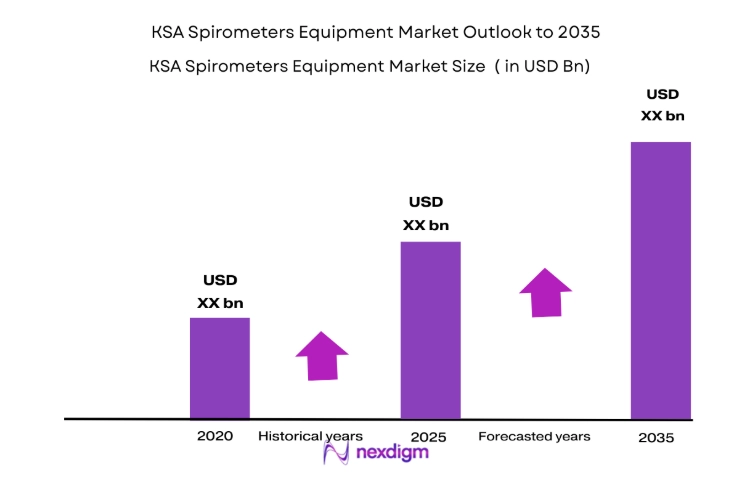
The spirometer equipment market in the Kingdom of Saudi Arabia (KSA) is witnessing steady growth, driven by a surge in respiratory diseases and increased healthcare investments. Based on a recent historical assessment, the market size for spirometers in KSA stands at approximately USD ~ million. The expansion is being fueled by a rise in chronic respiratory conditions, the growing demand for home healthcare solutions, and increasing awareness about the importance of early diagnosis and monitoring. With government efforts to enhance healthcare infrastructure, the demand for spirometer devices is expected to continue growing, fostering market expansion.
Dominating cities and regions within KSA include Riyadh, Jeddah, and Dammam, driven by high population density, advanced healthcare facilities, and significant government investments in health sector development. Riyadh, as the capital and economic hub, boasts the largest concentration of hospitals and healthcare centers, while Jeddah’s proximity to major ports supports easy access to medical equipment. Dammam, a key oil-rich city, has seen an influx of investment into healthcare facilities, supporting the market’s growth. These cities lead the market due to better healthcare access, infrastructure, and governmental support.
Market Segmentation
By Product Type:
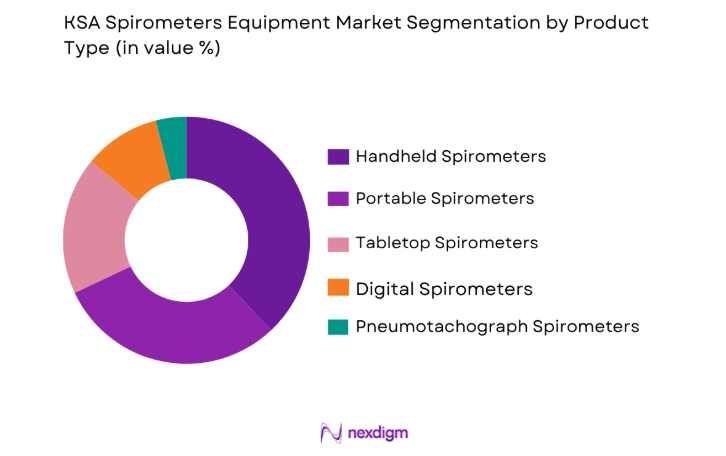
The spirometer market is segmented by product type into handheld spirometers, portable spirometers, tabletop spirometers, digital spirometers, and pneumotachograph spirometers. Recently, handheld spirometers have a dominant market share due to their portability, ease of use, and increasing adoption for home healthcare purposes. These devices offer simplicity and convenience for users, allowing them to perform regular monitoring of respiratory conditions in a non-clinical environment. The growing demand for home care, along with advancements in wireless and mobile technologies, has further contributed to the increasing dominance of handheld spirometers.
By Platform Type:
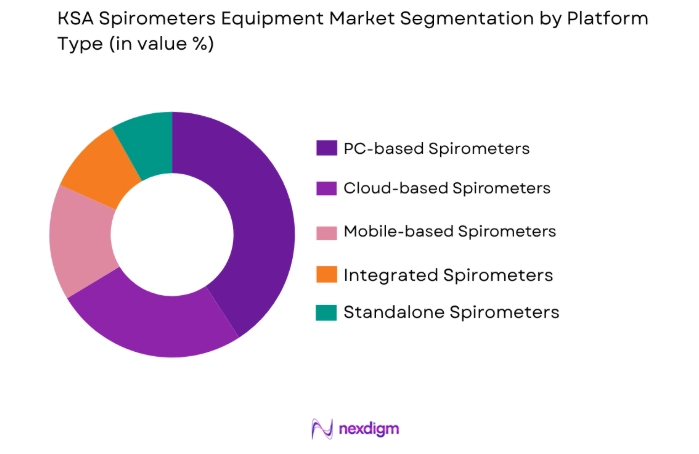
The market is also segmented by platform type into PC-based spirometers, cloud-based spirometers, mobile-based spirometers, integrated spirometers, and standalone spirometers. Among these, PC-based spirometers currently lead the market share due to their widespread use in hospital settings, where high accuracy and advanced diagnostic features are necessary. The integration with electronic health records (EHR) and sophisticated diagnostic tools enhances their reliability and efficiency, making them the preferred choice for medical professionals in diagnosing respiratory conditions.
Competitive Landscape
The competitive landscape of the KSA spirometer market is characterized by both global and regional players. Consolidation is occurring as larger companies acquire smaller firms to broaden their product portfolios, particularly in the homecare and portable device sectors. Key players in the market are influencing technological advancements and establishing strong distribution networks, which is further intensifying competition. Collaboration with healthcare institutions and the integration of digital solutions are expected to be the primary strategies for companies to maintain a competitive edge.
| Company Name | Establishment Year | Headquarters | Technology Focus | Market Reach | Key Products | Revenue (USD) |
| Siemens Healthineers | 1847 | Germany | ~ | ~ | ~ | ~ |
| Philips Healthcare | 1891 | Netherlands | ~ | ~ | ~ | ~ |
| Medtronic | 1949 | Ireland | ~ | ~ | ~ | ~ |
| Vitalograph | 1960 | UK | ~ | ~ | ~ | ~ |
| Miris | 2011 | Sweden | ~ | ~ | ~ | ~ |
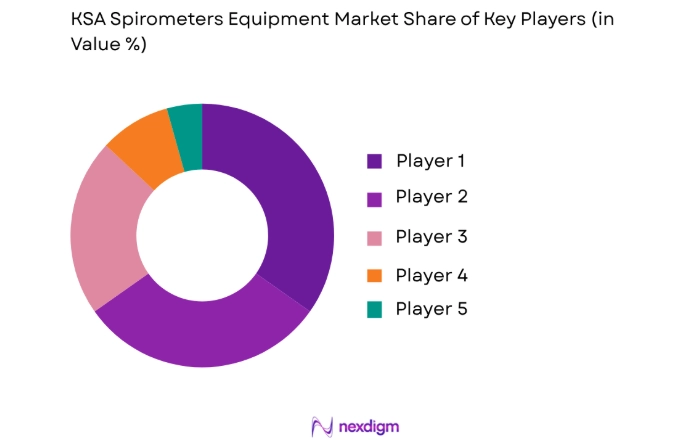
KSA Spirometers Equipment Market Analysis
Growth Drivers
Government Investment in Healthcare:
Government investment in the healthcare sector, including infrastructure development, is one of the main growth drivers for the spirometer market. The KSA government has committed to boosting healthcare services, with large-scale plans for hospital expansions, the construction of healthcare facilities, and the development of medical technologies. The Vision 2030 initiative is a pivotal factor, as it focuses on enhancing healthcare systems and improving access to advanced diagnostics. As part of this initiative, the government is heavily investing in both private and public healthcare, including the procurement of medical equipment like spirometers. This investment is creating favorable conditions for the growth of the spirometer market, especially with the rising prevalence of respiratory diseases, including asthma and chronic obstructive pulmonary disease (COPD).
Increasing Prevalence of Respiratory Diseases:
The rising number of respiratory diseases, particularly chronic obstructive pulmonary disease (COPD) and asthma, is also driving the growth of the spirometer market. According to the World Health Organization (WHO), respiratory diseases are among the leading causes of death and morbidity in Saudi Arabia, accounting for a significant share of hospital admissions and outpatient visits. As more individuals are diagnosed with these conditions, there is a growing demand for early diagnosis and ongoing monitoring, which in turn drives the need for spirometer devices. Public awareness campaigns regarding respiratory health, along with technological advancements in spirometry, are contributing to the increasing adoption of these devices by healthcare providers and patients alike.
Market Challenges
High Cost of Advanced Spirometers:
One of the major challenges hindering the growth of the spirometer market in KSA is the high cost of advanced devices. The high price point of certain spirometers, particularly digital and cloud-based models, limits their accessibility in smaller hospitals and healthcare centers, as well as in rural areas. Many healthcare providers, especially in less-developed regions of Saudi Arabia, cannot afford to invest in the latest spirometry technologies due to budget constraints. As a result, healthcare providers often rely on older, more affordable devices, which may not offer the same level of accuracy and efficiency as newer models. This price barrier is stalling the market’s growth and hindering the widespread adoption of modern spirometers across the country.
Regulatory Hurdles and Compliance:
Regulatory challenges also pose a significant barrier to market growth. The regulatory landscape for medical devices, including spirometers, in Saudi Arabia can be complex, with manufacturers needing to comply with stringent local and international standards. Regulatory processes can be time-consuming and expensive, particularly for companies looking to introduce new technologies into the market. Additionally, the continuous evolution of healthcare regulations adds another layer of complexity for companies aiming to stay compliant while launching new products. The delay in regulatory approvals and the associated costs can discourage some players from entering the market, thereby limiting competition and slowing down technological innovation.
Opportunities
Rising Demand for Homecare Solutions:
A major opportunity in the spirometer market is the growing demand for homecare solutions. With the increasing number of individuals diagnosed with chronic respiratory conditions, there is a rising trend toward home-based monitoring and treatment. Patients with respiratory diseases such as asthma and COPD are seeking devices that allow them to monitor their condition at home, reducing the need for frequent hospital visits. Handheld and portable spirometers are particularly popular in this segment due to their compact size, ease of use, and ability to connect with mobile apps and cloud-based platforms. Healthcare providers are also becoming more open to remote patient monitoring, which is expected to drive the adoption of homecare solutions in the coming years. As patient preferences shift toward homecare, spirometer manufacturers have the opportunity to focus on creating devices tailored to this market.
Technological Advancements in Spirometry:
Technological advancements in spirometry are opening new growth opportunities in the KSA market. Innovations such as the integration of artificial intelligence (AI), cloud-based data storage, and mobile connectivity are enhancing the accuracy and functionality of spirometers. AI-powered devices, for instance, can analyze lung function in real-time and offer predictive insights that help clinicians make more informed decisions. Additionally, cloud-based platforms enable healthcare providers to store and access patient data remotely, facilitating better care coordination. As these technologies become more mainstream, they will contribute to the expansion of the spirometer market by offering more efficient, user-friendly, and cost-effective solutions. The growing acceptance of digital health solutions among both healthcare providers and patients is creating significant opportunities for market players to innovate and capture new market share.
Future Outlook
The spirometer market in Saudi Arabia is expected to experience sustained growth over the next five years, driven by advancements in diagnostic technology, government investments in healthcare, and a rise in chronic respiratory diseases. Technological innovations, particularly in mobile and cloud-based platforms, are set to enhance the functionality of spirometers, leading to greater adoption across healthcare settings. Moreover, regulatory support and policies aimed at improving healthcare access and infrastructure will provide a favorable environment for continued market expansion. Demand-side factors, such as the increasing need for home healthcare and remote patient monitoring, will continue to fuel market growth.
Major Players
- Siemens Healthineers
- Philips Healthcare
- Medtronic
- Vitalograph
- Miris
- Schiller AG
- COSMED
- NDD Medizintechnik
- Morgan Scientific
- CareFusion
- Chest MI
- Smiths Medical
- Mindray
- GE Healthcare
- SpiroTech
Key Target Audience
- Investments and venture capitalist firms
- Government and regulatory bodies
- Hospitals and healthcare providers
- Respiratory care equipment distributors
- Medical equipment wholesalers
- Home healthcare providers
- Diagnostic centers
- Research and development organizations
Research Methodology
Step 1: Identification of Key Variables
Identifying and defining the key variables and parameters that impact the spirometer market in KSA, including market trends, technological advancements, and regulatory frameworks.
Step 2: Market Analysis and Construction
Gathering and analyzing quantitative and qualitative data to construct a comprehensive market model, evaluating current market dynamics and projecting future trends.
Step 3: Hypothesis Validation and Expert Consultation
Validating the market model and hypotheses through consultations with industry experts, regulatory bodies, and key stakeholders.
Step 4: Research Synthesis and Final Output
Synthesizing the findings from all data sources and consultations to create a final, actionable market report with recommendations for stakeholders.

- Executive Summary
- Research Methodology (Definitions, Scope, Industry Assumptions, Market Sizing Approach, Primary & Secondary Research Framework, Data Collection & Verification Protocol, Analytic Models & Forecast Methodology, Limitations & Research Validity Checks)

- Market Definition and Scope
- Value Chain & Stakeholder Ecosystem
- Regulatory / Certification Landscape
- Sector Dynamics Affecting Demand

- Growth Drivers
Increase in Respiratory Disorders
Rising Demand for Home Healthcare Solutions
Advancements in Spirometer Technology - Market Challenges
High Initial Investment
Lack of Skilled Personnel
Regulatory Challenges - Market Opportunities
Expansion of Healthcare Infrastructure
Growing Awareness on Respiratory Health
Technological Advancements in Diagnostic Tools - Trends
Shift Toward Portable Spirometers
Integration with AI for Better Diagnosis
Growth of Mobile-based Healthcare Solutions - Government Regulations
- SWOT Analysis of Key Competitors

- By Market Value, 2020-2025
- By Installed Units, 2020-2025
- By Average System Price, 2020-2025
- By System Complexity Tier, 2020-2025

- By System Type (In Value%)
Portable Spirometers
Tabletop Spirometers
Handheld Spirometers
Digital Spirometers
Pneumotachograph Spirometers - By Platform Type (In Value%)
PC-based Spirometers
Cloud-based Spirometers
Mobile-based Spirometers
Integrated Spirometers
Standalone Spirometers - By Fitment Type (In Value%)
Stand-alone Spirometers
Built-in Spirometers
Integrated Spirometers
Portable Spirometers
Hospital-based Spirometers - By EndUser Segment (In Value%)
Hospitals
Clinics
Homecare
Diagnostic Centers
Research & Academic Institutions

- Market Share Analysis
- CrossComparison Parameters (Market Share, Pricing Trends, Technological Advancements, Regulatory Compliance, Product Offering)
- SWOT Analysis of Key Competitors
- Pricing & Procurement Analysis
- Porter’s Five Forces
- Key Players
Siemens Healthineers
Philips Healthcare
Medtronic
GE Healthcare
Miris
Shenzhen Bestman Instrument
Schiller AG
Vitalograph
MediPoint
Morgan Scientific
CareFusion
Cosmed
Chest MI
NDD Medizintechnik
Mirage HealthTech
Sunovion Pharmaceuticals

- Hospitals Demand for High-Performance Spirometers
- Homecare Sector Adoption of Portable Devices
- Clinics’ Preference for Affordable and Compact Models
- Research Institutions’ Use of High-Precision Spirometers

- Forecast Market Value, 2026-2035
- Forecast Installed Unit,s 2026-2035
- Price Forecast by System Tier, 2026-2035
- Future Demand by Platform, 2026-2035


 Request a Sample
 Ask for Customization
 Get a Quote
 Enquire Now