
 Download PDF
Market Overview
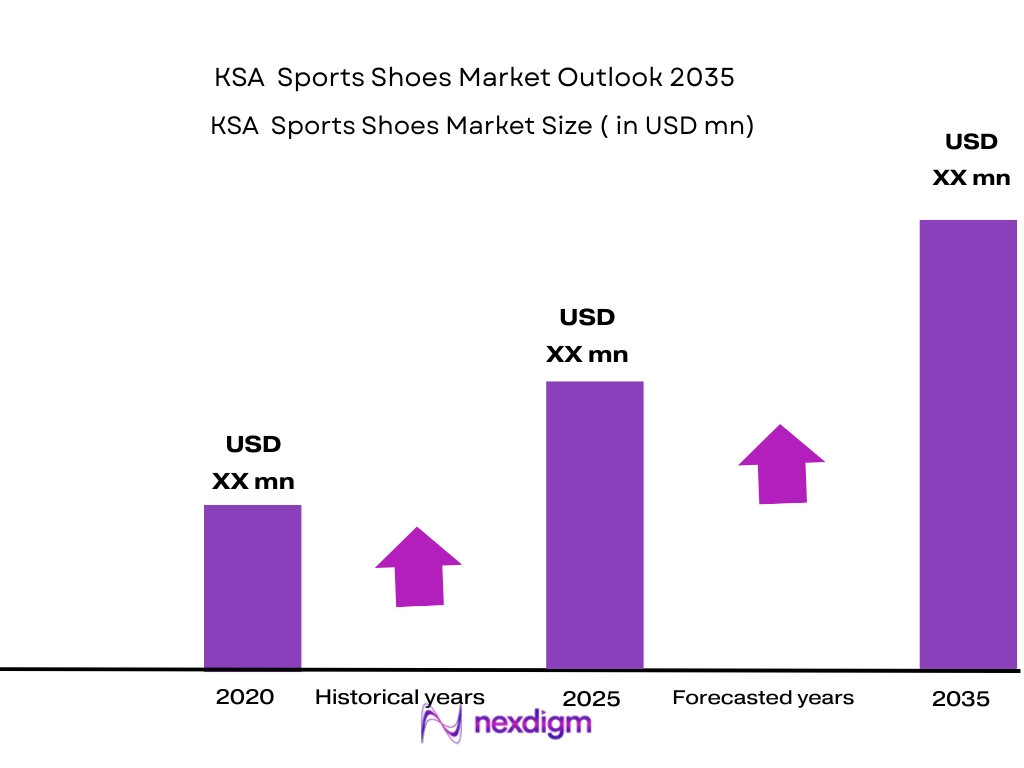
The KSA sports shoes market is valued at USD ~ million, based on current market analysis for lifestyle sneakers and athletic-use footwear, while the wider Saudi footwear market is valued at USD 1.28 billion and is projected to reach USD 1.90 billion by 2030, growing at a CAGR of 6.8%. Demand is driven by fitness adoption, athleisure usage, youth-led fashion consumption, and organized retail expansion across malls, brand outlets, and online platforms.
Riyadh, Jeddah, Dammam, Makkah, and Madinah dominate the KSA sports shoes market due to dense urban populations, stronger mall infrastructure, high-income consumer clusters, and broader access to premium international brands. Saudi Arabia’s population reached 35.3 million, up from 33.7 million, while GDP per capita stood at USD 35,121.7, supporting higher spending on branded sports and lifestyle footwear in major cities.
Market Segmentation
By Product Type
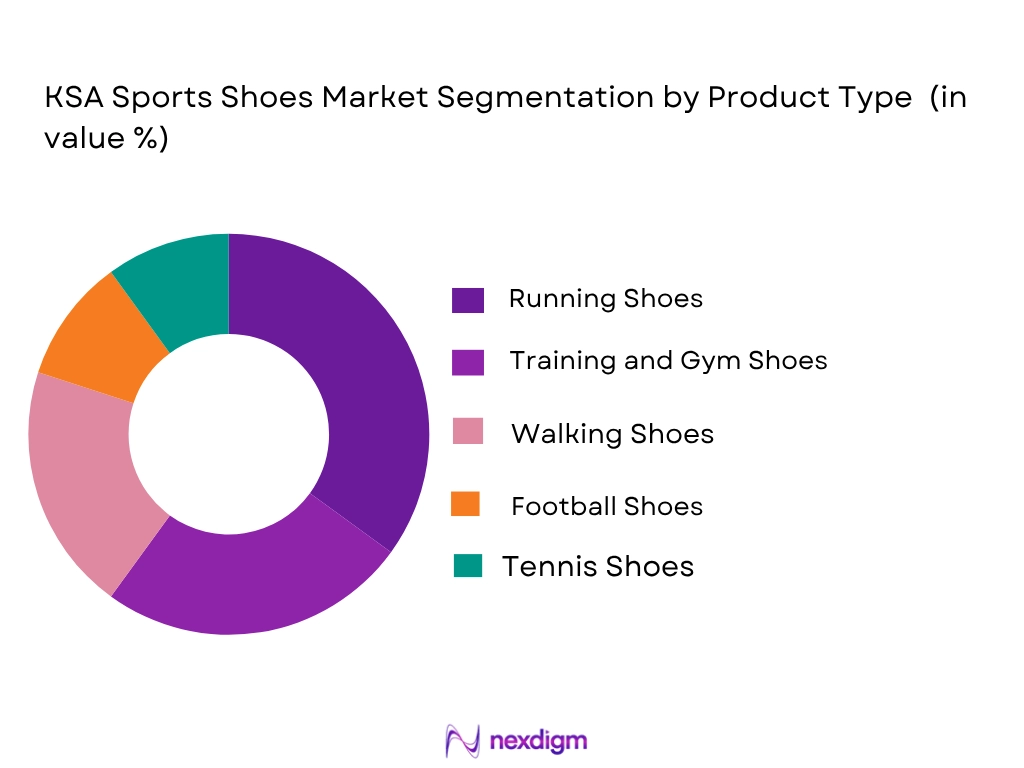
The KSA Sports Shoes Market is segmented by product type into running shoes, training and gym shoes, lifestyle and athleisure sports shoes, football shoes, basketball shoes, hiking and outdoor shoes, and others. Recently, running shoes have held a dominant position under this segmentation due to their multi-use appeal across fitness, walking, gym workouts, and casual daily wear. Consumers increasingly prefer lightweight, cushioned, breathable, and performance-oriented shoes that can serve both athletic and lifestyle purposes. Running footwear also benefits from the growth of marathons, community sports events, corporate wellness programs, and recreational walking in urban zones. International brands such as Nike, Adidas, ASICS, New Balance, and Puma have built strong product depth in this category, ranging from entry-level running shoes to premium performance models. Their dominance is further supported by frequent launches, strong online visibility, and wide availability through sports specialty stores and brand-owned outlets.
By Distribution Channel
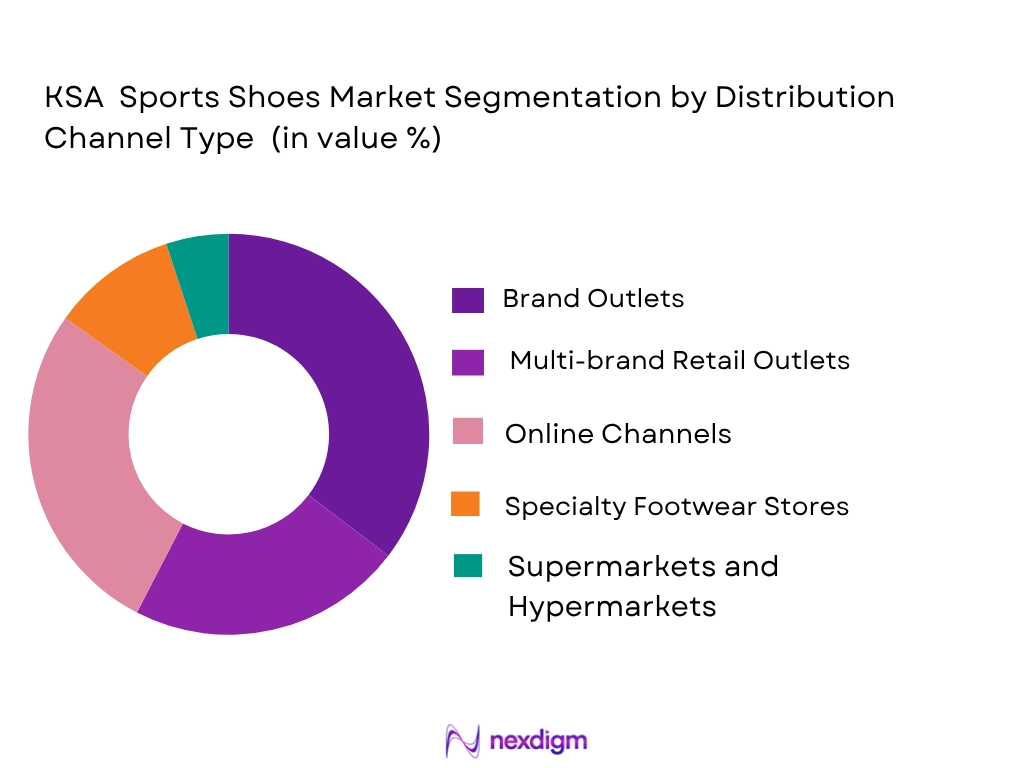
The KSA Sports Shoes Market is segmented by distribution channel into brand outlets, sports specialty stores, online channels, multi-brand retail stores, supermarkets and hypermarkets, and others. Recently, brand outlets have secured a dominant market share under this segmentation due to consumer preference for authenticity, full-size availability, new-season collections, and direct access to premium international labels. In Saudi Arabia, mall-based retail remains highly influential, especially in Riyadh, Jeddah, Dammam, and Makkah, where consumers frequently combine leisure, fashion, and sportswear purchases. Brand outlets also allow companies to control visual merchandising, launch limited-edition products, offer loyalty programs, and deliver a consistent customer experience. However, online channels are expanding quickly because of convenience, discounting, product comparison, and growing comfort with digital payments. Platforms such as Namshi, Noon, Amazon.sa, and brand-owned websites are reshaping the purchase journey, especially among younger consumers.
Competitive Landscape
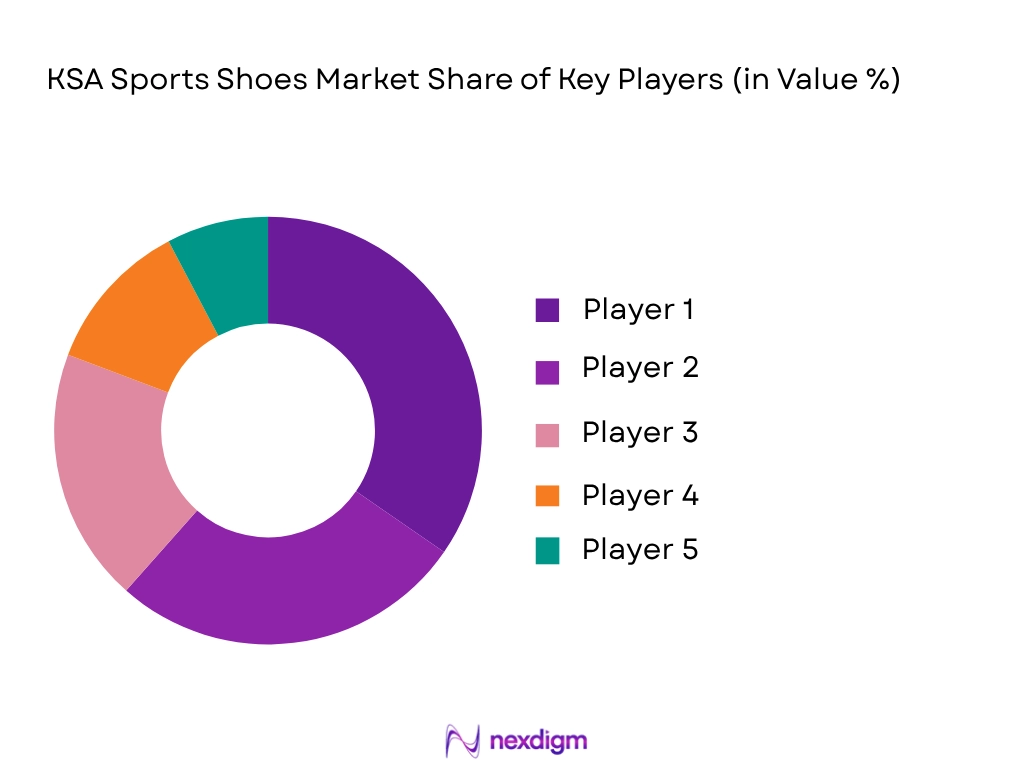
The KSA Sports Shoes Market is moderately consolidated, with global brands dominating premium and performance categories, while regional retailers and e-commerce platforms influence distribution reach. Nike, Adidas, Puma, Skechers, and New Balance maintain strong brand equity through mall outlets, sports-specialty partnerships, online channels, influencer-led marketing, and product innovation. Retailers such as Sun & Sand Sports, JD Sports, Decathlon, Namshi, Noon, and Amazon.sa strengthen market access by offering multi-brand assortments and promotional pricing.
| Company | Establishment Year | Headquarters | Product Strength | KSA Channel Presence | Core Consumer Segment | Pricing Position | Digital Strength | Key Competitive Advantage |
| Nike | 1964 | Beaverton, USA | ~ | ~ | ~ | ~ | ~ | ~ |
| Adidas | 1949 | Herzogenaurach, Germany | ~ | ~ | ~ | ~ | ~ | ~ |
| Puma | 1948 | Herzogenaurach, Germany | ~ | ~ | ~ | ~ | ~ | ~ |
| Skechers | 1992 | Manhattan Beach, USA | ~ | ~ | ~ | ~ | ~ | ~ |
| New
Balance |
1906 | Boston, USA | ~ | ~ | ~ | ~ | ~ | ~ |
KSA Sports Shoes Market Analysis
Growth Drivers
Rising Health and Fitness Awareness
The KSA Sports Shoes Market is strongly supported by rising health and fitness awareness among urban consumers. Sports shoes are increasingly being purchased for walking, gym workouts, running, and everyday comfort rather than only for professional sports. Consumers are becoming more aware of cushioning, arch support, breathability, and injury prevention, which is increasing demand for branded and performance-oriented footwear. Riyadh, Jeddah, and the Eastern Province are seeing stronger adoption due to higher income levels, wider gym access, and greater exposure to global fitness trends. The growth of wellness routines, corporate fitness programs, and recreational exercise has made sports shoes a regular lifestyle purchase across age groups.
Expansion of E-commerce and Omnichannel Retail
The expansion of e-commerce and omnichannel retail is a major growth driver for the KSA Sports Shoes Market. Online platforms provide consumers with access to broader product ranges, size availability, seasonal discounts, and international brands beyond physical store limitations. Younger consumers increasingly compare prices, reviews, and styles before purchasing sports footwear online. At the same time, brand outlets and sports retailers are integrating online returns, app-based loyalty programs, click-and-collect services, and digital promotions. This improves convenience and repeat purchases. E-commerce also helps brands reach consumers outside Riyadh, Jeddah, and Dammam, widening the addressable market for sports shoes across Saudi Arabia.
Market Challenges
High Dependence on Imports
The KSA Sports Shoes Market faces a key challenge due to high dependence on imported footwear. Most major sports shoe brands manufacture outside Saudi Arabia, which exposes the market to shipping delays, customs procedures, logistics costs, and currency fluctuations. This can affect product availability, especially for new launches, limited-edition sneakers, and specialized performance footwear. Retailers must maintain careful inventory planning across sizes, colors, and styles to avoid shortages or excess stock. Import dependence also limits flexibility in responding quickly to sudden demand changes. As competition increases, supply chain efficiency becomes critical for maintaining margins, ensuring timely replenishment, and protecting customer satisfaction.
Price Sensitivity Among Mass Consumers
Price sensitivity remains a significant challenge in the KSA Sports Shoes Market, particularly among mass and mid-income consumers. While premium brands are popular in major cities, many buyers still compare prices across online marketplaces, discount stores, and multi-brand retailers before purchasing. High prices for international brands may push consumers toward lower-cost alternatives, private labels, or counterfeit products. Frequent discounts and promotional campaigns also create pressure on retailer margins and weaken full-price sales. Brands must balance quality, comfort, durability, and affordability to retain value-conscious consumers. The challenge is especially visible in family purchases, kids’ footwear, and entry-level athletic shoe categories.
Opportunities
Growing Demand for Women’s Sports Shoes
The growing demand for women’s sports shoes presents a strong opportunity in the KSA Sports Shoes Market. Female participation in gyms, walking groups, running events, wellness programs, and sports clubs is increasing, creating demand for footwear designed around women’s fit, comfort, style, and performance requirements. Brands can benefit by expanding women-specific collections across running, training, walking, and athleisure categories. Women-only gyms, fitness influencers, and lifestyle-focused retail campaigns can further support this opportunity. Products that combine modest fashion compatibility, cushioning, lightweight materials, and modern design are likely to gain traction. This segment also offers scope for premiumization and brand loyalty.
Rising Demand for Sustainable and Eco-friendly Sports Shoes
Rising demand for sustainable and eco-friendly sports shoes is emerging as a long-term opportunity in Saudi Arabia’s urban footwear market. Younger consumers and premium buyers are becoming more receptive to products made with recycled materials, vegan alternatives, low-waste packaging, and responsible manufacturing practices. Global sports brands are already introducing sustainability-focused footwear lines, which can help differentiate products in a competitive market. Although price and comfort remain primary purchase factors, sustainability can strengthen brand image and influence repeat buying among conscious consumers. Retailers can support this opportunity through dedicated eco-friendly collections, product labeling, awareness campaigns, and online sustainability storytelling.
Future Outlook
Over the next five years, the KSA Sports Shoes Market is expected to grow steadily, supported by sports participation, athleisure adoption, rising health awareness, and government-led sports development under Vision 2030. The broader footwear category is projected to expand at a CAGR of 6.8% through 2030, while sports shoes are expected to benefit disproportionately from fitness, running, football, and lifestyle sneaker demand. The market will continue shifting from basic footwear toward performance-oriented, comfort-led, and fashion-compatible sports shoes. Running shoes, walking shoes, and athleisure sneakers are expected to remain resilient because they serve both exercise and daily use. Women’s sports footwear is likely to expand as female participation in fitness, gyms, walking clubs, and sports programs increases. Kids’ sports footwear will also benefit from school sports, family shopping behavior, and demand for durable branded shoes.
Major Players
- Nike
- Adidas
- Puma
- New Balance
- Skechers
- Under Armour
- ASICS
- Reebok
- Fila
- Converse
- Vans
- Decathlon
- Sun & Sand Sports
- JD Sports
- Foot Locker
Key Target Audience
- Sports footwear manufacturers
- Athletic apparel and footwear retailers
- E-commerce footwear platforms
- Mall developers and retail real estate operators
- Investments and venture capitalist firms
- Sports clubs, gyms, and fitness center chains
- Government and regulatory bodies
- Importers, distributors, and franchise operators
Research Methodology
Step 1: Identification of Key Variables
The initial phase involves constructing an ecosystem map covering manufacturers, importers, brand outlets, e-commerce platforms, sports retailers, distributors, and end users within the KSA Sports Shoes Market. This step is supported by extensive desk research using public databases, company information, trade indicators, and sector-level sources. The key objective is to identify variables such as pricing, product type, consumer group, retail channel, and city-level demand concentration.
Step 2: Market Analysis and Construction
In this phase, historical data related to Saudi footwear, lifestyle sneakers, sports participation, population growth, retail development, and online sales penetration is compiled and analyzed. The analysis reviews market value, product mix, channel contribution, and consumer spending behavior. Revenue construction is supported by triangulating brand presence, category pricing, distribution reach, and demand patterns across key Saudi cities.
Step 3: Hypothesis Validation and Expert Consultation
Market hypotheses are developed and validated through structured discussions with industry stakeholders, including footwear distributors, sports retailers, e-commerce category managers, mall-based retail operators, and import specialists. These consultations help test assumptions related to dominant product types, consumer preferences, pricing bands, sales channels, and brand competition. The process improves the reliability of category-level estimates and segmentation outputs.
Step 4: Research Synthesis and Final Output
The final phase involves synthesizing secondary research, market indicators, retail observations, and expert inputs into a structured market report. Insights related to product segmentation, future growth, competitive positioning, distribution strategy, and target audiences are consolidated. The bottom-up and top-down findings are cross-verified to deliver a coherent and validated assessment of the KSA Sports Shoes Marke

- Executive Summary
- Research Methodology (Market Definitions and Assumptions Abbreviations, Market Sizing Approach, Consolidated Research Approach, Understanding Market Potential Through In-Depth Industry Interviews, Primary Research Approach, Limitations and Future Conclusions)

- Definition and Scope
- Market Dynamics Overview
- Market Genesis
- Major Players and Market Timeline
- Business Cycle and Trends
- Supply Chain and Value Chain Analysis

- Growth Drivers
Rising Health and Fitness Awareness
Growth of Sports Participation and Recreational Activities
Increasing Popularity of Athleisure and Casual Sportswear
Expansion of Gyms, Fitness Centers, and Sports Clubs
Growing Youth Population and Urbanization
Rising Disposable Income and Premiumization
Expansion of E-commerce and Omnichannel Retail
Government Push for Sports Under Vision 2030 - Market Challenges
High Dependence on Imports
Price Sensitivity Among Mass Consumers
Counterfeit and Unorganized Market Presence
Intense Competition Among Global and Local Brands
Seasonality in Demand and Inventory Management
Supply Chain and Logistics Challenges
Changing Consumer Preferences and Brand Loyalty - Opportunities
Growing Demand for Women’s Sports Shoes
Expansion of Kids’ Sports Footwear Segment
Rising Demand for Sustainable and Eco-friendly Sports Shoes
Growth of Customized and Performance-based Footwear
Increased Adoption of Digital Retail and Direct-to-consumer Channels
Partnerships with Fitness Influencers, Athletes, and Sports Clubs
Growth of Local Sports Events, Marathons, and Community Fitness Programs - Key Trends
Shift Toward Athleisure and Everyday Sports Footwear
Rising Demand for Lightweight and Breathable Shoes
Growth of Smart and Technology-enabled Sports Shoes
Increasing Preference for Premium International Brands
Sustainability in Materials and Packaging
Influence of Social Media, Fitness Apps, and Celebrity Endorsements
Growth of Online-exclusive Product Launches and Limited-edition Collections - Government Regulations
Import Regulations and Customs Duties
Product Safety and Quality Standards
Labeling and Packaging Requirements
E-commerce and Consumer Protection Regulations
Sustainability and Environmental Compliance
Saudi Standards, Metrology and Quality Organization Requirements - SWOT Analysis
- Porter’s Five Forces

- By Value, 2020–2025
- By Volume, 2020–2025
- By Average Price, 2020–2025

- By Product Type (In Value %)
Running Shoes
Training and Gym Shoes
Walking Shoes
Football Shoes
Basketball Shoes
Tennis Shoes - By End User (In Value %)
Men
Women
Kids - By Price Range (In Value %)
Mass/Economy Sports Shoes
Mid-range Sports Shoes
Premium Sports Shoes
Luxury Sports Shoes - By Distribution Channel (In Value %)
Brand Outlets
Multi-brand Retail Stores
Sports Specialty Stores
Online Channels
Supermarkets and Hypermarkets
Department Stores
Others - By Usage/Application (In Value %)
Professional Sports
Fitness and Gym
Running and Walking
Outdoor and Adventure Activities
Casual and Athleisure Wear
School and Kids’ Sports Activities
Others - By Region (In Value %)
Riyadh
Makkah
Madinah
Eastern Province
Asir
Qassim
Rest of KSA

- Market Share of Major Players by Value/Volume
- Market Share of Major Players by Product Type
- Market Share of Major Players by Distribution Channel
- Cross Comparison Parameters (Company Overview, Business Strategies, Recent Developments, Strengths and Weaknesses, Organizational Structure, Revenues, Revenues by Product Type, Number of Retail Touchpoints, Online Presence, Distribution Channels, Number of Dealers and Distributors, Margins, Manufacturing/Import Model,, Unique Value Offering, Product Portfolio Marketing and Sponsorship Strategy, Others)
- SWOT Analysis of Major Players
- Pricing Analysis Based on Product Categories for Major Players
- Detailed Profiles of Major Companies
Nike
Adidas
Puma
New Balance
Skechers
Under Armour
ASICS
Reebok
Fila
Converse
Vans
Decathlon
Sun & Sand Sports
JD Sports
Foot Locker
Namshi
Noon
Amazon.sa
Centrepoint
Redtag

- Market Demand and Utilization
- Purchasing Power and Budget Allocations
- Consumer Preferences and Buying Behavior
- Needs, Desires, and Pain Point Analysis
- Decision-making Process
- Brand Awareness and Loyalty Analysis

- By Value, 2026–2035
- By Volume, 2026–2035
- By Average Price, 2026–2035


 Request a Sample
 Ask for Customization
 Get a Quote
 Enquire Now