
 Download PDF
Market Overview
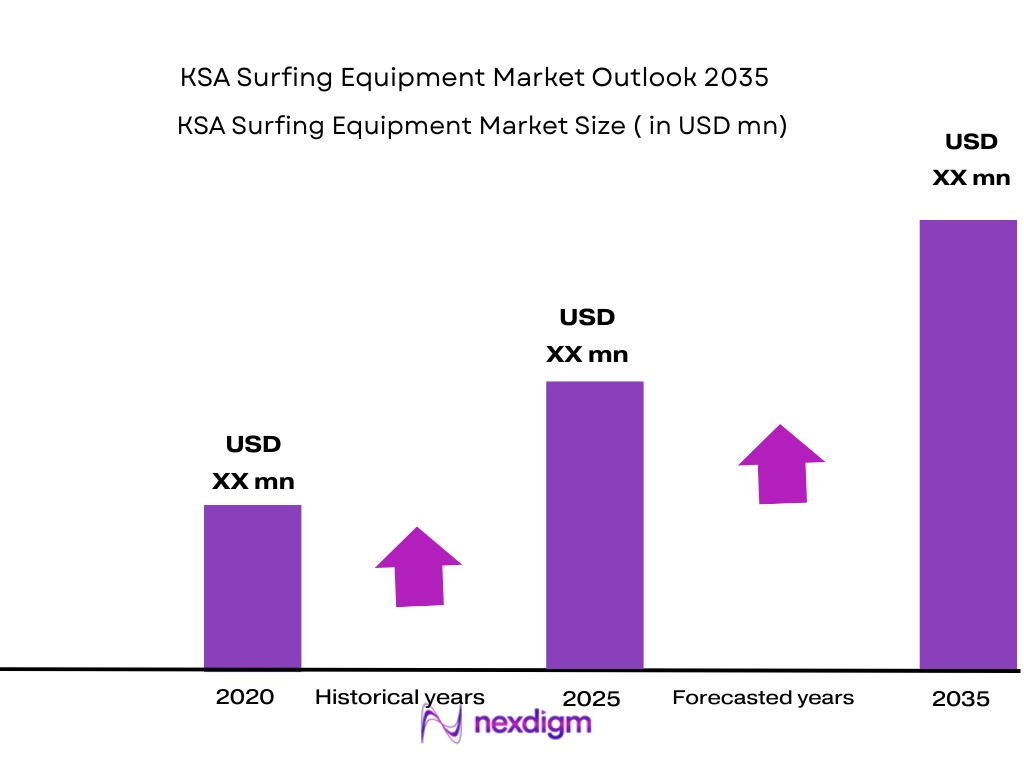
The KSA surfing equipment market is valued at approximately USD ~ million, driven by an increasing interest in surfing and water sports. The market’s growth is propelled by Saudi Arabia’s investment in developing its tourism infrastructure, especially along its extensive coastline. The market is also benefitting from a shift in consumer preferences toward outdoor and adventure sports. The rise in disposable incomes and the government’s push to encourage a healthy lifestyle among the youth population further contributes to the growth of the surfing equipment market. As a result, demand for surfing gear, such as surfboards, wetsuits, and accessories, continues to rise.
Jeddah, Riyadh, and the Eastern Province are key regions driving the KSA surfing equipment market. Jeddah, located on the Red Sea, has long been a hub for water sports and beach activities, including surfing. Its favorable coastal geography and increasing number of tourists make it the dominant city in the surfing market. Riyadh, the capital, is also contributing to the market through increased recreational interest and rising disposable income. The Eastern Province, with its growing coastal tourism and surf-friendly areas, is emerging as a significant player in the market, supported by the government’s efforts to diversify the tourism industry.
Market Segmentation
By Product Type
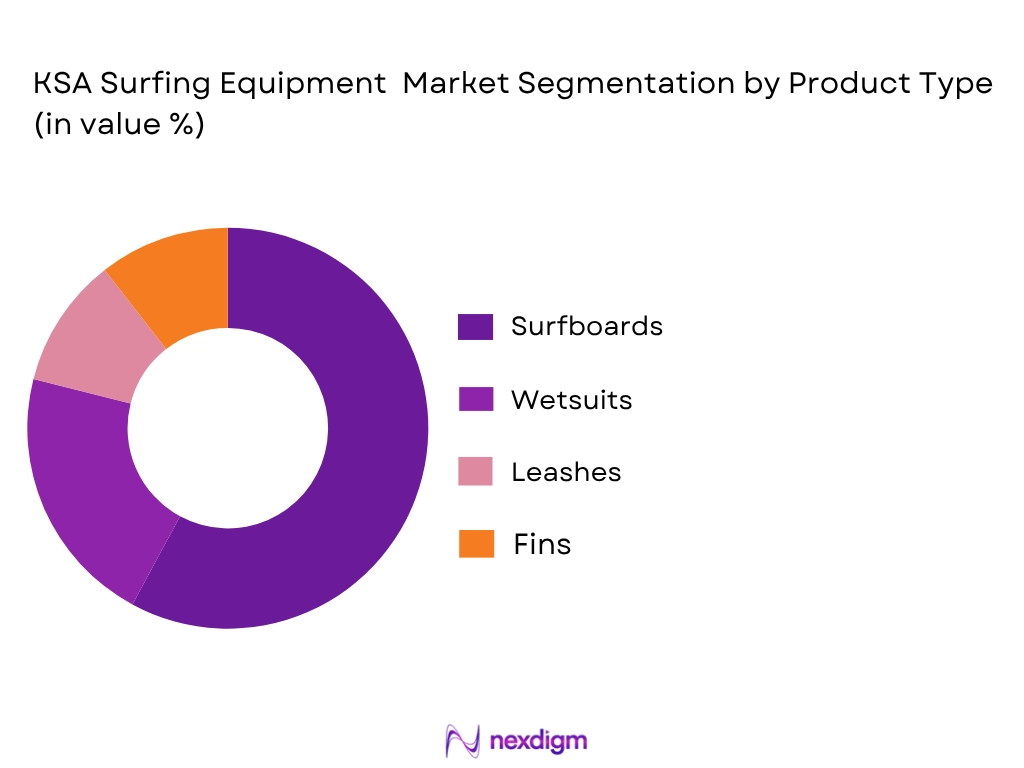
The KSA surfing equipment market is segmented by product type into surfboards, wetsuits, leashes, fins, and accessories. Among these, surfboards dominate the market share due to their essential role in the sport. Surfboards are the most important and fundamental piece of equipment for any surfer, driving significant demand. The growing number of surfing enthusiasts in KSA is increasing the demand for high-performance surfboards. The preference for lightweight and durable surfboards made from advanced materials like epoxy and carbon fiber is further boosting the market for surfboards. Additionally, local brands are emerging, catering to both affordability and quality, which is contributing to the growth of the surfboard segment.
By Material Type
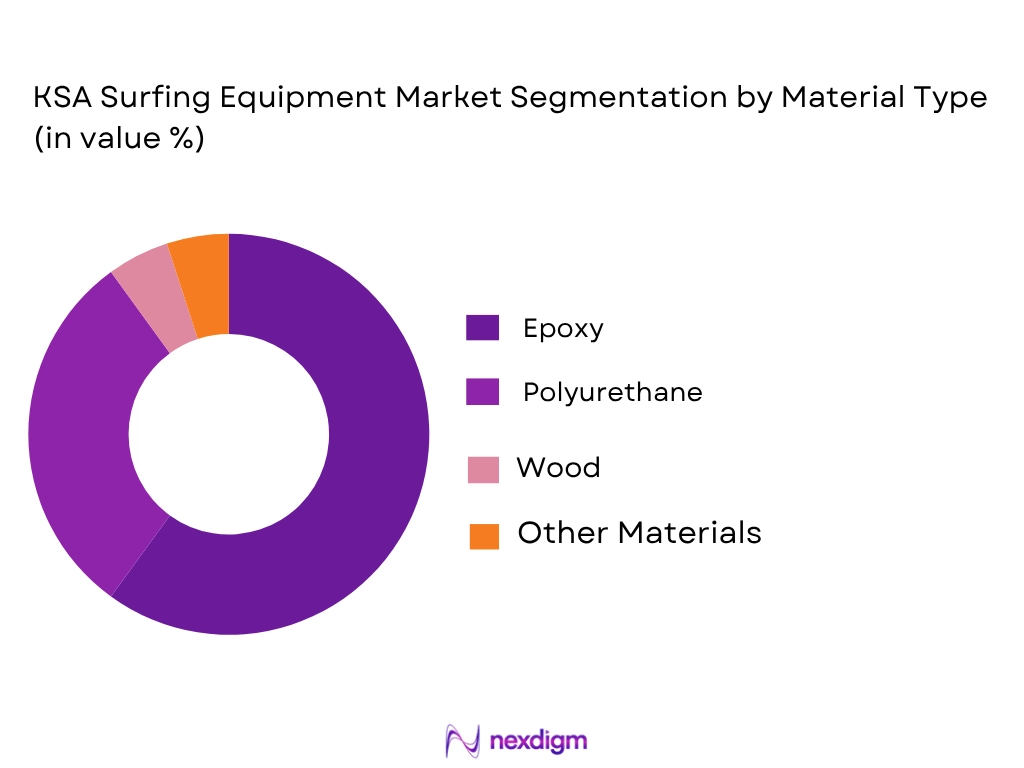
The market is also segmented by material type into epoxy, polyurethane, wood, and other materials. Epoxy surfboards dominate the market due to their superior performance, light weight, and durability. Epoxy boards are increasingly favored by both recreational and professional surfers, as they provide better buoyancy and strength. These boards are also more resistant to dings and damage compared to traditional polyurethane surfboards. Moreover, the growing demand for sustainable materials is making epoxy surfboards more attractive to environmentally conscious consumers. This shift towards durable, high-performance materials is expected to sustain the dominance of epoxy surfboards in the market.
Competitive Landscape
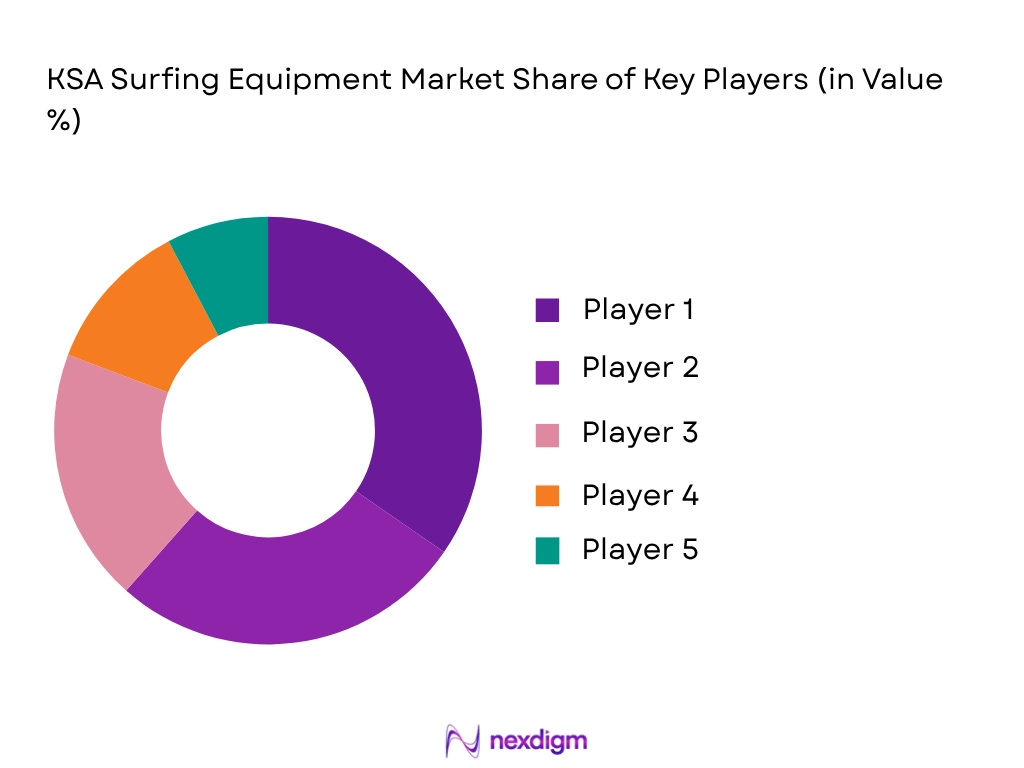
The KSA surfing equipment market is driven by both international brands and emerging local players. Major global players like Quiksilver, Rip Curl, Billabong, and O’Neill dominate the market due to their strong brand recognition and extensive distribution networks. These companies offer high-quality surfboards, wetsuits, and accessories, which are highly sought after in KSA’s growing surfing community. Local companies are gradually carving out a niche by focusing on affordable surf gear and leveraging regional knowledge. This growing competition between international and local players is benefiting the market by driving innovation and improving product offerings.
| Company Name | Establishment Year | Headquarters | Product Focus | Distribution Channels | Revenue | Market Share |
| Quiksilver | 1969 | USA | ~ | ~ | ~ | ~ |
| Rip Curl | 1969 | Australia | ~ | ~ | ~ | |
| Billabong | 1973 | Australia | ~ | ~ | ~ | ~ |
| O’Neill | 1952 | USA | ~
|
~ | ~ | ~ |
| Roxy Saudi | 2008 | Saudi Arabia | ~ | ~ | ~ | ~ |
KSA Surfing Equipment Market Analysis
Growth Drivers
Increasing Interest in Water Sports
The increasing interest in water sports in Saudi Arabia is one of the major drivers of the surfing equipment market. The country’s expanding coastline along the Red Sea and the Arabian Gulf provides ideal conditions for water sports, including surfing. As more individuals, especially the youth, embrace surfing and other water sports, the demand for related equipment continues to rise. This interest is also supported by the growing number of surfing schools and surf-related events, which are drawing more people into the sport. Government initiatives to promote physical activity and outdoor recreation are further fueling this interest in water sports, leading to a sustained demand for surfing gear.
Expanding Tourism Industry and Infrastructure
Saudi Arabia’s expanding tourism infrastructure is a significant growth driver for the surfing equipment market. As part of its Vision 2030 initiative, the country has been investing heavily in its tourism sector, aiming to attract millions of tourists, many of whom are keen on water sports. With the development of resorts, beaches, and coastal tourism hubs in cities like Jeddah and the Eastern Province, the demand for surfing equipment is increasing. The government’s push to diversify its economy and promote Saudi Arabia as a top tourist destination is expected to further accelerate the growth of the surfing equipment market, benefiting both local and international brands.
Market Challenges
High Import Dependence for Surfing Equipment
One of the major challenges facing the KSA surfing equipment market is the high dependence on imported products. While the demand for surfing gear is rising, much of the equipment, including surfboards, wetsuits, and accessories, is imported from countries with established surfing industries, such as the U.S. and Australia. This reliance on imports results in higher costs for consumers due to shipping, tariffs, and distribution fees. Additionally, fluctuations in global supply chains can affect the availability of products, making it difficult for local retailers to meet the growing demand for surfing equipment.
Price Sensitivity Among Consumers
Price sensitivity remains a key challenge in the KSA surfing equipment market. While there is a growing interest in surfing, many consumers, especially in emerging surfing communities, are cautious about spending on high-end surf gear. The cost of quality surfboards and wetsuits can be prohibitive for many, particularly given the relatively niche nature of the sport in Saudi Arabia. Consumers often look for budget-friendly options, which can affect the profitability of premium brands. The challenge is to find a balance between offering high-quality products and meeting the price expectations of the broader consumer base, especially in an emerging market like KSA.
Opportunities
Rising Demand for Eco-Friendly and Sustainable Surf Equipment
There is a growing demand for eco-friendly and sustainable surfing equipment in Saudi Arabia, driven by increasing environmental awareness. As global sustainability trends gain momentum, consumers are becoming more inclined to purchase products made from recyclable materials, organic resins, and biodegradable packaging. Surfboard manufacturers in KSA have the opportunity to capitalize on this trend by offering sustainable and environmentally friendly alternatives. The growing popularity of eco-conscious consumerism presents an opportunity for brands to differentiate themselves in the market, attracting environmentally aware customers and meeting the demand for greener alternatives in the water sports sector.
Expansion of Surf Tourism in Emerging Regions
The expansion of surf tourism in emerging regions of Saudi Arabia presents a significant opportunity for growth in the surfing equipment market. While established destinations like Jeddah are known for their surf-friendly conditions, lesser-known coastal areas such as the Eastern Province are becoming increasingly popular for surfing. As Saudi Arabia continues to develop its tourism infrastructure, these emerging regions are expected to see a rise in surf tourists. This creates new market opportunities for local retailers and surf schools, as well as for brands looking to expand their presence in less saturated areas. The government’s push to diversify tourism into less explored regions further supports this growth.
Future Outlook
Over the next five years, the KSA surfing equipment market is expected to experience significant growth. This is driven by the country’s expanding tourism sector, a young and active population, and increasing interest in surfing as an adventure sport. The government’s Vision 2030 initiative, which aims to diversify the economy and boost the tourism sector, will further contribute to the growth of the surfing market. As more people take up water sports, demand for high-quality, eco-friendly, and innovative surfing equipment will increase, creating new opportunities for local and international brands.
Major Players
- Quiksilver
- Rip Curl
- Billabong
- O’Neill
- Roxy Saudi
- Dakine
- Hurley
- Volcom
- Body Glove
- Lost Surfboards
- Channel Islands Surfboards
- FCS
- Firewire Surfboards
- JS Industries
- Torq Surfboards
Key Target Audience
- Surfing Equipment Manufacturers
- Surfing Gear Distributors and Wholesalers
- Tourism and Hospitality Businesses
- Retail Chains and E-commerce Platforms
- Investments and Venture Capitalist Firms
- Government and Regulatory Bodies (Saudi Ministry of Sports)
- Surfing Event Organizers
- Eco-Conscious Consumers
Research Methodology
Step 1: Identification of Key Variables
The first step involves constructing an ecosystem map of the KSA surfing equipment market. This will help identify all major stakeholders including manufacturers, distributors, retailers, and consumers. The information will be gathered through secondary research using a combination of reports, market studies, and proprietary databases to gather comprehensive industry-level information.
Step 2: Market Analysis and Construction
This phase includes the collection of historical market data and trend analysis. We will assess market penetration, evaluate revenue generation patterns, and forecast the market’s growth trajectory. Additionally, we will examine consumer behavior and the popularity of surfing as a sport in KSA.
Step 3: Hypothesis Validation and Expert Consultation
To validate market hypotheses, we will conduct consultations with industry experts, including manufacturers, retailers, and distributors. These consultations will provide valuable insights into the operational challenges and opportunities within the market, allowing for more accurate forecasting and validation of initial assumptions.
Step 4: Research Synthesis and Final Output
The final phase of research involves synthesizing the data from primary and secondary sources to create a comprehensive report. This will include insights into product trends, market dynamics, consumer preferences, and competitive landscapes. The final report will provide detailed market forecasts and recommendations for key stakeholders in the surfing equipment market.

- Executive Summary
- Research Methodology (Market Definitions and Assumptions Abbreviations, Market Sizing Approach, Consolidated Research Approach, Understanding Market Potential Through In-Depth Industry Interviews, Primary Research Approach, Limitations and Future Conclusions)

- Definition and Scope
- Market Dynamics Overview
- Market Genesis
- Major Players and Market Timeline
- Business Cycle and Trends
- Supply Chain and Value Chain Analysis

- Growth Drivers
Increasing Interest in Water Sports
Expanding Tourism Industry and Infrastructure
Growing Disposable Income
Youth Engagement in Active Lifestyles - Market Challenges
High Import Dependence for Surfing Equipment
Price Sensitivity Among Consumers
Limited Local Surf Equipment Manufacturing
Intense Competition from International Brands - Opportunities
Rising Demand for Eco-Friendly and Sustainable Surf Equipment
Expansion of Surf Tourism in Emerging Regions
Development of Local Surfing Brands
Advancements in Surfboard Technology and Materials - Key Trends
Popularity of Eco-Conscious Surfing Gear
Shift Toward Lightweight and Durable Surfboards
Growth in Women’s and Youth Surfing Equipment
Adoption of Technology-Enhanced Surf Gear - Government Regulations
- SWOT Analysis
- Porter’s Five Forces

- By Value, 2020–2025
- By Volume, 2020–2025
- By Average Price, 2020–2025

- By Product Type (In Value %)
Surfboards
Wetsuits
Leashes
Fins
Accessories - By Material Type (In Value %)
Epoxy
Polyurethane
Wood
Other Materials - By Application (In Value %)
Professional Surfing
Recreational Surfing
Competitive Surfing - By Distribution Channel (In Value %)
Direct Sales
Distributors and Wholesalers
Retail Stores
Online Channels - By Region (In Value %)
Riyadh
Jeddah
Dammam
Rest of KSA

- Market Share of Major Players by Value/Volume
- Market Share of Major Players by Product Type
- Cross Comparison Parameters(Company Overview, Business Strategies, Recent Developments, Strength, Weakness, Organizational Structure, Revenues, Revenues by Product Type, Number of Touchpoints, Distribution Channels, Number of Dealers and Distributors, Margins, Production Plant, Capacity, Unique Value Offering, and Others)
- SWOT Analysis of Major Players
- Pricing Analysis Based on Product Categories for Major Players
- Detailed Profiles of Major Companies
Quiksilver
Rip Curl
Billabong
O’Neill
Dakine
Hurley
Volcom
Body Glove
Lost Surfboards
Channel Islands Surfboards

- Growing interest in recreational surfing driven by expanding coastal tourism.
- Increased participation from beginners and intermediate surfers.
- Rising demand for multifunctional, durable equipment across skill levels.
- Popularity of surf-related attractions, such as artificial wave pools.
- Surfers include locals, expatriates, and tourists seeking adventure experiences.

- By Value, 2026–2035
- By Volume, 2026–2035
- By Average Price, 2026–2035


 Request a Sample
 Ask for Customization
 Get a Quote
 Enquire Now