
 Download PDF
 Download PDF
Market Overview
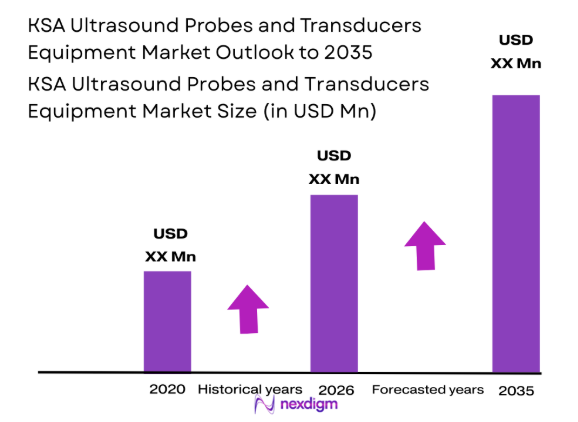
The KSA Ultrasound Probes and Transducers Equipment market is witnessing substantial growth, driven by factors like technological advancements and increasing healthcare infrastructure investments. The market size is projected to reach USD ~ million by a recent historical assessment. These factors, including enhanced diagnostic capabilities, the growing demand for portable ultrasound systems, and improved healthcare services, contribute to the robust market dynamics. Moreover, market growth is further propelled by government efforts to modernize healthcare infrastructure, improving access to advanced diagnostic tools.
The market’s dominance is concentrated in key cities like Riyadh, Jeddah, and Dammam, where healthcare investments are at their highest. These cities boast advanced healthcare systems, including state-of-the-art medical facilities, which continue to fuel the demand for advanced ultrasound probes and transducers. Furthermore, regulatory support and public-private partnerships enhance growth in these regions, establishing them as critical hubs for the market. Additionally, the ongoing development of the Saudi healthcare sector significantly supports the adoption of cutting-edge ultrasound technology across the kingdom.
Market Segmentation
By System Type
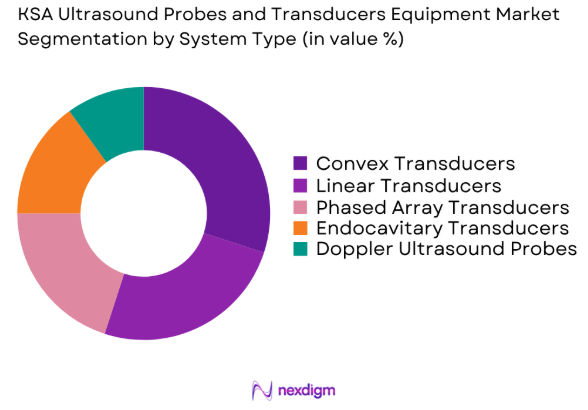
The KSA Ultrasound Probes and Transducers Equipment market is segmented by system type into Convex Transducers, Linear Transducers, Phased Array Transducers, Endocavitary Transducers, and Doppler Ultrasound Probes. Recently, the Convex Transducers sub-segment has dominated the market share due to its extensive use in obstetric and gynecological applications, where it offers broad coverage and is ideal for imaging the abdomen and fetal development. The versatile application of convex transducers across various medical fields contributes to their prominence.
By Platform Type
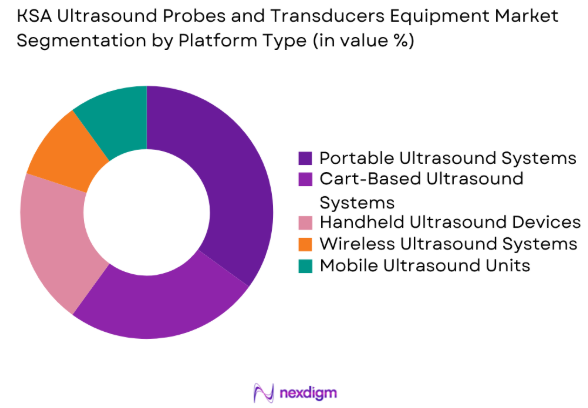
The KSA Ultrasound Probes and Transducers Equipment market is segmented by platform type into Portable Ultrasound Systems, Cart-Based Ultrasound Systems, Handheld Ultrasound Devices, Wireless Ultrasound Systems, and Mobile Ultrasound Units. Recently, Portable Ultrasound Systems have gained dominance due to their compact size, versatility, and growing demand in emergency and point-of-care settings. The ease of use and increasing preference for mobile diagnostics in remote areas drive the market share of portable systems.
Competitive Landscape
The KSA Ultrasound Probes and Transducers Equipment market is highly competitive, with leading players offering a diverse range of ultrasound technologies. Market consolidation is notable, as established companies dominate the market by leveraging advanced imaging capabilities, strong distribution networks, and robust brand presence. The presence of key global manufacturers, such as GE Healthcare and Philips, ensures a competitive landscape driven by continuous innovation and superior product offerings. The growing demand for portable and mobile ultrasound systems has prompted companies to focus on expanding their product portfolios.
| Company Name | Establishment Year | Headquarters | Technology Focus | Market Reach | Key Products | Revenue (USD) | Additional Parameter |
| GE Healthcare | 1892 | Chicago, USA | ~ | ~ | ~ | ~ | ~ |
| Philips Healthcare | 1891 | Amsterdam, Netherlands | ~ | ~ | ~ | ~ | ~ |
| Siemens Healthineers | 1847 | Erlangen, Germany | ~ | ~ | ~ | ~ | ~ |
| Mindray Medical | 1991 | Shenzhen, China | ~ | ~ | ~ | ~ | ~ |
| Canon Medical Systems | 1933 | Tokyo, Japan | ~ | ~ | ~ | ~ | ~ |
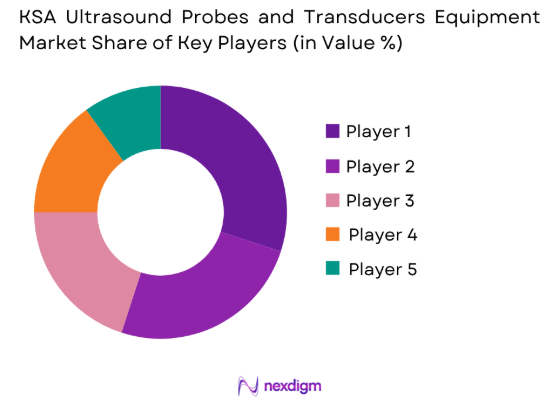
KSA Ultrasound Probes and Transducers Equipment Market Analysis
Growth Drivers
Technological Advancements in Ultrasound Equipment
The growth of the KSA Ultrasound Probes and Transducers Equipment market is significantly influenced by the continuous advancements in ultrasound technology. Enhanced image quality, portability, and integration with artificial intelligence have revolutionized the diagnostic process, making ultrasound systems more reliable and efficient. These technological developments offer a significant advantage in clinical settings, improving diagnostic accuracy and workflow efficiency. Additionally, the advent of portable and handheld ultrasound devices further drives the demand for these products, enabling point-of-care diagnostics in remote and emergency settings. The ease of integration with mobile applications and cloud-based systems facilitates remote consultations and faster diagnoses, fueling the widespread adoption of ultrasound equipment.
Increase in Healthcare Investments and Infrastructure Development
The significant investment in healthcare infrastructure by both the Saudi government and private players is another key driver of market growth. Saudi Arabia has been heavily investing in modernizing its healthcare system as part of its Vision 2030 initiative, which aims to expand and upgrade medical facilities across the country. The demand for diagnostic equipment, including ultrasound probes and transducers, has risen in tandem with the growing number of hospitals, diagnostic centers, and specialized medical institutions. The government’s focus on improving healthcare access in rural areas and establishing state-of-the-art medical facilities in urban centers is expected to drive the demand for ultrasound equipment.
Market Challenges
High Initial Cost of Advanced Ultrasound Systems
One of the major challenges hindering the growth of the KSA Ultrasound Probes and Transducers Equipment market is the high initial cost associated with advanced ultrasound systems. These systems, particularly those equipped with cutting-edge technology, come with a hefty price tag that can be prohibitive for smaller healthcare providers and private clinics. Although the benefits of high-quality imaging and advanced functionalities are undeniable, many healthcare institutions, especially in underserved areas, struggle to make the initial investment. This can create a gap between large hospitals with state-of-the-art equipment and smaller centers that rely on less advanced, lower-cost systems. While the high cost is often mitigated by financing options and government support for healthcare modernization.
Shortage of Skilled Professionals for Ultrasound Technology
Another significant challenge facing the KSA Ultrasound Probes and Transducers Equipment market is the shortage of skilled professionals capable of operating advanced ultrasound systems and interpreting the results. Despite the growing adoption of ultrasound technology, there remains a shortage of trained radiologists, sonographers, and technicians in Saudi Arabia. This skills gap limits the ability of healthcare providers to fully utilize the potential of modern ultrasound systems, leading to suboptimal diagnostic outcomes. The demand for skilled ultrasound professionals is expected to increase as more healthcare facilities adopt advanced ultrasound technology, but the existing educational and training infrastructure struggles to meet this growing need.
Opportunities
Growth in Point-of-Care Ultrasound Devices
The increasing demand for point-of-care diagnostics presents significant opportunities for the ultrasound probes and transducers market in Saudi Arabia. Portable ultrasound devices offer healthcare providers greater flexibility and the ability to perform imaging in emergency situations, remote locations, or underserved regions. This trend is expected to continue as more healthcare institutions adopt mobile and handheld ultrasound units to improve diagnostic accessibility and reduce patient wait times. Additionally, point-of-care ultrasound devices offer potential applications in a variety of medical fields, including emergency medicine, obstetrics, cardiology, and musculoskeletal imaging. As these devices become more affordable and easier to use, they are expected to gain widespread adoption in both urban and rural healthcare settings, further driving the demand for ultrasound equipment.
Telemedicine and Remote Diagnostics
The growing emphasis on telemedicine and remote diagnostics presents another key opportunity for the KSA Ultrasound Probes and Transducers Equipment market. With the rise of digital health platforms and telehealth services, ultrasound technology is becoming increasingly integrated with remote diagnostics. Telemedicine allows healthcare professionals to conduct consultations, diagnose conditions, and provide treatment recommendations through digital platforms, reducing the need for in-person visits. Ultrasound probes equipped with wireless technology enable remote transmission of imaging data, allowing patients in rural or underserved areas to receive timely diagnoses and treatment. As the government continues to invest in digital healthcare solutions, the integration of ultrasound systems with telemedicine platforms is expected to expand, providing increased access to healthcare and driving market growth.
Future Outlook
The future outlook for the KSA Ultrasound Probes and Transducers Equipment market is promising, driven by advancements in technology, increasing demand for portable ultrasound devices, and the expansion of healthcare infrastructure. The growing emphasis on point-of-care diagnostics, along with the adoption of AI-driven ultrasound systems, is expected to accelerate market growth. Furthermore, regulatory support for the healthcare sector, coupled with rising healthcare spending, will contribute to the continued expansion of the ultrasound equipment market. The increasing trend of telemedicine and remote diagnostics is also expected to play a significant role in shaping the market over the next five years.
Major Players
- GE Healthcare
- Philips Healthcare
- Siemens Healthineers
- Mindray Medical
- Canon Medical Systems
- Hitachi Healthcare
- Samsung Medison
- Esaote
- Analogic Corporation
- Chison Medical Imaging
- BPL Medical Technologies
- SoniMed
- SonoSite
- Shenzhen Bestman Instrument
- Shanghai United Imaging Healthcare
Key Target Audience
- Investments and venture capitalist firms
- Government and regulatory bodies
- Healthcare providers and hospitals
- Diagnostic imaging centers
- Medical equipment distributors
- Manufacturers of ultrasound equipment
- Private clinics and outpatient care centers
- Veterinary clinics
Research Methodology
Step 1: Identification of Key Variables
This step involves defining the core variables that influence market dynamics, including technological advancements, regulatory frameworks, and demand drivers.
Step 2: Market Analysis and Construction
Comprehensive analysis of the ultrasound market is conducted by examining past trends, current market conditions, and future projections to establish a robust market model.
Step 3: Hypothesis Validation and Expert Consultation
Expert interviews and market surveys are conducted to validate the findings, ensuring that the assumptions made during the research are accurate and reliable.
Step 4: Research Synthesis and Final Output
The final market insights and projections are compiled, focusing on key growth drivers, challenges, and opportunities in the KSA Ultrasound Probes and Transducers Equipment market.

- Executive Summary
- Research Methodology (Definitions, Scope, Industry Assumptions, Market Sizing Approach, Primary & Secondary Research Framework, Data Collection & Verification Protocol, Analytic Models & Forecast Methodology, Limitations & Research Validity Checks)

- Market Definition and Scope
- Value Chain & Stakeholder Ecosystem
- Regulatory / Certification Landscape
- Sector Dynamics Affecting Demand
- Strategic Initiatives & Infrastructure Growth

- Growth Drivers
Technological Advancements in Ultrasound Technology
Rising Prevalence of Chronic Diseases and Aging Population
Government Support for Healthcare Infrastructure Development - Market Challenges
High Cost of Advanced Ultrasound Equipment
Lack of Skilled Professionals
Stringent Regulatory Requirements - Market Opportunities
Expansion of Point-of-Care Ultrasound Devices
Integration of Artificial Intelligence in Ultrasound Technology
Veterinary Ultrasound Equipment Demand - Trends
Shift Toward Non-Invasive Diagnostic Methods
Growth in Mobile Health (mHealth) Applications
Rising Demand for 3D/4D Ultrasound Technology - Government Regulations
- SWOT Analysis of Key Competitors
- Porter’s Five Forces

- By Market Value, 2020-2025
- By Installed Units, 2020-2025
- By Average System Price, 2020-2025
- By System Complexity Tier, 2020-2025

- By System Type (In Value%)
Convex Transducers
Linear Transducers
Phased Array Transducers
Endocavitary Transducers
Doppler Ultrasound Probes - By Platform Type (In Value%)
Portable Ultrasound Systems
Cart-Based Ultrasound Systems
Handheld Ultrasound Devices
Wireless Ultrasound Systems
Mobile Ultrasound Units - By Fitment Type (In Value%)
External Fitment
Internal Fitment
Disposable Fitment
Reusable Fitment
Custom Fitment - By End User Segment (In Value%)
Hospitals
Diagnostic Imaging Centers
Ambulatory Surgical Centers
Research Laboratories
Veterinary Clinics - By Procurement Channel (In Value%)
Direct Procurement
Distributor Channel
Online Sales Channels
Third-Party Resellers
Government Tenders

- Market Share Analysis
- Cross Comparison Parameters (Market Growth Rate, Competitive Intensity, Technology Adoption, Regulatory Environment, Price Sensitivity)
- SWOT Analysis of Key Competitors
- Pricing & Procurement Analysis
- Key Players
GE Healthcare
Philips Healthcare
Siemens Healthineers
Canon Medical Systems
Fujifilm Medical Systems
Hitachi Healthcare
Samsung Medison
Mindray Medical
Esaote
Analogic Corporation
Chison Medical Imaging
Shenzhen Bestman Instrument
BPL Medical Technologies
SoniMed
SonoSite

- Increasing Demand for Ultrasound in Diagnostic Imaging Centers
- Surge in Ultrasound Adoption Among Private and Public Hospitals
- Growth of Veterinary Ultrasound Equipment for Animal Healthcare
- Increasing Utilization of Ultrasound Devices in Research and Educational Institutions

- Forecast Market Value, 2026-2035
- Forecast Installed Units, 2026-2035
- Price Forecast by System Tier, 2026-2035
- Future Demand by Platform, 2026-2035


 Request a Sample
 Ask for Customization
 Get a Quote
 Enquire Now