
 Download PDF
Market Overview
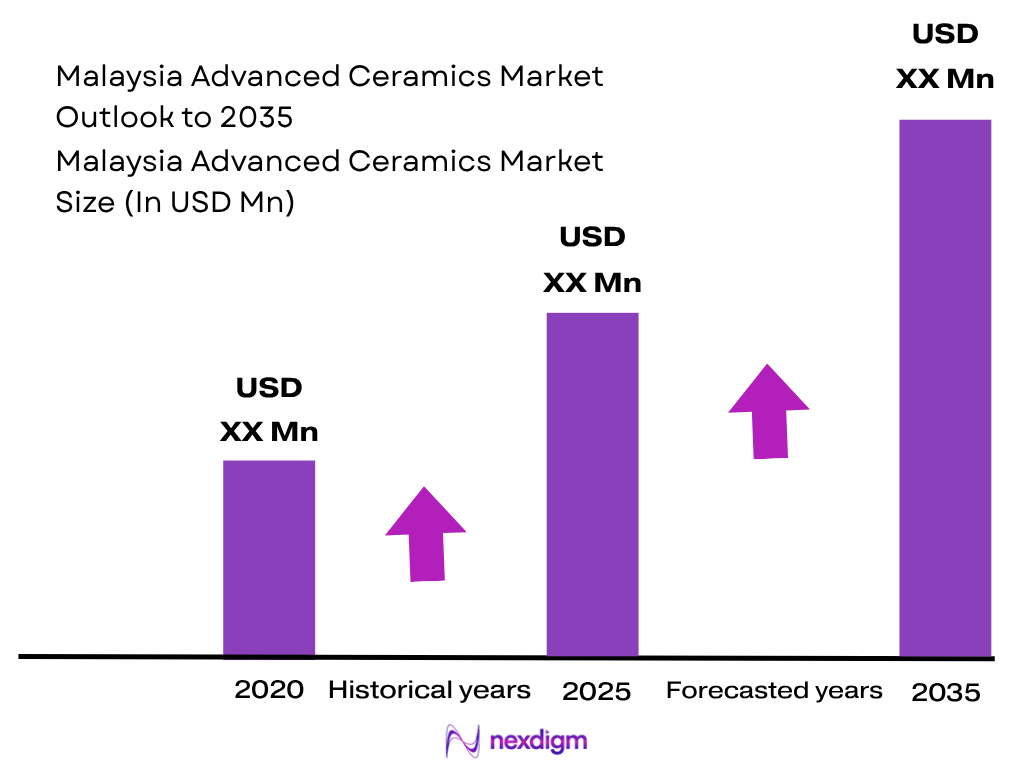
The Malaysia Advanced Ceramics Market is valued at approximately USD ~XX million, based on historical market analysis. Demand is supported by the country’s semiconductor, electrical and electronics, medical-device and precision-engineering ecosystem. Malaysia’s semiconductor industry recorded RM48.1 billion in approved investments across 46 projects, compared with the preceding period when E&E manufacturing secured RM85.4 billion in approved investments, strengthening downstream requirements for high-purity alumina, silicon carbide, aluminum nitride and precision ceramic components.
Penang and the Kedah-Kulim corridor dominate Malaysia’s advanced-ceramics demand environment, supported by dense semiconductor fabrication, assembly, testing, electronics and precision-engineering ecosystems. Penang secured RM32.0 billion in approved investments, while Kedah secured RM45.8 billion in the latest full-year investment assessment. The preceding industrial cycle also established Penang as a major E&E hub, while Kulim strengthened its position through Infineon’s additional RM30.1 billion silicon-carbide power-fabrication investment, creating demand for semiconductor-grade ceramic processing components.
Market Segmentation
By Material Type
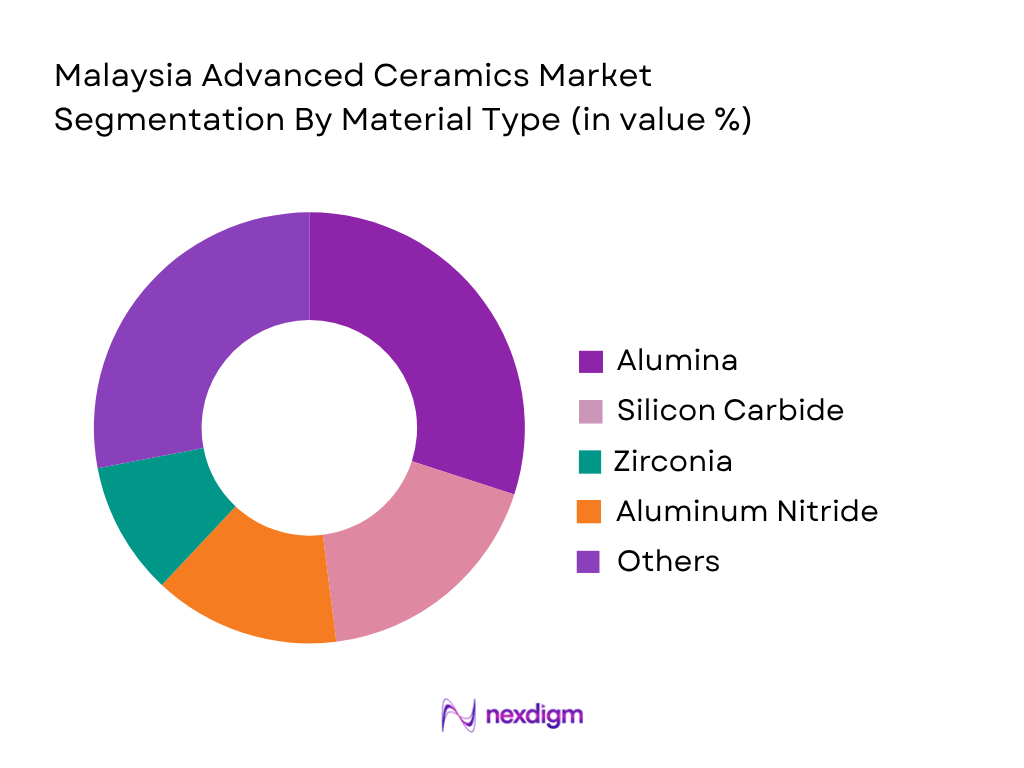
The Malaysia Advanced Ceramics Market is segmented by material type into alumina, zirconia, silicon carbide, silicon nitride, aluminum nitride, boron nitride and other specialty advanced ceramics. Alumina holds the dominant market share because its combination of electrical insulation, hardness, chemical stability, thermal resistance and established processing capabilities makes it suitable for Malaysia’s semiconductor and electronics manufacturing base. Alumina is extensively applicable to insulators, substrates, rings, feedthroughs, wafer-processing components and precision-machined parts. Malaysia’s semiconductor industry secured RM48.1 billion across 46 approved projects, with 20 expansion or diversification projects and 26 new projects, reinforcing the addressable industrial base for semiconductor-grade technical ceramics. Silicon carbide is gaining strategic importance as Malaysia develops power-semiconductor capabilities, particularly around Kulim. Aluminum nitride is also becoming important for high-thermal-conductivity substrates and electronic packaging, while zirconia has applications in precision engineering, dental products and medical-device components.
By End-Use Industry
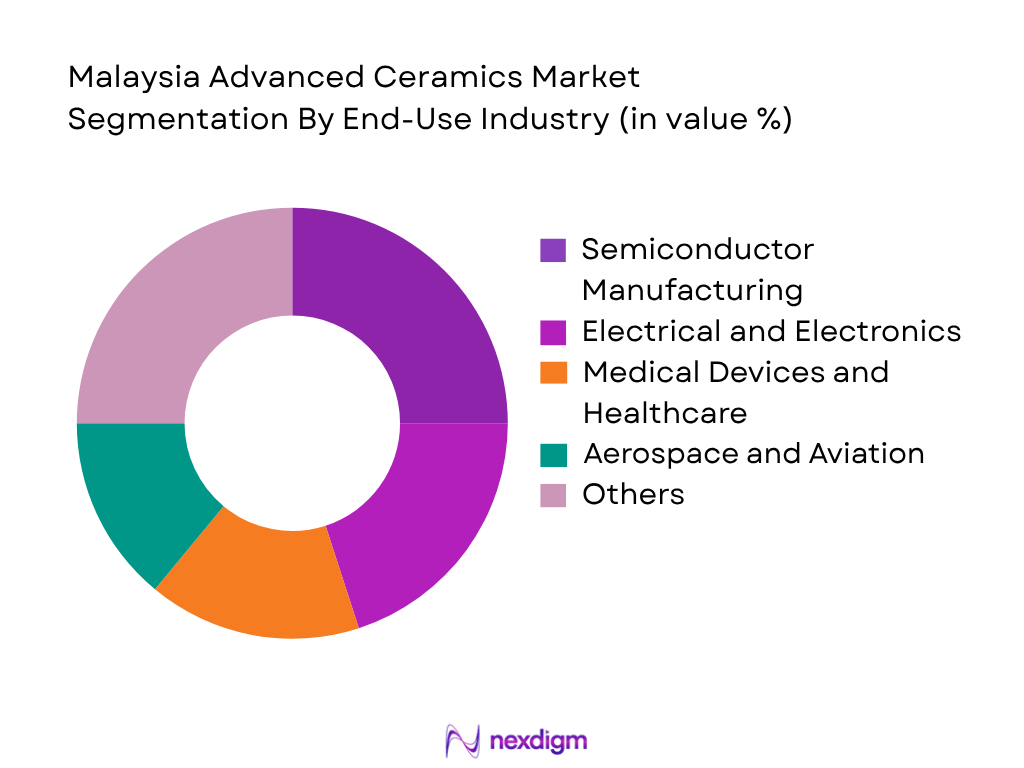
The Malaysia Advanced Ceramics Market is segmented into semiconductor manufacturing, electrical and electronics, medical devices and healthcare, aerospace and aviation, automotive and electric vehicles, industrial machinery and automation, and other specialized industries. Semiconductor manufacturing holds the dominant market share because Malaysia has developed an extensive ecosystem spanning outsourced semiconductor assembly and testing, equipment manufacturing, packaging and increasingly front-end and advanced semiconductor activities. Semiconductor projects attracted RM48.1 billion in approved investments, creating 21,722 employment opportunities, while Malaysia’s National Semiconductor Strategy is designed to move the ecosystem toward IC design, advanced packaging, high-end manufacturing and semiconductor equipment. This transition expands applications for high-purity alumina, silicon carbide, aluminum nitride and low-thermal-expansion ceramics used in process chambers, wafer handling, heaters, electrical insulation and precision equipment. Medical devices provide another relevant demand base, with Malaysia hosting more than 200 medical-device manufacturers and over 30 multinational healthcare companies.
Competitive Landscape
The Malaysia Advanced Ceramics Market combines domestic precision-ceramic specialists with multinational advanced-material companies serving semiconductor, electronics, industrial and medical applications. Ferrotec Manufacturing Malaysia, Advanced Ceramics Technology and AKTY Technologies strengthen local processing and precision-machining capabilities, while global groups such as KYOCERA and CoorsTek bring broader material portfolios and application engineering. Competition is shaped by ceramic purity, sub-micron machining capability, material selection expertise, surface finishing, semiconductor qualification, thermal properties and the ability to deliver customized components to high-technology manufacturers.
| Major Player | Establishment Year | Headquarters | Core Ceramic Materials | Semiconductor Capability | Precision Processing | Electronic Applications | Medical/Industrial Applications | Key Differentiation |
| Ferrotec Holdings Corporation | 1980 | Tokyo, Japan | ~ | ~ | ~ | ~ | ~ | ~ |
| CoorsTek, Inc. | 1910 | Colorado, USA | ~ | ~ | ~ | ~ | ~ | ~ |
| KYOCERA Corporation | 1959 | Kyoto, Japan | ~ | ~ | ~ | ~ | ~ | ~ |
| CeramTec GmbH | 1903 | Plochingen, Germany | ~ | ~ | ~ | ~ | ~ | ~ |
| Morgan Advanced Materials plc | 1856 | Windsor, UK | ~ | ~ | ~ | ~ | ~ | ~ |
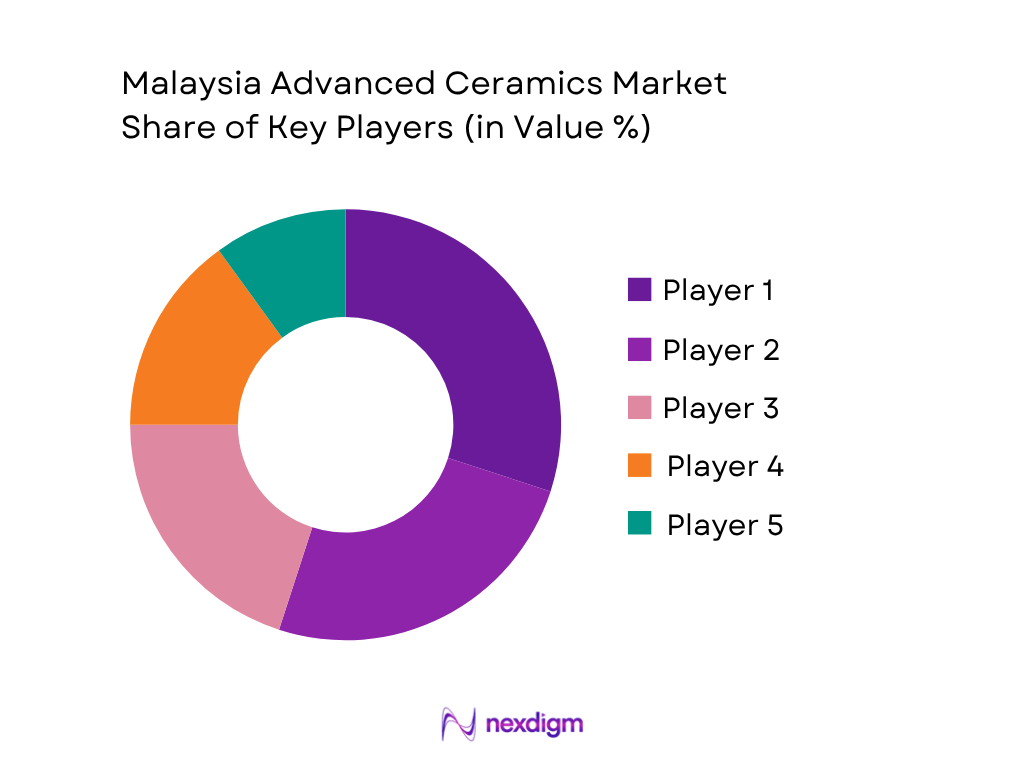
Malaysia Advanced Ceramics Market Analysis
Growth Drivers
Semiconductor Manufacturing and Advanced Packaging Expansion
Malaysia’s semiconductor expansion is directly strengthening demand for advanced ceramics used in wafer-processing equipment, heaters, insulators, electrostatic components, precision rings, substrates and thermal-management systems. The Malaysian Investment Development Authority reported RM47.0 billion in approved electrical and electronics investment during the first nine months of 2024, with semiconductor activity accounting for the majority of that pipeline. Siliconware Precision Malaysia alone committed RM6.0 billion to integrated-circuit assembly, wafer bumping and wafer sorting, while MKS Instruments established a Penang super-centre supporting wafer-fabrication equipment production. Separately, Infineon’s Kulim expansion involves an additional RM30.1 billion for a 200-millimetre silicon-carbide power fabrication facility, creating a highly relevant demand environment for alumina, aluminum nitride, silicon carbide and precision-engineered ceramic components. The macroeconomic backdrop also supports sustained industrial investment: the IMF reports Malaysia’s 2024 nominal GDP at USD 422.2 billion, GDP per capita at USD 12,397, and population at 34.1 million. These manufacturing and economic fundamentals deepen the domestic customer base available to advanced-ceramics suppliers serving semiconductor process equipment and electronic-component manufacturers.
Expansion of Medical Device, Aerospace and Precision Manufacturing Ecosystems
Diversification across medical devices, aerospace and precision engineering is creating a broader structural demand base for Malaysia’s advanced ceramics industry. MIDA reported in December 2024 that Malaysia hosted more than 200 medical-device manufacturers and over 30 multinational healthcare companies, while the sector had generated approximately 95,000 jobs since 2012. These manufacturers create application opportunities for zirconia, alumina and other technical ceramics used in dental systems, diagnostic equipment, electrical insulation, wear-resistant parts and selected implant-related components. Aerospace is adding another layer of demand: MIDA recorded RM1.5 billion in approved aerospace investment during 2024, supported by aerostructure manufacturing, engine-component production and maintenance activities concentrated in Selangor, Johor and Penang. Malaysia’s broader manufacturing economy provides additional depth, with RM120.5 billion in approved manufacturing investments recorded for 2024. The IMF places Malaysia’s nominal GDP at USD 422.2 billion and population at 34.1 million for 2024. Together, these industries reduce dependence on a single end-use market and support demand for precision, high-temperature, electrically insulating and biocompatible ceramic materials.
Market Challenges
Skilled Engineering and Precision Ceramic Processing Constraints
The Malaysia Advanced Ceramics Market faces a technical workforce challenge because advanced ceramic production requires expertise in powder preparation, sintering, diamond grinding, lapping, polishing, metallization, dimensional inspection and semiconductor-grade contamination control. Malaysia’s National Semiconductor Strategy itself highlights the scale of this constraint by targeting the training and upskilling of 60,000 high-skilled Malaysian engineers, supported by RM1.2 billion specifically for workforce development. The government has also allocated at least RM25 billion in fiscal support to operationalize the wider semiconductor strategy. These figures indicate that the shortage is not limited to chip design or fabrication; adjacent suppliers of precision ceramics, automation systems and semiconductor equipment also compete for the same engineering and technical workforce. MIDA reported 58,017 potential jobs from 800 approved manufacturing projects during the first nine months of 2024, illustrating the intensity of hiring pressure across advanced manufacturing. Against this backdrop, the IMF reported Malaysia’s 2024 population at 34.1 million and nominal GDP at USD 422.2 billion. Ceramic suppliers therefore need to scale technical training alongside manufacturing capacity, particularly in Penang and Kedah where semiconductor investment is concentrating.
Dependence on Imported High-Purity Materials and Specialized Equipment
Malaysia’s advanced-ceramics industry remains exposed to imported high-purity ceramic powders, specialty additives, precision machine tools and semiconductor-grade processing equipment. This matters because alumina, zirconia, silicon carbide, silicon nitride and aluminum nitride components require carefully controlled feedstock purity and processing conditions before they can qualify for semiconductor, medical or aerospace applications. Malaysia’s industrial structure highlights the scale of this external dependency: the Department of Statistics recorded semiconductor trade value at RM93.0 billion in 2024 and electrical machinery, apparatus, appliances and parts at RM25.9 billion, demonstrating the size of technology-intensive supply chains that depend on cross-border material and equipment flows. At the same time, MIDA recorded RM170.4 billion in foreign approved investments during 2024, reflecting Malaysia’s deep integration with multinational manufacturing networks. The IMF reported nominal GDP of USD 422.2 billion and GDP per capita of USD 12,397 for 2024. For advanced ceramic manufacturers, supply interruptions involving high-purity powders, furnace equipment, grinding consumables or specialized coatings can therefore affect qualification schedules and production continuity, particularly when customers demand semiconductor-grade traceability and extremely tight tolerances.
Market Opportunities
Localization of Semiconductor-Grade Ceramic Components
Malaysia has a significant opportunity to localize semiconductor-grade ceramic components as its fabrication, advanced-packaging and equipment ecosystem moves toward higher-value activities. Current investment activity provides a strong base for future ceramic demand without relying on forecast statistics. MIDA reported RM47.0 billion in E&E approved investment during the first nine months of 2024, while Siliconware Precision Malaysia committed RM6.0 billion to integrated-circuit assembly, wafer bumping and wafer sorting. Infineon’s Kulim development adds RM30.1 billion of investment around a 200-millimetre silicon-carbide power fabrication platform, while a further RM3.51 billion advanced semiconductor facility announced in 2025 for Kulim is designed to produce system-in-package modules, MEMS and sensors. These activities create commercialization potential for ceramic heaters, chamber components, insulating parts, precision rings, wafer-handling components and aluminum-nitride thermal substrates. Malaysia’s macroeconomic capacity also supports localization: the IMF reports 2024 nominal GDP of USD 422.2 billion, GDP per capita of USD 12,397, and population of 34.1 million. Suppliers that combine clean processing, ultra-precision machining and local application engineering can increasingly replace imported finished ceramic components.
Expansion into Aluminum Nitride, Silicon Carbide and Advanced Thermal-Management Ceramics
High-performance thermal-management ceramics represent a major future opportunity as Malaysia expands power semiconductors, sensors, advanced packaging and AI-related electronics manufacturing. Aluminum nitride is particularly relevant because it combines electrical insulation with high thermal conductivity, while silicon carbide offers chemical resistance, mechanical strength and thermal stability for semiconductor process environments. Malaysia already has a strong commercial base for these applications. Infineon’s Kulim expansion involves RM30.1 billion for a 200-millimetre silicon-carbide power fabrication facility, while a 2025 MIDA-approved project in Kulim involves RM3.51 billion for advanced system-in-package, MEMS and sensor manufacturing. MIDA also reported a RM700 million investment in a 12-inch wafer-level chip-scale packaging facility and RM329.8 million for semiconductor wafering technology focused partly on silicon-carbide wafers. These projects create downstream opportunities for aluminum-nitride substrates, ceramic heat spreaders, silicon-carbide process parts and precision insulating components. The IMF reports Malaysia’s 2024 nominal GDP at USD 422.2 billion and population at 34.1 million, providing an economic base capable of supporting further high-value materials localization and specialized ceramic manufacturing.
Future Outlook
The Malaysia Advanced Ceramics Market is projected to expand at approximately ~XX% CAGR during 2026-2035, supported primarily by semiconductor localization, advanced packaging, power electronics, medical-device manufacturing and precision engineering. Malaysia’s transition from conventional assembly and testing toward higher-value semiconductor activities will increase the technical specifications required from ceramic suppliers. High-purity materials, advanced thermal-management ceramics and precision-machined components are consequently expected to become more strategically important.
Major Players
- Ferrotec Manufacturing Malaysia Sdn. Bhd.
- Advanced Ceramics Technology (M) Sdn. Bhd.
- AKTY Technologies Sdn. Bhd.
- CoorsTek, Inc.
- KYOCERA Corporation
- CeramTec GmbH
- Morgan Advanced Materials plc
- Saint-Gobain
- NGK Insulators, Ltd.
- Murata Manufacturing Co., Ltd.
- TDK Corporation
- MARUWA Co., Ltd.
- Denka Company Limited
- Tosoh Corporation
- AGC Inc.
Key Target Audience
- Advanced Ceramic Material and Component Manufacturers
- Semiconductor Fabrication, Assembly and Advanced Packaging Companies
- Semiconductor Equipment and Precision Engineering Manufacturers
- Electrical, Electronics and Power Electronics Manufacturers
- Medical Device, Aerospace and High-Performance Industrial OEMs
- Advanced Ceramic Raw Material and High-Purity Powder Suppliers
- Investments and Venture Capitalist Firms
- Government and Regulatory Bodies (Ministry of Investment, Trade and Industry, Malaysian Investment Development Authority, Malaysia External Trade Development Corporation, Medical Device Authority Malaysia)
Research Methodology
Step 1: Identification of Key Variables
The initial phase involves developing an ecosystem map encompassing high-purity ceramic powder suppliers, advanced ceramic manufacturers, precision machining companies, semiconductor equipment manufacturers, OSAT companies, electronics manufacturers and medical-device producers within the Malaysia Advanced Ceramics Market. Desk research is used to identify material chemistry, purity requirements, processing technologies, end-use applications, customer qualification requirements and regional manufacturing clusters that influence market demand.
Step 2: Market Analysis and Construction
Historical industry information is analyzed using complementary top-down and bottom-up methodologies. The top-down assessment evaluates Malaysia’s semiconductor, E&E, medical-device, automotive, aerospace and precision-engineering industries, while the bottom-up framework examines consumption of alumina, zirconia, silicon carbide, aluminum nitride, silicon nitride and other technical ceramics across individual applications. The resulting datasets are reconciled to establish the underlying market structure and segmentation framework.
Step 3: Hypothesis Validation and Expert Consultation
Market hypotheses are validated through computer-assisted telephone interviews with advanced ceramic manufacturers, semiconductor suppliers, precision-engineering companies, distributors, equipment manufacturers and end-user procurement specialists. Primary discussions assess ceramic material specifications, component qualification, sourcing structures, processing requirements, replacement patterns and application development. These operational inputs are compared with secondary information to validate assumptions and identify differences between semiconductor, electronics, medical and industrial ceramic demand.
Step 4: Research Synthesis and Final Output
The final stage integrates secondary research, company information, government investment data and primary industry inputs into a unified market model. Bottom-up material and component demand is cross-checked against top-down manufacturing indicators and end-user activity. Competitive benchmarking subsequently evaluates material portfolios, semiconductor exposure, precision-machining capability, local manufacturing presence, application engineering expertise and customer coverage to generate the final Malaysia Advanced Ceramics Market assessment and long-term outlook.

- Executive Summary
- Research Methodology (Market Definition and Scope, Malaysia Advanced Ceramics Market Classification, Oxide and Non-Oxide Ceramic Mapping, High-Purity Ceramic Material Assessment, Semiconductor Ceramic Component Demand Mapping, Electronics and Electrical Ceramic Application Assessment, Medical Bioceramic Application Mapping, Aerospace Ceramic Application Assessment, Raw Material and Powder Supply Assessment, Domestic Precision Ceramic Processing Assessment, Top-Down Market Sizing)

- Definition and Scope
- Malaysia Advanced Ceramics Industry Evolution and Development of Semiconductor, Electronics and Precision Ceramic Manufacturing Ecosystem
- Advanced Ceramic Material Chemistry, Functional Properties and Performance Architecture
- Malaysia Advanced Ceramics Value Chain Analysis
- Malaysia Advanced Ceramics Supply Chain Analysis
- High-Purity Ceramic Powder, Forming, Sintering, Precision Grinding, Lapping, Polishing, Metallization and Component Integration Ecosystem Analysis
- Advanced Ceramics Integration Assessment Across Semiconductor, Electronics, Medical Devices, Aerospace, Automotive, Energy and Precision Industrial Applications

- Growth Drivers (Expansion of Semiconductor Fabrication and Advanced Packaging, Growth of Penang and Kulim Electronics Manufacturing Clusters, Increasing High-Purity Ceramic Component Requirements, Expansion of Medical Device Manufacturing, Growth of Aerospace Component Manufacturing and MRO, Increasing Precision Engineering and Automation Requirements)
- Market Challenges (Dependence on Imported High-Purity Ceramic Powders, Limited Domestic Advanced Ceramic Powder Production, High Precision Machining Requirements, Brittle Material Processing Constraints, Semiconductor-Grade Contamination Control Requirements, Energy-Intensive Sintering Processes, Skilled Ceramic Engineering Workforce Constraints)
- Market Opportunities (Localization of Semiconductor Ceramic Components, High-Purity Alumina and Yttria Component Development, Aluminum Nitride Thermal Management Substrates, Silicon Carbide Components for Semiconductor Equipment, Precision Ceramic Machining Expansion, Medical Bioceramic Component Manufacturing, Aerospace High-Temperature Ceramic Applications, Ceramic Components for EV Power Electronics)
- Market Trends (Semiconductor-Grade Ceramic Localization, High-Purity Alumina Adoption, Silicon Carbide Processing Component Expansion, Aluminum Nitride Thermal Management Growth, Ultra-Precision Ceramic Machining, Low-CTE Ceramic Adoption, Ceramic Metallization Development, Advanced Packaging Substrate Innovation)
- Regulatory and Standards Landscape (New Industrial Master Plan, National Semiconductor Strategy, Malaysian Investment Development Authority Manufacturing Framework, Medical Device Authority Requirements, Medical Device Act, ISO 13485 Medical Device Quality Requirements, ISO 9001 Manufacturing Quality Standards, ISO 14001 Environmental Management Standards, Aerospace Quality Management Requirements)
- SWOT Analysis
- Porter’s Five Forces Analysis
- PESTLE Analysis
- Stakeholder Ecosystem
- Competition Ecosystem

- By Market Value (2020-2025)
- By Advanced Ceramic Consumption Volume (2020-2025)
- By Oxide Ceramic Consumption Volume (2020-2025)
- By Non-Oxide Ceramic Consumption Volume (2020-2025)
- By Semiconductor-Grade Ceramic Consumption Volume (2020-2025)
- By Semiconductor Process Equipment Component Volume (2020-2025)
- By Electronic Ceramic Substrate Consumption Volume (2020-2025)
By Aluminum Nitride Ceramic Consumption Volume (2020-2025)

- By Material Type (In Value %)
Alumina
Zirconia
Silicon Carbide
Silicon Nitride
Aluminum Nitride
Boron Nitride
Titanate Ceramics
Ferrite Ceramics
Yttria and Yttria-Based Ceramics
Low-CTE Ceramics
Other Specialty Advanced Ceramics - By Ceramic Class (In Value %)
Oxide Ceramics
Non-Oxide Ceramics
Electroceramics
Bioceramics
Structural Ceramics
Functional Ceramics
High-Purity Semiconductor Ceramics
Machinable Ceramics - By Product Type (In Value %)
Precision Ceramic Components
Ceramic Substrates
Ceramic Packages and Feedthroughs
Semiconductor Process Equipment Components
Ceramic Tubes and Rods
Ceramic Rings and Seals
Ceramic Bearings and Wear Components
Ceramic Heaters and Insulators
Ceramic Crucibles and Wafer Handling Components
Medical Ceramic Components
Ceramic Coatings
Specialty Ceramic Assemblies - By Application Type (In Value %)
Semiconductor Wafer Processing
Integrated Circuit Assembly and Testing
Electronic Substrates and Packaging
Thermal Management
Electrical Insulation
Precision Motion and Automation Components
Wear and Corrosion Resistant Components
Medical and Diagnostic Equipment
Dental and Orthopedic Applications
Aerospace Engine and Structural Components
Automotive Electronics and Power Modules
Energy and High-Temperature Applications - By End-Use Industry (In Value %)
Semiconductor Manufacturing
Electrical and Electronics
Medical Devices and Healthcare
Aerospace and Aviation
Automotive and Electric Vehicles
Industrial Machinery and Automation
Energy and Power Electronics
Chemical and Process Industries
Telecommunications
Precision Engineering
Research and Specialty Manufacturing - By Region (In Value %)
Penang
Kedah and Kulim High-Tech Corridor
Selangor and Klang Valley
Johor
Melaka
Negeri Sembilan
Perak
Other Malaysia

- Market Share of Major Players (By Revenue, Ceramic Material Type, Semiconductor Application, Electronics Application, Medical Application, Product Category, Malaysia Manufacturing Presence, Customer Industry)
- Cross Comparison Parameters (Advanced Ceramic Material Portfolio Breadth, High-Purity Semiconductor Ceramic Capability, Precision Ceramic Machining Capability, Aluminum Nitride and Thermal Management Expertise, Silicon Carbide and Silicon Nitride Capability, Semiconductor OEM and OSAT Customer Coverage, Malaysia Manufacturing and Technical Support Footprint, Application Engineering and Custom Component Development Capability)
- SWOT Analysis of Major Players
- Competitive Positioning Matrix
- Pricing and Ceramic Component Category Benchmarking
- Detailed Profiles of Major Companies
Ferrotec Manufacturing Malaysia Sdn. Bhd. – Alumina, Aluminum Nitride, Silicon Nitride, Zirconia, Silicon Carbide and Semiconductor-Grade Precision Ceramic Components
Advanced Ceramics Technology (M) Sdn. Bhd. – Precision Advanced Ceramic Components, Ceramic Processing and Semiconductor Industry Applications
AKTY Technologies Sdn. Bhd. – Alumina, Zirconia and Silicon Carbide Precision Components, Sub-Micron Machining, Lapping, Polishing and Ceramic Metallization
CoorsTek, Inc. – High-Purity Alumina, Aluminum Nitride, Silicon Carbide, Silicon Nitride and Semiconductor Process Ceramic Components
KYOCERA Corporation – Fine Ceramics, Ceramic Substrates, Electronic Components, Semiconductor Components and Industrial Ceramic Solutions
CeramTec GmbH – Advanced Structural Ceramics, Medical Bioceramics, Electronics Components and High-Performance Industrial Ceramics
Morgan Advanced Materials plc – Technical Ceramics, Electrical Ceramics, Semiconductor Components and Thermal Management Solutions
Saint-Gobain – Silicon Carbide, Boron Nitride, Alumina and High-Performance Ceramic Materials
NGK Insulators, Ltd. – Fine Ceramics, Semiconductor Manufacturing Components, Electronic Ceramics and High-Performance Industrial Ceramic Solutions
Murata Manufacturing Co., Ltd. – Multilayer Ceramic Components, Piezoelectric Ceramics, RF Components and Electronic Ceramic Technologies
TDK Corporation – Ferrite Ceramics, Piezoelectric Materials, Multilayer Ceramic Components and Electronic Material Solutions
MARUWA Co., Ltd. – Alumina and Aluminum Nitride Ceramic Substrates, Electronic Packages and Thermal Management Components
Denka Company Limited – Aluminum Nitride Materials, High-Thermal-Conductivity Ceramic Materials and Electronic Material Solutions
Tosoh Corporation – High-Purity Zirconia Powders, Advanced Ceramic Raw Materials and Engineering Ceramic Materials
AGC Inc. – Electronic Materials, Specialty Ceramics, Semiconductor Processing Materials and High-Performance Material Solutions

- Semiconductor Fabrication Company Procurement Assessment
- Semiconductor Assembly, Testing and Packaging Company Requirements Analysis
- Electrical and Electronics Manufacturer Ceramic Consumption Assessment
- Medical Device Manufacturer Material Qualification Assessment
- Aerospace Manufacturer and MRO Ceramic Requirements Analysis
- Automotive and EV Component Manufacturer Assessment
- Industrial Automation and Precision Equipment Manufacturer Assessment
- Power Electronics Manufacturer Ceramic Substrate Requirements Analysis
- Advanced Ceramic Supplier Selection Criteria

- By Market Value (2026-2035)
- By Advanced Ceramic Consumption Volume (2026-2035)
- By Oxide Ceramic Consumption Volume (2026-2035)
- By Non-Oxide Ceramic Consumption Volume (2026-2035)
- By Semiconductor-Grade Ceramic Consumption Volume (2026-2035)
- By Semiconductor Process Equipment Component Volume (2026-2035)
- By Electronic Ceramic Substrate Consumption Volume (2026-2035)
- By Aluminum Nitride Ceramic Consumption Volume (2026-2035)


 Request a Sample
 Ask for Customization
 Get a Quote
 Enquire Now