

 Download PDF
 Download PDF
Market Overview
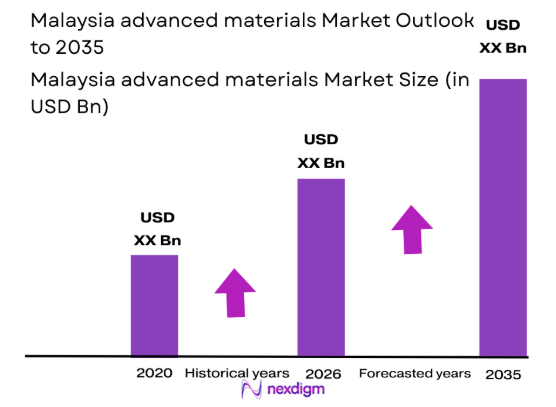
The Malaysia advanced materials market is expected to reach a significant size, driven by the increasing demand for high-performance materials in various industries, including automotive, construction, and electronics. Based on recent assessments, the market is valued in USD ~ billions, reflecting strong growth trends supported by technological advancements in material science and growing industrialization in the region. Key drivers include the rise in demand for lightweight and sustainable materials, which support Malaysia’s industrial sectors in meeting evolving needs and environmental standards.
The market is dominated by several key regions within Malaysia, particularly areas with robust industrial ecosystems like Kuala Lumpur and Penang. These regions benefit from their strategic proximity to manufacturing hubs, technological development centers, and established infrastructure. The government’s initiatives to promote advanced manufacturing and industrial modernization also contribute to the growing market presence in these areas, fostering innovation and material adoption in high-demand sectors like automotive and construction.
Market Segmentation
By Product Type
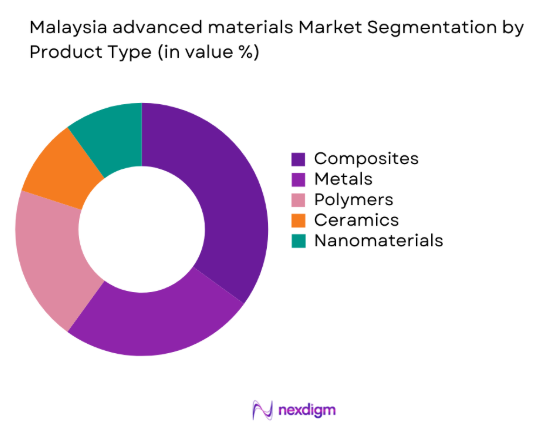
The Malaysia advanced materials market is segmented by product type into composites, metals, polymers, ceramics, and nanomaterials. Recently, composite materials have captured a dominant market share, driven by increasing demand for lightweight and durable solutions in industries such as automotive and aerospace. Their high strength-to-weight ratio and adaptability to various applications make them the preferred choice for industries focused on performance and sustainability.
By End-User Industry
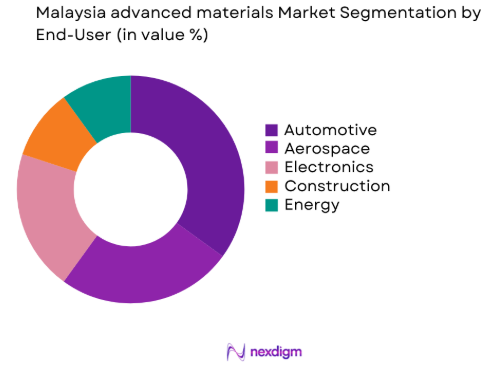
The Malaysia advanced materials market is segmented by end-user industry into automotive, aerospace, electronics, construction, and energy. The automotive sector has recently dominated the market due to the increasing adoption of advanced materials for light weighting, fuel efficiency, and enhanced safety features in vehicles. Technological innovations and consumer demand for eco-friendly solutions are key factors driving the automotive industry’s market share in Malaysia.
Competitive Landscape
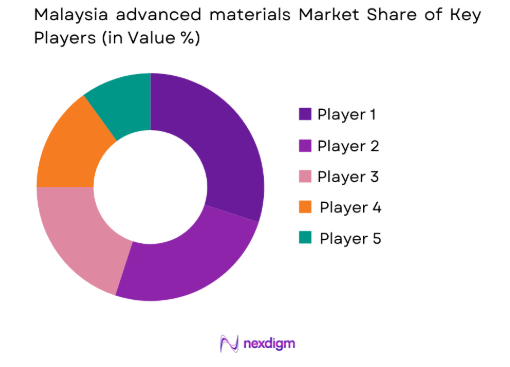
The Malaysia advanced materials market is competitive, with several players dominating across different product categories. Market consolidation is ongoing as companies increasingly focus on advanced material technologies such as composites and nanomaterials to maintain a competitive edge. Global leaders in materials technology, as well as local innovators, continue to expand their market presence through strategic partnerships, acquisitions, and investments in research and development. This competition drives the ongoing evolution of material technologies and their applications across multiple industries.
| Company Name | Establishment Year | Headquarters | Technology Focus | Market Reach | Key Products | Revenue (USD) | Additional Parameter |
| BASF | 1865 | Ludwigshafen, Germany | ~ | ~ | ~ | ~ | ~ |
| Dow Chemicals | 1897 | Midland, USA | ~ | ~ | ~ | ~ | ~ |
| SABIC | 1976 | Riyadh, Saudi Arabia | ~ | ~ | ~ | ~ | ~ |
| Solvay | 1863 | Brussels, Belgium | ~ | ~ | ~ | ~ | ~ |
| 3M | 1902 | St. Paul, USA | ~ | ~ | ~ | ~ | ~ |
Malaysia advanced materials Market Analysis
Growth Drivers
Technological Advancements in Material Science
Recent advancements in material science have greatly influenced the demand for advanced materials in Malaysia, driving market growth. Innovations like lightweight composites, high-strength alloys, and nanomaterials are enabling industries such as automotive, aerospace, and construction to meet higher performance, durability, and sustainability standards. These materials allow companies to improve product efficiency, reduce environmental impact, and enhance overall performance. As industries in Malaysia continue to invest in next-generation materials, technological progress accelerates the development of stronger, lighter, and more energy-efficient solutions. This trend is expected to contribute to the continued expansion of the market, with a growing emphasis on materials that offer both performance and sustainability in critical industries.
Government Initiatives and Infrastructure Development
The Malaysian government’s emphasis on infrastructure development and industrialization has fostered a favorable environment for adopting advanced materials. Policies like the “National Automotive Policy” and “Industry 4.0” encourage the integration of innovative materials to boost performance and efficiency across key sectors. These initiatives provide material providers with opportunities to collaborate with industries, addressing the growing demand for advanced solutions. Government incentives, along with substantial investments in infrastructure, further support this transition, making it easier for businesses to integrate cutting-edge materials into their operations. The focus on modernization and sustainability has positioned Malaysia as an attractive market for advanced materials, creating pathways for innovation and long-term growth in the sector.
Market Challenges
High Production Costs
High production costs are a major barrier to market growth for advanced materials in Malaysia. The manufacturing of high-performance materials like composites and nanomaterials demands specialized equipment, advanced processes, and high-quality raw materials, all of which increase costs. This creates challenges for smaller companies, making it harder for them to compete and limiting their access to the market. Additionally, the financial burden of research and development in advanced materials technology further exacerbates the situation. Smaller players face difficulties in scaling their operations and entering the market, while larger companies with more resources can better absorb these costs. As a result, the high production costs hinder the growth potential of the advanced materials sector in Malaysia.
Regulatory Compliance and Certification Issues
In Malaysia, advanced materials face stringent regulatory standards, particularly in sectors like automotive and aerospace. Complying with international quality standards such as ISO and ASTM is a complex, time-consuming, and costly process. Companies must navigate these regulations while obtaining necessary certifications for new materials, which involves rigorous testing. This process often delays product launches and adds to operational costs. For both local and international companies aiming to enter or expand in the market, the regulatory landscape presents a significant challenge. Meeting these standards requires considerable investment in compliance efforts, potentially affecting market entry timelines and overall competitiveness. Despite the challenges, adherence to these regulations ensures the production of high-quality and safe materials for critical industries.
Opportunities
Sustainability and Green Materials
As global environmental concerns rise, the demand for sustainable materials in Malaysia’s industrial sectors creates a significant opportunity for market growth. Industries are increasingly seeking advanced materials that promote energy efficiency, reduce waste, and lower carbon footprints. Bio-based polymers, recycled composites, and energy-efficient coatings are gaining popularity due to their sustainability benefits. These materials help industries comply with regulatory standards while meeting the growing expectations of environmentally-conscious consumers. This shift towards sustainability is creating a niche market for innovative, eco-friendly materials, allowing businesses to differentiate themselves by adopting solutions that support both environmental goals and performance requirements, thus driving demand for sustainable advanced materials in Malaysia.
Collaborations Between Industries and Academia
The growing collaboration between industry players and academic institutions in Malaysia presents a significant opportunity for advancing research and development in the field of advanced materials. By leveraging the expertise of both industry professionals and academic researchers, the development of innovative materials can be expedited, particularly in industries such as automotive, electronics, and renewable energy. These partnerships facilitate the creation of new material solutions that meet the evolving demands of various sectors. Furthermore, collaborative efforts help address challenges such as high production costs and complex regulatory requirements, streamlining the process of material innovation. This synergy not only accelerates the development of advanced materials but also supports their adoption across industries, fostering long-term growth and sustainability in the Malaysian market.
Future Outlook
The Malaysia advanced materials market is expected to experience strong growth over the next five years. Technological advancements, increasing government support for infrastructure development, and a growing demand for sustainable materials are all expected to drive this growth. The automotive, aerospace, and construction industries will continue to lead material adoption, with increasing demand for lightweight, high-strength, and energy-efficient solutions. Additionally, regulatory support and investments in research and development will provide the foundation for continued innovation in material science, fueling the market’s expansion.
Major Players
- BASF
- Dow Chemicals
- SABIC
- Solvay
- 3M
- Evonik Industries
- LG Chem
- Huntsman Corporation
- ArcelorMittal
- Saint-Gobain
- Mitsubishi Chemical
- DuPont
- DuPont de Nemours
- Reliance Industries
- Covestro
Key Target Audience
- Investments and venture capitalist firms
- Government and regulatory bodies
- Automotive manufacturers
- Aerospace companies
- Construction and infrastructure developers
- Electronics manufacturers
- Materials science researchers
- Industrial engineers
Research Methodology
Step 1: Identification of Key Variables
Identifying the key drivers, challenges, and opportunities that influence the Malaysia advanced materials market, including technological advancements, regulatory factors, and demand from end-user industries.
Step 2: Market Analysis and Construction
Building a market model to evaluate the size, growth, and dynamics of the Malaysia advanced materials market, incorporating data from both primary and secondary sources.
Step 3: Hypothesis Validation and Expert Consultation
Consulting with industry experts, stakeholders, and companies operating in the market to validate assumptions and refine market projections.
Step 4: Research Synthesis and Final Output
Synthesizing the data gathered to create a comprehensive market report that includes key insights, forecasts, and strategic recommendations for stakeholders in the market.

- Executive Summary
- Research Methodology (Definitions, Scope, Industry Assumptions, Market Sizing Approach, Primary & Secondary Research Framework, Data Collection & Verification Protocol, Analytic Models & Forecast Methodology, Limitations & Research Validity Checks)

- Market Definition and Scope
- Value Chain & Stakeholder Ecosystem
- Regulatory / Certification Landscape
- Sector Dynamics Affecting Demand
- Strategic Initiatives & Infrastructure Growth

- Growth Drivers
Technological Advancements in Material Science
Government Support for Infrastructure Development
Increasing Demand from Automotive Sector - Market Challenges
High Cost of Production
Environmental Impact of Advanced Materials
Regulatory Compliance and Certification Issues - Market Opportunities
Growth in Green and Sustainable Materials
Integration of Advanced Materials in Energy Efficiency Solutions
Rising Demand for Advanced Materials in the Automotive Industry - Trends
Increased Adoption of Nanomaterials
Shift Towards Sustainable Manufacturing Processes
Rising Use of Advanced Polymers in High-performance Applications - Government Regulations
- SWOT Analysis of Key Competitors
- Porter’s Five Forces

- By Market Value, 2020-2025
- By Installed Units, 2020-2025
- By Average System Price, 2020-2025
- By System Complexity Tier, 2020-2025

- By System Type (In Value%)
Composite Materials
Polymers
Ceramics
Metals
Nanomaterials - By Platform Type (In Value%)
Automotive
Aerospace
Construction
Electronics
Energy - By Fitment Type (In Value%)
On-premise Solutions
Cloud-based Solutions
Hybrid Solutions
Modular Solutions
Integrated Solutions - By End User Segment (In Value%)
Automotive Industry
Aerospace Industry
Electronics Industry
Construction Sector
Energy Sector - By Procurement Channel (In Value%)
Direct Procurement
Distributors
Online Bidding Platforms
Government Tenders
Third-party Suppliers

- Market Share Analysis
- Cross Comparison Parameters (System Type, Platform Type, Procurement Channel, End User Segment, Fitment Type, Material Type, Production Method, Application Area, Regional Demand, Technology Adoption)
- SWOT Analysis of Key Competitors
- Pricing & Procurement Analysis
- Key Players
BASF
Dow Chemicals
3M
ArcelorMittal
LG Chem
SABIC
ExxonMobil Chemical
Huntsman Corporation
Alcoa
Dupont
Covestro
Solvay
Ashland Inc.
Evonik Industries
Saint-Gobain

- Automotive Industry’s Increasing Demand for Lightweight Materials
- Aerospace Sector’s Focus on High-performance Composites
- Electronics Sector’s Shift Towards Advanced Polymers
- Energy Sector’s Growing Investment in Renewable Technologies

- Forecast Market Value, 2026-2035
- Forecast Installed Units, 2026-2035
- Price Forecast by System Tier, 2026-2035
- Future Demand by Platform, 2026-2035


 Request a Sample
 Ask for Customization
 Get a Quote
 Enquire Now