

 Download PDF
 Download PDF
Market Overview
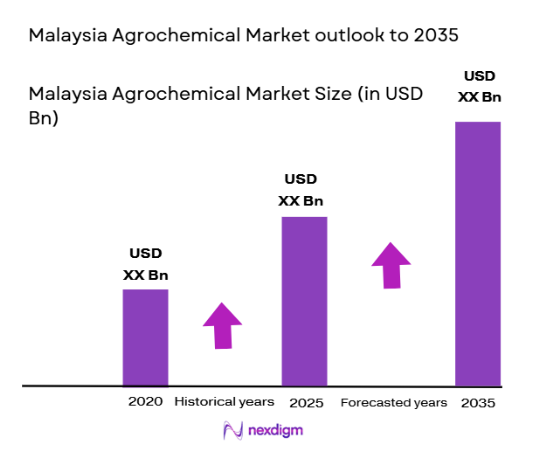
The agrochemical market in Malaysia is anticipated to reach USD ~ billion, driven by factors such as increasing agricultural production, government support for modern farming techniques, and the rise in crop protection needs. The market is primarily influenced by both domestic agricultural activities and the need for sustainable farming solutions, which are pushing agrochemical manufacturers to focus on more efficient, eco-friendly products. This trend of heightened demand for agrochemicals, especially in the form of fertilizers and pesticides, is expected to persist, influencing market growth patterns.
The market is predominantly driven by key agricultural states such as Perak, Selangor, and Johor, which contribute significantly to crop production. Malaysia’s large palm oil plantations and rice fields continue to demand agrochemical solutions for pest control, soil health, and crop protection. The country benefits from its strategic location in Southeast Asia, with access to global agricultural trade routes. These cities and regions also benefit from strong infrastructure, a skilled workforce, and government programs designed to enhance agricultural sustainability.
Market Segmentation
By Product Type:
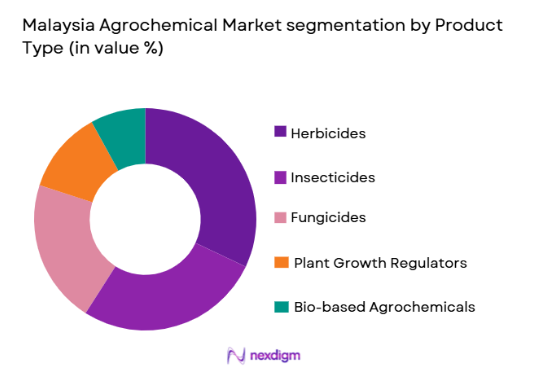
Malaysia Agrochemical market is segmented by product type into herbicides, insecticides, fungicides, plant growth regulators, and bio-based agrochemicals. Recently, herbicides have a dominant market share due to factors such as widespread usage in rice fields and palm oil plantations, effective weed management, and ease of application. The demand for herbicides is driven by the growing need to improve crop yields and the adoption of modern farming techniques that focus on higher productivity.
By Application Method:
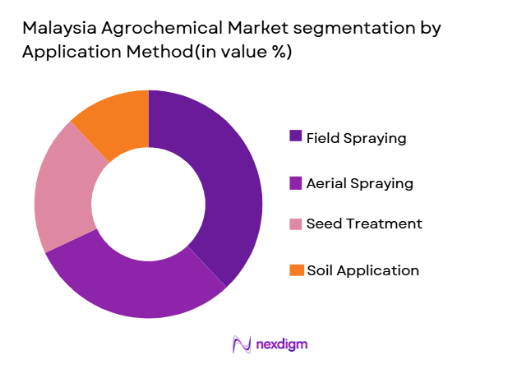
The Malaysia agrochemical market is segmented by application method into aerial spraying, field spraying, seed treatment, and soil application. Field spraying holds the largest market share due to its widespread adoption among large-scale plantations, particularly in palm oil and rice farms. This method is efficient in covering large areas and allows for precise delivery of chemicals, ensuring optimal crop protection and minimizing losses. As the country’s agricultural landscape becomes more mechanized, field spraying continues to be the preferred application method.
Competitive Landscape
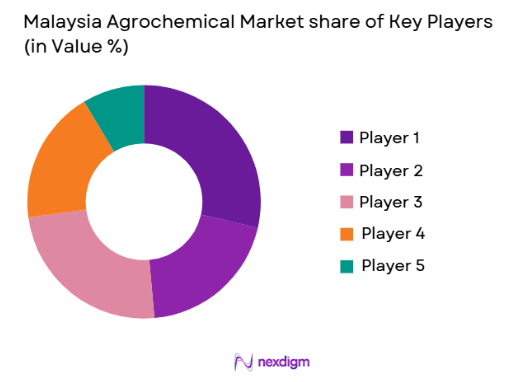
The competitive landscape of the Malaysia agrochemical market is marked by strong consolidation with major global and regional players. These companies influence market dynamics through innovations in agrochemical formulations, advanced technologies in application methods, and large-scale distribution channels. Companies are focusing on strategic collaborations with local distributors, government initiatives, and expanding their product portfolios to cater to the needs of diverse agricultural sectors.
| Company Name | Establishment Year | Headquarters | Technology Focus | Market Reach | Key Products | Revenue (USD Billion) | Key Technology |
| BASF | 1865 | Germany | ~ | ~ | ~ | ~ | ~ |
| Syngenta | 2000 | Switzerland | ~ | ~ | ~ | ~ | ~ |
| Bayer CropScience | 1863 | Germany | ~ | ~ | ~ | ~ | ~ |
| Dow AgroSciences | 1897 | USA | ~ | ~ | ~ | ~ | ~ |
| UPL Limited | 1969 | India | ~ | ~ | ~ | ~ | ~ |
Malaysia Agrochemical Market Analysis
Growth Drivers
Rising Demand for Crop Protection Solutions:
The growing population in Malaysia is leading to an increased demand for food, putting pressure on farmers to adopt advanced agrochemical solutions to protect crops from pests and diseases. As the agricultural industry becomes more mechanized, there is a greater need for efficient and scalable crop protection solutions. This growing demand is driven by the need to ensure higher yields, improved quality of produce, and reduced crop loss due to pest infestations. With the continued push towards increasing productivity in Malaysia’s agricultural sector, especially in large-scale plantations, crop protection solutions such as insecticides and fungicides are becoming more indispensable in day-to-day operations. The adoption of precision farming techniques is also contributing to this demand, as farmers are increasingly relying on technology to manage pests and disease outbreaks.
Government Initiatives for Sustainable Agriculture:
The Malaysian government has introduced several policies to boost agricultural productivity while ensuring environmental sustainability. Initiatives like subsidies for bio-based agrochemicals, grants for sustainable farming technologies, and training programs for farmers on integrated pest management have contributed to the market’s growth. These measures help reduce environmental impacts while promoting the adoption of innovative and eco-friendly products. Additionally, the government is encouraging the use of organic and biopesticide-based agrochemicals to promote sustainable agriculture. This policy support fosters growth opportunities for manufacturers focusing on sustainable and environmentally friendly products.
Market Challenges
High Dependency on Imports:
One of the major challenges facing the agrochemical market in Malaysia is its dependency on imports. A large proportion of the agrochemical products used in Malaysia, including pesticides and fertilizers, are imported from countries like China, India, and the United States. This reliance on imports exposes the Malaysian market to fluctuations in global supply chains, which can lead to price volatility and supply disruptions. As the market continues to grow, local manufacturers are under pressure to establish a more self-sufficient supply chain. However, building local production capabilities and complying with international standards poses significant barriers for new market entrants and existing players, leading to challenges in maintaining competitive pricing and availability.
Pesticide Resistance Issues:
Another challenge for the agrochemical market in Malaysia is the issue of pesticide resistance. The excessive and improper use of pesticides has led to the emergence of resistance among certain pest populations, which diminishes the effectiveness of agrochemicals. Farmers face difficulties in controlling pests, which negatively impacts crop yield and quality. To address this, agrochemical companies are focusing on the development of new products with different modes of action, but overcoming pesticide resistance remains a significant hurdle.
Opportunities
Growth of Organic Farming:
The increasing trend towards organic farming in Malaysia presents a significant opportunity for the agrochemical market. As consumer preferences shift towards organic produce, farmers are seeking agrochemical solutions that are aligned with organic farming principles. This includes the use of bio-based agrochemicals and eco-friendly alternatives to traditional chemical pesticides and fertilizers. The Malaysian government is also supporting the transition to organic farming through financial incentives and technical support. As the demand for organic food continues to grow, manufacturers of organic agrochemicals have the opportunity to expand their market share by offering sustainable solutions.
Technological Advancements in Agrochemical Application:
The adoption of precision farming technologies, such as drones and automated sprayers, presents a significant opportunity for the agrochemical market. These technologies allow for precise application of agrochemicals, reducing waste and improving efficacy. As the industry moves towards more efficient farming practices, there is a growing need for innovative application methods that ensure minimal environmental impact while maximizing crop protection. The integration of artificial intelligence and data analytics into agrochemical applications will further enhance the performance and sustainability of these solutions.
Future Outlook
The Malaysia agrochemical market is poised for steady growth over the next five years, driven by the continued need for crop protection, the adoption of sustainable farming practices, and technological advancements in agrochemical application. As Malaysia seeks to increase its agricultural productivity, the demand for effective and environmentally friendly agrochemical solutions is expected to rise. The market will see a shift towards more eco-conscious products as consumers demand sustainable farming practices. The government’s focus on promoting bio-based agrochemicals and organic farming will create opportunities for manufacturers in this segment. Furthermore, advancements in precision agriculture, which integrates IoT, drones, and AI, will redefine agrochemical usage, ensuring more targeted applications and reducing waste.
Major Players
- BASF
- Syngenta
- Bayer CropScience
- Dow AgroSciences
- UPL Limited
- FMC Corporation
- Sumitomo Chemical
- Nufarm
- ADAMA
- Isagro
- Gujarat State Fertilizers and Chemicals
- AMVAC Chemical Corporation
- Monsanto
- Cheminova
- JF Chemicals
Key Target Audience
- Investments and venture capitalist firms
- Government and regulatory bodies
- Large-scale farming operations
- Agrochemical manufacturers
- Retailers and distributors
- Agricultural cooperatives
- Technology providers in precision farming
- Private sector agriculture firms
Research Methodology
Step 1: Identification of Key Variables
The key variables that influence the market, such as market size, product segmentation, and key players, are identified through secondary research and expert consultations.
Step 2: Market Analysis and Construction
The market data is gathered from primary and secondary sources to construct an accurate market model, which includes current and future trends, drivers, and challenges.
Step 3: Hypothesis Validation and Expert Consultation
Validation of market assumptions and hypotheses is done through discussions with industry experts, market leaders, and stakeholders in the agrochemical industry.
Step 4: Research Synthesis and Final Output
All data is synthesized to produce a comprehensive report, ensuring accuracy and clarity, which is then presented in the final research output.

- Executive Summary
- Research Methodology(Definitions, Scope, Industry Assumptions, Market Sizing Approach, Primary & Secondary Research Framework, Data Collection & Verification Protocol, Analytic Models & Forecast Methodology, Limitations & Research Validity Checks)

- Market Definition and Scope
- Value Chain & Stakeholder Ecosystem
- Regulatory / Certification Landscape
- Sector Dynamics Affecting Demand
- Strategic Initiatives & Infrastructure Growth

- Growth Drivers
Rising Demand for High-Yield Crops
Technological Advancements in Agrochemicals
Increasing Adoption of Organic Farming Practices
Government Support for Agricultural Innovation
Growing Awareness of Sustainable Agriculture - Market Challenges
Stringent Environmental Regulations
Pest Resistance Issues
High Production Costs
Supply Chain Disruptions
Lack of Skilled Workforce - Market Opportunities
Growth in Organic Agrochemical Adoption
Rising Demand for Bio-based Products
Technological Advancements in Smart Agrochemical Solutions - Trends
Shift Towards Biologically Derived Products
Integration of AI and IoT in Agrochemical Application
Increasing Use of Drones for Agrochemical Distribution
Focus on Sustainable Farming Practices
Growing Importance of Crop Protection Systems - Government Regulations & Defense Policy
Pesticide Residue Regulations
Subsidies and Incentives for Sustainable Farming
Regulations on Chemical-based Agrochemical Use - SWOT Analysis
- Stakeholder and Ecosystem Analysis
- Porter’s Five Forces Analysis
- Competition Intensity and Ecosystem Mapping

- By Market Value, 2020-2025
- By Installed Units, 2020-2025
- By Average System Price, 2020-2025
- By System Complexity Tier, 2020-2025

- By System Type (In Value%)
Herbicides
Insecticides
Fungicides
Plant Growth Regulators
Bio-based Agrochemicals - By Platform Type (In Value%)
Crop-based Platforms
Pest Management Platforms
Soil Health Platforms
Fertility Management Platforms
Integrated Solutions - By Fitment Type (In Value%)
On-field Application
Greenhouse Application
Indoor Application
Automated Application
Precision Application - By EndUser Segment (In Value%)
Farmers
Agricultural Cooperatives
Agrochemical Manufacturers
Private Sector / Technology Firms
Government Agencies - By Procurement Channel (In Value%)
Direct Procurement
Government Tenders
Private Sector Procurement
Online Bidding Platforms
Third-party Distributors - By Material / Technology (In Value%)
Chemical-based Agrochemicals
Biological Agrochemicals
Nanotechnology-based Agrochemicals
Smart Agrochemical Products
Organic Agrochemicals

- Market structure and competitive positioning
- Market share snapshot of major players
- CrossComparison Parameters (Product Type, Platform Type, EndUser Segment, Procurement Channel, Fitment Type, Technology Adoption, Regulatory Compliance, R&D Investments, Geographic Reach, Pricing Strategy)
- SWOT Analysis of Key Players
- Pricing & Procurement Analysis
- Key Players
BASF
Syngenta
Bayer CropScience
Dow AgroSciences
Monsanto
Corteva Agriscience
ADAMA
FMC Corporation
Sumitomo Chemical
UPL
Jiangsu Changqing Agrochemical
King Quenson
Sinochem International
Guangdong Xinhe Chemical
Nufarm

- Farmers’ Adoption of Precision Agriculture
- Government’s Role in Regulating Agrochemical Use
- Agrochemical Manufacturers’ Focus on R&D
- Private Sector’s Involvement in Agrochemical Innovation

- Forecast Market Value, 2026-2035
- Forecast Installed Units, 2026-2035
- Price Forecast by System Tier, 2026-2035
- Future Demand by Platform, 2026-2035


 Request a Sample
 Ask for Customization
 Get a Quote
 Enquire Now