
 Download PDF
 Download PDF
Market Overview
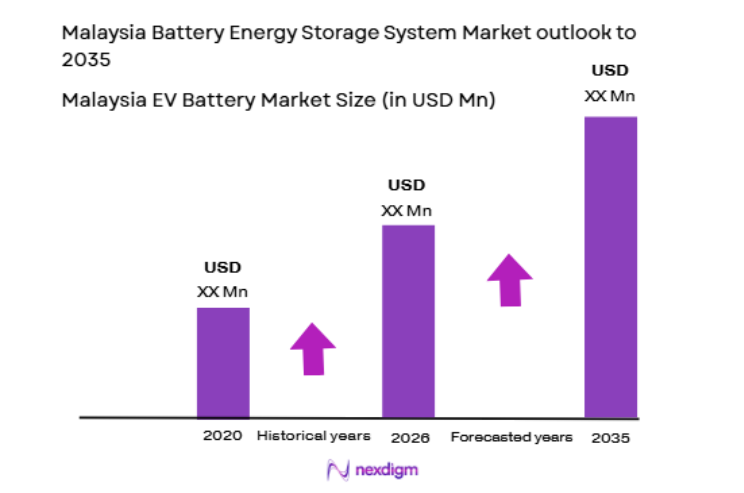
The Malaysia Battery Energy Storage System (BESS) Market is witnessing rapid growth, driven by the increasing demand for energy storage solutions to stabilize the integration of renewable energy and support grid efficiency. Based on a recent historical assessment, the market size is projected to reach approximately USD ~ million in 2024. The expansion is driven by both private sector investments and government initiatives aimed at boosting the adoption of sustainable energy technologies, along with the necessity to enhance grid reliability and flexibility.
Urban centers such as Kuala Lumpur, Johor Bahru, and Penang are the key regions driving the market. These areas benefit from high levels of industrialization and renewable energy adoption, making them ideal locations for the installation of energy storage systems. The government’s focus on supporting renewable energy projects and ensuring energy security in these regions has propelled the demand for BESS. This geographical concentration, combined with an influx of green energy projects, positions Malaysia’s major cities at the forefront of the energy storage transformation.
Market Segmentation
By Product Type
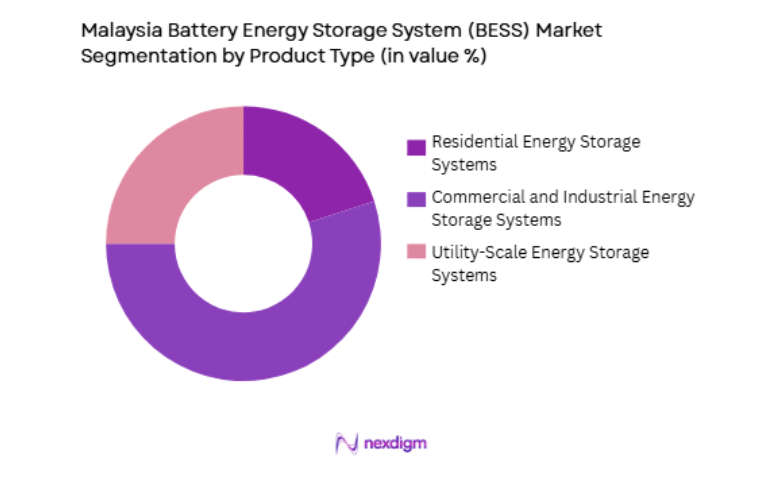
The Malaysia BESS Market is segmented by product type into residential energy storage systems, commercial and industrial energy storage systems, and utility-scale energy storage systems. Recently, commercial and industrial energy storage systems have dominated the market due to the increasing need for large-scale energy management solutions in commercial buildings, factories, and office spaces. Businesses are increasingly adopting BESS as a way to reduce energy costs, enhance sustainability, and ensure a reliable power supply in case of grid disruptions. The growing shift towards green energy solutions, combined with the significant savings potential of commercial-scale BESS, has made this sub-segment the leader in the market. The demand for grid independence, peak load management, and energy storage as a service are also contributing factors to its growth in the commercial and industrial sectors.
By Storage Capacity
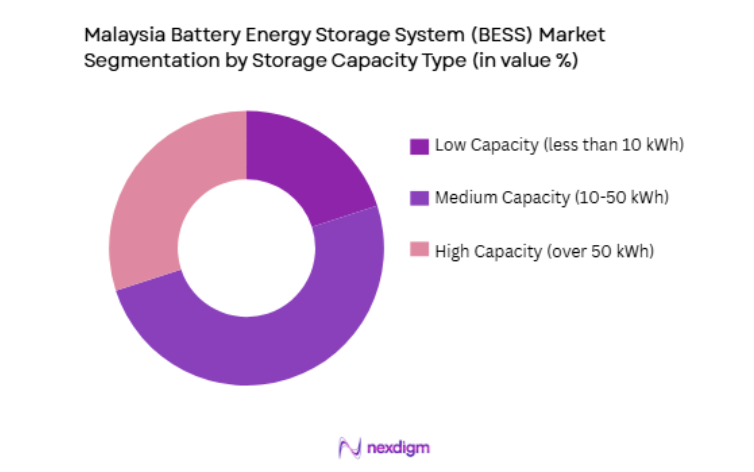
The Malaysia BESS Market is segmented by storage capacity into low capacity (less than 10 kWh), medium capacity (10-50 kWh), and high capacity (over 50 kWh) systems. Recently, medium-capacity storage systems have gained the largest market share due to their versatility in both residential and commercial applications. These systems are ideal for small businesses and homes with moderate energy consumption needs, providing a cost-effective solution to store energy and optimize usage. Medium-capacity systems also strike a balance between cost, performance, and scalability, making them the most popular choice for residential and commercial users. As the need for more sustainable and resilient energy solutions continues to grow, medium-capacity systems are expected to remain dominant in the Malaysia BESS Market.
 Competitive Landscape
The Malaysia BESS Market is characterized by competition among both local and international players, each working to expand their market presence and technological capabilities. The market has seen significant consolidation, with major players partnering with utilities and energy companies to enhance energy storage capacities and improve grid resilience. This competitive environment fosters innovation, driving down the costs of energy storage while improving the performance and scalability of systems. Key players are also focusing on integrating smart grid technology and renewable energy sources into their BESS offerings, making Malaysia a key player in the Southeast Asian energy storage landscape.
| Company Name | Establishment Year | Headquarters | Technology Focus | Market Reach | Key Products | Revenue | Additional Parameter |
| Tesla | 2003 | California, USA | ~ | ~ | ~ | ~ | ~ |
| LG Energy Solution | 1947 | Seoul, South Korea | ~ | ~ | ~ | ~ | ~ |
| BYD | 1995 | Shenzhen, China | ~ | ~ | ~ | ~ | ~ |
| Siemens | 1847 | Munich, Germany | ~ | ~ | ~ | ~ | ~ |
| Vestas | 1945 | Aarhus, Denmark | ~ | ~ | ~ | ~ | ~ |
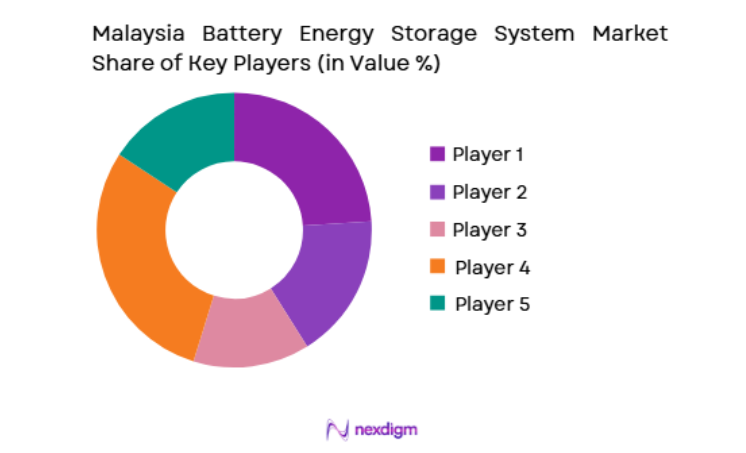
Malaysia Battery Energy Storage System Market Analysis
Growth Drivers
Government Support and Regulatory Policies
The rapid growth of Malaysia’s BESS market can be attributed to strong government support and favorable regulatory policies aimed at promoting sustainable energy. Malaysia’s government has introduced several initiatives, including tax incentives, subsidies for renewable energy adoption, and low-interest loans for energy storage systems. These policies are designed to reduce the upfront costs of energy storage and encourage businesses and households to invest in BESS. Moreover, the government’s push for net-zero emissions and the integration of more renewable energy into the national grid has accelerated the demand for energy storage solutions. The energy storage systems provide a solution to mitigate the intermittent nature of renewable energy sources like solar and wind, ensuring that excess energy generated can be stored and used when needed, thus increasing grid stability. These government-backed incentives, combined with Malaysia’s renewable energy goals, are key drivers of the BESS market’s growth.
Renewable Energy Adoption and Energy Security Needs
As Malaysia expands its renewable energy infrastructure, the demand for energy storage solutions is also increasing. Malaysia’s renewable energy targets, such as a significant increase in solar power generation, are driving the need for efficient energy storage to store excess power produced during peak generation hours. Energy storage systems play a vital role in ensuring the reliability of the power supply, especially as the nation integrates a higher share of renewable sources into the grid. These systems help address the challenges posed by the intermittent nature of renewable energy generation, ensuring that energy is available during off-peak hours or when solar and wind power generation is low. Additionally, energy storage provides an opportunity for businesses and households to reduce their dependency on grid power, enhancing energy security and resilience against outages. This rising focus on energy security and grid independence, particularly in industrial areas and growing cities, continues to push the market forward.
Market Challenges
High Initial Investment Costs
A major challenge facing the Malaysia BESS market is the high initial investment required for the installation of energy storage systems. While the cost of batteries has decreased significantly over the years, energy storage systems still require substantial capital investment, especially for larger-scale commercial and industrial systems. For businesses, the high upfront cost can be a deterrent, especially for small and medium enterprises (SMEs) that may struggle with the initial expenditure. Despite the long-term savings and efficiency gains from reduced energy costs and improved grid stability, the high capital cost remains a significant barrier to widespread adoption of BESS solutions. Furthermore, while government subsidies and incentives help reduce some of the financial burden, they may not be enough to make energy storage systems affordable for all sectors. Overcoming this financial challenge is essential for accelerating the growth of the BESS market in Malaysia.
Limited Awareness and Education
Another challenge is the limited awareness and understanding of energy storage technologies, particularly among residential and small business owners. Despite the growing interest in renewable energy solutions, many consumers are still unfamiliar with the concept of energy storage and its benefits, such as cost savings, increased energy independence, and grid stability. This knowledge gap hinders the adoption of BESS solutions, especially in the residential sector, where individuals may not be aware of the long-term advantages of installing energy storage systems in combination with solar panels. Additionally, the complexity of energy storage systems and their integration with existing energy infrastructure can deter potential users. To overcome this challenge, industry players and government bodies must invest in educational initiatives to raise awareness about energy storage solutions and demonstrate the tangible benefits they offer to consumers and businesses.
Opportunities
Integration with Smart Grid and Renewable Energy Systems
One significant opportunity for the Malaysia BESS market is the integration of energy storage systems with smart grids and renewable energy sources. As the country continues to expand its renewable energy capacity, energy storage systems will play a pivotal role in ensuring the smooth integration of solar, wind, and other renewable resources into the grid. Smart grids, which use digital communication to monitor and manage electricity flow, are a perfect complement to BESS, allowing for better energy management, reduced waste, and improved grid reliability. The integration of BESS with smart grid technologies will help optimize energy storage and distribution, making it easier for consumers and businesses to manage their energy usage. This integration also presents a tremendous opportunity for the growth of the BESS market, as it creates a demand for more advanced storage systems that can efficiently store and distribute renewable energy.
Energy Storage as a Service for Commercial Applications
Another significant opportunity in the Malaysia BESS market lies in the growing demand for Energy Storage as a Service (ESaaS) in commercial and industrial applications. Many businesses, especially large manufacturing plants, commercial facilities, and data centers, are increasingly turning to ESaaS models to manage their energy needs. With ESaaS, companies can lease energy storage systems rather than make large upfront investments, reducing the financial burden of energy storage adoption. This model provides businesses with the flexibility to access advanced energy storage systems while avoiding capital expenditure. Additionally, businesses benefit from cost savings on energy bills, enhanced energy security, and the ability to participate in demand response programs. As more businesses recognize the benefits of energy storage for reducing operational costs and improving sustainability, the demand for ESaaS in Malaysia’s commercial sector is expected to grow significantly, providing a major opportunity for energy storage providers.
Future Outlook
The future outlook for the Malaysia BESS market is positive, with continued growth anticipated as the country integrates more renewable energy into its grid and adopts advanced storage technologies. Government policies supporting renewable energy, along with ongoing technological advancements, will drive demand for energy storage solutions. As Malaysia’s energy market evolves and becomes more reliant on sustainable energy, BESS will be a crucial component in stabilizing the grid and supporting energy independence. The market is expected to see significant innovation in storage technologies and greater adoption across residential, commercial, and industrial sectors.
Major Players
- Tesla
- LG Energy Solution
- BYD
- Siemens
- Vestas
- Schneider Electric
- ABB
- General Electric
- Mitsubishi Power
- Hitachi
- Energy Vault
- Fluence
- Wärtsilä
- Engie
- Panasonic
Key Target Audience
- Investments and venture capitalist firms
- Government and regulatory bodies
- Energy companies
- Battery manufacturers
- Solar energy firms
- Industrial energy users
- Utilities
- Commercial developers
Research Methodology
Step 1: Identification of Key Variables
This step involves identifying the key factors affecting the BESS market, such as technological advancements, government policies, and market demand for energy storage solutions.
Step 2: Market Analysis and Construction
The market is analyzed using historical data, industry trends, and competitive intelligence to build a comprehensive model that forecasts future trends and demand.
Step 3: Hypothesis Validation and Expert Consultation
This step validates the hypotheses through consultations with industry experts, government officials, and key stakeholders in the energy storage and renewable energy sectors.
Step 4: Research Synthesis and Final Output
The final report synthesizes the data gathered from primary and secondary sources to provide actionable insights and projections for the Malaysia BESS Market.

- Executive Summary
- Research Methodology (Definitions, Scope, Industry Assumptions, Market Sizing Approach, Primary & Secondary Research Framework, Data Collection & Verification Protocol, Analytic Models & Forecast Methodology, Limitations & Research Validity Checks)

- Market Definition and Scope
- Value Chain & Stakeholder Ecosystem
- Regulatory / Certification Landscape
- Sector Dynamics Affecting Demand

- Growth Drivers
Rising Integration of Renewable Energy into the National Grid
Government Incentives Supporting Energy Storage Deployment
Increasing Demand for Grid Stability and Peak Load Management - Market Challenges
High Initial Capital Investment for Storage Infrastructure
Limited Domestic Manufacturing of Advanced Battery Systems
Regulatory and Grid Integration Complexities - Market Opportunities
Expansion of Utility Scale Energy Storage Projects
Deployment of Storage Solutions for Solar and Wind Farms
Development of Smart Grid and Microgrid Storage Applications - Trends
Adoption of Lithium Ion Based Grid Scale Storage Solutions
Increasing Integration of Battery Storage with Solar Power Systems - Government Regulations
- SWOT Analysis
- Porter’s Five Forces

- By Market Value, 2020-2025
- By Installed Units, 2020-2025
- By Average System Price, 2020-2025
- By System Complexity Tier, 2020-2025

- By System Type (In Value%)
Lithium Ion Battery Storage Systems
Flow Battery Energy Storage Systems
Lead Acid Battery Storage Systems
Sodium Sulfur Battery Storage Systems
Hybrid Battery Energy Storage Systems - By Platform Type (In Value%)
Utility Scale Energy Storage Systems
Commercial and Industrial Energy Storage Systems
Residential Energy Storage Systems
Grid Integrated Energy Storage Platforms
Renewable Energy Coupled Storage Systems - By Fitment Type (In Value%)
Standalone Battery Energy Storage Installations
Solar Plus Storage Integrated Systems
Wind Energy Integrated Storage Systems
Microgrid Integrated Storage Systems - By End User Segment (In Value%)
Utility and Grid Operators
Commercial and Industrial Facilities
Residential Consumers

- Market Share Analysis
- Cross Comparison Parameters (Battery Chemistry Type, Energy Capacity, Round Trip Efficiency, System Life Cycle, Charging Speed, Grid Integration Capability, System Scalability, Safety Standards, Cost per kWh, Environmental Impact)
- SWOT Analysis of Key Competitors
- Pricing & Procurement Analysis
- Key Players
Tesla Energy
LG Energy Solution
Samsung SDI
CATL
BYD Energy Storage
Fluence Energy
Powin Energy
Wärtsilä Energy Storage
Saft Groupe
Hitachi Energy
ABB
Siemens Energy
Sungrow Power Supply
NEC Energy Solutions
Schneider Electric

- Utilities Investing in Grid Stability and Energy Storage Capacity
- Industrial Facilities Adopting Storage to Manage Energy Costs
- Residential Users Deploying Solar Plus Storage Solutions
- Renewable Energy Developers Integrating Storage into New Projects

- Forecast Market Value, 2026-2035
- Forecast Installed Units, 2026-2035
- Price Forecast by System Tier, 2026-2035
- Future Demand by Platform, 2026-2035


 Request a Sample
 Ask for Customization
 Get a Quote
 Enquire Now