
 Download PDF
 Download PDF
Market Overview
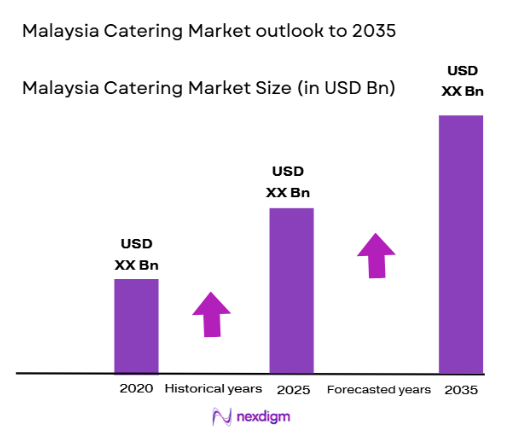
The Malaysia Catering market is a significant industry within the country’s service sector, contributing to the economy through various catering services for events, corporate functions, and institutional needs. Based on a recent historical assessment, the market size for Malaysia’s catering industry is valued at USD ~ billion. It has been driven by factors such as increasing corporate events, rising disposable income, and growth in tourism, particularly in urban centers like Kuala Lumpur. The demand for diverse and customized catering solutions has also played a crucial role in expanding market size, while catering technologies have streamlined operations.
The market is dominated by urban centers, particularly Kuala Lumpur and Penang, due to their thriving commercial, corporate, and tourism sectors. Kuala Lumpur, as the capital, is home to many multinational companies and serves as a hub for high-demand catering services. Penang, with its focus on tourism and local hospitality, has also seen a rise in catering demand, particularly for large-scale events and festivals. These cities dominate due to infrastructure availability, high consumer demand for quality services, and favorable business environments that encourage catering companies to establish a strong presence.
Market Segmentation
By Product Type:
Malaysia Catering market is segmented by product type into corporate catering, event catering, institutional catering, hospitality catering, and in-flight catering. Recently, corporate catering has a dominant market share due to the increasing demand from businesses for catering services during conferences, meetings, and corporate events. Companies prefer corporate catering for its efficiency, wide service offering, and customization options. As businesses continue to grow and host more events, corporate catering becomes a go-to solution for many enterprises looking to maintain a high standard of service.

By Platform Type:
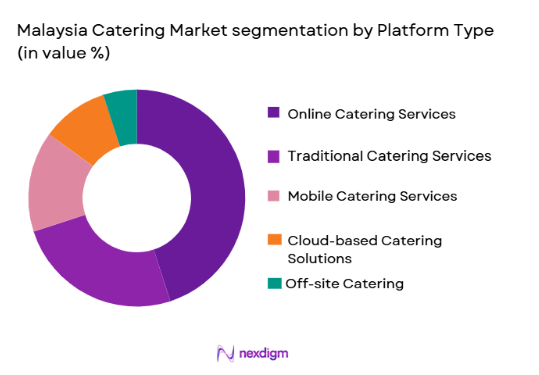
Malaysia Catering market is segmented by platform type into online catering services, traditional catering services, mobile catering services, cloud-based catering solutions, and off-site catering. Recently, online catering services have a dominant market share due to the shift towards digital platforms, which make it easier for consumers to order catering for their events. The convenience of browsing menus and placing orders through apps or websites has driven the popularity of online platforms, with many consumers opting for them due to ease of use, time-saving benefits, and quick access to customer service.
Competitive Landscape
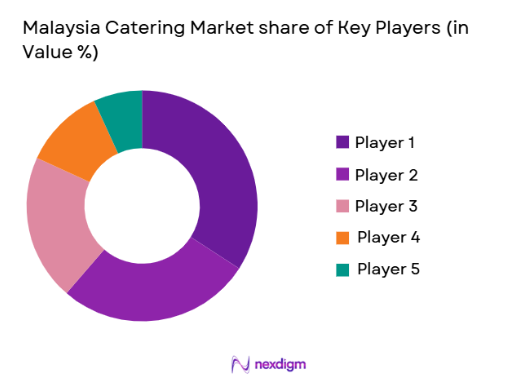
The competitive landscape of the Malaysia Catering market is characterized by a mix of established players and emerging local businesses. Consolidation is ongoing as larger catering companies acquire smaller ones to expand their service offerings and geographic reach. Major players dominate the market by offering diverse services, catering to corporate clients, large events, and government contracts. The influence of key players drives innovation and sets the service quality standards, helping shape consumer preferences.
| Company Name | Establishment Year | Headquarters | Technology Focus | Market Reach | Key Products | Revenue (USD Billion) | Market-Specific Parameter |
| Kuala Lumpur Catering Sdn Bhd | 2001 | Kuala Lumpur | ~ | ~ | ~ | ~ | ~ |
| Berjaya Food Berhad | 1985 | Kuala Lumpur | ~ | ~ | ~ | ~ | ~ |
| Tropicana Catering Services | 1998 | Penang | ~ | ~ | ~ | ~ | ~ |
| Golden Eagle Catering | 2005 | Kuala Lumpur | ~ | ~ | ~ | ~ | ~ |
| The Food Co. Malaysia | 2010 | Selangor | ~ | ~ | ~ | ~ | ~ |
Malaysia Catering Market Analysis
Growth Drivers
Rising Corporate Demand:
The increasing demand for catering services within the corporate sector is one of the primary growth drivers for the Malaysia Catering market. Companies are increasingly recognizing the importance of providing high-quality meals during corporate events, meetings, and conferences. The rise in corporate budgets allocated for employee welfare, business functions, and client-facing events has significantly boosted the demand for professional catering services. Corporate catering solutions are highly customizable, ensuring they meet the diverse dietary preferences and requirements of employees, clients, and guests. Moreover, businesses that host large-scale events, seminars, and workshops also tend to outsource catering services to focus on their core business activities. The corporate demand is further accelerated by the growing trend of remote working and hybrid events, which continue to require quality catering for in-person events and online meetings. As businesses grow and expand in Malaysia, the demand for catering services is expected to continue on an upward trajectory.
Growth of Tourism and Hospitality Sector:
The growth of Malaysia’s tourism and hospitality sector has also played a significant role in driving the catering market. With Malaysia being a popular tourist destination, the need for hospitality catering services has surged, particularly in cities like Kuala Lumpur, Penang, and Langkawi, which attract tourists and business travelers alike. Hotels, resorts, and event venues that cater to large gatherings, conferences, and weddings rely heavily on catering services. Additionally, government initiatives to boost tourism, such as promoting international events, festivals, and conferences, have further increased the demand for catering solutions. This has created an opportunity for catering companies to provide specialized services, including menu customization, food safety management, and efficient delivery. The rise in global travel and the expansion of hospitality venues are expected to contribute to the long-term growth of the catering sector in Malaysia.
Market Challenges
Regulatory Compliance and Food Safety:
Regulatory compliance and food safety standards present significant challenges for the Malaysia Catering market. Catering businesses must comply with stringent government regulations concerning food handling, preparation, storage, and transportation. Non-compliance can lead to penalties and a tarnished reputation, particularly in an industry where food safety is of utmost importance. The complexity of adhering to food safety standards becomes even more challenging for smaller businesses that may lack the resources to keep up with evolving regulations. Moreover, ensuring the quality of food across large-scale events and remote locations is often difficult, as catering companies must rely on consistent supply chains and temperature-controlled storage and transportation. Strict compliance with food safety regulations requires investment in training, technology, and infrastructure, posing a challenge for companies, especially those aiming to expand into new regions or provide services at a larger scale.
High Operational Costs:
High operational costs also remain a major challenge for the Malaysia Catering market. With increasing demand for catering services, companies are often required to invest in sophisticated kitchens, specialized equipment, and transportation fleets to meet service delivery expectations. Moreover, fluctuations in food prices, labor costs, and overheads can strain profitability, especially for smaller catering businesses that do not have the financial capacity to absorb these costs. Catering services are often seasonal, with peak demand during holidays, festivals, and large-scale events, making it difficult for businesses to maintain profitability during off-peak times. Managing high operational costs while maintaining quality standards and meeting client expectations remains a significant challenge for market participants.
Opportunities
Expansion of Online Catering Services:
The increasing reliance on digital solutions presents a major opportunity for growth in the Malaysia Catering market, particularly in the online catering service segment. As consumers and businesses alike shift to online platforms for convenience, ordering catering services via websites and mobile apps has gained significant traction. Catering companies that adopt online platforms can streamline their operations, increase their customer base, and offer real-time updates on service availability and menu choices. Additionally, the flexibility of online ordering allows consumers to customize their catering requirements, providing an enhanced experience. The ongoing digital transformation and the rise in smartphone usage among Malaysian consumers make online catering services a lucrative opportunity for companies seeking to expand their reach and improve customer engagement.
Sustainability and Eco-friendly Catering Solutions:
Sustainability is increasingly becoming a priority for both businesses and consumers, opening up a major opportunity for catering companies to offer eco-friendly solutions. With growing awareness of environmental issues, consumers are seeking catering services that focus on sustainable practices, such as using organic, locally sourced ingredients, and offering recyclable or biodegradable packaging. Catering companies that adopt green practices and market themselves as eco-friendly are likely to capture the attention of environmentally-conscious consumers, particularly those in corporate and event catering. Moreover, government initiatives and regulatory support for sustainable practices present an opportunity for catering businesses to integrate sustainability into their operations, reducing waste and enhancing their corporate social responsibility profiles. The increasing demand for sustainable catering solutions presents a compelling growth opportunity in Malaysia’s evolving catering industry.
Future Outlook
The future of the Malaysia Catering market looks promising, with expected growth driven by advancements in catering technologies and increasing consumer demand for diverse and customizable services. Innovations in food delivery, catering management software, and eco-friendly practices will likely shape the market landscape over the next five years. Additionally, favorable government policies supporting the tourism and hospitality sectors, combined with a rising number of corporate events and festivals, will continue to drive demand. Catering companies are expected to invest in improving service efficiency, quality control, and consumer engagement to remain competitive.
Major Players
- Kuala Lumpur Catering Sdn Bhd
- Berjaya Food Berhad
- Tropicana Catering Services
- Golden Eagle Catering
- The Food Co. Malaysia
- Marriott International Malaysia
- Sushi King Malaysia
- AirAsia Inflight Catering
- The Ritz-Carlton Catering Malaysia
- Café Latte Malaysia
- Golden Eagle Catering
- Tropicana Catering
- QSR Brands
- Sunway Catering Services
- Hyatt Catering Malaysia
Key Target Audience
- Investments and venture capitalist firms
- Government and regulatory bodies
- Foodservice providers
- Event planners and organizers
- Hotel and hospitality chains
- Corporate clients
- Airline services
- Large educational institutions
Research Methodology
Step 1: Identification of Key Variables
Identifying relevant market drivers, challenges, and segmentation parameters that affect the Malaysia Catering market.
Step 2: Market Analysis and Construction
Building a robust model using primary and secondary data sources to analyze market trends, consumer preferences, and competitive dynamics.
Step 3: Hypothesis Validation and Expert Consultation
Validating assumptions with industry experts, stakeholders, and market participants to refine the research approach and conclusions.
Step 4: Research Synthesis and Final Output
Synthesizing data from all sources and expert feedback to generate the final report, which includes actionable insights and strategic recommendations.

What is the market size of the Malaysia Catering market?
The Malaysia Catering market size is valued at approximately USD ~ billion based on a recent historical assessment. The market is driven by rising demand for corporate events, tourism, and hospitality services.
What are the growth drivers in the Malaysia Catering market?
The key growth drivers for the Malaysia Catering market include the rise in corporate demand for catering services and the growth of the tourism and hospitality sector in Malaysia.
Which segment is dominating the Malaysia Catering market?
Corporate catering currently dominates the Malaysia Catering market. The increasing demand for catering at business meetings, conferences, and corporate events has made corporate catering a dominant segment.
Who are the major players in the Malaysia Catering market?
Major players in the Malaysia Catering market include Kuala Lumpur Catering Sdn Bhd, Berjaya Food Berhad, Tropicana Catering Services, and The Food Co. Malaysia, among others.
What challenges do catering companies face in Malaysia?
Catering companies in Malaysia face challenges such as regulatory compliance, food safety standards, high operational costs, and seasonality in demand for catering services.

- Market Definition and Scope
- Value Chain & Stakeholder Ecosystem
- Regulatory / Certification Landscape
- Sector Dynamics Affecting Demand
- Strategic Initiatives & Infrastructure Growth

- Growth Drivers
Rising Demand for On-the-go Meals
Growing Corporate and Event Catering Services
Increase in Disposable Income and Spending
Expanding Tourism and Hospitality Sector
Advancements in Catering Technologies - Market Challenges
High Competition in Local Catering Services
Regulatory Challenges in Food Safety
Dependence on Seasonal and Volatile Demand
Rising Operational Costs in Catering Services
Difficulty in Scaling Operations for Small Players - Market Opportunities
Introduction of Eco-friendly Catering Solutions
Expansion of Online Catering Platforms
Demand for Customized Catering Services - Trends
Increasing Adoption of Delivery-Only Kitchens
Growth in Personal Chef and Meal Prep Services
Rising Popularity of Healthy and Sustainable Catering Options
Integration of AI in Catering Operations
Growth in Corporate Catering Contracts - Government Regulations & Defense Policy
Food Safety and Hygiene Regulations
Government Support for Sustainable Catering
Tax Incentives for Eco-friendly Catering Businesses - SWOT Analysis
- Stakeholder and Ecosystem Analysis
- Porter’s Five Forces Analysis
- Competition Intensity and Ecosystem Mapping

- By Market Value, 2020-2025
- By Installed Units, 2020-2025
- By Average System Price, 2020-2025
- By System Complexity Tier, 2020-2025

- By System Type (In Value%)
Corporate Catering
Event Catering
Institutional Catering
Hospitality Catering
In-flight Catering - By Platform Type (In Value%)
Online Catering Services
Traditional Catering Services
Mobile Catering Services
Cloud-based Catering Solutions
Off-site Catering - By Fitment Type (In Value%)
In-house Catering
Outsourced Catering
Contract-based Catering
Temporary Catering Services
Custom-built Catering Solutions - By EndUser Segment (In Value%)
Corporate Clients
Individual Consumers
Government & Public Sector
Educational Institutions
Healthcare Institutions - By Procurement Channel (In Value%)
Direct Procurement
Through Distributors
Online Procurement
Private Sector Procurement
Public Sector Tenders - By Material / Technology (in Value%)
Food Preparation Equipment
Catering Management Software
Food Storage & Delivery Solutions
Eco-friendly Packaging Materials
Catering Logistics Systems

- Market structure and competitive positioning
- Market share snapshot of major players
- CrossComparison Parameters (System Type, Platform Type, Procurement Channel, EndUser Segment, Fitment Type, Material / Technology, Pricing, Operational Efficiency, Customer Satisfaction, Marketing Strategies)
- SWOT Analysis of Key Players
- Pricing & Procurement Analysis
- Key Players
Kuala Lumpur Catering Sdn Bhd
Selangor Catering Services
Tropicana Catering Services
Berjaya Food Berhad
CaterPlanet Malaysia
Marriott International Malaysia
Sushi King Malaysia
AirAsia Inflight Catering
The Food Co. Malaysia
Café Latte Malaysia
Golden Eagle Catering
Ritz-Carlton Catering Malaysia
Sapore Malaysia
Caterlink Malaysia
TastyBites Catering Services

- Growing Demand from Corporate and Business Events
- Increasing Interest in Healthy and Sustainable Meal Options
- Shift Toward Digital Ordering and Delivery Systems
- Demand for Personalized and Tailored Catering Services

- Forecast Market Value, 2026-2035
- Forecast Installed Units, 2026-2035
- Price Forecast by System Tier, 2026-2035
- Future Demand by Platform, 2026-2035


 Request a Sample
 Ask for Customization
 Get a Quote
 Enquire Now