
 Download PDF
Market Overview
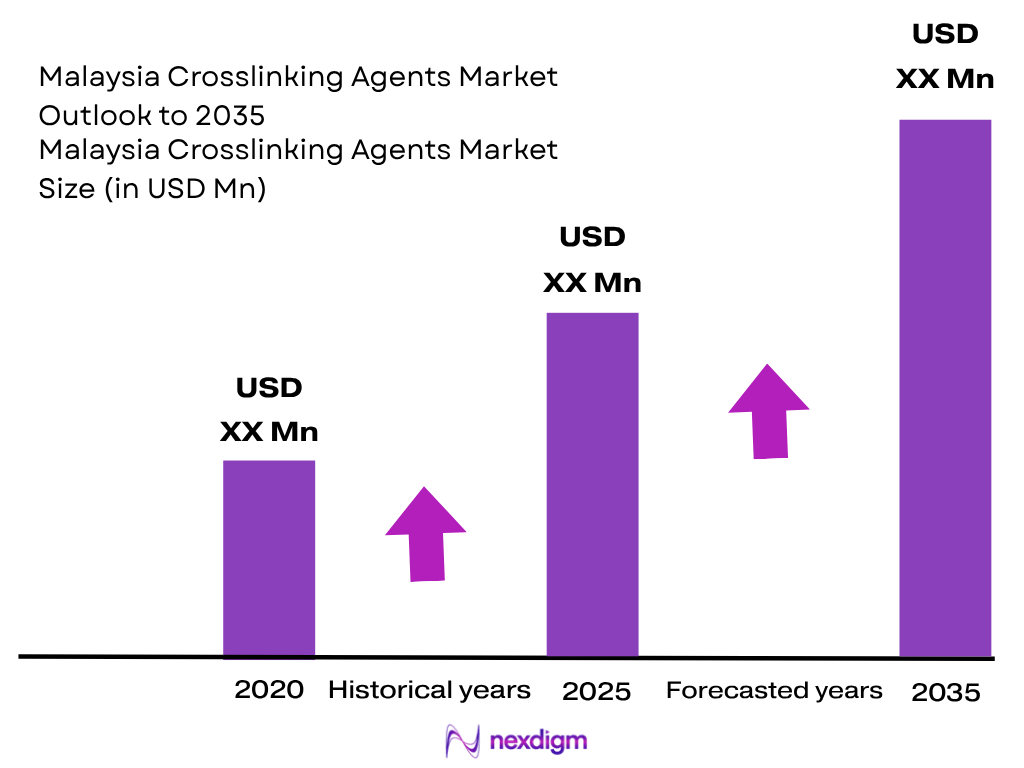
The Malaysia Crosslinking Agents market is valued at USD ~XX million in 2024, supported by increasing demand for polymer modification solutions across electrical insulation, automotive components, rubber processing, and construction materials. The market expansion is linked with Malaysia’s manufacturing ecosystem, where the electrical and electronics sector recorded RM 575.5 billion in approved investments in 2023, according to the Malaysian Investment Development Authority (MIDA), strengthening demand for advanced polymer materials. The growth of high-performance polymers, including XLPE materials used in cable applications, continues to support crosslinking agent consumption across industrial applications.
The Malaysia Crosslinking Agents market is concentrated around major industrial hubs including Selangor, Penang, Johor, and Kuala Lumpur, driven by their established manufacturing infrastructure, chemical processing capabilities, and presence of downstream industries. Selangor dominates due to its extensive industrial base covering plastics, electrical components, and polymer processing industries. Penang’s semiconductor and electronics manufacturing ecosystem creates demand for specialized polymer materials used in insulation and electronic components. Johor benefits from petrochemical activities and industrial development zones, while Kuala Lumpur acts as a commercial and distribution center for specialty chemical suppliers and industrial users.
Market Segmentation
By Crosslinking Agent Type
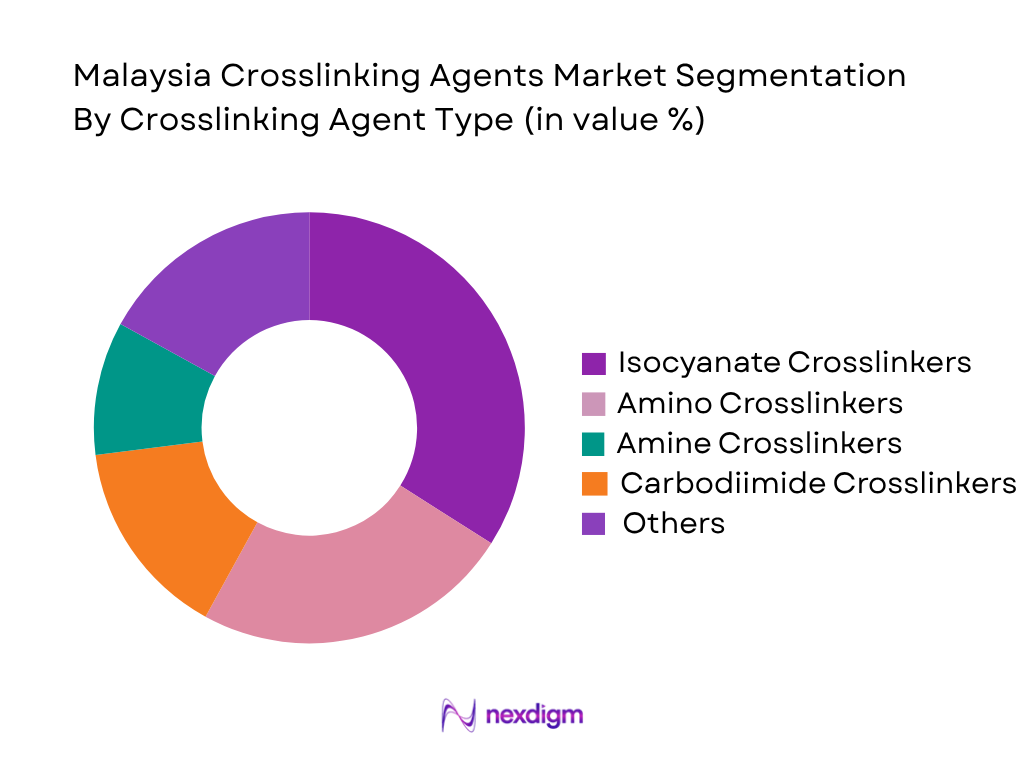
Malaysia Crosslinking Agents Market is segmented by crosslinking agent type into organic peroxides, silane crosslinking agents, sulfur-based crosslinking agents, radiation crosslinking agents, epoxy-based crosslinking agents, and specialty crosslinking systems. Organic peroxides hold a dominant position within the Malaysia Crosslinking Agents market due to their extensive utilization in polyethylene crosslinking, especially for XLPE cable insulation and polymer processing applications. The increasing requirement for durable electrical insulation materials from Malaysia’s electronics and power infrastructure industries supports demand for peroxide-based solutions. Organic peroxides provide controlled decomposition properties, improved thermal resistance, and enhanced mechanical strength, making them preferred for high-performance polymer applications. The expansion of electrical equipment manufacturing and cable production activities further contributes to their adoption. Additionally, their compatibility with polyethylene and elastomer systems enables manufacturers to improve product durability and reliability across multiple industrial applications.
By Application Type
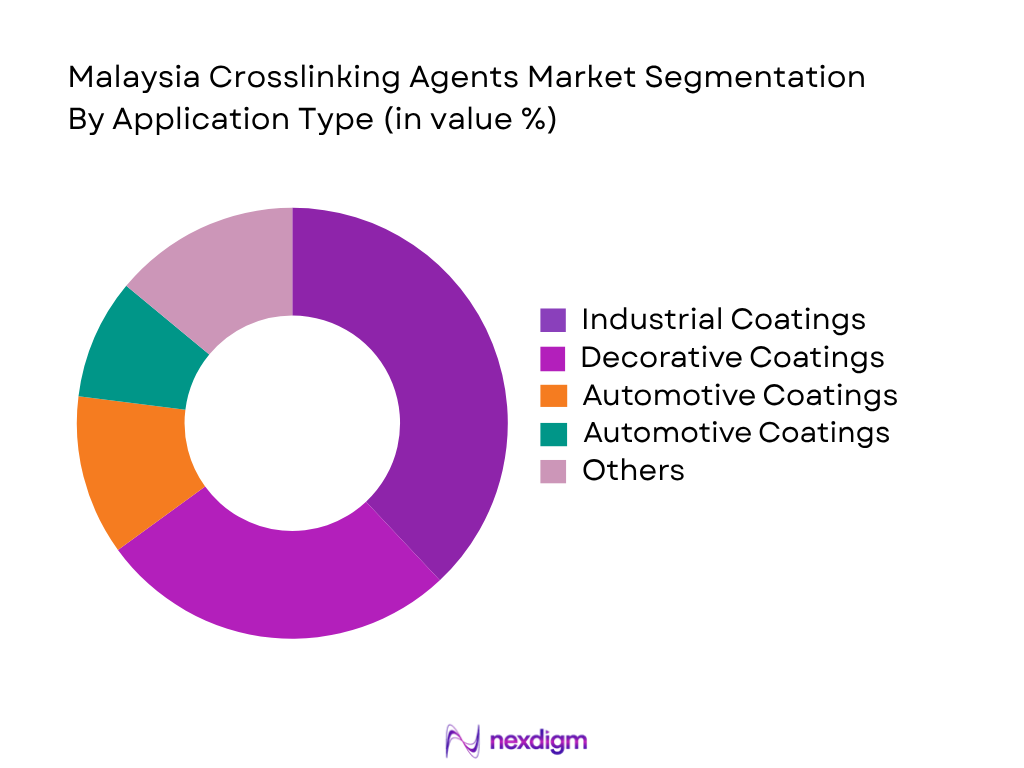
Malaysia Crosslinking Agents Market is segmented by application type into wire and cable insulation, automotive polymer components, construction materials, rubber products, plastic pipes and tubing systems, adhesives and sealants, packaging materials, and industrial polymer products. Wire and cable insulation represents the leading application segment in the Malaysia Crosslinking Agents market due to the country’s strong electrical and electronics manufacturing ecosystem and increasing requirement for reliable insulation materials. Crosslinked polyethylene (XLPE) applications are widely used in power cables because of their improved electrical performance, heat resistance, and durability. Malaysia’s role as a regional electronics manufacturing hub supports continuous demand for advanced polymer compounds. The expansion of renewable energy infrastructure, industrial facilities, and electrical distribution networks further increases the requirement for crosslinked polymer materials. Crosslinking agents enable manufacturers to enhance the performance characteristics of cables and polymer-based electrical components, supporting their dominant application across the market.
Competitive Landscape
The Malaysia Crosslinking Agents market is characterized by the presence of global specialty chemical manufacturers and regional suppliers providing organic peroxides, silane-based systems, and polymer modification solutions. The competitive environment includes companies such as Arkema, Nouryon, BASF, Evonik Industries, and Wacker Chemie, which maintain strong positions through advanced chemical technologies, broad product portfolios, and technical support capabilities. Market competition is influenced by product performance, application expertise, supply chain reliability, regulatory compliance, and partnerships with downstream polymer processors.
| Company | Establishment Year | Headquarters | Key Products | Primary Applications | Material Expertise | Regional Presence | Manufacturing & Distribution Capability | Innovation Focus |
| BASF SE | 1865 | Ludwigshafen, Germany | ~ | ~ | ~ | ~ | ~ | ~ |
| Evonik Industries AG | 2007 | Essen, Germany | ~ | ~ | ~ | ~ | ~ | ~ |
| Covestro AG | 2015 | Leverkusen, Germany | ~ | ~ | ~ | ~ | ~ | ~ |
| Allnex | 2013 | Frankfurt, Germany | ~ | ~ | ~ | ~ | ~ | ~ |
| Huntsman Corporation | 1970 | The Woodlands, USA | ~ | ~ | ~ | ~ | ~ | ~ |
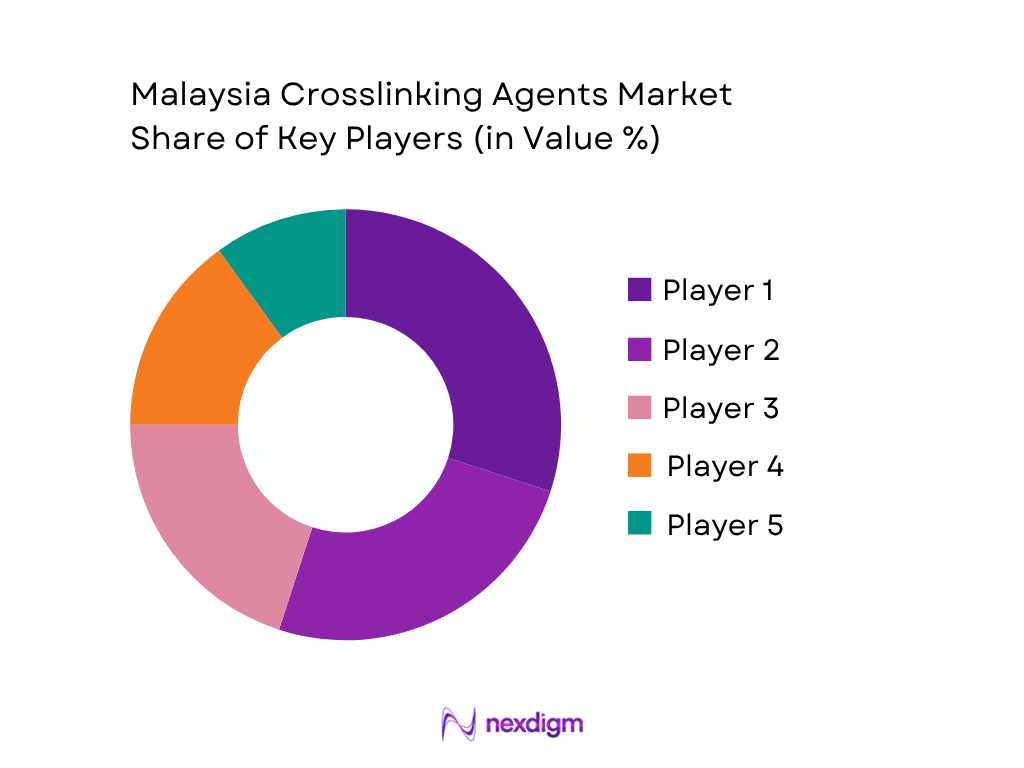
Malaysia Crosslinking Agents Market Analysis
Growth Drivers
Expansion of Malaysia’s Manufacturing and Industrial Coating Sector
The growth of Malaysia’s crosslinking agents market is supported by the country’s expanding manufacturing base, particularly industries requiring high-performance coatings, adhesives, and polymer systems. Malaysia recorded a manufacturing value added contribution of approximately USD 95 billion, reflecting the continued importance of manufacturing activities within the economy. According to the World Bank, Malaysia’s GDP reached around USD 422 billion, supported by industrial production, export-oriented manufacturing, and investment activities. Crosslinking agents are increasingly used in industrial coatings, automotive finishes, protective coatings, and polymer modification processes because they improve durability, chemical resistance, and mechanical strength. Malaysia’s automotive industry produced more than 700,000 vehicles annually in recent years, creating demand for advanced coating technologies that require crosslinking solutions. The country’s electrical and electronics sector also remains a major industrial contributor, with exports exceeding USD 100 billion, increasing demand for specialty polymers and protective materials. The combination of manufacturing growth, industrial diversification, and demand for high-performance materials supports wider adoption of crosslinking agents across Malaysian industries.
Rising Construction and Infrastructure Development Increasing Demand for Protective Coating Systems
Malaysia’s construction and infrastructure activities continue to generate demand for crosslinking agents used in architectural coatings, waterproofing materials, sealants, and protective polymer systems. The World Bank reported Malaysia’s urban population exceeding 26 million people, creating continued requirements for residential, commercial, and infrastructure development. Construction activities depend on advanced coating technologies that provide improved weather resistance, durability, and surface protection in tropical climatic conditions. Malaysia’s infrastructure investments, including transportation networks, industrial parks, and urban development projects, increase the requirement for high-performance coatings and adhesives. The country’s construction sector contributes approximately 4% to national economic output and supports demand for specialty chemical products used in building materials. Crosslinking agents enable coatings to withstand humidity, temperature variations, and chemical exposure, making them essential for applications such as industrial flooring, protective paints, and structural coatings. Increasing urban development, industrial facility expansion, and infrastructure modernization are expected to strengthen demand for advanced crosslinking technologies in Malaysia.
Market Challenges
Dependence on Imported Raw Materials and Global Chemical Supply Chain Volatility
The Malaysia crosslinking agents market faces challenges due to dependence on imported chemical intermediates, specialty resins, and petrochemical-based raw materials. Malaysia imports significant quantities of chemical products to support its downstream manufacturing industries, making local suppliers exposed to international supply chain disruptions and raw material availability fluctuations. According to international trade statistics, Malaysia’s chemical and chemical product imports represent a major portion of industrial input requirements, with countries such as China, Singapore, Japan, and South Korea serving as important supply partners. Crosslinking agents such as isocyanates, amino resins, and specialty curing agents require stable access to upstream petrochemical feedstocks. Changes in crude oil markets, transportation disruptions, and regional supply constraints can influence production planning and procurement strategies. Additionally, manufacturers must maintain consistent product quality while managing inventory requirements for industrial customers. These supply chain dependencies create operational challenges for companies operating within Malaysia’s specialty chemical ecosystem.
Increasing Environmental Compliance Requirements for Chemical Formulations
Environmental regulations and sustainability requirements create challenges for crosslinking agent manufacturers as industries increasingly shift toward low-emission and environmentally compliant chemical solutions. Malaysia’s Department of Environment continues to strengthen industrial environmental management requirements, particularly regarding chemical handling, emissions control, and hazardous substance management. Coating and adhesive manufacturers are under pressure to reduce volatile organic compound emissions and develop safer alternatives without compromising performance characteristics. Crosslinking agents traditionally used in industrial coatings may require reformulation to meet evolving environmental standards. The global transition toward water-based coatings and sustainable polymer technologies is influencing product development strategies among chemical suppliers. Malaysia’s participation in regional sustainability initiatives and industrial decarbonization programs is increasing attention toward environmentally responsible chemical manufacturing. Companies supplying crosslinking agents must invest in formulation development, regulatory compliance, and alternative technologies to maintain competitiveness in the evolving chemical market.
Market Opportunities
Increasing Adoption of Sustainable and Low-VOC Coating Technologies
The shift toward sustainable coating solutions presents an opportunity for crosslinking agent manufacturers operating in Malaysia. Industrial users are increasingly adopting water-based coatings, low-VOC formulations, and environmentally improved polymer systems that require advanced crosslinking technologies. Malaysia’s industrial ecosystem, including electronics, automotive, and manufacturing sectors, is moving toward higher-performance materials with reduced environmental impact. The country’s electrical and electronics industry generated exports exceeding USD 100 billion, creating opportunities for specialty chemical suppliers providing advanced materials for protective coatings and electronic applications. Sustainable crosslinking technologies can support manufacturers in achieving improved durability while reducing environmental emissions. Demand is expected to increase for bio-based crosslinkers, blocked isocyanates, and specialty curing agents compatible with environmentally compliant coating systems. Companies developing innovative formulations aligned with sustainability requirements can access opportunities across industrial coatings, adhesives, packaging materials, and specialty polymer applications.
Growth Potential from Electronics, Automotive, and Advanced Manufacturing Applications
Malaysia’s position as a regional manufacturing hub creates opportunities for crosslinking agent suppliers through increasing demand from electronics, automotive, and advanced industrial applications. The country’s electrical and electronics sector remains one of Malaysia’s largest export contributors, with semiconductor and electronics exports exceeding USD 100 billion. These industries require advanced polymer materials, encapsulants, coatings, and adhesives with enhanced thermal stability, chemical resistance, and mechanical performance. The automotive sector also supports demand for crosslinking technologies through applications in vehicle coatings, interior components, and polymer-based materials. Malaysia produced more than 700,000 motor vehicles annually, supporting continued demand for automotive coating solutions. Expansion of high-value manufacturing activities, including semiconductor facilities and industrial technology investments, creates additional opportunities for specialty chemical providers. Crosslinking agents that deliver improved performance, reliability, and sustainability are positioned to benefit from Malaysia’s industrial transformation and increasing demand for advanced material solutions.
Future Outlook
The Malaysia Crosslinking Agents Market is expected to experience continued development supported by increasing demand from industrial coatings, automotive manufacturing, construction materials, electronics production, and specialty polymer applications. Future market expansion will be influenced by the adoption of environmentally compliant coating technologies, increasing preference for high-performance materials, and growing requirements for durable polymer solutions across multiple industries. Manufacturers are expected to focus on sustainable formulations, advanced resin technologies, and application-specific crosslinking solutions to address evolving industrial requirements.
Major Players
- BASF SE
- Evonik Industries AG
- Covestro AG
- Allnex
- Huntsman Corporation
- Arkema Group
- Solvay S.A.
- Wanhua Chemical Group
- Mitsubishi Chemical Group
- DIC Corporation
- Momentive Performance Materials
- Eastman Chemical Company
- Dow Inc.
- Hexion Inc.
- Adeka Corporation
Key Target Audience
- Crosslinking Agent Manufacturers
- Coating and Paint Manufacturers
- Adhesive and Sealant Producers
- Polymer and Resin Manufacturers
- Automotive Coating Suppliers
- Electronics Material Manufacturers
- Investments and Venture Capitalist Firms
- Government and Regulatory Bodies (Ministry of Investment, Trade and Industry Malaysia, Department of Environment Malaysia)
Research Methodology
Step 1: Identification of Key Variables
The initial research phase involves developing a comprehensive ecosystem map covering raw material suppliers, crosslinking agent manufacturers, resin producers, coating formulators, distributors, and end-use industries operating in Malaysia. The assessment focuses on identifying key variables including chemistry types, application areas, consumption patterns, industrial demand drivers, and supply chain structures influencing the crosslinking agents industry.
Step 2: Market Analysis and Construction
This phase involves analyzing historical industry trends, production capabilities, import-export dynamics, application-level demand, and industrial consumption patterns associated with crosslinking agents. The research evaluates demand from coatings, adhesives, automotive, electronics, construction, and polymer industries to construct a detailed understanding of market development and consumption behavior.
Step 3: Hypothesis Validation and Expert Consultation
Market assumptions are validated through discussions with industry participants including chemical manufacturers, coating producers, polymer suppliers, and downstream application companies. These consultations provide insights into product adoption trends, technological developments, competitive strategies, and operational factors influencing the Malaysia Crosslinking Agents Market.
Step 4: Research Synthesis and Final Output
The final stage combines primary industry insights with secondary research findings to create a validated market assessment. The analysis integrates segmentation analysis, competitive benchmarking, application evaluation, and future industry trends to provide a comprehensive understanding of the Malaysia Crosslinking Agents Market.

- Executive Summary
- Research Methodology (Market Definition and Scope, Malaysia Crosslinking Agents Market Classification, Crosslinking Chemistry Assessment, Crosslinking Agent Consumption Analysis, Polymer Modification Demand Assessment, Resin Compatibility Assessment, Silane Crosslinking Agent Demand Evaluation, Peroxide Crosslinking Agent Adoption Assessment, Radiation Crosslinking Technology Assessment, Polyethylene Crosslinking Application Mapping, Rubber Crosslinking Requirement Analysis, Cable and Wire Insulation Material Assessment, Automotive Polymer Component Demand Analysis, Construction Polymer Application Assessment, Packaging Material Crosslinking Demand Assessment)

- Definition and Scope
- Malaysia Crosslinking Agents Industry Evolution and Development of Polymer Modification Technologies
- Organic Peroxide Crosslinking Agents, Silane Crosslinking Agents, Sulfur-Based Crosslinking Agents, Radiation Crosslinking Agents, Amines, Epoxides, Isocyanates, Specialty Crosslinking Systems
- Malaysia Crosslinking Agents Value Chain Analysis
- Malaysia Crosslinking Agents Supply Chain Analysis
- Raw Material Supplier, Chemical Intermediate Manufacturer, Crosslinking Agent Producer, Polymer Compounder, Plastic Converter, Rubber Manufacturer, Cable Producer, Automotive Component Manufacturer, Construction Material Supplier, End-Use Industry User
- Crosslinking Agent Integration Across Polyethylene Compounds, Wire and Cable Insulation Systems, Rubber Products, Automotive Components, Construction Materials, Adhesives and Sealants, Packaging Applications, Industrial Polymer Systems

- Growth Drivers (Expansion of Electrical and Electronics Manufacturing, Semiconductor Packaging Industry Growth, Increasing XLPE Cable Demand, Automotive Component Manufacturing Expansion, Renewable Energy Infrastructure Development, Construction Polymer Applications, Rising Polymer Modification Requirements, High-Performance Material Adoption, Chemical Processing Industry Expansion)
- Market Challenges (Raw Material Price Volatility, Dependence on Imported Specialty Chemicals, Chemical Safety Regulations, Environmental Concerns Related to Crosslinking Chemicals, Competition from Alternative Polymer Technologies, Supply Chain Disruptions, Limited Domestic Specialty Chemical Production Capacity, Technical Complexity in Polymer Formulation Development)
- Market Opportunities (Renewable Energy Cable System Expansion, Electric Vehicle Manufacturing Growth, Advanced Polymer Material Adoption, Semiconductor Industry Expansion, Sustainable Crosslinking Technology Development, High-Performance Construction Materials Demand, Specialty Adhesive and Sealant Applications, Smart Manufacturing Adoption, Advanced Packaging Material Development)
- Market Trends (XLPE Cable Application Growth, Silane Crosslinking Technology Adoption, Sustainable Polymer Additive Development, High-Temperature Polymer Applications, Advanced Cable Insulation Technologies, Lightweight Automotive Material Adoption, Specialty Chemical Formulation Innovation, Functional Polymer System Development, Low-Emission Chemical Processing Technologies)
- Regulatory and Standards Landscape (Department of Environment Malaysia Chemical Regulations, Occupational Safety and Health Chemical Management Requirements, Industrial Polymer Material Standards, Electrical Cable Standards, Construction Material Regulations, Chemical Import Regulations, Environmental Compliance Requirements, Workplace Chemical Safety Standards)
- SWOT Analysis
- Porter’s Five Forces Analysis
- PESTLE Analysis
- Stakeholder Ecosystem
- Competition Ecosystem

- By Market Value (2020-2025)
- By Consumption Volume (2020-2025)
- By Crosslinking Agent Consumption Volume (2020-2025)
- By Organic Peroxide Consumption Volume (2020-2025)
- By Silane Crosslinking Agent Consumption Volume (2020-2025)
- By Polymer Processing Application Consumption Volume (2020-2025)

- By Crosslinking Agent Type (In Value %)
Organic Peroxides
Silane Crosslinking Agents
Sulfur-Based Crosslinking Agents
Radiation Crosslinking Agents
Epoxy-Based Crosslinking Agents
Isocyanate-Based Crosslinking Agents
Amine-Based Crosslinking Agents
Specialty Crosslinking Systems - By Chemistry Type (In Value %)
Dicumyl Peroxide (DCP)
Di-tert-butyl Peroxide (DTBP)
Benzoyl Peroxide (BPO)
Amino Silanes
Vinyl Silanes
Methoxy Silanes
Sulfur Donor Systems
Multifunctional Crosslinking Compounds - By Polymer Type (In Value %)
Polyethylene (PE)
Crosslinked Polyethylene (XLPE)
Ethylene Vinyl Acetate (EVA)
Polypropylene (PP)
Polyvinyl Chloride (PVC)
Rubber Compounds
Thermoplastic Elastomers (TPE)
Silicone Polymers
Engineering Plastics - By Application Type (In Value %)
Wire and Cable Insulation
Power Transmission Cable Systems
Automotive Polymer Components
Construction Materials
Plastic Pipes and Tubing Systems
Rubber Products
Adhesives and Sealants
Packaging Materials
Electrical Components
Industrial Polymer Products - By End-Use Industry (In Value %)
Electrical and Electronics Industry
Automotive Industry
Construction Industry
Oil and Gas Industry
Chemical Processing Industry
Plastic Manufacturing Industry
Rubber Manufacturing Industry
Packaging Industry
Renewable Energy Industry
Consumer Goods Industry - By Region (In Value %)
Central Malaysia
Kuala Lumpur Metropolitan Region
Selangor Industrial Region
Johor Industrial Region
Penang Manufacturing Region
East Malaysia

- Market Share of Major Players(By Malaysia Revenue, Crosslinking Agent Sales Volume, Organic Peroxide Sales Volume, Silane Crosslinking Agent Sales Volume, XLPE Application Exposure, Polymer Processing Exposure, Electrical Industry Exposure, Automotive Industry Exposure, Manufacturing Capacity, Distribution Network Coverage, Product Portfolio Breadth, Technical Support Capability)
- Cross Comparison Parameters (Malaysia Crosslinking Agent Revenue, Crosslinking Chemistry Portfolio Breadth, Organic Peroxide Manufacturing Capability, Silane Technology Expertise, Polymer Application Support Capability, Electrical Cable Industry Exposure, Distribution Network Reach, Chemical Safety and Regulatory Compliance Coverage)
- SWOT Analysis of Major Players
- Competitive Positioning Matrix
- Crosslinking Agent Product Portfolio Benchmarking
- Chemical Production Technology and Formulation Capability Assessment
- Polymer Compatibility and Application Development Assessment
- Detailed Profiles of Major Companies
Arkema
Solvay
Nouryon
Evonik Industries
BASF
Mitsubishi Chemical Group
Wacker Chemie
Momentive Performance Materials
Dow Chemical
SI Group
Lanxess
Peroxide Chemie
Adeka Corporation
Akzo Nobel Specialty Chemicals
Eastman Chemical Company

- Electrical Cable Manufacturer Crosslinking Agent Procurement Assessment
- Semiconductor and Electronics Manufacturer Polymer Material Requirement Analysis
- Automotive Component Manufacturer Material Specification Assessment
- Plastic Compounder Crosslinking Technology Assessment
- Rubber Product Manufacturer Chemical Requirement Analysis
- Construction Material Manufacturer Polymer Application Assessment
- Renewable Energy Equipment Manufacturer Cable Material Assessment
- Chemical Distributor Inventory and Procurement Assessment
- Adhesive and Sealant Manufacturer Crosslinking Requirement Analysis
- Polymer Processing Company Technology Preference Assessment
- OEM Material Development Assessment
- Industrial Chemical Buyer Procurement Analysis

- By Market Value (2026-2035)
- By Consumption Volume (2026-2035)
- By Organic Peroxide Consumption Volume (2026-2035)
- By Silane Crosslinking Agent Consumption Volume (2026-2035)
- By XLPE Application Consumption Volume (2026-2035)
- By Polymer Processing Application Consumption Volume (2026-2035)


 Request a Sample
 Ask for Customization
 Get a Quote
 Enquire Now