
 Download PDF
 Download PDF
Market Overview
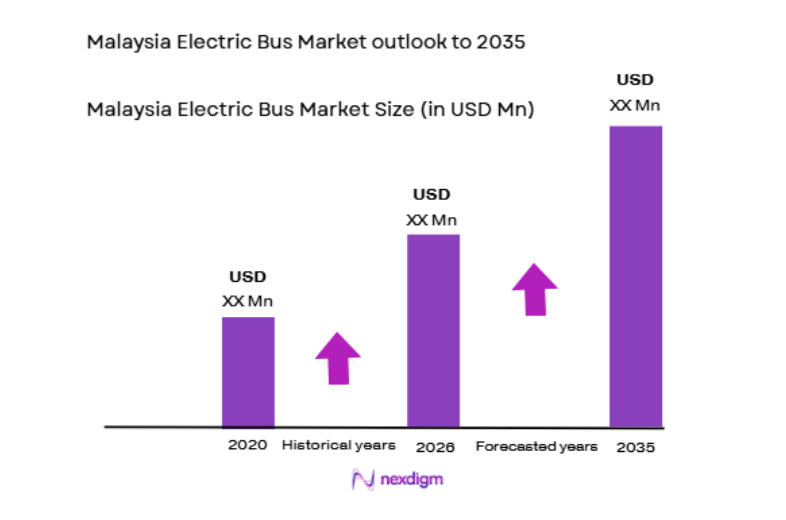
The Malaysia Electric Bus Market is experiencing significant growth, driven by government policies supporting sustainable transportation and the increasing demand for cleaner public transport options. Based on a recent historical assessment, the market size is projected to reach approximately USD ~ million in 2024. The push for reducing carbon emissions, combined with the expansion of electric vehicle infrastructure and advancements in electric bus technology, is fueling this growth. Additionally, subsidies and incentives provided by the Malaysian government for electric vehicle adoption are further stimulating the market’s expansion.
Key urban areas such as Kuala Lumpur, Johor Bahru, and Penang are leading the adoption of electric buses due to their high population density, heavy air pollution, and government-backed initiatives. The commitment of these cities to reducing their carbon footprint and enhancing public transport systems makes them dominant players in the market. As Malaysia continues its green transition, these cities have become central hubs for the deployment of electric buses, reflecting their readiness to embrace environmentally friendly transportation solutions.
Market Segmentation
By Bus Type
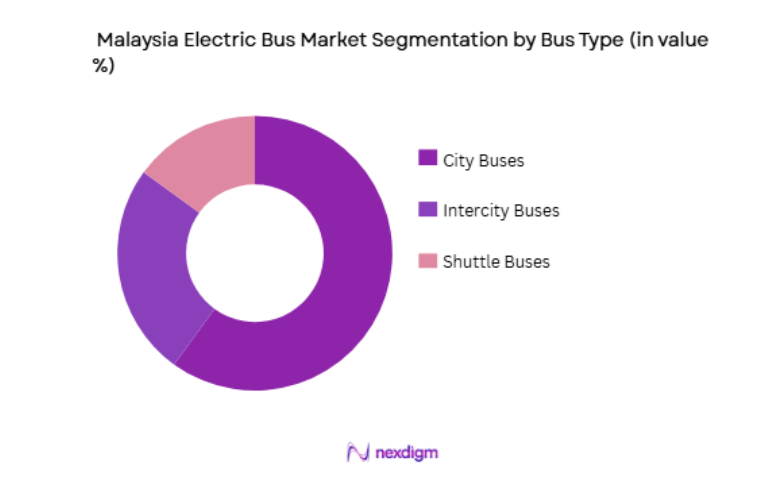
The Malaysia Electric Bus Market is segmented by bus type into city buses, intercity buses, and shuttle buses. Recently, city buses have dominated the market due to their high demand in urban areas, where public transport solutions are being rapidly upgraded to meet growing urban populations. City buses benefit from the increased push for electrification of mass transit systems, particularly in high-density cities like Kuala Lumpur and Penang. The Malaysian government has supported the transition to electric city buses with initiatives aimed at reducing urban pollution, improving air quality, and enhancing public transport infrastructure. Additionally, city buses are well-suited to electric propulsion due to their short-range, frequent stops, and consistent operating hours, making them ideal candidates for electrification.
By Charging Type
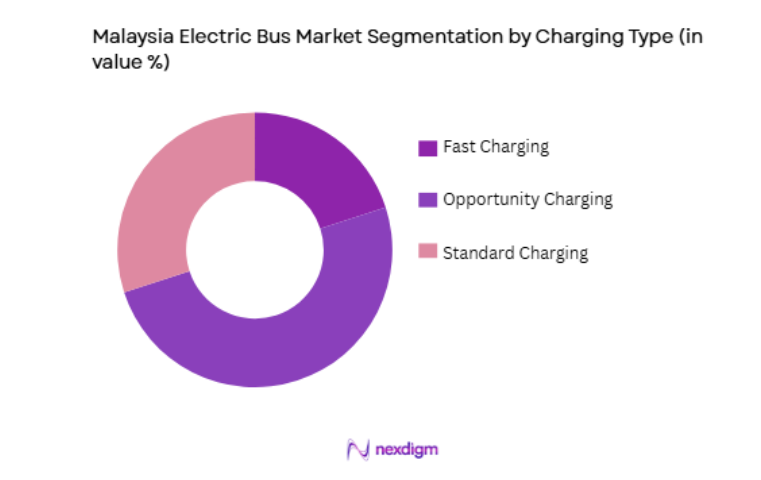
The Malaysia Electric Bus Market is segmented by charging type into fast charging, opportunity charging, and standard charging. Recently, fast charging electric buses have dominated the market due to their ability to significantly reduce charging time and increase operational efficiency. Fast charging is particularly attractive for public transport systems that require quick turnaround times for buses between trips. In cities like Kuala Lumpur, where the demand for efficient public transport is high, fast charging systems enable the buses to operate with minimal downtime. The growing infrastructure of fast-charging stations across urban areas has made these systems more feasible for electric bus fleets, ensuring that buses remain operational throughout the day without extended stops. This trend is expected to continue as technological advancements in fast-charging systems further improve their efficiency and availability.
Competitive Landscape
The Malaysia Electric Bus Market is highly competitive, with both local and international companies vying for market share. The market has seen significant collaboration between global electric bus manufacturers and local transit authorities to meet the growing demand for sustainable public transport solutions. Players in this market are focusing on technological advancements, including improvements in battery efficiency, charging infrastructure, and integration with smart city systems. With the government’s active role in supporting green transport, major manufacturers are increasing their investments in Malaysia, leading to the consolidation of market players and increased competition for government contracts.
| Company Name | Establishment Year | Headquarters | Technology Focus | Market Reach | Key Products | Revenue | Additional Parameter |
| BYD | 1995 | Shenzhen, China | ~ | ~ | |||
| Proterra | 2004 | California, USA | |||||
| Nexport | 2013 | Malaysia | |||||
| Volvo Group | 1927 | Gothenburg, Sweden | |||||
| Yutong | 1963 | Zhengzhou, China |
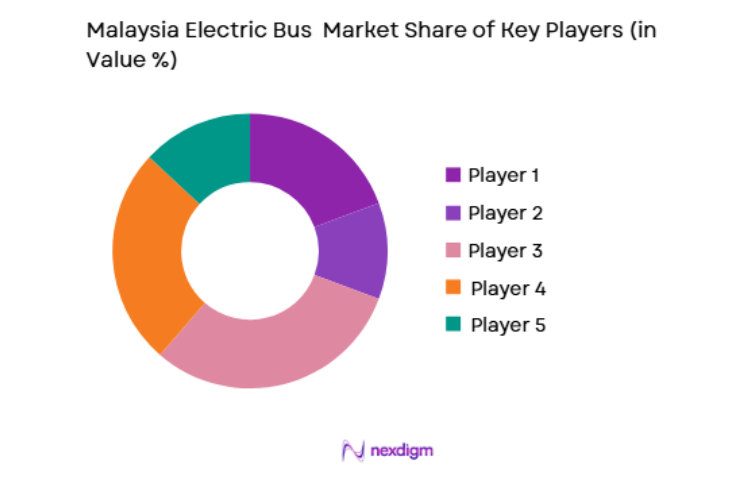
Malaysia Electric Bus Market Analysis
Growth Drivers
Government Policies and Incentives
The Malaysia Electric Bus Market’s growth is primarily driven by the government’s commitment to sustainable public transportation. The Malaysian government has introduced several initiatives, including tax exemptions, subsidies, and grants for electric vehicle adoption, particularly for public transportation systems. The green technology policy, alongside the National Automotive Policy, promotes the development and adoption of electric vehicles across various sectors, including buses. The government’s emphasis on reducing carbon emissions and improving air quality in urban areas has further accelerated the adoption of electric buses in city fleets. These initiatives not only ease the financial burden on transit authorities but also create a favorable environment for electric bus manufacturers. The demand for electric buses is expected to rise in response to these government-backed initiatives, positioning Malaysia’s public transport system for a sustainable future. Additionally, the installation of charging infrastructure across key cities supports the government’s push for greener transport solutions.
Increasing Environmental Awareness and Urbanization
The growing environmental awareness among the Malaysian public and the rapid urbanization of major cities are key factors driving the adoption of electric buses. As urban populations continue to rise, the need for efficient, low-emission public transport systems becomes more critical. Electric buses offer an environmentally friendly alternative to conventional diesel-powered buses, significantly reducing air pollution and greenhouse gas emissions. Public awareness campaigns and environmental NGOs have also highlighted the benefits of adopting green transportation solutions, contributing to the demand for electric buses. As urban centers like Kuala Lumpur and Penang face increasing traffic congestion and poor air quality, the transition to electric buses is seen as a necessary step towards improving urban living conditions. The combination of urbanization and environmental concern is making electric buses an attractive choice for city planners and public transport authorities looking to modernize and green their fleets.
Market Challenges
High Initial Costs and Infrastructure Development
A significant challenge in the Malaysia Electric Bus Market is the high initial cost of electric buses and the required infrastructure. Despite the long-term savings in fuel and maintenance costs, the upfront investment required for electric buses is considerably higher than conventional diesel buses. This cost includes not only the purchase of the buses themselves but also the establishment of the necessary charging infrastructure, which can be expensive and logistically complex to install. The high costs create a financial barrier for many transit authorities, especially in smaller cities or regions with limited budgets. While government incentives help offset some of these costs, the financial burden remains a major challenge for the market. Additionally, the lack of a comprehensive charging network, particularly in rural or less developed areas, hampers the widespread adoption of electric buses. Building the necessary infrastructure to support electric buses remains a critical obstacle to market growth, despite the ongoing efforts from both public and private sectors.
Limited Charging Infrastructure and Range Anxiety
Another challenge facing the growth of the Malaysia Electric Bus Market is the limited availability of charging infrastructure and the issue of range anxiety. While some major cities are actively building charging stations, many areas still lack adequate charging infrastructure to support a large fleet of electric buses. The concern that buses may run out of charge before completing their routes, especially in areas with fewer charging points, creates uncertainty for public transport authorities. This issue of range anxiety can deter cities from making the transition to electric buses, as they fear operational disruptions and delays. Additionally, the charging times for electric buses are longer than those of traditional refueling methods, adding to concerns over efficiency and vehicle uptime. The development of fast-charging stations, particularly along bus routes, will be crucial to addressing these challenges and encouraging broader adoption of electric buses.
Opportunities
Growing Demand for Sustainable Public Transport Solutions
One of the major opportunities for the Malaysia Electric Bus Market lies in the increasing demand for sustainable and efficient public transport solutions. With the Malaysian government setting ambitious targets for reducing carbon emissions and promoting clean energy, the electric bus market is expected to experience continued growth. Public transport authorities and city planners are increasingly focused on reducing traffic congestion, improving air quality, and offering a more sustainable form of transportation for urban populations. Electric buses are seen as an effective solution to these challenges, offering lower emissions, lower operating costs, and quieter operations compared to traditional diesel buses. The global shift towards green transport and the push for sustainability in urban mobility provides a significant opportunity for electric bus manufacturers to expand their market share in Malaysia. As environmental policies tighten and cities strive for cleaner, more efficient transport systems, the demand for electric buses is expected to rise, creating new opportunities for manufacturers and service providers.
Technological Advancements in Battery and Charging Solutions
Another opportunity for the Malaysia Electric Bus Market lies in the technological advancements in battery technology and charging solutions. Recent innovations in battery capacity, energy density, and charging speed have made electric buses more efficient and cost-effective. Advances in lithium-ion batteries, for example, have significantly improved the range and performance of electric buses, reducing concerns about range anxiety and operational efficiency. Moreover, the development of ultra-fast charging technologies, which can charge buses in a matter of minutes, is helping to address the issue of long downtime at charging stations. As these technologies continue to improve, electric buses will become more attractive to transit authorities and operators, leading to wider adoption. Additionally, smart charging solutions that integrate with renewable energy sources such as solar power could further reduce operating costs and improve the environmental impact of electric buses, creating a promising opportunity for growth in the market.
Future Outlook
The future of the Malaysia Electric Bus Market is optimistic, with strong growth expected over the next five years. The continued push for green transportation solutions, combined with advancements in battery technology and charging infrastructure, will drive the adoption of electric buses. Government incentives, along with growing environmental awareness, will further accelerate the transition to electric buses in major cities. The integration of electric buses into the national public transport fleet will be crucial to meeting Malaysia’s environmental goals and improving urban mobility. As the market matures, electric buses will play a key role in Malaysia’s transition to a cleaner, more sustainable public transportation system.
Major Players
- BYD
- Proterra
- Nexport
- Volvo Group
- Yutong
- Solaris Bus & Coach
- MAN Truck & Bus
- Daimler AG
- New Flyer
- Gillig
- Alexander Dennis
- Scania
- ABB
- Siemens
- Zhongtong Bus
Key Target Audience
- Investments and venture capitalist firms
- Government and regulatory bodies
- Electric bus manufacturers
- Public transportation authorities
- Charging infrastructure developers
- Automotive industry suppliers
- Electric vehicle service providers
- Commercial fleet operators
Research Methodology
Step 1: Identification of Key Variables
This step involves identifying key factors influencing the electric bus market, such as government policies, technological advancements, and consumer demand for electric vehicles.
Step 2: Market Analysis and Construction
The market is analyzed by studying current trends, historical data, and industry forecasts to build an accurate market model.
Step 3: Hypothesis Validation and Expert Consultation
Industry experts, government representatives, and key stakeholders are consulted to validate hypotheses and ensure market predictions are based on real-world data.
Step 4: Research Synthesis and Final Output
The findings from various data sources and consultations are synthesized to create a comprehensive report that highlights market trends, growth opportunities, and challenges.

- Executive Summary
- Research Methodology (Definitions, Scope, Industry Assumptions, Market Sizing Approach, Primary & Secondary Research Framework, Data Collection & Verification Protocol, Analytic Models & Forecast Methodology, Limitations & Research Validity Checks)

- Market Definition and Scope
- Value Chain & Stakeholder Ecosystem
- Regulatory / Certification Landscape
- Sector Dynamics Affecting Demand

- Growth Drivers
Government Support and Incentives for EV Adoption
Increasing Focus on Public Transportation Sustainability
Advancements in Battery Technologies for Electric Buses - Market Challenges
High Initial Cost of Electric Buses
Limited Charging Infrastructure
Technological Challenges in Battery Capacity and Range - Market Opportunities
Development of Smart Charging Infrastructure
Growing Demand for Eco-friendly Transportation Solutions
Potential Partnerships with Private Sector and Governments - Trends
Integration of Electric Buses into Smart City Solutions
Rising Popularity of Green Mobility Solutions - Government Regulations
- SWOT Analysis
- Porter’s Five Forces

- By Market Value, 2020-2025
- By Installed Units, 2020-2025
- By Average System Price, 2020-2025
- By System Complexity Tier, 2020-2025

- By System Type (In Value%)
Battery Electric Buses
Plug-in Hybrid Electric Buses
Fuel Cell Electric Buses
Autonomous Electric Buses
Double-decker Electric Buses - By Platform Type (In Value%)
Urban Transit Buses
Intercity Buses
Tourist and Shuttle Buses
School Buses
Cargo Delivery Electric Buses - By Fitment Type (In Value%)
Factory-Fitted Electric Bus Systems
Aftermarket Electric Bus Conversion Kits
Fully Integrated Electric Bus Systems - By End User Segment (In Value%)
Public Transport Operators
Private Transportation Companies
Government and Municipal Bodies

- Market Share Analysis
- Cross Comparison Parameters (Battery Technology, Bus Type (Single-decker, Double-decker), Charging Infrastructure, Operational Range, Charging Time, Cost per Unit, Lifecycle Cost, Energy Efficiency, Government Incentives, Environmental Impact)
- SWOT Analysis of Key Competitors
- Pricing & Procurement Analysis
- Key Players
BYD Company
Proterra
Gillig
Zhengzhou Yutong Bus
New Flyer
Solaris Bus & Coach
Volvo Buses
Mercedes-Benz
Alexander Dennis
MAN Truck & Bus
Scania
King Long
NFI Group
Hitachi
Renault Trucks

- Public Transport Operators Expanding Electric Bus Fleets
- Private Sector Adoption of Electric Buses for Urban Mobility
- Tourism and Shuttle Service Providers Integrating Electric Buses
- Municipalities Embracing Sustainable Transit Solutions

- Forecast Market Value, 2026-2035
- Forecast Installed Units, 2026-2035
- Price Forecast by System Tier, 2026-2035
- Future Demand by Platform, 2026-2035


 Request a Sample
 Ask for Customization
 Get a Quote
 Enquire Now