
 Download PDF
 Download PDF
Market Overview
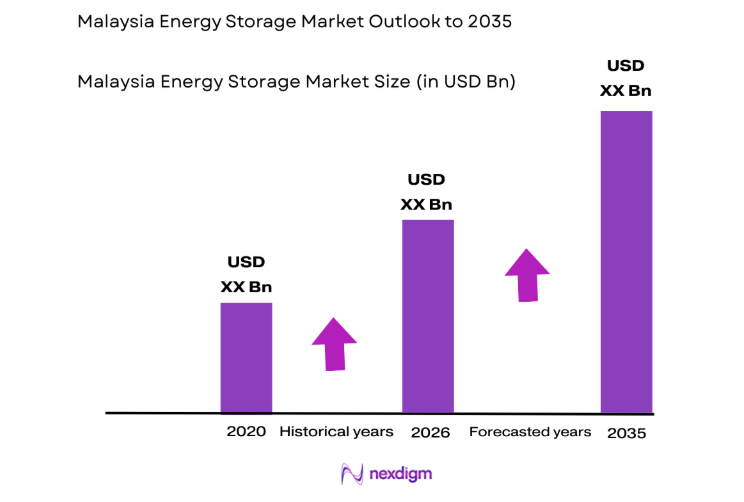
The Malaysia Energy Storage market is valued at approximately USD ~ million based on a recent historical assessment, driven by the increasing adoption of renewable energy sources and the growing need for reliable and efficient energy storage systems. The market is benefiting from the government’s renewable energy policies and initiatives that emphasize clean energy generation and storage solutions. As Malaysia increases its reliance on solar, wind, and other renewable energy sources, energy storage technologies play a critical role in stabilizing the grid and ensuring a steady energy supply.
Key regions such as Kuala Lumpur, Johor Bahru, and Penang are central to the growth of the energy storage market. Kuala Lumpur, as the capital city, drives investments and policy initiatives supporting clean energy and energy storage. Johor Bahru, with its strategic location near Singapore, has become a hub for industrial energy storage applications, while Penang’s growing manufacturing base is adopting energy storage solutions to improve energy efficiency and reduce costs. These regions are expected to lead the market in energy storage adoption.
Market Segmentation
By Product Type
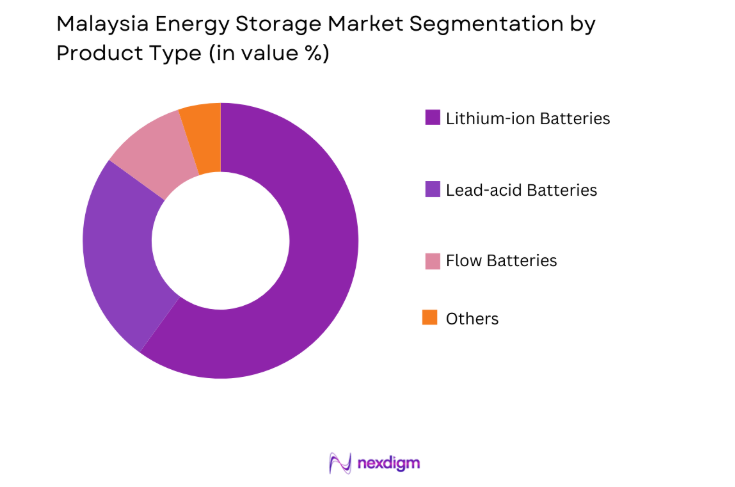
The Malaysia Energy Storage market is segmented by product type into lithium-ion batteries, lead-acid batteries, flow batteries, and others. Recently, lithium-ion batteries have dominated the market share due to their high energy density, efficiency, and decreasing costs. As the global market for electric vehicles (EVs) and renewable energy storage systems grows, lithium-ion batteries are increasingly used for residential, commercial, and industrial energy storage. The growing demand for electric vehicles, along with advancements in battery technology and government incentives, is driving the widespread adoption of lithium-ion batteries, further cementing their dominance in the Malaysian market.
By End-Use Industry
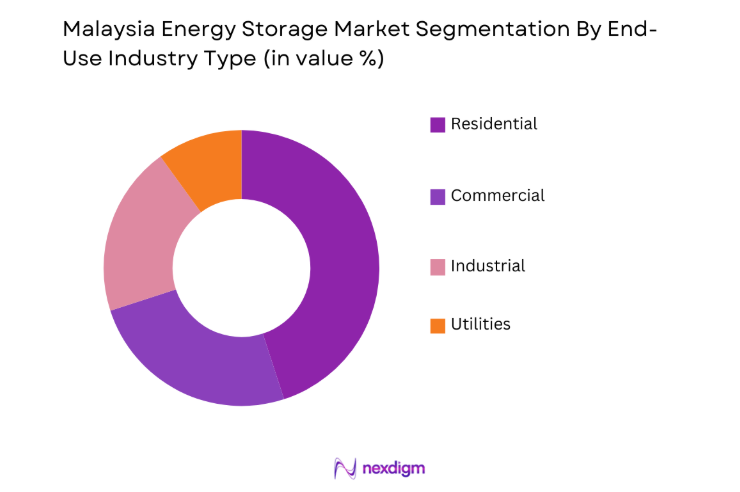
The Malaysia Energy Storage market is also segmented by end-use industry into residential, commercial, industrial, and utilities. Recently, the residential sector has dominated the market share due to the increasing number of homeowners installing solar energy systems and energy storage solutions to reduce electricity costs and achieve energy independence. Government incentives, such as the Net Energy Metering (NEM) scheme, have made energy storage solutions more affordable for residential customers. Additionally, the growing awareness of sustainability and the desire for backup power solutions during outages are contributing factors to the rise of residential energy storage installations in Malaysia.
Competitive Landscape
The competitive landscape of the Malaysia Energy Storage market is characterized by both global and local players. International companies such as Tesla, LG Chem, and Panasonic dominate the market with advanced lithium-ion battery technology and large-scale energy storage solutions. However, local companies such as Malakoff Corporation and TNB Renewables are increasingly investing in energy storage projects to support Malaysia’s transition to renewable energy. The collaboration between international and local players, along with increasing investments in energy storage infrastructure, is expected to drive further growth and innovation in the market.
| Company Name | Establishment Year | Headquarters | Technology Focus | Market Reach | Key Products | Revenue | Market-Specific Focus |
| Tesla | 2003 | Palo Alto, USA | ~ | ~ | ~ | ~ | ~ |
| LG Chem | 1947 | Seoul, South Korea | ~ | ~ | ~ | ~ | ~ |
| Panasonic | 1918 | Osaka, Japan | ~ | ~ | ~ | ~ | ~ |
| Malakoff Corporation | 1975 | Kuala Lumpur, Malaysia | ~ | ~ | ~ | ~ | ~ |
| TNB Renewables | 1997 | Kuala Lumpur, Malaysia | ~ | ~ | ~ | ~ | ~ |
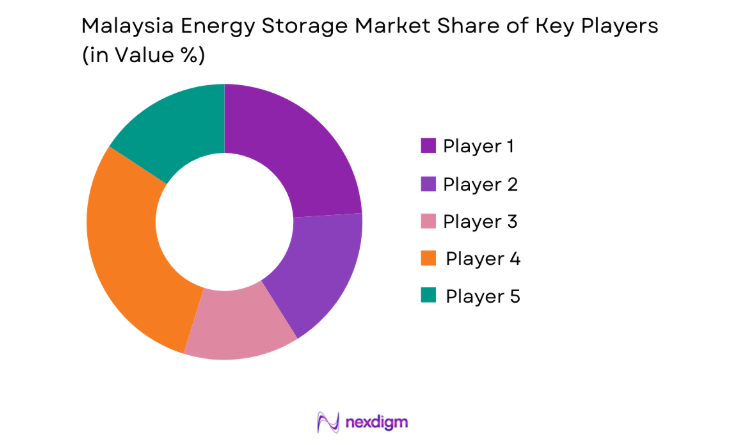
Malaysia Energy Storage Market Analysis
Growth Drivers
Government Support for Renewable Energy and Storage Solutions
The Malaysia Energy Storage market is primarily driven by the government’s strong focus on renewable energy integration and the need for efficient storage solutions. Malaysia’s Renewable Energy Transition Plan, which aims to increase the share of renewable energy in the country’s energy mix, emphasizes the adoption of energy storage systems as a crucial component of grid stability. The government’s initiatives, including subsidies and incentives for renewable energy systems, such as solar power paired with storage, are encouraging both residential and industrial users to invest in energy storage solutions. As the country moves toward achieving its sustainability goals, energy storage systems will be essential for managing intermittent renewable energy sources like solar and wind, creating significant market growth potential.
Technological Advancements and Cost Reductions
The continuous technological advancements in energy storage systems, particularly in lithium-ion battery technology, have led to significant reductions in costs, making them more affordable for consumers and businesses. As battery technology improves, the efficiency and energy density of energy storage systems continue to rise, enabling longer storage durations and faster charging times. These technological advancements, coupled with cost reductions in production, are making energy storage solutions increasingly accessible to a wider range of customers, driving their adoption across residential, commercial, and industrial sectors. The development of smart grid technologies and the integration of energy storage with renewable energy sources are also contributing to the market’s growth.
Market Challenges
High Initial Capital Costs
One of the major challenges facing the Malaysia Energy Storage market is the high initial capital costs associated with energy storage systems, particularly lithium-ion batteries. While the cost of batteries has decreased over the years, the upfront investment required to install energy storage systems remains significant. Residential consumers, in particular, may find it difficult to justify the cost of purchasing and installing energy storage systems, even with government incentives. Additionally, the need for ongoing maintenance and potential replacement of battery components over time can further increase costs. To overcome this challenge, there is a need for continued investment in research and development to reduce the costs of energy storage solutions and to explore alternative energy storage technologies that may be more cost-effective in the long run.
Regulatory and Policy Barriers
While the Malaysian government has introduced several initiatives to promote renewable energy and energy storage, regulatory and policy barriers still hinder the widespread adoption of energy storage systems. There is a need for more comprehensive and clear regulations surrounding the installation, operation, and integration of energy storage systems into the grid. Furthermore, the lack of standardized protocols for energy storage systems and the integration of such systems with the existing energy infrastructure may delay the adoption of large-scale energy storage projects. The market will require continued regulatory support and clarity to address these challenges and unlock the full potential of energy storage in Malaysia.
Opportunities
Integration of Energy Storage with Renewable Energy
The integration of energy storage systems with renewable energy sources, such as solar and wind, presents a significant opportunity for the Malaysia Energy Storage market. As Malaysia increases its renewable energy capacity, particularly in solar energy, the need for reliable and efficient storage solutions to manage intermittent energy generation becomes crucial. Energy storage systems, when combined with solar power, can store excess energy generated during the day for use at night or during periods of low generation. This integration enables greater energy independence, reduces reliance on fossil fuels, and enhances the overall sustainability of the grid. As Malaysia’s renewable energy capacity grows, the demand for integrated energy storage solutions will continue to rise, creating significant market opportunities.
Electrification of Transportation and Industrial Sectors
The ongoing shift toward electrification in transportation and industrial sectors presents a significant growth opportunity for the Malaysia Energy Storage market. As Malaysia embraces electric vehicles (EVs) and electrifies industrial processes, the demand for efficient and scalable energy storage solutions is increasing. EV charging stations, for example, require energy storage systems to manage the demand for electricity during peak times and ensure a stable supply. Additionally, industries are increasingly adopting electrification to reduce emissions and improve energy efficiency. Energy storage solutions will play a critical role in supporting this transition by ensuring reliable energy supply and enhancing grid resilience. As these sectors continue to electrify, energy storage solutions will become even more vital, driving long-term growth in the market.
Future Outlook
The Malaysia Energy Storage market is expected to experience strong growth over the next five years, driven by the increasing demand for renewable energy integration, government policies, and technological advancements in energy storage systems. The country’s renewable energy ambitions, coupled with the growing need for grid stability and reliable energy supply, will create substantial market opportunities for energy storage solutions. Additionally, the rise in electric vehicles and the electrification of industrial processes will further fuel the demand for energy storage, positioning the market for continued expansion and innovation.
Major Players
- Tesla
- LG Chem
- Panasonic
- Malakoff Corporation
- TNB Renewables
- BYD Company
- CATL
- AES Energy Storage
- Fluence
- Vestas
- Siemens Gamesa
- Schneider Electric
- Enel Green Power
- General Electric
- ABB
Key Target Audience
- Investments and venture capitalist firms
- Government and regulatory bodies
- Energy storage manufacturers
- Electric vehicle infrastructure developers
- Renewable energy solution providers
- Residential property developers
- Commercial and industrial property owners
Research Methodology
Step 1: Identification of Key Variables
Identify key market drivers, barriers, and trends that impact the Malaysia Energy Storage market, including government policies, technological advancements, and market demand.
Step 2: Market Analysis and Construction
Analyze market data, trends, and forecasts to construct a model that reflects the current and projected state of the energy storage market in Malaysia.
Step 3: Hypothesis Validation and Expert Consultation
Consult with industry experts, stakeholders, and energy storage providers to validate assumptions and ensure the accuracy of research findings.
Step 4: Research Synthesis and Final Output
Synthesize the research findings into a detailed market report that includes actionable insights, strategic recommendations, and market forecasts.

- Executive Summary
- Research Methodology (Definitions, Scope, Industry Assumptions, Market Sizing Approach, Primary & Secondary Research Framework, Data Collection & Verification Protocol, Analytic Models & Forecast Methodology, Limitations & Research Validity Checks)

- Market Definition and Scope
- Value Chain & Stakeholder Ecosystem
- Regulatory / Certification Landscape
- Sector Dynamics Affecting Demand

- Growth Drivers
Government incentives for energy storage
Technological advancements in energy storage systems
Increasing demand for renewable energy integration - Market Challenges
High initial capital costs
Regulatory barriers and policy uncertainties
Technological limitations and efficiency issues - Market Opportunities
Integration of energy storage with renewable energy systems
Expansion of energy storage systems in electric vehicle markets
Development of large-scale storage solutions - Trends
Growing adoption of energy storage in smart grids
Increasing interest in battery storage solutions - Government Regulations
National renewable energy policies
Energy storage safety and certification standards
Subsidies and tax incentives for energy storage systems - SWOT Analysis
- Porter’s Five Forces

- By Market Value, 2020-2025
- By Installed Units, 2020-2025
- By Average System Price, 2020-2025
- By System Complexity Tier, 2020-2025

- By System Type (In Value%)
Lithium-ion Batteries
Flow Batteries
Lead-acid Batteries
Sodium-based Batteries
Other Energy Storage Systems - By Platform Type (In Value%)
On-grid Energy Storage Systems
Off-grid Energy Storage Systems
Hybrid Energy Storage Systems
Mobile Energy Storage Systems - By Fitment Type (In Value%)
Residential Energy Storage Systems
Commercial Energy Storage Systems
Industrial Energy Storage Systems
Utility-scale Energy Storage Systems - By End User Segment (In Value%)
Energy Utilities
Industrial Sector
Commercial Sector

- Market Share Analysis
- Cross Comparison Parameters (Cost Efficiency, Technology, Performance, Government Support, Market Penetration, Scalability, Integration Potential)
- SWOT Analysis of Key Competitors
- Pricing & Procurement Analysis
- Key Players
Tesla, Inc.
LG Chem
Panasonic Corporation
Samsung SDI
BYD Company Limited
Sonnen GmbH
VARTA AG
Fluence Energy
AES Corporation
E.ON SE
Siemens AG
ABB Ltd
Schneider Electric
General Electric
Johnson Controls International

- Increased adoption of energy storage in the industrial sector
- Growing role of energy storage in grid stabilization
- Rising awareness about energy storage benefits in residential markets

- Forecast Market Value, 2026-2035
- Forecast Installed Units, 2026-2035
- Price Forecast by System Tier, 2026-2035
- Future Demand by Platform, 2026-2035


 Request a Sample
 Ask for Customization
 Get a Quote
 Enquire Now