
 Download PDF
 Download PDF
Market Overview
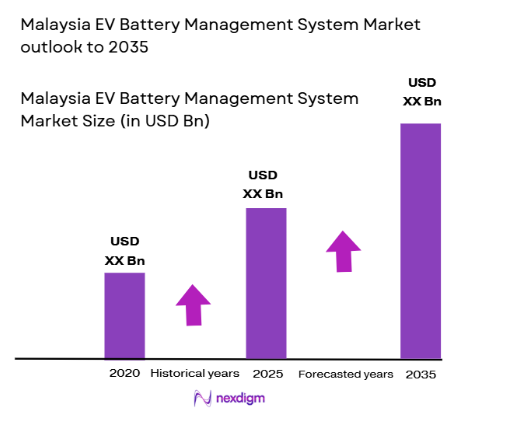
The market size of Malaysia’s EV Battery Management System market is projected to reach USD ~ billion by the end of the year, driven by strong demand for electric vehicles, increased government support for EV adoption, and substantial investments in charging infrastructure. This market is expanding rapidly, fueled by a combination of technological advancements in battery management systems, declining battery costs, and the urgent push towards sustainability. Government policies promoting green energy adoption, as well as the growing demand for energy-efficient solutions, are key drivers of the market’s growth.
Malaysia, particularly its urban centers like Kuala Lumpur and Penang, stands as a dominant hub for electric vehicle development and infrastructure. This is mainly due to the strong governmental support for EV policies, combined with the growing demand for cleaner energy alternatives. Additionally, these cities are also key players in the broader Southeast Asia EV market due to their infrastructure investments and the presence of major EV manufacturers. The local market is further bolstered by robust supply chains and strategic collaborations with international players in the EV space.
Market Segmentation
By Product Type:
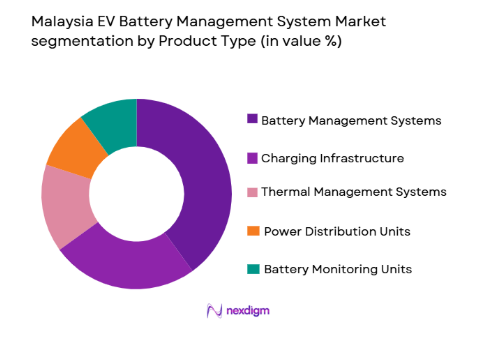
Malaysia EV Battery Management System market is segmented by product type into Battery Management Systems, Charging Infrastructure, Thermal Management Systems, Power Distribution Units, and Battery Monitoring Units. Recently, Battery Management Systems have seen a dominant market share due to their critical role in ensuring optimal performance, safety, and efficiency of electric vehicle batteries. Their importance is amplified by the increasing demand for high-performance, long-lasting EV batteries that can support more extended driving ranges and quicker charging times. This has resulted in the widespread adoption of advanced Battery Management Systems, making them the central component of the market.
By Platform Type:
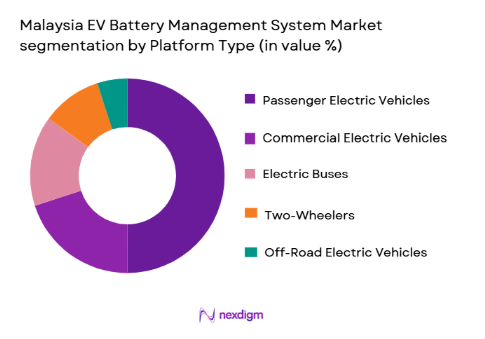
The Malaysia EV Battery Management System market is also segmented by platform type into Passenger Electric Vehicles, Commercial Electric Vehicles, Electric Buses, Two-Wheelers, and Off-Road Electric Vehicles. The Passenger Electric Vehicles sub-segment dominates the market due to the widespread adoption of electric cars in urban areas and the increased consumer awareness about sustainable transport solutions. Additionally, government incentives and the global shift toward cleaner energy sources have further accelerated the demand for electric passenger vehicles in Malaysia, reinforcing this sub-segment’s market dominance.
Competitive Landscape
The competitive landscape of Malaysia’s EV Battery Management System market is characterized by a mix of global giants and regional players, with consolidation gradually occurring due to strategic mergers and acquisitions. Leading players focus on innovation, efficiency, and affordability to maintain their competitive edge. Major players are also focusing on expanding their regional presence through partnerships with local governments and automotive manufacturers, enhancing their capabilities in product development and distribution.
| Company Name | Establishment Year | Headquarters | Technology Focus | Market Reach | Key Products | Revenue | R&D Investment |
| BYD | 1995 | China | ~ | ~ | ~ | ~ | ~ |
| Panasonic | 1918 | Japan | ~ | ~ | ~ | ~ | ~ |
| LG Chem | 1947 | South Korea | ~ | ~ | ~ | ~ | ~ |
| CATL | 2011 | China | ~ | ~ | ~ | ~ | ~ |
| Tesla | 2003 | USA | ~ | ~ | ~ | ~ | ~ |
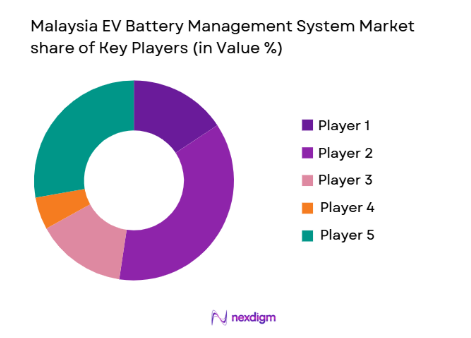
Malaysia EV Battery Management System Market Analysis
Growth Drivers
Government Support for Electric Vehicles:
The Malaysian government has introduced several policies aimed at accelerating the adoption of electric vehicles in the country. These policies include tax incentives, rebates, and infrastructure development programs that incentivize EV manufacturers and consumers. This robust government support is driving the demand for EVs and, consequently, for advanced EV battery management systems. The policy framework not only enhances the financial attractiveness of EVs but also promotes the establishment of a comprehensive charging network, which is critical for the widespread adoption of electric vehicles. Additionally, the focus on reducing emissions in line with global sustainability goals has positioned Malaysia as a key player in the transition to cleaner energy, further supporting the growth of this sector. As a result, EV battery management systems, which are crucial for maximizing the performance and lifespan of EV batteries, are seeing an uptick in demand, fueling growth in the market.
Technological Advancements in Battery Management Systems:
Another significant growth driver in Malaysia’s EV Battery Management System market is the rapid technological advancements being made in battery management solutions. Innovations in battery monitoring, charging, and thermal management systems are creating more efficient and cost-effective solutions for electric vehicles. With increasing research and development efforts in lithium-ion and solid-state battery technologies, battery management systems have become a critical component in maximizing battery performance, safety, and lifespan. Additionally, the integration of IoT and AI into battery management systems is allowing for more sophisticated monitoring and diagnostics, improving the overall efficiency and reliability of EV batteries. These innovations not only enhance the functionality of electric vehicles but also help address concerns regarding battery longevity and performance, further driving the market’s expansion in Malaysia.
Market Challenges
High Initial Investment in EV Infrastructure:
One of the primary challenges hindering the rapid expansion of the EV Battery Management System market in Malaysia is the high initial investment required for EV infrastructure. The cost of building the necessary charging stations, energy storage solutions, and grid upgrades is significant, and this creates a financial barrier for widespread adoption. While government incentives are aimed at reducing this burden, the upfront capital required from both public and private sectors remains a considerable obstacle. This challenge is particularly prominent in rural areas and smaller cities, where the lack of infrastructure makes it difficult to support the widespread adoption of electric vehicles. Without a comprehensive and accessible network of charging infrastructure, consumer confidence in EVs remains low, further delaying the growth of the EV Battery Management System market.
Battery Efficiency and Performance Limitations:
Another significant challenge facing the Malaysia EV Battery Management System market is the limitations in battery efficiency and performance. Although battery technology has advanced in recent years, the energy density, charging time, and lifespan of batteries still face constraints that hinder their ability to meet the growing demand for electric vehicles. Consumers continue to be concerned about the driving range of EVs, and long charging times can create inconvenience, especially for users who require quick turnarounds. These challenges create a demand for better and more efficient battery management systems that can help optimize the performance of existing battery technologies. As a result, manufacturers must invest in further innovation to overcome these limitations and meet market expectations. Without improvements in battery efficiency and performance, the EV market in Malaysia may struggle to achieve its full potential, limiting the growth of the battery management system segment.
Opportunities
Integration of Smart Technologies:
One of the key opportunities for growth in the Malaysia EV Battery Management System market is the integration of smart technologies, such as AI and IoT, into battery management systems. These technologies offer a wide range of benefits, from real-time monitoring and predictive analytics to the optimization of energy usage and battery life. Smart battery management systems can improve the overall performance of electric vehicles by providing more accurate data on battery health and ensuring that the batteries are charged and discharged efficiently. The rise of smart grids and connected infrastructure further enhances the ability of EVs to interact with the grid, enabling better energy management. By leveraging these smart technologies, EV manufacturers and battery management system providers can offer enhanced solutions that improve the user experience, extend the lifespan of batteries, and increase the overall adoption of electric vehicles in Malaysia. This represents a significant opportunity for market players to gain a competitive edge and drive growth in the market.
Battery Recycling and Sustainability:
As the demand for electric vehicles grows, so does the need for sustainable solutions to address the environmental impact of battery disposal and recycling. The recycling of EV batteries offers significant opportunities for market players to improve their environmental footprint while providing valuable raw materials for new batteries. Battery management systems play a crucial role in ensuring that EV batteries are recycled efficiently and sustainably by providing accurate data on battery health and helping identify when a battery has reached the end of its useful life. Additionally, as global sustainability trends continue to gain momentum, governments and businesses are placing greater emphasis on circular economy models. By adopting advanced recycling processes and improving battery lifespan management, companies can not only meet regulatory requirements but also tap into a growing market for recycled materials, thereby enhancing their long-term profitability and sustainability credentials.
Future Outlook
The future of Malaysia’s EV Battery Management System market looks promising, driven by continued government support for electric vehicles, increasing investments in charging infrastructure, and advancements in battery technologies. Over the next five years, the market is expected to experience significant growth, fueled by both local and global demand for electric vehicles. Technological developments in battery management systems, including AI integration and smart monitoring, will enhance the efficiency of electric vehicles and make them more appealing to consumers. Additionally, regulatory policies promoting environmental sustainability will further push the adoption of electric vehicles, resulting in an expansion of the EV battery management market in Malaysia.
Major Players
- BYD
- Panasonic
- LG Chem
- CATL
- Tesla
- Nissan
- Bosch
- Denso
- Delphi Technologies
- A123 Systems
- Samsung SDI
- Hitachi
- General Motors
- Schneider Electric
- Siemens
Key Target Audience
- Automobile Manufacturers
- Battery Manufacturers
- Government and Regulatory Bodies
- EV Charging Station Providers
- Fleet Operators
- Automotive Component Suppliers
- Energy Storage Solution Providers
- EV Battery Recycling Companies
Research Methodology
Step 1: Identification of Key Variables
We identify key variables affecting market growth, including technological developments, regulatory policies, and economic factors influencing the demand for electric vehicles and battery management systems.
Step 2: Market Analysis and Construction
Comprehensive market analysis is conducted through both primary and secondary research, focusing on market size, trends, and segmentations relevant to EV Battery Management Systems in Malaysia.
Step 3: Hypothesis Validation and Expert Consultation
The initial findings are validated through consultations with industry experts, EV manufacturers, and technology providers to ensure accuracy and market relevance.
Step 4: Research Synthesis and Final Output
The final report is synthesized, combining insights from primary data, market trends, and expert consultations to deliver a comprehensive analysis of Malaysia’s EV Battery Management System market.

- Executive Summary
- Research Methodology (Definitions, Scope, Industry Assumptions, Market Sizing Approach, Primary & Secondary Research Framework, Data Collection & Verification Protocol, Analytic Models & Forecast Methodology, Limitations & Research Validity Checks)

- Market Definition and Scope
- Value Chain & Stakeholder Ecosystem
- Regulatory / Certification Landscape
- Sector Dynamics Affecting Demand
- Strategic Initiatives & Infrastructure Growth

- Growth Drivers
Increased Adoption of Electric Vehicles
Government Incentives for EV Adoption
Technological Advancements in Battery Management Systems
Expansion of Charging Infrastructure
Environmental Regulations and Sustainability Initiatives - Market Challenges
High Initial Investment for EV Infrastructure
Battery Lifecycle and Performance Limitations
Lack of Standardization in Battery Management Systems
Technological Barriers in Battery Efficiency
Supply Chain Disruptions in EV Battery Production - Market Opportunities
Integration of AI and IoT for Smart Battery Management
Development of Long-Range EV Batteries
Collaborations Between Governments and Private Sectors - Trends
Rising Demand for Autonomous Electric Vehicles
Growth of Battery Recycling Technologies
Improved Battery Charging Speed and Efficiency
Expansion of EV Charging Networks in Urban Areas
Integration of Smart Grid Systems with EVs - Government Regulations & Defense Policy
Government Funding for EV and Battery Development
Environmental Policies Promoting Sustainable EV Growth
Regulations Governing EV Battery Recycling - SWOT Analysis
- Stakeholder and Ecosystem Analysis
- Porter’s Five Forces Analysis
- Competition Intensity and Ecosystem Mapping

- By Market Value, 2020-2025
- By Installed Units, 2020-2025
- By Average System Price, 2020-2025
- By System Complexity Tier, 2020-2025

- By System Type (In Value%)
Battery Management Systems for Electric Vehicles
Charging Infrastructure Systems
Thermal Management Systems
Power Distribution Units
Battery Monitoring Units - By Platform Type (In Value%)
Passenger Electric Vehicles
Commercial Electric Vehicles
Electric Buses
Two-Wheelers
Off-Road Electric Vehicles - By Fitment Type (In Value%)
OEM Battery Management Systems
Aftermarket Battery Management Systems
Integrated Battery Systems
Modular Battery Management Systems
Custom-Fit Battery Systems - By EndUser Segment (In Value%)
Automobile Manufacturers
Battery Manufacturers
Fleet Operators
Charging Infrastructure Providers
Government & Regulatory Bodies - By Procurement Channel (In Value%)
Direct Procurement from OEMs
Government Tenders and Contracts
Third-Party Distributors
E-commerce Platforms
Private Sector Procurement - By Material / Technology (In Value%)
Lithium-Ion Battery Management Technology
Solid-State Battery Management Systems
Thermal Management Technologies
High-Voltage Power Electronics
Wireless Battery Monitoring Technology

- Market structure and competitive positioning
- Market share snapshot of major players
- CrossComparison Parameters (System Type, Platform Type, Procurement Channel, EndUser Segment, Fitment Type, Material/Technology, Pricing, Geographic Reach, Innovation, Market Share)
- SWOT Analysis of Key Players
- Pricing & Procurement Analysis
- Key Players
BYD
LG Chem
Tesla
Panasonic
CATL
Samsung SDI
A123 Systems
Contemporary Amperex Technology
BASF
General Motors
Volkswagen
BMW Group
Hitachi
Delphi Technologies
NXP Semiconductors

- Automobile Manufacturers Expanding EV Production
- Battery Manufacturers Focusing on Advanced Technologies
- Fleet Operators Investing in EV Battery Solutions
- Governments Supporting Infrastructure Development

- Forecast Market Value, 2026-2035
- Forecast Installed Units, 2026-2035
- Price Forecast by System Tier, 2026-2035
- Future Demand by Platform, 2026-2035


 Request a Sample
 Ask for Customization
 Get a Quote
 Enquire Now