
 Download PDF
 Download PDF
Market Overview
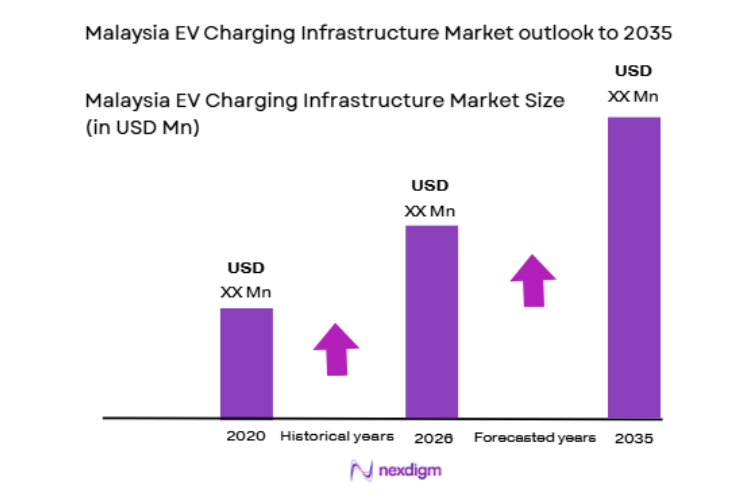
The Malaysia EV Charging Infrastructure Market is experiencing significant growth, driven by the increasing adoption of electric vehicles (EVs) and substantial governmental support for sustainable energy initiatives. Based on a recent historical assessment, the market is expected to reach approximately USD ~million in 2025. This growth is fueled by government incentives, policies promoting green energy, and increasing investments from both public and private sectors. The robust push towards achieving carbon-neutral goals and reducing dependency on fossil fuels has accelerated the demand for EV infrastructure in Malaysia.
The market is primarily driven by urban areas, with cities like Kuala Lumpur, Penang, and Johor Bahru being major hubs for EV charging infrastructure. These regions are home to high EV adoption rates and a growing consumer preference for eco-friendly transportation options. The government’s commitment to enhancing EV infrastructure, coupled with favorable policies and subsidies, has positioned these cities as key players in the market. This concentrated urban development drives further investments in charging stations, fueling the expansion of the EV infrastructure ecosystem.
Market Segmentation
By Product Type
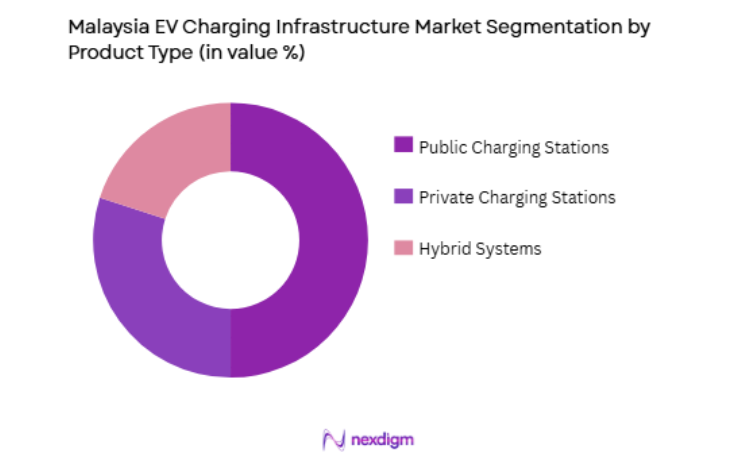
Malaysia’s EV Charging Infrastructure market is segmented by product type into public charging stations, private charging stations, and hybrid systems. Recently, public charging stations have a dominant market share due to factors such as government investment in public infrastructure, the growing need for accessible charging points in urban areas, and high demand from EV users. The government’s incentives and commitment to building a comprehensive public charging network have made public charging stations the preferred choice among consumers. Furthermore, the increased number of electric vehicles on the road has further driven the need for public charging networks, contributing to the growth of this sub-segment.
By Charging Type
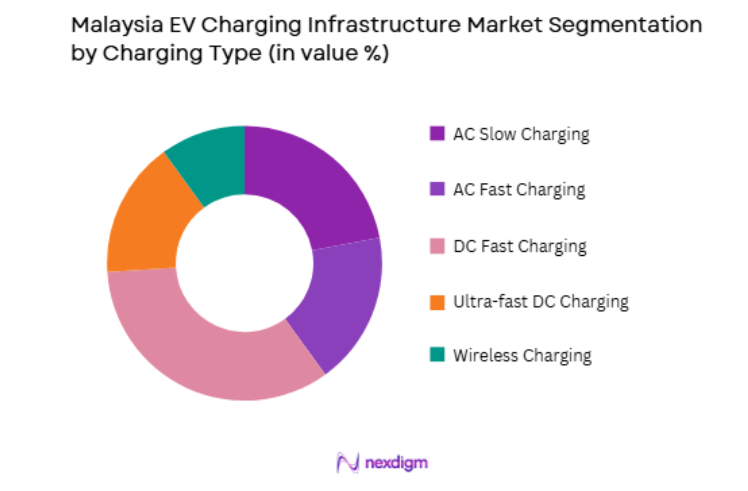
Malaysia EV Charging Infrastructure Market is segmented by charging type into AC slow charging, AC fast charging, DC fast charging, ultra-fast DC charging, and wireless charging. Recently, DC fast charging has a dominant market share due to factors such as increasing demand for faster charging cycles, highway corridor charging expansion, and the need for reduced vehicle downtime. Rapid urban commuting patterns and commercial fleet electrification have accelerated the deployment of DC fast chargers across urban hubs, shopping centers, and expressway rest areas. Government infrastructure programs and partnerships with energy companies have prioritized high-power charging installations to support long-distance EV travel. DC fast charging also benefits from technological advancements that allow higher energy transfer rates, making it suitable for both passenger vehicles and commercial EV fleets. Growing EV battery capacities and consumer preference for shorter charging durations further reinforce the dominance of this sub-segment across the national charging ecosystem.
Competitive Landscape
The Malaysia EV Charging Infrastructure market is highly competitive, with numerous global and local players competing for market share. The market is undergoing consolidation, with large corporations collaborating with government bodies to build and expand the charging network. Established players are also focusing on technological innovations and strategic partnerships to maintain a competitive edge. The influence of major players such as global electric vehicle charging network providers and energy companies has been significant in shaping market dynamics and driving the expansion of the infrastructure.
| Company Name | Establishment Year | Headquarters | Technology Focus | Market Reach | Key Products | Revenue | Additional Parameter |
| ChargePoint | 2007 | California, USA | ~ | ~ | ~ | ~ | ~ |
| Tesla | 2003 | California, USA | ~ | ~ | ~ | ~ | ~ |
| ABB | 1988 | Switzerland | ~ | ~ | ~ | ~ | ~ |
| Siemens | 1847 | Germany | ~ | ~ | ~ | ~ | ~ |
| Greenlots | 2008 | California, USA | ~ | ~ | ~ | ~ | ~ |
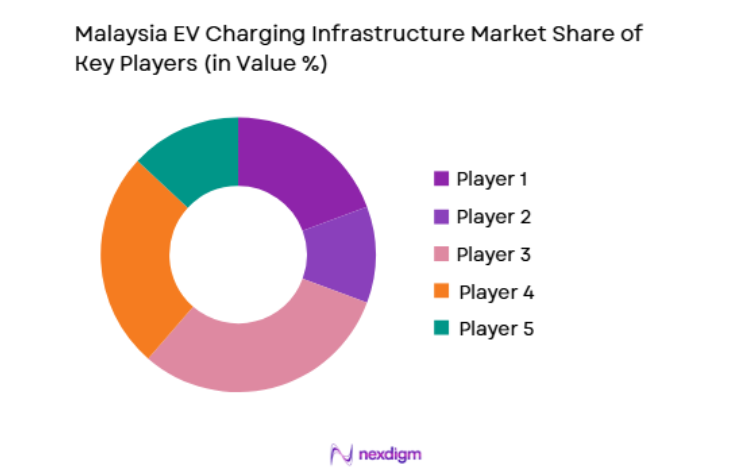
Malaysia EV Charging Infrastructure Market Analysis
Growth Drivers
Government Support and Incentives
The growth of Malaysia’s EV Charging Infrastructure Market is heavily driven by government support and incentives. The Malaysian government has set ambitious goals to transition towards electric mobility, with policies such as tax exemptions, rebates, and subsidies for EV purchases and charging infrastructure. These initiatives are designed to reduce the upfront cost of EVs and make EV charging stations more accessible to the public. Additionally, government investments in public charging networks play a critical role in expanding the infrastructure and ensuring that EV owners have convenient charging options. This robust government backing provides the necessary foundation for a long-term sustainable growth trajectory for the market. Government collaborations with the private sector are also helping to facilitate the establishment of charging stations, further accelerating the adoption of electric vehicles.
Urbanization and Increased EV Adoption
The shift towards EV adoption in urban centers across Malaysia has also contributed significantly to the market’s growth. As cities grow, the demand for cleaner, more sustainable transportation solutions has increased. The rise of electric vehicles as a viable alternative to traditional internal combustion engine vehicles has led to a surge in EV adoption. In response, cities like Kuala Lumpur, Penang, and Johor Bahru have seen significant investments in charging infrastructure to cater to the growing number of EVs on the road. Urbanization also drives the demand for high-density charging points to ensure that EV owners have easy access to charging facilities, especially in public spaces such as parking lots, shopping centers, and commercial buildings. This trend is further supported by the increasing consumer awareness regarding environmental sustainability, further bolstering EV adoption and charging infrastructure growth.
Market Challenges
Infrastructure Development Costs
A significant challenge facing the Malaysia EV Charging Infrastructure Market is the high initial investment required for infrastructure development. Establishing a widespread network of EV charging stations involves substantial costs related to equipment installation, grid upgrades, and operational expenses. For private investors and operators, the financial burden of setting up charging infrastructure, particularly in remote or less dense areas, may discourage new entrants from entering the market. Moreover, the inconsistent demand for charging stations, particularly in areas with lower EV adoption rates, makes it difficult to predict returns on investments. Without a clearly defined ROI, some investors are hesitant to fund the development of charging networks in these regions, limiting the overall expansion of the infrastructure.
Interoperability Issues and Standardization
Another challenge that hampers the growth of Malaysia’s EV Charging Infrastructure Market is the lack of standardized charging protocols and interoperability between different charging networks. The absence of a unified system means that EV owners may struggle to find compatible charging stations, particularly if their vehicle is from a manufacturer whose chargers are not supported by all networks. This fragmentation leads to confusion and frustration among consumers and reduces the overall user experience. To address this challenge, market players and government agencies must work together to establish common standards and ensure that all charging stations are compatible with various EV models and charging interfaces. Standardization of charging technology will facilitate greater adoption and usage of EV infrastructure, improving the market’s efficiency.
Opportunities
Technological Advancements in Charging Solutions
As the EV market continues to evolve, advancements in charging technology present significant opportunities for growth in Malaysia’s charging infrastructure sector. Innovations in ultra-fast charging technologies, wireless charging systems, and energy management software are expected to drive the market forward. These advancements will reduce charging times, improve the overall efficiency of charging stations, and provide more convenient options for EV users. Companies that invest in next-generation charging technologies will have a competitive edge in the market, offering better services and attracting a larger customer base. Furthermore, integration with renewable energy sources like solar power will help reduce operating costs for charging station operators while promoting sustainable practices, which are highly valued by both governments and consumers.
Integration with Smart Grids and Energy Storage
Another promising opportunity lies in the integration of EV charging infrastructure with smart grids and energy storage systems. Smart grids enable more efficient distribution and management of electricity, allowing EV charging stations to operate in a more energy-efficient manner. With the rising demand for clean energy and sustainable solutions, EV charging stations that are integrated with renewable energy sources and energy storage systems can lower carbon footprints while reducing electricity costs. This integration will allow charging stations to optimize energy use, store excess power during off-peak hours, and distribute energy more effectively during peak periods. The adoption of smart charging solutions presents a significant opportunity to improve the infrastructure’s efficiency and sustainability, aligning with both environmental and economic goals.
Future Outlook
Over the next five years, the Malaysia EV Charging Infrastructure Market is expected to continue its upward trajectory, driven by ongoing technological developments, regulatory support, and increasing demand for electric vehicles. The government’s continued push for green energy solutions, coupled with technological innovations in charging systems, will significantly shape the market’s growth. Furthermore, as EV adoption rates increase across urban areas and the government’s EV infrastructure development plans materialize, the market will see further expansion, with a notable rise in the number of public charging stations.
Major Players
- ChargePoint
- Tesla
- ABB
- Siemens
- Greenlots
- Shell
- EVBox
- BP Chargemaster
- Schneider Electric
- ABB
- Engie
- Tesla Supercharger
- Siemens EV Solutions
- Hitachi ABB Power Grids
- McKinsey Electric
Key Target Audience
- Investments and venture capitalist firms
- Government and regulatory bodies
- Electric vehicle manufacturers
- Automotive industry suppliers
- EV charging infrastructure developers
- Energy companies
- Public transportation companies
- Fleet operators
Research Methodology
Step 1: Identification of Key Variables
This step involves identifying the key factors that drive the growth of the EV charging infrastructure market, such as government policies, consumer adoption rates, and technological advancements.
Step 2: Market Analysis and Construction
This phase includes gathering data on market trends, industry challenges, competitive landscape, and segmentation to build a comprehensive market model.
Step 3: Hypothesis Validation and Expert Consultation
This step ensures the hypotheses developed are validated through interviews with industry experts, governmental bodies, and key stakeholders in the market.
Step 4: Research Synthesis and Final Output
In this final step, the research findings are compiled into a detailed report, providing actionable insights and forecasts based on the validated data.

- Executive Summary
- Research Methodology (Definitions, Scope, Industry Assumptions, Market Sizing Approach, Primary & Secondary Research Framework, Data Collection & Verification Protocol, Analytic Models & Forecast Methodology, Limitations & Research Validity Checks)

- Market Definition and Scope
- Value Chain & Stakeholder Ecosystem
- Regulatory / Certification Landscape
- Sector Dynamics Affecting Demand

- Growth Drivers
Government Policy Support for EV Adoption
Technological Advancements in Charging Infrastructure
Rising Environmental Awareness
Increasing EV Sales
Expansion of Urban Infrastructure - Market Challenges
High Initial Infrastructure Investment
Limited EV Adoption in Rural Areas
Technology Integration Barriers
Regulatory and Compliance Issues
Consumer Education and Awareness - Market Opportunities
Development of Ultra-Fast Charging Networks
Collaboration with EV Manufacturers
Expansion of Charging Solutions in Urban Centers - Trends
Growing Demand for Smart Charging Stations
Emerging Wireless EV Charging Technology - Government Regulations
- SWOT Analysis
- Porter’s Five Forces

- By Market Value, 2020-2025
- By Installed Units, 2020-2025
- By Average System Price, 2020-2025
- By System Complexity Tier, 2020-2025

- By System Type (In Value%)
Public Charging Stations
Private Charging Solutions
Fast Charging Stations
Home Charging Systems
Ultra-Fast Charging Networks - By Platform Type (In Value%)
Standalone Charging Stations
Integrated Charging Platforms
Smart Grid-Integrated Charging
Cloud-Based Charging Management Systems
Mobile Charging Solutions - By Fitment Type (In Value%)
On-Premise Charging Solutions
Residential Charging Systems
Commercial Charging Systems
Fleet Charging Solutions - By End User Segment (In Value%)
Private Electric Vehicle Owners
Commercial Fleet Operators
Public Transport Operators

- Market Share Analysis
- Cross Comparison Parameters (System Type, Platform Type, Fitment Type, End User Segment, Charging Speed, Geographic Coverage, Technological Integration, Charging Network Scalability, Cost Efficiency, Environmental Impact)
- SWOT Analysis of Key Competitors
- Pricing & Procurement Analysis
- Key Players
ChargePoint
Tesla
Greenlots
BP Chargemaster
Shell Recharge
Eaton
ABB
Siemens
Schneider Electric
EVBox
ClipperCreek
Engie
Iberdrola
Siemens
Coulomb Technologies

- Growth in Private EV Ownership
- Commercial Fleets Increasing EV Adoption
- Public Transport Integration with EVs
- Hospitality Sector Adoption of EV Charging

- Forecast Market Value, 2026-2035
- Forecast Installed Units, 2026-2035
- Price Forecast by System Tier, 2026-2035
- Future Demand by Platform, 2026-2035


 Request a Sample
 Ask for Customization
 Get a Quote
 Enquire Now