
 Download PDF
Market Overview
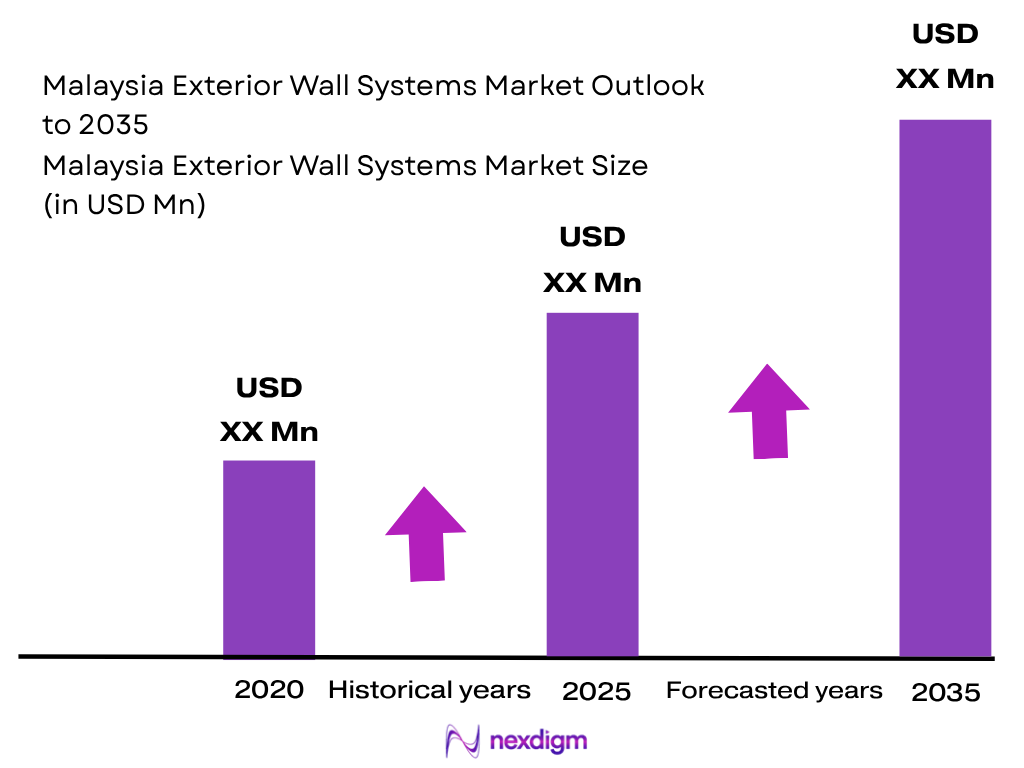
The Malaysia Exterior Wall Systems Market is estimated at ~USD XX billion in 2024, supported by strong construction activity across residential, non-residential and infrastructure projects. Malaysia’s construction work done reached RM158.8 billion in 2024, compared with RM132.2 billion in 2023, while residential buildings generated RM35.8 billion and non-residential buildings generated RM44.4 billion. The construction sector also expanded 17.5 in 2024, creating sustained requirements for curtain walls, glazing, aluminium cladding, insulated envelopes and other facade systems. Department of Statistics Malaysia
The Malaysia Exterior Wall Systems Market is concentrated around major urban and industrial construction centres, particularly Kuala Lumpur, Selangor, Johor and Penang, because these locations combine high-density development, commercial construction, manufacturing activity and infrastructure investment. Selangor recorded GDP of RM432.9 billion in 2024, while Johor reached RM158.0 billion and recorded construction-sector growth of 42.7. Malaysia also received 37,961,485 visitor arrivals in 2024, supporting hotel, retail and mixed-use facade requirements.
Market Segmentation
By System Type
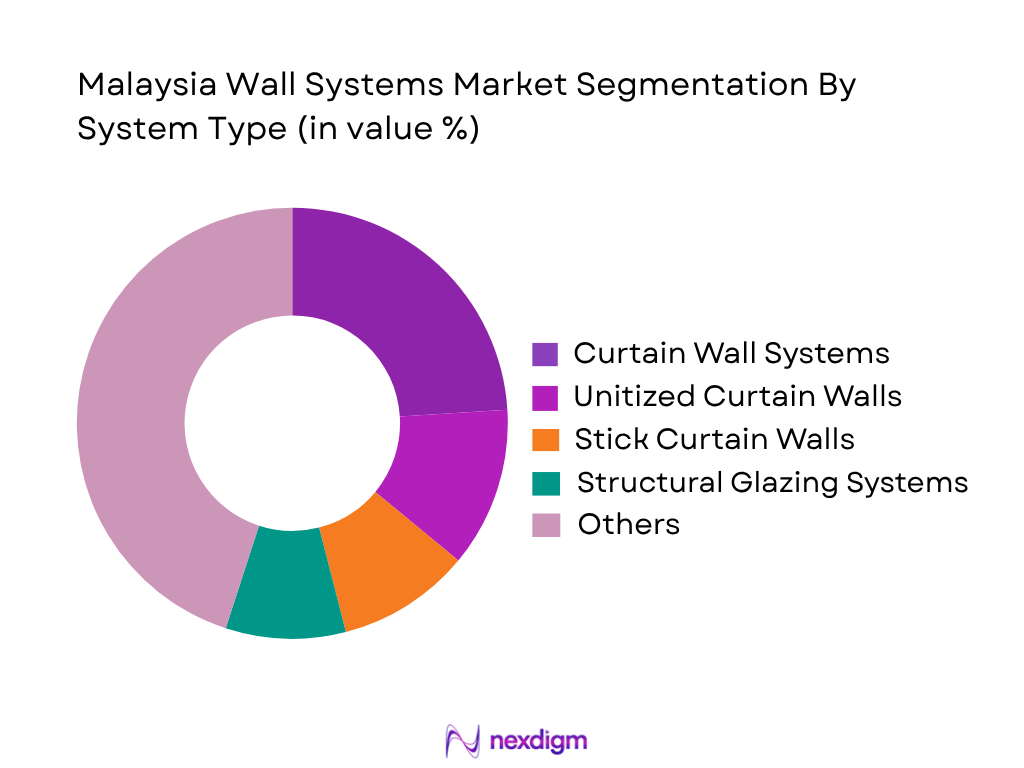
The Malaysia Exterior Wall Systems Market is segmented by system type into curtain wall systems, unitized curtain walls, stick curtain walls, structural glazing systems, semi-unitized facade systems, aluminium cladding systems, aluminium composite panel cladding, metal cladding systems, stone cladding systems, rainscreen and ventilated facade systems, insulated exterior wall systems, and precast and GRC exterior wall systems. Curtain wall systems are expected to represent the leading sub-segment because they are extensively used in high-rise residential, commercial, office, retail, hospitality and mixed-use developments. Their combination of architectural flexibility, daylight provision and compatibility with aluminium and high-performance glazing makes them suitable for Malaysia’s urban construction environment. Unitized systems are gaining relevance where project developers require faster installation and factory-controlled fabrication. Aluminium and ACP cladding remain important for opaque facade sections and architectural detailing, while structural glazing supports premium developments. Rainscreen, ventilated and insulated systems are increasingly relevant for tropical heat, humidity and rainfall management.
By Application
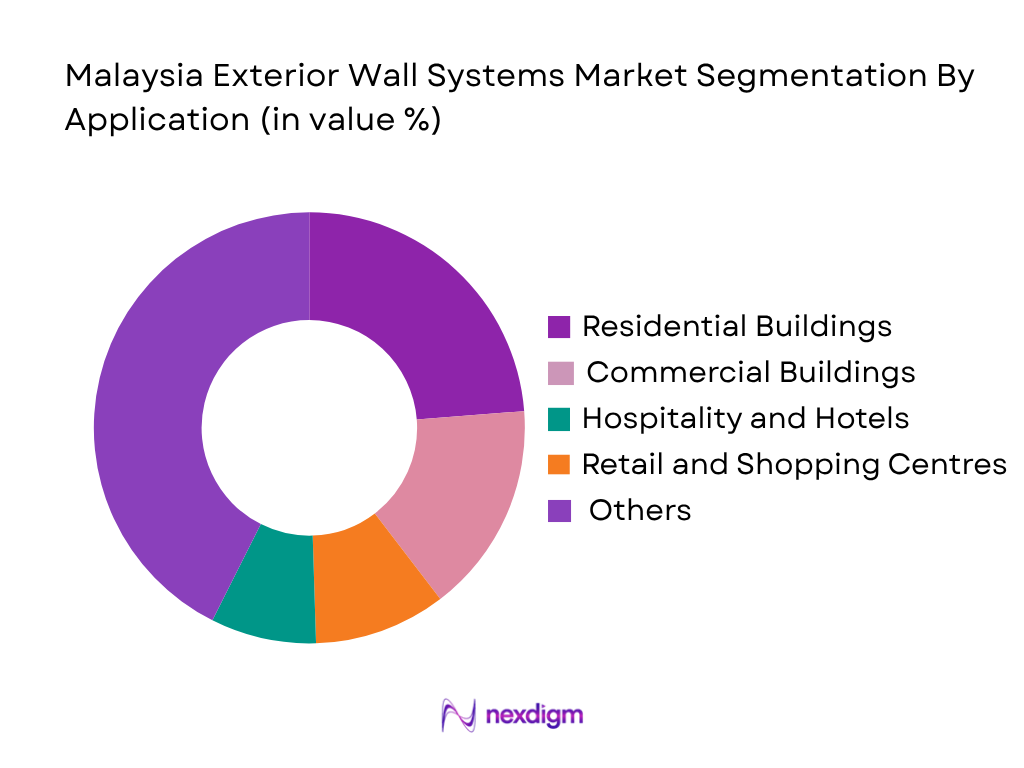
The Malaysia Exterior Wall Systems Market is segmented by application into residential buildings, commercial buildings, hospitality and hotels, retail and shopping centres, office buildings, healthcare facilities, educational buildings, industrial and logistics buildings, airports and transportation infrastructure, government and institutional buildings, mixed-use developments, data centres, and entertainment and cultural developments. Residential buildings are expected to represent the leading application because Malaysia’s urban housing pipeline supports recurring demand for glazing, balconies, aluminium cladding, curtain walls and opaque facade systems. The residential construction subsector recorded RM35.8 billion in work done in 2024, while non-residential buildings generated RM44.4 billion, demonstrating demand across both housing and commercial assets. Kuala Lumpur and Selangor remain important because of dense urban development, while Johor benefits from industrial and cross-border development. Hospitality is also significant, with Malaysia receiving 37.96 million visitor arrivals in 2024, supporting hotel construction, refurbishment and mixed-use tourism projects.
Competitive Landscape
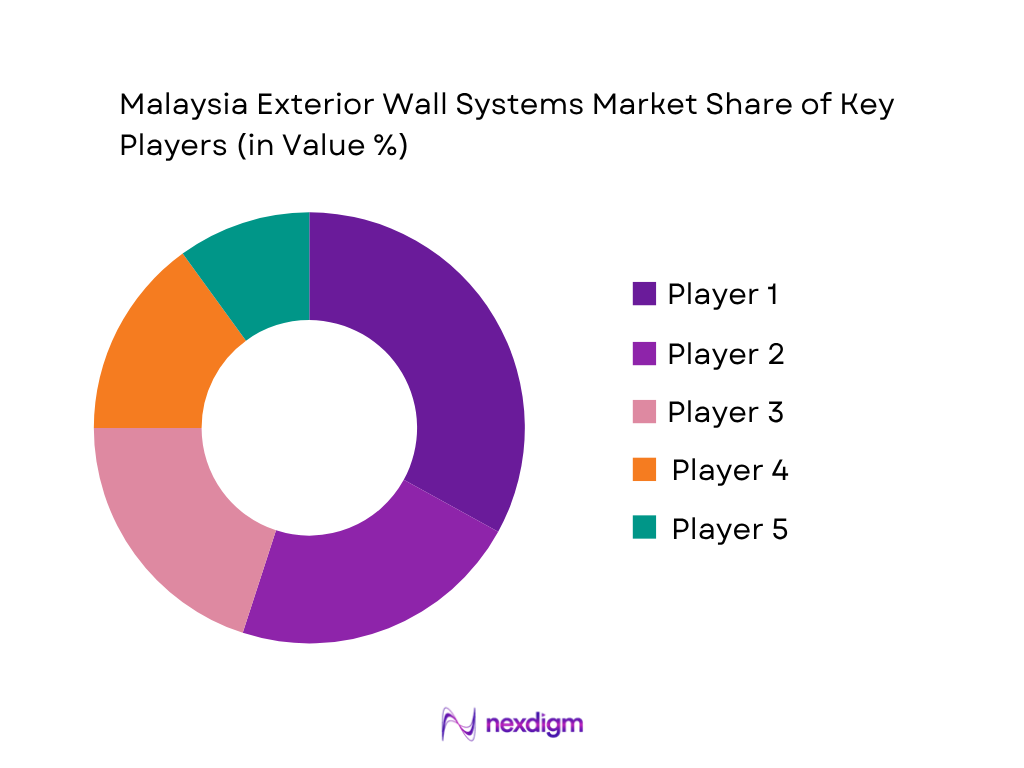
The Malaysia Exterior Wall Systems Market comprises domestic facade fabricators, aluminium and glass processors, international building-envelope system suppliers and diversified construction-material companies. Competition is influenced by facade engineering capability, project execution capacity, aluminium fabrication, architectural glass processing, unitized facade manufacturing and the ability to meet thermal, fire, structural and weather-performance requirements. Major participants serve high-rise residential, commercial, hospitality, industrial, infrastructure and data-centre projects.
| Company | Establishment Year | Headquarters | Curtain Wall Capability | Aluminium Fabrication | Architectural Glass | Cladding Portfolio | Unitized Facade Capability | Green Building Capability |
| YKK AP | 1957 | Tokyo, Japan | ~ | ~ | ~ | ~ | ~ | ~ |
| Schüco | 1951 | Bielefeld, Germany | ~ | ~ | ~ | ~ | ~ | ~ |
| Reynaers Aluminium | 1965 | Duffel, Belgium | ~ | ~ | ~ | ~ | ~ | ~ |
| Saint-Gobain | 1665 | Paris, France | ~ | ~ | ~ | ~ | ~ | ~ |
| Kingspan | 1972 | Kingscourt, Ireland | ~ | ~ | ~ | ~ | ~ | ~ |
Malaysia Exterior Wall Systems Market Analysis
Growth Drivers
Strong Construction Activity and Residential Development
Malaysia’s construction cycle provides a direct demand base for exterior wall systems, particularly curtain walls, architectural glazing, aluminium cladding, ACP panels and insulated facade assemblies. The Department of Statistics Malaysia reported RM158.8 billion of construction work done in 2024, while residential building activity reached RM35.8 billion and non-residential building activity reached RM44.4 billion. The construction sector expanded 17.5 in 2024, with building construction increasing 16.2 and specialised construction activities increasing 21.0. These indicators support continued requirements for exterior-envelope materials across high-rise residential, commercial, office and mixed-use projects. Malaysia’s real GDP expanded 5.1 in 2024, while nominal GDP reached US$422.2 billion and population reached 34.1 million. Strong construction activity is creating recurring requirements for facade engineering, fabrication and installation services across different building categories. Urban development in Kuala Lumpur, Selangor, Johor and Penang is particularly relevant because these locations combine residential, commercial, industrial and mixed-use development. High-rise construction also increases demand for curtain walls, glazing, aluminium systems and architectural cladding because developers require lightweight and visually flexible envelope solutions. Continued investment in urban buildings therefore provides a broad project pipeline for facade manufacturers, contractors and material suppliers. The combination of economic expansion, construction activity and urban development creates sustained demand for exterior wall systems across Malaysia.
Expansion of Industrial, Data-Centre and High-Value Commercial Construction
Malaysia’s growing investment pipeline is creating additional demand for technically specified exterior wall systems beyond conventional residential and commercial construction. Approved investments reached RM378.5 billion across 6,700 projects in 2024, with 207,241 new jobs associated with these projects. Services-sector investments reached RM252.7 billion, while manufacturing investments reached RM120.5 billion, strengthening requirements for offices, industrial facilities, logistics buildings, technology campuses and specialised structures. Data-centre development is particularly relevant to the facade market, with RM90.2 billion of approved data-centre, cloud-computing and data-hosting projects recorded from 2021 through June 2024. Johor had 9 completed data-centre projects with combined capacity of 1,280 MW and another 6 projects under completion with almost 1,490 MW capacity. These developments require durable, thermally controlled and performance-oriented exterior envelopes. Malaysia’s GDP reached US$422.2 billion in 2024, while private investment expanded 12.3. The expansion of technology-intensive facilities creates demand for insulated panels, metal cladding, high-performance glazing and engineered facade systems. Industrial developments also require exterior envelopes capable of supporting fire-safety, weather-resistance and operational requirements. The concentration of new investment in Johor, Selangor and Kuala Lumpur strengthens demand in major construction hubs. This diversification allows exterior wall-system suppliers to participate in residential, commercial, industrial, logistics and technology-related projects rather than relying on a single construction segment.
Market Challenges
Tropical Climate Exposure and Facade Performance Requirements
Malaysia’s tropical climate creates demanding operating conditions for exterior wall systems because facade assemblies must withstand high humidity, heavy rainfall, solar exposure and recurring moisture cycles while maintaining structural and thermal performance. These conditions increase technical requirements for curtain walls, glazing, sealants, aluminium profiles, ACP systems, rainscreen assemblies and insulated wall systems. Malaysia recorded RM158.8 billion in construction work done in 2024, with residential buildings accounting for RM35.8 billion and non-residential buildings for RM44.4 billion. Real GDP expanded 5.1, while inflation remained at 1.8, indicating an active economic environment supporting construction activity. For facade suppliers, this activity increases the number of projects requiring compliance with structural, water-management, thermal and fire-performance specifications. High-rise buildings can amplify these requirements because larger facade areas increase exposure to wind-driven rain and solar radiation and make installation quality particularly important. Moisture management is especially significant because poor drainage, inadequate sealing or unsuitable material combinations can contribute to deterioration and maintenance requirements. Building-envelope systems therefore require careful engineering, testing and site execution rather than simple material substitution. Contractors must coordinate aluminium, glass, insulation, sealants and substructures as an integrated system. This raises technical complexity and increases the need for specialised installation capabilities. Suppliers that cannot provide appropriate engineering and performance documentation may face greater difficulty in complex commercial and high-rise projects.
Project Execution Complexity, Skilled Labour and Supply-Chain Coordination
The Malaysia Exterior Wall Systems Market faces execution challenges arising from the coordination of architects, facade engineers, developers, main contractors, specialist fabricators and installation teams. Complex curtain walls and cladding systems require accurate measurement, engineering calculations, fabrication control, delivery scheduling and installation sequencing. These requirements become more demanding as the construction pipeline expands into high-rise buildings, industrial facilities and data centres. Malaysia recorded RM158.8 billion in construction work done in 2024, while civil-engineering work reached RM61.1 billion, non-residential buildings reached RM44.4 billion and residential buildings reached RM35.8 billion. Investment activity further increases supply-chain complexity, with RM378.5 billion in approved investments across 6,700 projects during 2024 and 207,241 associated employment opportunities. For facade manufacturers and contractors, rapid project activity can place pressure on production capacity, qualified installers, material availability and project scheduling. Specialist components may also require coordinated procurement and longer logistics planning. Large projects can involve multiple facade materials and interfaces, increasing the possibility of design changes and installation delays. Local fabrication capacity and engineering support are consequently important for maintaining project schedules. Contractors also need skilled teams capable of handling glazing, aluminium framing, cladding, waterproofing and sealant applications. These execution requirements can increase project-management complexity and create challenges for companies attempting to scale rapidly across multiple construction locations.
Market Opportunities
Energy-Efficient and High-Performance Building Envelopes
The Malaysia Exterior Wall Systems Market has an opportunity to expand through greater adoption of energy-efficient glazing, thermally improved aluminium systems, insulated wall assemblies, solar-control facades and ventilated rainscreen solutions. Malaysia’s real GDP expanded 5.1 in 2024, while nominal GDP reached US$422.2 billion. Private investment expanded 12.3, indicating continued capital formation across the economy. Construction activity provides an additional demand base, with total construction work done reaching RM158.8 billion and non-residential building work reaching RM44.4 billion. Commercial offices, industrial facilities, data centres and high-rise developments can require more sophisticated facade specifications because these buildings have significant cooling, ventilation and environmental-control requirements. The opportunity extends across both new construction and renovation, where older buildings can be upgraded through improved glazing, shading, insulation and facade assemblies. Suppliers that combine thermal performance with architectural flexibility can address developer requirements without relying solely on conventional curtain-wall products. High-performance systems can also be integrated with prefabricated facade components, improving consistency and potentially reducing site installation complexity. Demand for energy-conscious buildings creates opportunities for low-emissivity glazing, thermally broken aluminium frames, insulated cladding and solar-control systems. Building owners can also use facade improvements as part of broader refurbishment programs aimed at improving building performance. Current construction and investment activity therefore provides a strong base for suppliers offering technically advanced exterior wall solutions.
Data Centres, Advanced Manufacturing and Specialised Industrial Facades
The expansion of data centres and advanced industrial facilities creates an opportunity for Malaysia’s exterior wall-system suppliers to move toward specialised, performance-oriented facade solutions. Approved data-centre, cloud-computing and data-hosting investments reached RM90.2 billion from 2021 through June 2024. Six completed projects were valued at RM68.9 billion, while additional projects were under planning or construction. Johor alone had 9 completed data centres with combined capacity of 1,280 MW and 6 additional projects approaching completion with almost 1,490 MW capacity. Malaysia also recorded RM120.5 billion in manufacturing investments during 2024, creating a broad industrial construction base. These facilities can require exterior wall systems with enhanced fire performance, weather resistance, thermal control, durability and integration with mechanical and electrical infrastructure. The opportunity therefore extends beyond conventional curtain walls toward insulated panels, metal cladding, rainscreen systems, high-performance glazing and engineered facade assemblies. Technology facilities also require reliable environmental control, making the building envelope an important component of overall facility performance. Industrial projects can create demand for durable systems that withstand demanding operating environments while maintaining predictable maintenance requirements. Suppliers with local fabrication, engineering and installation capabilities can address these requirements while improving project coordination and delivery responsiveness. Malaysia’s 5.1 real GDP growth and RM378.5 billion in approved investments further support the development pipeline for technology, manufacturing and specialised industrial facilities.
Future Outlook
The Malaysia Exterior Wall Systems Market is expected to expand through the forecast period, supported by continued residential, commercial, industrial and infrastructure development. Malaysia’s construction sector reached RM158.8 billion in work done in 2024, while the economy expanded 5.1 during the year. The construction pipeline is also becoming more diversified through data centres, industrial facilities, logistics assets, high-rise housing and tourism-related developments. Department of Statistics Malaysia
Future demand is expected to increasingly emphasize thermally efficient glazing, unitized facades, prefabricated components, rainscreen systems, solar-control solutions and sustainable facade materials. The market’s development will also be supported by renovation and replacement requirements in established urban areas.
Major Players
- YKK AP Facade Malaysia Sdn Bhd
- Permasteelisa Group
- Schüco Malaysia
- Reynaers Aluminium Malaysia
- Alumil Malaysia
- Aluminium Company of Malaysia Berhad
- Kawneer Malaysia
- NS BlueScope Malaysia Sdn Bhd
- Malaysian Sheet Glass Sdn Bhd
- KCC Glass Malaysia
- Saint-Gobain Malaysia
- Kingspan Malaysia
- Sika Malaysia Sdn Bhd
- Lafarge Malaysia Berhad
- SCG Malaysia
Key Target Audience
- Real Estate Developers and Property Development Companies
- Main Contractors and Building Construction Companies
- Facade Contractors and Building-Envelope Specialists
- Aluminium, Glass and Cladding Manufacturers
- Investments and Venture Capitalist Firms
- Government and Regulatory Bodies (CIDB Malaysia, Ministry of Works Malaysia, Suruhanjaya Tenaga)
- Architects, Facade Engineers and Building Designers
- Data Centre, Industrial and Logistics Facility Developers
Research Methodology
Step 1: Identification of Key Variables
The initial phase involves mapping the Malaysia exterior wall systems ecosystem across developers, architects, facade contractors, material manufacturers, system suppliers and installation companies. Secondary research is used to identify construction activity, building types, facade technologies, material consumption and project pipelines. Key variables include facade installation area, system type, material composition, application and building height.
Step 2: Market Analysis and Construction
Historical construction data is compiled across residential, commercial, hospitality, industrial and infrastructure projects. The analysis evaluates exterior-envelope requirements, facade installation intensity, material usage and project characteristics. Supply-side information is combined with construction activity to establish the underlying market structure and develop the market-sizing framework.
Step 3: Hypothesis Validation and Expert Consultation
Market hypotheses are validated through discussions with facade contractors, system manufacturers, aluminium fabricators, architectural-glass processors, developers and construction professionals. These consultations are used to assess system adoption, project specifications, procurement practices, installation capacity and technology preferences. Industry inputs are cross-checked against available construction and company-level information.
Step 4: Research Synthesis and Final Output
The final stage integrates bottom-up project analysis with top-down construction-sector assessment to develop the Malaysia Exterior Wall Systems Market model. Findings are triangulated across system type, material, application, building height and geography. The resulting analysis provides a structured view of historical performance, competitive positioning, market segmentation and future demand.

- Executive Summary
- Research Methodology (Market Definitions and Assumptions, Malaysia Exterior Wall Systems Market Classification, Building-Envelope Scope, Facade System Mapping, Curtain Wall Assessment, Structural Glazing Assessment, Cladding System Assessment, Insulated Wall System Assessment, Exterior Insulation Assessment, Rainscreen Facade Assessment, Ventilated Facade Assessment, Aluminium Profile Assessment, Architectural Glass Assessment, ACP and Metal Composite Panel Assessment, Stone and Ceramic Cladding Assessment, GRC and GFRC Facade Assessment, Thermal Performance Assessment, Solar Control Assessment, Fire Performance Assessment, Wind-Load Assessment, Water-Tightness Assessment, Acoustic Performance Assessment, Moisture and Humidity Resistance Assessment, Supply-Side Assessment, Demand-Side Assessment, Top-Down Market Sizing, Bottom-Up Market Sizing, Primary Industry Interviews, Construction Project Pipeline Assessment, Data Triangulation, Forecasting Framework)

- Definition and Scope
- Malaysia Building-Envelope Industry Evolution and Development of Curtain Wall Systems, Structural Glazing, Unitized Facades, Stick Curtain Walls, Aluminium Cladding, ACP Cladding, Stone Cladding, Glass Facades, GRC and GFRC Facades, Rainscreen Systems, Insulated Wall Systems, Ventilated Facades, High-Performance Glazing, Solar-Shading Facades, Prefabricated Facade Systems, Sustainable Exterior Wall Technologies
- Exterior Wall Systems Value Chain Analysis
- Exterior Wall Systems Supply Chain Analysis
- Aluminium Extrusion Suppliers, Architectural Glass Manufacturers, ACP Manufacturers, GRC and GFRC Manufacturers, Insulation Material Suppliers, Sealant and Adhesive Suppliers, Steel and Structural Component Suppliers, Facade System Providers, Facade Engineering Companies, Facade Contractors, Fabrication Facilities, Installation Contractors, Main Contractors, Real Estate Developers, Architects, Consultants, Building Material Distributors, Building Testing and Certification Providers

- Growth Drivers (High-Rise Residential Development, Commercial Real Estate Construction, Infrastructure Development, Data Centre Expansion, Industrial and Logistics Construction, Klang Valley Urban Development, Iskandar Malaysia Development, Penang Industrial Expansion, Hospitality and Tourism Development, Green Building Adoption, Energy-Efficient Building Requirements, Urban Redevelopment)
- Market Challenges (High Installation Complexity, Skilled Facade Installer Requirements, Tropical Heat Exposure, High Humidity and Rainfall, Solar Radiation Exposure, Imported Material Dependency, Construction Labour Constraints, Project Execution Delays, Fire-Safety Compliance Requirements, Facade Maintenance Requirements, Material and Component Supply Constraints)
- Market Opportunities (High-Performance Curtain Walls, Energy-Efficient Glazing, Unitized Facade Adoption, Sustainable Cladding Systems, Building Retrofit and Facade Renovation, Data Centre Facade Development, Industrial and Logistics Facade Development, High-Rise Residential Facades, Hospitality Projects, GRC and GFRC Architectural Facades, Green Building Materials, Solar-Control Facades, Ventilated Facade Systems, Smart Facade Technologies)
- Market Trends (Unitized Curtain Wall Adoption, High-Performance Low-E Glass, Thermally Broken Aluminium Systems, Sustainable Cladding Materials, GRC and GFRC Architectural Systems, Rainscreen Facades, Integrated Solar Shading, Prefabricated Facade Components, Digital Facade Engineering, BIM-Based Facade Coordination, Smart Building Envelopes, Lightweight Cladding, High-Durability Coatings)
- Government Regulations and Standards (Uniform Building By-Laws, Malaysian Standards for Building Materials, MS 1525 Energy Efficiency Requirements, CIDB Construction Requirements, SIRIM Product Standards, BOMBA Fire-Safety Requirements, Thermal Insulation Requirements, External Cladding Requirements, Fire and Life Safety Requirements, Glazing and Solar-Control Requirements, Wind-Load Requirements, Building Permit Requirements, Facade Material Testing and Certification Requirements)
- SWOT Analysis
- Porter’s Five Forces Analysis
- PESTLE Analysis
- Stakeholder Ecosystem
- Construction and Facade Project Ecosystem

- By Market Value (2020-2025)
- By Exterior Wall Systems Installation Area (2020-2025)
- By Curtain Wall Installation Area (2020-2025)
- By Cladding Installation Area (2020-2025)
- By Architectural Glass Installation Area (2020-2025)
- By Aluminium Facade Installation Volume (2020-2025)
- By GRC and GFRC Facade Installation Area (2020-2025)
- By Insulated Wall System Installation Area (2020-2025)
- By Residential Exterior Wall System Installation Area (2020-2025)
- By Commercial Exterior Wall System Installation Area (2020-2025)
- By Infrastructure Exterior Wall System Installation Area (2020-2025)
- By Industrial and Logistics Exterior Wall System Installation Area (2020-2025)
- By Average System Value per Square Meter (2020-2025)

- By System Type (In Value %)
Curtain Wall Systems
Unitized Curtain Walls
Stick Curtain Walls
Structural Glazing Systems
Semi-Unitized Facade Systems
Aluminium Cladding Systems
Aluminium Composite Panel Cladding
Metal Cladding Systems
Stone Cladding Systems
Rainscreen and Ventilated Facade Systems
Insulated Exterior Wall Systems
Precast and GRC Exterior Wall Systems - By Material Type (In Value %)
Aluminium
Architectural Glass
Aluminium Composite Panels
Steel
Natural Stone
Ceramic and Terracotta
GRC and GFRC
Insulation Materials
Concrete and Precast Materials
Other Facade Materials - By Application (In Value %)
Residential Buildings
Commercial Buildings
Hospitality and Hotels
Retail and Shopping Centres
Office Buildings
Healthcare Facilities
Educational Buildings
Industrial and Logistics Buildings
Airports and Transportation Infrastructure
Government and Institutional Buildings
Mixed-Use Developments
Data Centres
Entertainment and Cultural Developments - By Building Height (In Value %)
Low-Rise Buildings
Mid-Rise Buildings
High-Rise Buildings
Super High-Rise Buildings
Skyscrapers - By Region (In Value %)
Kuala Lumpur and Klang Valley
Selangor
Johor
Penang
Putrajaya
Sabah
Sarawak
Negeri Sembilan
Perak
Other States

- Market Share of Major Players (By Malaysia Revenue, Facade Project Value, Curtain Wall Installation Capacity, Aluminium Fabrication Capacity, Architectural Glass Processing Capacity, Cladding Portfolio, Unitized Facade Capability, GRC and GFRC Capability, High-Rise Project Portfolio, Regional Project Coverage, Green Building Capability, Facade Engineering Capability, Installation Capacity, Aftermarket and Maintenance Support)
- Cross Comparison Parameters (Curtain Wall System Portfolio Breadth, Unitized Facade Manufacturing Capability, Architectural Glass Processing Capability, Aluminium Fabrication Capacity, High-Performance Glazing Capability, Facade Engineering and Design Capability, High-Rise and Large-Scale Project Execution Capability, Green Building and Energy-Efficiency Compliance)
- SWOT Analysis of Major Players
- Competitive Positioning Matrix
- Major Companies
YKK AP Facade Malaysia Sdn Bhd
Permasteelisa Group
Schüco Malaysia
Reynaers Aluminium Malaysia
Alumil Malaysia
Aluminium Company of Malaysia Berhad
Kawneer Malaysia
NS BlueScope Malaysia Sdn Bhd
Malaysian Sheet Glass Sdn Bhd
KCC Glass Malaysia
Saint-Gobain Malaysia
Kingspan Malaysia
Sika Malaysia Sdn Bhd
Lafarge Malaysia Berhad
SCG Malaysia

- Real Estate Developer Facade Requirement Assessment
- Main Contractor Procurement Assessment
- Facade Contractor Project Requirement Analysis
- Architect and Design Specification Assessment
- Commercial Building Envelope Requirement Assessment
- Residential High-Rise Facade Requirement Assessment
- Hospitality Facade Requirement Assessment
- Data Centre Facade Requirement Assessment
- Infrastructure and Transportation Facade Assessment
- Industrial and Logistics Building Envelope Assessment
- Healthcare and Institutional Facade Assessment
- Mixed-Use Development Facade Assessment
- Facade Performance Requirement Assessment (Thermal Insulation, U-Value, Solar Heat Gain, Air Permeability, Water Tightness, Wind Resistance, Fire Performance, Acoustic Performance, Structural Load Resistance, Moisture Resistance, Durability)

- By Market Value (2026-2035)
- By Exterior Wall Systems Installation Area (2026-2035)
- By Curtain Wall Installation Area (2026-2035)
- By Cladding Installation Area (2026-2035)
- By Architectural Glass Installation Area (2026-2035)
- By Aluminium Facade Installation Volume (2026-2035)
- By GRC and GFRC Facade Installation Area (2026-2035)
- By Insulated Wall System Installation Area (2026-2035)
- By Residential Exterior Wall System Installation Area (2026-2035)
- By Commercial Exterior Wall System Installation Area (2026-2035)
- By Infrastructure Exterior Wall System Installation Area (2026-2035)
- By High-Rise Building Facade Installation Area (2026-2035)
- By Green Building Facade Installation Area (2026-2035)
- By Data Centre Exterior Wall System Installation Area (2026-2035)
By Industrial and Logistics Exterior Wall System Installation Area (2026-2035)


 Request a Sample
 Ask for Customization
 Get a Quote
 Enquire Now
