
 Download PDF
Market Overview
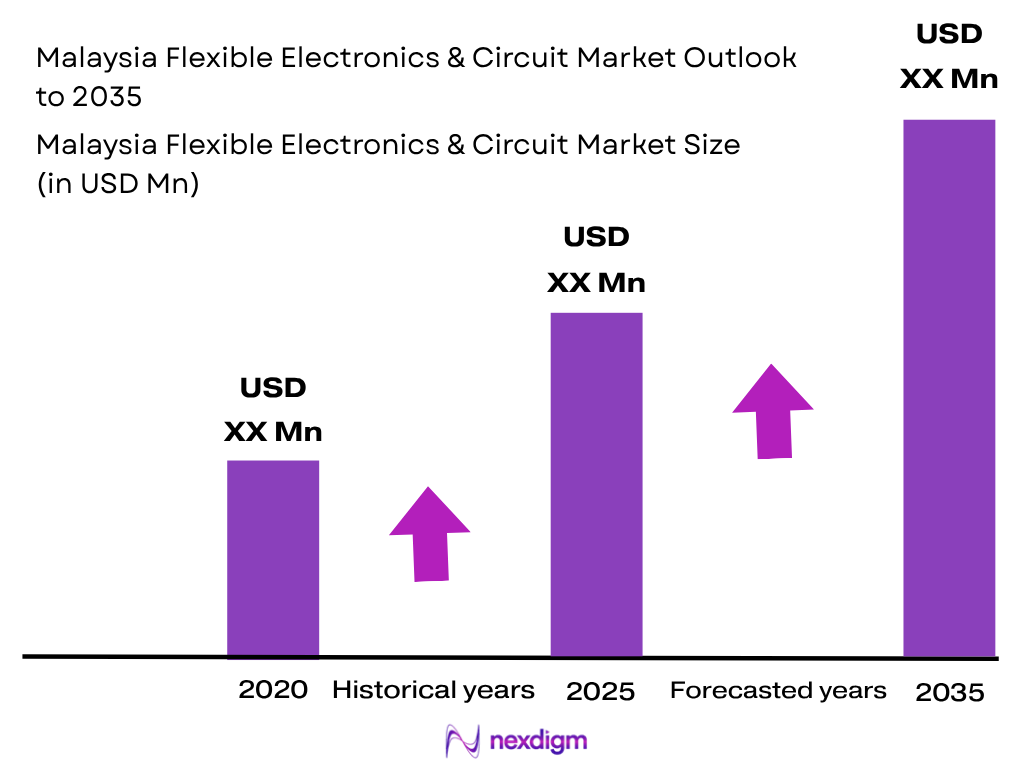
The Malaysia Flexible Electronics & Circuit Market is positioned within the country’s broader electrical and electronics (E&E), semiconductor, advanced manufacturing, automotive electronics, healthcare technology and industrial automation ecosystem. Malaysia has developed a substantial electronics manufacturing base supported by semiconductor assembly and testing, electronic component manufacturing, contract manufacturing and export-oriented production. The market is increasingly influenced by miniaturization, high-density interconnect requirements, flexible sensors, wearable devices, automotive electronics, electric mobility and advanced semiconductor packaging. The country’s established E&E supply chain provides a foundation for wider adoption of flexible circuits across high-value applications.
Market Segmentation
By Circuit Technology Type
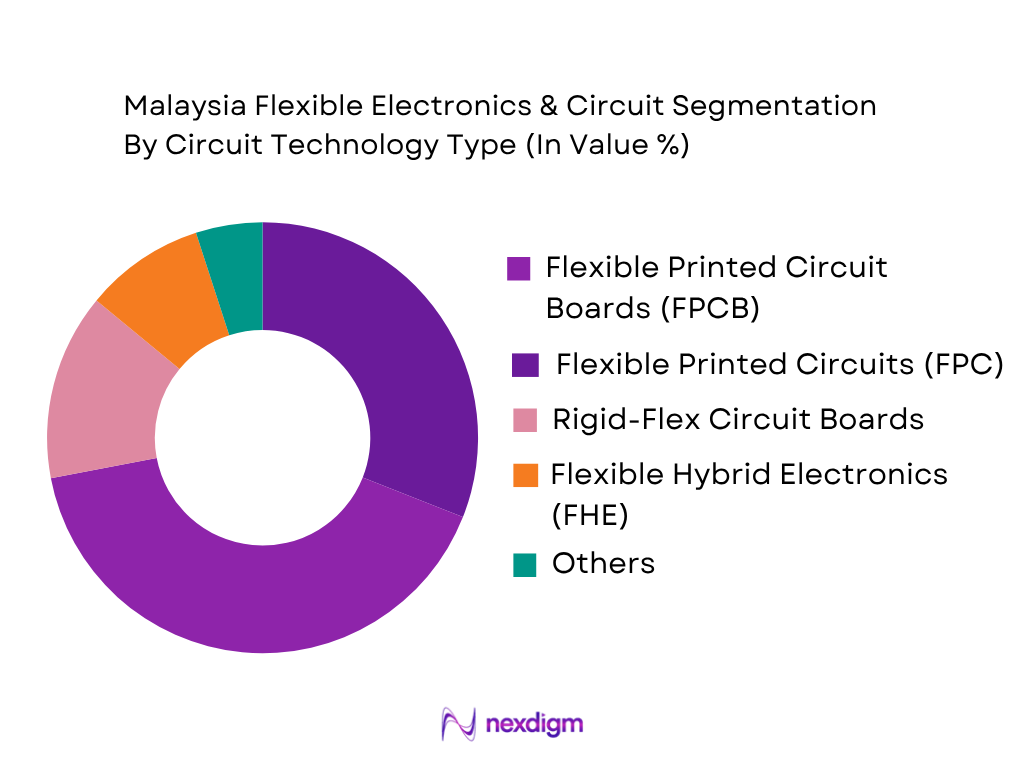
The Malaysia Flexible Electronics & Circuit Market is segmented by circuit technology type into flexible printed circuits (FPC), flexible printed circuit boards (FPCB), rigid-flex circuit boards, flexible hybrid electronics (FHE), printed electronics circuits, stretchable electronics circuits, thin-film flexible circuits and multilayer flexible circuits. Flexible printed circuit boards (FPCB) represent the leading sub-segment because they combine compact form factors with high-density interconnection and are suitable for electronics requiring weight reduction, space optimization and improved routing flexibility. Malaysia’s substantial electronics manufacturing base provides a natural downstream application environment for FPCB products. E&E exports reached RM601.18 billion in 2024, while electronic integrated circuits generated RM313.1 billion in exports, illustrating the scale of electronics production and component integration. FPCB demand is particularly relevant to consumer electronics, semiconductor equipment, automotive electronics, medical equipment and industrial automation. The technology also supports miniaturized assemblies where conventional rigid boards
By Application Area
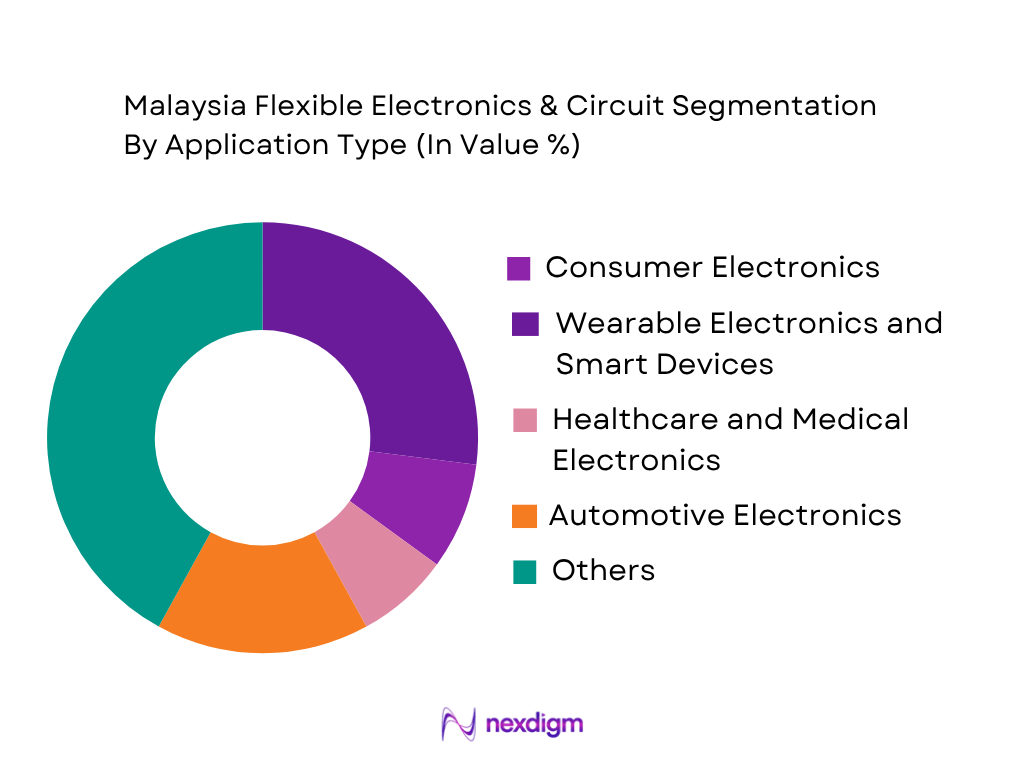
The Malaysia Flexible Electronics & Circuit Market is segmented by application area into consumer electronics, wearable electronics and smart devices, healthcare and medical electronics, automotive electronics, electric vehicle electronics, aerospace and defense electronics, industrial automation electronics, IoT devices, telecommunication equipment, smart packaging electronics and energy-storage electronics. Consumer electronics represents a leading application because Malaysia has a deep electronics manufacturing and export ecosystem supporting electronic devices, components and assemblies. Manufacturing activity in electronic components, communication equipment and consumer electronics increased 4.0 in 2024, compared with a contraction of 3.0 in 2023, indicating a recovery in an important downstream segment. Flexible circuits are increasingly applicable to compact smartphones, wearable devices, displays, cameras, sensors and connected products. At the same time, automotive and EV electronics provide additional demand channels as vehicles incorporate more sensors, displays, control modules and electronic interfaces. The expansion of industrial automation and semiconductor equipment manufacturing further broadens potential applications.
Competitive Landscape
The Malaysia Flexible Electronics & Circuit Market consists of global flexible-circuit manufacturers, electronic component suppliers, semiconductor companies, materials specialists and electronics manufacturing service providers. Competition is shaped by FPC/FPCB manufacturing capability, advanced materials, semiconductor integration, automotive electronics exposure, manufacturing scale and relationships with multinational electronics manufacturers. Malaysia’s position in the global semiconductor ecosystem strengthens the competitive environment: MIDA reported RM48.1 billion in approved semiconductor investments across 46 projects in 2024, generating 21,722 employment opportunities.
| Company | Establishment Year | Headquarters | FPC/FPCB Capability | Flexible Electronics Technology | Key Application Exposure | Manufacturing Capability | Malaysia Ecosystem Presence | Semiconductor Integration |
| Zhen Ding Technology Holding Limited | 2006 | Taoyuan, Taiwan | ~ | ~ | ~ | ~ | ~ | ~ |
| Fujikura Limited | 1885 | Tokyo, Japan | ~ | ~ | ~ | ~ | ~ | ~ |
| Sumitomo Electric Industries, Ltd. | 1897 | Osaka, Japan | ~ | ~ | ~ | ~ | ~ | ~ |
| Nitto Denko Corporation | 1918 | Osaka, Japan | ~ | ~ | ~ | ~ | ~ | ~ |
| Panasonic Industry Co., Ltd. | 2022 | Kadoma, Japan | ~ | ~ | ~ | ~ | ~ | ~ |
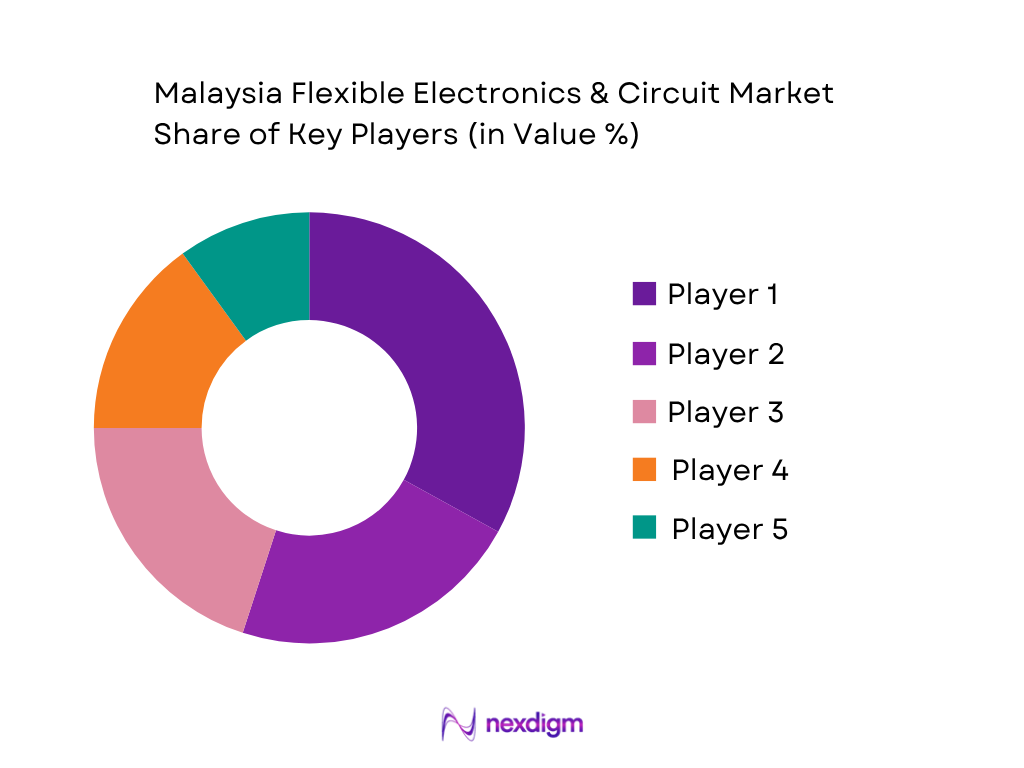
Malaysia Flexible Electronics & Circuit Market Analysis
Growth Drivers
Expansion of Semiconductor and E&E Manufacturing
Malaysia’s expanding semiconductor and electrical and electronics ecosystem is strengthening the industrial base for flexible electronics and circuit applications. The Ministry of Investment, Trade and Industry reported that Malaysia’s E&E industry generated RM1,056 billion in total trade, including RM601.18 billion in exports and RM455.68 billion in imports, while semiconductor trade reached RM655.13 billion, comprising RM387.95 billion of exports and RM267.18 billion of imports. E&E also attracted RM55.8 billion in approved investments, of which semiconductor activities accounted for RM48.1 billion. Manufacturing activity provides a direct industrial foundation for flexible circuits because advanced electronic assemblies require compact interconnects, sensors, substrates and miniaturized components. Malaysia’s manufacturing sector recorded RM1.9 trillion in sales, while electronic components, communication equipment and consumer electronics expanded by 4.0. The scale of semiconductor assembly, testing, packaging and electronic-component production therefore creates downstream requirements for flexible interconnection technologies and specialized circuit integration. Bank Negara Malaysia also reported that Malaysia’s economy expanded 5.1, supported by stronger investment and exports, while E&E and ICT projects contributed materially to the investment cycle. These conditions strengthen the addressable industrial ecosystem for flexible electronics manufacturers, component suppliers and electronics manufacturing service providers. MITI
Growth of Advanced Manufacturing, Automotive and Connected Electronics
Malaysia’s transition toward higher-value manufacturing is creating additional application pathways for flexible electronics and circuit technologies across automotive electronics, industrial automation, IoT equipment and advanced electronic assemblies. Approved manufacturing investments reached RM120.5 billion, covering 1,108 projects and creating close to 88,000 new jobs, while the E&E industry alone secured RM55.8 billion. Transport equipment attracted RM15.8 billion, creating a complementary industrial base for automotive electronic components and vehicle systems. Malaysia’s private investment increased 12.3, with Bank Negara Malaysia identifying E&E and ICT among the major areas receiving investment. The manufacturing sector also recorded 2.6 growth in labour productivity per employee, reaching RM134,498 per employee, while electronic components, communication equipment and consumer electronics expanded 4.0. These indicators support demand for compact wiring, flexible interconnects, sensor assemblies and lightweight circuit architectures. Industry4WRD initiatives further strengthen this environment: 1,192 businesses completed readiness assessments, while 406 SMEs were approved for intervention grants totaling RM150.9 million. The government’s Smart Technology Uptake programme also received RM18.18 million, reinforcing industrial digitalisation and automation. Together, these developments expand the industrial customer base capable of adopting flexible electronics in connected machinery, robotics, automotive systems and smart manufacturing applications. Department of Statistics Malaysia
Market Challenges
Dependence on Imported Flexible Materials and Electronic Inputs
Malaysia’s flexible electronics ecosystem remains exposed to imported materials and intermediate electronic inputs because the country’s advanced electronics production is deeply integrated with international supply chains. MITI reported E&E imports of RM455.68 billion against exports of RM601.18 billion, while semiconductor imports reached RM267.18 billion compared with semiconductor exports of RM387.95 billion. These trade flows demonstrate the scale of imported components, materials and production inputs supporting the domestic electronics industry. Bank Negara Malaysia also reported that capital imports increased 29.6 in 2024, reflecting stronger investment in production capacity, while intermediate imports remained important for export-oriented manufacturing. For flexible electronics, exposure can extend across polyimide films, liquid-crystal polymer materials, copper foil, conductive inks, specialty adhesives, electronic components and precision manufacturing equipment. Malaysia’s manufacturing sector recorded RM400.8 billion in FDI position at the end of 2024, with electrical and electronic products forming an important component, demonstrating strong integration with multinational production networks. However, this integration also creates exposure to disruptions in international logistics, technology supply and component availability. For manufacturers developing flexible circuits locally, securing qualified material suppliers and maintaining consistent specifications can therefore remain a significant operational requirement. MITI
Specialized Engineering and Technology Qualification Requirements
Flexible electronics manufacturing requires specialized process engineering, materials expertise, precision fabrication and electronics integration capabilities, creating a qualification challenge as Malaysia moves toward more advanced manufacturing. DOSM reported 2.86 million persons employed in manufacturing during the fourth quarter, while manufacturing labour productivity reached RM134,498 per employee for the year. At the same time, the broader labour market recorded 193,600 unfilled positions during the fourth quarter, indicating continuing demand for skilled workers. Malaysia’s manufacturing investment pipeline also increasingly targets sophisticated operations: E&E investment reached RM55.8 billion, semiconductor investment reached RM48.1 billion, and 41.6 of newly created manufacturing positions were classified as management, technical or skilled roles. Flexible circuit production adds further requirements involving substrate handling, fine-line patterning, laser processing, conductive materials, surface-mount integration and reliability testing. The National Semiconductor Strategy specifically includes talent development as an enabling component, reflecting the importance of skilled technical capacity to the country’s semiconductor ambitions. For flexible electronics, companies therefore need personnel capable of connecting materials science, circuit design, manufacturing engineering and quality assurance. The challenge is amplified when manufacturers scale from prototyping to high-volume production because process control, yield management and qualification standards become increasingly demanding. Department of Statistics Malaysia
Market Opportunities
Advanced Semiconductor Packaging and Flexible Interconnects
Malaysia’s established semiconductor packaging ecosystem creates a clear pathway for flexible electronics to expand into advanced interconnects, sensor integration and compact electronic assemblies. Semiconductor trade reached RM655.13 billion, including RM387.95 billion of exports and RM267.18 billion of imports, while semiconductor activities attracted RM48.1 billion of investment. Malaysia’s E&E sector also contributed 7.3 to national GDP, demonstrating the economic importance of the electronics manufacturing base. The country’s role in assembly, testing and packaging provides an established customer and supplier ecosystem for technologies that can improve space utilisation, connectivity and component integration. The National Semiconductor Strategy introduced a framework covering capacity expansion, research-driven innovation and talent development, while the government has identified advanced manufacturing and semiconductor capability as strategic priorities. Flexible circuits can support this direction through high-density interconnections, compact packaging architectures, flexible sensor connections and specialized electronics used around semiconductor assemblies. Malaysia’s strong foreign investment position in manufacturing, including RM400.8 billion of manufacturing FDI stock, further provides access to multinational technology networks and established qualification systems. These conditions create opportunities for local production, technology partnerships, contract manufacturing and component localization, particularly where flexible electronics can complement semiconductor packaging, test equipment, industrial electronics and high-density electronic assemblies. MITI
Industrial IoT, Automotive and Smart Manufacturing Applications
Malaysia’s continuing industrial digitalisation creates opportunities for flexible sensors, flexible interconnects and printed electronic components across smart factories, automotive systems and connected industrial equipment. The Industry4WRD programme recorded 1,192 completed readiness assessments and 406 approved SME intervention applications, with grants totaling RM150.9 million. The New Industrial Master Plan 2030 targets transformation of 3,000 manufacturing facilities into smart factories, while RM18.18 million was allocated to the Smart Technology Uptake programme. Automotive and transport-equipment investment also provides a complementary demand base, with RM15.8 billion of approved manufacturing investment directed toward transport equipment. At the wider industrial level, Malaysia secured RM120.5 billion in approved manufacturing investments covering 1,108 projects, reinforcing the pipeline of factories and production systems that can adopt automation, sensors and connected equipment. Flexible electronics can address applications where conventional rigid electronics face space, weight or mechanical-integration constraints, including equipment monitoring, robotics, human-machine interfaces, vehicle electronics and distributed sensing. The opportunity is supported by Malaysia’s established electronics export ecosystem and improving manufacturing productivity, with manufacturing labour productivity reaching RM134,498 per employee. As manufacturers increasingly integrate connected machinery and digital production systems, flexible circuits can become an enabling component for compact sensor networks, embedded monitoring and electronically connected equipment. MITI
Future Outlook
Over the next decade, the Malaysia Flexible Electronics & Circuit Market is expected to develop alongside the country’s semiconductor, electronics manufacturing, automotive, industrial automation and advanced packaging ecosystems. Growth will be supported by increasing electronic content in vehicles, miniaturization of electronic assemblies, industrial IoT adoption and demand for high-density interconnect solutions. Malaysia’s RM55.8 billion in approved E&E investment in 2024 and RM48.1 billion in approved semiconductor investment demonstrate continued capital deployment into technology-intensive manufacturing.
Major Players
- Zhen Ding Technology Holding Limited
- Fujikura Limited
- Sumitomo Electric Industries, Ltd.
- Nitto Denko Corporation
- Panasonic Industry Co., Ltd.
- Molex LLC
- TE Connectivity Ltd.
- Flex Ltd.
- Career Technology (MFG.) Co., Ltd.
- Unimicron Technology Corporation
- ASE Technology Holding Co., Ltd.
- Samsung Electronics Co., Ltd.
- LG Electronics Inc.
- DuPont de Nemours, Inc.
- 3M Company
Key Target Audience
- Flexible Circuit and FPCB Manufacturers
- Semiconductor and Advanced Packaging Companies
- Consumer Electronics Manufacturers
- Automotive and Electric Vehicle Electronics Manufacturers
- Healthcare and Medical Device Electronics Manufacturers
- Industrial Automation and IoT Electronics Companies
- Investments and Venture Capitalist Firms
- Government and Regulatory Bodies (Ministry of Investment, Trade and Industry; Malaysian Investment Development Authority; Ministry of Science, Technology and Innovation)
Research Methodology
Step 1: Identification of Key Variables
The initial phase involves mapping Malaysia’s flexible electronics ecosystem across FPC/FPCB manufacturers, semiconductor companies, materials suppliers, electronics manufacturers and downstream users. Secondary research covers Malaysia’s E&E manufacturing base, semiconductor investments, exports, industrial policies and application industries. Key variables include production capacity, technology adoption, application penetration, investment activity and supply-chain integration.
Step 2: Market Analysis and Construction
Historical market information is compiled through a combination of top-down and bottom-up approaches covering flexible circuits, materials, manufacturing technologies and applications. The assessment considers FPC/FPCB consumption, production activity, electronics manufacturing, semiconductor packaging and downstream application demand. Industry output, trade information, investment activity and company-level operating indicators are used to construct the market framework.
Step 3: Hypothesis Validation and Expert Consultation
Market hypotheses are validated through consultations with flexible electronics manufacturers, semiconductor companies, electronics manufacturers, component suppliers and technology specialists. Discussions focus on manufacturing capacity, product specifications, procurement patterns, application demand and technology adoption. Expert inputs are cross-checked against secondary information to reduce inconsistencies and strengthen the market assessment.
Step 4: Research Synthesis and Final Output
The final research stage integrates supply-side and demand-side findings to establish the Malaysia Flexible Electronics & Circuit Market structure. Company-level information is assessed against industry production, investment and trade indicators, while application-level findings are used to identify demand centers. Data triangulation is then applied to validate historical estimates, segmentation structures and the future market framework.

- Executive Summary
- Research Methodology (Market Definition and Scope, Malaysia Flexible Electronics & Circuit Market Classification, Flexible Electronics Technology Mapping, Flexible Printed Circuit (FPC) Assessment, Flexible Printed Circuit Board (FPCB) Evaluation, Flexible Hybrid Electronics (FHE) Analysis, Printed Electronics Assessment, Stretchable Electronics Evaluation, Flexible Sensor Technology Mapping, Conductive Ink Assessment, Flexible Substrate Material Analysis, Polyimide Film Evaluation, Liquid Crystal Polymer (LCP) Assessment, Copper Foil Technology Analysis, Thin-Film Electronics Evaluation, Roll-to-Roll Manufacturing Assessment, Additive Electronics Manufacturing Analysis, Semiconductor Integration Assessment, Market Sizing Approach, Top-Down Analysis, Bottom-Up Analysis, Demand-Side Assessment, Supply-Side Assessment, Primary Industry Interviews, Data Triangulation, Forecasting Framework)

- Definition and Scope
- Malaysia Flexible Electronics & Circuit Industry Evolution
- Flexible Electronics & Circuit Value Chain Analysis
- Flexible Electronics & Circuit Supply Chain Analysis

- Growth Drivers (Expansion of Semiconductor and E&E Manufacturing, Increasing Advanced Packaging Activities, Growth of Automotive and EV Electronics, Industry 4.0 Adoption, Expansion of IoT and Connected Devices, Rising Demand for Miniaturized Electronics, Development of High-Value Manufacturing, Growth of Sensor-Based Electronics, Increasing Electronics Export Activity)
- Market Challenges (Limited Domestic Flexible Electronics Manufacturing Capacity, Dependence on Imported Flexible Materials, Advanced Equipment Requirements, High Technology Qualification Requirements, Specialized Engineering Talent Requirements, Complex Flexible Circuit Manufacturing Processes, Limited Local Flexible Substrate Production, Supply Chain Exposure to Global Electronics Cycles, High R&D Requirements)
- Market Opportunities (Advanced Semiconductor Packaging, Flexible Sensors for Industrial Applications, Automotive and EV Flexible Electronics, Wearable Electronics Manufacturing, Flexible Healthcare Devices, Printed Electronics, Smart Packaging Electronics, Industrial IoT Applications, Flexible Display Components, Advanced Electronics Manufacturing)
- Market Trends (Shift Toward High-Density Flexible Circuits, Semiconductor Packaging Innovation, Growth of Flexible Sensors, Automotive Electronics Miniaturization, EV Electronics Integration, Expansion of Printed Electronics, Roll-to-Roll Manufacturing Adoption, Industry 4.0 Electronics Deployment, Sustainable Electronics Materials, Advanced Surface-Mount Integration)
- Government Regulations and Standards (National Semiconductor Strategy, New Industrial Master Plan 2030, National Investment Policy, Ministry of Investment Trade and Industry E&E Framework, MIDA Investment Regulations, SIRIM Standards, Department of Environment Requirements, Electrical Equipment Safety Requirements, RoHS Compliance, WEEE-Related Environmental Requirements, Import and Export Controls for Electronic Components)
- SWOT Analysis
- Porter’s Five Forces Analysis
- PESTLE Analysis
- Stakeholder Ecosystem
- Competition Ecosystem

- By Market Value (2020-2025)
- By Volume Consumption (2020-2025)
- By Average Selling Price (2020-2025)
- By Flexible Printed Circuit (FPC) Consumption Volume (2020-2025)
- By Flexible Printed Circuit Board (FPCB) Consumption Volume (2020-2025)
- By Flexible Hybrid Electronics (FHE) Consumption Volume (2020-2025)

- By Circuit Technology Type (In Value %)
Flexible Printed Circuit Boards (FPCB)
Rigid-Flex Circuit Boards
Flexible Hybrid Electronics (FHE)
Stretchable Electronics Circuits
Thin-Film Flexible Circuits
Multilayer Flexible Circuits
High-Density Interconnect Flexible Circuits - By Material Type (In Value %)
Polyimide-Based Flexible Substrates
Polyester-Based Flexible Substrates
Liquid Crystal Polymer (LCP) Materials
Copper Foil Flexible Materials
Conductive Ink Materials
Silver-Based Conductive Materials
Copper-Based Conductive Materials
Organic Semiconductor Materials
Advanced Composite Flexible Materials - By Application Area (In Value %)
Consumer Electronics
Wearable Electronics and Smart Devices
Healthcare and Medical Electronics
Automotive Electronics
Electric Vehicle Electronics
Aerospace and Defense Electronics
Industrial Automation Electronics
Internet of Things (IoT) Devices
Telecommunication Equipment
Smart Packaging Electronics
Energy Storage and Battery Management Systems - By Manufacturing Technology (In Value %)
Photolithography-Based Manufacturing
Screen Printing Technology
Inkjet Printing Technology
Roll-to-Roll Manufacturing
Laser Processing Technology
Additive Electronics Manufacturing
Hybrid Manufacturing Processes
Surface Mount Technology Integration
Laser Direct Imaging
Advanced Flexible Circuit Assembly - By End-Use Industry (In Value %)
Consumer Electronics Industry
Semiconductor and Electronics Industry
Automotive Industry
Electric Vehicle Industry
Healthcare Technology Industry
Telecommunication Industry
Industrial Manufacturing Industry
Aerospace and Defense Industry
Energy and Battery Industry
Smart Packaging Industry
Research and Development Applications - By Region (In Value %)
Penang
Selangor
Kuala Lumpur
Johor
Kedah
Perak
Negeri Sembilan
Other Malaysian Regions

- Market Share of Major Players (By Malaysia Revenue, Flexible Circuit Product Portfolio, FPC/FPCB Capability, Flexible Electronics Technology Coverage, Material Technology Portfolio, Application Industry Coverage, Manufacturing Capacity, Semiconductor Integration Capability, Customer Base, Regional Presence, Manufacturing Partnerships, R&D Capability, Innovation Pipeline, Export Capability)
- Cross Comparison Parameters (FPC/FPCB Product Portfolio Breadth, Flexible Hybrid Electronics Expertise, Flexible Substrate Technology Coverage, Conductive Material Technology Capability, Roll-to-Roll Manufacturing Capability, Advanced Packaging Integration Capability, Automotive and EV Electronics Capability, Flexible Sensor Development Capability)
- SWOT Analysis of Major Players
- Detailed Profiles of Major Companies
ASE Technology Holding Co., Ltd.
Unimicron Technology Corporation
Zhen Ding Technology Holding Limited
Career Technology (MFG.) Co., Ltd.
Fujikura Limited
Sumitomo Electric Industries, Ltd.
Nitto Denko Corporation
Molex LLC
TE Connectivity Ltd.
Panasonic Industry Co., Ltd.
Samsung Electronics Co., Ltd.
LG Electronics Inc.
DuPont de Nemours, Inc.
3M Company
Flex Ltd.

- Semiconductor Manufacturer Requirement Assessment
- OSAT and Advanced Packaging Demand Analysis
- Consumer Electronics Manufacturer Requirement Assessment
- Automotive Electronics Manufacturer Demand Analysis
- Electric Vehicle Component Manufacturer Requirement Assessment
- Wearable Technology Manufacturer Demand Analysis
- Healthcare Electronics Manufacturer Requirement Assessment

- By Market Value (2026-2035)
- By Volume Consumption (2026-2035)
- By Average Selling Price (2026-2035)
- By Flexible Printed Circuit (FPC) Consumption Volume (2026-2035)
- By Flexible Printed Circuit Board (FPCB) Consumption Volume (2026-2035)
- By Flexible Hybrid Electronics (FHE) Consumption Volume (2026-2035)


 Request a Sample
 Ask for Customization
 Get a Quote
 Enquire Now