

 Download PDF
Market Overview
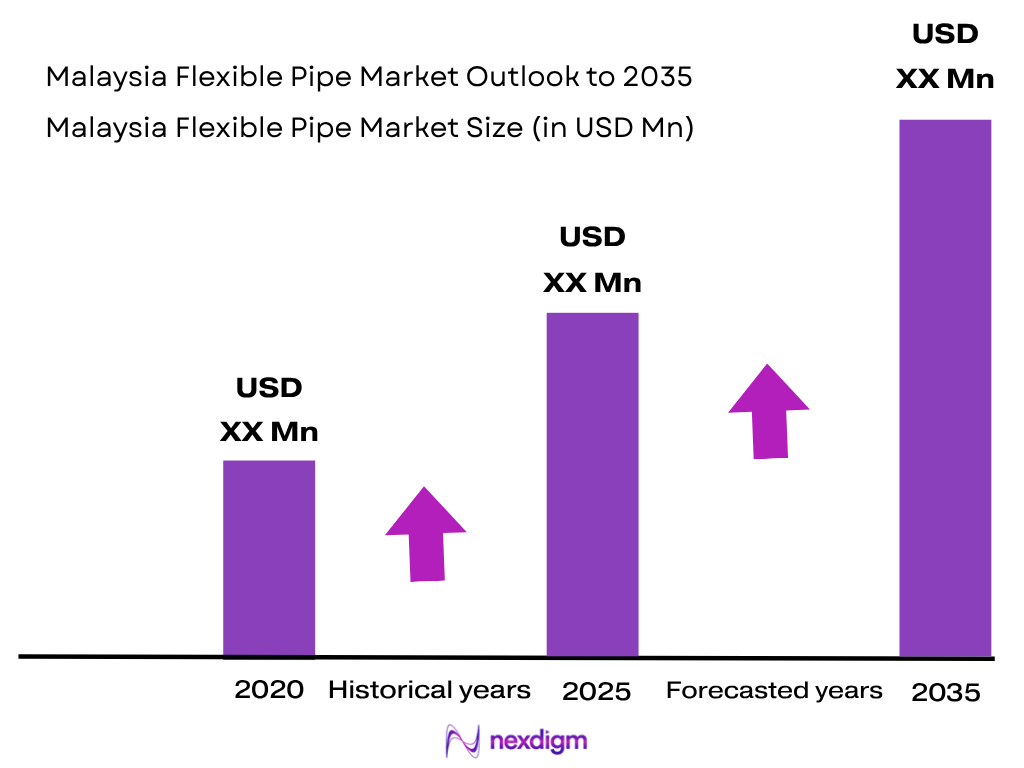
The Malaysia Flexible Pipe Market is valued at ~ USD ~ bn based on historical industry assessment and is supported by offshore oil and gas activities, subsea infrastructure development, and replacement demand from ageing production assets. The market is driven by Malaysia’s continued hydrocarbon production ecosystem, offshore field maintenance requirements, and deepwater exploration activities. According to national energy statistics, Malaysia recorded crude oil and condensate production of approximately ~ million barrels per day and natural gas production of ~ billion cubic feet per day, supporting demand for flexible risers, flowlines, and offshore pipeline solutions.
The Malaysia Flexible Pipe Market is concentrated around offshore energy hubs including Sarawak, Sabah, and the Peninsular Malaysia offshore region due to the presence of major oil and gas production fields, offshore platforms, and marine support infrastructure. Sarawak and Sabah remain important because of their extensive offshore exploration activities and proximity to deepwater developments. Malaysia’s energy sector infrastructure includes thousands of kilometres of offshore pipelines and production networks, creating continuous demand for flexible pipe installation, maintenance, and replacement applications across upstream oil and gas operations.
Market Segmentation
By Application Type
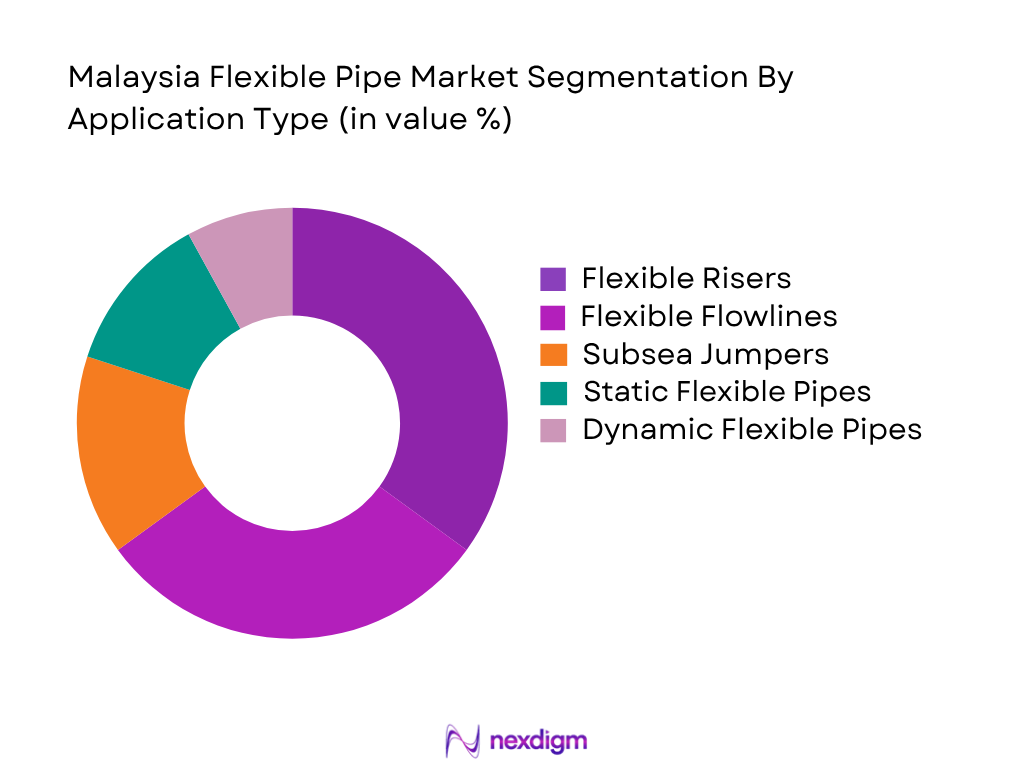
Malaysia Flexible Pipe Market is segmented by application type into flexible risers, flexible flowlines, subsea jumpers, static flexible pipes, and dynamic flexible pipes. Among these segments, flexible risers account for a dominant market share due to their critical role in offshore production systems where they connect subsea wells to floating production facilities. The increasing adoption of floating production storage and offloading (FPSO) units and deepwater exploration projects supports demand for high-performance riser systems. Flexible risers provide advantages such as resistance to dynamic movement, improved installation flexibility, and suitability for harsh offshore environments. Their ability to handle complex seabed conditions and platform movements makes them preferred for offshore oil and gas developments in Malaysia.
By End-Use Industry
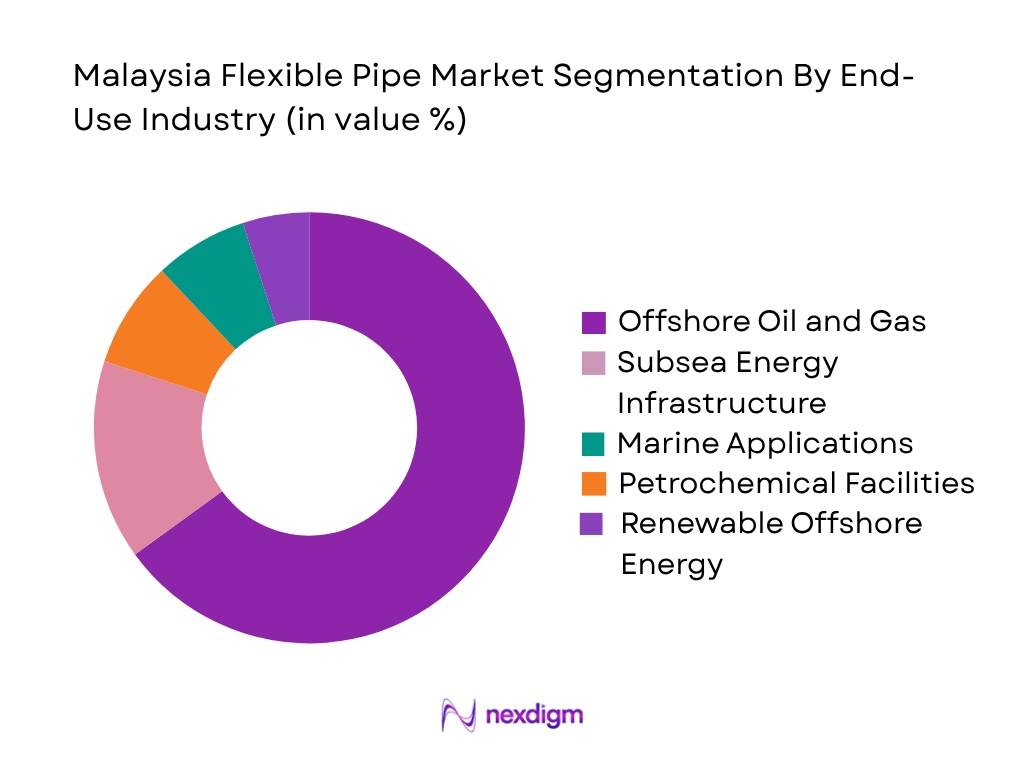
Malaysia Flexible Pipe Market is segmented by end-use industry into offshore oil and gas, subsea energy infrastructure, marine applications, petrochemical facilities, and renewable offshore energy projects. Offshore oil and gas dominates the segment due to Malaysia’s established upstream petroleum sector and continued investment in offshore field development. Flexible pipes are extensively used in offshore production because they enable efficient transportation of hydrocarbons between subsea equipment and floating or fixed production facilities. The presence of mature offshore assets also creates demand for replacement, maintenance, and brownfield upgrade activities. Increasing focus on extending production life from existing offshore fields further supports flexible pipe adoption across Malaysia’s energy sector.
Competitive Landscape
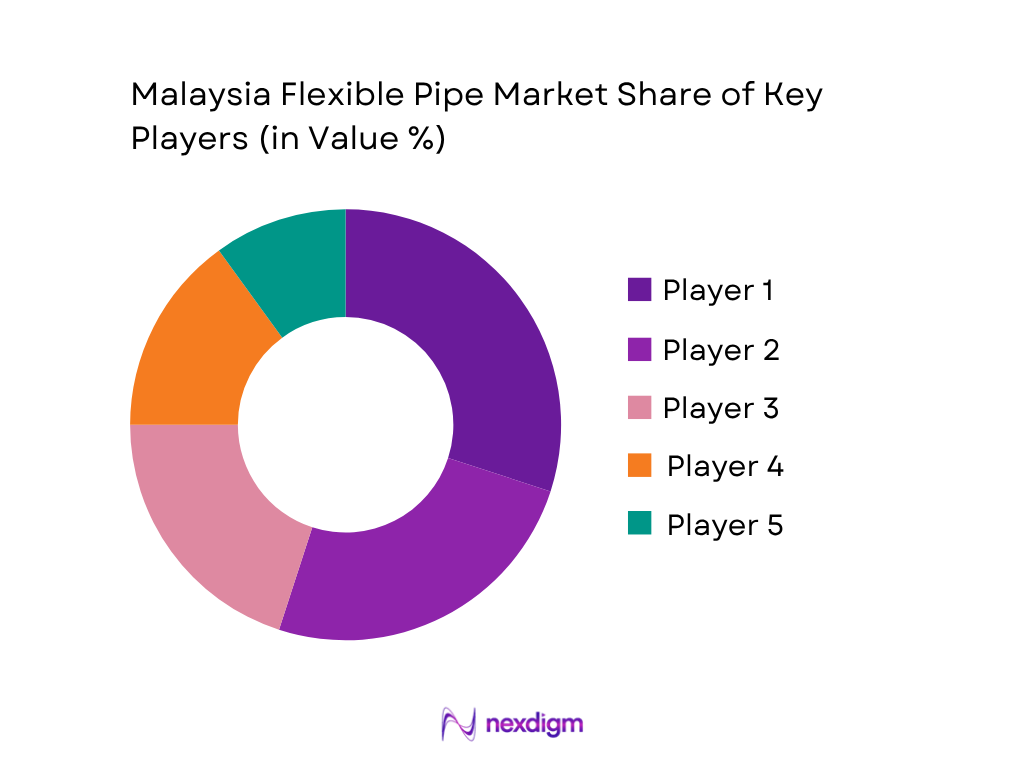
The Malaysia Flexible Pipe Market is characterized by the presence of global offshore technology providers and specialized subsea equipment manufacturers. Major companies compete through advanced flexible pipe designs, deepwater project experience, manufacturing capabilities, and technical service networks. The market includes international players supplying flexible risers, flowlines, and subsea solutions to offshore operators and engineering contractors.
| Company | Establishment Year | Headquarters | Flexible Pipe Portfolio | Offshore Project Experience | Subsea Technology Capability | Malaysia Presence | Manufacturing Capability | Technical Support |
| TechnipFMC | 2017 | UK | ~ | ~ | ~ | ~ | ~ | ~ |
| Baker Hughes | 2017 | USA | ~ | ~ | ~ | ~ | ~ | ~ |
| Prysmian Group | 1881 | Italy | ~ | ~ | ~ | ~ | ~ | ~ |
| NOV | 1862 | USA | ~ | ~ | ~ | ~ | ~ | ~ |
| Schlumberger OneSubsea | 1926 | USA | ~ | ~ | ~ | ~ | ~ | ~ |
Malaysia Flexible Pipe Market Analysis
Growth Drivers
Offshore Oil and Gas Production Activities
The Malaysia Flexible Pipe Market is strongly supported by the country’s offshore hydrocarbon production ecosystem, where flexible risers and flowlines are essential for connecting subsea wells, floating production units, and offshore platforms. Malaysia remains a major energy producer in Southeast Asia, with the energy sector contributing significantly to industrial activity. According to the International Energy Agency, Malaysia produced approximately 490 thousand barrels per day of crude oil and condensates and around 7.2 billion cubic feet per day of natural gas in recent assessments. The country operates more than 200 offshore oil and gas fields, creating continuous requirements for flexible pipeline systems used in new developments, brownfield expansions, and asset replacement programs. The presence of offshore production clusters in Sarawak, Sabah, and Peninsular Malaysia supports demand for advanced flexible pipe solutions capable of handling high pressure, dynamic movement, and challenging subsea conditions. The development of deepwater and marginal field projects further increases the requirement for flexible technologies that provide installation efficiency and operational reliability compared with traditional rigid pipeline systems.
Expansion of Subsea Infrastructure and Offshore Field Development
The Malaysia Flexible Pipe Market benefits from continued investment in subsea infrastructure modernization and offshore production enhancement programs. Flexible pipes are increasingly utilized in complex offshore environments because they provide improved installation flexibility, corrosion resistance, and compatibility with floating production systems. Malaysia’s offshore infrastructure includes extensive pipeline networks and production facilities supporting upstream activities. National energy statistics indicate that Malaysia has significant offshore reserves concentrated in regions such as Sarawak and Sabah, where subsea development activities require advanced flow assurance and transportation systems. The country’s natural gas sector remains strategically important, with Malaysia ranking among the leading liquefied natural gas exporters globally. Offshore LNG-related upstream developments require reliable subsea connections and flexible pipeline technologies. Increasing focus on extending the operational life of mature offshore assets is also encouraging replacement of ageing pipeline systems. Flexible pipe manufacturers are positioned to support refurbishment projects, deepwater developments, and offshore tie-back applications where conventional pipeline solutions face technical limitations.
Market Challenges
High Dependence on Imported Advanced Flexible Pipe Technologies
The Malaysia Flexible Pipe Market faces challenges due to dependence on international manufacturers for advanced flexible pipe technologies, specialized materials, and subsea engineering expertise. Flexible pipe production requires sophisticated manufacturing capabilities involving multiple layers of polymers, steel reinforcement structures, and high-performance materials designed for extreme offshore conditions. Malaysia’s domestic manufacturing ecosystem has limited capacity for producing complex deepwater flexible pipe systems compared with global technology providers. The country’s upstream sector relies significantly on imported subsea equipment and offshore services to support major developments. According to trade and energy sector data, Malaysia imports a substantial portion of specialized oil and gas equipment required for offshore operations. This dependency increases exposure to international supply chain disruptions, currency fluctuations, and longer procurement cycles. Additionally, offshore operators require extensive qualification procedures before approving flexible pipe suppliers, which creates barriers for new local manufacturers entering the market.
Complex Offshore Installation and Operational Requirements
The Malaysia Flexible Pipe Market experiences challenges associated with complex offshore installation conditions, technical requirements, and maintenance demands. Flexible pipes used in offshore applications must withstand high pressure, temperature variations, dynamic loads, and corrosive marine environments. Installation requires specialized vessels, offshore engineering expertise, and advanced monitoring systems. Malaysia’s offshore operations are increasingly focused on mature fields, where ageing infrastructure requires careful inspection and replacement planning. According to energy sector assessments, Malaysia operates numerous mature offshore fields that require enhanced recovery techniques and infrastructure upgrades to maintain production levels. The complexity of offshore environments increases project execution risks and requires significant technical capabilities from suppliers and contractors. Additionally, strict safety and environmental requirements imposed on offshore activities increase compliance obligations for operators and equipment providers. These factors can influence project timelines and increase technical barriers for flexible pipe deployment.
Market Opportunities
Offshore Asset Revitalization and Brownfield Development
The Malaysia Flexible Pipe Market presents opportunities through offshore asset revitalization programs and brownfield development activities. Malaysia has a large base of mature offshore fields that require infrastructure upgrades, replacement of ageing flowlines, and production optimization solutions. The extension of offshore asset operating life creates demand for flexible pipes that can support tie-back projects and modifications to existing production systems. Malaysia’s upstream sector continues to focus on maximizing recovery from existing fields while developing selected new offshore resources. The presence of mature offshore infrastructure creates opportunities for flexible pipe suppliers offering replacement solutions, inspection technologies, and customized engineering services. Flexible pipes are particularly suitable for brownfield applications because they can be installed in constrained offshore environments with reduced modification requirements. The increasing adoption of subsea technologies and floating production systems further supports demand for flexible risers and flowlines. Companies providing integrated flexible pipe solutions, installation services, and lifecycle support are positioned to benefit from future offshore infrastructure requirements.
Development of Deepwater and Subsea Energy Projects
The Malaysia Flexible Pipe Market has growth opportunities from deepwater exploration and subsea production developments requiring advanced pipeline technologies. Malaysia’s offshore resources include deepwater fields where flexible pipes provide advantages in connecting subsea equipment with floating production facilities. Deepwater operations require lightweight, flexible, and durable transportation systems capable of managing dynamic offshore conditions. Malaysia continues to develop offshore energy resources while maintaining its position as a major regional oil and gas producer. The country’s LNG industry, supported by extensive natural gas production infrastructure, creates additional demand for reliable offshore transportation systems. Flexible pipe technology providers can benefit from increasing requirements for subsea tiebacks, offshore field extensions, and advanced production systems. The adoption of digital monitoring, improved materials, and enhanced flexible pipe designs further expands opportunities for suppliers supporting next-generation offshore projects. These developments create demand for companies with advanced engineering capabilities and experience in complex marine environments.
Future Outlook
Over the next decade, the Malaysia Flexible Pipe Market is expected to witness continued development driven by offshore asset maintenance, subsea field expansion, and demand for reliable offshore transportation systems. Growth will be supported by deepwater exploration activities, replacement of ageing offshore infrastructure, and technological advancements in flexible pipe materials. Increasing adoption of advanced subsea production systems and floating production facilities will further strengthen market opportunities. The Malaysia Flexible Pipe Market is expected to register a CAGR of ~% during 2026–2035.
Major Players
- TechnipFMC
- Baker Hughes
- Schlumberger OneSubsea
- NOV
- Prysmian Group
- Saipem
- Subsea 7
- Vallourec
- Nexans
- Aker Solutions
- Trelleborg Offshore & Construction
- SoluForce
- Strohm
- Airborne Oil & Gas
- Magma Global
Key Target Audience
- Offshore Oil and Gas Operators
- Subsea Engineering and EPC Contractors
- Floating Production Storage and Offloading (FPSO) Operators
- Flexible Pipe Manufacturers and Technology Providers
- Marine Installation and Offshore Service Companies
- Investments and Venture Capitalist Firms
- Government and Regulatory Bodies (Malaysia Petroleum Resources Corporation, PETRONAS, Department of Occupational Safety and Health Malaysia)
- Energy Infrastructure and Offshore Asset Management Companies
Research Methodology
Step 1: Identification of Key Variables
The initial phase involves developing an ecosystem map covering offshore operators, flexible pipe manufacturers, subsea contractors, EPC companies, and regulatory stakeholders. Extensive secondary research is conducted to identify key market variables including offshore field development, subsea infrastructure requirements, flexible pipe applications, and technology adoption patterns.
Step 2: Market Analysis and Construction
This phase includes analysis of historical market trends, offshore project activities, flexible pipe demand patterns, and supply chain structures. The assessment evaluates application segments, end-use industries, production capabilities, import dependency, and demand from Malaysia’s offshore oil and gas sector.
Step 3: Hypothesis Validation and Expert Consultation
Market assumptions are validated through discussions with industry professionals including offshore engineers, subsea specialists, equipment suppliers, and energy sector stakeholders. These consultations provide operational insights related to installation requirements, procurement patterns, and technology preferences.
Step 4: Research Synthesis and Final Output
The final stage combines primary and secondary research findings to create a comprehensive analysis of the Malaysia Flexible Pipe Market. The study evaluates competitive positioning, market opportunities, technology developments, and future industry trends to provide actionable business insights.

- Executive Summary
- Research Methodology (Market Definition and Scope, Malaysia Flexible Pipe Market Classification, Offshore Oil and Gas Flexible Pipe Demand Assessment, Subsea Flexible Pipe Installation Mapping, Floating Production Storage and Offloading Pipeline Requirement Analysis, Offshore Platform Flowline Assessment, Flexible Riser Demand Analysis, Thermoplastic and Steel Reinforced Flexible Pipe Technology Assessment, Domestic Oilfield Service Ecosystem Analysis, Import Dependency Assessment, Marine Pipeline Infrastructure Assessment, Energy Transition Application Assessment)

- Definition and Scope
- Malaysia Flexible Pipe Industry Evolution and Development of Offshore Oil and Gas Infrastructure, Deepwater Exploration, Subsea Production Systems, Floating Production Facilities and Marine Pipeline Networks
- Flexible Riser, Flexible Flowline, Jumper Pipe, Static Flexible Pipe, Dynamic Flexible Pipe
- Malaysia Flexible Pipe Value Chain Analysis
- Malaysia Flexible Pipe Supply Chain Analysis
- Raw Material Supplier, Polymer Manufacturer, Steel Reinforcement Supplier, Flexible Pipe Manufacturer, Offshore Engineering Contractor, Subsea Installation Contractor, Oilfield Service Provider, Energy Operator
- Flexible Pipe Integration Across Offshore Oil Fields, Subsea Production Systems, FPSO Facilities, Floating Platforms, Offshore Platforms, Marine Infrastructure and Renewable Energy Projects

- Growth Drivers (Expansion of Offshore Oil and Gas Activities, PETRONAS Offshore Development Projects, Deepwater Exploration Growth, Increasing Subsea Production Systems, FPSO Deployment Expansion, Offshore Asset Replacement Demand, Development of Marginal Oil Fields, Increasing Offshore Infrastructure Investments)
- Market Challenges (High Manufacturing Complexity, Dependence on Imported Advanced Flexible Pipe Technology, Offshore Installation Challenges, High Qualification Requirements, Long Project Approval Cycles, Corrosion and Fatigue Management Challenges, Limited Domestic Manufacturing Capability)
- Market Opportunities (Deepwater Oil Field Development, Subsea Tieback Projects, Offshore Brownfield Replacement Activities, Floating Production Facility Expansion, Composite Flexible Pipe Adoption, Offshore Renewable Energy Applications, Local Flexible Pipe Manufacturing Development, Advanced Material Innovation)
- Market Trends (Subsea Production System Expansion, Lightweight Composite Flexible Pipes, Digital Pipeline Monitoring, Advanced Polymer Materials, Deepwater Flexible Riser Technology, Offshore Asset Life Extension, Sustainable Offshore Infrastructure, Smart Inspection Technologies)
- Government Regulations (PETRONAS Technical Standards, Energy Commission Malaysia Regulations, Department of Occupational Safety and Health Requirements, Environmental Quality Act Requirements, Marine Safety Regulations, Offshore Installation Standards, Oil and Gas Licensing Requirements)
- SWOT Analysis
- Porter’s Five Forces Analysis
- PESTLE Analysis
- Stakeholder Ecosystem
- Competition Ecosystem

- By Market Value (2020-2025)
- By Flexible Pipe Consumption Volume (2020-2025)
- By Flexible Riser Consumption Volume (2020-2025)
- By Flexible Flowline Consumption Volume (2020-2025)
- By Subsea Flexible Pipe Consumption Volume (2020-2025)
- By Offshore Platform Flexible Pipe Consumption Volume (2020-2025)
- By FPSO Flexible Pipe Consumption Volume (2020-2025)

- By Product Type (In Value %)
Flexible Risers
Flexible Flowlines
Static Flexible Pipes
Dynamic Flexible Pipes
Flexible Jumpers
Thermoplastic Composite Pipes
Steel Reinforced Flexible Pipes - By Application Type (In Value %)
Offshore Oil Production
Subsea Oil and Gas Systems
FPSO Applications
Floating Production Platforms
Fixed Offshore Platforms
Gas Transportation Systems
Water Injection Systems
Chemical Injection Systems
Hydraulic Control Systems - By Material Type (In Value %)
Steel Reinforced Flexible Pipes
Thermoplastic Composite Pipes
Polyamide Lined Flexible Pipes
Polyethylene Based Flexible Pipes
Polyvinylidene Fluoride (PVDF) Flexible Pipes
Composite Flexible Pipes - By End-Use Industry (In Value %)
Oil and Gas Exploration
Offshore Production
Subsea Engineering
Marine Infrastructure
Petrochemical Industry
Power Generation
Renewable Offshore Energy
Industrial Fluid Transportation - By Region (In Value %)
Peninsular Malaysia
Sabah
Sarawak
South China Sea Offshore Region
East Coast Offshore Region

- Market Share of Major Players (By Malaysia Revenue, Flexible Riser Sales Volume, Flexible Flowline Sales Volume, Offshore Project Exposure, Subsea Installation Capability, End-Use Industry, Regional Manufacturing Presence, Technical Service Coverage)
- Cross Comparison Parameters (Malaysia Flexible Pipe Revenue, Flexible Riser and Flowline Portfolio Breadth, Deepwater Flexible Pipe Technology Capability, Offshore Project Execution Experience, Subsea Installation Capability, Advanced Material and Polymer Technology Capability, Malaysia Regional Service Network, Research and Development Capability)
- SWOT Analysis of Major Players
- Competitive Positioning Matrix
- Pricing and Flexible Pipe Category Benchmarking
- Detailed Profiles of Major Companies
TechnipFMC
Nexans
Baker Hughes
Aker Solutions
NOV
Prysmian Group
Trelleborg Offshore & Construction
SoluForce
Shawcor
Magma Global
Vallourec
Tenaris
Parker Hannifin
ContiTech
Malaysia Marine and Heavy Engineering

- PETRONAS Offshore Flexible Pipe Procurement Assessment
- Offshore Oil Operator Pipeline Requirement Analysis
- FPSO Operator Flexible Riser Demand Assessment
- Subsea Engineering Contractor Requirement Analysis
- Offshore Fabrication Yard Flexible Pipe Requirement Assessment
- Oilfield Service Provider Procurement Analysis
- Marine Infrastructure Developer Flexible Pipe Application Assessment
- Deepwater Exploration Project Requirement Analysis
- Offshore Renewable Energy Infrastructure Assessment
- Industrial Fluid Transportation Requirement Analysis

- By Market Value (2026-2035)
- By Flexible Pipe Consumption Volume (2026-2035)
- By Flexible Riser Consumption Volume (2026-2035)
- By Flexible Flowline Consumption Volume (2026-2035)
- By Subsea Flexible Pipe Consumption Volume (2026-2035)
- By Offshore Platform Flexible Pipe Consumption Volume (2026-2035)
- By FPSO Flexible Pipe Consumption Volume (2026-2035)


 Request a Sample
 Ask for Customization
 Get a Quote
 Enquire Now