
 Download PDF
Market Overview
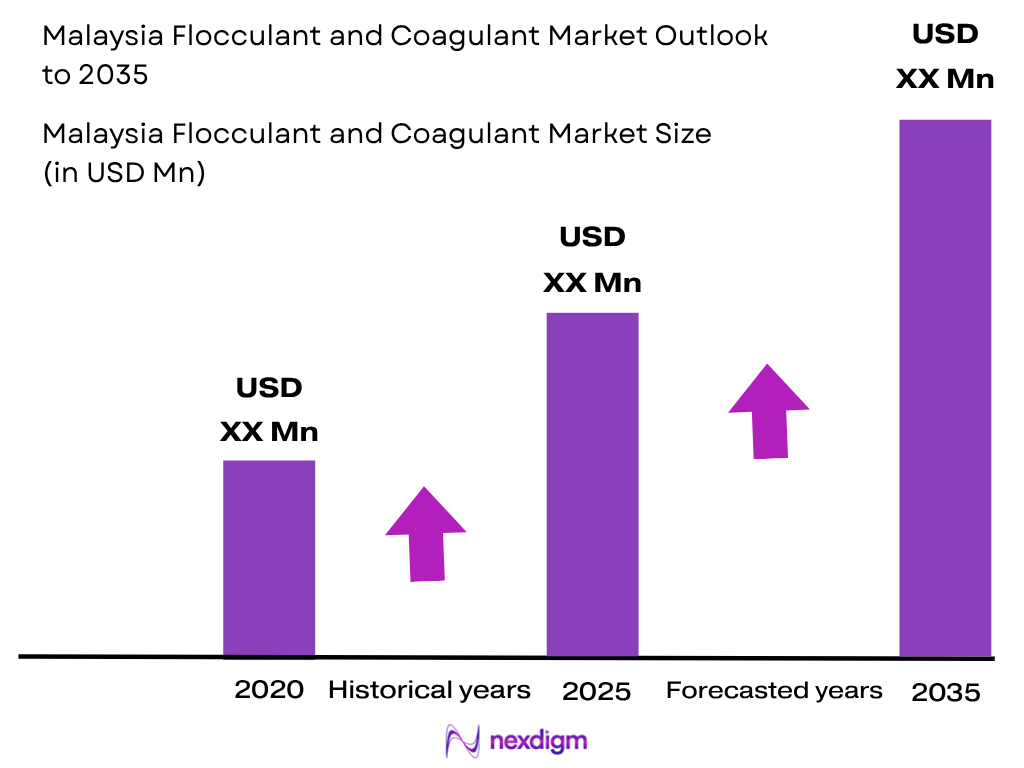
The Malaysia Flocculant and Coagulant Market is valued at USD ~XX million in 2024 and is projected to grow at a CAGR of ~XX% during 2026-2035. The market growth is supported by recurring demand from municipal water treatment, industrial wastewater management, palm oil processing, electronics manufacturing, food processing and petrochemical industries. Malaysia’s water treatment chemical ecosystem is strengthened by continuous requirements for suspended-solid removal, sludge dewatering and regulatory compliance in industrial discharge management. Coagulants and flocculants remain essential treatment chemicals due to their ability to improve clarification efficiency and maintain consistent wastewater-treatment performance.
The Malaysia Flocculant and Coagulant Market is concentrated around industrial and urban regions including Selangor, Kuala Lumpur, Johor and Penang due to their high density of manufacturing facilities, water utilities and industrial wastewater treatment plants. Selangor represents a major demand centre because of extensive municipal infrastructure and industrial activity, while Penang contributes demand from electronics and semiconductor manufacturing. Johor supports consumption through manufacturing parks, petrochemical activities and large-scale industrial developments requiring continuous water treatment solutions.
Market Segmentation
By Product Type
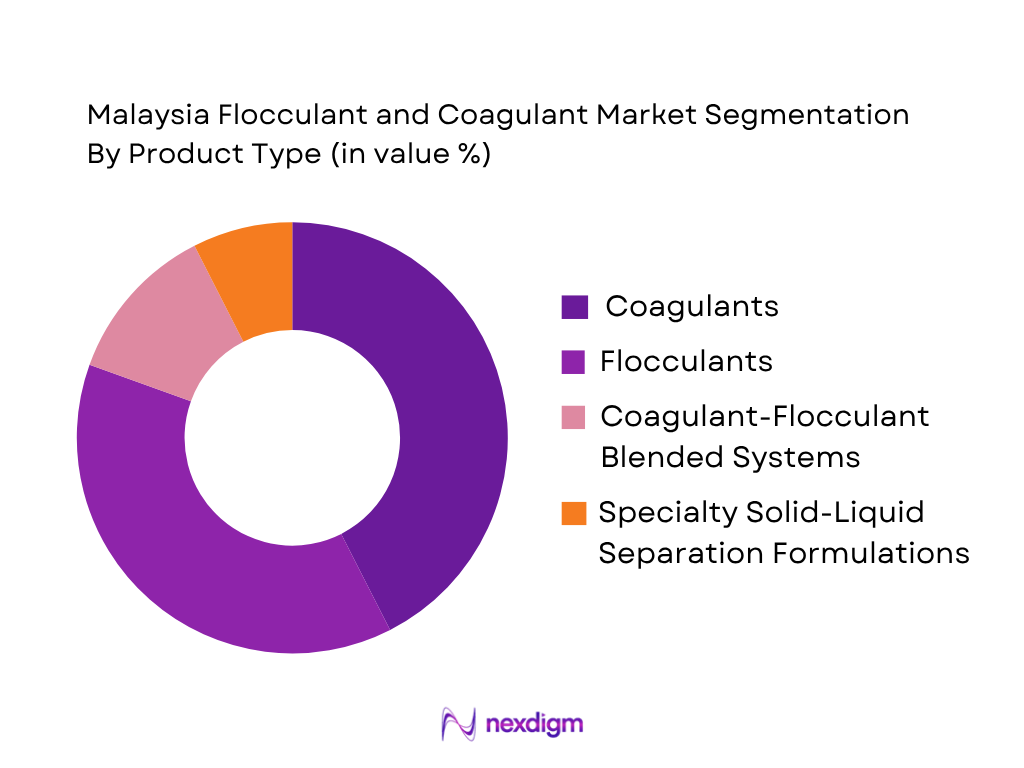
The Malaysia Flocculant and Coagulant Market is segmented by product type into coagulants, flocculants, coagulant-flocculant blended systems and specialty solid-liquid separation formulations. Coagulants are expected to maintain a dominant market position due to their widespread application in municipal water clarification, industrial wastewater treatment and primary treatment processes. Aluminum-based and iron-based coagulants are commonly used for destabilizing suspended particles before sedimentation and filtration stages. Flocculants support secondary treatment operations by improving particle aggregation, sludge settling and dewatering efficiency. Blended systems are increasingly preferred by industrial users seeking simplified chemical dosing programs, while specialty formulations support complex applications requiring higher treatment precision. Malaysia’s manufacturing base, including electronics, palm oil processing, food manufacturing and chemical industries, continues to generate demand for reliable solid-liquid separation chemicals across diverse wastewater conditions.
By End-Use Industry
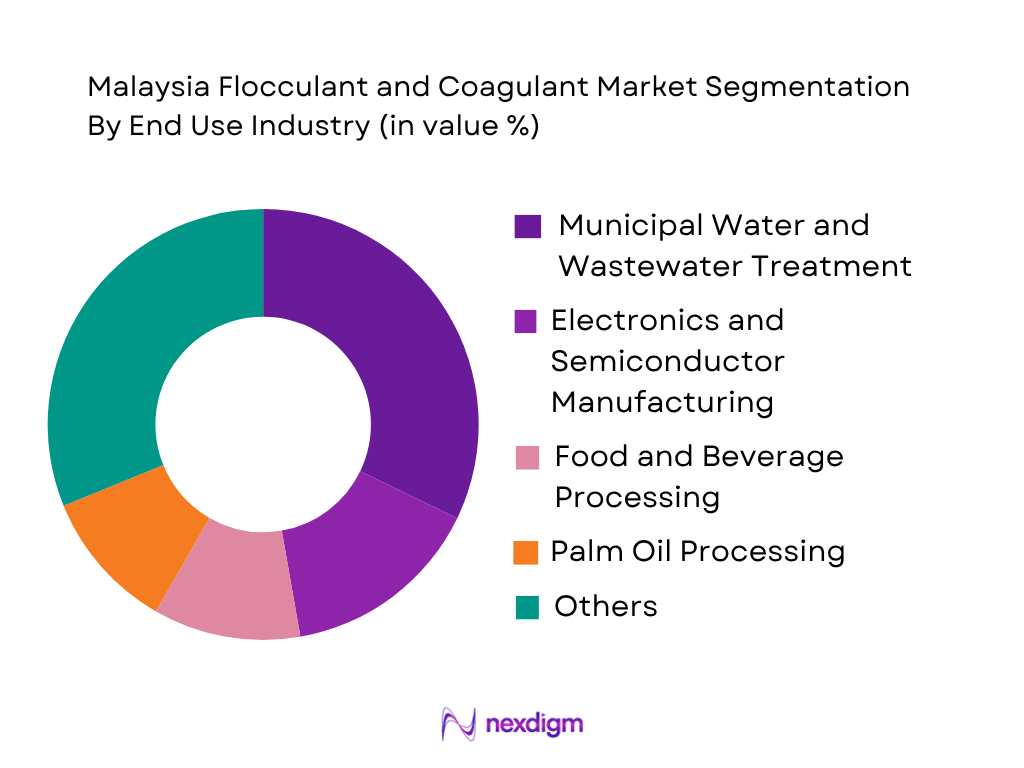
The Malaysia Flocculant and Coagulant Market is segmented by end-use industry into municipal water and wastewater treatment, electronics and semiconductor manufacturing, food and beverage processing, palm oil processing, chemical manufacturing, power generation, mining and mineral processing, pharmaceutical manufacturing, oil and gas and other industrial applications. Municipal water and wastewater treatment is expected to represent the leading segment due to continuous chemical requirements for clarification, sludge treatment and wastewater discharge compliance. Industrial applications also contribute significantly as Malaysia has developed strong manufacturing clusters requiring advanced wastewater management systems. Electronics and semiconductor facilities require high-quality process water treatment, while palm oil processing generates wastewater streams requiring effective coagulation and flocculation solutions.
Competitive Landscape
The Malaysia Flocculant and Coagulant Market is characterized by the presence of global water-treatment chemical manufacturers and regional suppliers providing commodity and specialty treatment solutions. Major companies compete through product portfolio expansion, technical service capabilities, chemical formulation expertise and long-term supply relationships with municipal utilities and industrial customers. Key participants include global players such as Ecolab, Kemira, Solenis and SNF Group, alongside regional chemical suppliers supporting local industrial demand.
| Company | Establishment Year | Headquarters | Flocculant & Coagulant Portfolio | Malaysia Market Presence | Key End-Use Applications | Technical Service Capability | Manufacturing / Supply Capability | Competitive Strength |
| Ecolab Inc. (Nalco Water) | 1923 | Saint Paul, USA | ~ | ~ | ~ | ~ | ~ | ~ |
| Kemira Oyj | 1920 | Helsinki, Finland | ~ | ~ | ~ | ~ | ~ | ~ |
| Solenis LLC | 1907 | Wilmington, USA | ~ | ~ | ~ | ~ | ~ | ~ |
| Kurita Water Industries Ltd. | 1949 | Tokyo, Japan | ~ | ~ | ~ | ~ | ~ | ~ |
| SNF Group | 1978 | Andrézieux-Bouthéon, France | ~ | ~ | ~ | ~ | ~ | ~ |
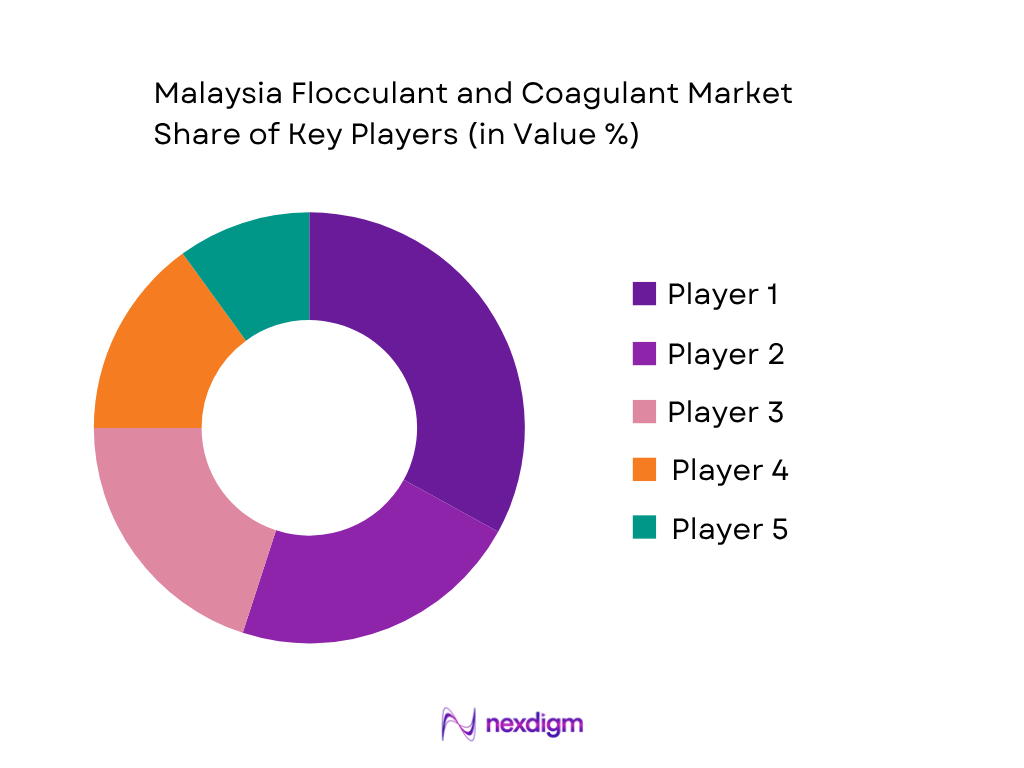
Malaysia Flocculant and Coagulant Market Analysis
Growth Drivers
Expansion of Municipal Water Treatment Infrastructure
The Malaysia Flocculant and Coagulant Market is supported by continuous development of municipal water treatment infrastructure, as population growth, urban expansion and rising water-quality requirements increase demand for clarification and wastewater treatment chemicals. Malaysia recorded a population of approximately 34.1 million people in 2024, increasing pressure on public water infrastructure and wastewater management systems. According to national water statistics, Malaysia operates thousands of water treatment facilities supplying treated water across residential, commercial and industrial users. The country’s urban population reached more than 26 million people, increasing the requirement for efficient treatment processes involving coagulation, flocculation and sludge management. Municipal operators increasingly require chemical solutions capable of improving suspended-solid removal, reducing treatment variability and supporting compliance with discharge standards. The continued expansion of water infrastructure in major urban areas such as Selangor, Kuala Lumpur, Johor and Penang creates recurring demand for aluminum-based coagulants, iron-based coagulants and polymer flocculants. Increasing wastewater generation from households and commercial establishments further strengthens the requirement for reliable chemical treatment programs across municipal facilities.
Increasing Industrial Wastewater Treatment Requirements
The Malaysia Flocculant and Coagulant Market benefits from increasing industrial wastewater treatment requirements due to the country’s diversified manufacturing ecosystem, including electronics, semiconductor, palm oil processing, chemicals and food manufacturing. Malaysia’s economy recorded a gross domestic product of approximately USD 445 billion in 2024, reflecting continued industrial activity and infrastructure development. The manufacturing sector contributed around 23% of Malaysia’s GDP, demonstrating the importance of industrial operations requiring wastewater management solutions. Industrial facilities generate wastewater containing suspended solids, organic contaminants and process residues that require coagulation and flocculation treatment before discharge or reuse. The electronics and semiconductor industry, concentrated in Penang, Selangor and Johor, requires advanced water-treatment systems due to strict process-water quality requirements. Palm oil processing facilities also create significant wastewater streams requiring efficient solid-liquid separation technologies. Increasing environmental compliance requirements and industrial water-recycling initiatives are encouraging companies to adopt advanced chemical treatment programs, supporting demand for specialized flocculants, coagulants and customized wastewater-treatment formulations.
Market Challenges
Raw Material Price Volatility and Dependence on Imported Specialty Chemicals
The Malaysia Flocculant and Coagulant Market faces challenges due to fluctuations in raw material availability and dependence on imported chemical inputs for specialty treatment formulations. Many advanced water-treatment chemicals, including high-performance polymers and specialty additives, rely on international supply chains, exposing local suppliers to changes in global chemical availability and logistics conditions. Malaysia imported chemical products valued at more than USD 50 billion in 2024, highlighting the importance of international chemical trade for industrial operations. The country’s chemical manufacturing ecosystem continues to depend on imported feedstocks for several specialized applications, including water-treatment polymers and advanced formulations. Exchange-rate movements and transportation disruptions can influence procurement planning for treatment chemical suppliers and industrial users. Smaller wastewater treatment operators may face difficulty maintaining consistent chemical supply due to limited purchasing scale. The requirement for specialized formulations for industries such as semiconductor manufacturing, palm oil processing and chemical production further increases dependency on technical-grade chemical imports and creates supply-chain complexity within the market.
Stringent Environmental Discharge Regulations and Complex Industrial Wastewater Characteristics
The Malaysia Flocculant and Coagulant Market faces challenges from increasingly complex wastewater characteristics and stricter environmental discharge requirements across industrial sectors. Malaysia’s industrial facilities are required to comply with wastewater discharge regulations covering parameters such as suspended solids, chemical oxygen demand and pollutant levels. The manufacturing sector, which contributed approximately USD 100 billion in economic output in 2024, includes industries generating diverse wastewater streams requiring customized treatment approaches. Semiconductor, chemical, palm oil and food-processing facilities often produce wastewater with varying chemical compositions, making standardized treatment programs less effective. Industrial operators increasingly require advanced testing, dosage optimization and technical expertise to achieve treatment efficiency. Sludge disposal requirements also create additional operational challenges because wastewater treatment generates residual solids requiring proper management. The need to balance treatment effectiveness, environmental compliance and operational efficiency increases complexity for chemical suppliers and end users. Companies must invest in application support and specialized formulations to address changing wastewater conditions across industrial applications.
Market Opportunities
Advanced Polyacrylamide Formulations and Sustainable Bio-Based Flocculants
The Malaysia Flocculant and Coagulant Market presents opportunities through the development of advanced polyacrylamide formulations and sustainable bio-based flocculants designed for improved treatment efficiency and environmental performance. Growing industrial water-management requirements are encouraging adoption of higher-performance polymers capable of reducing chemical consumption and improving sludge separation. Malaysia generated more than 18 million tonnes of crude palm oil production in 2024, creating significant wastewater-treatment requirements from palm oil mill effluent management. This creates opportunities for specialized flocculant solutions designed for high-organic-load wastewater streams. Sustainable chemical alternatives are gaining attention as industries focus on reducing environmental impact and improving wastewater-reuse capabilities. Bio-based polymers derived from renewable materials can support industries seeking environmentally optimized treatment options. Semiconductor manufacturing and electronics industries also require advanced wastewater treatment due to increasing production complexity and strict water-quality requirements. Development of customized polymer formulations, automated dosing systems and application-specific treatment programs provides opportunities for suppliers to strengthen their presence across Malaysia’s industrial wastewater-treatment ecosystem.
Industrial Water Recycling Systems and High-Efficiency Sludge Dewatering Solutions
The Malaysia Flocculant and Coagulant Market has significant opportunities through industrial water recycling systems and advanced sludge dewatering technologies as industries seek efficient water management solutions. Malaysia’s industrial sector consumed substantial volumes of water across manufacturing, agriculture and energy activities, increasing the need for treatment technologies that support reuse and resource efficiency. The country recorded total renewable internal freshwater resources of approximately 580 billion cubic meters, highlighting the importance of sustainable water management practices. Industrial users including electronics manufacturers, food processors and chemical producers are increasingly adopting wastewater recycling systems to reduce dependency on freshwater sources and improve operational sustainability. High-efficiency sludge dewatering solutions using specialized polymer flocculants can improve solid separation performance and reduce waste-handling requirements. Palm oil mills, municipal wastewater operators and manufacturing facilities require improved sludge-management technologies to handle increasing treatment volumes. Digital chemical dosing systems, real-time monitoring technologies and optimized treatment programs provide additional opportunities for suppliers to offer value-added solutions beyond conventional chemical supply.
Future Outlook
Over the next decade, the Malaysia Flocculant and Coagulant Market is expected to experience continued expansion driven by increasing wastewater treatment requirements, industrialization and stricter environmental compliance standards. Growth will be supported by rising adoption of advanced polymer-based formulations, improved sludge management technologies and increasing demand from manufacturing industries. The expansion of electronics, semiconductor and industrial facilities will create additional requirements for specialized water treatment chemicals. Municipal infrastructure development and water reuse initiatives will further strengthen demand for coagulation and flocculation solutions.
Major Players
- SNF Group
- Ecolab Inc.
- Kemira Oyj
- Solenis LLC
- Kurita Water Industries Ltd.
- BASF SE
- Veolia Water Technologies
- SUEZ Water Technologies & Solutions
- Dow Inc.
- Chemtrade Logistics Inc.
- Feralco Group
- GEO Specialty Chemicals
- Aries Chemical Inc.
- Buckman Laboratories
- Hydrite Chemical Co.
Key Target Audience
- Water Treatment Chemical Manufacturers
- Industrial Wastewater Treatment Operators
- Municipal Water Utilities and Sewerage Operators
- Electronics and Semiconductor Manufacturing Companies
- Palm Oil Processing Companies
- Chemical and Petrochemical Companies
- Investments and Venture Capitalist Firms
- Government and Regulatory Bodies (National Water Services Commission Malaysia, Department of Environment Malaysia)
Research Methodology
Step 1: Identification of Key Variables
The initial phase involves developing a comprehensive ecosystem map covering manufacturers, distributors, municipal utilities, industrial users and regulatory stakeholders operating within the Malaysia Flocculant and Coagulant Market. Secondary research is conducted to identify product categories, application areas, demand drivers and supply-side factors influencing market performance.
Step 2: Market Analysis and Construction
This phase involves analyzing historical market conditions, consumption patterns, industrial demand and application-specific requirements. The assessment includes evaluation of municipal wastewater treatment, industrial effluent management, sludge treatment applications and chemical consumption patterns to establish market structure.
Step 3: Hypothesis Validation and Expert Consultation
Market assumptions are validated through discussions with industry participants including chemical suppliers, treatment operators and industrial end users. These consultations provide operational insights regarding product adoption, customer preferences, technology shifts and competitive dynamics.
Step 4: Research Synthesis and Final Output
The final stage combines secondary research findings with industry-level insights to validate market estimates and develop a detailed assessment of product segments, applications, competitive positioning and future market opportunities within Malaysia’s flocculant and coagulant ecosystem.

- Executive Summary
- Research Methodology (Market Definition and Scope, Malaysia Flocculant and Coagulant Market Classification, Flocculant and Coagulant Product Mapping, Polymer Chemistry Assessment, Coagulant Chemistry Assessment, Charge Density Analysis, Molecular Weight Assessment, Formulation-Level Assessment, Water Treatment Process Mapping, Application-Level Demand Analysis, Municipal Water Treatment Assessment, Industrial Wastewater Assessment, Desalination and Water Reuse Assessment, Production Capacity Mapping, Domestic Manufacturing Assessment, Import and Export Trade Analysis, Raw Material Supply Assessment, Demand-Side Assessment, Supply-Side Assessment, Top-Down Market Sizing, Bottom-Up Market Sizing, Primary Industry Interviews, Data Triangulation, Forecasting Framework, Market Share Validation, Limitations and Future Conclusions)

- Definition and Scope
- Malaysia Flocculant and Coagulant Industry Evolution
- Flocculant and Coagulant Value Chain Analysis
- Flocculant and Coagulant Supply Chain Analysis

- Growth Drivers (Expansion of Municipal Water Treatment Infrastructure, Increasing Industrial Wastewater Treatment Requirements, Palm Oil Industry Effluent Management Demand, Semiconductor Manufacturing Expansion, Water Recycling Adoption, Growth of Food Processing Industries, Mining Activity Development, Increasing Sludge Dewatering Requirements, Demand for High-Efficiency Solid-Liquid Separation Technologies)
- Market Challenges (Raw Material Price Volatility, Dependence on Imported Specialty Chemicals, Stringent Environmental Discharge Regulations, High Chemical Treatment Costs, Sludge Disposal Challenges, Complex Industrial Wastewater Characteristics, Supply Chain Disruptions, Requirement for Technical Treatment Expertise, Competition from Alternative Treatment Technologies)
- Market Opportunities (Advanced Polyacrylamide Formulations, Sustainable Bio-Based Flocculants, Palm Oil Wastewater Treatment Solutions, Semiconductor Wastewater Treatment Applications, Industrial Water Recycling Systems, Low-Residual Coagulant Technologies, High-Efficiency Sludge Dewatering Solutions, Specialty Mining Treatment Chemicals, Digital Chemical Dosing Systems)
- Market Trends (High-Performance Polymer Flocculants, Sustainable Water Treatment Chemicals, Automated Chemical Dosing Systems, Advanced Membrane Pretreatment Solutions, Industrial Water Reuse Technologies, Smart Wastewater Monitoring, Specialty Effluent Treatment Formulations, Low-Sludge Generation Chemicals, Circular Water Management Practices)
- Government Regulations and Standards (Environmental Quality Act Requirements, Department of Environment Industrial Effluent Regulations, Water Services Industry Act Requirements, National Water Services Commission Standards, Drinking Water Quality Standards, Industrial Wastewater Discharge Requirements, Chemical Management Regulations, Occupational Safety and Health Requirements)
- SWOT Analysis
- Porter’s Five Forces Analysis
- PESTLE Analysis
- Stakeholder Ecosystem
- Competition Ecosystem

- By Market Value (2020-2025)
- By Market Volume (2020-2025)
- By Flocculant Consumption Volume (2020-2025)
- By Coagulant Consumption Volume (2020-2025)

- By Product Type (In Value %)
Flocculants
Coagulants
Coagulant-Flocculant Blended Systems
Specialty Solid-Liquid Separation Formulations - By Flocculant Type (In Value %)
Polyacrylamide Flocculants
Cationic Flocculants
Anionic Flocculants
Nonionic Flocculants
Amphoteric Flocculants
Natural Flocculants
Biopolymer-Based Flocculants
Specialty High-Performance Flocculants - By Coagulant Type (In Value %)
Aluminum Sulfate
Ferric Chloride
Ferric Sulfate
Polyaluminum Chloride
Polyaluminum Sulfate
Organic Coagulants
Sodium Aluminate
Other Specialty Coagulants - By Form (In Value %)
Liquid Flocculants and Coagulants
Dry Powder Formulations
Emulsion Products
Granular Products
Solution-Based Products - By Charge Type (In Value %)
Cationic
Anionic
Nonionic
Amphoteric - By Application Type (In Value %)
Coagulation
Flocculation
Clarification
Sedimentation
Sludge Thickening
Sludge Dewatering
Solid-Liquid Separation
Tailings Treatment
Water Recycling and Reuse

- Market Share of Major Players (By Malaysia Revenue, Flocculant Sales Volume, Coagulant Sales Volume, Product Chemistry Portfolio, Polyacrylamide Technology Coverage, Domestic Distribution Network, Municipal Customer Coverage, Industrial Customer Coverage, Palm Oil Industry Exposure, Semiconductor Industry Exposure, Production Capacity, Regional Presence, Technical Service Capability, Application Laboratory Capability)
- Cross Comparison Parameters (Flocculant and Coagulant Revenue, Organic and Inorganic Product Portfolio Breadth, Polyacrylamide Formulation Capability, Municipal Water Treatment Coverage, Palm Oil Effluent Treatment Capability, Industrial Wastewater Treatment Expertise, Semiconductor Wastewater Application Capability, Malaysia Distribution Network Reach)
- SWOT Analysis of Major Players
- Detailed Profiles of Major Companies
SNF Malaysia Sdn Bhd
Kemira Oyj
BASF Malaysia Sdn Bhd
Solenis Malaysia Sdn Bhd
Ecolab Malaysia
Nalco Water
Kurita Water Industries Malaysia
Feralco Group
USALCO LLC
Ixom Watercare
Chemtrade Logistics Inc.
GEO Specialty Chemicals
Buckman Laboratories Malaysia
Hydrex Chemicals
Aqua Industrial Water Treatment Sdn Bhd

- Municipal Water Utility Chemical Procurement Assessment
- Wastewater Treatment Plant Chemical Requirement Analysis
- Palm Oil Mill Effluent Treatment Chemical Assessment
- Semiconductor Manufacturing Wastewater Treatment Requirement Analysis
- Food and Beverage Processing Wastewater Assessment
- Mining and Mineral Processing Chemical Requirement Analysis

- By Market Value (2026-2035)
- By Market Volume (2026-2035)
- By Flocculant Consumption Volume (2026-2035)
- By Coagulant Consumption Volume (2026-2035)


 Request a Sample
 Ask for Customization
 Get a Quote
 Enquire Now