
 Download PDF
 Download PDF
Market Overview
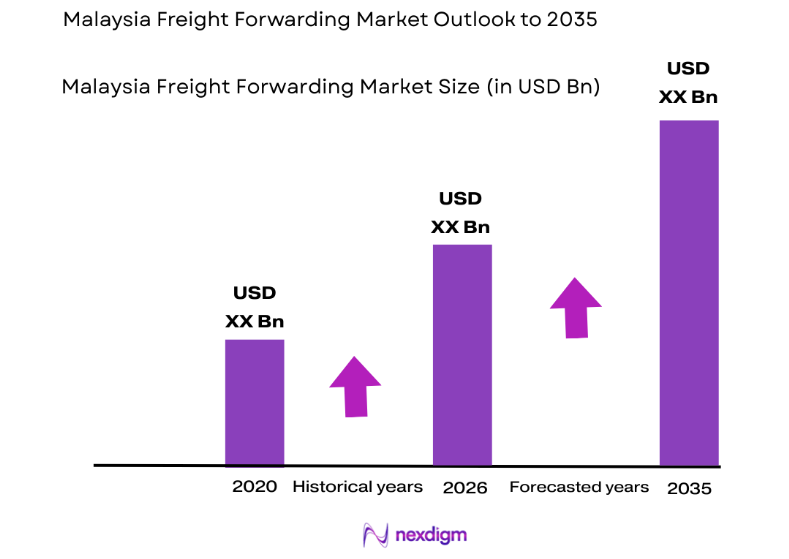
Malaysia’s freight forwarding sector operates as a fundamental component of the country’s international trade ecosystem, with the market valued at approximately USD ~ billion based on a recent historical assessment derived from logistics sector revenue statistics published by the Malaysian Investment Development Authority and regional transportation industry associations. Market expansion is largely driven by growing international trade volumes, rising manufacturing exports, strong port infrastructure, and increasing demand for integrated logistics coordination supporting maritime, air cargo, and multimodal freight transportation networks.
Major freight forwarding operations are concentrated in Kuala Lumpur, Selangor, Johor, and Penang due to their proximity to Malaysia’s largest seaports, airport cargo terminals, and industrial export zones. Port Klang and Tanjung Pelepas function as the primary international shipping gateways supporting containerized trade flows, while Kuala Lumpur International Airport operates as a major air cargo hub facilitating time sensitive freight forwarding services for electronics manufacturing, pharmaceutical distribution, and high value industrial exports.
Market Segmentation
By Transport Mode
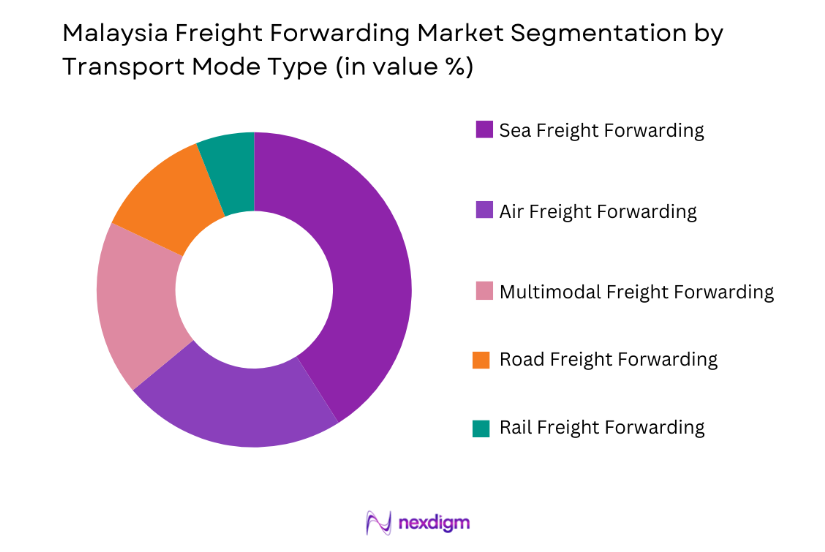
Malaysia Freight Forwarding market is segmented by product type into sea freight forwarding, air freight forwarding, road freight forwarding, rail freight forwarding, and multimodal freight forwarding services. Recently, sea freight forwarding has a dominant market share due to factors such as high containerized cargo volumes, cost efficiency for international trade, and the presence of large maritime shipping hubs such as Port Klang and Tanjung Pelepas. Malaysia’s export oriented manufacturing sector relies heavily on ocean shipping to transport electronics, machinery, and industrial components to global markets. Freight forwarding companies coordinate cargo consolidation, customs documentation, container handling, and international shipping logistics across global maritime routes connecting Malaysia with Asia, Europe, and North America.
By End User Industry
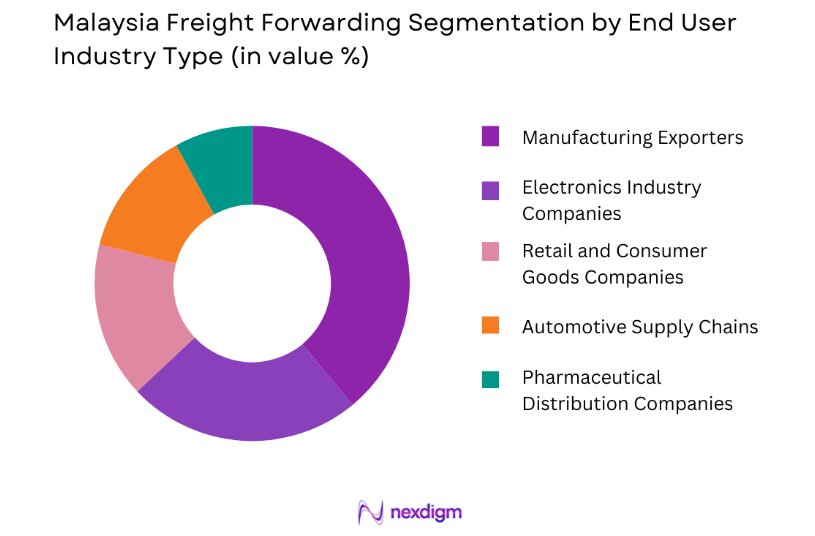
Malaysia Freight Forwarding market is segmented by product type into manufacturing exporters, electronics industry companies, automotive supply chains, retail and consumer goods companies, and pharmaceutical distribution companies. Recently, manufacturing exporters have a dominant market share due to factors such as Malaysia’s strong export oriented industrial economy and the presence of large electronics and industrial production clusters. Manufacturing companies depend heavily on freight forwarding providers to coordinate international cargo shipments, customs documentation, container booking, and global shipping logistics. Export driven industries ship large volumes of electronic components machinery equipment and industrial goods through Malaysia’s major seaports and air cargo terminals, which significantly increases demand for professional freight forwarding services.
Competitive Landscape
The Malaysia freight forwarding market is moderately consolidated with the presence of global logistics providers alongside regional forwarding specialists competing across maritime shipping coordination, air cargo logistics, and multimodal transportation management services. Large multinational logistics companies dominate complex international shipping operations due to their global carrier partnerships and advanced logistics technology platforms. Domestic forwarding firms focus on regional trade routes and specialized export logistics services supporting Malaysia’s manufacturing and industrial sectors.
| Company Name | Establishment Year | Headquarters | Technology Focus | Market Reach | Key Products | Revenue | Container Handling Coordination |
| DHL Global Forwarding | 1969 | Germany | ~ | ~ | ~ | ~ | ~ |
| Kuehne + Nagel | 1890 | Switzerland | ~ | ~ | ~ | ~ | ~ |
| DB Schenker | 1872 | Germany | ~ | ~ | ~ | ~ | ~ |
| DSV | 1976 | Denmark | ~ | ~ | ~ | ~ | ~ |
| Yusen Logistics | 1955 | Japan | ~ | ~ | ~ | ~ | ~ |
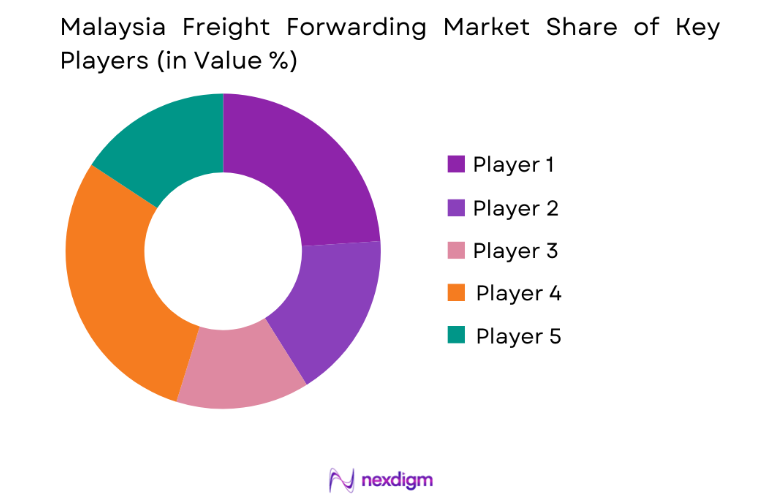
Malaysia Freight Forwarding Market Analysis
Growth Drivers
Expansion of Export Oriented Manufacturing and Electronics Production Clusters
Malaysia’s strong export oriented manufacturing economy significantly drives the growth of the freight forwarding market because industrial production sectors rely heavily on coordinated international logistics services to transport goods across global supply chains. Electronics manufacturing clusters located in Penang Selangor and Johor produce large volumes of semiconductors electrical equipment and industrial components that must be exported to international markets. Freight forwarding companies therefore play a critical role in organizing container shipments air cargo bookings and customs clearance procedures that enable manufacturers to deliver products efficiently to overseas buyers. The growth of global electronics supply chains has further strengthened Malaysia’s position as a major export manufacturing hub within Southeast Asia. Industrial exporters require reliable logistics coordination for handling large volumes of containerized cargo moving through seaports and airport cargo terminals. Freight forwarding providers also support manufacturers by managing shipping documentation insurance coordination and international freight rate negotiations with global carriers. Increasing global demand for electronics and industrial products continues to generate substantial freight forwarding activity within Malaysia’s international trade logistics ecosystem.
Expansion of Maritime Trade Infrastructure and Regional Logistics Connectivity
Malaysia’s extensive maritime infrastructure and strategic geographic location along major global shipping routes significantly contribute to the expansion of the freight forwarding market by facilitating efficient international cargo movement. Major container ports including Port Klang and Tanjung Pelepas serve as primary maritime gateways connecting Malaysia to global shipping networks linking Asia Europe and North America. Freight forwarding companies coordinate container handling vessel booking cargo consolidation and international shipping documentation for exporters and importers operating within these port ecosystems. The presence of modern container terminals automated cargo handling equipment and integrated port logistics systems improves operational efficiency for shipping companies and freight forwarders. Regional trade connectivity within Southeast Asia also increases cross border cargo flows requiring coordinated multimodal freight services. Logistics providers integrate sea freight air cargo and land transportation solutions to ensure smooth cargo movement between industrial production zones and international shipping gateways. These infrastructure advantages significantly strengthen Malaysia’s position as a regional logistics hub supporting growing freight forwarding activity.
Market Challenges
Complex Customs Regulations and International Trade Compliance Requirements
Freight forwarding operations in Malaysia face regulatory challenges related to customs documentation international trade compliance and cross border shipping regulations that require strict adherence to government procedures. Exporters and logistics companies must comply with customs declarations tariff classifications cargo inspection requirements and trade documentation standards before goods can be shipped internationally. Freight forwarding companies therefore allocate significant resources to managing regulatory compliance processes and coordinating with customs authorities. Changes in international trade regulations and shipping documentation standards can also introduce operational complexities that affect cargo processing timelines. Small exporters sometimes lack the expertise required to manage complex international shipping procedures which increases reliance on freight forwarding intermediaries. Delays in documentation processing or customs clearance procedures can result in shipment disruptions and increased logistics costs for businesses engaged in global trade. Freight forwarding companies must continuously update regulatory knowledge and maintain compliance systems to ensure efficient cargo handling within international trade networks.
Volatility in Global Freight Rates and Transportation Cost Structures
The freight forwarding market is highly influenced by fluctuations in global shipping costs airline cargo rates and fuel prices which can significantly impact the profitability of logistics providers and exporters. Ocean freight rates often fluctuate due to global shipping capacity imbalances geopolitical developments and seasonal cargo demand patterns across international trade routes. Air freight forwarding costs are also influenced by airline cargo capacity fuel price variations and airport congestion affecting shipment scheduling. Logistics companies must constantly negotiate shipping contracts with carriers while maintaining competitive pricing for clients engaged in international trade. Sudden increases in transportation costs can reduce profit margins for exporters and freight forwarders particularly during periods of supply chain disruption. Freight forwarding companies therefore face operational challenges in maintaining stable pricing structures while managing dynamic freight rate fluctuations across global transportation markets.
Opportunities
Growth of Cross Border E-commerce Logistics and International Parcel Trade
The rapid expansion of cross border e-commerce presents significant opportunities for freight forwarding companies operating in Malaysia because international online retail platforms require reliable logistics systems capable of transporting small parcel shipments between countries. Consumers increasingly purchase products from global online retailers which requires efficient air cargo logistics and customs clearance services to manage international parcel deliveries. Freight forwarding providers play an important role in consolidating international e-commerce shipments coordinating airline cargo capacity and ensuring rapid customs processing for inbound and outbound parcels. Logistics companies are therefore investing in specialized cross border fulfillment centers and digital logistics platforms capable of handling high volumes of international parcel shipments. Integration between international shipping networks and domestic last mile delivery systems further strengthens the growth of cross border e-commerce logistics services. As digital commerce continues expanding across Southeast Asia freight forwarding companies capable of supporting international parcel trade will benefit from increasing shipment volumes.
Development of Integrated Multimodal Logistics and Digital Freight Platforms
The adoption of integrated multimodal logistics systems and digital freight management platforms creates significant growth opportunities for freight forwarding providers seeking to improve operational efficiency across international supply chains. Digital logistics platforms enable freight forwarders to track cargo shipments coordinate transport routes and manage shipping documentation through centralized technology systems. Multimodal logistics solutions allow companies to combine sea freight air cargo and land transportation services into integrated supply chain networks that improve cargo transit efficiency. Logistics companies increasingly deploy digital freight marketplaces automated cargo booking platforms and real time shipment visibility technologies that enhance service quality for exporters and importers. The integration of smart logistics technologies enables freight forwarding companies to optimize cargo routing reduce transit times and improve cost efficiency across international trade corridors. These technological advancements will play an important role in transforming freight forwarding operations throughout Malaysia’s global trade logistics ecosystem.
Future Outlook
Malaysia’s freight forwarding market is expected to expand steadily as international trade activity and export manufacturing production continue to grow across the region. Increasing investment in port infrastructure digital logistics systems and integrated freight management platforms will strengthen operational efficiency across shipping networks. Government initiatives supporting trade facilitation and logistics sector development will further enhance the country’s position as a regional logistics hub. Rising cross border e-commerce trade and expanding global supply chains will continue generating strong demand for freight forwarding services.
Major Players
- DHL Global Forwarding
- Kuehne + Nagel
- DB Schenker
- DSV
- Yusen Logistics
- Expeditors International
- CEVA Logistics
- Nippon Express
- Bollore Logistics
- Kerry Logistics
- Agility Logistics
- Sinotrans
- Panalpina
- CJ Logistics
- Hellmann Worldwide Logistics
Key Target Audience
- International logistics service providers
- Manufacturing and export companies
- Retail and consumer goods companies
- Automotive and industrial supply chain companies
- Investments and venture capitalist firms
- Government and regulatory bodies
- Port and transportation infrastructure developers
Research Methodology
Step 1: Identification of Key Variables
Key variables including international cargo volumes export trade statistics freight forwarding service revenues shipping route connectivity and logistics infrastructure capacity were identified using government trade databases port authority reports and logistics industry publications.
Step 2: Market Analysis and Construction
The market structure was constructed by analyzing container cargo throughput air freight volumes export manufacturing activity and operational data from freight forwarding companies operating within Malaysia’s logistics ecosystem.
Step 3: Hypothesis Validation and Expert Consultation
Industry assumptions were validated through consultations with freight forwarding managers shipping industry specialists port logistics coordinators and international trade experts operating within Malaysia’s global logistics networks.
Step 4: Research Synthesis and Final Output
Validated data logistics infrastructure insights and international trade trends were synthesized to generate the final market assessment including segmentation competitive landscape and long term growth outlook for Malaysia’s freight forwarding sector.

- Executive Summary
- Research Methodology (Definitions, Scope, Industry Assumptions, Market Sizing Approach, Primary & Secondary Research Framework, Data Collection & Verification Protocol, Analytic Models & Forecast Methodology, Limitations & Research Validity Checks)

- Market Definition and Scope
- Value Chain & Stakeholder Ecosystem
- Regulatory / Certification Landscape
- Sector Dynamics Affecting Demand

- Growth Drivers
Expansion of International Trade and Export Manufacturing Activities
Development of Port Infrastructure and Maritime Logistics Connectivity
Increasing Demand for Integrated Supply Chain and Freight Management Services - Market Challenges
Volatility in Global Freight Rates and Shipping Costs
Complex Customs Clearance and Cross Border Regulatory Procedures
Capacity Constraints in Port and Cargo Handling Infrastructure - Market Opportunities
Growth of Cross Border E Commerce Logistics Services
Adoption of Digital Freight Management Platforms
Expansion of Regional Trade Connectivity Across ASEAN Supply Chains - Trends
Integration of Digital Freight Visibility and Tracking Systems
Increasing Adoption of Multimodal Freight Transportation Networks - Government Regulations
- SWOT Analysis
- Porter’s Five Forces

- By Market Value, 2020-2025
- By Installed Units, 2020-2025
- By Average System Price, 2020-2025
- By System Complexity Tier, 2020-2025

- By System Type (In Value%)
Air Freight Forwarding Services
Sea Freight Forwarding Services
Road Freight Forwarding Services
Rail Freight Forwarding Services
Multimodal Freight Forwarding Services - By Platform Type (In Value%)
Digital Freight Forwarding Platforms
Traditional Freight Brokerage Platforms
Integrated Logistics Management Platforms
Third Party Freight Marketplace Platforms - By Fitment Type (In Value%)
Asset Light Freight Forwarding Models
Asset Based Freight Forwarding Models
Hybrid Freight Forwarding Models
Integrated Supply Chain Service Models - By End User Segment (In Value%)
Manufacturing and Industrial Exporters
Retail and E Commerce Distribution Companies
Oil and Gas and Energy Sector Companies

- Market Share Analysis
- Cross Comparison Parameters (Global Logistics Network Coverage, Multimodal Transport Capability, Digital Freight Platform Integration, Customs Clearance Expertise, Cargo Handling Infrastructure, Strategic Shipping Line Partnerships, Supply Chain Service Portfolio)
- SWOT Analysis of Key Competitors
- Pricing & Procurement Analysis
- Key Players
DHL Global Forwarding Malaysia
Kuehne + Nagel Malaysia
DB Schenker Malaysia
DSV Malaysia
CEVA Logistics Malaysia
Nippon Express Malaysia
Yusen Logistics Malaysia
Expeditors Malaysia
Bolloré Logistics Malaysia
Tasco Berhad
CJ Century Logistics Holdings
FM Global Logistics
Swift Haulage Berhad
Agility Logistics Malaysia
Geodis Malaysia

- Manufacturing Exporters Increasing Dependence on Global Freight Forwarding Networks
- Retail and E Commerce Businesses Expanding Cross Border Shipping Operations
- Energy and Industrial Companies Requiring Specialized Cargo Handling Services
- SME Exporters Utilizing Freight Forwarders for International Market Access

- Forecast Market Value, 2026-2035
- Forecast Installed Units, 2026-2035
- Price Forecast by System Tier, 2026-2035
- Future Demand by Platform, 2026-2035


 Request a Sample
 Ask for Customization
 Get a Quote
 Enquire Now