

 Download PDF
 Download PDF
Market Overview
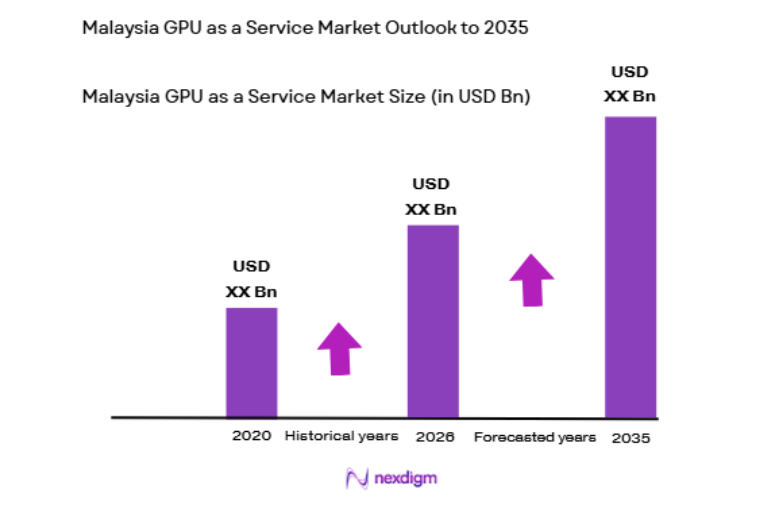
The Malaysia GPU as a Service market is projected to reach USD ~ million, driven by the increasing demand for GPU-accelerated computing in industries such as artificial intelligence (AI), machine learning, and big data analytics. The growth of cloud-based solutions and the need for high-performance computing resources to support AI model training, simulations, and data processing have been key factors in this expansion. Malaysia’s growing digital infrastructure and its push for digital transformation in various sectors are pivotal to the market’s growth.
The key cities driving the market include Kuala Lumpur, Penang, and Johor Bahru. Kuala Lumpur remains the central hub due to its developed IT ecosystem, strong infrastructure, and government support for technology innovation. Penang, with its expanding tech industry, and Johor Bahru, close to Singapore, benefit from a strategic location that allows easy access to regional markets. The government’s initiatives and its growing tech ecosystem contribute to these cities’ dominance.
Market Segmentation
By Product Type
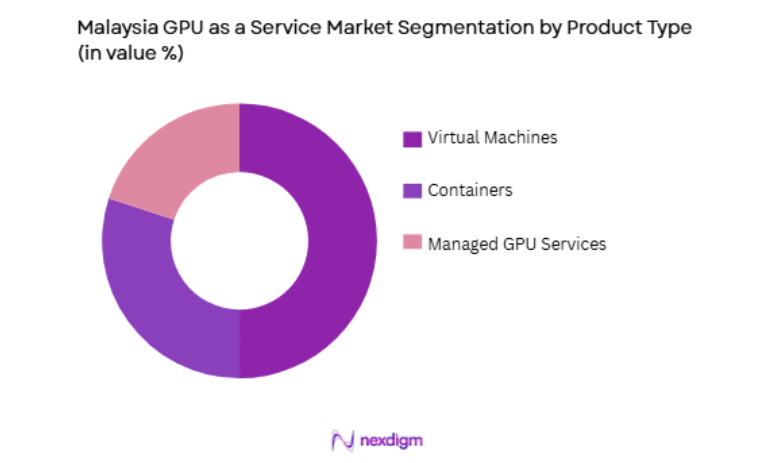
The Malaysia GPU as a Service market is segmented by product type into virtual machines, containers, and managed GPU services. Virtual machines currently dominate the market due to the flexibility and scalability they offer to businesses in need of GPU resources for various workloads. This sub segment’s growth is fueled by the growing adoption of cloud platforms offering virtualized GPU resources for AI, deep learning, and scientific computing. The flexibility of virtual machines to meet the specific needs of different industries has led to their widespread adoption, especially in sectors like healthcare, finance, and e-commerce.
By End-user Industry
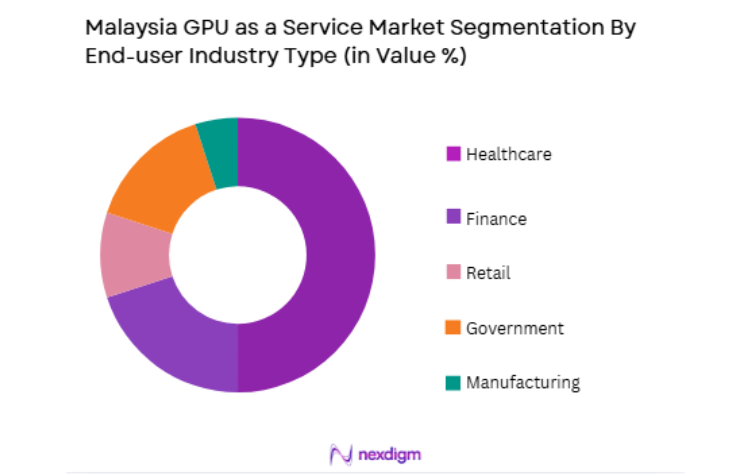
The Malaysia GPU as a Service market is segmented by end-user industry into healthcare, finance, retail, government, and manufacturing. Healthcare has emerged as the leading sector driving GPU demand due to the increased use of GPU-accelerated computing in medical imaging, diagnostics, and drug discovery. The need for faster processing of large datasets in research and patient care, coupled with the growing adoption of AI-based solutions, makes the healthcare sector a significant contributor to the GPU as a Service market in Malaysia.
Competitive Landscape
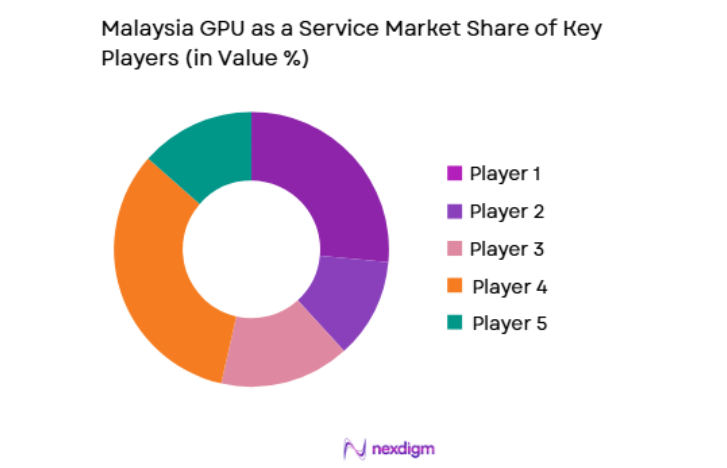
The competitive landscape in the Malaysia GPU as a Service market is shaped by global cloud service providers and local tech companies offering specialized GPU services. The market is highly consolidated, with key players such as Amazon Web Services (AWS), Microsoft Azure, Google Cloud, and local providers like Time Dotcom and Telekom Malaysia. These companies invest in expanding their service offerings and local data centers to meet the growing demand for high-performance computing resources in the region.
| Company Name | Establishment Year | Headquarters | Technology Focus | Market Reach | Key Products | Revenue | Additional Parameter |
| Amazon Web Services | 2006 | USA | ~ | ~ | ~ | ~ | ~ |
| Microsoft Azure | 2010 | USA | ~ | ~ | ~ | ~ | ~ |
| Google Cloud | 2008 | USA | ~ | ~ | ~ | ~ | ~ |
| Telekom Malaysia | 1987 | Malaysia | ~ | ~ | ~ | ~ | ~ |
| Time Dotcom | 1995 | Malaysia | ~ | ~ | ~ | ~ | ~ |
Malaysia GPU as a Service Market Analysis
Growth Drivers
Government Digital Transformation Initiatives
The Malaysian government’s push for digital transformation has significantly impacted the GPU as a Service market. Through initiatives like the Malaysia Digital Economy Blueprint (MyDIGITAL), the government has facilitated the growth of digital infrastructure, including cloud computing services. These initiatives have provided businesses with access to advanced technologies, including GPUs, to accelerate innovation in AI, machine learning, and big data analytics. With increasing investment in cloud infrastructure and a focus on enhancing digital capabilities, Malaysia’s government policies have created a conducive environment for the GPU as a Service market to flourish. By offering incentives to both local and foreign businesses, the government has positioned Malaysia as a leading digital economy in the region, further driving the adoption of GPU-powered services across sectors.
Increasing Demand for AI and Machine Learning
The rapid adoption of artificial intelligence and machine learning technologies in Malaysia is another critical driver for the growth of the GPU as a Service market. AI and ML applications require powerful computational resources to handle large datasets and run complex algorithms. GPUs are essential for processing these workloads efficiently, making them indispensable for industries such as healthcare, finance, and manufacturing. As Malaysian businesses continue to embrace AI for data analysis, automation, and predictive modeling, the demand for GPU-based solutions is expected to grow significantly. The increasing need for high-performance computing capabilities in AI applications is driving enterprises to adopt cloud-based GPU services that can scale with their growing computational requirements.
Market Challenges
High Cost of GPU Infrastructure
One of the key challenges facing the Malaysia GPU as a Service market is the high cost of building and maintaining the necessary GPU infrastructure. While cloud service providers mitigate this by offering GPU as a service, the cost of establishing local data centers with high-performance GPU capabilities remains a significant barrier for smaller businesses and startups. The capital expenditure required for GPU infrastructure, including GPUs, storage, and network bandwidth, can be prohibitive. Additionally, companies must account for the ongoing operational expenses, such as maintenance, upgrades, and electricity consumption, making it more expensive than traditional computing solutions. As the market grows, cloud providers may look to address this issue by offering more affordable pricing models or expanding their service offerings.
Data Privacy and Security Risks
Data privacy and security concerns are another major challenge for the GPU as a Service market in Malaysia. As businesses increasingly move sensitive data to the cloud to leverage GPU-powered services, ensuring that this data remains secure is critical. With the growing frequency of cyberattacks and data breaches, organizations are cautious about storing their valuable data on third-party cloud platforms. Compliance with local data protection regulations, such as the Personal Data Protection Act (PDPA) in Malaysia, is crucial for businesses. Cloud service providers must address these concerns by implementing robust security measures, including encryption and secure access protocols, to ensure that their GPU as a Service offerings are safe and compliant with industry regulations.
Opportunities
Expansion of Cloud Services in Southeast Asia
As Southeast Asia’s digital economy continues to grow, there is a significant opportunity for the Malaysia GPU as a Service market to expand. The region’s increasing demand for cloud-based solutions and high-performance computing, driven by sectors such as e-commerce, logistics, and healthcare, presents ample growth potential. Companies are increasingly looking for scalable, flexible solutions to support their AI, data analytics, and machine learning needs, making GPU-as-a-Service an attractive offering. The rise of data centers in Malaysia and neighboring countries provides a solid foundation for GPU services to meet the growing demand for computing power, particularly for high-bandwidth applications. As cloud adoption increases, Malaysia is well-positioned to capitalize on the growing interest in GPU-powered solutions, offering an excellent opportunity for service providers to expand their reach.
Growth of AI Research and Development in Asia
Asia is rapidly becoming a global hub for artificial intelligence research and development, and Malaysia is well-positioned to benefit from this trend. The demand for GPU services to support AI R&D in industries such as healthcare, robotics, and automotive is expected to surge in the coming years. By leveraging high-performance computing, businesses can accelerate their AI projects, enabling faster development of new products, services, and solutions. Malaysia’s growing AI ecosystem, supported by government policies and investment in research institutions, offers ample opportunities for GPU as a Service providers to tap into the booming demand for AI-driven innovations. As the nation continues to enhance its AI capabilities, the need for GPU resources will be a significant driver of market growth.
Future Outlook
The future outlook for the Malaysia GPU as a Service market is optimistic, with significant growth expected over the next five years. The expansion of cloud-based GPU solutions, coupled with the increasing demand for AI, machine learning, and big data analytics, will drive market development. With strong government support for digital transformation and a growing tech ecosystem, Malaysia is well-positioned to become a regional leader in high-performance computing services. The rise of AI research, expanding cloud infrastructure, and increased data center investment are expected to fuel further market growth, making Malaysia a key player in the Southeast Asian GPU-as-a-Service market.
Major Players
- Amazon Web Services
- Microsoft Azure
- Google Cloud
- Oracle
- Nvidia
- IBM
- Alibaba Cloud
- Huawei Cloud
- Rackspace Technology
- Tencent Cloud
- DigitalOcean
- IBM Cloud
- Fujitsu
- Atos
- VMware
Key Target Audience
- Investments and venture capitalist firms
- Government and regulatory bodies
- AI and machine learning solution providers
- Healthcare technology firms
- Financial institutions and fintech companies
- Large-scale enterprises
- Data centers and hosting companies
- Technology consulting firms
Research Methodology
Step 1: Identification of Key Variables
The first step in our research methodology involves identifying key variables impacting the Malaysia GPU as a Service market, including cloud adoption, demand for AI, and the growth of digital infrastructure.
Step 2: Market Analysis and Construction
We analyze various sources, including industry reports, government publications, and market surveys, to construct a detailed market model based on current trends and future projections.
Step 3: Hypothesis Validation and Expert Consultation
Consultations with industry experts and market participants help validate our hypotheses and refine assumptions, ensuring the accuracy of our research.
Step 4: Research Synthesis and Final Output
The final research output synthesizes data from all sources, providing a comprehensive market analysis that covers key growth drivers, challenges, opportunities, and future projections.

- Executive Summary
- Research Methodology (Definitions, Scope, Industry Assumptions, Market Sizing Approach, Primary & Secondary Research Framework, Data Collection & Verification Protocol, Analytic Models & Forecast Methodology, Limitations & Research Validity Checks)

- Market Definition and Scope
- Value Chain & Stakeholder Ecosystem
- Regulatory / Certification Landscape
- Sector Dynamics Affecting Demand

- Growth Drivers
Growing demand for AI and machine learning applications
Rising adoption of cloud computing solutions
Increase in GPU utilization for gaming and simulations - Market Challenges
High cost of GPU infrastructure
Scarcity of skilled professionals in AI/ML
Security concerns with cloud-based GPU solutions - Market Opportunities
Growth in edge computing and real-time processing
Partnerships with cloud service providers for expansion
Increase in demand from the gaming and entertainment industry - Trends
Adoption of multi-cloud GPU services
Integration of GPU as a Service into AI/ML workflows
Emerging demand for GPU-accelerated cloud gaming platforms - Government regulations
Regulations on data protection and privacy for cloud computing
Cloud service compliance with local cybersecurity standards
Incentives for AI-related technological advancements - SWOT analysis
- Porters 5 forces

- By Market Value, 2020-2025
- By Installed Units, 2020-2025
- By Average System Price, 2020-2025
- By System Complexity Tier, 2020-2025

- By System Type (In Value%)
Cloud-based GPU as a Service
On-demand GPU as a Service
Edge Computing GPUs
Dedicated GPU Instances
GPU Virtualization Systems - By Platform Type (In Value%)
Cloud Platforms
On-premise Platforms
Hybrid Platforms
Platform-as-a-Service (PaaS)
Infrastructure-as-a-Service (IaaS) - By Fitment Type (In Value%)
Dedicated GPU Servers
Shared GPU Resources
Managed GPU Instances
Containerized GPU Solutions
GPU Clusters - By End User Segment (In Value%)
Gaming Industry
AI/ML Development Firms
Data Science & Analytics Firms
Cloud Service Providers

- Market Share Analysis
- Cross Comparison Parameters (System Type, Platform Type, Procurement Channel, End User Segment, Fitment Type, Deployment Model, Geographic Reach, Scalability, Pricing Model, Data Security Standards)
- SWOT Analysis of Key Competitors
- Pricing & Procurement Analysis
- Key Players
NVIDIA
AMD
Google Cloud
Amazon Web Services (AWS)
Microsoft Azure
IBM Cloud
Oracle Cloud
Alibaba Cloud
Huawei Cloud
Tencent Cloud
Vultr
Rackspace
DigitalOcean
OVHcloud
Linode

- Gaming industry’s shift to cloud-based solutions
- Increased demand for AI/ML services from various industries
- Cloud providers investing in GPU resources to cater to enterprise needs
- Financial services leveraging GPU for high-performance computing

- Forecast Market Value, 2026-2035
- Forecast Installed Units, 2026-2035
- Price Forecast by System Tier, 2026-2035
- Future Demand by Platform, 2026-2035


 Request a Sample
 Ask for Customization
 Get a Quote
 Enquire Now