

 Download PDF
 Download PDF
Market Overview
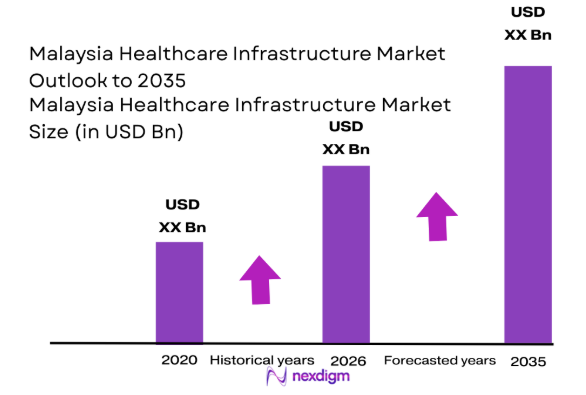
The healthcare infrastructure market in Malaysia is poised for significant growth, with a market size estimated to reach USD ~ billion based on a recent historical assessment. This expansion is primarily driven by increasing government investments in healthcare, rising demand for advanced medical technologies, and the growing population’s need for quality healthcare services. Infrastructure development across both public and private healthcare sectors, particularly in urban areas, plays a crucial role in shaping the market landscape. The adoption of telemedicine and digital health platforms further strengthens this growth.
Malaysia’s healthcare infrastructure is dominated by major urban centers like Kuala Lumpur, Penang, and Johor Bahru, where significant investments are being made to upgrade medical facilities and attract international patients. These cities lead the country due to their robust healthcare systems, availability of high-quality medical services, and proximity to commercial hubs. The increasing adoption of advanced healthcare technologies in these regions, coupled with favorable government policies and a growing medical tourism sector, continues to foster the development of the healthcare infrastructure.
Market Segmentation
By Product Type
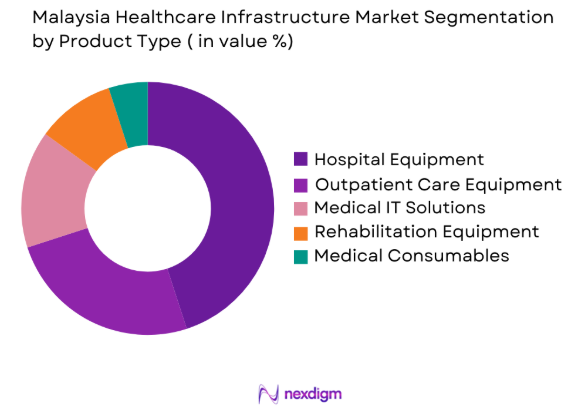
The Malaysian healthcare infrastructure market is segmented by product type into hospital equipment, outpatient care equipment, medical IT solutions, rehabilitation equipment, and medical consumables. Recently, hospital equipment has a dominant market share due to factors such as rising healthcare spending, increasing hospital bed capacity, and the demand for state-of-the-art medical technologies. The expansion of both public and private hospitals to meet the growing healthcare needs in urban areas further propels this segment.
By Platform Type
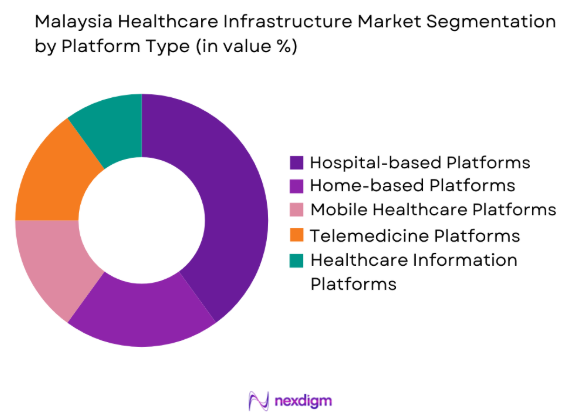
The market is also segmented by platform type into hospital-based platforms, home-based platforms, mobile healthcare platforms, telemedicine platforms, and healthcare information platforms. Recently, hospital-based platforms have a dominant market share due to the high volume of patients requiring in-patient care and the growing number of hospital infrastructures being set up in Malaysia’s major cities. Additionally, government policies promoting healthcare system upgrades and investments in hospital infrastructure have contributed to the expansion of this segment.
Competitive Landscape
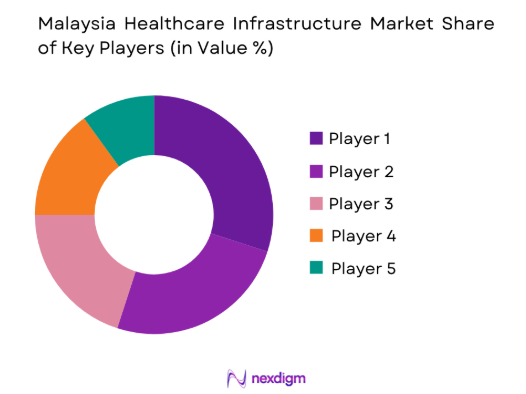
The healthcare infrastructure market in Malaysia is characterized by a competitive landscape where both local and international players are vying for a share of the market. Large multinational companies, such as Siemens Healthineers and GE Healthcare, dominate the high-end equipment segment. Local players like KPJ Healthcare Berhad and IHH Healthcare also play a significant role in providing essential healthcare infrastructure. The market continues to experience consolidation, with new partnerships and collaborations between global and local players enhancing the overall healthcare offering in Malaysia.
| Company Name | Establishment Year | Headquarters | Technology Focus | Market Reach | Key Products | Revenue (USD) | Additional Parameter |
| Siemens Healthineers | 1847 | Germany | ~ | ~ | ~ | ~ | ~ |
| GE Healthcare | 1892 | United States | ~ | ~ | ~ | ~ | ~ |
| KPJ Healthcare Berhad | 1981 | Malaysia | ~ | ~ | ~ | ~ | ~ |
| IHH Healthcare | 1975 | Malaysia | ~ | ~ | ~ | ~ | ~ |
| Pantai Medivest | 1997 | Malaysia | ~ | ~ | ~ | ~ | ~ |
Malaysian healthcare infrastructure Market Analysis
Growth Drivers
Government Healthcare Spending
The Malaysian government has consistently increased healthcare spending to enhance the country’s infrastructure, focusing on developing modern hospitals and healthcare centers in urban areas. This investment boost drives the demand for healthcare infrastructure, including advanced medical technologies and facility upgrades. By funding infrastructure projects and supporting medical technology investments, the government is committed to providing accessible healthcare services. As Malaysia continues to urbanize, the need for advanced medical services grows, further fueling the expansion of healthcare infrastructure. These government efforts play a key role in shaping the market, ensuring that healthcare systems evolve to meet the needs of the population and improve overall service delivery.
Technological Advancements
Advancements in medical technology are significantly driving the growth of Malaysia’s healthcare infrastructure market. The integration of AI, robotics, and telemedicine into healthcare services improves both patient care and operational efficiency. Hospitals are increasingly adopting cutting-edge medical equipment like MRI machines, robotic surgery systems, and advanced diagnostic tools. These innovations enable better treatment outcomes, more accurate diagnoses, and the ability to serve a larger patient population. As a result, the demand for modern healthcare infrastructure is rising, with healthcare facilities prioritizing the adoption of these technologies to enhance service delivery, improve patient outcomes, and meet the growing healthcare needs of the population.
Market Challenges
High Infrastructure Investment Costs
A major challenge facing Malaysia’s healthcare infrastructure market is the high cost of development. Constructing modern hospitals, acquiring advanced medical technologies, and establishing integrated healthcare systems require substantial capital investment. Smaller healthcare providers often struggle to secure the necessary funding for large-scale projects, hindering the expansion of healthcare services, especially in underserved regions. This issue is particularly evident in rural areas, where healthcare facilities are less developed, and access to quality medical care remains limited. Without sufficient financial support, these regions face difficulties in upgrading their infrastructure to meet the growing healthcare demands of the population. As a result, the gap between urban and rural healthcare access continues to widen, delaying overall market growth.
Regulatory Compliance
Navigating the regulatory landscape poses a significant challenge for healthcare infrastructure projects in Malaysia. The healthcare sector is subject to strict regulations, requiring any new infrastructure project or medical facility to adhere to safety standards, medical certifications, and environmental guidelines. For smaller healthcare providers, these regulations can be time-consuming and costly, slowing down their expansion efforts. In addition, the frequent changes in healthcare policies and regulations make it difficult for investors and developers to ensure ongoing compliance. This dynamic regulatory environment increases uncertainty, complicates planning, and delays infrastructure development. As a result, the growth of healthcare infrastructure in Malaysia faces obstacles, particularly in terms of meeting compliance requirements and keeping up with evolving government mandates.
Opportunities
Telemedicine Expansion
The rise of digital health solutions presents a significant growth opportunity for telemedicine in Malaysia’s healthcare infrastructure market. The COVID-19 pandemic expedited the adoption of telemedicine, enabling remote access to healthcare services. Government support through favorable policies and investments in digital health infrastructure has been instrumental in this shift. Telemedicine platforms help healthcare providers reach underserved populations, particularly in rural areas with limited access to medical facilities. As the demand for telehealth services continues to grow, it will drive the need for more advanced digital health platforms. This expansion creates ample opportunities for technology providers to enhance their offerings and play a pivotal role in the healthcare sector’s growth.
Medical Tourism
Malaysia is becoming a prominent medical tourism hub in Southeast Asia, drawing international patients seeking affordable, high-quality treatments. The government’s focus on enhancing healthcare infrastructure to cater to foreign patients has opened up lucrative investment opportunities for both local and international players. The development of specialized healthcare centers, high-end hospitals, and advanced medical facilities designed to meet international standards is fueling this trend. As Malaysia continues to position itself as a destination for medical tourism, the demand for top-tier healthcare services is expected to rise significantly, further driving the growth of the country’s healthcare infrastructure market. This growing sector is attracting global attention and investment.
Future Outlook
The future of Malaysia’s healthcare infrastructure market looks promising, with expected growth driven by technological advancements, government support, and increasing healthcare demand. The expansion of telemedicine and AI-driven healthcare solutions will continue to shape the market, along with a growing focus on patient-centered care. Regulatory support and healthcare reforms are likely to foster further investments in infrastructure development, particularly in underserved regions. The ongoing urbanization and rise in medical tourism will continue to drive demand for healthcare facilities and high-end medical services, positioning Malaysia as a key player in Southeast Asia’s healthcare landscape.
Major Players
- Siemens Healthineers
- GE Healthcare
- KPJ Healthcare Berhad
- IHH Healthcare
- PantaiMedivest
- Sunway Medical Centre
- Gleneagles Kuala Lumpur
- KPJ Ampang Puteri Specialist Medical Centre
- Pantai Hospital Kuala Lumpur
- Tropicana Medical Centre
- Columbia Asia Hospital
- Manipal Hospitals Malaysia
- MedivestSdn Bhd
- Advanced Medical and Imaging Centre
- Alliance Healthcare
Key Target Audience
- Investments and venture capitalist firms
- Government and regulatory bodies
- Healthcare providers
- Medical equipment manufacturers
- Pharmaceutical companies
- Private healthcare investors
- Healthcare technology companies
- Insurance companies
Research Methodology
Step 1: Identification of Key Variables
The first step is to identify the key variables that influence the market dynamics, such as market trends, consumer preferences, technological developments, and government regulations.
Step 2: Market Analysis and Construction
A thorough market analysis is conducted to assess the size, segmentation, and competitive landscape of the healthcare infrastructure market, followed by constructing relevant frameworks for forecasting and analysis.
Step 3: Hypothesis Validation and Expert Consultation
Hypotheses based on preliminary findings are validated by consulting with market experts, industry stakeholders, and analyzing secondary data to refine market projections.
Step 4: Research Synthesis and Final Output
The final research output is synthesized, integrating all findings into a comprehensive report that accurately represents the healthcare infrastructure market in Malaysia.

- Executive Summary
- Research Methodology (Definitions, Scope, Industry Assumptions, Market Sizing Approach, Primary & Secondary Research Framework, Data Collection & Verification Protocol, Analytic Models & Forecast Methodology, Limitations & Research Validity Checks)

- Market Definition and Scope
- Value Chain & Stakeholder Ecosystem
- Regulatory / Certification Landscape
- Sector Dynamics Affecting Demand
- Strategic Initiatives & Infrastructure Growth

- Growth Drivers
Increase in Government Healthcare Spending
Rise in Healthcare Digitization
Aging Population and Chronic Diseases
Expansion of Private Healthcare Providers
Growing Demand for Healthcare Services - Market Challenges
High Infrastructure Investment Costs
Regulatory Compliance Issues
Limited Access to Healthcare in Rural Areas
Technological Integration Barriers
Lack of Skilled Healthcare Professionals - Market Opportunities
Development of Telemedicine Solutions
Expansion of Health Insurance Coverage
Growing Adoption of AI in Healthcare - Trends
Increase in Smart Healthcare Technologies
Telehealth Integration with Wearable Devices
Rise in Patient-Centered Care Models - Government Regulations
- SWOT Analysis of Key Competitors
- Porter’s Five Forces

- By Market Value, 2020-2025
- By Installed Units, 2020-2025
- By Average System Price, 2020-2025
- By System Complexity Tier, 2020-2025

- By System Type (In Value%)
Hospital Equipment
Outpatient Care Equipment
Medical IT Solutions
Rehabilitation Equipment
Medical Consumables - By Platform Type (In Value%)
Hospital-based Platforms
Home-based Platforms
Mobile Healthcare Platforms
Telemedicine Platforms
Healthcare Information Platforms - By Fitment Type (In Value%)
On-premise Solutions
Cloud-based Solutions
Hybrid Solutions
Modular Solutions
Integrated Solutions - By End User Segment (In Value%)
Public Healthcare Providers
Private Healthcare Providers
Medical Equipment Manufacturers
Healthcare IT Service Providers
Insurance Companies - By Procurement Channel (In Value%)
Direct Procurement
Government Tenders
Private Sector Procurement
Online Bidding Platforms
Third-party Distributors

- Market Share Analysis
- Cross Comparison Parameters (System Type, Platform Type, Procurement Channel, End User Segment, Fitment Type, Market Value, Installed Units, Technology Integration, Regulatory Compliance, Operational Efficiency)
- SWOT Analysis of Key Competitors
- Pricing & Procurement Analysis
- Key Players
KPJ Healthcare Berhad
IHH Healthcare Berhad
Pantai Medivest
Healthcare Malaysia
Ramsay Sime Darby Healthcare
Sunway Medical Centre
Beacon Hospital
Gleneagles Kuala Lumpur
KPJ Ampang Puteri Specialist Medical Centre
Pantai Hospital Kuala Lumpur
Tropicana Medical Centre
Columbia Asia Hospital
Manipal Hospitals Malaysia
Medivest Sdn Bhd
Advanced Medical and Imaging Centre
Alliance Healthcare

- Demand for Affordable Healthcare Solutions
- Growth of Private Healthcare Facilities
- Increasing Role of Insurance in Healthcare
- Demand for Technological Integration in Healthcare

- Forecast Market Value, 2026-2035
- Forecast Installed Units, 2026-2035
- Price Forecast by System Tier, 2026-2035
- Future Demand by Platform, 2026-2035


 Request a Sample
 Ask for Customization
 Get a Quote
 Enquire Now