

 Download PDF
Market Overview
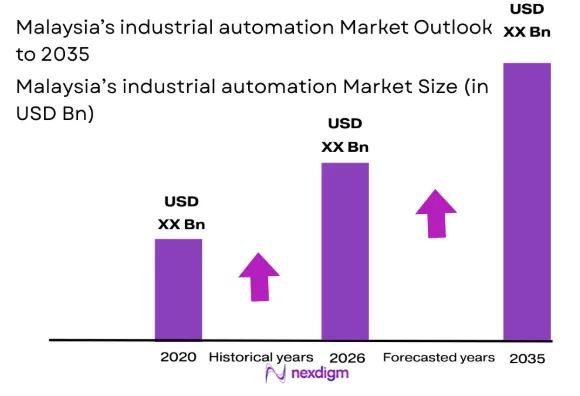
Malaysia’s industrial automation sector represents an important component of Southeast Asia’s advanced manufacturing technology ecosystem supported by electronics manufacturing expansion, semiconductor packaging operations, and government led smart factory initiatives. Based on a recent historical assessment, the Malaysia Industrial Automation market generated approximately USD ~ billion according to industrial robotics deployment statistics from the International Federation of Robotics and manufacturing investment information from Malaysia’s Ministry of Investment, Trade and Industry. Demand growth is supported by robotics adoption, programmable control systems, machine vision technologies, and integrated industrial digitalization platforms used across manufacturing industries.
Malaysia’s industrial automation ecosystem is concentrated across highly developed manufacturing corridors where global electronics and semiconductor companies operate advanced production facilities requiring automation infrastructure. Penang functions as a major hub for semiconductor assembly, electronics manufacturing, and precision engineering industries deploying automated production technologies. Selangor and Johor host major automotive assembly plants, logistics infrastructure, and advanced manufacturing facilities implementing industrial robotics and automated control systems. National Industry 4.0 initiatives and manufacturing digitalization programs further accelerate automation adoption across Malaysian industrial zones.
Market Segmentation
By Product Type
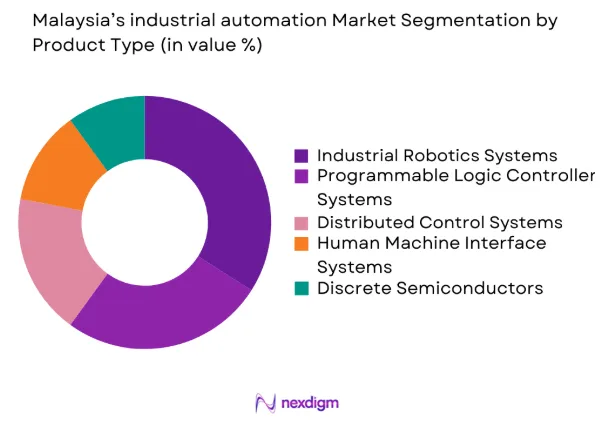
Malaysia Industrial Automation market is segmented by product type into Industrial Robotics Systems, Programmable Logic Controller Systems, Distributed Control Systems, Human Machine Interface Systems, and Industrial Machine Vision Systems. Recently, Industrial Robotics Systems have a dominant market share due to increasing demand from electronics manufacturing plants, semiconductor packaging facilities, and automotive assembly lines requiring high precision automated production. Robotics technologies enable continuous manufacturing operations, reduce manual intervention, and significantly improve product consistency across high volume industrial production environments. Semiconductor assembly facilities extensively utilize robotic handling systems for wafer transportation and chip packaging processes where contamination control and precision handling are critical. Electronics manufacturers producing printed circuit boards and consumer electronics components also rely on robotic pick and place systems capable of assembling micro electronic components at extremely high speeds. Automotive manufacturers deploy robotics systems for welding, painting, and assembly operations to improve manufacturing efficiency. Continuous expansion of Malaysia’s electronics manufacturing ecosystem therefore strengthens the dominance of industrial robotics technologies across automation deployments.
By End User Industry
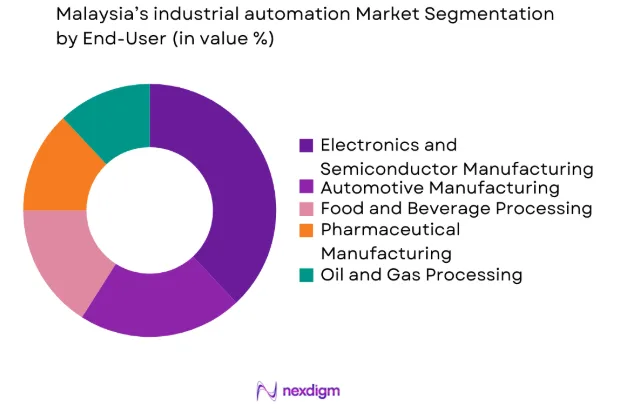
Malaysia Industrial Automation market is segmented by end user industry into Electronics and Semiconductor Manufacturing, Automotive Manufacturing, Food and Beverage Processing, Pharmaceutical Manufacturing, and Oil and Gas Processing. Recently, Electronics and Semiconductor Manufacturing has a dominant market share due to Malaysia’s strong global position in semiconductor packaging, electronics assembly, and integrated circuit production supply chains. Semiconductor facilities operating advanced chip assembly and testing operations require automated wafer handling equipment, machine vision inspection systems, and programmable process control technologies capable of maintaining extremely precise manufacturing conditions. Electronics manufacturing plants producing printed circuit boards, telecommunications equipment, and consumer electronics devices deploy robotics assembly systems and automated inspection platforms to ensure consistent production quality across high volume manufacturing environments. Malaysia’s long established electronics manufacturing clusters supported by multinational semiconductor companies and electronics equipment producers significantly strengthen automation technology demand. Continuous investment in semiconductor packaging facilities and electronics manufacturing infrastructure therefore drives automation system adoption across Malaysian industrial zones.
Competitive Landscape
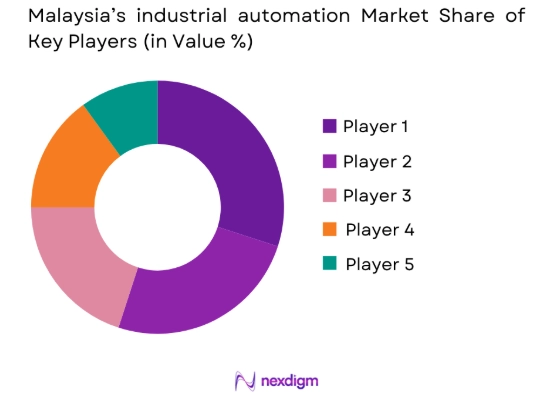
Malaysia’s industrial automation market is characterized by strong participation from global automation technology companies providing robotics platforms, programmable control systems, industrial software, and smart manufacturing solutions supporting advanced production facilities. Multinational technology providers dominate high value automation system deployments within semiconductor manufacturing plants, electronics assembly operations, and automotive production lines across Malaysia. Competition within the market focuses on robotics engineering capabilities, industrial software integration, digital manufacturing platforms, and long term service support for complex automated production environments.
| Company Name | Establishment Year | Headquarters | Technology Focus | Market Reach | Key Products | Revenue | Industrial Robotics Capability |
| Siemens AG | 1847 | Germany | ~ | ~ | ~ | ~ | ~ |
| ABB Ltd | 1988 | Switzerland | ~ | ~ | ~ | ~ | ~ |
| Rockwell Automation | 1903 | United States | ~ | ~ | ~ | ~ | ~ |
| Schneider Electric | 1836 | France | ~ | ~ | ~ | ~ | ~ |
| Mitsubishi Electric | 1921 | Japan | ~ | ~ | ~ | ~ | ~ |
Malaysia’s industrial automation Market Analysis
Growth Drivers
Expansion of Electronics and Semiconductor Manufacturing Ecosystem
Malaysia’s electronics and semiconductor manufacturing ecosystem significantly increases demand for industrial automation technologies because semiconductor production requires extremely precise manufacturing environments supported by robotics systems, automated wafer handling platforms, machine vision inspection equipment, and advanced process control software maintaining stable fabrication conditions across production lines. Semiconductor packaging facilities rely on robotics capable of handling delicate wafers and integrated circuits without contamination. Electronics manufacturers producing printed circuit boards, telecommunications equipment, and consumer electronics depend on robotic assembly lines and automated inspection technologies detecting microscopic defects during high speed production. Industrial clusters across Penang, Selangor, and Johor host multinational semiconductor companies expanding manufacturing infrastructure and strengthening automation demand.
Rapid Industrial Digitalization and Smart Factory Adoption Across Manufacturing
Manufacturing companies across Malaysia increasingly adopt Industry 4.0 strategies integrating automation technologies, artificial intelligence analytics, industrial Internet of Things sensors, and digital monitoring platforms into connected manufacturing ecosystems designed to improve productivity and reduce production downtime. Smart factory environments combine robotics systems, automated assembly equipment, industrial control platforms, and real time data monitoring technologies enabling managers to evaluate machine performance across entire facilities. Predictive maintenance systems using industrial IoT sensors monitor vibration, temperature fluctuations, and operational performance to identify potential equipment failures before production interruptions occur. Digital manufacturing software also allows companies to simulate processes, optimize resource allocation, and enhance supply chain coordination within advanced manufacturing environments.
Market Challenges
High Capital Investment Requirements for Advanced Industrial Automation Infrastructure
Industrial automation deployment requires substantial financial investment because advanced manufacturing systems involve complex robotics equipment, programmable control systems, industrial sensors, machine vision inspection platforms, and specialized engineering integration services needed to build automated production environments. Manufacturing companies often allocate significant capital budgets for robotics assembly lines, automated packaging equipment, industrial analytics platforms, and digital factory software supporting smart manufacturing operations. Small and medium enterprises frequently face financial limitations that slow large scale automation adoption despite productivity benefits. Automation implementation also requires engineering design, system simulation, and testing processes that increase project costs. Ongoing maintenance of robotics systems, control hardware, and industrial networks further raises operational expenses for manufacturers.
Shortage of Skilled Industrial Automation Engineers and Technical Workforce
Industrial automation technologies require highly specialized engineering expertise including robotics programming, industrial control systems integration, machine vision engineering, industrial software development, and advanced electrical system maintenance, which creates workforce challenges in rapidly industrializing manufacturing economies. Malaysia’s manufacturing sector continues expanding faster than the availability of skilled automation engineers capable of designing and maintaining advanced automated production systems. Robotics operations require engineers skilled in motion control programming, sensor calibration, and automated assembly optimization. Programmable logic controllers and industrial networking platforms also demand advanced technical knowledge. Companies therefore compete for limited automation talent, increasing labor costs and slowing automation deployment, while education and training programs continue expanding to support Industry 4.0 workforce development.
Opportunities
Expansion of Robotics Deployment Across Logistics Warehousing and Distribution Infrastructure
Malaysia’s expanding logistics sector creates strong opportunities for industrial automation technologies, particularly robotics systems capable of automating warehouse operations, distribution center logistics, and supply chain fulfillment supporting regional trade and digital commerce growth. Automated warehouses integrate robotics platforms, conveyor systems, machine vision inspection equipment, and inventory management software capable of handling large volumes of goods with high operational efficiency. Logistics companies increasingly deploy automated guided vehicles, robotic sorting systems, and palletizing robots to transport goods across warehouse facilities while reducing manual labor requirements. E commerce fulfillment centers also adopt advanced automation platforms for sorting, packaging, and routing consumer products. Malaysia’s strategic Southeast Asian trade position further strengthens long term demand for warehouse automation technologies.
Growth of Artificial Intelligence Driven Industrial Automation Platforms
Artificial intelligence technologies significantly enhance industrial automation capabilities by enabling manufacturing systems to analyze operational data, predict equipment failures, optimize production schedules, and improve quality control across automated factory environments. AI powered automation platforms integrate machine learning algorithms with robotics equipment, industrial sensors, and digital process control systems, allowing manufacturing facilities to operate with greater efficiency and adaptive production capabilities. Predictive maintenance software evaluates machine performance data such as vibration patterns, temperature fluctuations, and equipment utilization levels, helping factories prevent unexpected machinery failures before they disrupt production. Artificial intelligence also strengthens automated quality inspection through machine vision algorithms that detect microscopic defects during high speed manufacturing operations, improving production consistency and operational efficiency.
Future Outlook
Malaysia’s industrial automation market is expected to experience steady expansion as manufacturing companies continue implementing digital manufacturing strategies and smart factory technologies across electronics semiconductor and automotive production sectors. Government initiatives supporting Industry 4.0 transformation and industrial digitalization will further accelerate automation adoption. Advances in robotics artificial intelligence and industrial Internet of Things platforms will enhance production efficiency across automated manufacturing environments. Growing semiconductor manufacturing investments and logistics automation development will further strengthen automation demand across Malaysia’s industrial economy.
Major Players
- Siemens AG
- ABB Ltd
- Rockwell Automation
- Schneider Electric
- Mitsubishi Electric
- Omron Corporation
- Honeywell International
- Emerson Electric
- Bosch Rexroth
- Delta Electronics
- Fanuc Corporation
- Keyence Corporation
- Yaskawa Electric Corporation
- Hitachi Industrial Equipment Systems
- SICK AG
Key Target Audience
- Semiconductor Manufacturing Companies
- Electronics Manufacturing Companies
- Automotive Manufacturers
- Industrial Equipment Manufacturers
- Logistics and Warehouse Operators
- Investments and venture capitalist firms
- Government and regulatory bodies
- Industrial Automation System Integrators
Research Methodology
Step 1: Identification of Key Variables
Industrial automation technologies robotics deployment patterns manufacturing investments semiconductor production capacity and Industry 4.0 adoption trends were analyzed to identify key variables influencing automation technology demand across Malaysia’s manufacturing ecosystem.
Step 2: Market Analysis and Construction
Manufacturing investment reports robotics installation statistics semiconductor production data and industrial automation vendor information were analyzed to construct the market structure segmentation framework and competitive landscape.
Step 3: Hypothesis Validation and Expert Consultation
Industry experts including automation engineers manufacturing technology specialists and robotics system integrators were consulted to validate industrial automation adoption trends and technology investment patterns.
Step 4: Research Synthesis and Final Output
All quantitative and qualitative research inputs were synthesized through structured analytical frameworks enabling the preparation of a comprehensive industrial automation market report covering technology trends industry adoption and competitive dynamics.

- Executive Summary
- Research Methodology (Definitions, Scope, Industry Assumptions, Market Sizing Approach, Primary & Secondary Research Framework, Data Collection & Verification Protocol, Analytic Models & Forecast Methodology, Limitations & Research Validity Checks)

- Market Definition and Scope
- Value Chain & Stakeholder Ecosystem
- Regulatory / Certification Landscape
- Sector Dynamics Affecting Demand
- Strategic Initiatives & Infrastructure Growth

- Growth Drivers
Expansion of Electronics and Semiconductor Manufacturing Ecosystem
Rapid Adoption of Smart Factory and Industry 4.0 Technologies
Government Industrial Digitalization and Automation Initiatives - Market Challenges
High Capital Investment Requirements for Automation Infrastructure
Shortage of Skilled Industrial Automation Engineers and Technicians
Integration Complexity Across Legacy Manufacturing Systems - Market Opportunities
Expansion of Robotics Integration Across Manufacturing Plants
Industrial AI and Predictive Maintenance Platforms Development
Growth of Automated Warehousing and Logistics Facilities - Trends
Adoption of Collaborative Robots in Manufacturing Operations
Integration of Artificial Intelligence within Industrial Automation Systems
Development of Digital Twin Enabled Manufacturing Environments - Government Regulations
- SWOT Analysis of Key Competitors
- Porter’s Five Forces

- By Market Value, 2020-2025
- By Installed Units, 2020-2025
- By Average System Price, 2020-2025
- By System Complexity Tier, 2020-2025

- By System Type (In Value%)
Industrial Robotics Systems
Programmable Logic Controller Systems
Distributed Control Systems
Human Machine Interface Systems
Industrial Machine Vision Systems - By Platform Type (In Value%)
Manufacturing Automation Platforms
Process Automation Platforms
Warehouse Automation Platforms
Energy and Utilities Automation Platforms
Smart Factory Digital Platforms - By Fitment Type (In Value%)
New Automation System Installation
Retrofit Automation Integration
Modular Automation Systems
Fully Integrated Automation Lines
Standalone Automation Equipment - By End User Segment (In Value%)
Electronics and Semiconductor Manufacturing
Automotive Manufacturing
Food and Beverage Processing
Pharmaceutical and Biotechnology Production
Oil and Gas Processing Facilities - By Procurement Channel (In Value%)
Direct Industrial Automation Vendors
Industrial System Integrators
Engineering Procurement Contractors
Industrial Equipment Distributors
Government Industrial Modernization Programs

- Market Share Analysis
- Cross Comparison Parameters (Automation Hardware Portfolio, Robotics and Motion Control Capability, Industrial Software and Smart Factory Platforms, Industry Vertical Expertise, System Integration and Engineering Services, Regional Manufacturing and Service Support, After Sales Maintenance Network, Industrial Cybersecurity Capability, Custom Automation Solution Development, Research and Innovation Investment)
- SWOT Analysis of Key Competitors
- Pricing & Procurement Analysis
- Key Players
Siemens AG
ABB Ltd
Rockwell Automation
Schneider Electric
Mitsubishi Electric
Omron Corporation
Yaskawa Electric Corporation
Honeywell International
Emerson Electric
Bosch Rexroth
Delta Electronics
Fanuc Corporation
Keyence Corporation
Hitachi Industrial Equipment Systems
SICK AG

- Electronics manufacturing companies increasing robotics deployment across assembly lines
- Automotive manufacturers expanding automated welding and precision production systems
- Food processing facilities implementing automated packaging and quality inspection systems
- Oil and gas operators adopting automated process control systems across refineries

- Forecast Market Value, 2026-2035
- Forecast Installed Units, 2026-2035
- Price Forecast by System Tier, 2026-2035
- Future Demand by Platform, 2026-2035


 Request a Sample
 Ask for Customization
 Get a Quote
 Enquire Now