

 Download PDF
 Download PDF
Market Overview
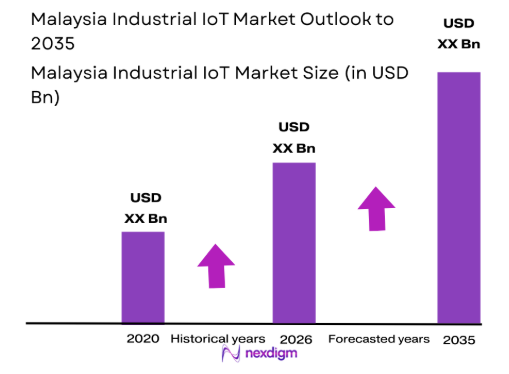
The Malaysia Industrial IoT market is valued at USD ~ billion based on a recent historical assessment. The growth is driven by increasing investments in Industry 4.0, which accelerates the adoption of automation, IoT technologies, and smart manufacturing. The market is also benefiting from the government’s strategic initiatives aimed at digital transformation across industries. The rising demand for operational efficiency, predictive maintenance, and real-time data analytics further propels the market expansion.
Malaysia remains a dominant player in the Southeast Asian industrial IoT landscape due to its robust manufacturing sector and government support for smart factory adoption. Kuala Lumpur, Penang, and Johor Bahru are major hubs of industrial activity, driving demand for IoT solutions. The country’s focus on enhancing digital infrastructure, alongside the establishment of smart cities and industrial parks, ensures its leadership in industrial IoT solutions in the region. The nation’s openness to international collaborations strengthens its position further.
Market Segmentation
By Product Type
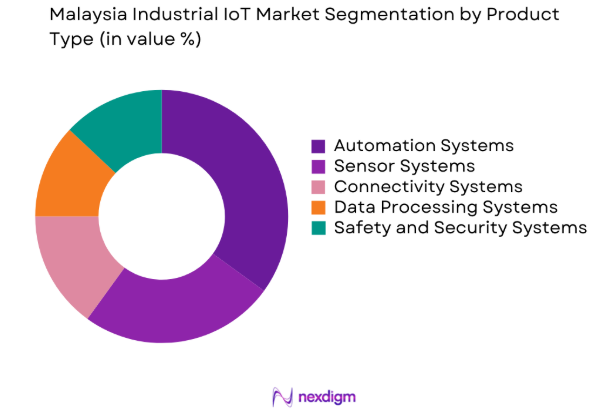
The Malaysia Industrial IoT market is segmented by product type into automation systems, sensor systems, connectivity systems, data processing systems, and safety and security systems. Recently, automation systems have captured a dominant market share, driven by increasing demand for process optimization and reducing human errors in manufacturing. Automation enables industries to improve operational efficiency, reduce downtime, and enhance safety. With the rise of digital transformation, companies are rapidly adopting automation systems to stay competitive in the global market.
By Platform Type
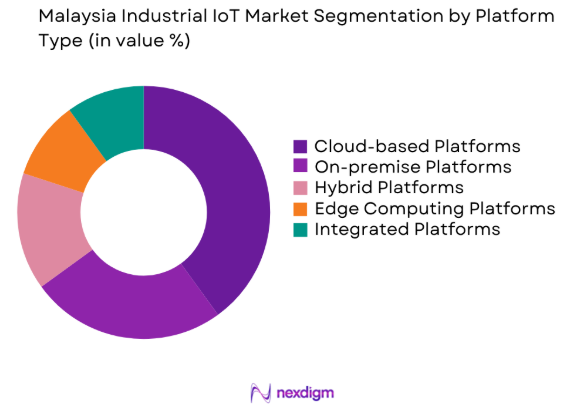
The Malaysia Industrial IoT market is segmented by platform type into cloud-based platforms, on-premise platforms, hybrid platforms, edge computing platforms, and integrated platforms. Recently, cloud-based platforms have a dominant market share due to their scalability, cost-effectiveness, and flexibility. The adoption of cloud solutions allows businesses to manage large volumes of data, enable remote monitoring, and enhance collaboration. As industries transition to digital ecosystems, cloud platforms are essential for the seamless integration of IoT technologies.
Competitive Landscape
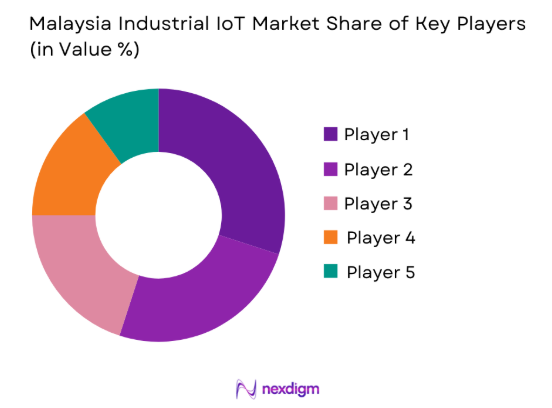
The competitive landscape of the Malaysia Industrial IoT market is characterized by a mix of global players and regional innovators. Major companies are consolidating their market presence through strategic partnerships, product innovation, and the development of smart factory solutions. Companies such as Siemens, ABB, and Honeywell are increasingly focusing on the automation and connectivity aspects of IoT solutions to cater to the rising demand from industries such as manufacturing, energy, and logistics. This trend is expected to intensify as technological advancements and the need for cost-effective, scalable solutions continue to shape the market.
| Company Name | Establishment Year | Headquarters | Technology Focus | Market Reach | Key Products | Revenue (USD) | Additional Parameter |
| Siemens | 1847 | Germany | ~ | ~ | ~ | ~ | ~ |
| ABB | 1883 | Switzerland | ~ | ~ | ~ | ~ | ~ |
| Honeywell | 1906 | USA | ~ | ~ | ~ | ~ | ~ |
| Cisco | 1984 | USA | ~ | ~ | ~ | ~ | ~ |
| Rockwell Automation | 1903 | USA | ~ | ~ | ~ | ~ | ~ |
Malaysia Industrial IoT Market Analysis
Growth Drivers
Government Support for Digital Transformation
The Malaysian government has been actively promoting digital transformation across industries through its national policies, which include tax incentives and financial support for the adoption of IoT solutions. Government initiatives, such as the “Malaysia Digital Economy Blueprint,” aim to position the country as a leader in the digital economy. These efforts encourage businesses to embrace Industrial IoT technologies to enhance their competitiveness, thus contributing to market growth. With the backing of public sector investments in smart manufacturing, the market is expected to continue its upward trajectory.
Rising Demand for Operational Efficiency
One of the primary growth drivers for the Malaysia Industrial IoT market is the increasing demand for operational efficiency. Businesses are seeking ways to optimize production processes, reduce operational costs, and enhance product quality. IoT solutions enable real-time monitoring of equipment, predictive maintenance, and automation, helping manufacturers stay competitive in the global market. As industries like manufacturing, automotive, and energy are under pressure to innovate, the demand for IoT solutions that improve efficiency is accelerating.
Market Challenges
High Initial Capital Investment
One of the major challenges facing the Malaysia Industrial IoT market is the high initial investment required for the deployment of IoT solutions. Small and medium-sized enterprises (SMEs) may find it difficult to justify the upfront cost of adopting advanced technologies, especially in regions with lower digital infrastructure. While IoT offers long-term benefits such as cost savings and efficiency improvements, the financial burden of implementation can be a barrier, limiting the widespread adoption of IoT solutions across all sectors.
Data Privacy and Security Concerns
The integration of IoT devices and platforms into industrial systems raises concerns about data privacy and security. As more connected devices generate massive volumes of data, ensuring the protection of sensitive information becomes increasingly challenging. Vulnerabilities in the IoT ecosystem could expose industries to cyberattacks and data breaches. This challenge necessitates stringent cybersecurity protocols, which could further add to the complexity and cost of IoT deployments, hindering growth in certain industries.
Opportunities
Expansion of Smart Manufacturing Solutions
One of the most significant opportunities for the Malaysia Industrial IoT market lies in the expansion of smart manufacturing solutions. As companies shift towards Industry 4.0, there is a growing need for intelligent systems that integrate IoT, artificial intelligence (AI), and robotics. The demand for smart factories is rising as manufacturers seek to improve production efficiency, enhance supply chain visibility, and reduce waste. Companies investing in IoT technologies will be well-positioned to capitalize on the growing trend towards automation and digitalization.
Rise of Predictive Maintenance Solutions
Predictive maintenance is gaining traction across industries such as automotive, energy, and manufacturing. With the ability to monitor equipment in real-time and predict potential failures before they occur, predictive maintenance can significantly reduce downtime and improve asset management. IoT-powered predictive maintenance solutions are expected to become more advanced, offering better analytics, real-time data, and decision-making capabilities. This opportunity is particularly relevant in Malaysia, where industries are increasingly prioritizing operational efficiency and cost reduction.
Future Outlook
The Malaysia Industrial IoT market is set to grow steadily over the next five years, driven by the adoption of smart manufacturing technologies, government initiatives supporting digital transformation, and the increasing need for operational efficiency. As industries embrace automation and data-driven solutions, the demand for IoT devices and platforms will surge. Technological advancements in AI, machine learning, and edge computing will further accelerate market growth. The government’s continued focus on infrastructure development and its efforts to enhance the digital economy will play a key role in shaping the future of the industrial IoT landscape in Malaysia.
Major Players
- Siemens
- ABB
- Honeywell
- Rockwell Automation
- Cisco
- Mitsubishi Electric
- Schneider Electric
- Bosch Rexroth
- Emerson Electric
- Fujitsu
- Hitachi
- Yokogawa Electric
- Huawei Technologies
- IBM
- Intel
Key Target Audience
- Investments and venture capitalist firms
- Government and regulatory bodies
- Industrial manufacturers
- IoT solution providers
- Technology integrators
- System integrators
- Energy and utilities companies
- Transportation andlogisticsfirms
Research Methodology
Step 1: Identification of Key Variables
This step involves identifying critical factors such as market drivers, challenges, trends, and technological advancements that will shape the Industrial IoT market.
Step 2: Market Analysis and Construction
The next step focuses on constructing the market by analyzing industry data, trends, and growth patterns to provide a clear picture of the market landscape.
Step 3: Hypothesis Validation and Expert Consultation
Expert consultations and hypothesis validation are conducted to ensure that the assumptions made in the research are accurate and reflective of real market conditions.
Step 4: Research Synthesis and Final Output
The final step involves synthesizing the collected data into a comprehensive report, including actionable insights and future market predictions.

- Executive Summary
- Research Methodology (Definitions, Scope, Industry Assumptions, Market Sizing Approach, Primary & Secondary Research Framework, Data Collection & Verification Protocol, Analytic Models & Forecast Methodology, Limitations & Research Validity Checks)

- Market Definition and Scope
- Value Chain & Stakeholder Ecosystem
- Regulatory / Certification Landscape
- Sector Dynamics Affecting Demand
- Strategic Initiatives & Infrastructure Growth

- Growth Drivers
Increased Government Investment in Digital Transformation
Technological Advancements in Industrial Automation
Rising Demand for Operational Efficiency - Market Challenges
High Initial Investment Costs
Lack of Skilled Workforce
Data Privacy and Security Concerns - Market Opportunities
Expansion of 5G Networks
Growth of Smart Manufacturing Solutions
Partnerships for AI and IoT Integration - Trends
Increased Adoption of Edge Computing
Integration of AI in Industrial IoT
Rise of Predictive Maintenance Solutions - Government Regulations
- SWOT Analysis of Key Competitors
- Porter’s Five Forces

- By Market Value, 2020-2025
- By Installed Units, 2020-2025
- By Average System Price, 2020-2025
- By System Complexity Tier, 2020-2025

- By System Type (In Value%)
Automation Systems
Sensor Systems
Connectivity Systems
Data Processing Systems
Safety and Security Systems - By Platform Type (In Value%)
Cloud-based Platforms
On-premise Platforms
Hybrid Platforms
Edge Computing Platforms
Integrated Platforms - By Fitment Type (In Value%)
On-premise Solutions
Cloud-based Solutions
Hybrid Solutions
Modular Solutions
Integrated Solutions - By End User Segment (In Value%)
Manufacturing
Energy and Utilities
Transportation and Logistics
Building and Infrastructure
Healthcare - By Procurement Channel (In Value%)
Direct Procurement
Government Tenders
Private Sector Procurement
Online Bidding Platforms
Third-party Distributors

- Market Share Analysis
- Cross Comparison Parameters (System Type, Platform Type, Procurement Channel, End User Segment, Fitment Type, Integration Level, Data Security Protocol, Market Region, IoT Technology, Device Interoperability)
- SWOT Analysis of Key Competitors
- Pricing & Procurement Analysis
- Key Players
Siemens
Schneider Electric
Honeywell
Rockwell Automation
Cisco Systems
ABB
General Electric
Mitsubishi Electric
Bosch Rexroth
Emerson Electric
Hitachi
Yokogawa Electric
Fujitsu
Samsungs SDS
Huawei Technologies

- Growing Need for Automation in Manufacturing
- Government’s Role in Regulatory Framework
- Increased IoT Adoption in Healthcare
- Rising Demand for Smart Infrastructure

- Forecast Market Value, 2026-2035
- Forecast Installed Units, 2026-2035
- Price Forecast by System Tier, 2026-2035
- Future Demand by Platform, 2026-2035


 Request a Sample
 Ask for Customization
 Get a Quote
 Enquire Now