
 Download PDF
Market Overview
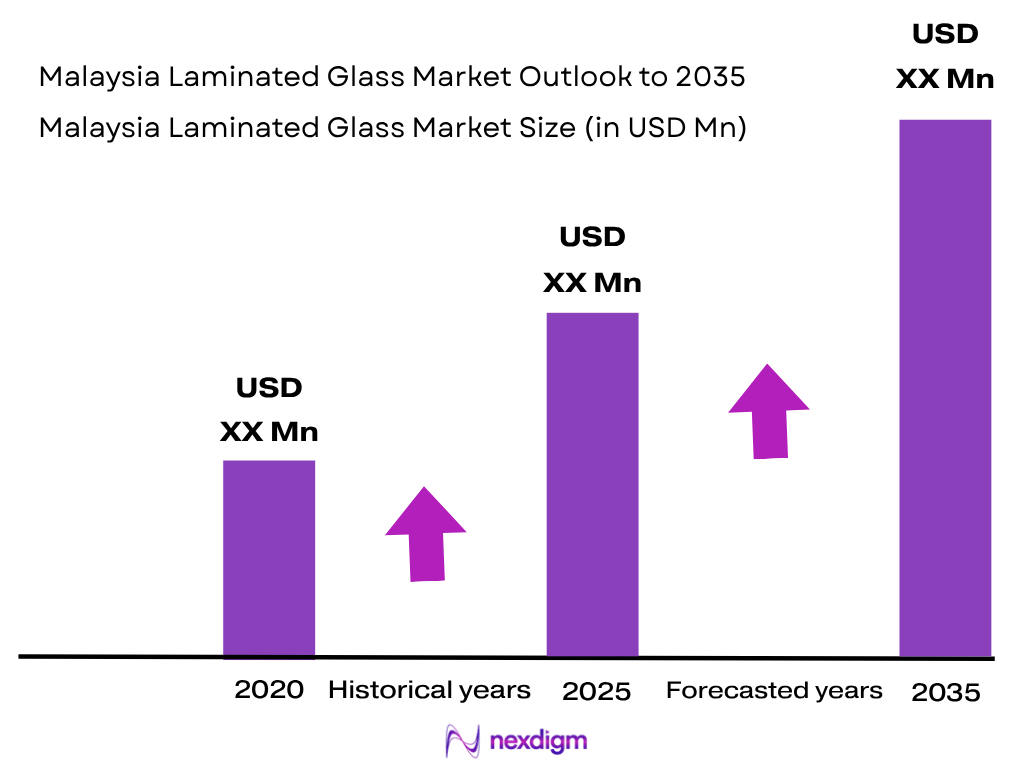
The Malaysia laminated glass market is valued at approximately ~USD XX million in 2024, supported by increasing demand from construction, automotive, infrastructure, and specialty glazing applications. The market size has expanded from ~USD XX million in 2023 due to rising adoption of safety glazing solutions, increasing high-rise construction activities, and growing requirements for energy-efficient building materials. According to industry sources including the Malaysian Construction Research Institute (CREAM), Construction Industry Development Board (CIDB) Malaysia, and global glass industry assessments, laminated glass consumption is closely linked with commercial construction growth, façade development, and automotive manufacturing requirements.
The laminated glass market in Malaysia is concentrated around major urban and industrial regions including Kuala Lumpur, Selangor, Johor, Penang, and Sarawak due to their strong construction activity, industrial infrastructure, automotive manufacturing presence, and commercial real estate development. Kuala Lumpur and Selangor dominate demand because of extensive high-rise residential projects, office towers, shopping complexes, and premium façade installations. Johor benefits from industrial expansion and cross-border development activities, while Penang contributes through electronics manufacturing facilities and commercial infrastructure projects requiring advanced glazing solutions.
Market Segmentation
By Product Type
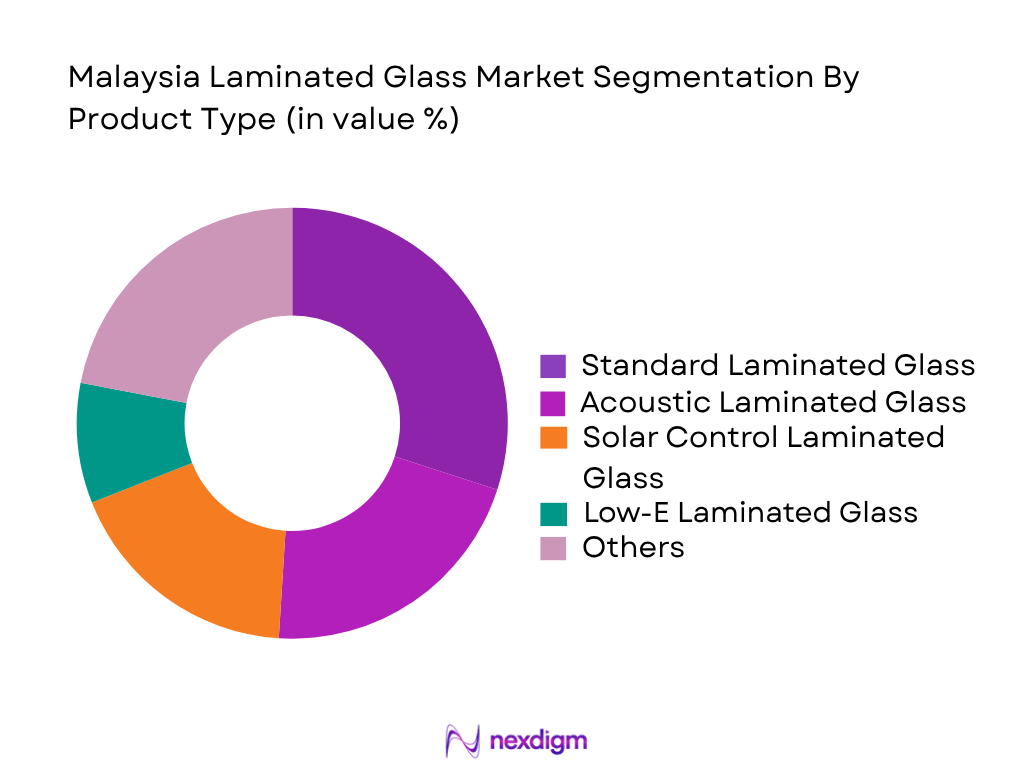
Malaysia laminated glass market is segmented by product type into standard laminated glass, acoustic laminated glass, solar control laminated glass, low-E laminated glass, security laminated glass, fire resistant laminated glass, decorative laminated glass, and smart laminated glass. Standard laminated glass holds the dominant market position in Malaysia due to its widespread application in commercial buildings, residential developments, automotive windshields, and general safety glazing requirements. The segment benefits from cost competitiveness, compliance with safety regulations, and extensive availability through local glass processors. Increasing construction activity in urban areas has strengthened demand for standard laminated solutions as developers prioritize impact resistance and occupant safety. However, premium products such as acoustic and solar control laminated glass are gaining adoption in high-end commercial projects.
By Application
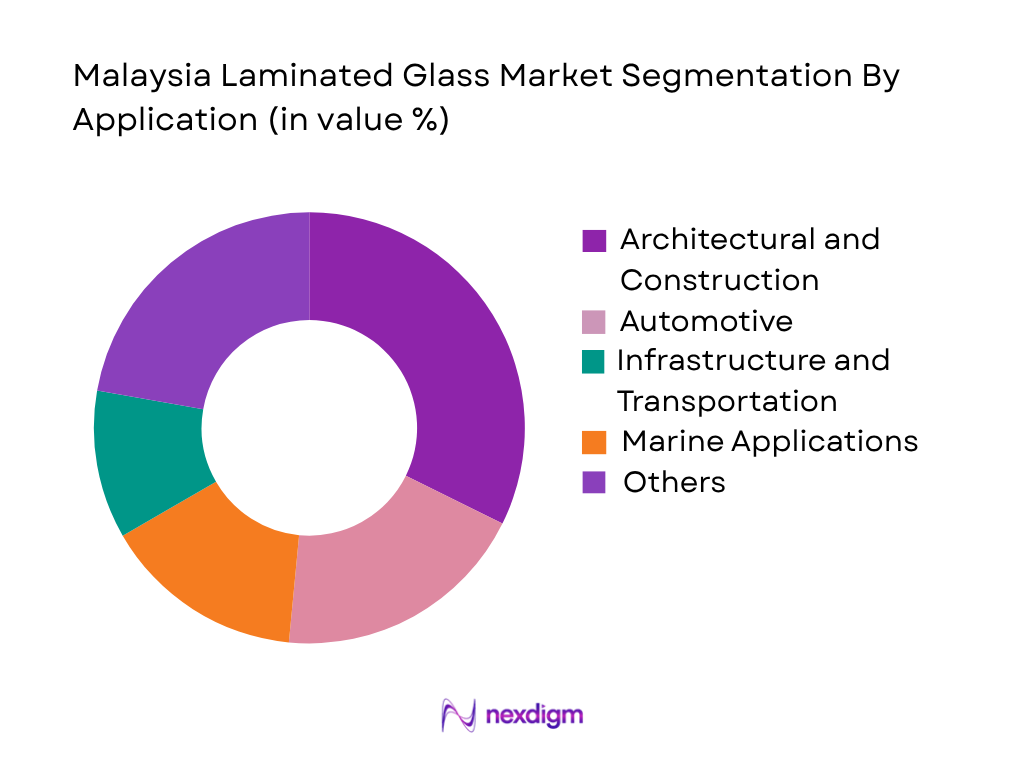
Malaysia laminated glass market is segmented by application into architectural and construction, automotive, infrastructure, marine, security, and interior applications. Architectural and construction applications dominate the Malaysia laminated glass market due to continuous urban development, high-rise building construction, and increasing demand for advanced façade systems. The expansion of commercial buildings, luxury residential towers, hotels, and shopping malls has increased the use of laminated glass for safety, acoustic insulation, and solar performance benefits. Developers and architects increasingly specify laminated glass for curtain walls, balustrades, skylights, and large glazing systems. Automotive applications represent another significant segment supported by vehicle manufacturing and replacement windshield demand, while infrastructure applications are increasing due to airport, railway, and public development projects.
Competitive Landscape
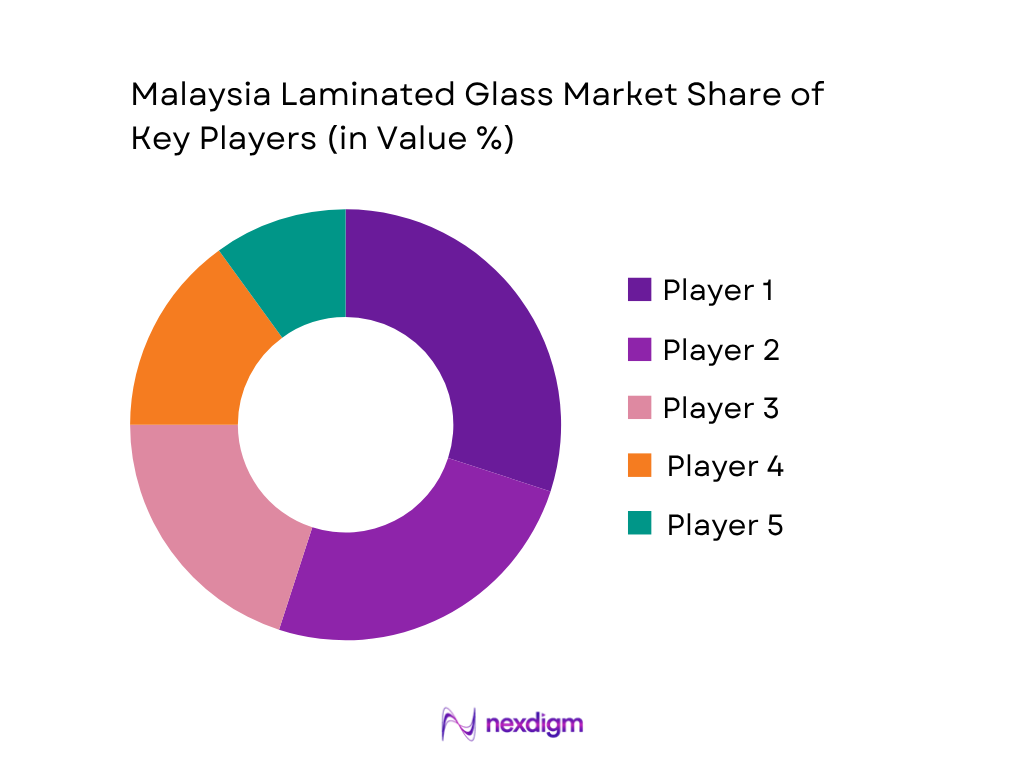
The Malaysia laminated glass market is characterized by the presence of multinational glass manufacturers, regional suppliers, and domestic glass processors. The competitive environment is influenced by manufacturing capability, product quality, processing technology, project approvals, and distribution networks. Major companies compete through advanced glazing solutions, energy-efficient glass products, automotive supply capabilities, and customized fabrication services.
| Company | Establishment Year | Headquarters | Laminated Glass Product Portfolio | Manufacturing & Processing Capability | Key Application Presence | Technology & Innovation Capability | Distribution & Market Reach | Sustainability & Energy Efficient Glass Solutions |
| AGC Inc. | 1907 | Tokyo, Japan | ~ | ~ | ~ | ~ | ~ | ~ |
| NSG Group | 1918 | Tokyo, Japan | ~ | ~ | ~ | ~ | ~ | ~ |
| Saint-Gobain | 1665 | Paris, France | ~ | ~ | ~ | ~ | ~ | ~ |
| Xinyi Glass Holdings Limited | 1988 | Hong Kong | ~ | ~ | ~ | ~ | ~ | ~ |
| Malaysian Sheet Glass Sdn Bhd | 1971 | Malaysia | ~ | ~ | ~ | ~ | ~ | ~ |
| Guardian Industries | 1932 | Michigan, USA | ~ | ~ | ~ | ~ | ~ | ~ |
| Vitro | 1909 | Nuevo León, Mexico | ~ | ~ | ~ | ~ | ~ | ~ |
| Taiwan Glass Industry Corporation | 1964 | Taipei, Taiwan | ~ | ~ | ~ | ~ | ~ | ~ |
Malaysia Laminated Glass Market Analysis
Growth Drivers
Rising Construction Activity and Urban Infrastructure Development
The expansion of Malaysia’s construction ecosystem is a major growth driver for the laminated glass market, as the material is increasingly specified in high-rise buildings, commercial complexes, residential towers, and infrastructure projects due to its safety, acoustic, and solar-control properties. Malaysia’s construction sector recorded a value-added contribution of approximately RM 85.6 billion in 2024, according to the Department of Statistics Malaysia (DOSM), reflecting continued activity in building and infrastructure development. The World Bank reported that Malaysia’s GDP reached approximately USD 422.2 billion in 2024, supported by industrial expansion, urban development, and investment activity. The Construction Industry Development Board (CIDB) Malaysia recorded continued implementation of large-scale infrastructure and building projects, strengthening demand for advanced glazing materials. Urban centers such as Kuala Lumpur and Selangor continue to witness increasing demand for curtain walls, façade systems, and safety glazing solutions in commercial and residential developments. The adoption of laminated glass is further supported by requirements for improved building safety, energy efficiency, and occupant comfort in modern construction projects.
Increasing Automotive Production and Vehicle Safety Glass Requirements
The growth of Malaysia’s automotive manufacturing sector is supporting demand for laminated glass, particularly for windshields and advanced vehicle glazing applications. Malaysia produced more than 790,000 motor vehicles in 2024, according to the Malaysian Automotive Association (MAA), demonstrating continued activity in passenger and commercial vehicle manufacturing. The country’s automotive ecosystem includes major vehicle assembly facilities, component suppliers, and export-oriented manufacturing operations that require safety glass solutions. Malaysia’s manufacturing sector contributed approximately 23% of national GDP in 2024, according to World Bank economic indicators, supporting industrial demand for automotive components and processed glass products. Laminated glass is increasingly preferred in automotive applications due to impact resistance, noise reduction capability, and compliance with vehicle safety requirements. The expansion of electric vehicle production and assembly activities is also increasing demand for lightweight and high-performance glazing solutions. Automotive manufacturers and component suppliers continue to adopt advanced laminated glass technologies to improve vehicle safety performance and meet evolving consumer expectations.
Market Challenges
Dependence on Imported Raw Materials and Advanced Glass Technologies
The Malaysia laminated glass market faces challenges due to dependence on imported raw materials, specialty interlayers, and advanced processing technologies required for premium laminated glass production. Key materials including PVB films, specialty coatings, and high-performance glass inputs are often sourced from international suppliers, increasing exposure to global supply chain disruptions. Malaysia’s trade structure remains highly integrated with global manufacturing networks, with total merchandise trade exceeding RM 2.8 trillion in 2024, according to the Ministry of Investment, Trade and Industry (MITI), highlighting the country’s dependence on international supply chains. Advanced laminated glass products such as acoustic laminated glass, low-E laminated glass, and smart glazing solutions require specialized technologies that are concentrated among global manufacturers. Local processors may face limitations in developing certain high-performance glass capabilities due to technology requirements and investment intensity. Fluctuations in international logistics conditions and availability of specialty materials can affect production planning and supply reliability for laminated glass manufacturers.
Limited Adoption of Premium Laminated Glass Solutions in Price-Sensitive Construction Segments
The adoption of advanced laminated glass products remains challenging in certain Malaysian construction segments due to preference for cost-effective glazing alternatives. While premium laminated glass provides benefits such as improved acoustic insulation, solar heat reduction, and enhanced safety, some developers continue to prioritize initial project affordability. Malaysia recorded a population of approximately 34 million people in 2024, according to DOSM, with urban concentration increasing demand for affordable residential and commercial developments. The construction market includes diverse project categories ranging from premium high-rise buildings to budget-oriented developments, creating varying levels of acceptance for advanced glazing technologies. The Malaysian Green Building Index (GBI) has encouraged sustainable building practices, but adoption of high-performance glass solutions depends on project specifications, developer priorities, and regulatory requirements. Limited awareness regarding long-term energy savings and performance benefits of advanced laminated glass can restrict wider adoption among smaller construction projects.
Market Opportunities
Expansion of Green Building and Energy Efficient Glazing Applications
Growing emphasis on sustainable construction creates opportunities for laminated glass manufacturers to expand energy-efficient glazing solutions in Malaysia. Buildings increasingly require materials that support thermal performance, daylight optimization, and reduced energy consumption, creating demand for low-E laminated glass, solar control glass, and advanced façade systems. Malaysia’s commitment toward sustainable development is supported through initiatives such as the National Energy Transition Roadmap (NETR), which targets improvements in energy efficiency across economic sectors. According to the International Energy Agency (IEA), buildings account for a significant share of global energy consumption, increasing focus on efficient building materials. Malaysia recorded continued growth in urban infrastructure investment, with government development allocations under national development plans supporting construction activities. The increasing implementation of green building certifications such as the Green Building Index creates opportunities for laminated glass suppliers to provide performance-based glazing solutions. Developers, architects, and façade consultants are increasingly considering energy-efficient glass systems to improve building performance and comply with sustainability objectives.
Increasing Demand from Electric Vehicles and Advanced Transportation Systems
The expansion of electric vehicles and modern transportation infrastructure provides new opportunities for laminated glass suppliers in Malaysia. Electric vehicles require advanced glazing solutions that support safety, acoustic comfort, thermal management, and weight optimization. Malaysia’s electric vehicle ecosystem is expanding through government initiatives such as the Low Carbon Mobility Blueprint and incentives supporting EV adoption. The Malaysian Automotive Association reported increasing electric and hybrid vehicle registrations, reflecting rising consumer and industrial interest in alternative mobility solutions. Malaysia’s manufacturing ecosystem, which contributed approximately RM 1.4 trillion in export value in 2024 according to MITI trade statistics, provides a strong foundation for automotive component development. Laminated glass manufacturers can benefit from partnerships with automotive OEMs, component suppliers, and EV assembly facilities by supplying specialized windshield and glazing solutions. Growth in transportation infrastructure, including rail and airport development, also creates additional opportunities for safety and performance-oriented laminated glass applications.
Future Outlook
Over the next decade, the Malaysia laminated glass market is expected to witness significant growth driven by increasing construction activities, rising adoption of sustainable building materials, and growing demand for high-performance glazing solutions. The market will benefit from expansion of commercial real estate, infrastructure projects, electric vehicle adoption, and advanced architectural designs. Manufacturers are expected to focus on solar control, acoustic insulation, smart glazing, and security glass technologies to address evolving customer requirements. The forecast period is expected to register a CAGR of approximately ~XX% during 2026-2035.
Major Players
- AGC Inc.
- NSG Group
- Saint-Gobain
- Xinyi Glass Holdings Limited
- Guardian Industries
- Vitro
- Taiwan Glass Industry Corporation
- Central Glass Co., Ltd.
- Sisecam
- Fuyao Glass Industry Group
- Nippon Sheet Glass
- KCC Glass Corporation
- SCHOTT AG
- Malaysian Sheet Glass Sdn Bhd
- Kumpulan Kensei Malaysia
Key Target Audience
- Glass Manufacturers and Laminated Glass Processing Companies
- Construction and Real Estate Development Companies
- Automotive OEMs and Automotive Glass Suppliers
- Façade Engineering Companies and Building Material Suppliers
- Investments and Venture Capitalist Firms (Khazanah Nasional Berhad, Temasek Holdings, Sequoia Capital)
- Government and Regulatory Bodies (Construction Industry Development Board Malaysia, Ministry of Works Malaysia, Standards Malaysia, Malaysian Green Building Index)
- Infrastructure Development Companies and Public Construction Agencies
- Specialty Glass Distribution and Installation Companies
Research Methodology
Step 1: Identification of Key Variables
The initial phase involves developing a comprehensive ecosystem map covering laminated glass manufacturers, glass processors, raw material suppliers, construction developers, automotive companies, and end users. This stage is supported by extensive desk research using industry databases, company publications, government construction statistics, trade associations, and proprietary market information. The objective is to identify critical variables influencing Malaysia laminated glass market development.
Step 2: Market Analysis and Construction
In this phase, historical and current market information related to laminated glass production, consumption volume, pricing trends, application demand, imports, and processing capacity is analyzed. The assessment evaluates demand patterns across construction, automotive, infrastructure, and specialty applications. Market sizing is developed through bottom-up analysis of industry participants and application-level consumption.
Step 3: Hypothesis Validation and Expert Consultation
Market assumptions are validated through discussions with industry stakeholders including glass manufacturers, fabricators, architects, contractors, automotive suppliers, and distributors. These consultations provide insights into product adoption trends, purchasing behavior, competitive dynamics, and technological developments. Expert feedback is incorporated to refine market estimates and validate industry trends.
Step 4: Research Synthesis and Final Output
The final phase involves consolidating primary and secondary research findings to generate a detailed assessment of the Malaysia laminated glass market. Information collected from industry participants is cross-verified with construction trends, manufacturing data, trade statistics, and application demand patterns. The final report provides a comprehensive evaluation of market size, competitive landscape, opportunities, and future outlook.

- Executive Summary
- Research Methodology (Market Definition and Scope, Malaysia Laminated Glass Market Classification, Architectural Laminated Glass Demand Assessment, Automotive Laminated Glass Consumption Mapping, High-Rise Building Safety Glass Requirement Assessment, Green Building and Energy Efficient Glass Demand Assessment, Commercial Real Estate Façade Glass Assessment, Residential Construction Laminated Glass Adoption Analysis, Infrastructure and Transportation Laminated Glass Demand Mapping, Marine and Security Glass Application Assessment, Domestic Glass Processing and Fabrication Capacity Assessment, Float Glass Import Dependency Analysis, PVB EVA SGP and Advanced Interlayer Technology Assessment)

- Definition and Scope
- Malaysia Laminated Glass Industry Evolution and Development
- PVB Laminated Glass, EVA Laminated Glass, SGP Ionoplast Laminated Glass, Acoustic Laminated Glass, Solar Control Laminated Glass, Low-E Laminated Glass
- Malaysia Laminated Glass Value Chain Analysis
- Malaysia Laminated Glass Supply Chain Analysis
- Silica Sand Supplier, Soda Ash Supplier, Float Glass Manufacturer, Interlayer Film Supplier, Glass Processor, Laminated Glass Fabricator, Façade Contractor, Automotive Glass Supplier, Construction Material Distributor, Specialty Glass Installer

- Growth Drivers (High-Rise Construction Development, Increasing Safety Glass Regulations, Green Building Certification Growth, Commercial Real Estate Expansion, Automotive Production Growth, Electric Vehicle Adoption, Infrastructure Development Projects, Rising Demand for Acoustic Insulation Glass, Energy Efficient Building Requirements, Premium Architectural Design Trends)
- Market Challenges (High Production Cost Compared with Conventional Glass, Imported Float Glass and Interlayer Dependency, Energy Intensive Laminating Process, Limited Local Advanced Glass Technology Capability, Raw Material Price Volatility, Skilled Processing Workforce Requirement, Competition from Tempered Glass Alternatives)
- Market Opportunities (Energy Efficient Laminated Glass Adoption, Smart Glass Integration, Premium Façade Development, EV Windshield Demand Growth, ASEAN Export Opportunities, Sustainable Building Material Adoption, Acoustic Glass Expansion, Security Glass Demand Growth)
- Market Trends (Low-E Laminated Glass Adoption, Solar Control Glass Growth, Green Building Glass Solutions, Smart Glass Integration, Acoustic Performance Glass Demand, Digital Building Design Integration, Automated Glass Processing, Sustainable Glass Manufacturing, Premium Architectural Glazing, Advanced Interlayer Technology Adoption)
- Regulatory and Standards Landscape (Malaysian Construction Standards, MS Glass Standards, Building Energy Efficiency Requirements, Green Building Index Requirements, Automotive Safety Glass Standards, Fire Safety Regulations, Import Regulations, Quality Certification Requirements)
- SWOT Analysis
- Porter’s Five Forces Analysis
- PESTLE Analysis
- Stakeholder Ecosystem
- Competition Ecosystem

- By Market Value (2020-2025)
- By Laminated Glass Consumption Volume (2020-2025)
- By Architectural Laminated Glass Consumption Volume (2020-2025)
- By Automotive Laminated Glass Consumption Volume (2020-2025)
- By Commercial Building Laminated Glass Consumption Volume (2020-2025)
- By Residential Construction Laminated Glass Consumption Volume (2020-2025)
- By Infrastructure and Transportation Laminated Glass Consumption Volume (2020-2025)
- By Domestic Laminated Glass Processing and Fabrication Volume (2020-2025)
- By Laminated Glass Import Value (2020-2025)
- By Average Selling Price (2020-2025)

- By Product Type (In Value %)
Standard Laminated Glass
Acoustic Laminated Glass
Solar Control Laminated Glass
Low-E Laminated Glass
Heat Strengthened Laminated Glass
Tempered Laminated Glass
Security Laminated Glass
Bullet Resistant Laminated Glass
Fire Resistant Laminated Glass
Decorative Laminated Glass
Colored Laminated Glass
Smart Laminated Glass
Multifunctional Performance Laminated Glass - By Interlayer Type (In Value %)
Polyvinyl Butyral (PVB) Laminated Glass
Acoustic PVB Laminated Glass
Colored PVB Laminated Glass
Ethylene Vinyl Acetate (EVA) Laminated Glass
SentryGlas Plus (SGP) Laminated Glass
Ionoplast Interlayer Laminated Glass
Specialty Polymer Interlayer Laminated Glass - By Glass Thickness (In Value %)
Below 6 mm Laminated Glass
6 mm–12 mm Laminated Glass
12 mm–20 mm Laminated Glass
Above 20 mm Laminated Glass - By Application (In Value %)
Architectural and Construction Applications
Commercial Buildings
High-Rise Towers
Residential Buildings
Shopping Malls
Office Buildings
Hotels and Hospitality Buildings
Institutional Buildings
Industrial Facilities
Automotive Applications
Passenger Vehicles
Commercial Vehicles
Electric Vehicles
Windshields
Side and Rear Automotive Glass
Infrastructure Applications
Airports
Railway Stations
Transportation Facilities
Government Buildings
Marine Applications
Interior and Furniture Applications
Security and Safety Applications - By Region (In Value %)
Central Malaysia
Kuala Lumpur
Selangor
Johor
Penang
Perak
Sabah
Sarawak

- Market Share of Major Players (By Malaysia Revenue, Laminated Glass Sales Volume, Architectural Laminated Glass Sales Volume, Automotive Laminated Glass Sales Volume, Commercial Building Glass Exposure, High-Rise Construction Project Presence, Domestic Manufacturing and Processing Footprint, Import and Distribution Network Coverage, Technical Support and Installation Capability)
- Cross Comparison Parameters (Malaysia Laminated Glass Revenue, Laminated Glass Product Portfolio Breadth, Architectural-Automotive-Specialty Glass Capability, Maximum Glass Processing Thickness Capability, PVB EVA SGP and Advanced Interlayer Technology Capability, High-Rise Façade and Premium Building Project Exposure, Domestic Glass Processing and Fabrication Capacity, Quality Certification and Technical Support Capability)
- SWOT Analysis of Major Players
- Competitive Positioning Matrix
- Detailed Profiles of Major Companies
Malaysian Sheet Glass Sdn Bhd
Kumpulan Kensei Malaysia
AGC Inc.
NSG Group
Saint-Gobain
Xinyi Glass Holdings Limited
Guardian Industries
Vitro
Taiwan Glass Industry Corporation
Central Glass Co., Ltd.
Sisecam
Fuyao Glass Industry Group
Nippon Sheet Glass
KCC Glass Corporation
SCHOTT AG

- High-Rise Building Developer Laminated Glass Procurement Assessment
- Commercial Real Estate Façade Glass Requirement Analysis
- Residential Construction Safety Glass Adoption Assessment
- Architect and Façade Consultant Specification Preference Analysis
- Automotive OEM Windshield Glass Requirement Assessment
- Electric Vehicle Laminated Glass Demand Analysis
- Infrastructure Developer Glass Procurement Assessment
- Airport and Railway Laminated Glass Application Analysis

- By Market Value (2026-2035)
- By Laminated Glass Consumption Volume (2026-2035)
- By Architectural Laminated Glass Consumption Volume (2026-2035)
- By Automotive Laminated Glass Consumption Volume (2026-2035)
- By Commercial Building Laminated Glass Consumption Volume (2026-2035)
- By Residential Construction Laminated Glass Consumption Volume (2026-2035)
- By Infrastructure and Transportation Laminated Glass Consumption Volume (2026-2035)
- By Domestic Laminated Glass Processing and Fabrication Volume (2026-2035)
- By Laminated Glass Import Value (2026-2035)
- By Average Selling Price (2026-2035)


 Request a Sample
 Ask for Customization
 Get a Quote
 Enquire Now