

 Download PDF
Market Overview
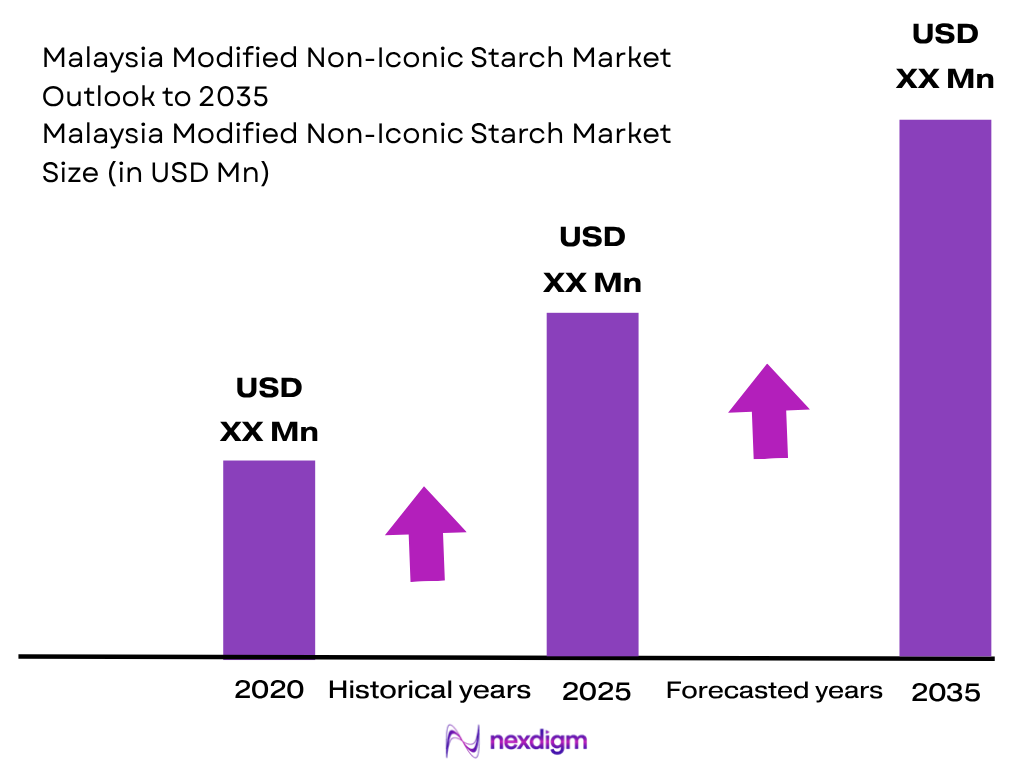
The Malaysia Modified Non-Iconic Starch Market is valued at USD ~ million in 2024, supported by increasing demand from food processing, bakery, dairy, beverage, pharmaceutical, and industrial applications. The market growth is driven by Malaysia’s expanding processed food ecosystem, rising halal food production, and increasing utilization of functional ingredients for texture enhancement, stabilization, and shelf-life improvement. Malaysia’s food manufacturing sector benefits from strong agricultural and processing capabilities, with the Department of Statistics Malaysia reporting that the food, beverages, and tobacco manufacturing segment contributed RM ~ billion to manufacturing output. The country’s palm oil and agricultural processing industries also support availability of starch-related raw materials and ingredient development.
The Malaysia Modified Non-Iconic Starch Market is concentrated in major industrial regions including Selangor, Kuala Lumpur, Johor, Penang, and Sarawak due to their developed food processing, manufacturing, and export infrastructure. Selangor dominates due to its concentration of food manufacturers, ingredient distributors, and industrial processing facilities, while Johor benefits from proximity to Singapore and strong manufacturing connectivity. Sarawak contributes through its sago starch production ecosystem, supported by local agricultural resources. Malaysia’s export-oriented food manufacturing sector is supported by its strategic location within ASEAN, with the World Bank reporting Malaysia’s GDP at approximately USD 422 billion in 2024, strengthening industrial and consumer food demand. These regions provide strong demand bases for modified starch applications across bakery products, sauces, beverages, processed foods, and industrial formulations.
Market Segmentation
By Starch Source
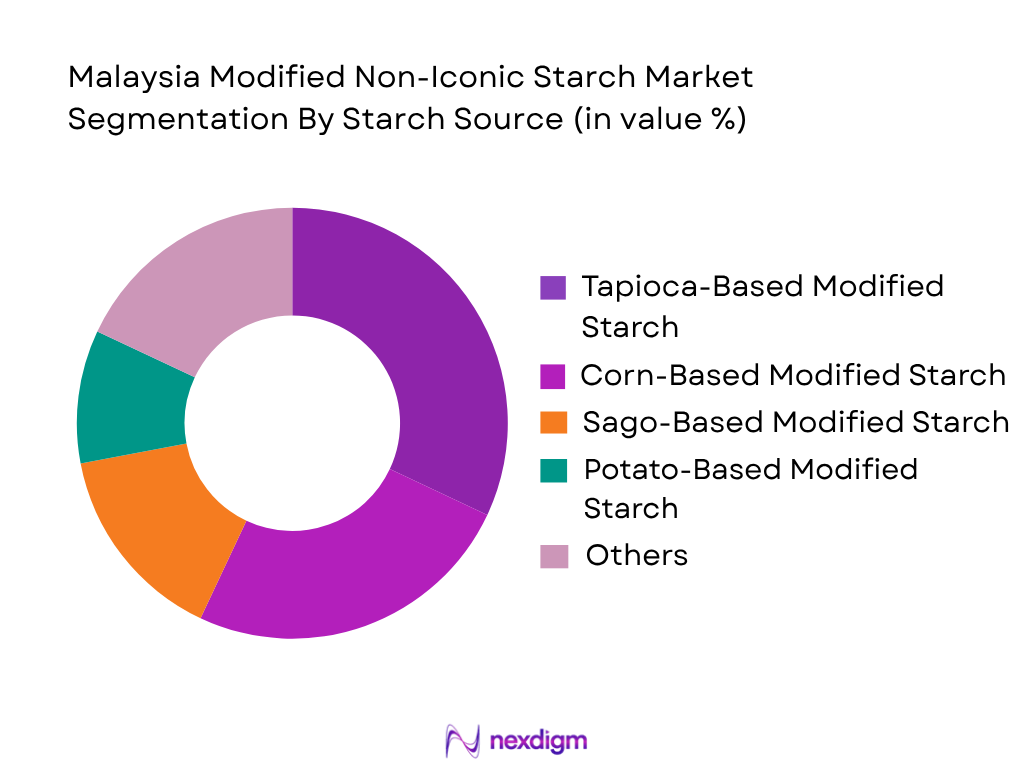
Malaysia Modified Non-Iconic Starch Market is segmented by starch source into tapioca-based modified starch, corn-based modified starch, potato-based modified starch, rice-based modified starch, sago-based modified starch, wheat-based modified starch, and other specialty starch sources. Tapioca-based modified starch represents the dominant segment due to Malaysia’s regional accessibility to cassava supply chains, suitability for food applications, and wide functional properties including thickening, binding, and texture enhancement. Tapioca starch is extensively used in processed foods, bakery products, sauces, and gluten-free formulations due to its neutral taste and excellent viscosity characteristics. Malaysia’s position within Southeast Asia provides access to major cassava-producing countries, supporting consistent raw material availability. The growing demand for clean-label and plant-based ingredients has further supported tapioca-derived modified starch adoption among food manufacturers.
By Application
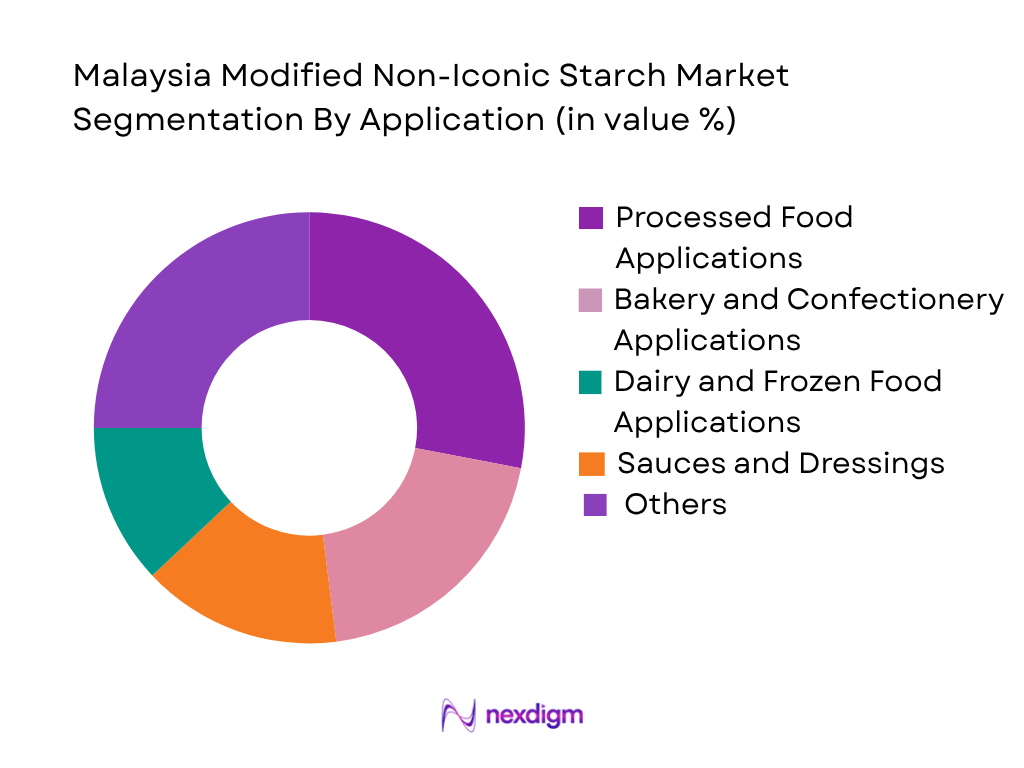
Malaysia Modified Non-Iconic Starch Market is segmented by application into bakery and confectionery, dairy and frozen foods, processed foods, sauces and dressings, beverages, pharmaceutical applications, nutraceutical applications, paper manufacturing, textile processing, and adhesives. Processed food applications represent the dominant segment due to increasing consumption of convenience foods, ready-to-eat products, and packaged food categories. Modified starches are widely utilized in processed foods for viscosity control, moisture retention, stability improvement, and texture enhancement. Malaysia’s expanding food manufacturing sector and increasing demand for halal-certified processed food products support the adoption of modified starch ingredients. Food manufacturers utilize modified starches in products such as instant noodles, sauces, frozen foods, and meat alternatives to improve product quality and shelf stability. The increasing development of innovative food formulations has strengthened demand for specialty starch solutions.
Competitive Landscape
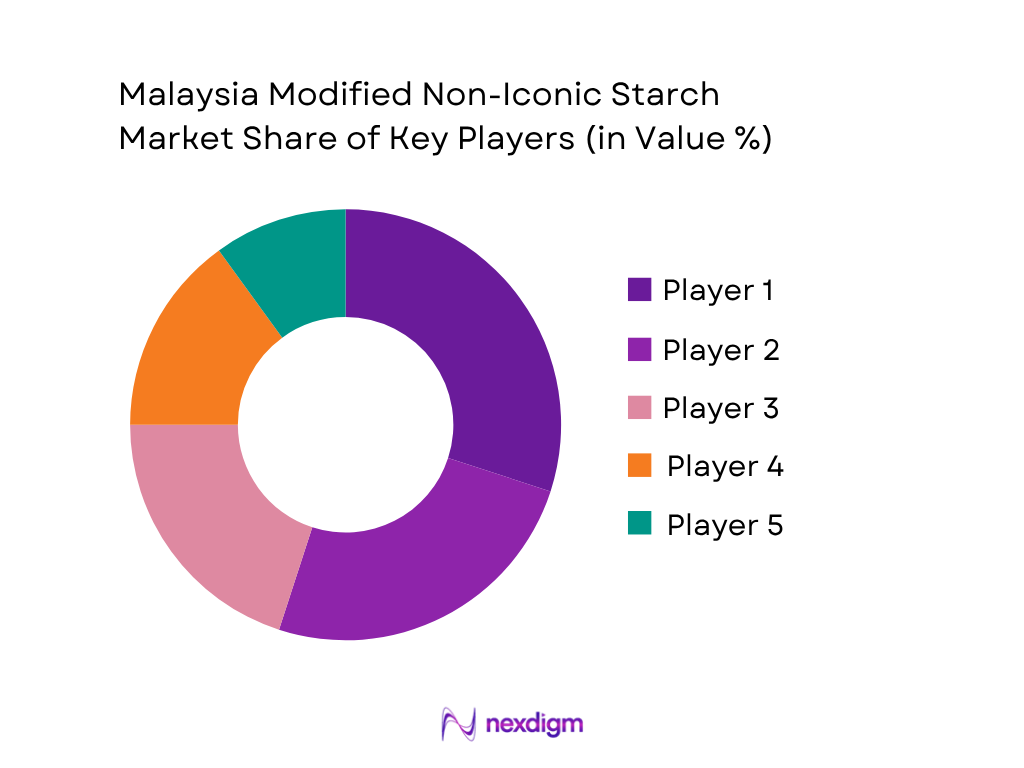
The Malaysia Modified Non-Iconic Starch Market includes global ingredient manufacturers, regional starch processors, and specialty food ingredient suppliers. The competitive landscape is influenced by product portfolio diversity, starch modification capabilities, halal certification capabilities, application expertise, and distribution networks. Major companies compete by developing customized modified starch solutions for food manufacturers, pharmaceutical companies, and industrial users while expanding specialty starch offerings.
| Company | Establishment Year | Headquarters | Modified Starch Portfolio | Major Applications | Malaysia Presence | Production Capability | Certification Coverage | Distribution Network |
| Ingredion Incorporated | 1906 | USA | ~ | ~ | ~ | ~ | ~ | ~ |
| Cargill Incorporated | 1865 | USA | ~ | ~ | ~ | ~ | ~ | ~ |
| Tate & Lyle PLC | 1921 | UK | ~ | ~ | ~ | ~ | ~ | ~ |
| Roquette Frères | 1933 | France | ~ | ~ | ~ | ~ | ~ | ~ |
| Asia Modified Starch Co., Ltd. | 1987 | Thailand | ~ | ~ | ~ | ~ | ~ | ~ |
Malaysia Modified Non-Iconic Starch Market Analysis
Growth Drivers
Expansion of Malaysia’s Food Processing Industry and Demand for Functional Starch Ingredients
Malaysia’s expanding food processing sector is a key driver for the Modified Non-Iconic Starch Market as manufacturers increasingly require functional ingredients for viscosity control, texture enhancement, stabilization, and shelf-life improvement across processed foods, bakery products, dairy products, and beverages. The food manufacturing sector is supported by Malaysia’s broader industrial base, with the World Bank reporting Malaysia’s GDP at approximately USD 422 billion in 2024, reflecting continued economic activity across manufacturing and consumer industries. According to the Department of Statistics Malaysia, the food, beverages, and tobacco manufacturing segment generated RM 107 billion in sales value in 2023, highlighting the scale of domestic food production activities supporting ingredient consumption. Malaysia exported food products valued at approximately RM 45 billion in 2024, according to the Ministry of Agriculture and Food Security, strengthening demand for high-quality food additives and functional ingredients. The country’s halal food ecosystem further supports modified starch utilization, as Malaysia remains a major halal-certified food production hub with manufacturers requiring compliant ingredients for domestic consumption and exports. Modified starches are increasingly incorporated into instant foods, sauces, confectionery, frozen foods, and bakery applications due to their ability to improve processing performance and product consistency.
Growth of Halal Food Manufacturing and Export-Oriented Food Ingredient Demand
Malaysia’s position as a regional halal food manufacturing center supports increasing demand for modified starch ingredients used in food formulations, particularly among manufacturers producing processed foods, ready-to-eat products, and export-oriented food categories. The Department of Islamic Development Malaysia (JAKIM) reported more than 8,000 companies holding halal certifications in Malaysia, creating a large base of manufacturers requiring certified food ingredients. Malaysia’s food export ecosystem continues to expand, with the Ministry of Agriculture and Food Security reporting food exports exceeding RM 50 billion in recent trade assessments, supported by processed food, agricultural products, and ingredient exports. The country’s strategic location within ASEAN also strengthens its role as a food manufacturing hub, with the World Bank reporting Malaysia’s trade-to-GDP ratio remained above 130 in recent assessments, indicating strong integration with international supply chains. Modified starch suppliers benefit from this environment because food manufacturers increasingly require ingredients that meet halal, safety, and functional performance requirements. Applications including sauces, bakery fillings, dairy products, and convenience foods require modified starches for improved stability, texture, and processing efficiency. The expansion of export-focused food production creates sustained demand for specialized starch solutions across Malaysia’s food manufacturing ecosystem.
Market Challenges
Dependence on Imported Specialty Starch Technologies and Raw Material Supply Fluctuations
The Malaysia Modified Non-Iconic Starch Market faces challenges due to dependence on imported specialty starch technologies, advanced modification processes, and certain raw material sources required for high-performance starch applications. While Malaysia has agricultural resources and regional access to cassava, sago, and cereal-based starch materials, many specialty modified starch formulations require advanced processing capabilities developed by international ingredient suppliers. Malaysia imported food and agricultural products valued at approximately RM 76 billion in 2024, according to the Ministry of Agriculture and Food Security, reflecting the country’s reliance on global supply chains for various food-related inputs. Agricultural commodity availability can also influence starch supply stability due to weather conditions, production cycles, and regional crop fluctuations. According to the Department of Statistics Malaysia, agricultural activities remain an important economic contributor, with the agriculture sector contributing more than RM 100 billion to Malaysia’s economy. However, specialty starch production requires investment in modification technology, quality control systems, and application research, creating entry barriers for smaller domestic manufacturers. Fluctuations in imported raw material availability, logistics conditions, and global agricultural supply patterns can affect manufacturers relying on consistent starch inputs for food and industrial applications.
Limited Adoption Among Small and Medium Food Manufacturers Due to Technical Requirements
The adoption of advanced modified starch solutions among small and medium food manufacturers remains challenging due to technical requirements related to formulation development, processing optimization, and application-specific performance testing. Malaysia has approximately 1.2 million registered micro, small, and medium enterprises according to the SME Corporation Malaysia, representing a large business ecosystem where many companies operate with limited technical resources compared with multinational food manufacturers. Smaller producers in bakery, sauces, snacks, and processed foods may continue using conventional starches due to familiarity with existing formulations and limited access to specialized ingredient expertise. The Ministry of Entrepreneur Development and Cooperatives has highlighted technology adoption and productivity improvement as key priorities for Malaysian SMEs. Modified starches often require adjustments in processing conditions, equipment settings, and recipe formulation to achieve desired viscosity, stability, and texture outcomes. Food manufacturers without dedicated research and development capabilities may face difficulties implementing advanced starch technologies. Additionally, certification requirements, quality testing, and supply consistency considerations can increase adoption complexity. These factors create challenges for broader penetration of specialty modified starch solutions among smaller food processing businesses across Malaysia.
Market Opportunities
Expansion of Plant-Based Food Products and Clean Label Ingredient Development
The increasing development of plant-based foods and demand for clean-label ingredients creates opportunities for modified starch manufacturers in Malaysia. Food producers are increasingly seeking functional plant-derived ingredients that provide texture, stability, and processing benefits without compromising consumer preferences for natural formulations. Malaysia has a strong agricultural foundation, with the Department of Statistics Malaysia reporting that agriculture contributed more than RM 100 billion to national economic activity in 2024, supporting availability of plant-based raw materials. The country produced more than 18 million tonnes of palm oil in 2024 according to the Malaysian Palm Oil Board, demonstrating the scale of Malaysia’s agricultural processing capabilities and availability of bio-based resources. Modified starches derived from tapioca, sago, rice, and other plant sources can support applications in meat alternatives, gluten-free products, functional foods, and reduced-fat formulations. The growth of halal-certified plant-based food production also creates additional opportunities because manufacturers require compliant ingredients with reliable functionality. As food companies expand product innovation, demand is increasing for specialty starches offering improved texture, moisture retention, and stability. Malaysia’s position as a regional food processing hub provides opportunities for modified starch suppliers to develop customized solutions for domestic and export markets.
Increasing Pharmaceutical and Nutraceutical Manufacturing Applications
Malaysia’s growing pharmaceutical and nutraceutical industries create opportunities for modified starch applications as excipients, binders, stabilizers, and controlled-release formulation components. The pharmaceutical sector is supported by Malaysia’s healthcare infrastructure development, with the Ministry of Health Malaysia allocating RM 41.2 billion for healthcare expenditure in the national budget framework, supporting pharmaceutical demand and healthcare manufacturing activities. Modified starches are increasingly used in pharmaceutical formulations due to their compatibility, binding properties, and ability to improve formulation stability. Malaysia’s nutraceutical sector is also supported by rising consumer interest in functional health products, vitamins, and dietary supplements. The country’s manufacturing ecosystem includes pharmaceutical production facilities and health product companies requiring specialized ingredient solutions. According to the Malaysian Investment Development Authority, healthcare and pharmaceutical-related investments continue to receive attention due to Malaysia’s manufacturing capabilities and regional export potential. Modified starch suppliers can benefit by developing pharmaceutical-grade starch solutions meeting quality and regulatory requirements. Increasing demand for locally manufactured healthcare products, export-oriented pharmaceutical production, and functional nutrition products provides opportunities for expansion of specialty modified starch applications beyond traditional food uses.
Future Outlook
Over the next decade, the Malaysia Modified Non-Iconic Starch Market is expected to demonstrate steady development driven by increasing demand for functional food ingredients, expansion of processed food manufacturing, growth of halal-certified food exports, and rising adoption of specialty starch technologies. Manufacturers are expected to focus on clean-label starch solutions, plant-based ingredients, and application-specific formulations. Growth opportunities will emerge from bakery innovation, convenience foods, pharmaceutical excipients, and sustainable ingredient development. The market will also benefit from Malaysia’s position as an ASEAN food manufacturing hub and increasing demand for customized ingredient solutions among domestic and international food producers.
Major Players
- Ingredion Incorporated
- Cargill Incorporated
- Tate & Lyle PLC
- Roquette Frères
- Asia Modified Starch Co., Ltd.
- Thai Wah Public Company Limited
- Global Bio-Chem Technology Group Company Limited
- PT Sorini Agro Asia Corporindo Tbk
- Archer Daniels Midland Company
- Kerry Group plc
- Beneo GmbH
- Avebe U.A.
- Emsland Group
- Tapioca Development Corporation
- PPZ-NV
Key Target Audience
- Food and beverage manufacturers
- Bakery and confectionery manufacturers
- Pharmaceutical and nutraceutical companies
- Modified starch producers and ingredient suppliers
- Industrial starch users including paper, textile, and adhesive manufacturers
- Investments and venture capitalist firms (Private equity firms, food ingredient investors, agrifood investment funds)
- Government and regulatory bodies (Ministry of Health Malaysia, Malaysian Investment Development Authority, Department of Islamic Development Malaysia, Food Safety and Quality Division Malaysia)
- Agricultural processing and commodity companies
Research Methodology
Step 1: Identification of Key Variables
The initial phase involves developing an ecosystem map covering all major stakeholders operating within the Malaysia Modified Non-Iconic Starch Market. This stage includes extensive secondary research covering starch producers, food manufacturers, agricultural suppliers, distributors, and regulatory bodies. The objective is to identify important market variables including raw material availability, modification technologies, application demand, production capabilities, and industry trends.
Step 2: Market Analysis and Construction
This phase involves analyzing historical market information related to modified starch consumption, production activities, import-export patterns, and application-level demand. Market construction includes evaluation of starch sources, modification methods, end-use industries, and distribution channels. Both supply-side and demand-side assessments are conducted to validate market structure and consumption patterns.
Step 3: Hypothesis Validation and Expert Consultation
Market hypotheses are validated through discussions with industry participants including starch manufacturers, food processors, ingredient distributors, and industrial users. Expert consultations provide insights regarding product demand, formulation requirements, competitive landscape, and adoption challenges. These discussions support validation of market assumptions and improve accuracy of industry analysis.
Step 4: Research Synthesis and Final Output
The final phase combines primary and secondary research findings to develop a comprehensive assessment of the Malaysia Modified Non-Iconic Starch Market. Information collected from manufacturers, users, and supply chain participants is analyzed to validate segmentation, competitive positioning, market dynamics, and future opportunities.

- Executive Summary
- Research Methodology (Market Definition and Scope, Malaysia Modified Non-Iconic Starch Market Classification, Modified Starch Source Mapping, Starch Functional Property Assessment, Native and Modified Starch Evaluation, Tapioca Starch Assessment, Corn Starch Assessment, Potato Starch Assessment, Sago Starch Assessment, Rice Starch Assessment, Chemical Modification Analysis, Physical Modification Analysis, Enzymatic Modification Analysis, Resistant Starch Evaluation, Cross-Linked Starch Assessment, Acetylated Starch Assessment, Hydroxypropyl Starch Assessment, Oxidized Starch Assessment, Viscosity and Texture Performance Analysis, Application-Level Demand Analysis, End-Use Industry Assessment)

- Definition and Scope
- Malaysia Modified Non-Iconic Starch Industry Evolution and Development of Functional Starch Technology, Food Processing Applications, Halal Food Ingredient Development, Convenience Food Manufacturing, Bakery and Confectionery Applications, Pharmaceutical Excipient Applications, Industrial Starch Utilization and Sustainable Starch Processing Technologies
- Modified Non-Iconic Starch Value Chain Analysis
- Modified Non-Iconic Starch Supply Chain Analysis
- Cassava and Tapioca Feedstock Suppliers, Corn and Cereal Starch Suppliers, Sago Starch Producers, Agricultural Raw Material Producers, Starch Modification Technology Providers, Modified Starch Manufacturers, Food Ingredient Manufacturers, Bakery and Confectionery Producers, Dairy Product Manufacturers, Pharmaceutical Companies, Paper Manufacturers, Textile Processors, Industrial Users, Distributors and Export Markets

- Growth Drivers (Expansion of Halal Food Manufacturing, Growth of Processed Food Industry, Increasing Demand for Functional Food Ingredients, Rising Bakery and Confectionery Production, Growth of Convenience Food Consumption, Pharmaceutical Industry Expansion, Increasing Demand for Texture Modification Ingredients, Growth of Export-Oriented Food Manufacturing, Adoption of Clean Label Ingredient Solutions)
- Market Challenges (Dependence on Imported Specialty Starch Inputs, Agricultural Raw Material Supply Fluctuations, Limited Domestic Specialty Modified Starch Production Capacity, Complex Modification Processing Requirements, High Technology Investment Requirements, Competition from Hydrocolloids and Alternative Functional Ingredients, Regulatory Compliance Requirements, Limited Awareness Among Small Food Manufacturers)
- Market Opportunities (Functional Modified Starch Development, Expansion of Halal-Certified Ingredients, Plant-Based Food Product Growth, Resistant Starch Applications, Gluten-Free Food Formulation Demand, Pharmaceutical Excipient Applications, Sustainable Starch Processing Technologies, Export Expansion of Malaysian Food Ingredients)
- Market Trends (Clean Label Modified Starch Development, Natural Modification Technologies, Plant-Based Ingredient Adoption, Functional Food Innovation, Low-Fat Food Formulation, Gluten-Free Product Expansion, Sustainable Agricultural Sourcing, Premium Food Ingredient Demand, Resistant Starch Innovation, Specialty Starch Application Development)
- Government Regulations and Standards (Malaysia Food Act Requirements, Ministry of Health Malaysia Food Regulations, Department of Islamic Development Malaysia Halal Standards, Food Safety and Quality Division Requirements, Agricultural Commodity Regulations, Export Food Certification Standards, International Food Ingredient Standards, Industrial Safety Regulations)
- SWOT Analysis
- Porter’s Five Forces Analysis
- PESTLE Analysis
- Stakeholder Ecosystem
- Competition Ecosystem

- By Market Value (2020-2025)
- By Market Volume Consumption (2020-2025)
- By Modified Starch Production Volume (2020-2025)
- By Domestic Consumption Volume (2020-2025)
- By Imported Modified Starch Volume (2020-2025)
- By Exported Modified Starch Volume (2020-2025)
- By Food Grade Modified Starch Consumption Volume (2020-2025)
- By Industrial Grade Modified Starch Consumption Volume (2020-2025)

- By Starch Source (In Value %)
Tapioca-Based Modified Starch
Corn-Based Modified Starch
Potato-Based Modified Starch
Rice-Based Modified Starch
Sago-Based Modified Starch
Wheat-Based Modified Starch
Other Specialty Starch Sources - By Modification Technology (In Value %)
Chemically Modified Starch
Physically Modified Starch
Enzymatically Modified Starch
Cross-Linked Starch
Acetylated Starch
Hydroxypropyl Starch
Oxidized Starch
Resistant Modified Starch - By Application (In Value %)
Bakery and Confectionery Applications
Dairy and Frozen Food Applications
Processed Food Applications
Sauces, Dressings and Condiments
Instant Food and Convenience Meal Applications
Beverage and Functional Food Applications
Pharmaceutical and Nutraceutical Applications
Industrial Applications - By Functional Property (In Value %)
Thickening and Viscosity Enhancement
Texture Improvement and Modification
Emulsification and Stabilization
Freeze-Thaw Stability Enhancement
Moisture Retention Capability
Binding and Encapsulation Functionality
Film Formation Properties - By End-Use Industry (In Value %)
Food and Beverage Manufacturing
Bakery Industry
Processed Food Industry
Dairy Industry
Pharmaceutical Industry
Nutraceutical Industry
Paper Industry
Textile Industry
Adhesive Industry
Chemical and Industrial Manufacturing - By Distribution Channel (In Value %)
Direct Industrial Supply
Food Ingredient Distributors
Specialty Chemical Distributors
Industrial Raw Material Suppliers
Online B2B Distribution Platforms
Export Distribution Networks - By Region (In Value %)
Central Malaysia
Southern Malaysia
Northern Malaysia
East Coast Malaysia
East Malaysia

- Market Share of Major Players (By Malaysia Revenue, Modified Starch Sales Volume, Starch Source Portfolio, Modification Technology Capability, Food Application Coverage, Industrial Application Coverage, Production Capacity, Halal Certification Coverage, Distribution Network Coverage, Export Market Presence, Regional Presence, Customer Industry Coverage, Technical Support Capability)
- Cross Comparison Parameters (Modified Starch Product Portfolio Breadth, Starch Source Diversification, Modification Technology Capability, Food Application Coverage, Halal-Certified Product Portfolio, Production Capacity, Export Distribution Network Reach, Specialty Starch Innovation Capability)
- SWOT Analysis of Major Players
- Competitive Positioning Matrix
- Modified Starch Product Portfolio and Application Benchmarking
- Food Grade Modified Starch Technology Assessment
- Industrial Grade Modified Starch Technology Assessment
- Detailed Profiles of Major Companies
Ingredion Incorporated
Cargill Incorporated
Tate & Lyle PLC
Roquette Frères
Asia Modified Starch Co., Ltd.
Thai Wah Public Company Limited
Global Bio-Chem Technology Group Company Limited
PT Sorini Agro Asia Corporindo Tbk
Archer Daniels Midland Company
Kerry Group plc
Beneo GmbH
Avebe U.A.
Emsland Group
Tapioca Development Corporation
PPZ-NV

- Food Manufacturer Modified Starch Requirement Assessment
- Bakery and Confectionery Manufacturer Ingredient Procurement Analysis
- Dairy Product Manufacturer Texture Enhancement Assessment
- Processed Food Manufacturer Formulation Analysis
- Beverage Manufacturer Stabilizer Requirement Assessment
- Pharmaceutical Manufacturer Excipient Procurement Analysis
- Nutraceutical Product Formulation Assessment
- Paper Manufacturer Starch Application Analysis
- Textile Manufacturer Processing Requirement Assessment
- Adhesive Manufacturer Binding Agent Assessment
- Industrial User Modified Starch Performance Evaluation
- Ingredient Distributor Procurement Analysis
- Food Service Manufacturer Modified Starch Requirement Assessment

- By Market Value (2026-2035)
- By Market Volume Consumption (2026-2035)
- By Modified Starch Production Volume (2026-2035)
- By Domestic Consumption Volume (2026-2035)
- By Imported Modified Starch Volume (2026-2035)
- By Exported Modified Starch Volume (2026-2035)
- By Food Grade Modified Starch Consumption Volume (2026-2035)
- By Industrial Grade Modified Starch Consumption Volume (2026-2035)


 Request a Sample
 Ask for Customization
 Get a Quote
 Enquire Now