
 Download PDF
Market Overview
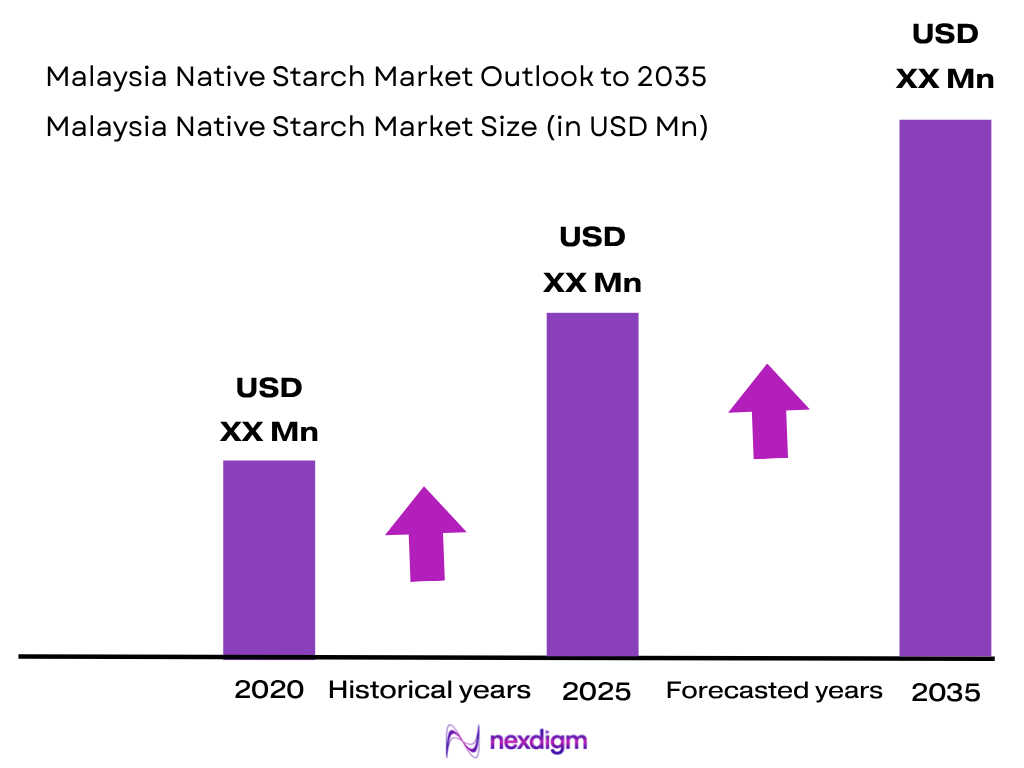
The Malaysia native starch market is valued at approximately ~USD XX billion, with demand supported by the country’s large food-processing, beverage, bakery, noodle, confectionery and paper-packaging industries. Malaysia’s GDP reached RM1.93 trillion in 2024, compared with RM1.79 trillion in 2023, while manufacturing expanded 4.2% in 2024 after 0.7% in 2023. Food processing also grew 4.7%, providing a direct industrial base for tapioca, sago, corn, wheat and other native starch applications.
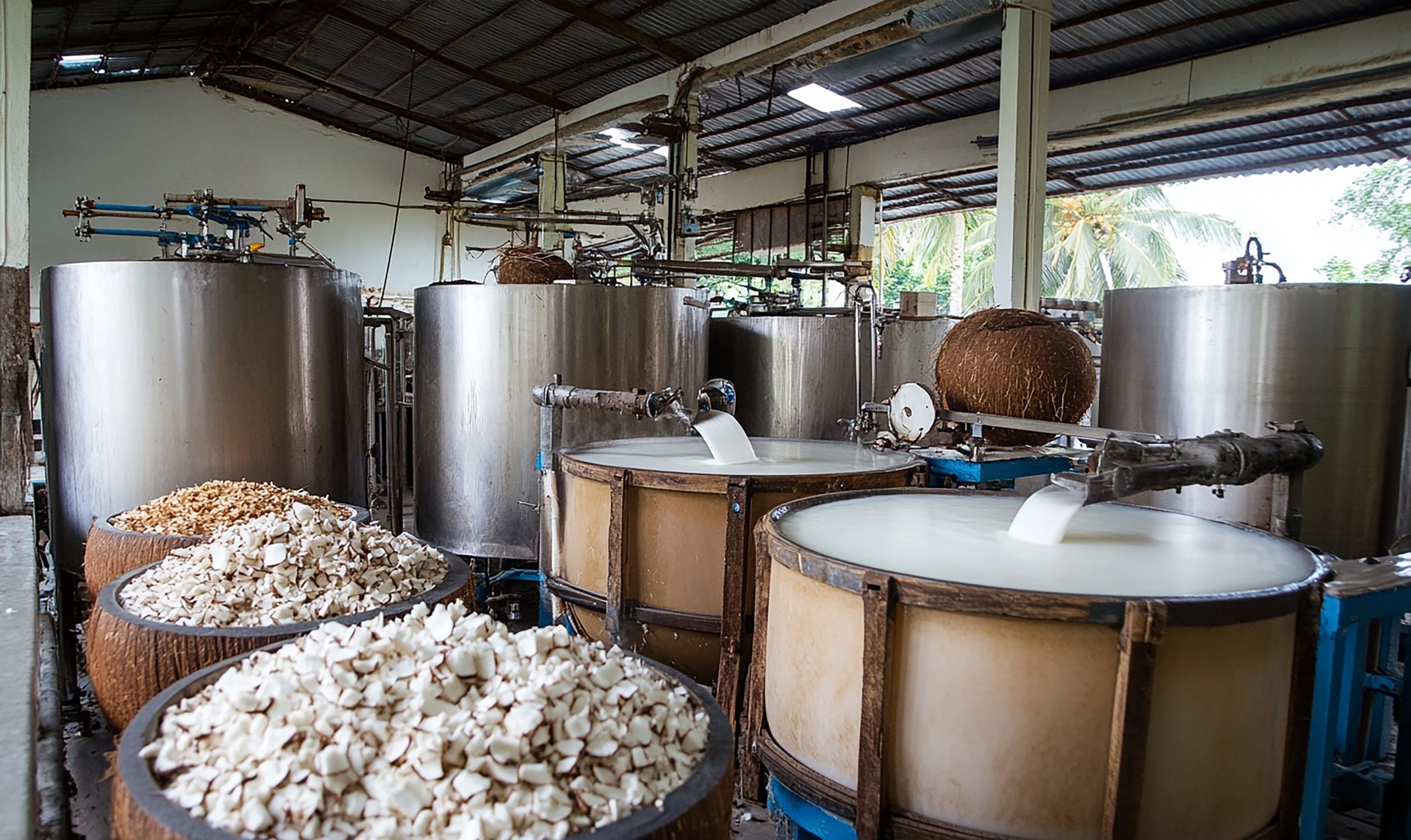
Sarawak is a distinctive production center for Malaysia native starch because of its established sago ecosystem, particularly around Mukah and Betong. Sarawak recorded 38,500 metric tons of sago-starch exports valued at RM107.5 million in 2024, compared with 35,000 metric tons valued at RM113 million in 2023. Peninsular Malaysia remains an important downstream destination, while major industrial centers support starch demand through food manufacturing, packaging, beverage and processed-food production.
Market Segmentation
By Starch Source
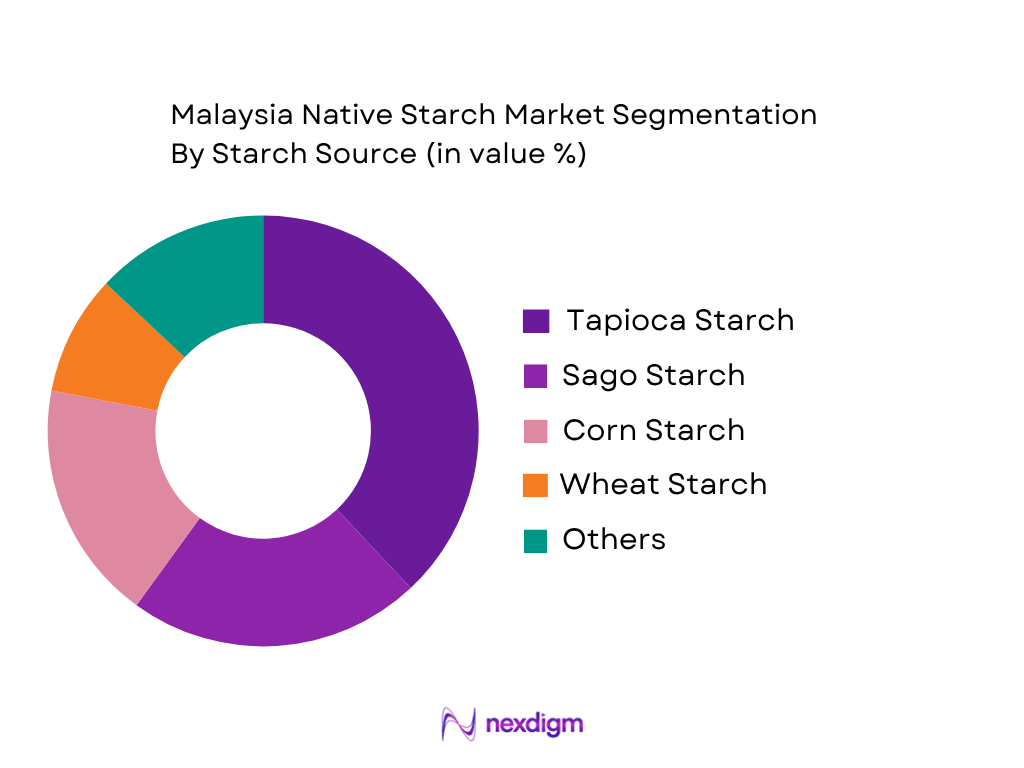
The Malaysia native starch market is segmented by starch source into tapioca starch, sago starch, corn starch, wheat starch, potato starch, rice starch, pea starch and other plant-based native starches. Tapioca starch represents a major demand category because of its broad functionality across noodles, bakery products, sauces, confectionery, processed foods and industrial formulations. Its neutral taste, thickening capability, binding performance and suitability for gluten-free formulations make it particularly relevant to Malaysian food manufacturers. Sago starch has a highly distinctive domestic supply base, with Sarawak operating seven sago-processing mills and recorded sago-starch exports of 38,500 metric tons in 2024. Corn and wheat starch remain important for food processors requiring specific texture and viscosity characteristics. Demand is therefore shaped by the application mix of Malaysia’s food-processing industry and the availability of locally processed versus imported starch sources.
By Application
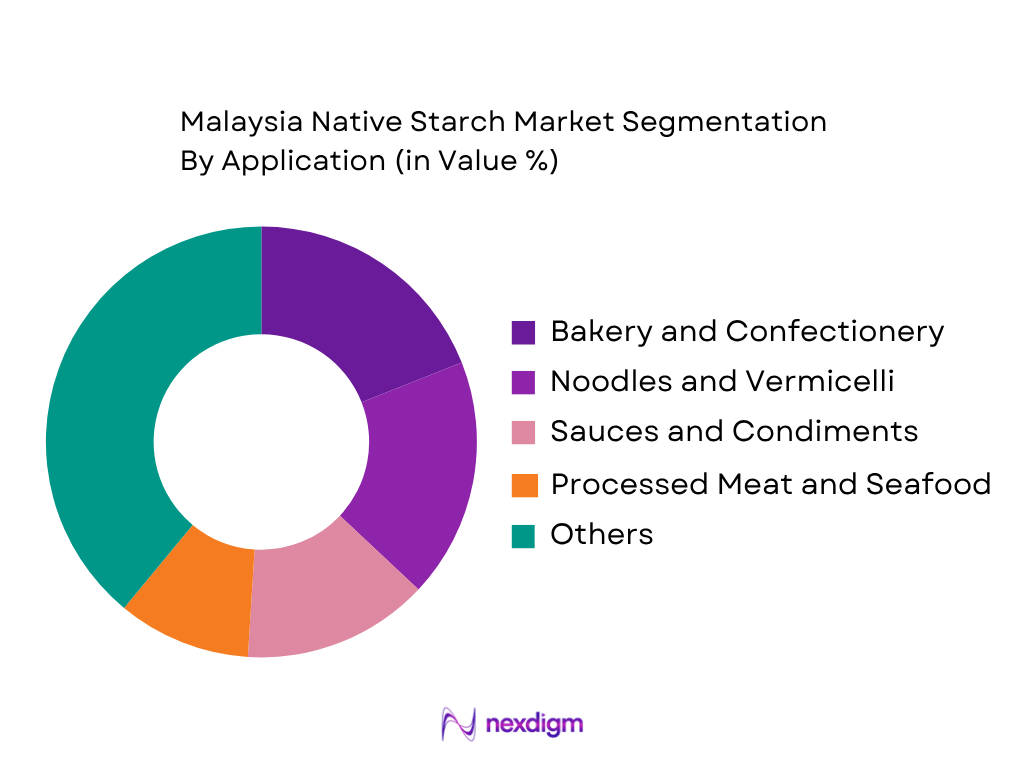
The Malaysia native starch market is segmented by application into bakery and confectionery, noodles and vermicelli, sauces and condiments, processed meat and seafood, dairy and desserts, beverages, paper and corrugated packaging, pharmaceutical and nutraceutical applications, textile processing and industrial adhesives. Food and beverage processing represents the central application base because starch is widely used for thickening, binding, moisture retention, texture modification and viscosity control. Malaysia’s manufacturing sector expanded 4.2% in 2024, while food processing increased 4.7%, demonstrating continued industrial activity among potential starch-consuming manufacturers. The country’s export-oriented manufacturing structure also supports demand for food ingredients used in processed products. Paper and packaging applications provide another important outlet because starch-based adhesives are used in corrugated-board and paper converting processes. The breadth of applications reduces dependence on a single downstream industry and supports continued utilization of native starch across Malaysian manufacturing.
Competitive Landscape
The Malaysia native starch market includes multinational ingredient suppliers, regional starch manufacturers, domestic sago processors and food-ingredient distributors. Competition is influenced by starch-source availability, food-grade quality, halal requirements, processing capabilities, customer relationships and supply reliability. Sarawak-based producers have a differentiated position in sago starch, while multinational suppliers provide broader starch portfolios covering tapioca, corn, wheat, potato and specialty food ingredients. Malaysia’s manufacturing expansion and strong trade orientation create demand for both domestically produced and imported starch products.
| Company | Establishment Year | Headquarters | Native Starch Portfolio | Major Starch Types | Primary Applications | Manufacturing Capability | Malaysia Presence | Distribution Model |
| Cargill | 1865 | Minneapolis, USA | ~ | ~ | ~ | ~ | ~ | ~ |
| Ingredion | 1906 | Chicago, USA | ~ | ~ | ~ | ~ | ~ | ~ |
| ADM | 1902 | Chicago, USA | ~ | ~ | ~ | ~ | ~ | ~ |
| Antik Sempurna | 1990s | Malaysia | ~ | ~ | ~ | ~ | ~ | ~ |
| Agricore CS Holdings | 2010s | Malaysia | ~ | ~ | ~ | ~ | ~ | ~ |
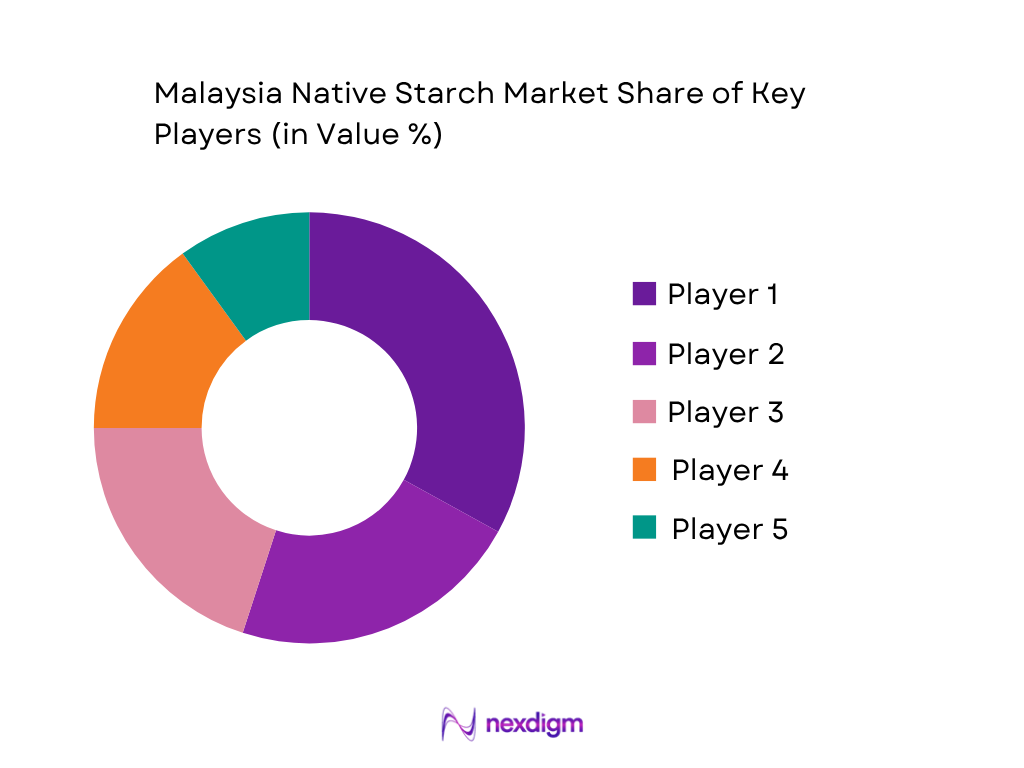
Malaysia Native Starch Market Analysis
Growth Drivers
Expansion of Food Processing Industry
Malaysia’s native starch market is supported by the expansion of food processing, where starch is used as a thickener, binder, stabilizer, texture modifier and moisture-retention ingredient across noodles, bakery products, sauces, confectionery, processed foods and beverages. The Department of Statistics Malaysia reported that Malaysia’s manufacturing sector recorded sales of RM1.9 trillion in 2024, while food, beverages and tobacco manufacturing remained an important contributor to manufacturing activity. DOSM also reported that food processing expanded 4.7% in 2024, providing a direct downstream demand base for native starch ingredients. Malaysia’s overall GDP reached RM1.65 trillion in 2024, according to DOSM, indicating continued economic activity across industries supplying consumer and industrial markets. The country’s large processed-food manufacturing ecosystem supports recurring requirements for tapioca, corn, wheat, potato and sago starch. Native starch is particularly relevant where manufacturers require conventional ingredient functionality without chemical modification. Growth in processed food production also supports demand from manufacturers producing sauces, bakery fillings, noodles, desserts and ready-to-eat foods. The combination of expanding manufacturing output and broad starch functionality provides a structural demand base for Malaysia’s native starch industry, particularly among established food-processing clusters and ingredient-intensive manufacturing operations.
Strong Noodle, Vermicelli and Food Ingredient Manufacturing Base
Malaysia’s established noodle, vermicelli and processed-food manufacturing ecosystem represents another important growth driver for the native starch market because tapioca, corn and other starches are incorporated into formulations requiring binding, viscosity control, texture and cooking performance. The Department of Statistics Malaysia reported manufacturing sales of RM1.9 trillion in 2024, while food processing recorded 4.7% growth during the same period. These figures demonstrate the scale of the manufacturing environment in which starch-consuming industries operate. Malaysia also imported 277,358,000 kg of maize starch in 2024, with imports valued at USD127.07 million, according to World Bank WITS based on UN Comtrade data. India supplied 235,400,000 kg, demonstrating the substantial industrial requirement for starch ingredients that is not fully supplied through domestic production. The scale of maize-starch imports provides a measurable indication of downstream demand from Malaysian processors. Native tapioca and sago starch can serve applications requiring thickening and binding properties in noodles, vermicelli, sauces and processed foods. Continued development of food manufacturing, export-oriented production and ingredient-intensive processing therefore creates opportunities for suppliers capable of delivering consistent food-grade starch specifications, halal-compliant products and reliable industrial supply.
Market Challenges
Dependence on Imported Tapioca, Corn and Other Starch Feedstocks
Malaysia’s native starch market faces a structural supply challenge because domestic manufacturers rely on international trade for several important starch categories and underlying agricultural feedstocks. World Bank WITS data based on UN Comtrade records show that Malaysia imported 277,358,000 kg of maize starch in 2024, valued at USD127.07 million. India alone supplied 235,400,000 kg, while South Korea supplied 23,776,400 kg, demonstrating reliance on external suppliers for substantial industrial starch requirements. Malaysia also imported 2,386,410,000 kg of maize excluding seed in 2024, valued at USD623.15 million, according to World Bank WITS, indicating the scale of imported agricultural raw materials connected to starch and food-processing supply chains. This dependence exposes starch processors and downstream food manufacturers to international logistics conditions, agricultural availability and cross-border supply continuity. The challenge is particularly relevant for manufacturers requiring consistent specifications and uninterrupted production inputs. Domestic sourcing is stronger for selected categories such as Sarawak sago, but the supply base is not equally developed across all native starch sources. Consequently, manufacturers may need multiple procurement channels to manage supply continuity, while domestic processors face pressure to strengthen raw-material sourcing, processing infrastructure and regional distribution capabilities.
Raw Material Availability and Supply Chain Concentration
Malaysia’s native starch industry faces challenges related to raw-material availability, geographic concentration and the ability to maintain consistent industrial supply. Sago provides Malaysia with a distinctive domestic starch resource, particularly in Sarawak, but its production is concentrated geographically and therefore requires efficient collection, processing and transportation networks to reach downstream manufacturers in Peninsular Malaysia. At the same time, imported starch categories create dependence on international supply routes. World Bank WITS records show Malaysia imported 277,358,000 kg of maize starch in 2024, while exports were only 844,630 kg, illustrating the substantial difference between imported and exported volumes for this starch category. Malaysia also imported 2,386,410,000 kg of maize excluding seed during the same period, creating additional exposure to international agricultural supply conditions. The Department of Statistics Malaysia reported that Malaysia’s agriculture sector expanded in 2024, while manufacturing activity also increased, placing continued requirements on agricultural and industrial supply chains. For starch manufacturers, variability in raw-material quality, transportation requirements and regional availability can complicate production planning. These conditions make supplier diversification, inventory planning, domestic processing capability and stronger producer-processor linkages important considerations for maintaining reliable native starch availability across Malaysia.
Market Opportunities
Expansion of Domestic Tapioca and Sago Starch Processing
Malaysia has an opportunity to strengthen domestic native starch processing by leveraging existing agricultural resources and established food-manufacturing demand. Sarawak provides a differentiated platform through its sago industry, while Peninsular Malaysia offers a large downstream base of food and industrial processors. The Department of Statistics Malaysia reported manufacturing sales of RM1.9 trillion in 2024 and food-processing growth of 4.7%, indicating substantial downstream industrial activity requiring functional ingredients. World Bank WITS data further show that Malaysia imported 277,358,000 kg of maize starch in 2024, valued at USD127.07 million, demonstrating the scale of external starch supply entering the domestic manufacturing system. Malaysia also imported 2,386,410,000 kg of maize excluding seed, valued at USD623.15 million, highlighting the importance of imported agricultural inputs. These figures create an opportunity for domestic processors to expand production where economically and technically viable, particularly for tapioca and sago-based native starches. Increased domestic processing could strengthen supply relationships with food manufacturers, shorten selected supply chains and enable producers to develop food-grade, halal-compliant and application-specific starch products. Additional processing capacity could also support higher-value applications in noodles, bakery, sauces, confectionery, processed foods and industrial adhesives, allowing Malaysia’s native starch ecosystem to capture more value from domestic and regional demand.
Growth of Halal, Clean-Label and Plant-Based Food Applications
Malaysia’s native starch market has an opportunity to benefit from expanding applications where manufacturers seek plant-derived ingredients for food formulation, texture management and clean-label positioning. Native starches from tapioca, sago, corn, rice and other botanical sources can provide thickening, binding, moisture retention and texture functionality without requiring chemical modification. The Department of Statistics Malaysia reported that Malaysia’s manufacturing sector generated RM1.9 trillion in sales during 2024, while food processing increased 4.7%, demonstrating continued activity among potential users of food-grade starch ingredients. World Bank WITS data show that Malaysia imported 277,358,000 kg of maize starch in 2024, confirming substantial industrial demand for starch-based ingredients. Malaysia’s established halal food manufacturing infrastructure creates additional relevance for certified native starch suppliers serving processed foods, bakery, noodles, sauces, desserts and beverages. Domestic manufacturers can therefore develop differentiated starch offerings around halal certification, traceability, consistent functional performance and plant-based formulations. The opportunity extends beyond conventional food applications into pharmaceutical, nutraceutical, paper and adhesive uses where starch functionality can support formulation requirements. Greater product specialization and domestic processing can enable suppliers to address application-specific requirements while reducing dependence on undifferentiated commodity supply and strengthening Malaysia’s position within regional food-ingredient supply chains.
Future Outlook
The Malaysia native starch market is expected to expand as food processing, bakery, noodles, sauces, beverages and packaging applications continue to develop. Demand should also benefit from halal food manufacturing, clean-label formulations and growing interest in plant-based ingredients. Sarawak’s established sago-processing ecosystem provides Malaysia with a differentiated native-starch resource, while imported tapioca, corn, wheat and potato starches supplement domestic requirements. Manufacturing growth, export-oriented food production and expanding ingredient applications should continue supporting demand.
Major Players
- Cargill
- Ingredion
- ADM
- Tate & Lyle
- Roquette
- Antik Sempurna Sdn. Bhd.
- C. L. Nee Sago Industries Sdn. Bhd.
- Sago-Link Sdn. Bhd.
- Song Ngeng Sago Industries (E.M.) Sdn. Bhd.
- THC Sdn. Bhd.
- Agricore CS Holdings Berhad
- Link Ingredients Sdn. Bhd.
- Swee Hin Chan Company Sdn. Bhd.
- San Soon Seng Food Industries Sdn. Bhd.
- Bestari Food Sdn. Bhd.
Key Target Audience
- Native Starch Manufacturers and Processors
- Food and Beverage Ingredient Procurement Companies
- Bakery, Confectionery, Noodle and Vermicelli Manufacturers
- Paper, Corrugated Packaging and Adhesive Manufacturers
- Pharmaceutical and Nutraceutical Ingredient Manufacturers
- Investments and Venture Capitalist Firms
- Government and Regulatory Bodies (Ministry of Agriculture and Food Security, Ministry of Investment, Trade and Industry, Ministry of Health, Department of Standards Malaysia)
- Food Ingredient Distributors and Industrial Starch Traders
Research Methodology
Step 1: Identification of Key Variables
The initial phase involves constructing a Malaysia native starch ecosystem covering cassava growers, sago producers, starch processors, importers, distributors and downstream manufacturers. The assessment identifies tapioca, sago, corn, wheat, potato and rice starch as key source categories and maps their applications across food, beverage, packaging, pharmaceutical and industrial markets.
Step 2: Market Analysis and Construction
This phase compiles historical information on native starch production, consumption, imports, exports and downstream industrial utilization. Malaysia’s manufacturing activity, food-processing performance, sago production ecosystem and trade flows are assessed to establish demand relationships between starch suppliers and major consuming industries.
Step 3: Hypothesis Validation and Expert Consultation
Market hypotheses are validated through consultations with starch processors, food manufacturers, ingredient distributors and downstream industrial users. Interviews focus on starch specifications, source preferences, procurement practices, domestic-versus-imported supply, halal requirements, quality parameters and application-specific functionality.
Step 4: Research Synthesis and Final Output
The final stage integrates production, trade, application and competitive information into the Malaysia native starch market assessment. Bottom-up consumption analysis is reconciled with top-down industry indicators, while supplier and end-user inputs are used to validate segmentation, competitive positioning and future market requirements.

- Executive Summary
- Research Methodology (Market Definition and Scope, Malaysia Native Starch Market Classification, Cassava and Tapioca Starch Supply Assessment, Sago Starch Production and Processing Assessment, Corn Starch Supply Mapping, Native Wheat and Potato Starch Import Assessment, Food and Beverage Starch Consumption Analysis, Noodle and Vermicelli Industry Starch Requirement Assessment, Bakery and Confectionery Starch Demand Assessment, Meat and Seafood Processing Starch Usage Assessment, Paper and Corrugated Packaging Starch Consumption Assessment, Domestic Starch Manufacturing Capacity Assessment, Import Dependency Analysis, Raw Material Availability Assessment, Starch Yield and Processing Efficiency Analysis, Primary Industry Interviews, Data Triangulation, Forecasting Framework, Limitations and Future Conclusions)

- Definition and Scope
- Malaysia Native Starch Industry Evolution
- Malaysia Native Starch Value Chain Analysis
- Malaysia Native Starch Supply Chain Analysis

- Growth Drivers (Expansion of Food Processing Industry, Strong Noodle and Vermicelli Manufacturing Base, Sago Starch Availability in Sarawak, Growing Bakery and Confectionery Production, Rising Processed Food Manufacturing, Expanding Halal Food Industry, Growth of Paper and Packaging Manufacturing, Increasing Demand for Plant-Based Food Ingredients)
- Market Challenges (Dependence on Imported Tapioca Starch, Cassava Raw Material Availability Constraints, Fluctuations in Sago Palm Supply, Dependence on Imported Corn and Wheat Starch, Limited Domestic Production of Certain Native Starch Types, Raw Material Quality Variability, Supply Chain Disruptions, Competition from Modified Starch and Hydrocolloid Alternatives)
- Market Opportunities (Expansion of Domestic Tapioca Processing, Premium Native Sago Starch Applications, Halal Food Ingredient Demand, Clean Label Starch Formulations, Native Starch Applications in Plant-Based Foods, Specialty Bakery Applications, Paper and Packaging Starch Consumption, Pharmaceutical and Nutraceutical Starch Applications)
- Market Trends (Clean Label Ingredient Adoption, Plant-Based Food Formulation, Native Tapioca Starch Utilization, Premium Sago Starch Demand, Gluten-Free Product Development, Non-GMO Ingredient Preference, Functional Food Formulation, Local Food Ingredient Sourcing, Sustainable Starch Processing, Food Texture Optimization)
- Government Regulations and Standards (Ministry of Health Food Regulations, Food Act Requirements, Food Hygiene Regulations, Malaysian Standards for Food Ingredients, Halal Certification Requirements, Department of Islamic Development Malaysia Requirements, Food Labelling Requirements, Import Permit Requirements, Environmental Regulations for Starch Processing Facilities)
- SWOT Analysis
- Porter’s Five Forces Analysis
- PESTLE Analysis
- Stakeholder Ecosystem
- Competition Ecosystem

- By Market Value (2020-2025)
- By Native Starch Consumption Volume (2020-2025)
- By Tapioca Starch Consumption Volume (2020-2025)
- By Sago Starch Consumption Volume (2020-2025)
- By Corn Starch Consumption Volume (2020-2025)

- By Starch Source (In Value %)
Tapioca Starch
Sago Starch
Corn Starch
Wheat Starch
Potato Starch
Rice Starch
Pea Starch
Other Plant-Based Native Starches - By Application (In Value %)
Bakery and Confectionery
Noodles and Vermicelli
Sauces and Condiments
Processed Meat and Seafood
Dairy and Desserts
Beverages
Glucose and Sweetener Production
Paper and Corrugated Packaging
Textile Processing
Pharmaceutical and Nutraceutical Applications
Industrial Adhesives
Other Food and Industrial Applications - By Functional Property (In Value %)
Thickening
Binding
Gelling
Stabilization
Moisture Retention
Texture Enhancement
Film Formation
Viscosity Control
Water Absorption
Emulsion Stabilization - By End-Use Industry (In Value %)
Food and Beverage Manufacturing
Bakery and Confectionery Manufacturing
Noodle and Vermicelli Manufacturing
Processed Meat and Seafood Manufacturing
Sauces and Condiment Manufacturing
Dairy and Dessert Manufacturing
Paper and Packaging Manufacturing
Textile Manufacturing
Pharmaceutical Manufacturing
Industrial Adhesives and Chemical Manufacturing - By Product Grade (In Value %)
Food Grade Native Starch
Industrial Grade Native Starch
Pharmaceutical Grade Native Starch
Halal-Certified Native Starch
Organic Native Starch
Non-GMO Native Starch
Premium High-Purity Native Starch - By Distribution Channel (In Value %)
Direct Manufacturer Sales
Food Ingredient Distributors
Specialty Ingredient Suppliers
Industrial Chemical Distributors
Wholesale Food Ingredient Traders
Retail and Consumer Packaging
Online B2B Distribution

- Market Share of Major Players (By Malaysia Revenue, Native Starch Sales Volume, Tapioca Starch Sales Volume, Sago Starch Sales Volume, Corn Starch Sales Volume, Food Industry Customer Exposure, Domestic Manufacturing and Processing Footprint, Import Distribution Network)
- Cross Comparison Parameters (Malaysia Native Starch Revenue, Native Starch Portfolio Breadth, Tapioca and Sago Starch Production Capability, Domestic Raw Material Sourcing Capability, Food and Beverage Customer Coverage, Starch Processing and Quality Control Capability, Halal and Food Certification Coverage, Distribution and Technical Support Network)
- SWOT Analysis of Major Players
- Detailed Profiles of Major Companies
Cargill Malaysia
Ingredion
ADM
Tate & Lyle
Roquette
Antik Sempurna Sdn. Bhd.
C. L. Nee Sago Industries Sdn. Bhd.
Sago-Link Sdn. Bhd.
Song Ngeng Sago Industries (E.M.) Sdn. Bhd.
THC Sdn. Bhd.
Agricore CS Holdings Berhad
Link Ingredients Sdn. Bhd.
Swee Hin Chan Company Sdn. Bhd.
San Soon Seng Food Industries Sdn. Bhd.
Bestari Food Sdn. Bhd.

- Food and Beverage Manufacturer Native Starch Procurement Assessment
- Bakery and Confectionery Manufacturer Starch Requirement Analysis
- Noodle and Vermicelli Manufacturer Tapioca and Wheat Starch Demand Assessment
- Sauce and Condiment Manufacturer Starch Application Analysis
- Processed Meat and Seafood Manufacturer Binding and Texture Requirement Assessment

- By Market Value (2026-2035)
- By Native Starch Consumption Volume (2026-2035)
- By Tapioca Starch Consumption Volume (2026-2035)
- By Sago Starch Consumption Volume (2026-2035)
- By Corn Starch Consumption Volume (2026-2035)


 Request a Sample
 Ask for Customization
 Get a Quote
 Enquire Now