
 Download PDF
Market Overview
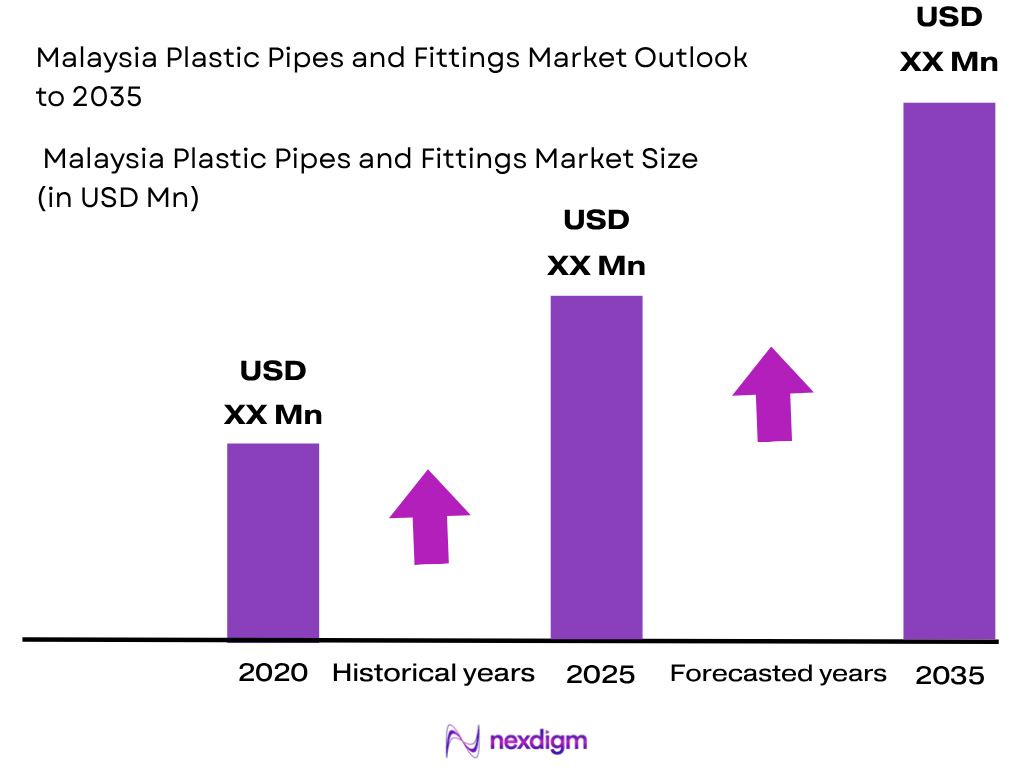
The Malaysia Plastic Pipes and Fittings Market is valued at ~USD XX billion, based on a five-year historical analysis, supported by rising infrastructure development, construction activity, and increasing replacement demand for conventional piping systems. The market is driven by demand from water distribution networks, sewerage systems, residential construction, and industrial applications. Malaysia’s plastic pipe industry continues to benefit from the adoption of PVC, HDPE, and PPR systems due to their corrosion resistance, lightweight characteristics, and cost advantages compared with traditional metal piping solutions. Industry reports indicate Malaysia’s plastic pipe market is expected to grow steadily due to urban expansion and water infrastructure investments.
The Malaysia Plastic Pipes and Fittings Market is concentrated around major urban and industrial regions including Kuala Lumpur, Selangor, Johor Bahru, Penang, and Sabah and Sarawak regions due to construction intensity, infrastructure modernization, and industrial expansion. Klang Valley dominates demand because of extensive residential developments, commercial projects, and municipal water networks. Johor benefits from industrial development and cross-border infrastructure activities, while Penang and East Malaysia regions contribute through manufacturing, utilities, and regional development projects requiring durable plastic piping solutions.
Market Segmentation
By Product Type
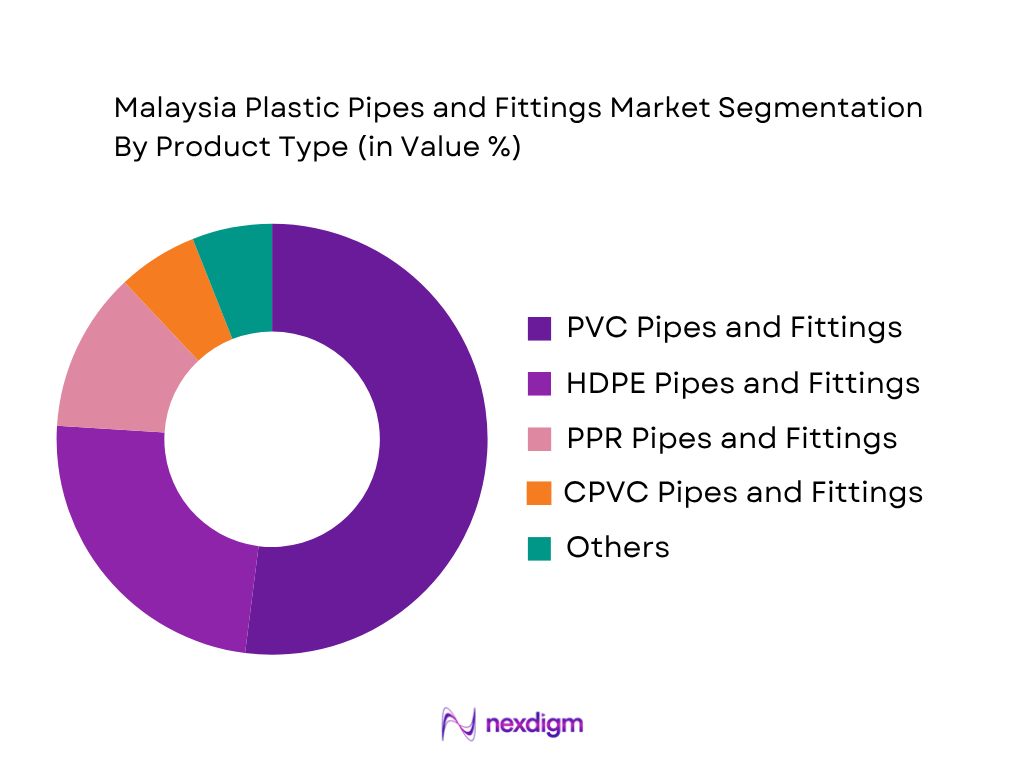
Malaysia Plastic Pipes and Fittings Market is segmented by product type into PVC pipes and fittings, HDPE pipes and fittings, PPR pipes and fittings, CPVC pipes and fittings, ABS pipes, and composite plastic piping systems. PVC pipes represent the dominant segment under product type due to their widespread adoption in water supply, drainage, sewerage, and construction applications. PVC systems are preferred because of their affordability, availability, long service life, and established installation ecosystem across Malaysia. HDPE pipes are gaining adoption in municipal infrastructure and industrial applications due to flexibility, chemical resistance, and suitability for underground pipeline networks. PPR pipes continue expanding in residential and commercial plumbing systems due to increasing preference for hot and cold water applications.
By Application
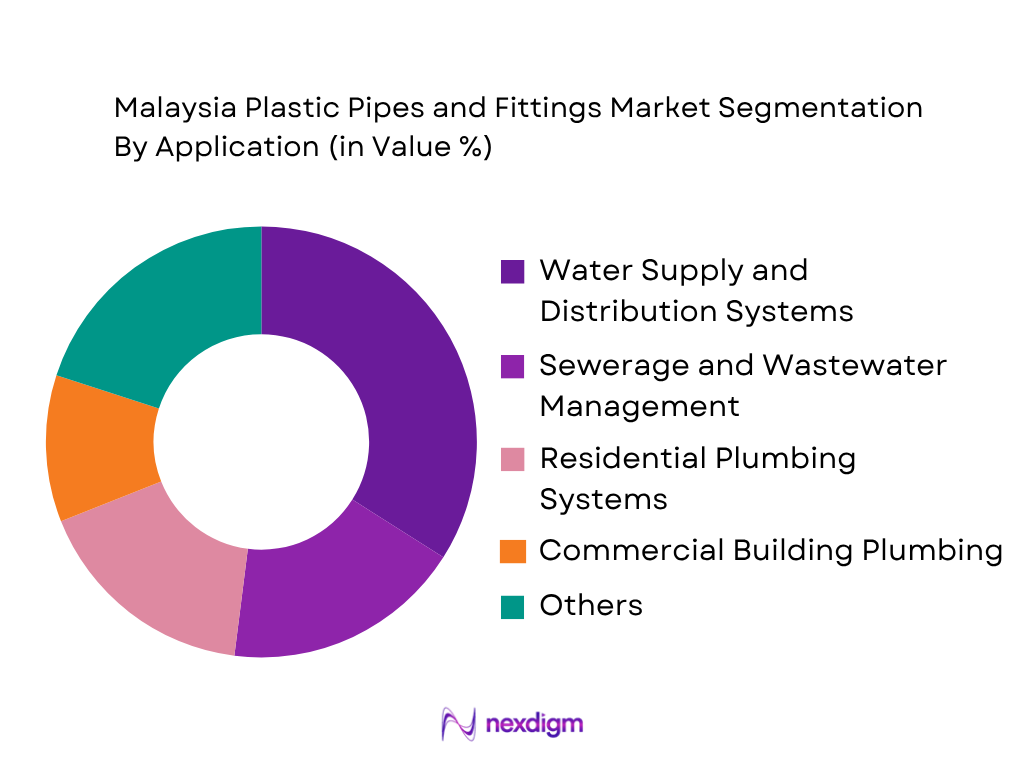
Malaysia Plastic Pipes and Fittings Market is segmented by application into water supply systems, sewerage and wastewater management, drainage systems, residential plumbing, commercial buildings, industrial piping, agriculture irrigation, and utility applications. Water supply and distribution systems hold the leading position because Malaysia continues investing in water infrastructure upgrades, pipeline replacement programs, and urban water management systems. Plastic pipes are increasingly preferred for municipal applications due to corrosion resistance, lower maintenance requirements, and longer operational lifespan. Sewerage and wastewater applications are also expanding due to urban sanitation development and infrastructure improvement initiatives.
Competitive Landscape
The Malaysia Plastic Pipes and Fittings Market is characterized by the presence of domestic manufacturers and international companies supplying PVC, HDPE, PPR, and specialty piping solutions. The competitive environment includes manufacturers with strong production capabilities, distribution networks, and project exposure across residential, infrastructure, and industrial applications. Companies compete based on product portfolio, manufacturing capacity, certification compliance, technical support, and ability to supply large-scale infrastructure projects.
| Company | Establishment Year | Headquarters | Key Products | Manufacturing Capability | Major Applications | Distribution Presence | Technology Focus | Market Strength |
| Vinidex | ~XXXX | Australia | ~ | ~ | ~ | ~ | ~ | ~ |
| Wavin | ~XXXX | Netherlands | ~ | ~ | ~ | ~ | ~ | ~ |
| Georg Fischer | ~XXXX | Switzerland | ~ | ~ | ~ | ~ | ~ | ~ |
| Lesso Malaysia | ~XXXX | China | ~ | ~ | ~ | ~ | ~ | ~ |
| Resintech Berhad | ~XXXX | Malaysia | ~ | ~ | ~ | ~ | ~ | ~ |
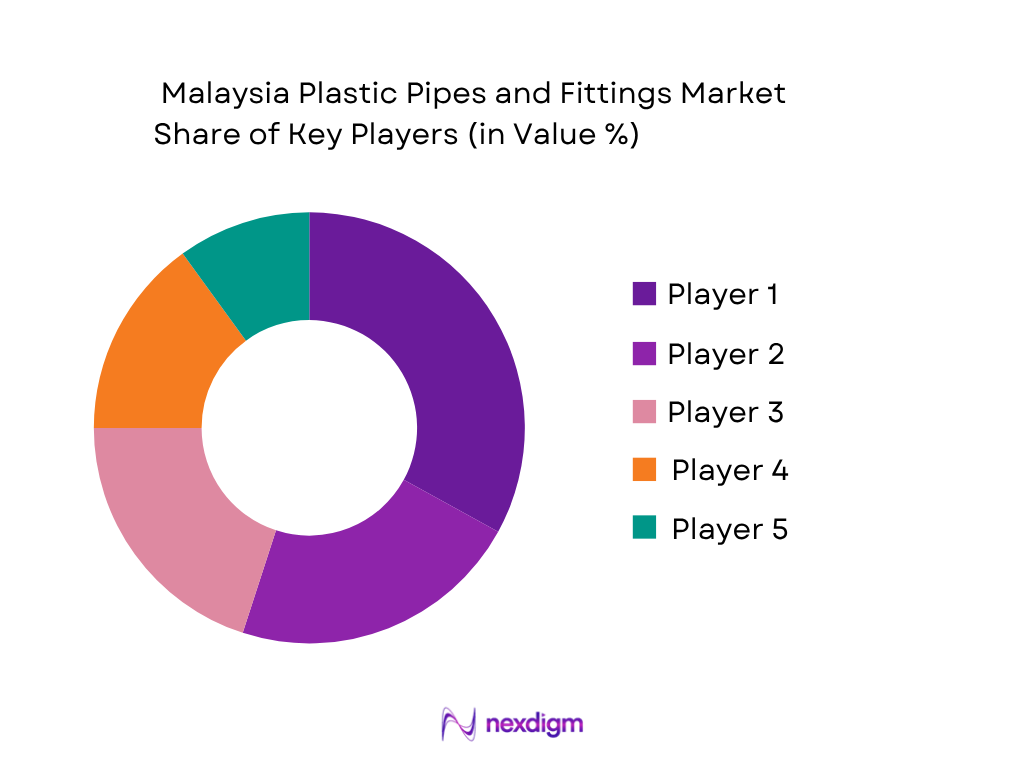
Malaysia Plastic Pipes and Fittings Market Analysis
Growth Drivers
Expansion of Residential Construction Activities
Malaysia’s residential construction activity continues to support demand for plastic pipes and fittings due to increasing urban housing development, population concentration in major metropolitan regions, and government-led housing initiatives. The country’s population reached approximately 34.1 million people in 2024, according to the Department of Statistics Malaysia (DOSM), creating sustained requirements for residential water supply, drainage, and plumbing infrastructure. Urban population concentration has increased demand for high-density housing projects, particularly in Kuala Lumpur, Selangor, Johor, and Penang, where plastic piping systems are widely used due to ease of installation, corrosion resistance, and lower maintenance requirements compared with conventional metal piping. Malaysia recorded more than 26 million internet users in 2024, according to DOSM, supporting digital construction coordination and property development activities that indirectly improve project execution efficiency. The construction sector remained an important contributor to Malaysia’s economy, with infrastructure and residential development continuing to receive government attention under national development programs. The Ministry of Housing and Local Government has continued supporting affordable housing initiatives, increasing demand for PVC, PPR, and HDPE piping systems used in residential plumbing networks, wastewater systems, and building drainage applications.
Water Infrastructure Development and Replacement of Aging Pipeline Networks
Malaysia’s water infrastructure modernization is a significant demand driver for plastic pipes and fittings as utilities increasingly focus on improving distribution efficiency, reducing leakages, and upgrading aging pipeline networks. The National Water Services Commission (SPAN) continues to emphasize improvements in water supply infrastructure, with Malaysia operating thousands of kilometers of water distribution pipelines requiring maintenance, replacement, and expansion. According to SPAN water industry statistics, Malaysia recorded more than 500 billion liters of treated water production capacity annually, highlighting the scale of infrastructure requiring reliable pipeline systems. Water losses remain a key infrastructure concern, encouraging utilities to adopt durable materials such as HDPE and PVC pipes for rehabilitation projects. Malaysia’s economic activity also supports infrastructure spending, with the World Bank reporting Malaysia’s population exceeding 34 million people in 2024, increasing long-term demand for reliable water distribution networks. Government initiatives under national infrastructure development plans continue supporting upgrades in urban and rural water systems, creating opportunities for plastic piping manufacturers supplying municipal water pipelines, sewerage networks, and drainage applications.
Market Challenges
Raw Material Price Volatility and Dependence on Imported Polymer Resins
The Malaysia Plastic Pipes and Fittings Market faces challenges due to fluctuations in polymer resin availability and dependence on petrochemical feedstocks, particularly PVC resin, polyethylene, and polypropylene materials. Plastic pipe manufacturing relies heavily on imported and globally traded raw materials, making manufacturers vulnerable to international supply chain disruptions and energy market fluctuations. Malaysia imported significant quantities of plastic raw materials, with polymer and plastic-related imports exceeding several million tonnes annually according to the Department of Statistics Malaysia trade data. Global crude oil production dynamics continue influencing petrochemical supply conditions, affecting resin availability for pipe manufacturers. The International Energy Agency reported continued volatility in global energy markets during 2024, creating uncertainty across petrochemical value chains. Malaysia’s manufacturing sector also depends on regional supply networks for advanced polymer materials and additives required for high-performance piping systems. These conditions create challenges for manufacturers in maintaining stable production schedules, managing inventory requirements, and ensuring consistent supply for infrastructure, construction, and industrial projects.
Plastic Waste Management Concerns and Regulatory Compliance Requirements
Environmental concerns associated with plastic waste management represent a growing challenge for Malaysia’s plastic pipes and fittings industry as sustainability requirements become increasingly important across construction and infrastructure sectors. Malaysia generated approximately 38,000 tonnes of solid waste daily in 2024, according to the Solid Waste and Public Cleansing Management Corporation (SWCorp), creating pressure to improve recycling systems and plastic waste management practices. Although plastic pipes have long service lives, concerns regarding end-of-life disposal, recycling capability, and environmental impact influence material selection decisions among developers and government agencies. Malaysia’s government continues strengthening environmental policies through initiatives under the Ministry of Natural Resources and Environmental Sustainability to encourage circular economy practices and improved waste management. Manufacturers face increasing requirements to incorporate recycled materials, comply with environmental standards, and develop sustainable production processes. These requirements create operational challenges for companies needing investment in recycling technologies, material recovery systems, and environmentally compliant manufacturing practices while maintaining product performance standards for water, sewerage, and industrial applications.
Market Opportunities
Water Pipeline Rehabilitation Projects
Water pipeline rehabilitation projects present significant opportunities for Malaysia’s plastic pipes and fittings market due to the country’s continued focus on improving water distribution efficiency and replacing aging infrastructure. Malaysia’s water sector manages extensive distribution networks serving more than 34 million residents in 2024, according to DOSM population statistics, requiring continuous maintenance and infrastructure upgrades. SPAN has identified improvements in water supply efficiency and reduction of non-revenue water as key priorities for the national water industry. HDPE and PVC pipes are increasingly suitable for rehabilitation applications because of their corrosion resistance, flexibility, and compatibility with trenchless installation methods. Malaysia’s government continues allocating resources toward infrastructure improvement through national development programs, supporting demand for modern pipeline systems. Urban areas including Selangor, Kuala Lumpur, Johor, and Penang require continuous water network improvements due to population density and industrial activity. These infrastructure requirements create opportunities for plastic pipe manufacturers to supply municipal utilities, contractors, and engineering companies involved in water pipeline replacement, expansion, and rehabilitation projects.
Sustainable Plastic Pipe Development and Recycled Polymer Adoption
The shift toward sustainable construction materials creates opportunities for Malaysia’s plastic pipes and fittings market through increased adoption of recycled polymers, environmentally efficient manufacturing, and circular economy practices. Malaysia’s National Recycling Rate reached approximately 35% in 2023, according to SWCorp, demonstrating increasing focus on improving material recovery systems. Government sustainability initiatives encourage industries to reduce waste generation and improve resource efficiency, supporting innovation in recycled plastic pipe manufacturing. Plastic pipes provide advantages in infrastructure applications due to long operational lifespans, lower maintenance requirements, and reduced corrosion compared with traditional materials. The Ministry of Natural Resources and Environmental Sustainability continues promoting circular economy approaches, encouraging manufacturers to improve recycling capabilities and resource utilization. Demand from green building developments and infrastructure projects is creating interest in sustainable piping solutions using recycled materials while maintaining technical performance requirements. Manufacturers investing in advanced recycling technologies, eco-friendly compounds, and sustainable production processes are positioned to address evolving requirements from developers, utilities, and government infrastructure projects.
Future Outlook
Over the next decade, the Malaysia Plastic Pipes and Fittings Market is expected to show steady growth driven by infrastructure modernization, residential construction expansion, and increasing demand for durable piping systems. Growth will be supported by municipal water upgrades, sewerage development, industrial expansion, and replacement of aging pipeline networks. Increasing adoption of HDPE and sustainable plastic piping solutions is expected to create new opportunities across infrastructure and utility applications. (GMI Research)
Major Players
- Vinidex
- Wavin
- Georg Fischer
- Lesso Malaysia
- Resintech Berhad
- Wah Seong Corporation
- Paling Industries
- Pan Malaysia Industries
- Polyware
- Teguh Harian Plastics
- Supreme Consolidated Resources
- Kossan Engineering
- Aik Huat Hardware
- Fajarbaru Builder Group
- Malaysian Industrial Plastics
Key Target Audience
- Plastic Pipe Manufacturers and Fittings Producers
- Polymer Resin Suppliers (PVC, HDPE, PPR Resin Producers)
- Water Utility Companies (Pengurusan Air Selangor, Ranhill SAJ, PBAPP)
- Construction and Infrastructure Developers
- Plumbing and Building Material Distributors
- Industrial Facility Operators and Engineering Procurement Companies
- Investments and Venture Capitalist Firms
- Government and Regulatory Bodies (National Water Services Commission – SPAN, Construction Industry Development Board Malaysia – CIDB, Ministry of Works Malaysia)
Research Methodology
Step 1: Identification of Key Variables
The initial phase involves developing a comprehensive ecosystem map covering manufacturers, resin suppliers, distributors, contractors, utilities, and end-use industries operating within the Malaysia Plastic Pipes and Fittings Market. Extensive secondary research is conducted using industry databases, company publications, trade associations, and infrastructure reports to identify variables influencing demand, supply, pricing, and technology adoption.
Step 2: Market Analysis and Construction
This phase involves collecting and analyzing historical market information related to plastic pipe consumption, product penetration, application demand, and manufacturing capacity. The analysis evaluates PVC, HDPE, PPR, and other plastic piping segments while assessing demand patterns across residential, infrastructure, industrial, and agricultural applications.
Step 3: Hypothesis Validation and Expert Consultation
Market assumptions are validated through computer-assisted telephone interviews (CATIs) and discussions with manufacturers, distributors, contractors, utilities, and industry specialists. These consultations provide insights into production trends, procurement behavior, competitive positioning, pricing structures, and future demand outlook.
Step 4: Research Synthesis and Final Output
The final stage includes verification of market estimates through direct engagement with industry participants and cross-validation using bottom-up and top-down approaches. The collected information is synthesized into a structured market analysis covering size, segmentation, competitive landscape, future outlook, and strategic insights.

- Executive Summary
- Research Methodology (Market Definitions and Assumptions, Abbreviations, Market Sizing Approach, Top-Down Analysis, Bottom-Up Analysis, Demand-Side Assessment, Supply-Side Assessment, Primary Industry Interviews, Data Triangulation, Forecasting Framework, Plastic Pipe Application Mapping, Resin-Based Market Assessment, Construction Industry Demand Assessment, Infrastructure Project Assessment, Import and Domestic Manufacturing Analysis, Limitations and Future Conclusions)

- Definition and Scope
- Market Evolution and Industry Genesis Timeline
- PVC Pipe Manufacturing Ecosystem
- Plastic Pipes and Fittings Integration Across Water Supply Infrastructure

- Growth Drivers (Expansion of Residential Construction Activities, Water Infrastructure Development, Replacement of Aging Pipeline Networks, Growth of Urban Housing Projects, Industrial Development in Manufacturing Corridors, Increasing Adoption of HDPE Pipes, Growth of Sewerage Infrastructure Projects, Agriculture Irrigation Expansion, Government Infrastructure Development Programs)
- Market Challenges (Raw Material Price Volatility, Dependence on Imported Polymer Resins, Competition from Metal Piping Systems, Plastic Waste Management Concerns, Limited Advanced Pipe Manufacturing Capability, Installation Quality Issues, Fluctuation in Construction Activity, Regulatory Compliance Requirements)
- Market Opportunities (Water Pipeline Rehabilitation Projects, Sustainable Plastic Pipe Development, Recycled Polymer Adoption, Smart Water Infrastructure Systems, Industrial Park Expansion, Rural Water Supply Development, Advanced HDPE Pipeline Applications, Green Building Construction Growth)
- Market Trends (HDPE Pipe Adoption, PPR Plumbing System Expansion, Infrastructure Pipeline Replacement, Trenchless Pipe Installation Growth, Sustainable Plastic Materials Adoption, Prefabricated Plumbing Systems, Advanced Pipe Joining Technologies, Digital Quality Monitoring, Lightweight Piping Solutions)
- Government Regulations and Standards (Malaysian Standards for Plastic Pipes, Suruhanjaya Perkhidmatan Air Negara Water Supply Requirements, Construction Industry Development Board Guidelines, National Water Services Commission Regulations, Plumbing Installation Standards, Environmental Regulations, Product Certification Requirements)
- SWOT Analysis
- Porter’s Five Forces Analysis
- PESTLE Analysis
- Stakeholder Ecosystem
- Competition Ecosystem

- By Market Value (2020-2025)
- By Plastic Pipes Consumption Volume (2020-2025)
- By Plastic Fittings Consumption Volume (2020-2025)
- By Average Selling Price (2020-2025)
- By Domestic Production Volume (2020-2025)

- By Product Type (In Value %)
PVC Pipes and Fittings
uPVC Water Supply Pipes
PVC Sewer Pipes
PVC Electrical Conduits
CPVC Pipes and Fitting
HDPE Water Distribution Pipes
HDPE Gas Distribution Pipes
HDPE Corrugated Pipes
HDPE Industrial Pipes
PPR Pipes and Fittings - By Resin Type (In Value %)
Polyvinyl Chloride (PVC)
High Density Polyethylene (HDPE)
Polypropylene Random Copolymer (PPR)
Chlorinated Polyvinyl Chloride (CPVC)
Acrylonitrile Butadiene Styrene (ABS)
Other Specialty Thermoplastic Resins - By Application (In Value %)
Water Supply and Distribution Systems
Sewerage and Wastewater Management Systems
Stormwater Drainage Systems
Residential Plumbing Systems
Commercial Building Plumbing Systems
Industrial Process Piping Systems
Agriculture and Irrigation Systems
Oil and Gas Distribution Systems
Telecommunication and Electrical Conduit Systems
Mining and Infrastructure Applications - By End-Use Industry (In Value %)
Residential Construction
Commercial Real Estate Development
Municipal Water Utilities
Wastewater Treatment Infrastructure
Industrial Manufacturing Facilities
Agriculture Sector
Infrastructure Development Projects - By Diameter Size (In Value %)
Small Diameter Pipes (Below 2 Inches)
Medium Diameter Pipes (2 Inches – 12 Inches)
Large Diameter Pipes (Above 12 Inches)
Large Infrastructure Pipeline Systems - By Pressure Rating (In Value %)
Non-Pressure Pipes
Low Pressure Pipes
Medium Pressure Pipes
High Pressure Pipes
Pressure Rated Water and Gas Distribution Pipes

- Market Share of Major Players (By Malaysia Revenue, Plastic Pipe Sales Volume, Plastic Fittings Sales Volume, PVC Pipe Sales Volume, HDPE Pipe Sales Volume, PPR Pipe Sales Volume, Manufacturing Capacity, Distribution Network Coverage, Infrastructure Project Exposure, End-Use Industry Presence)
- Cross Comparison Parameters (Plastic Pipe Product Portfolio Breadth, Resin Processing Capability, Pipe Diameter Range Availability, Manufacturing Capacity and Production Footprint, Municipal Infrastructure Project Exposure, HDPE Pipeline Technology Capability, Sustainability and Recycled Material Adoption, Distribution Network and Technical Support Coverage)
- SWOT Analysis of Major Players
- Detailed Profiles of Major Companies
Vinidex Malaysia
Georg Fischer Malaysia
Wavin Malaysia
Paling Industries
Pan Malaysia Industries
Resintech Berhad
Wah Seong Corporation
Malaysian Industrial Plastics
Lesso Malaysia
Supreme Consolidated Resources
Polyware
Teguh Harian Plastics
Fajarbaru Builder Group
Aik Huat Hardware
Kossan Engineering

- Municipal Water Utility Pipeline Procurement Assessment
- Water Supply Infrastructure Development Requirement Analysis
- Residential Housing Plumbing System Demand Assessment
- Commercial Building Plumbing Contractor Procurement Analysis
- Industrial Facility Plastic Piping Requirement Assessment
- Agricultural Irrigation System Pipe Consumption Analysis

- By Market Value (2026-2035)
- By Plastic Pipes Consumption Volume (2026-2035)
- By Plastic Fittings Consumption Volume (2026-2035)
- By Average Selling Price (2026-2035)
- By Domestic Production Volume (2026-2035)


 Request a Sample
 Ask for Customization
 Get a Quote
 Enquire Now