
 Download PDF
 Download PDF
Market Overview
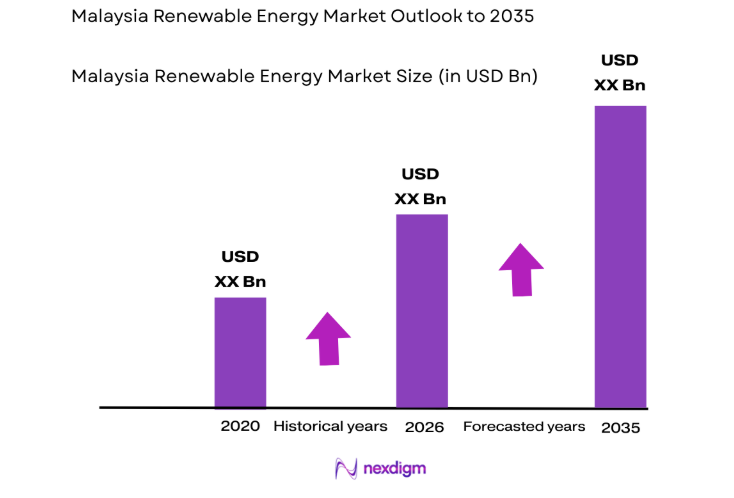
The Malaysia Renewable Energy market is valued at approximately USD ~ billion based on a recent historical assessment, driven by the country’s strong commitment to increasing its renewable energy share. The market is propelled by supportive government policies, the growing demand for sustainable energy solutions, and advancements in renewable technologies. Malaysia’s focus on reducing its carbon emissions and dependence on fossil fuels has spurred investments in various renewable energy sectors, including solar, wind, and hydropower.
Key regions such as Kuala Lumpur, Penang, and Johor Bahru play significant roles in Malaysia’s renewable energy development. Kuala Lumpur is at the forefront of policy-making and investment in renewable energy, while Penang’s industrial base and growing manufacturing sector have led to a rising demand for cleaner energy solutions. Johor Bahru, with its proximity to Singapore, serves as an important hub for large-scale renewable energy projects, contributing to Malaysia’s green energy goals.
Market Segmentation
By Renewable Energy Type
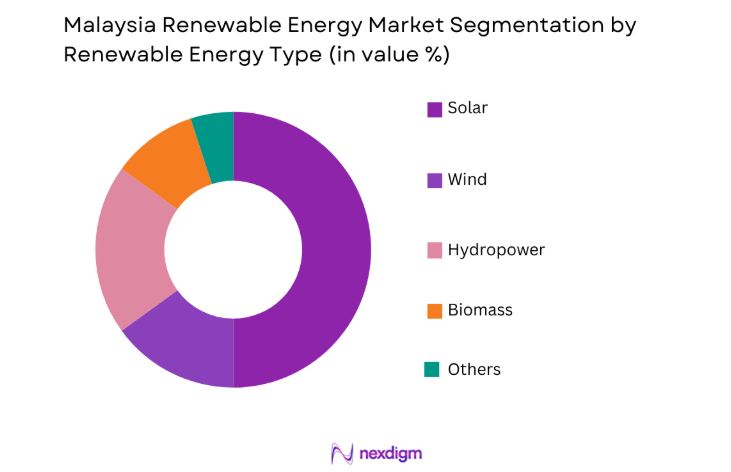
The Malaysia Renewable Energy market is segmented by energy type into solar, wind, hydropower, biomass, and others. Recently, solar energy has dominated the market share due to Malaysia’s abundant sunlight and strong government incentives. The country’s Solar Energy Roadmap and programs like the Net Energy Metering (NEM) scheme have made solar power installations more accessible and affordable, contributing to its dominance. Solar energy is increasingly utilized in residential, commercial, and utility-scale projects, making it the leading renewable energy source in Malaysia.
By Application
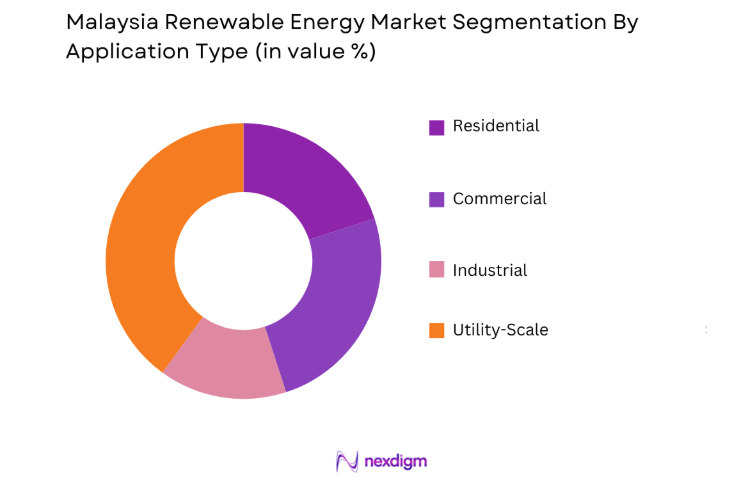
The Malaysia Renewable Energy market is also segmented by application type into residential, commercial, industrial, and utility-scale projects. Recently, utility-scale renewable energy projects have dominated the market share due to Malaysia’s push for large-scale clean energy infrastructure. The government’s ambitious targets for renewable energy generation, coupled with investments in solar and wind power plants, have made utility-scale projects the focal point of the market. These large-scale installations are vital in meeting the national renewable energy goals and ensuring grid stability.
Competitive Landscape
The competitive landscape of the Malaysia Renewable Energy market features a mix of international and local companies. Global players such as First Solar, Vestas, and Siemens Gamesa lead the market with their advanced renewable energy technologies and large-scale installations. Local companies like TNB Renewables and Malakoff Corporation are increasingly involved in solar and wind energy projects, playing a key role in Malaysia’s renewable energy transition. The competition in the market is intensifying as both international and local firms seek to capitalize on government incentives and Malaysia’s renewable energy potential.
| Company Name | Establishment Year | Headquarters | Technology Focus | Market Reach | Key Products | Revenue | Market-Specific Focus |
| First Solar | 1999 | Tempe, USA | ~ | ~ | ~ | ~ | ~ |
| Vestas | 1945 | Aarhus, Denmark | ~ | ~ | ~ | ~ | ~ |
| Siemens Gamesa | 1976 | Zamudio, Spain | ~ | ~ | ~ | ~ | ~ |
| TNB Renewables | 1997 | Kuala Lumpur, Malaysia | ~ | ~ | ~ | ~ | ~ |
| Malakoff Corporation | 1975 | Kuala Lumpur, Malaysia | ~ | ~ | ~ | ~ | ~ |
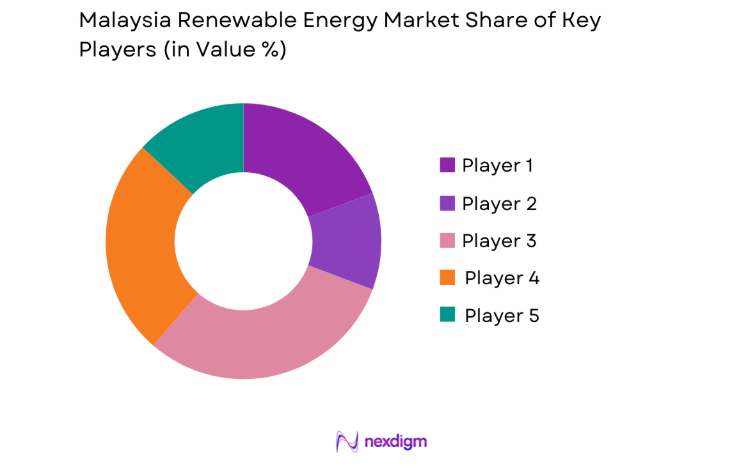
Malaysia Renewable Energy Market Analysis
Growth Drivers
Government Policies and Renewable Energy Targets
The Malaysia Renewable Energy market is significantly driven by the government’s strong focus on increasing the share of renewable energy in the national grid. Malaysia has set ambitious renewable energy targets, aiming for 20% of its energy mix to come from renewable sources by 2025. The government’s commitment to achieving net-zero emissions by 2050 has resulted in the introduction of several policies and incentives that support the development of renewable energy infrastructure. Programs like the Feed-in Tariff (FiT) and Net Energy Metering (NEM) have made solar and other renewable energy sources more affordable for consumers and businesses. As a result, the market for renewable energy solutions is expected to grow rapidly, with both local and foreign investments contributing to this transition.
Technological Advancements and Cost Reductions
Technological advancements in renewable energy technologies, particularly in solar, wind, and energy storage, are playing a critical role in driving the growth of the Malaysia Renewable Energy market. Over the past few years, the cost of solar panels and wind turbines has significantly decreased due to advancements in manufacturing processes and economies of scale. This has made renewable energy more cost-competitive with traditional fossil fuels, encouraging wider adoption across residential, commercial, and industrial sectors. Additionally, innovations in energy storage technologies, such as batteries, have improved the reliability and efficiency of renewable energy systems, further driving their adoption. As technology continues to improve and costs continue to decline, renewable energy will become an increasingly attractive option for Malaysians.
Market Challenges
High Initial Investment Costs
One of the key challenges facing the Malaysia Renewable Energy market is the high initial investment required for the installation of renewable energy systems, particularly solar and wind power plants. Despite the long-term benefits of renewable energy, such as lower operational costs and environmental sustainability, the upfront costs of purchasing and installing solar panels, wind turbines, and energy storage systems remain significant. This is especially true for residential and small commercial installations, where the return on investment can take several years. While government incentives have helped reduce costs, the initial investment required still poses a barrier for many Malaysians. For the market to expand further, there is a need for continued support in the form of subsidies, financing options, and cost-reduction innovations.
Grid Integration and Energy Storage
Another challenge facing the renewable energy market in Malaysia is the integration of renewable energy into the existing grid infrastructure. Malaysia’s electricity grid was primarily designed for centralized power generation from fossil fuels, and adapting it to accommodate decentralized renewable energy sources presents technical and logistical challenges. The intermittent nature of solar and wind energy further complicates grid integration, as energy supply can vary depending on weather conditions and time of day. To address these challenges, energy storage solutions, such as batteries, are essential to store excess energy for later use. However, the high cost of energy storage systems and the lack of infrastructure for large-scale storage solutions are limiting factors in the integration of renewable energy into Malaysia’s grid.
Opportunities
Growth of Solar Power in Residential and Commercial Sectors
The increasing demand for clean energy solutions in Malaysia presents a significant opportunity for the expansion of solar power systems in both residential and commercial sectors. Government incentives, such as the Net Energy Metering (NEM) program, have made it easier and more affordable for homeowners and businesses to install solar panels and reduce their electricity costs. The growing awareness of environmental sustainability and energy independence is driving the adoption of solar energy across residential properties, while businesses are increasingly installing solar systems to reduce operational costs and meet sustainability goals. As Malaysia continues to prioritize renewable energy, the residential and commercial solar market will continue to grow, presenting significant opportunities for solar EPC players.
Expansion of Wind Energy Projects
Wind energy is another key opportunity in the Malaysia Renewable Energy market. Although Malaysia’s wind resources are less favorable than some other countries, there are still untapped opportunities for wind energy development, particularly in coastal regions. The development of small- and medium-scale wind farms, along with government support for renewable energy initiatives, can help diversify the country’s renewable energy mix. As Malaysia seeks to reduce its reliance on fossil fuels and meet its renewable energy targets, wind energy will play an increasingly important role in achieving energy diversification and sustainability. As technological advancements make wind energy more cost-effective, the potential for wind power projects in Malaysia will grow, creating more opportunities for developers and EPC contractors.
Future Outlook
The Malaysia Renewable Energy market is set to experience strong growth over the next five years, driven by continued government support, declining technology costs, and increasing demand for sustainable energy solutions. As the country works toward meeting its renewable energy targets, the adoption of solar, wind, and other clean energy sources will expand across residential, commercial, and industrial sectors. Government incentives and infrastructure investments will further accelerate this transition, positioning Malaysia as a leader in renewable energy adoption in Southeast Asia.
Major Players
- First Solar
- Vestas
- Siemens Gamesa
- TNB Renewables
- Malakoff Corporation
- JinkoSolar
- Canadian Solar
- Longi Green Energy
- REC Group
- Yingli Solar
- First Solar
- Vestas
- Huawei
- Siemens Gamesa
- Enel Green Power
Key Target Audience
- Investments and venture capitalist firms
- Government and regulatory bodies
- Solar panel manufacturers
- Commercial and industrial property owners
- Residential property developers
- Energy storage companies
- Solar EPC solution providers
Research Methodology
Step 1: Identification of Key Variables
Identify key market drivers, barriers, and trends impacting the renewable energy market, including government policies, technological advancements, and energy demand.
Step 2: Market Analysis and Construction
Analyze market data, growth patterns, and government policies to develop a detailed market model for the renewable energy sector in Malaysia.
Step 3: Hypothesis Validation and Expert Consultation
Engage with industry experts, renewable energy developers, and policymakers to validate assumptions and ensure accuracy in market forecasts.
Step 4: Research Synthesis and Final Output
Synthesize the findings into a comprehensive report, providing actionable insights and strategic recommendations for stakeholders in the renewable energy market.

- Executive Summary
- Research Methodology (Definitions, Scope, Industry Assumptions, Market Sizing Approach, Primary & Secondary Research Framework, Data Collection & Verification Protocol, Analytic Models & Forecast Methodology, Limitations & Research Validity Checks)

- Market Definition and Scope
- Value Chain & Stakeholder Ecosystem
- Regulatory / Certification Landscape
- Sector Dynamics Affecting Demand

- Growth Drivers
Government incentives for renewable energy
Declining costs of renewable energy technologies
Increased public and private sector investment - Market Challenges
Infrastructure challenges in rural areas
High initial investment costs
Regulatory and policy uncertainties - Market Opportunities
Expansion of solar and wind energy projects
Adoption of energy storage solutions
Partnerships with international stakeholders - Trends
Increased adoption of hybrid renewable systems
Advancements in energy storage technologies - Government Regulations
Government support for renewable energy projects
Regulations on grid integration and interconnection
Environmental sustainability policies - SWOT Analysis
- Porter’s Five Forces

- By Market Value, 2020-2025
- By Installed Units, 2020-2025
- By Average System Price, 2020-2025
- By System Complexity Tier, 2020-2025

- By System Type (In Value%)
Solar Energy Systems
Wind Energy Systems
Biomass Energy Systems
Geothermal Energy Systems
Hydropower Systems - By Platform Type (In Value%)
Utility-Scale Solar Installations
Residential Solar Installations
Wind Turbine Platforms
Biomass Power Platforms
Geothermal Power Platforms - By Fitment Type (In Value%)
On-grid Renewable Systems
Off-grid Renewable Systems
Hybrid Renewable Systems
Distributed Energy Systems - By End User Segment (In Value%)
Residential Sector
Commercial Sector
Industrial Sector

- Market Share Analysis
- Cross Comparison Parameters (Cost, Efficiency, Performance, Government Support, Market Penetration, Innovation, Integration Potential)
- SWOT Analysis of Key Competitors
- Pricing & Procurement Analysis
- Key Players
First Solar
Sungrow Power Supply Co.
Siemens Gamesa
Canadian Solar
Vestas Wind Systems
Trina Solar
JinkoSolar
Enphase Energy
NextEra Energy
Goldwind
SMA Solar Technology
GE Renewable Energy
BayWa r.e.
Vikram Solar
Longi Green Energy

- Growth of residential sector demand for solar
- Commercial sector investment in energy efficiency
- Industrial sector shift towards renewable energy
- Government policies promoting renewable adoption

- Forecast Market Value, 2026-2035
- Forecast Installed Units, 2026-2035
- Price Forecast by System Tier, 2026-2035
- Future Demand by Platform, 2026-2035


 Request a Sample
 Ask for Customization
 Get a Quote
 Enquire Now