
 Download PDF
Market Overview
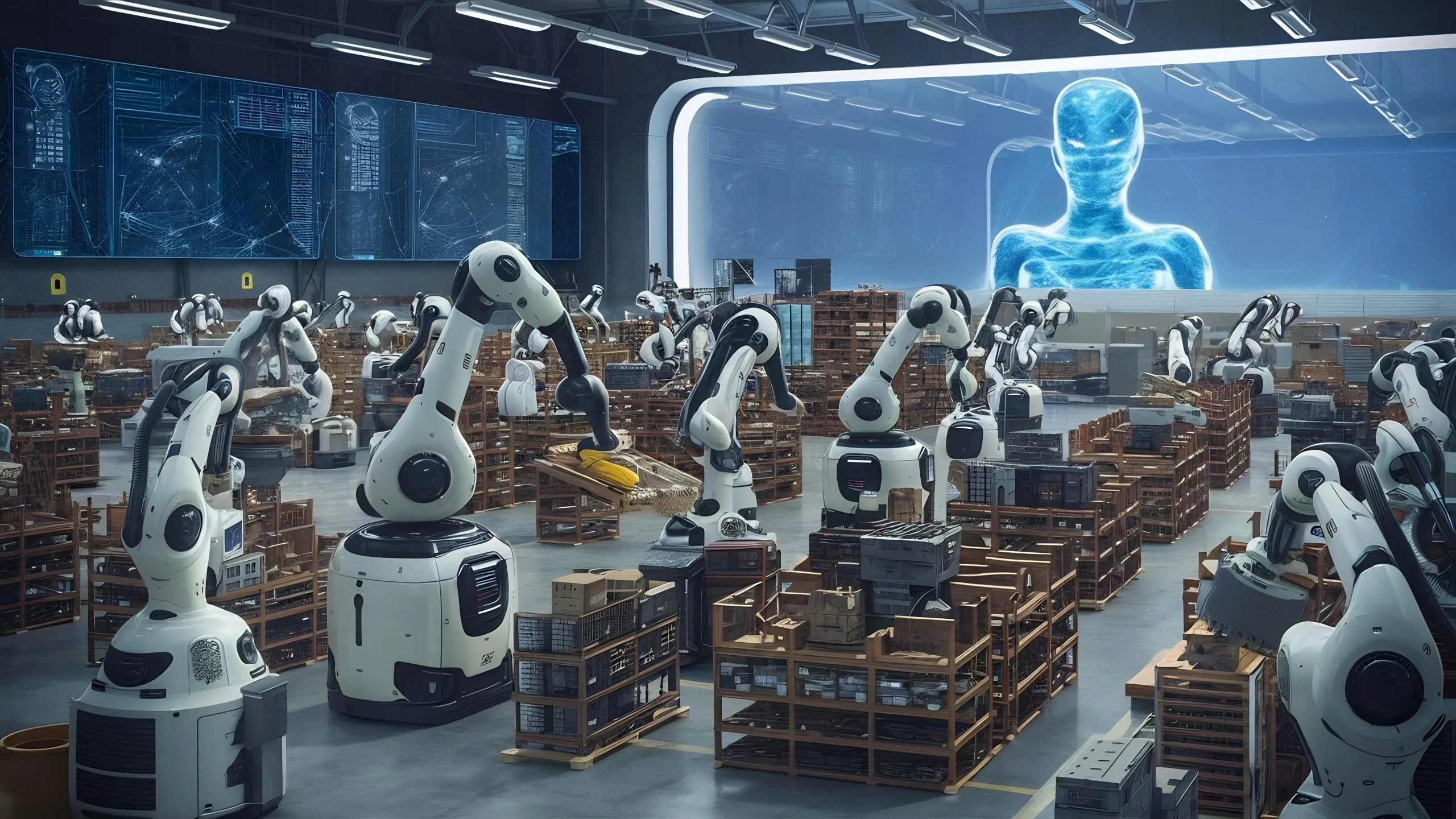
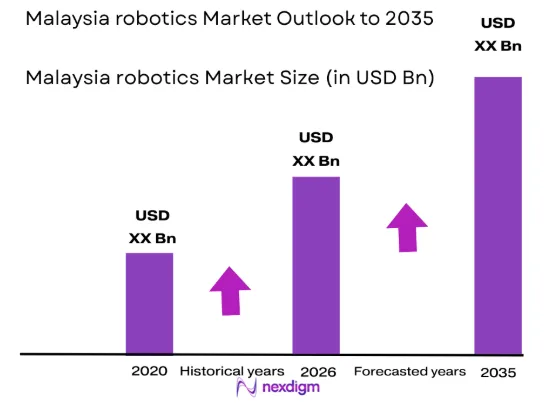
The Malaysia robotics market is valued at USD ~ billion, driven by the increasing demand for automation in industries such as manufacturing, healthcare, and logistics. Technological advancements in artificial intelligence, machine learning, and machine vision, along with the rise of Industry 4.0, are key factors propelling growth. As industries continue to embrace digital transformation and seek enhanced operational efficiency, the demand for robotics solutions is expected to grow, making automation an essential aspect of modern production systems.
Countries such as the United States, Japan, Germany, and China are leading the robotics market. These countries have strong industrial bases, significant investment in research and development, and well-established technological infrastructures. Japan, in particular, stands out for its high rate of industrial automation, while China’s growing manufacturing sector and focus on innovation drive its robotics market. The global nature of the industry further enables cross-border growth and collaboration.
Market Segmentation
By Product Type
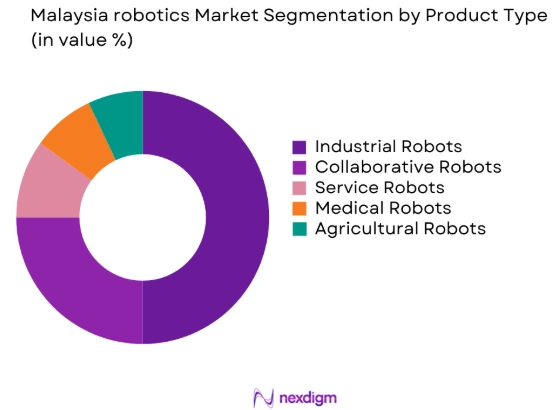
The Malaysia robotics market is segmented by product type into industrial robots, collaborative robots, service robots, medical robots, and agricultural robots. Industrial robots dominate the market due to their widespread use in manufacturing processes, particularly in automotive and electronics industries. These robots enhance productivity by automating repetitive tasks, improving precision, and reducing labor costs. The demand for industrial robots continues to grow as companies increasingly adopt automation to stay competitive in a fast-paced, cost-driven market.
By Platform Type
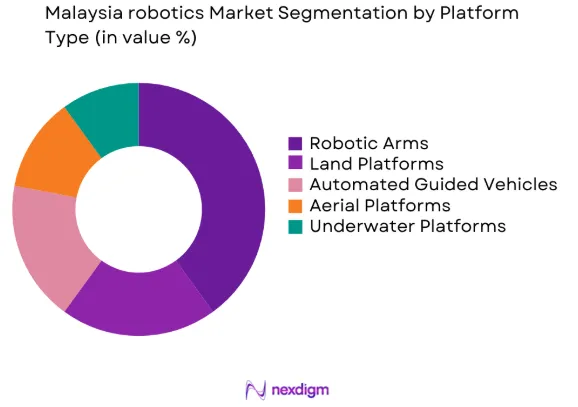
The market is segmented by platform type into land platforms, aerial platforms, underwater platforms, robotic arms, and automated guided vehicles (AGVs). Robotic arms lead the market due to their versatile applications in manufacturing, such as assembly, welding, and material handling. Their precision, flexibility, and ease of integration with other automated systems make them a preferred choice for industrial automation. The ongoing improvements in robotic arm capabilities, such as higher payloads and more intricate movements, contribute to their dominant position.
Competitive Landscape
The robotics market is characterized by strong competition and significant technological innovation, with major players focusing on expanding their product portfolios and exploring new markets. Established companies dominate the market, leveraging advanced R&D capabilities, strong distribution networks, and significant capital investments. The ongoing push towards automation, particularly in manufacturing and logistics, has led to increased demand for robotics solutions, driving both consolidation and the emergence of new players. As the market matures, companies are exploring partnerships, mergers, and acquisitions to enhance their technological capabilities.
| Company Name | Establishment Year | Headquarters | Technology Focus | Market Reach | Key Products | Revenue (USD) | Additional Parameter |
| ABB Robotics | 1988 | Switzerland | ~ | ~ | ~ | ~ | ~ |
| KUKA AG | 1898 | Germany | ~ | ~ | ~ | ~ | ~ |
| FANUC Corporation | 1956 | Japan | ~ | ~ | ~ | ~ | ~ |
| Yaskawa Electric | 1915 | Japan | ~ | ~ | ~ | ~ | ~ |
| Universal Robots | 2005 | Denmark | ~ | ~ | ~ | ~ | ~ |
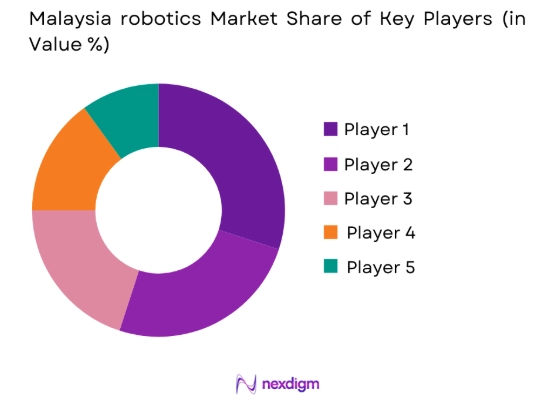
Malaysia robotics Market Analysis
Growth Drivers
Technological Advancements in AI and Robotics
The integration of artificial intelligence (AI) with robotics is revolutionizing the market. AI-enhanced robots can now perform a broader range of tasks, from complex decision-making to adapting to dynamic environments. These advancements are driving the adoption of robotics across various sectors, including manufacturing, healthcare, logistics, and agriculture. The shift towards autonomous systems, powered by machine learning and AI algorithms, is a key growth driver. As the cost of AI technology decreases, robots become more affordable and accessible, enabling widespread adoption across industries. This convergence of AI and robotics not only enhances efficiency and flexibility but also opens up new applications, accelerating growth in the global robotics market.
Government Support for Automation
Governments globally are supporting the robotics market through subsidies, grants, and favorable regulations. Initiatives like Industry 4.0 in Europe, Made in China 2025, and similar programs in North America and Asia are encouraging businesses to invest in robotics and automation. These policies offer financial incentives and promote innovation by establishing a supportive regulatory framework for research and development. As governments increasingly focus on digital transformation and smart manufacturing, the demand for robotics solutions continues to rise. By fostering an environment conducive to technological advancement, these initiatives are accelerating the adoption of robotics and driving the growth of the robotics market worldwide.
Market Challenges
High Initial Investment
A major challenge in the robotics market is the high initial cost of acquiring and implementing robotic systems. While robots provide long-term savings by reducing labor costs and boosting productivity, the upfront investment remains a barrier, especially for small and medium-sized enterprises (SMEs). Despite advancements making automation more affordable, the capital required for complex robotic systems is still substantial. This financial hurdle slows adoption, particularly in developing regions with limited financial resources. The high cost of both purchasing and integrating robots into existing processes deters many businesses from embracing automation, delaying market growth and limiting widespread adoption in certain sectors.
Integration Complexity and Skills Gap
Integrating robotics systems into existing production environments is a complex and time-consuming process. Many companies face technical challenges, especially when working with legacy systems that are not designed for automation. Additionally, there is a shortage of skilled workers capable of designing, programming, and maintaining these advanced robotic systems. The lack of proper training and expertise in robotics exacerbates the problem, hindering market growth. Companies require a highly skilled workforce to successfully implement and maintain robotic technologies. This skills gap slows the adoption of robotics, particularly in industries where automation is key to improving efficiency and staying competitive in a rapidly evolving market.
Opportunities
Robotics as a Service (RaaS)
Robotics as a Service (RaaS) is an emerging model that is expected to provide significant growth opportunities for the robotics market. With RaaS, businesses can lease robotic systems instead of making large upfront investments, significantly lowering the cost barrier to entry. This model is particularly attractive to small and medium-sized businesses (SMBs) that cannot afford high capital expenditures but still seek the operational benefits of automation. The subscription-based model offers flexibility, allowing companies to scale their robotic systems based on demand, driving adoption in industries like logistics, healthcare, and retail. As more companies move towards cloud computing and digital services, RaaS is expected to play a crucial role in expanding the market.
Expansion of Collaborative Robotics
Collaborative robots (cobots) are designed to work alongside humans in shared workspaces, offering enhanced safety features, flexibility, and ease of use. Their adoption is growing, particularly in small and medium-sized manufacturing environments where space and cost constraints previously limited the use of traditional industrial robots. Cobots are ideal for applications requiring direct human interaction, such as assembly, packaging, and quality control. Their affordability and continuous advancements in technology are making them more accessible to businesses across various industries. As a result, the demand for cobots is expected to rise, driving further growth in the robotics market by enabling more businesses to automate efficiently and cost-effectively.
Future Outlook
The robotics market is poised for robust growth over the next five years, driven by continued technological innovations in AI and automation. The widespread adoption of robots across industries such as manufacturing, healthcare, and logistics will be bolstered by government incentives and the growing demand for operational efficiency. The expansion of Robotics as a Service (RaaS) and the increasing integration of collaborative robots will further fuel market growth. As technology evolves and costs decrease, robotics will become an essential component of modern business operations worldwide.
Major Players
- ABB Robotics
- KUKA AG
- FANUC Corporation
- Yaskawa Electric
- Universal Robots
- Kawasaki Robotics
- Mitsubishi Electric
- Denso Robotics
- Bosch Rexroth
- Comau
- Robot System Products
- StaubliRobotics
- Siemens AG
- Teradyne
- Rethink Robotics
Key Target Audience
- Investments and venture capitalist firms
- Government and regulatory bodies
- Manufacturing companies
- Logistics and warehouse management firms
- Healthcare providers
- Research and development organizations
- Automation technology suppliers
- Robotics system integrators
Research Methodology
Step 1: Identification of Key Variables
We identify the key variables impacting the market, including technological trends, consumer behavior, and regulatory factors.
Step 2: Market Analysis and Construction
We build the market model using data collected from both primary and secondary sources, providing a detailed view of current and future market trends.
Step 3: Hypothesis Validation and Expert Consultation
We validate our hypotheses through expert consultations and feedback from key stakeholders within the robotics industry.
Step 4: Research Synthesis and Final Output
We synthesize the data into actionable insights, ensuring a comprehensive and well-rounded market report.

- Executive Summary
- Research Methodology (Definitions, Scope, Industry Assumptions, Market Sizing Approach, Primary & Secondary Research Framework, Data Collection & Verification Protocol, Analytic Models & Forecast Methodology, Limitations & Research Validity Checks)

- Market Definition and Scope
- Value Chain & Stakeholder Ecosystem
- Regulatory / Certification Landscape
- Sector Dynamics Affecting Demand
- Strategic Initiatives & Infrastructure Growth

- Growth Drivers
Increased Government Investment in Automation
Technological Advancements in Robotics
Rising Demand for Labor Efficiency
Industry 4.0 and Smart Manufacturing Initiatives
Adoption of Robotics in Healthcare and Agriculture - Market Challenges
High Capital Investment in Robotics Systems
Technical Skill Gaps in Robotics Workforce
Regulatory and Compliance Barriers
Integration and Interoperability Issues
Economic Uncertainties Impacting Investments - Market Opportunities
Robotics as a Service (RaaS) Expansion
Technological Advancements in AI and Machine Learning
Increasing Demand for Autonomous Systems - Trends
Growth in Collaborative Robotics
Advancements in Robotics AI Integration
Rise in Robotics in Small and Medium Enterprises - Government Regulations
- SWOT Analysis of Key Competitors
- Porter’s Five Forces

- By Market Value, 2020-2025
- By Installed Units, 2020-2025
- By Average System Price, 2020-2025
- By System Complexity Tier, 2020-2025

- By System Type (In Value%)
Industrial Robots
Collaborative Robots
Service Robots
Medical Robots
Agricultural Robots - By Platform Type (In Value%)
Land Platforms
Aerial Platforms
Underwater Platforms
Robotic Arms
Automated Guided Vehicles - By Fitment Type (In Value%)
On-premise Solutions
Cloud-based Solutions
Hybrid Solutions
Modular Solutions
Integrated Solutions - By End User Segment (In Value%)
Manufacturing
Healthcare
Agriculture
Logistics
Retail - By Procurement Channel (In Value%)
Direct Procurement
Government Tenders
Private Sector Procurement
Online Bidding Platforms
Third-party Distributors

- Market Share Analysis
- Cross Comparison Parameters (System Type, Platform Type, Procurement Channel, End User Segment, Fitment Type, Application, Robot Payload, Geographic Presence, Automation Level, Integration Complexity)
- SWOT Analysis of Key Competitors
- Pricing & Procurement Analysis
- Key Players
ABB Robotics
KUKA AG
Yaskawa Electric Corporation
Fanuc Corporation
Universal Robots
Honda Robotics
Rethink Robotics
Boston Dynamics
Denso Robotics
Intuitive Surgical
Autonomous Solutions
Teradyne
FANUC Robotics
RoboSense
Omron Corporation

- Growing Adoption of Robotics in Manufacturing
- Healthcare Providers Integrating Robotics for Surgery
- Robotics in Agriculture for Precision Farming
- Retailers Adopting Robots for Customer Service

- Forecast Market Value, 2026-2035
- Forecast Installed Units, 2026-2035
- Price Forecast by System Tier, 2026-2035
- Future Demand by Platform, 2026-2035


 Request a Sample
 Ask for Customization
 Get a Quote
 Enquire Now