

 Download PDF
 Download PDF
Market Overview
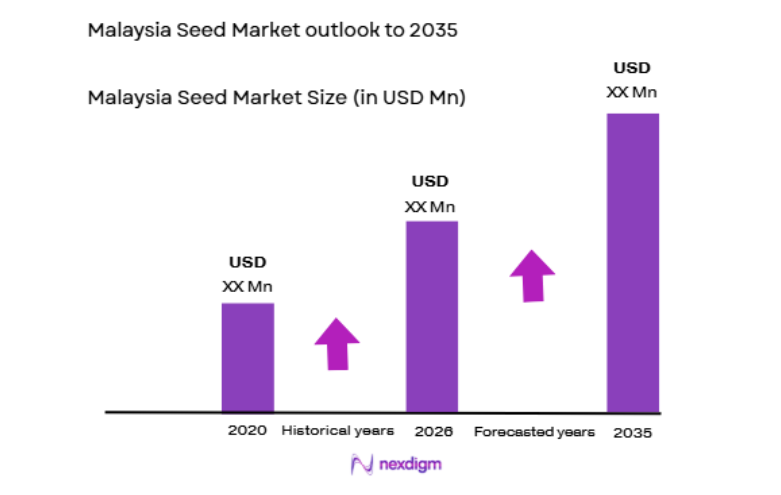
The Malaysia seed market is valued at USD ~ million based on a recent historical assessment. This growth is driven by the increasing adoption of advanced seed technologies, including hybrid and genetically modified (GM) seeds, which are crucial for improving crop yield and resilience to environmental challenges. Additionally, government initiatives aimed at enhancing food security and supporting the agricultural sector, coupled with rising domestic demand for locally grown produce, are accelerating the market’s expansion.
The dominant regions in the Malaysia seed market include Selangor, Perak, and Penang, which are key agricultural hubs. These areas benefit from strong infrastructure, government-backed programs, and proximity to research centers that foster innovation in seed development. The agricultural activities in these regions are supported by advanced farming technologies and strategic collaborations between the private sector and government agencies, making them central to Malaysia’s agricultural production.
Market Segmentation
By Product Type
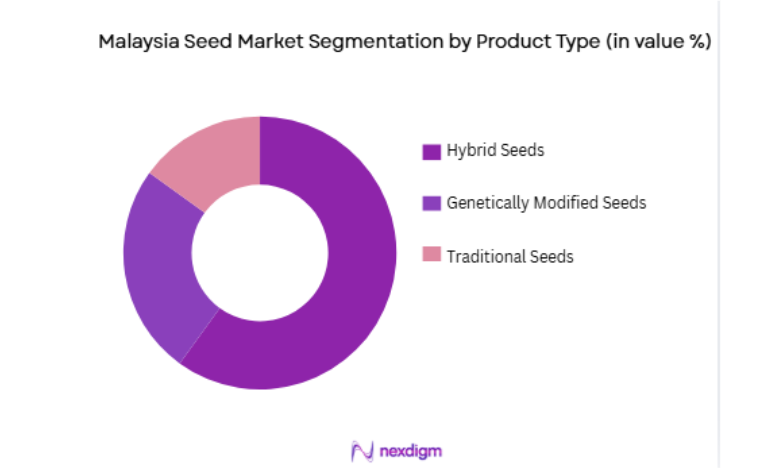
The Malaysia seed market is segmented by product type into hybrid seeds, genetically modified (GM) seeds, and traditional seeds. Hybrid seeds dominate the market due to their higher yield potential, improved resistance to pests and diseases, and adaptability to the Malaysian climate. Farmers increasingly prefer hybrid seeds as they help to maximize agricultural output, improve crop quality, and ensure higher profitability. With the government’s support for increasing food production efficiency, the demand for hybrid seeds continues to rise, especially for staple crops such as rice, maize, and vegetables.
By Seed Category
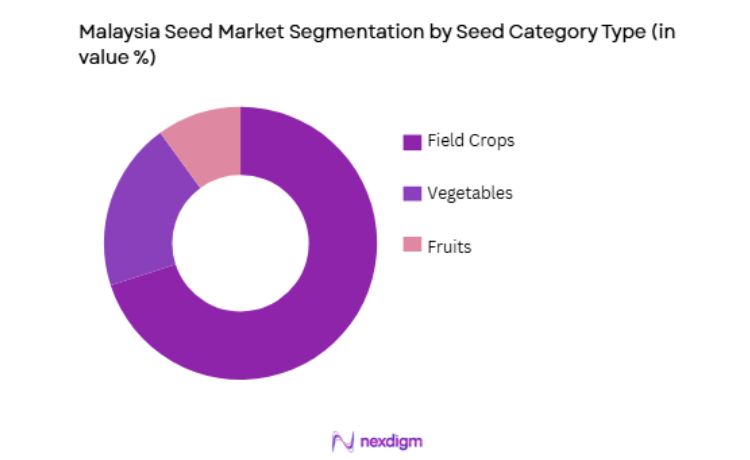
The market is also segmented by seed category into field crops, vegetables, and fruits. Field crops hold the largest market share due to the significant importance of crops like rice, maize, and oilseeds in Malaysia’s agriculture sector. These crops are fundamental to food security and form the backbone of agricultural production in the country. With increasing domestic demand and favorable climate conditions, the demand for field crop seeds continues to dominate, supported by government policies and initiatives that focus on boosting the production of staple crops for both domestic consumption and export.
Competitive Landscape
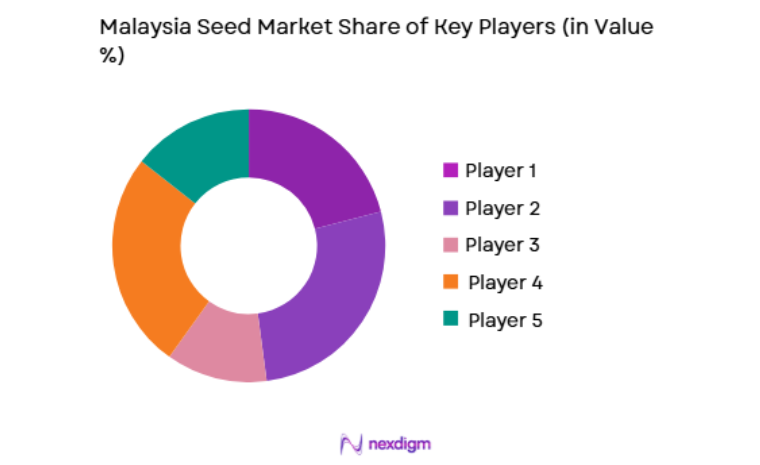
The Malaysia seed market is competitive, with both local and multinational companies actively participating. Local players are strengthening their positions by focusing on region-specific seeds, while international firms bring advanced seed technologies and global expertise. The market is marked by consolidation as larger companies acquire smaller firms to expand their portfolios and reach. Companies are also focusing on R&D to develop seeds tailored to local environmental conditions and agricultural practices. Government initiatives and partnerships with private players are further accelerating the market’s growth.
| Company Name | Establishment Year | Headquarters | Technology Focus | Market Reach | Key Products | Revenue (USD) | R&D Investment (%) |
| Bayer CropScience | 2002 | Germany | ~ | ~ | ~ | ~ | ~ |
| Syngenta | 2000 | Switzerland | ~ | ~ | ~ | ~ | ~ |
| East-West Seed | 1982 | Netherlands | ~ | ~ | ~ | ~ | ~ |
| Mahyco | 1962 | India | ~ | ~ | ~ | ~ | ~ |
| Syngenta Malaysia | 1996 | Malaysia | ~ | ~ | ~ | ~ | ~ |
Malaysia Seed Market Analysis
Growth Drivers
Government Initiatives to Boost Agricultural Productivity
The Malaysian government’s focus on boosting agricultural productivity and enhancing food security is a key growth driver in the seed market. Through policies like the National Agro-Food Policy and initiatives aimed at modernizing agriculture, the government has created a favorable environment for the development and adoption of high-quality seeds. These policies encourage the use of advanced seed technologies such as hybrid and GM seeds to increase crop yield and resistance to diseases. The government also offers financial support to farmers for seed procurement and farming technologies, driving demand for better seed varieties. As Malaysia seeks to enhance its domestic agricultural output to reduce dependency on imports, the seed market stands to benefit from this strong governmental push towards self-sufficiency and sustainability in food production.
Technological Advancements in Seed Development
Technological innovations in seed development have become a major growth driver for the Malaysia seed market. Advances in biotechnology and hybridization techniques have led to the development of high-performance seeds that are better suited to the diverse agricultural conditions found in Malaysia. Hybrid seeds, which combine traits from different plant varieties, offer higher yields, better pest resistance, and greater resilience to environmental stresses, making them increasingly popular among Malaysian farmers. In addition to hybrid seeds, genetically modified (GM) seeds that offer enhanced disease resistance and improved nutritional content are gaining traction in the market. As R&D in the seed sector continues to improve, the availability of innovative seed varieties that meet the evolving demands of farmers and consumers will further accelerate market growth.
Market Challenges
Climate Change and Environmental Variability
Climate change and environmental variability pose significant challenges to the Malaysian seed market. Malaysia’s tropical climate is prone to seasonal changes, including unpredictable rainfall patterns, temperature fluctuations, and increasing frequency of extreme weather events such as floods and droughts. These conditions create uncertainty in crop production and can affect the performance of seeds, particularly traditional varieties that are not engineered to withstand environmental stress. As farmers increasingly turn to hybrid and GM seeds for their improved resistance to environmental factors, there is a growing need for further innovation in seed technologies that can adapt to changing climate conditions. While advancements in seed development offer some solutions, the continued effects of climate change present a persistent challenge for ensuring stable agricultural productivity.
High Cost of Advanced Seed Varieties
The high cost of advanced seed varieties, such as hybrid and genetically modified (GM) seeds, is another major challenge facing the Malaysian seed market. While these seeds offer numerous benefits, including higher yields and better disease resistance, their premium pricing can be a barrier for smaller-scale farmers and those operating in more rural areas. Although the government provides subsidies and support for seed purchases, the cost of these advanced varieties remains a concern for many farmers who are looking to maximize their agricultural output while minimizing costs. As such, there is a need for seed companies to focus on developing cost-effective solutions that balance quality and affordability, particularly for the large proportion of smallholder farmers in Malaysia.
Opportunities
Expansion of Sustainable Farming Practices
The increasing demand for sustainable and organic produce presents a significant opportunity for the Malaysian seed market. As consumers become more conscious of the environmental and health impacts of the food they consume, there is a growing shift towards organic farming and the use of non-GMO crops. This trend has created a demand for organic seeds and non-GMO varieties, providing seed companies with an opportunity to expand their product offerings. The Malaysian government has also been promoting sustainable farming practices, which further supports the demand for seeds that align with organic and eco-friendly production systems. As the market for organic and sustainably produced food continues to grow, the seed market can capitalize on this shift by developing and offering organic seed varieties tailored to local agricultural conditions.
Growth of Agri-Tech Solutions in Seed Development
The rise of agri-tech solutions presents a promising opportunity for the Malaysia seed market. Technologies such as precision farming, data-driven agriculture, and automated systems are revolutionizing the way crops are cultivated and managed. These innovations are enabling farmers to optimize their use of resources such as water, nutrients, and labor, leading to more efficient and sustainable farming practices. Seed companies that align their products with these technological advancements have the opportunity to expand their market share by offering seeds that are compatible with precision farming systems and other agri-tech solutions. The increasing integration of technology into agriculture provides a fertile ground for the seed market to grow, as farmers seek high-quality seeds that support modern farming techniques.
Future Outlook
The future outlook for the Malaysia seed market is positive, driven by government support for agricultural innovation, technological advancements in seed development, and increasing demand for sustainable farming practices. The adoption of hybrid and genetically modified seeds will continue to expand as farmers seek to increase yields and reduce environmental risks. The rise of agri-tech solutions and the push for organic farming will provide new opportunities for seed companies to innovate and meet the changing needs of the agricultural sector. With continued investment in research and development, the Malaysia seed market is well-positioned for steady growth in the coming years.
Major Players
- Bayer CropScience
- Syngenta
- East-West Seed
- Mahyco
- Monsanto
- Limagrain
- SeedWorks International
- Kaveri Seed
- Dow AgroSciences
- DuPont Pioneer
- Sakata Seed Corporation
- Rasi Seeds
- Krishi Rasayan Exports
- Novozymes
- Agroviet
Key Target Audience
- Investments and venture capitalist firms
- Government and regulatory bodies
- Large-scale farmers and agricultural enterprises
- Seed distributors and retailers
- Agri-tech companies
- Agricultural cooperatives
- Food processing companies
- Research and development organizations
Research Methodology
Step 1: Identification of Key Variables
Identifying the key variables such as technological trends, demand for specific seed types, and regulatory influences that impact the seed market.
Step 2: Market Analysis and Construction
Conducting an analysis of the market size, growth trends, and segment dynamics to build a comprehensive market model.
Step 3: Hypothesis Validation and Expert Consultation
Validating hypotheses with experts, industry stakeholders, and government representatives to ensure the accuracy of market insights.
Step 4: Research Synthesis and Final Output
Synthesizing the research findings into a detailed report that provides actionable insights and recommendations for market stakeholders.

- Executive Summary
- Research Methodology (Definitions, Scope, Industry Assumptions, Market Sizing Approach, Primary & Secondary Research Framework, Data Collection & Verification Protocol, Analytic Models & Forecast Methodology, Limitations & Research Validity Checks)

- Market Definition and Scope
- Value Chain & Stakeholder Ecosystem
- Regulatory / Certification Landscape
- Sector Dynamics Affecting Demand

- Growth Drivers
Government Support for Agricultural Development
Technological Advancements in Seed Production
Increasing Demand for High-Yield Varieties - Market Challenges
Climate Change and Weather Variability
Supply Chain and Distribution Issues
Regulatory and Certification Barriers - Market Opportunities
Expanding Organic Farming Trends
Rising Investment in Agricultural Research
Growing Demand for Bio-based Seeds - Trends
Adoption of Precision Farming Technologies
Shift Toward Sustainable Agricultural Practices
Integration of Digital Platforms for Seed Distribution - Government regulations
- SWOT analysis
- Porters 5 forces

- By Market Value, 2020-2025
- By Installed Units, 2020-2025
- By Average System Price, 2020-2025
- By System Complexity Tier, 2020-2025

- By System Type (In Value%)
Hybrid Seeds
Open Pollinated Seeds
Genetically Modified Seeds
Certified Seeds
Vegetable Seeds - By Platform Type (In Value%)
Agricultural Land Platforms
Greenhouse Platforms
Hydroponic Platforms
Vertical Farming Platforms
Aquaponic Platforms - By Fitment Type (In Value%)
Field Application
Greenhouse Application
Hydroponic Application
Urban Farming Application
Commercial Application - By End User Segment (In Value%)
Farmers
Agricultural Cooperatives
Government Organizations
Private Sector Companies
Research & Development Institutes - By Procurement Channel (In Value%)
Direct Procurement
Retail Sales
Online Sales

- Market Share Analysis
- Cross Comparison Parameters (System Type, Platform Type, Procurement Channel, EndUser Segment, Fitment Type, Seed Variety, Technological Advancements, Distribution Channels, Regional Market Dynamics, Production and Storage Capacity)
- SWOT Analysis of Key Competitors
- Pricing & Procurement Analysis
- Key Players
Bayer CropScience
Syngenta Malaysia
Monsanto
Vietseed
Rongsheng Group
Malaysia Seed Corporation
Agritech Malaysia
Thang Loi Seed
Daewoo Seeds
Khang Minh Seed
Malaysian Agricultural Science Institute
Vinasoy
Herbicide Seeds
VietGAP Seed Company
Hoang Anh Gia Lai Group

- Increasing Demand from Small-scale Farmers
- Large Corporations Investing in Seed Production
- Government Initiatives to Support Agricultural Growth
- Focus on Sustainable and Organic Farming Practices

- Forecast Market Value, 2026-2035
- Forecast Installed Units, 2026-2035
- Price Forecast by System Tier, 2026-2035
- Future Demand by Platform, 2026-2035


 Request a Sample
 Ask for Customization
 Get a Quote
 Enquire Now