

 Download PDF
 Download PDF
Market Overview
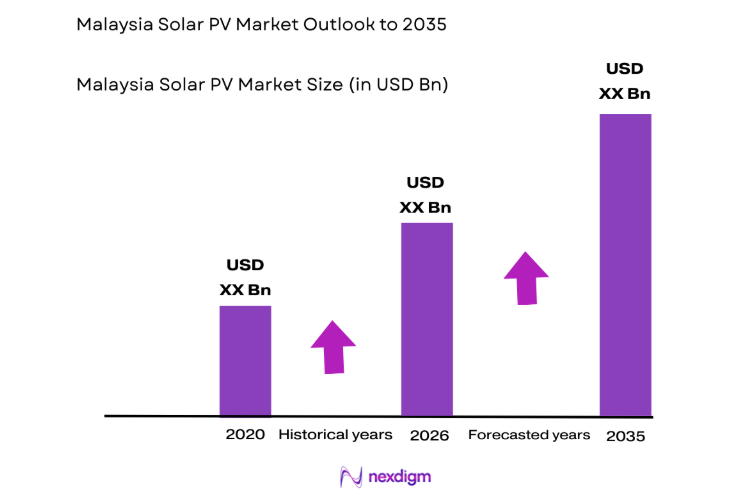
The Malaysia Solar PV market is valued at approximately USD ~ billion based on a recent historical assessment, driven by the increasing demand for renewable energy solutions, particularly solar power. Malaysia’s geographical location, abundant sunlight, and government policies supporting solar energy adoption are key factors contributing to the market’s growth. The expansion of both residential and industrial solar power installations is further bolstering the sector, supported by declining solar panel costs and technological advancements in energy storage systems.
Key cities such as Kuala Lumpur, Penang, and Johor Bahru are central to the growth of Malaysia’s Solar PV market. Kuala Lumpur, as the political and economic hub, leads in the adoption of solar energy technologies, driven by both residential and commercial installations. Penang’s thriving industrial base is adopting solar energy solutions for manufacturing facilities, while Johor Bahru, with its proximity to Singapore, is becoming a regional center for renewable energy initiatives. These cities drive demand for solar PV systems in both residential and industrial sectors.
Market Segmentation
By Product Type
The Malaysia Solar PV market is segmented by product type into solar panels, inverters, batteries, and others. Recently, solar panels have dominated the market share due to their central role in harnessing solar energy. With decreasing costs and technological improvements, solar panels have become increasingly affordable, making solar energy accessible to a broader range of consumers. The growing demand for both residential and commercial installations, as well as government incentives to promote clean energy adoption, has driven the widespread use of solar panels. As Malaysia continues to invest in renewable energy, solar panels remain the key component for harnessing solar power effectively.

By Application Type
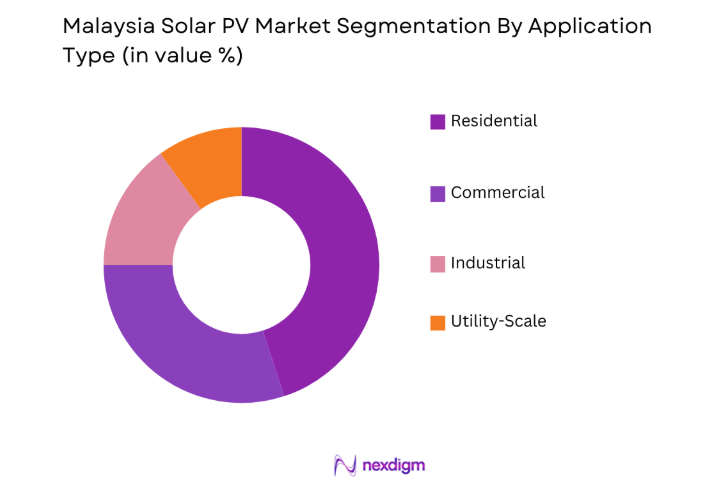
The Malaysia Solar PV market is also segmented by application type into residential, commercial, industrial, and utility-scale. Residential applications hold the largest market share due to the increasing adoption of solar PV systems in homes across Malaysia. Government incentives, such as the Net Energy Metering (NEM) scheme, have made it more affordable for homeowners to install solar systems. The push for energy independence, along with growing concerns over electricity costs and environmental sustainability, is encouraging residential consumers to adopt solar energy solutions. As residential solar PV installations become more common, this sector is expected to continue driving market growth.
Competitive Landscape
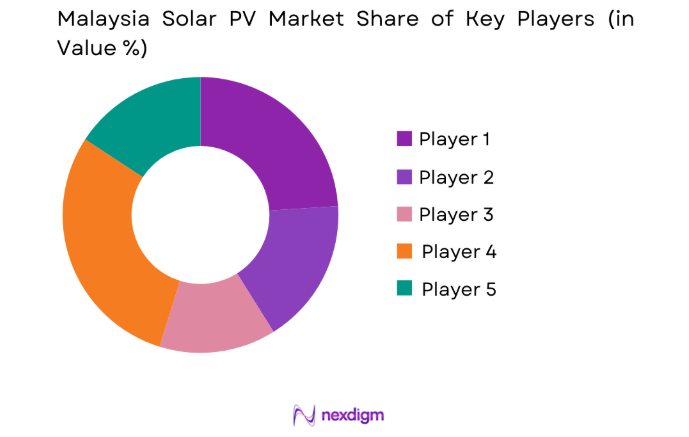
The competitive landscape of the Malaysia Solar PV market is characterized by the presence of both local and international players, with key industry leaders such as First Solar, JinkoSolar, and Trina Solar dominating the market. These global players provide high-efficiency solar panels and related components, which are essential for large-scale solar projects. Local companies such as Solarvest and Gading Kencana are making significant strides in the market by providing integrated solar solutions, including installation and maintenance services. As the market matures, there is an increasing trend of partnerships and collaborations between global and local players to expand solar energy adoption across residential, commercial, and industrial sectors.
| Company Name | Establishment Year | Headquarters | Technology Focus | Market Reach | Key Products | Revenue | Industry-Specific Focus |
| First Solar | 1999 | Tempe, USA | ~ | ~ | ~ | ~ | ~ |
| JinkoSolar | 2006 | Shanghai, China | ~ | ~ | ~ | ~ | ~ |
| Trina Solar | 1997 | Changzhou, China | ~ | ~ | ~ | ~ | ~ |
| Solarvest | 2012 | Petaling Jaya, Malaysia | ~ | ~ | ~ | ~ | ~ |
| Gading Kencana | 1994 | Shah Alam, Malaysia | ~ | ~ | ~ | ~ | ~ |
Malaysia Solar PV Market Analysis
Growth Drivers
Government Policies and Incentives
The Malaysia Solar PV market is significantly driven by government policies and incentives that promote the adoption of solar energy. The Net Energy Metering (NEM) program, introduced by the government, allows residential, commercial, and industrial users to offset their electricity bills by generating their own solar power and feeding excess energy back to the grid. This policy has made solar energy an attractive option for consumers seeking to reduce electricity costs while contributing to environmental sustainability. Additionally, the government’s renewable energy plans and green initiatives, such as the Renewable Energy Transition Plan, are driving investments in solar PV systems. These favorable policies and financial incentives are playing a key role in accelerating the adoption of solar energy in Malaysia, further fueling the market’s growth.
Technological Advancements in Solar Power
Technological advancements in solar power systems are another major growth driver for the Malaysia Solar PV market. The efficiency of solar panels has increased significantly over the past few years, leading to greater energy generation per square meter of panel. Improvements in energy storage solutions, such as lithium-ion batteries, have further boosted the adoption of solar PV systems, enabling households and businesses to store excess energy for use during non-sunny periods. As technology continues to evolve, the costs of solar panels and energy storage systems are expected to decline, making solar energy more affordable and accessible. These technological advancements, coupled with the continued push for green energy solutions, are driving the growth of the solar PV market in Malaysia.
Market Challenges
High Initial Installation Costs
Despite the long-term savings associated with solar energy, the high initial installation costs of solar PV systems remain a significant barrier for many consumers, particularly in residential markets. While the price of solar panels has decreased over time, the upfront costs for installation, including inverters, batteries, and other necessary components, can still be prohibitive. For residential customers, the financial burden of purchasing and installing a solar PV system may outweigh the immediate benefits, especially for households with lower disposable incomes. Although government incentives such as the NEM program help alleviate some of these costs, many consumers are still reluctant to invest in solar energy due to the high initial outlay, limiting the widespread adoption of solar PV systems.
Dependence on Imported Materials and Supply Chain Issues
Another challenge facing the Malaysia Solar PV market is the dependence on imported materials, particularly solar panels and related components, which are primarily sourced from countries like China. This reliance on international suppliers makes the market vulnerable to supply chain disruptions, fluctuating material costs, and global trade uncertainties. Additionally, the limited local manufacturing capabilities for key solar components such as high-efficiency solar panels and inverters mean that Malaysia’s solar PV market is dependent on the price fluctuations of imported goods. This lack of local production capacity can also slow the development of a sustainable solar energy ecosystem within the country and contribute to higher overall costs.
Opportunities
Expansion of Solar Power in Industrial Applications
One of the key opportunities for the Malaysia Solar PV market is the growing adoption of solar energy solutions in industrial applications. With the industrial sector accounting for a significant portion of energy consumption in Malaysia, there is increasing pressure on businesses to reduce energy costs and meet sustainability goals. Solar PV systems offer an attractive solution for industrial facilities looking to lower electricity expenses, improve energy efficiency, and reduce carbon footprints. By installing large-scale solar power systems, manufacturers, warehouses, and commercial buildings can generate their own electricity and offset energy costs. The rise of energy-intensive industries in Malaysia, along with supportive government policies, presents a major opportunity for the solar PV sector to expand in the industrial market.
Growth in Energy Storage Solutions
The increasing need for reliable, clean, and off-grid power in Malaysia presents significant opportunities for the energy storage market, especially in combination with solar PV systems. The development of energy storage technologies, such as advanced batteries and smart grids, is making it easier for consumers and businesses to store excess solar energy and use it when demand is high or during power outages. As solar power adoption grows, so does the need for efficient energy storage solutions that can store the electricity generated during peak sun hours for use during the night or cloudy periods. This synergy between solar energy and energy storage offers substantial growth potential for the Malaysian Solar PV market, particularly in remote areas and industrial sectors where energy reliability is critical.
Future Outlook
The Malaysia Solar PV market is expected to experience steady growth in the next five years, driven by the increasing demand for renewable energy solutions, government support for solar energy adoption, and ongoing technological advancements. The continued reduction in solar panel costs and the growth of energy storage systems will make solar energy more accessible and affordable for a wider range of consumers. As Malaysia strives to meet its renewable energy targets, solar PV adoption will become a central part of the country’s energy transition, with residential, commercial, and industrial sectors all benefiting from the expansion of solar technologies.
Major Players
- First Solar
- JinkoSolar
- Trina Solar
- Solarvest
- Gading Kencana
- LONGi Solar
- Canadian Solar
- SunPower
- SMA Solar Technology
- REC Group
- Q CELLS
- Risen Energy
- JA Solar
- Yingli Green Energy
- GT Advanced Technologies
Key Target Audience
- Investments and venture capitalist firms
- Government and regulatory bodies
- Solar panel manufacturers
- Energy providers
- Residential property developers
- Commercial and industrial property owners
- Renewable energy solution providers
Research Methodology
Step 1: Identification of Key Variables
Identify key variables affecting the Solar PV market, including technological advancements, government policies, market trends, and economic conditions.
Step 2: Market Analysis and Construction
Analyze historical data, current trends, and growth patterns to develop a comprehensive market model based on real-world industry dynamics.
Step 3: Hypothesis Validation and Expert Consultation
Consult with industry experts, stakeholders, and solar energy providers to validate hypotheses and ensure the accuracy of research findings.
Step 4: Research Synthesis and Final Output
Synthesize the research findings into a detailed market report that includes actionable insights, strategic recommendations, and forecasts for stakeholders.

- Executive Summary
- Research Methodology (Definitions, Scope, Industry Assumptions, Market Sizing Approach, Primary & Secondary Research Framework, Data Collection & Verification Protocol, Analytic Models & Forecast Methodology, Limitations & Research Validity Checks)

- Market Definition and Scope
- Value Chain & Stakeholder Ecosystem
- Regulatory / Certification Landscape
- Sector Dynamics Affecting Demand

- Growth Drivers
Government support for renewable energy
Technological advancements in solar panel efficiency
Growing demand for sustainable energy solutions - Market Challenges
High initial investment costs
Intermittency and storage challenges
Regulatory barriers and policy uncertainties - Market Opportunities
Rural electrification using solar power
Expansion of the utility-scale solar market
Development of solar power storage systems - Trends
Growth in hybrid solar power systems
Advancements in solar panel efficiency and energy storage - Government Regulations
Renewable energy targets and incentives
Grid connection standards for solar systems
Environmental regulations for solar PV installations - SWOT Analysis
- Porter’s Five Forces

- By Market Value, 2020-2025
- By Installed Units, 2020-2025
- By Average System Price, 2020-2025
- By System Complexity Tier, 2020-2025

- By System Type (In Value%)
Photovoltaic Solar Panels
Solar Inverters
Solar Batteries
Solar Trackers
Solar Modules - By Platform Type (In Value%)
Residential Solar Systems
Commercial Solar Systems
Utility-scale Solar Systems
Off-grid Solar Systems - By Fitment Type (In Value%)
Roof-mounted Solar Systems
Ground-mounted Solar Systems
Building-integrated Photovoltaics
Floating Solar Systems - By End User Segment (In Value%)
Residential
Commercial
Industrial

- Market Share Analysis
- Cross Comparison Parameters (Technology, Efficiency, Cost, Storage Solutions, Installation Time, Market Presence, Government Support)
- SWOT Analysis of Key Competitors
- Pricing & Procurement Analysis
- Key Players
First Solar
Sungrow Power Supply Co., Ltd.
JA Solar Technology Co. Ltd.
Trina Solar Limited
Canadian Solar Inc.
LONGi Green Energy Technology Co. Ltd.
Hanwha Q CELLS
JA Solar
REC Group
Risen Energy Co., Ltd.
GCL-Poly Energy Holdings Limited
Solaria Energia y Medio Ambiente
SMA Solar Technology AG
Vestas Wind Systems
Siemens Gamesa Renewable Energy

- Residential users seeking energy independence
- Commercial sectors investing in renewable energy
- Government projects promoting sustainable energy solutions

- Forecast Market Value, 2026-2035
- Forecast Installed Units, 2026-2035
- Price Forecast by System Tier, 2026-2035
- Future Demand by Platform, 2026-2035


 Request a Sample
 Ask for Customization
 Get a Quote
 Enquire Now