

 Download PDF
 Download PDF
Market Overview
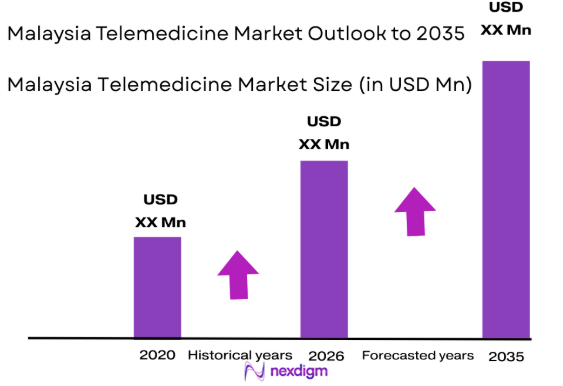
The Malaysia telemedicine market is experiencing substantial growth, driven by advancements in digital healthcare technologies and the increasing demand for accessible healthcare services. The market size for telemedicine is expected to reach USD ~ million, propelled by factors such as the government’s initiatives to expand digital healthcare infrastructure, rising adoption of mobile health solutions, and the growing need for remote healthcare services. The increasing integration of teleconsultation, telemonitoring, and mobile health platforms into the healthcare ecosystem has significantly contributed to this growth.
Key cities such as Kuala Lumpur and Penang are dominating the telemedicine sector due to their well-established healthcare infrastructure and strong support from both government and private sectors. Kuala Lumpur, in particular, has emerged as a hub for digital health startups and technology providers, fostering innovation in telemedicine services. Additionally, the Malaysian government’s push for smart healthcare initiatives has strengthened the nation’s telemedicine market, making it a key player in Southeast Asia. Moreover, the urbanization trend and increasing internet penetration have positioned Malaysia as a leader in digital healthcare solutions.
Market Segmentation
By System Type
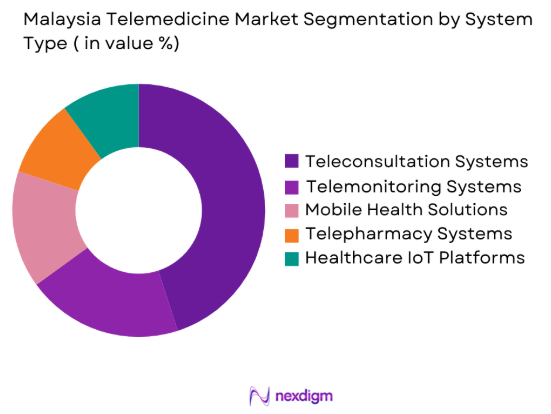
The Malaysia telemedicine market is segmented by system type into teleconsultation systems, telemonitoring systems, mobile health solutions, telepharmacy systems, and healthcare IoT platforms. The teleconsultation system has emerged as the dominant sub-segment due to the increasing preference for remote doctor consultations and virtual healthcare services. Factors such as ease of access, cost-effectiveness, and government support have made teleconsultation the preferred choice for both healthcare providers and patients. Moreover, with the growing number of mobile and internet users, teleconsultation platforms are more accessible than ever.
By Platform Type
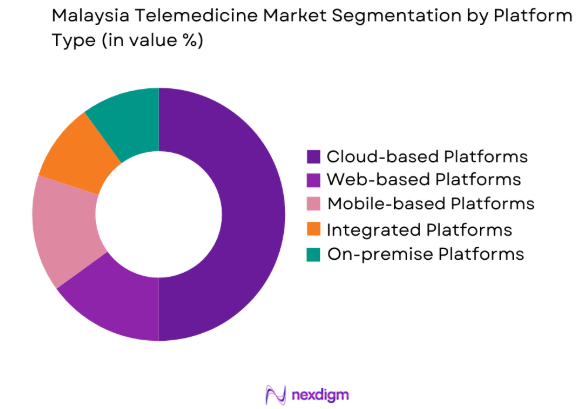
The market is segmented by platform type into cloud-based platforms, web-based platforms, mobile-based platforms, integrated platforms, and on-premise platforms. Cloud-based platforms hold a dominant share due to their flexibility, scalability, and lower infrastructure costs. The shift towards cloud-based solutions has been driven by the increasing adoption of SaaS models and the need for healthcare providers to manage and store large volumes of patient data securely. This shift also enables better collaboration between healthcare professionals across different locations, further boosting the popularity of cloud-based platforms.
Competitive Landscape
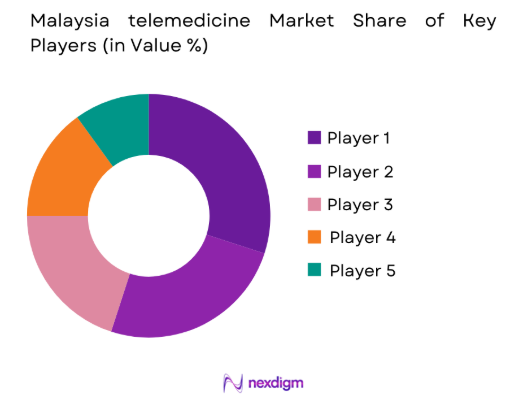
The Malaysia telemedicine market is highly competitive, with numerous global and local players vying for dominance. The market is characterized by a growing trend of consolidation, with larger companies acquiring smaller startups to expand their service offerings. Major players such as TeleMedico, Docquity, and Medtronic are leading the way, providing a range of telemedicine solutions from teleconsultation platforms to advanced healthcare IoT applications. These companies have established strong brand presence and technological capabilities, allowing them to capture a significant portion of the market.
| Company Name | Establishment Year | Headquarters | Technology Focus | Market Reach | Key Products | Revenue (USD) | Additional Parameter |
| TeleMedico | 2015 | Kuala Lumpur | ~ | ~ | ~ | ~ | ~ |
| Docquity | 2014 | Kuala Lumpur | ~ | ~ | ~ | ~ | ~ |
| Medtronic | 1949 | Dublin | ~ | ~ | ~ | ~ | ~ |
| Philips Healthcare | 1891 | Amsterdam | ~ | ~ | ~ | ~ | ~ |
| Cerner | 1979 | Kansas City | ~ | ~ | ~ | ~ | ~ |
Malaysia telemedicine Market Analysis
Growth Drivers
Government Support for Digital Healthcare
Government initiatives have played a crucial role in driving the growth of Malaysia’s telemedicine market. The government has been investing heavily in digital healthcare technologies to enhance access to healthcare, especially in rural and underserved regions. Projects such as smart healthcare initiatives have encouraged healthcare providers to incorporate telemedicine into their services as part of the national digital healthcare strategy. These efforts have been supported through funding, regulatory backing, and promoting telemedicine in public hospitals. A favorable regulatory environment has facilitated the expansion of telemedicine platforms, enabling healthcare providers to scale their services effectively. As a result, these government initiatives have been instrumental in fostering market growth.
Increasing Adoption of Mobile Health Solutions
Mobile health solutions are becoming an integral part of Malaysia’s telemedicine ecosystem. The growing smartphone penetration and internet access have enabled the widespread adoption of mobile health apps that allow patients to monitor their health and communicate with healthcare providers seamlessly. This growth is further driven by a tech-savvy population that prefers using mobile devices for healthcare services. The shift towards mobile-based telemedicine platforms has resulted in increased demand for app-based telemedicine consultations, thus propelling the market forward. Mobile health apps also offer greater convenience, enhancing patient engagement and satisfaction, which has encouraged both private healthcare providers and government bodies to invest in such solutions.
Market Challenges
Data Privacy and Security Concerns
One of the biggest challenges facing the Malaysia telemedicine market is ensuring the privacy and security of sensitive patient data. As the adoption of digital health platforms increases, so does the volume of patient data being shared, stored, and processed. This data often includes highly sensitive personal health information, making it a target for cyberattacks and data breaches. Healthcare providers and telemedicine platforms must comply with stringent data protection regulations, such as the Personal Data Protection Act (PDPA), to ensure that patient data remains secure. The lack of a robust data protection framework across some telemedicine platforms may hinder the widespread adoption of telemedicine services.
Regulatory Hurdles and Compliance Issues
Despite strong government support, navigating the regulatory landscape remains a significant challenge for telemedicine providers in Malaysia. Issues such as licensing requirements, compliance with medical standards, and unclear guidelines for cross-border telemedicine services complicate market entry for both local and international companies. These regulatory barriers may slow down the widespread adoption of telemedicine solutions, particularly in cases where regulations lag behind technological advancements. The lack of alignment between rapidly evolving technologies and regulatory frameworks creates uncertainty, which can hinder growth. Streamlining the regulatory environment and establishing clearer guidelines will be essential to accelerate the adoption and growth of telemedicine services in Malaysia, enabling more widespread access to digital healthcare.
Opportunities
Expansion of Rural Healthcare Access
A key opportunity in the Malaysia telemedicine market is expanding services to rural and remote areas, where access to healthcare is limited due to a shortage of medical professionals and infrastructure. Telemedicine platforms can address this challenge by connecting rural patients with healthcare providers in urban centers, facilitating timely and essential medical consultations. This initiative is supported by government efforts to integrate telemedicine into public health programs, improving accessibility and reducing healthcare disparities. By providing remote diagnosis, consultations, and monitoring, telemedicine can enhance healthcare delivery in underserved areas. This opportunity offers significant growth potential, as both local and international players can tap into these underserved regions, addressing the demand for better healthcare solutions in rural Malaysia.
Integration of AI and Machine Learning
A significant opportunity in the Malaysia telemedicine market is the integration of artificial intelligence (AI) and machine learning (ML) into telemedicine platforms. AI-powered telemedicine solutions improve diagnosis accuracy, predict patient outcomes, and offer personalized treatment plans. These technologies can transform healthcare services by enabling more precise decision-making, reducing the workload on healthcare providers, and improving overall efficiency. As AI and ML technologies advance, their integration into telemedicine platforms will enhance the effectiveness of healthcare delivery, allowing for more timely and informed medical decisions. The continued evolution of these technologies is expected to accelerate the adoption of AI-driven telemedicine solutions in Malaysia, benefiting both patients and healthcare providers.
Future Outlook
The future outlook for the Malaysia telemedicine market is promising, with continued growth expected over the next few years. The increasing adoption of digital health solutions, driven by government initiatives and technological advancements, will fuel demand for telemedicine services. With the integration of AI, machine learning, and healthcare IoT, telemedicine platforms are expected to become more advanced and efficient, improving patient outcomes and healthcare delivery. Additionally, as the Malaysian population becomes more tech-savvy and embraces digital solutions, telemedicine is expected to become a mainstream healthcare delivery model, further propelling market growth.
Major Players
- TeleMedico
- Docquity
- Medtronic
- Philips Healthcare
- Cerner
- Tata Consultancy Services
- GE Healthcare
- Siemen Healthineers
- Fresenius Medical Care
- HealthConnect
- HCA Healthcare
- QuickMed
- mClinica
- Cigna
- Teladoc Health
Key Target Audience
- Investments and venture capitalist firms
- Government and regulatory bodies
- Healthcare providers
- Telemedicine technology developers
- Pharmaceutical companies
- Digital health startups
- Health insurance companies
- Private sector health organizations
Research Methodology
Step 1: Identification of Key Variables
The first step involves identifying the key variables that drive the telemedicine market in Malaysia. These variables include technological trends, government policies, and healthcare demand patterns.
Step 2: Market Analysis and Construction
Market analysis is conducted through both primary and secondary research. This phase involves gathering data from healthcare providers, telemedicine platforms, and government sources to understand market trends, demand, and challenges.
Step 3: Hypothesis Validation and Expert Consultation
Hypotheses regarding market dynamics and growth drivers are validated by consulting with industry experts, healthcare professionals, and technology providers to ensure that assumptions align with real-world insights.
Step 4: Research Synthesis and Final Output
The final step involves synthesizing all collected data and expert insights to produce a comprehensive market report that offers actionable insights into the Malaysia telemedicine market.

- Executive Summary
- Research Methodology (Definitions, Scope, Industry Assumptions, Market Sizing Approach, Primary & Secondary Research Framework, Data Collection & Verification Protocol, Analytic Models & Forecast Methodology, Limitations & Research Validity Checks)

- Market Definition and Scope
- Value Chain & Stakeholder Ecosystem
- Regulatory / Certification Landscape
- Sector Dynamics Affecting Demand
- Strategic Initiatives & Infrastructure Growth

- Growth Drivers
Increased Government Initiatives for Digital Healthcare
Technological Advancements in Telemedicine Solutions
Rising Demand for Healthcare Services in Remote Areas - Market Challenges
Regulatory Challenges and Compliance Issues
Data Privacy and Security Concerns
High Initial Investment Costs - Market Opportunities
Expansion of Rural Healthcare Access
Growth in Mobile Health Applications
Integration of AI and Machine Learning in Telemedicine - Trends
Increased Adoption of Wearable Health Devices
Focus on Remote Patient Monitoring
Shift Towards Hybrid Telemedicine Models - Government Regulations
- SWOT Analysis of Key Competitors
- Porter’s Five Forces

- By Market Value, 2020-2025
- By Installed Units, 2020-2025
- By Average System Price, 2020-2025
- By System Complexity Tier, 2020-2025

- By System Type (In Value%)
Teleconsultation Systems
Telemonitoring Systems
Mobile Health Solutions
Tele pharmacy Systems
Healthcare IoT Platforms - By Platform Type (In Value%)
Cloud-based Platforms
Web-based Platforms
Mobile-based Platforms
Integrated Platforms
On-premise Platforms - By Fitment Type (In Value%)
On-premise Solutions
Cloud-based Solutions
Hybrid Solutions
Modular Solutions
Integrated Solutions - By End User Segment (In Value%)
Hospitals
Clinics
Government Agencies
Telemedicine Providers
Home Healthcare Providers - By Procurement Channel (In Value%)
Direct Procurement
Government Tenders
Private Sector Procurement
Online Bidding Platforms
Third-party Distributors

- Market Share Analysis
- Cross Comparison Parameters (System Type, Platform Type, Procurement Channel, End User Segment, Fitment Type, Technology Integration, Regional Market Growth, Cost Structure, Market Penetration, Service Delivery Models)
- SWOT Analysis of Key Competitors
- Pricing & Procurement Analysis
- Key Players
TeleMedico
Docquity
HealthConnect
QuickMed
mClinica
HCA Healthcare
Medtronic
Philips Healthcare
Fresenius Medical Care
Cerner Corporation
GE Healthcare
Siemens Healthineers
Tata Consultancy Services
Cigna
Teladoc Health

- Hospitals Increasing Adoption of Telemedicine
- Government Agencies Investing in Telemedicine Infrastructure
- Home Healthcare Providers Expanding Telemedicine Usage
- Telemedicine Providers Improving Service Delivery

- Forecast Market Value, 2026-2035
- Forecast Installed Units, 2026-2035
- Price Forecast by System Tier, 2026-2035
- Future Demand by Platform, 2026-2035


 Request a Sample
 Ask for Customization
 Get a Quote
 Enquire Now