

 Download PDF
Market Overview
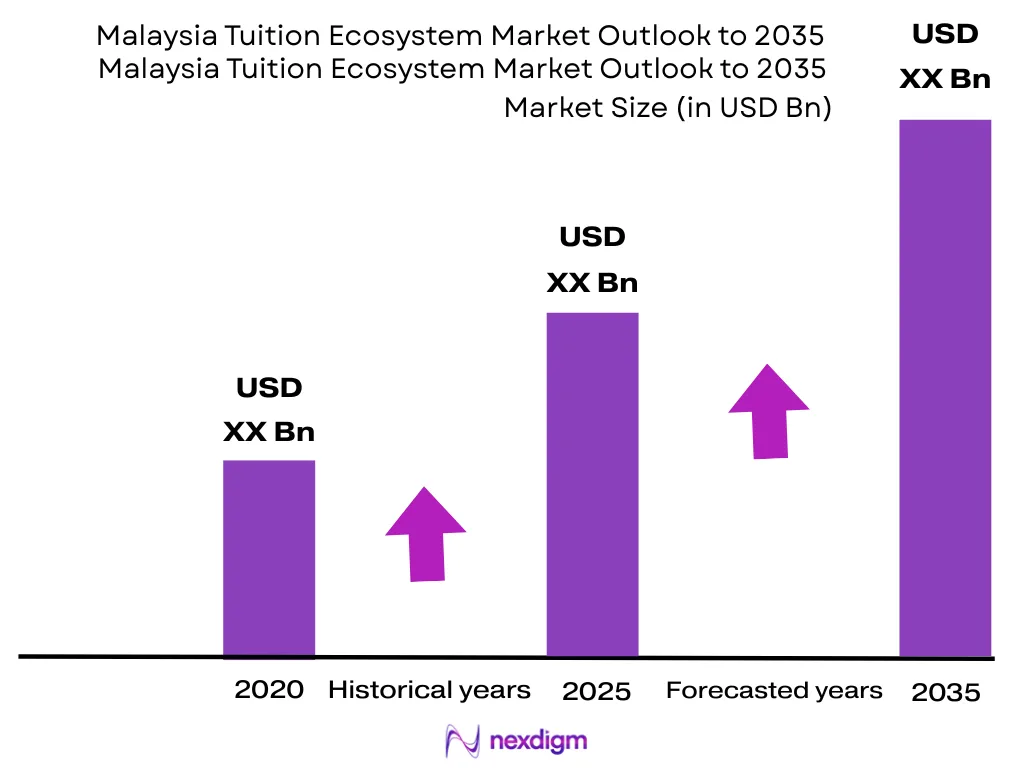
The Malaysia Tuition Ecosystem Market represents one of Southeast Asia’s most developed shadow education industries, supported by strong academic competition and high household expenditure on supplementary education. According to Malaysia’s Ministry of Education, student enrollment across primary and secondary education exceeded 5 million learners, while the Department of Statistics Malaysia reported household spending on education reaching more than RM 15 billion. The market size of approximately USD ~ billion is driven by growing demand for examination-oriented learning, increasing participation in international curricula, expansion of tuition centre networks, and rising adoption of online tutoring platforms across urban and semi-urban areas.
Market Segmentation
By Tuition Format
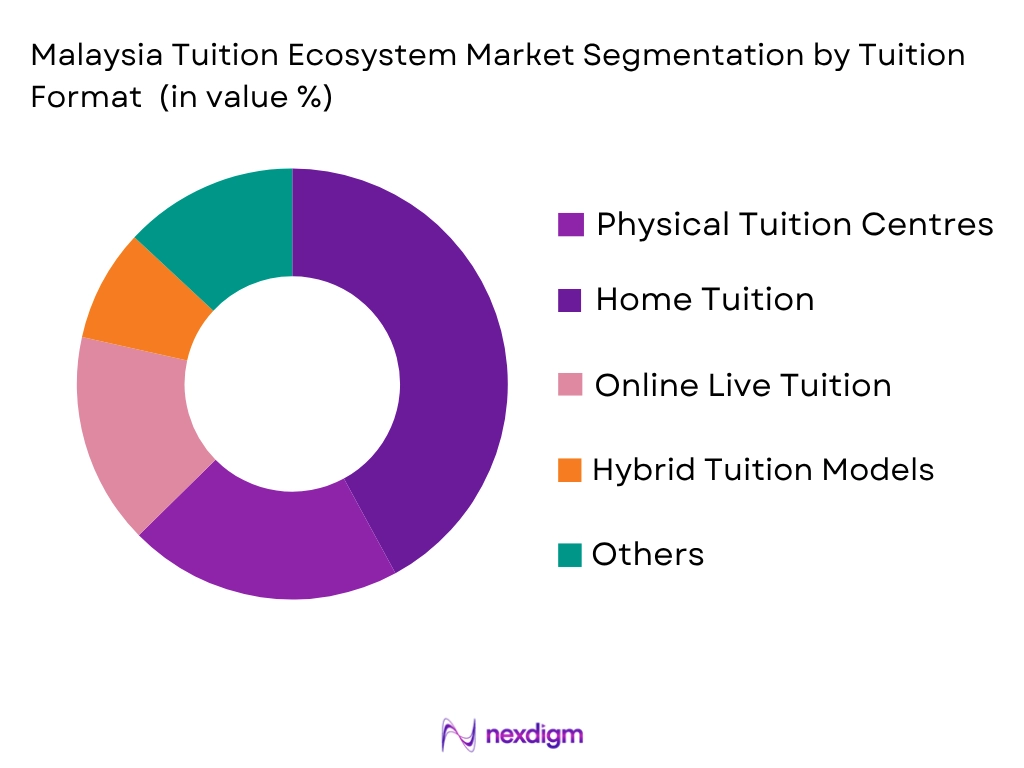
Physical Tuition Centres dominate the Malaysia Tuition Ecosystem Market under this segmentation. Their leadership is attributed to long-established consumer trust, structured learning environments, and superior peer interaction opportunities. Parents continue to perceive physical centres as more effective for academic monitoring, discipline, and examination preparation. Major centres offer specialized programs for SPM, STPM, IGCSE, and A-Level examinations, supported by experienced tutors and proven track records. Additionally, the presence of large tuition chains across Kuala Lumpur, Selangor, Johor, and Penang enhances accessibility and brand recognition. Despite the growth of digital learning solutions, physical centres remain the preferred option due to personalized engagement, classroom interaction, and stronger accountability mechanisms that support measurable academic performance improvements.
By Education Level
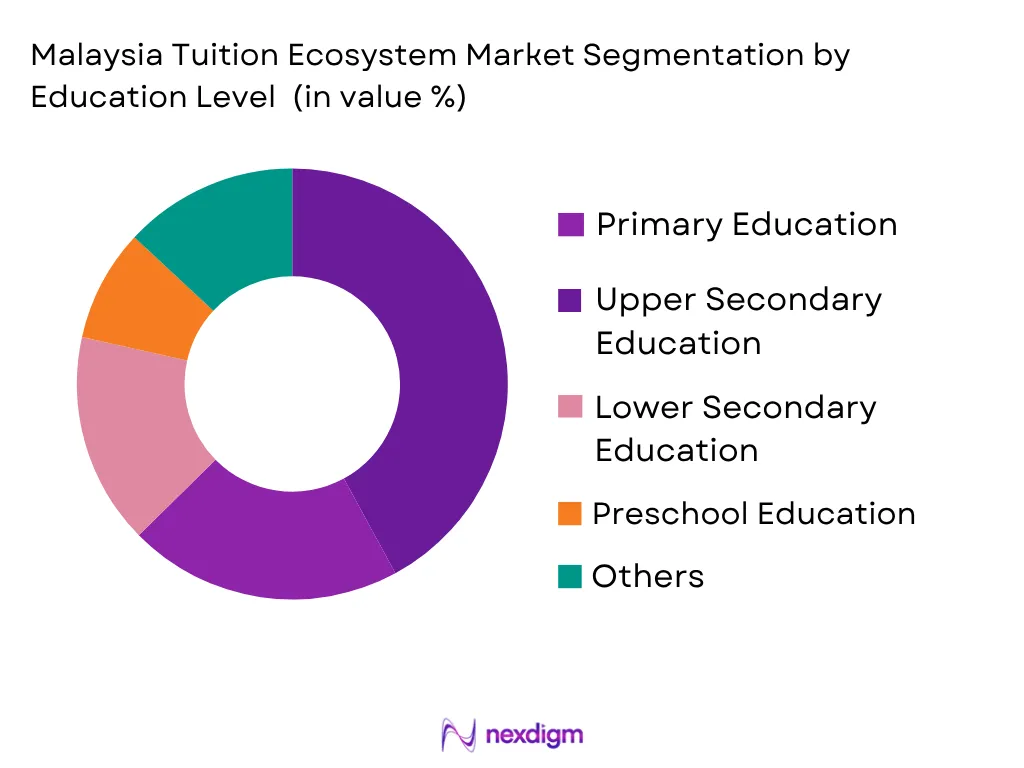
Upper Secondary Education holds the dominant position within this segmentation due to intense examination pressure associated with SPM, IGCSE, and other qualification pathways. Students at this stage often enroll in multiple tuition subjects simultaneously, significantly increasing tuition expenditure per learner. Parents prioritize academic performance during these years because examination outcomes strongly influence university admissions and scholarship opportunities. Tuition centres allocate substantial resources toward specialized upper secondary programs, including intensive revision courses, trial examination workshops, and subject-specific coaching. Demand is particularly strong for mathematics, science, English, and accounting subjects. Furthermore, higher student retention rates and greater class frequency contribute to the segment’s dominance, making upper secondary education the largest revenue contributor within Malaysia’s tuition ecosystem.
Competitive Landscape
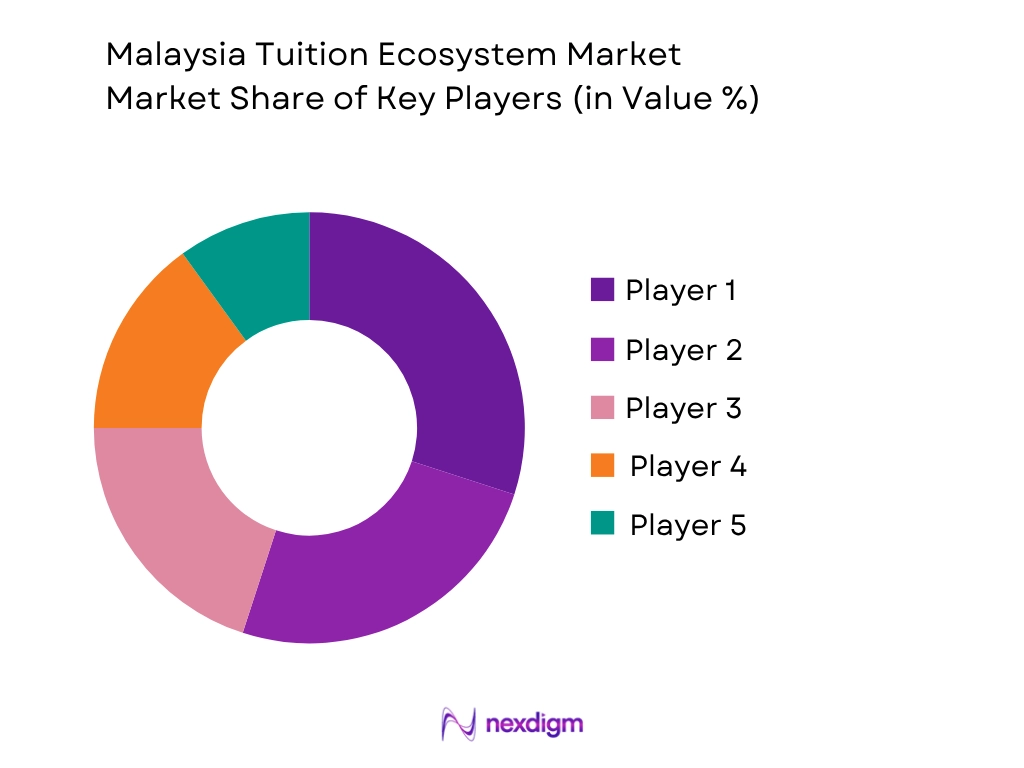
The Malaysia Tuition Ecosystem Market is moderately fragmented, with a mix of established tuition centre chains, international learning franchises, home tuition platforms, and digital education providers competing for student enrollment. Traditional tuition centres maintain strong market influence through extensive physical networks and examination preparation expertise, while EdTech companies are increasingly disrupting the sector through personalized learning technologies and online tutoring solutions. Competition is primarily based on academic outcomes, tutor quality, pricing, curriculum specialization, geographic coverage, and digital capabilities.
| Company | Establishment Year | Headquarters | Tuition Format Coverage | Geographic Presence | Key Curriculum Focus | Digital Learning Capability | Tutor Network Strength | Franchise Presence |
| Kumon Malaysia | 1958 | ~ | ~ | ~ | ~ | ~ | ~ | ~ |
| Smart Reader Worldwide | 1989 | ~ | ~ | ~ | ~ | ~ | ~ | ~ |
| Eye Level Malaysia | 1976 | ~ | ~ | ~ | ~ | ~ | ~ | ~ |
| ACE EdVenture Group | 2002 | ~ | ~ | ~ | ~ | ~ | ~ | ~ |
| Pandai Education | 2020 | ~ | ~ | ~ | ~ | ~ | ~ | ~ |
Malaysia Tuition Ecosystem Market Analysis
Growth Drivers
Rising Education Expenditure and Government Focus on Academic Development
Malaysia’s tuition ecosystem continues to benefit from sustained national investment in education and increasing household spending on learning-related services. The Ministry of Education Malaysia received an allocation of RM58.7 billion under the national budget, making it the largest recipient among all ministries. Within this allocation, RM2.5 billion was designated for the construction of 26 new schools, RM1.9 billion for school maintenance and upgrading works, RM100 million for STEM education enhancement, and RM150 million for financial assistance programs benefiting approximately 1 million students. Simultaneously, the Department of Statistics Malaysia reported that average monthly household expenditure reached RM5,566, while spending on education services averaged RM77 per household monthly. States such as Kuala Lumpur recorded average household expenditure of RM8,178, Selangor RM7,266, Johor RM5,927, and Penang RM5,850, indicating stronger purchasing power in regions where tuition centre density is highest. Rising disposable incomes and increasing competition for university admissions have encouraged parents to invest in supplementary education beyond formal schooling. The combination of substantial public education investment, increasing household expenditure, and emphasis on academic achievement directly supports demand for tuition centres, private tutors, examination preparation programs, and digital learning platforms throughout Malaysia.
Growth of Student Population and Expansion of Secondary and Pre-University Education
The Malaysia Tuition Ecosystem Market is significantly supported by the country’s large student population and continuing expansion of educational pathways. According to the Ministry of Education and Ministry of Higher Education statistics, Malaysia continues to serve millions of students across primary, secondary, pre-university, and tertiary education systems. The government’s continued investment in educational infrastructure includes RM82 million for 26 new preschool buildings and RM180 million for the construction of 18 new special education blocks. Furthermore, RM100 million has been allocated specifically for upgrading computer laboratories and acquiring new STEM learning equipment. The expansion of educational infrastructure increases student participation and academic competition, which directly translates into greater demand for supplementary tuition services. Urban centres such as Kuala Lumpur, Selangor, Johor Bahru, and Penang host the largest concentration of secondary schools, private schools, and international schools, creating a strong customer base for tuition providers. As students increasingly pursue competitive examination pathways including SPM, STPM, IGCSE, A-Level, and IB curricula, tuition services have become an essential support mechanism. The growing number of students entering examination years and pre-university streams continues to drive enrollment across tuition centres and online learning platforms.
Market Challenges
Affordability Constraints and Uneven Household Spending Capacity
Despite strong demand for supplementary education, affordability remains a major challenge for the Malaysia Tuition Ecosystem Market. Data from the Department of Statistics Malaysia shows that average monthly household expenditure reached RM5,566 nationally, but substantial disparities exist across regions. While households in Putrajaya spent RM9,186 monthly, Kuala Lumpur RM8,178, and Selangor RM7,266, several states remain significantly below these expenditure levels. Education services accounted for only RM77 of average monthly household expenditure nationally, reflecting limitations in discretionary spending among many households. Rising living costs related to housing, transportation, food, and utilities continue to place pressure on household budgets. Housing, water, electricity, gas, and other fuels represented RM1,307 of average monthly expenditure, while food and beverages accounted for RM876 and transportation RM611. As essential expenses consume a larger share of household budgets, many families face constraints in enrolling children in multiple tuition subjects or premium learning programs. This challenge is particularly evident in rural and lower-income regions where tuition participation rates remain lower. The affordability gap creates barriers to market penetration and limits the ability of tuition providers to expand premium service offerings across all geographic segments.
Tutor Talent Shortages and Increasing Demand for Specialized Educators
The availability of qualified tutors remains a structural challenge within Malaysia’s tuition ecosystem. Demand for specialized educators in mathematics, science, English language, STEM subjects, coding, accounting, and international curricula continues to increase as parents seek better academic outcomes for students. Government investments in STEM education, including RM100 million allocated for computer laboratories and STEM learning resources, are further increasing interest in science and technology-related subjects. However, the supply of highly qualified tutors has not expanded at the same pace as student demand. International curriculum providers, private schools, tuition centres, and EdTech platforms compete for the same pool of experienced educators, creating talent shortages in key subject areas. The Ministry of Higher Education’s enrollment statistics demonstrate continued growth across higher education institutions, but translating graduates into experienced educators requires substantial time and professional development. Urban centres attract the majority of qualified tutors due to stronger income opportunities, leaving smaller cities and rural areas underserved. This imbalance affects service quality, increases recruitment costs for tuition operators, and limits expansion opportunities for providers seeking nationwide coverage across Malaysia’s education ecosystem.
Market Opportunities
Expansion of Digital Learning and Online Tuition Platforms
The rapid adoption of digital technologies presents a significant opportunity for Malaysia’s tuition ecosystem. Government support for educational technology continues to strengthen through investments such as RM100 million allocated for computer laboratory upgrades and STEM-related digital infrastructure. The Department of Statistics Malaysia reported average monthly household spending of RM347 on information and communication services, highlighting the widespread adoption of internet connectivity and digital devices among Malaysian households. Urban regions including Kuala Lumpur, Selangor, Johor, and Penang possess strong digital infrastructure that supports large-scale online learning adoption. Digital tuition platforms enable providers to overcome geographic limitations and access students beyond major metropolitan areas. Furthermore, online learning models reduce dependence on physical classroom capacity while enabling flexible scheduling and personalized learning experiences. The increasing integration of artificial intelligence, adaptive learning systems, learning analytics, and digital assessment tools creates additional opportunities for platform differentiation. As educational institutions continue expanding digital learning initiatives and students become more comfortable with virtual learning environments, online tutoring providers are well positioned to capture demand from both urban and underserved rural markets, making digital education one of the most promising growth avenues within the tuition ecosystem.
Increasing Demand for STEM, International Curriculum, and Skills-Based Education
Malaysia’s emphasis on developing a knowledge-based economy is creating strong opportunities for tuition providers specializing in STEM subjects, international curricula, and future-oriented skills. Government support includes RM100 million specifically allocated for STEM education enhancement and technology-enabled learning environments. The continued expansion of international schools, private educational institutions, and higher education pathways has increased demand for IGCSE, A-Level, IB, and other globally recognized academic programs. Ministry of Education investments in educational infrastructure, including new schools and upgraded facilities, further support academic advancement across the country. Employers increasingly require skills in science, technology, engineering, mathematics, coding, and digital literacy, encouraging parents to seek supplementary educational services that provide competitive advantages. Urban centres such as Kuala Lumpur and Selangor serve as hubs for international education and technology industries, creating strong demand for specialized tutoring services. Additionally, Malaysia’s continued focus on innovation, digital transformation, and high-value industries supports long-term demand for advanced academic coaching and skills development programs. Tuition providers capable of delivering specialized STEM and international curriculum offerings are therefore positioned to benefit from evolving educational and workforce requirements across the country.
Future Outlook
The Malaysia Tuition Ecosystem Market is expected to witness sustained expansion over the forecast period due to increasing academic competition, rising household expenditure on education, and rapid digitalization of learning delivery models. The integration of artificial intelligence, adaptive learning systems, and learning analytics is anticipated to transform traditional tutoring practices. Growth in international curriculum adoption, expansion of hybrid learning models, and increasing penetration into secondary cities will further strengthen market development. Additionally, consolidation among tuition providers and franchise expansion strategies are expected to reshape the competitive landscape.
Major Players
- Pusat Tuisyen Kasturi
- Pusat Tuisyen Era Educare
- Pusat Tuisyen Cekap
- Pusat Tuisyen Didik Jaya
- Erican Education Group
- Smart Reader Worldwide
- Kumon Malaysia
- Eye Level Malaysia
- Sirius Mind Education
- Math Monkey Malaysia
- ACE EdVenture Group
- Tutor2u Malaysia
- TutorKami
- MyTuition
- Pandai Education
Key Target Audience
- Investments and Venture Capitalist Firms
- Tuition Centre Chains and Education Network Operators
- EdTech Platform Providers
- Private Education Holding Companies
- Government and Regulatory Bodies (Ministry of Education Malaysia, Malaysian Qualifications Agency, Ministry of Higher Education Malaysia)
- Franchise Investors and Education Franchise Operators
- Corporate Training and Learning Solution Providers
- Educational Content and Curriculum Developers
Research Methodology
Step 1: Identification of Key Variables
The initial phase involves constructing a comprehensive ecosystem map covering all major stakeholders within the Malaysia Tuition Ecosystem Market. Extensive secondary research is conducted using government publications, education statistics, company reports, industry associations, and proprietary databases. The objective is to identify critical variables influencing market performance, including student enrollment, tuition spending, tutor availability, and digital learning adoption.
Step 2: Market Analysis and Construction
Historical market information is compiled and analyzed to assess tuition centre penetration, student participation rates, tutor density, and tuition fee structures. Both demand-side and supply-side assessments are conducted to estimate revenue generation across various tuition formats. This phase also includes benchmarking tuition pricing and evaluating operational metrics across different provider categories.
Step 3: Hypothesis Validation and Expert Consultation
Preliminary market assumptions are validated through computer-assisted telephone interviews (CATIs) and expert consultations with tuition centre operators, education franchise owners, EdTech executives, independent tutors, and industry specialists. These interactions provide operational insights, validate market trends, and help refine revenue estimates and segment-level assumptions.
Step 4: Research Synthesis and Final Output
The final phase involves integrating findings from primary and secondary research sources. Market estimates derived through bottom-up calculations are cross-validated against institutional data, industry benchmarks, and expert feedback. This process ensures the final report provides a robust, accurate, and comprehensive assessment of the Malaysia Tuition Ecosystem Market.

- Executive Summary
- Research Methodology (Market Definitions and Scope, Research Assumptions and Abbreviations, Market Sizing Framework, Top-Down Market Assessment, Bottom-Up Revenue Mapping, Demand-Side Analysis, Supply-Side Analysis, Primary Industry Interviews, Data Triangulation and Validation, Forecasting Methodology, Limitations and Future Conclusions)

- Definition and Scope
- Evolution of Malaysia’s Shadow Education Industry
- Education System Mapping and Tuition Dependency Landscape
- Timeline of Major Industry Developments
- Tuition Ecosystem Value Chain Analysis

- Growth Drivers (Student Academic Competition, Rising Household Education Expenditure, Examination Performance Pressure, Growth of International Schools, Increasing University Admission Competitiveness, Rising Middle-Class Population, Parent Educational Aspirations, Digital Learning Accessibility)
- Market Challenges (Tutor Shortages, Rising Operating Costs, Tuition Fee Sensitivity, Regulatory Compliance Requirements, Student Burnout Concerns, Talent Retention Issues, Regional Access Disparities, Increasing Competition)
- Market Opportunities (AI-Enabled Learning, Rural Tuition Penetration, International Curriculum Expansion, STEM Upskilling Demand, Personalized Learning Solutions, Subscription-Based Learning Models, Corporate Education Partnerships, Data-Driven Learning Platforms)
- Market Trends (Hybrid Learning Adoption, Micro-Learning Models, Learning Analytics Integration, Subscription-Based Tuition, Parent Monitoring Dashboards, AI Tutors, Gamified Learning, Outcome-Based Learning Models)
- Government Regulations (Private Educational Institution Licensing, Tutor Qualification Requirements, Consumer Protection Standards, Digital Learning Regulations, Taxation Framework, Student Data Protection Compliance)
- SWOT Analysis
- PESTLE Analysis
- Porter’s Five Forces Analysis
- Competition Ecosystem

- By Market Value (2020-2025)
- By Number of Students Enrolled (2020-2025)
- By Number of Active Tutors (2020-2025)

- By Tuition Format (In Value %)
Physical Tuition Centres
Home Tuition
Online Live Tuition
Hybrid Tuition Models
Recorded Learning Platforms - By Education Level (In Value %)
Preschool Education
Primary Education
Lower Secondary Education
Upper Secondary Education
Pre-University Education
International Curriculum Education - By Subject Category (In Value %)
Mathematics
Science
English Language
Bahasa Malaysia
Chinese Language
STEM Subjects
Accounting and Commerce
Coding and Digital Skills
Examination Preparation Courses - By Examination Focus (In Value %)
SPM Preparation
STPM Preparation
IGCSE Preparation
A-Level Preparation
IB Preparation
School-Based Assessments - By Tutor Type (In Value %)
Full-Time Professional Tutors
Part-Time Tutors
School Teachers Providing Tuition
Retired Educators
University Students

- Market Share of Major Players (By Revenue, Student Enrollment, Tuition Centre Network, Online Learning Penetration, Examination Preparation Segment)
- Cross Comparison Parameters (Student Enrollment Base, No of Tuition Centres, Tutor Strength, Average Class Size, Subject Portfolio Breadth)
- SWOT Analysis of Major Players
- Pricing Analysis by Subject, Education Level and Learning Mode
- Detailed Profiles of Major Companies
Pusat Tuisyen Kasturi
Pusat Tuisyen Era Educare
Pusat Tuisyen Cekap
Pusat Tuisyen Didik Jaya
Erican Education Group
Smart Reader Worldwide
Kumon Malaysia
Eye Level Malaysia
Sirius Mind Education
Math Monkey Malaysia
ACE EdVenture Group
Tutor2u Malaysia
TutorKami
MyTuition
Pandai Education

- Student Enrollment and Participation Analysis (Enrollment Rate, Repeat Enrollment Rate, Subject Preference, Class Attendance Rate, Completion Rate)
- Parent Spending and Budget Allocation Analysis (Education Budget Share, Tuition Affordability Index, Spending Frequency, Premium Service Adoption, Annual Spend Growth)
- Academic Outcome Assessment (Grade Improvement Rate, Examination Success Rate, University Placement Impact, Subject Performance Uplift, Learning Retention Rate)
- Consumer Preference Analysis (Tutor Reputation, Class Size Preference, Learning Mode Preference, Location Accessibility, Schedule Flexibility)
- Parent and Student Pain Point Analysis (Cost Concerns, Time Constraints, Tutor Availability, Learning Effectiveness, Examination Anxiety)

- By Market Value (2026-2035)
- By Number of Students Enrolled (2026-2035)
- By Number of Active Tutors (2026-2035)


 Request a Sample
 Ask for Customization
 Get a Quote
 Enquire Now