
 Download PDF
 Download PDF
Market Overview
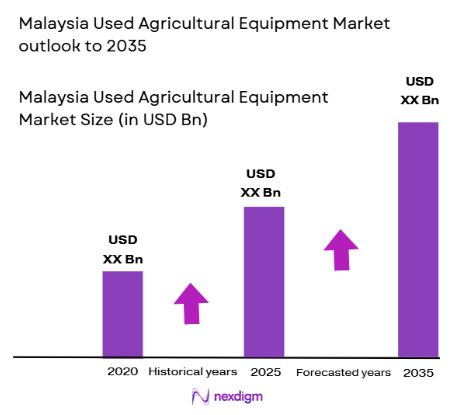
The Malaysia Used Agricultural Equipment Market is expected to see significant growth, driven by increasing demand for affordable farming solutions. The market is currently valued at approximately USD ~ billion, reflecting a steady rise in the adoption of used agricultural machinery, particularly among small and medium-sized farms. This is due to the growing need for mechanization in the agricultural sector to improve productivity and reduce labor costs. The demand for used tractors, harvesters, and plows remains high, as farmers seek cost-effective options for enhancing their operations.
Dominating cities in Malaysia include Kuala Lumpur, Johor Bahru, and Penang, where the agriculture sector has a strong presence due to the availability of infrastructure and support services. These areas benefit from proximity to key agricultural regions and transportation hubs, ensuring efficient equipment distribution. Moreover, government support through subsidies and initiatives aimed at increasing agricultural efficiency further fuels the demand for used equipment. The availability of a well-established dealer network in these urban centers plays a pivotal role in market dominance.
Market Segmentation
By Product Type:
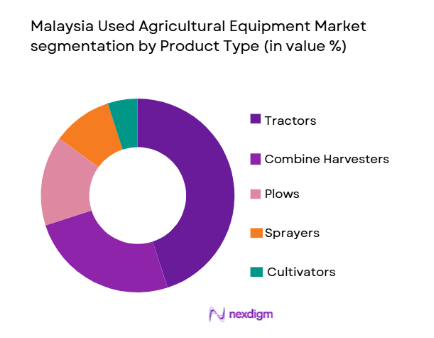
The Malaysia Used Agricultural Equipment Market is segmented by product type into tractors, combine harvesters, plows, sprayers, and cultivators. Recently, the tractor segment has had a dominant market share due to its essential role in farming operations across various agricultural regions. This dominance is driven by the widespread adoption of tractors among both small-scale and large-scale farmers, who rely on these machines for land preparation and cultivation. The high demand for used tractors is further fueled by affordability compared to new machines and the increasing availability of financing options. Additionally, the growing trend towards mechanized farming and the need to increase productivity in the agricultural sector continue to drive the popularity of used tractors. Their versatility in performing multiple tasks on farms and their long operational lifespan further contribute to their market leadership in Malaysia.
By Platform Type:
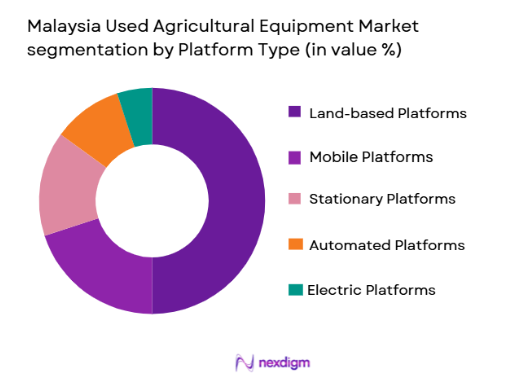
The market is segmented into land-based platforms, mobile platforms, stationary platforms, automated platforms, and electric platforms. Land-based platforms, particularly tractors and plows, continue to dominate the market due to their crucial role in crop production and land preparation. These platforms are the primary choice for many farmers in Malaysia, owing to their established usage in various agricultural practices. Furthermore, land-based machinery is well-suited for the country’s vast farming landscape, which includes both large estates and smallholder farms. With the growing emphasis on mechanization in the agricultural sector, land-based platforms remain the backbone of Malaysia’s farming infrastructure, and their affordability in the used equipment market solidifies their market dominance.
Competitive Landscape
The Malaysia Used Agricultural Equipment Market is characterized by a competitive landscape where both local and international players contribute to market dynamics. Major players like Sime Darby Industrial, Kubota Malaysia, and Tractors Malaysia are crucial in shaping market consolidation. These companies dominate the market through their extensive dealer networks, after-sales services, and product availability. Their strong market presence has been reinforced by their ability to provide cost-effective solutions to farmers, particularly those opting for used equipment to minimize expenses. The growing trend towards mechanization, coupled with government initiatives supporting agricultural growth, further enhances the competitive positioning of these key players.
| Company Name | Establishment Year | Headquarters | Technology Focus | Market Reach | Key Products | Revenue (USD billion) | Additional Market Parameter |
| Sime Darby Industrial | 1962 | Malaysia | ~ | ~ | ~ | ~ | ~ |
| Kubota Malaysia | 1981 | Malaysia | ~ | ~ | ~ | ~ | ~ |
| Tractors Malaysia | 1976 | Malaysia | ~ | ~ | ~ | ~ | ~ |
| John Deere Malaysia | 1991 | Malaysia | ~ | ~ | ~ | ~ | ~ |
| Yanmar Malaysia | 2000 | Malaysia | ~ | ~ | ~ | ~ | ~ |
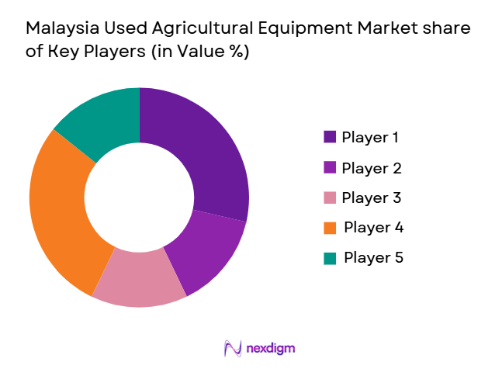
Malaysia Used Agricultural Equipment Market Analysis
Growth Drivers
Government Support for Agricultural Mechanization:
The Malaysian government has implemented several policies aimed at boosting agricultural mechanization. These policies include financial subsidies, low-interest loans, and tax incentives for farmers investing in agricultural equipment. The increasing support for mechanization has driven the demand for used agricultural equipment, especially tractors and harvesters, as farmers seek affordable yet efficient solutions to improve productivity. Government-backed initiatives ensure that mechanization is accessible to a larger segment of the farming community, enhancing the market’s growth potential. As the government continues to push for modernization in the agricultural sector, the demand for used equipment is likely to remain high, benefiting the market. The government’s efforts also extend to training programs that teach farmers how to operate and maintain the equipment, which further supports the uptake of used agricultural machinery.
Increasing Labor Costs and Shortage of Workforce:
One of the key growth drivers in the Malaysia Used Agricultural Equipment Market is the rising labor costs and the shortage of farmworkers. As Malaysia’s agricultural sector becomes more mechanized, there is a growing need for labor-saving equipment to maintain productivity levels. Labor shortages, particularly in rural areas, have led farmers to seek alternative solutions such as used agricultural equipment. The ability of these machines to reduce manual labor, increase operational efficiency, and lower overall costs has made them highly attractive to farmers. This shift towards mechanization is a direct response to the labor challenges faced by the agricultural sector, making used agricultural equipment an essential investment for farmers. The growing scarcity of labor and rising wages make it increasingly difficult for smallholder farmers to rely on traditional farming methods, further pushing the demand for affordable, mechanized solutions.
Market Challenges
Regulatory Barriers and Import Restrictions:
One of the major challenges in the Malaysia Used Agricultural Equipment Market is the regulatory hurdles and import restrictions that affect the availability of used machinery. The Malaysian government has strict regulations concerning the importation of used agricultural equipment, which can sometimes delay the entry of these products into the market. Additionally, compliance with local standards and safety regulations is mandatory, and older machinery may not always meet these criteria. This limits the accessibility of certain used equipment, especially for small-scale farmers who are most in need of affordable options. The regulatory complexity adds to the cost of importing and distributing used agricultural machinery, which could slow down market growth. This challenge is compounded by the evolving standards for machinery emissions and safety, which further restricts the flow of used equipment in the market.
High Maintenance and Repair Costs:
Another significant challenge faced by the Malaysia Used Agricultural Equipment Market is the high maintenance and repair costs associated with used machinery. While used equipment offers an affordable initial purchase price, the long-term operational costs, including repairs and maintenance, can be substantial. Older equipment is more prone to mechanical failures, and the cost of spare parts can be high, particularly for imported models. Farmers may find themselves spending more on maintaining their used equipment than anticipated, leading to a reduced return on investment. Furthermore, the lack of technical expertise in rural areas can make repairs more challenging and costly. This issue can discourage some farmers from purchasing used agricultural equipment, particularly those with limited access to professional repair services.
Opportunities
Expansion of E-commerce Platforms for Used Agricultural Equipment:
The rise of e-commerce platforms presents a significant opportunity for the Malaysia Used Agricultural Equipment Market. Online marketplaces are becoming increasingly popular as farmers seek convenient ways to purchase machinery. These platforms offer a wide range of used equipment, often at competitive prices, and provide an avenue for farmers to compare different models and prices from various suppliers. The growth of e-commerce enables farmers in remote areas to access used agricultural machinery that may not be available through traditional distribution channels. Moreover, the ability to offer online auctions and peer-to-peer sales is creating new opportunities for the market, expanding its reach beyond traditional brick-and-mortar dealers. The convenience of purchasing through online platforms, combined with flexible financing options, is expected to drive further growth in the market.
Rising Demand for Eco-Friendly and Energy-Efficient Machines:
As sustainability becomes a more prominent focus in agriculture, there is an increasing demand for eco-friendly and energy-efficient used agricultural machinery. Farmers are becoming more conscious of the environmental impact of their operations and are seeking equipment that reduces fuel consumption and lowers emissions. The rise in demand for energy-efficient machines presents a growth opportunity for the used agricultural equipment market, as manufacturers and dealers increasingly offer machines that comply with environmental standards. This shift towards more sustainable farming practices not only aligns with global environmental trends but also helps farmers reduce operational costs in the long run. By offering used machinery that meets these eco-friendly standards, the market can tap into a growing segment of environmentally-conscious farmers looking for cost-effective solutions.
Future Outlook
The Malaysia Used Agricultural Equipment Market is expected to continue its growth trajectory over the next five years, driven by advancements in agricultural technologies and the increasing need for efficient farming solutions. Technological developments in automation, electrification, and precision farming will create new opportunities for used equipment sales. Additionally, continued government support for agricultural modernization, along with rising labor costs and equipment affordability, will fuel demand. As farmers become more open to using pre-owned equipment, the market will likely see increased competition and consolidation among key players. Moreover, the continued emphasis on sustainability will lead to more energy-efficient and eco-friendly used machinery entering the market, further enhancing growth potential.
Major Players
- Sime Darby Industrial
- Kubota Malaysia
- Tractors Malaysia
- John Deere Malaysia
- Yanmar Malaysia
- New Holland Agriculture
- Massey Ferguson
- Tafe Tractors
- SDF Group
- Fendt Malaysia
- Honda Malaysia
- Caterpillar Malaysia
- Zetor Malaysia
- CLAAS Malaysia
- Agri-Tech Solutions
Key Target Audience
- Investments and venture capitalist firms
- Government and regulatory bodies
- Agricultural cooperatives
- Large-scale farms
- Agricultural machinery dealerships
- Equipment leasing companies
- NGOs supporting agriculture
- Financial institutions offering agricultural loans
Research Methodology
Step 1: Identification of Key Variables
The first step involves identifying key factors that influence the used agricultural equipment market, such as consumer behavior, government policies, and technological advancements.
Step 2: Market Analysis and Construction
This step focuses on constructing a comprehensive market model by collecting data from primary and secondary sources, followed by market sizing and trend analysis.
Step 3: Hypothesis Validation and Expert Consultation
At this stage, the market model’s assumptions are validated through expert consultations, ensuring accuracy and relevance to current market conditions.
Step 4: Research Synthesis and Final Output
The final step involves synthesizing all collected data, validating the findings, and preparing the final report with actionable insights for stakeholders.

- Executive Summary
- Research Methodology(Definitions, Scope, Industry Assumptions, Market Sizing Approach, Primary & Secondary Research Framework, Data Collection & Verification Protocol, Analytic Models & Forecast Methodology, Limitations & Research Validity Checks)

- Market Definition and Scope
- Value Chain & Stakeholder Ecosystem
- Regulatory / Certification Landscape
- Sector Dynamics Affecting Demand
- Strategic Initiatives & Infrastructure Growth

- Growth Drivers
Increasing Demand for High-Performance Machinery
Government Initiatives Supporting Agricultural Growth
Rising Mechanization in Agriculture
Technological Advancements in Equipment
Cost-Effective Used Equipment Options - Market Challenges
High Maintenance Costs for Used Equipment
Regulatory Compliance Issues
Competition from New Agricultural Equipment
Lack of Skilled Labor for Machinery Operation
Limited Financing Options for Small Farmers - Market Opportunities
Expansion of E-commerce Platforms for Used Equipment
Increasing Adoption of Smart Agricultural Technologies
Government Support for Farm Mechanization - Trends
Shift Towards Electric and Hybrid Agricultural Equipment
Growing Focus on Sustainable Farming Practices
Integration of IoT in Agricultural Machinery
Demand for Multi-Function Agricultural Machines
Rise in Mechanized Land Preparation - Government Regulations & Defense Policy
Government Subsidies for Agricultural Equipment
Regulations on Equipment Safety and Emissions
Incentives for Farmers to Upgrade Equipment - SWOT Analysis
- Stakeholder and Ecosystem Analysis
- Porter’s Five Forces Analysis
- Competition Intensity and Ecosystem Mapping

- By Market Value, 2020-2025
- By Installed Units, 2020-2025
- By Average System Price, 2020-2025
- By System Complexity Tier, 2020-2025

- By System Type (In Value%)
Tractors
Combine Harvesters
Plows & Harrows
Cultivators
Sprayers - By Platform Type (In Value%)
Land-Based Platforms
Mobile Platforms
Stationary Platforms
Automated Platforms
Electric Platforms - By Fitment Type (In Value%)
Standalone Solutions
Integrated Solutions
Modular Solutions
Hybrid Solutions
Automated Solutions - By EndUser Segment (In Value%)
Farmers
Agricultural Contractors
Government Organizations
Retailers
OEMs - By Procurement Channel (In Value%)
Direct Procurement
Third-Party Distributors
Online Marketplaces
Government Tendering
Retail Sales - By Material / Technology (In Value%)
Steel
Aluminum
Composite Materials
Electric Power Systems
Hydraulic Systems

- Market structure and competitive positioning
- Market share snapshot of major players
- CrossComparison Parameters (System Type, Platform Type, Procurement Channel, EndUser Segment, Fitment Type, Material / Technology, Regional Coverage, Equipment Age, Price, Warranty)
- SWOT Analysis of Key Players
- Pricing & Procurement Analysis
- Key Players
Sime Darby Industrial
Tractors Malaysia
Kubota Malaysia
John Deere Malaysia
Case IH Malaysia
Mahindra & Mahindra
Yanmar Malaysia
Fendt Malaysia
New Holland Agriculture
Massey Ferguson
Tafe Tractors
SDF Group
Honda Malaysia
Caterpillar Malaysia
Zetor Malaysia

- Increasing Use of Tractors in Small Farms
- Adoption of Combine Harvesters by Large-Scale Farms
- Growing Preference for Used Equipment in Rural Areas
- Shift Towards Eco-Friendly Farming Equipment

- Forecast Market Value, 2026-2035
- Forecast Installed Units, 2026-2035
- Price Forecast by System Tier, 2026-2035
- Future Demand by Platform, 2026-2035


 Request a Sample
 Ask for Customization
 Get a Quote
 Enquire Now