
 Download PDF
Market Overview
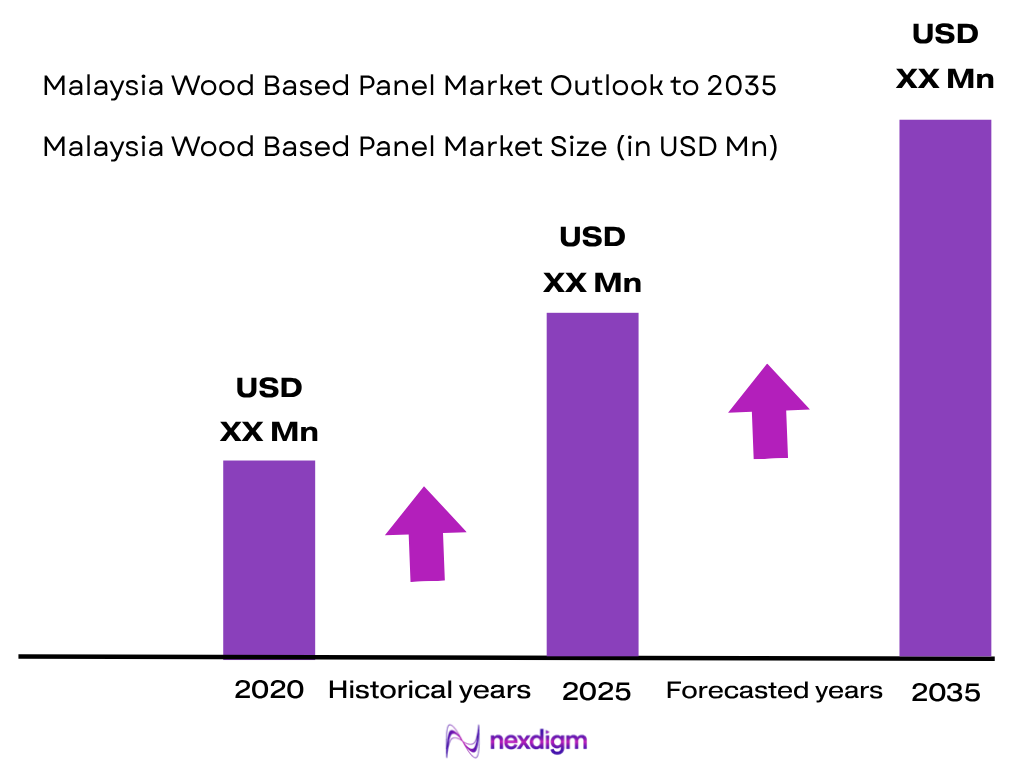
The Malaysia Wood Based Panel Market is estimated at ~USD XX billion in 2024, with the market supported by Malaysia’s established timber-processing ecosystem, furniture manufacturing base, construction activity, and export-oriented wood-products industry. Malaysia’s timber industry generated RM22.92 billion in timber exports in 2024, while the broader timber sector contributed RM1.40 billion equivalent to 1.40% of national GDP. The country also had 3,115 timber-processing mills and a timber-sector workforce of 178,127, demonstrating the depth of the domestic processing ecosystem.
The Malaysia Wood Based Panel Market is concentrated around established timber-processing and furniture-manufacturing clusters in Johor, Sarawak, Sabah, Negeri Sembilan, Selangor and Kedah. Johor is particularly relevant because of its established MDF, particleboard, plywood, furniture and downstream manufacturing base. Malaysia’s export-oriented structure further strengthens these industrial clusters, with timber and timber products reaching international markets and Malaysia recording RM1.5 trillion in total exports across all goods in 2024. The United States, China, Japan and Singapore were among the major destinations for Malaysian timber products.
Market Segmentation
By Product Type
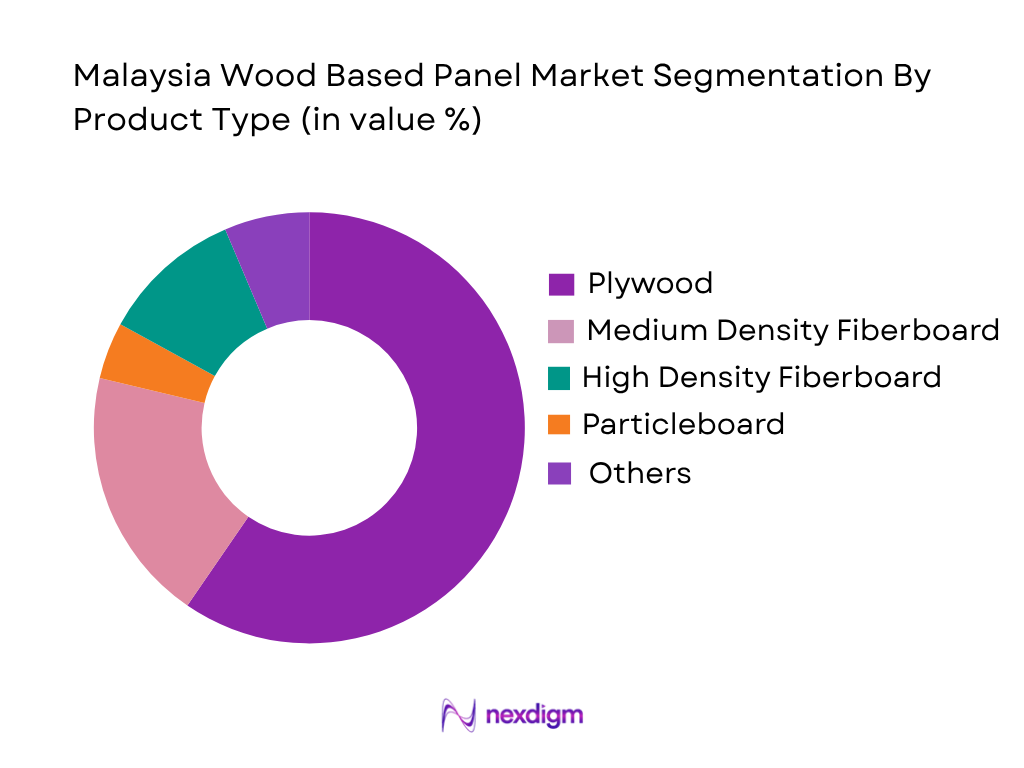
The Malaysia Wood Based Panel Market is segmented by product type into plywood, medium density fiberboard (MDF), high density fiberboard (HDF), particleboard, oriented strand board (OSB), hardboard, softboard, decorative wood-based panels and other engineered wood panels. MDF is expected to represent the leading product category in the market framework because of its broad use across furniture, kitchen cabinets, office furniture, interior fit-outs, doors and decorative applications. Malaysia has an established MDF manufacturing ecosystem, supported by manufacturers operating large-scale production facilities and downstream lamination capabilities. Particleboard also benefits from demand from ready-to-assemble furniture and cabinet manufacturing, particularly because rubberwood residues and other wood resources can be converted into engineered panels. Plywood remains highly relevant for construction, packaging and furniture applications, while decorative panels are gaining importance as manufacturers move toward higher-value products. Malaysia’s timber industry exported RM2.40 billion of plywood in 2024, demonstrating the continuing importance of panel products within the national wood-products ecosystem.
By Application
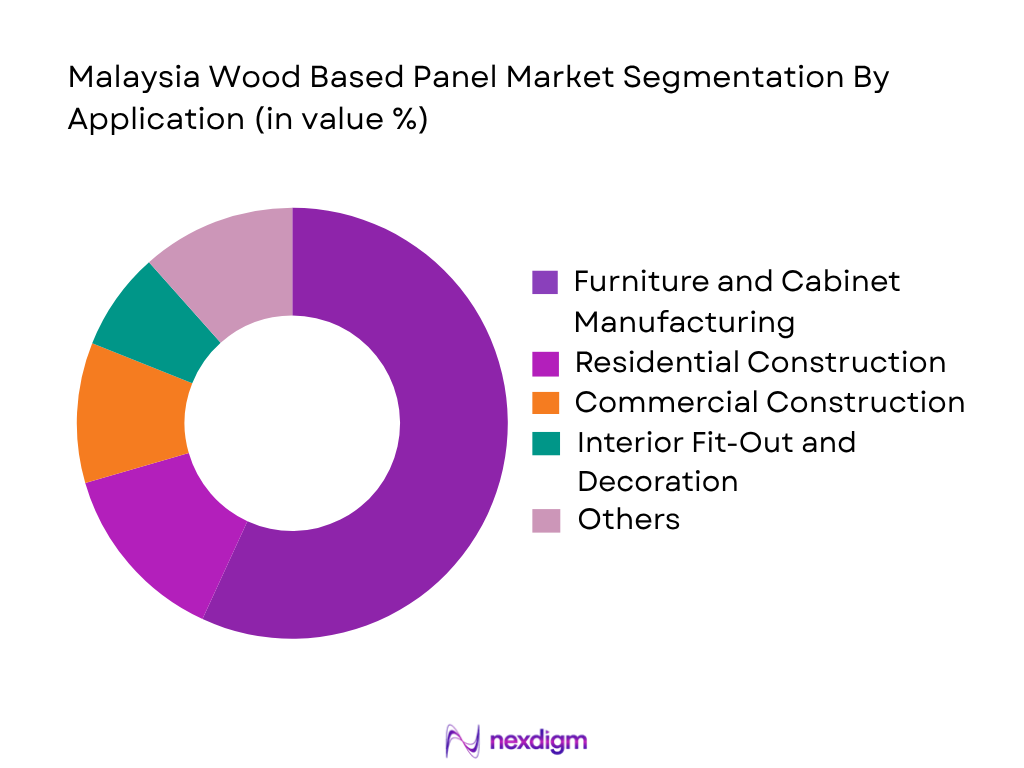
The Malaysia Wood Based Panel Market is segmented by application into furniture and cabinet manufacturing, residential construction, commercial construction, interior fit-out and decoration, flooring and wall systems, doors and architectural components, packaging and industrial applications, office furniture, kitchen and bathroom furniture, and retail fixtures and displays. Furniture and cabinet manufacturing is expected to represent the leading application because Malaysia has a mature furniture-production and export ecosystem that consumes MDF, particleboard, plywood and laminated panels. Wood-based panels provide manufacturers with dimensional consistency, machinability, surface-finishing flexibility and compatibility with automated furniture production. The importance of furniture demand is reinforced by Malaysia’s position as a major furniture-exporting country. Wooden furniture generated RM9.89 billion in Malaysian exports in 2024, accounting for the largest portion of timber-product exports. Construction and interior applications provide additional demand through doors, partitions, flooring, wall systems and built-in furniture, while commercial and hospitality projects create requirements for decorative and high-finish panels.
Competitive Landscape
The Malaysia Wood Based Panel Market includes established domestic manufacturers and international wood-material companies with production, processing and distribution capabilities in the country. Competition is shaped by panel production capacity, access to wood resources, manufacturing efficiency, product quality, downstream lamination capabilities, sustainability credentials and export reach. Evergreen Fibreboard, HeveaBoard and Dongwha Malaysia have established positions across MDF, particleboard, laminated panels and related engineered-wood products, while other Malaysian timber groups participate through plywood, panel production and vertically integrated forestry operations. Evergreen, for example, operates multiple sites across Malaysia and its core panel activities include MDF, particleboard and value-added laminated products.
| Company | Establishment | Headquarters / Principal Malaysia Base | Key Product Portfolio | Manufacturing Capability | Export Reach | Sustainability / Certification Focus | Downstream Capability |
| Evergreen Fibreboard Berhad | 1991 | Parit Raja, Johor | ~ | ~ | ~ | ~ | ~ |
| HeveaBoard Berhad | 1993 | Gemas, Negeri Sembilan | ~ | ~ | ~ | ~ | ~ |
| Dongwha Malaysia | 1989 | Nilai, Negeri Sembilan | ~ | ~ | ~ | ~ | ~ |
| Ta Ann Holdings Berhad | 1973 | Sarawak | ~ | ~ | ~ | ~ | ~ |
| Samling Global Limited | 1970 | Sarawak / Malaysia operations | ~ | ~ | ~ | ~ | ~ |
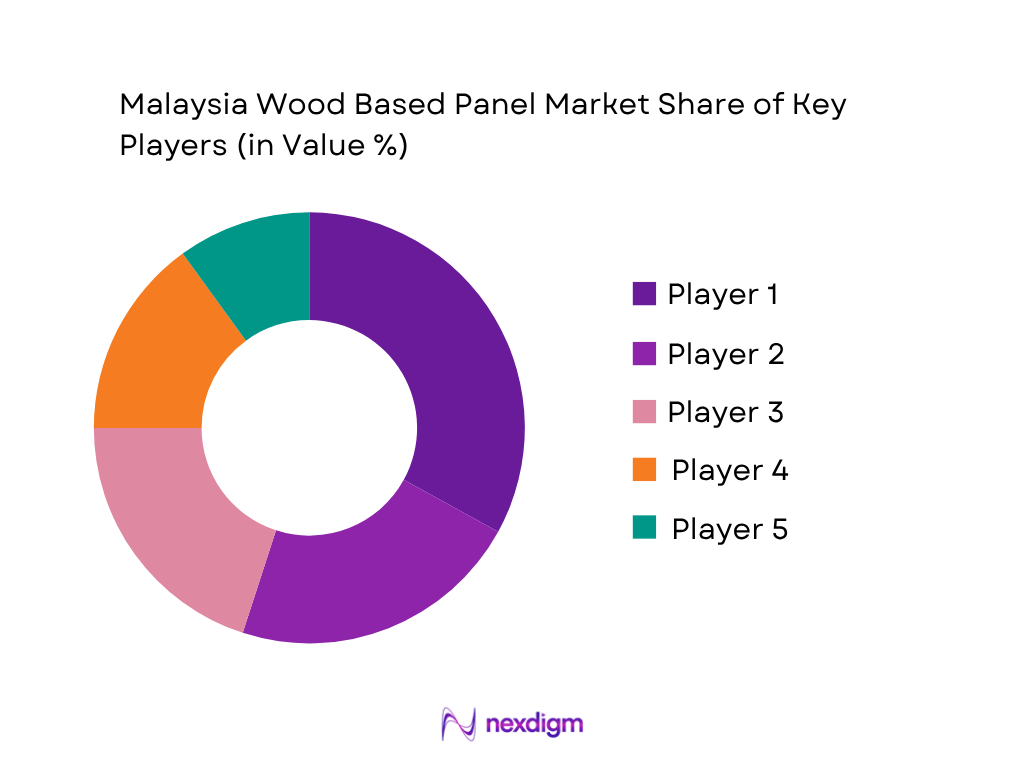
Malaysia Wood Based Panel Market Analysis
Growth Drivers
Expansion of Construction and Interior Activity
The Malaysia Wood Based Panel Market is supported by strong construction and interior-development activity, creating demand for plywood, MDF, particleboard and engineered panels used in doors, partitions, flooring, cabinetry, furniture and architectural interiors. Construction work completed reached RM158.8 billion in 2024, compared with RM132.2 billion in 2023. Residential building work reached RM55.3 billion, while non-residential building work reached RM44.4 billion. Civil engineering contributed RM40.8 billion, creating additional requirements for construction-related wood products and downstream fit-outs. Malaysia’s construction sector expanded by 17.5% in 2024, compared with 6.0% in 2023. Gross fixed capital formation reached RM396.9 billion in 2024, compared with RM350.7 billion in 2023, indicating stronger investment activity across the economy. This environment supports demand for furniture components, commercial interiors, office fit-outs, doors and cabinetry. The manufacturing ecosystem also provides a strong downstream base, with wood products, furniture, paper products and printing recording continued industrial activity. The combination of construction investment, residential development, commercial projects and renovation activity creates recurring requirements for dimensionally consistent and easily machinable wood-based panels.
Strengthening Furniture Manufacturing and Export Demand
The Malaysia Wood Based Panel Market benefits from the country’s established furniture manufacturing and export ecosystem, where MDF, particleboard and plywood are widely used for cabinets, bedroom furniture, office furniture, kitchen units and other manufactured products. Malaysian timber and timber-product exports reached RM22.92 billion in 2024, compared with RM21.84 billion in 2023. Wooden furniture generated RM9.89 billion in exports in 2024, while plywood exports reached RM2.40 billion and chipboard and particleboard exports reached RM234.52 million. Malaysia exported timber products to more than 160 countries, providing manufacturers with a broad international customer base. The manufacturing sector recorded RM1.9 trillion in sales in 2024, supporting a substantial industrial ecosystem for panel-intensive products. The country also recorded 39 approved furniture and fixture projects involving RM692.7 million in approved investments in 2024. These investments support additional furniture-production capacity and downstream consumption of engineered panels. Furniture manufacturers increasingly require consistent panel thickness, machinability, surface quality and finishing compatibility, supporting demand for MDF, particleboard and laminated panels. The combination of domestic furniture production and international furniture exports therefore creates a significant recurring application base for Malaysian wood-based panel manufacturers.
Market Challenges
Raw-Material Availability and Timber Supply Constraints
The Malaysia Wood Based Panel Market faces supply-side challenges because manufacturers depend on consistent availability of timber, wood residues, veneers and other fiber inputs. Malaysia’s forestry and logging subsector contracted by 5.4% in 2024, while the broader agriculture sector expanded by 3.1%. Malaysia imported RM8.52 billion of wood and wood-based products in 2024, compared with RM7.53 billion in 2023, demonstrating the importance of external supply within the domestic wood ecosystem. Plywood imports reached RM1.39 billion during January–September 2024, while chipboard and particleboard imports reached RM420.36 million and fibreboard imports reached RM233.23 million during the same period. Manufacturing capacity utilisation for wood and wood products excluding furniture stood at 76.9% in the fourth quarter of 2024. These conditions create challenges involving raw-material consistency, procurement planning and production scheduling. Panel manufacturers must maintain suitable fiber quality and moisture characteristics to achieve consistent board density, strength and surface finish. Continued emphasis on responsible forestry and traceability can also increase operational requirements for manufacturers sourcing timber and wood residues. Consequently, reliable raw-material access remains an important consideration for maintaining production continuity and meeting customer specifications.
Export Exposure and International Demand Volatility
The Malaysia Wood Based Panel Market is exposed to international demand because Malaysia maintains a strongly export-oriented timber and furniture industry. Timber and timber-product exports reached RM22.92 billion in 2024, compared with RM25.21 billion in 2022, showing the sensitivity of the industry to external market conditions. The United States was Malaysia’s largest timber-product destination in 2024 at RM6.51 billion, followed by China at RM3.35 billion, Japan at RM2.85 billion, Singapore at RM1.40 billion and Australia at RM1.06 billion. Wooden furniture exports reached RM9.89 billion, with the United States accounting for RM4.99 billion. This concentration exposes panel-intensive manufacturers to changes in construction activity, furniture demand, trade requirements, logistics conditions and purchasing patterns in major destination markets. Malaysia’s manufacturing sector nevertheless recorded RM1.9 trillion in sales in 2024, providing a broad industrial base for diversification. For wood-based panel producers, dependence on international furniture and construction markets can create fluctuations in order volumes and production planning. Expanding customer markets, increasing domestic downstream consumption and developing differentiated panel products can help manufacturers address exposure to individual export destinations and changing international demand conditions.
Market Opportunities
Expansion of Value-Added and Decorative Engineered Panels
The Malaysia Wood Based Panel Market has opportunities to expand value-added MDF, laminated panels, decorative particleboard, surface-finished boards and application-specific engineered panels. Malaysia’s timber industry generated RM22.92 billion in timber and timber-product exports in 2024, while wooden furniture exports reached RM9.89 billion. Malaysia ranked 5th globally for wooden-furniture exports, demonstrating an established downstream manufacturing ecosystem that requires substantial volumes of engineered panels. MIDA recorded 36 approved wood and wood-product projects involving RM999.5 million in investments in 2024, while 39 furniture and fixture projects involved RM692.7 million. These investment flows create opportunities for panel producers supplying higher-specification furniture and interior applications. Manufacturing labour productivity reached RM134,498 per person in 2024, compared with RM131,112 in 2023, supporting greater adoption of automated production and finishing systems. Manufacturers can use this industrial base to develop panels with improved surface quality, moisture resistance, machinability and decorative finishes. Demand can increasingly move toward laminated MDF, pre-finished particleboard and customized panels for kitchens, wardrobes, offices, hotels, retail interiors and architectural applications. This creates opportunities for manufacturers to increase downstream value addition rather than competing solely through standard panel production.
Sustainable and Export-Oriented Engineered Wood Applications
The Malaysia Wood Based Panel Market has opportunities to expand sustainable engineered-wood applications through certified timber sourcing, wood-residue utilization, low-emission panels and higher-value export products. Malaysia’s timber and timber-product exports reached RM22.92 billion in 2024, with products supplied to more than 160 countries. Malaysia ranked 5th globally for plywood exports, while fibreboard also maintained an established position in international trade. The timber sector contributed approximately 1.39% to Malaysia’s GDP in 2024, demonstrating its continuing economic importance. Manufacturing sales reached RM1.9 trillion in 2024, while manufacturing labour productivity increased to RM56.5 per hour. Investment activity also provides a foundation for technological upgrading, with RM999.5 million approved for wood and wood-product projects during 2024. Panel manufacturers can use these conditions to develop low-emission MDF and particleboard, recycled-fiber boards, certified panels and engineered products designed for international furniture and construction customers. Growing requirements for documented timber legality and responsible sourcing can further encourage adoption of traceability systems and recognized certification frameworks. These developments provide opportunities to strengthen Malaysia’s position in higher-value engineered wood products while improving resource efficiency and expanding applications across furniture, interiors, construction and export markets.
Future Outlook
Over the next decade, the Malaysia Wood Based Panel Market is expected to develop through greater value addition, furniture manufacturing demand, export-oriented production and increasing adoption of engineered wood materials. Growth opportunities are likely to be concentrated in decorative MDF, laminated panels, low-emission products, sustainable timber materials and higher-performance boards. The industry’s established manufacturing infrastructure and international trade relationships provide a platform for continued downstream development, while automation and resource-efficiency initiatives can support productivity and product consistency.
Malaysia’s wood industry is increasingly shifting from conventional primary timber products toward higher-value engineered products, furniture and specialized applications. MIDA recorded 36 approved wood and wood-product projects with RM999.5 million of approved investments in 2024, alongside 39 approved furniture and fixture projects with RM692.7 million of investments. MIDA This investment environment supports further modernization of panel manufacturing, surface treatment, downstream processing and export-oriented production.
Major Players
- Evergreen Fibreboard Berhad
- HeveaBoard Berhad
- Dongwha Malaysia
- Ta Ann Holdings Berhad
- Samling Global Limited
- WTK Holdings Berhad
- Jaya Tiasa Holdings Berhad
- Subur Tiasa Holdings Berhad
- Kumpulan Pengurusan Kayu Kayan Trengganu Berhad
- Priceworth International Berhad
- Mieco Chipboard Berhad
- Kumpulan Peransang Selangor Berhad
- Seng Fong Holdings Berhad
- Pansar Berhad
- Rimbunan Sawit Berhad
Key Target Audience
- Wood Based Panel Manufacturers and Engineered Wood Producers
- Furniture and Cabinet Manufacturers
- Construction Material and Interior Fit-Out Companies
- Timber Processing and Plantation Companies
- Building Material Distributors and Panel Trading Companies
- Investments and Venture Capitalist Firms
- Government and Regulatory Bodies (Malaysian Timber Industry Board, Malaysian Timber Council, Ministry of Plantation and Commodities)
- Export-Oriented Furniture and Wood Product Manufacturers
Research Methodology
Step 1: Identification of Key Variables
The initial phase involves constructing an ecosystem map covering Malaysian timber plantations, sawmills, panel manufacturers, furniture producers, construction companies, distributors and export channels. Key variables include panel production capacity, raw-material availability, product mix, downstream processing, domestic consumption and export activity.
Step 2: Market Analysis and Construction
Historical market information is compiled across plywood, MDF, HDF, particleboard, OSB and other engineered panels. The analysis incorporates production volumes, imports, exports, application demand, manufacturing capacity, furniture output and construction-related consumption to construct the market baseline.
Step 3: Hypothesis Validation and Expert Consultation
Market hypotheses are validated through consultations with panel manufacturers, timber processors, furniture manufacturers, distributors and industry participants. Discussions focus on capacity utilization, product demand, raw-material sourcing, export markets, panel specifications and changing customer requirements.
Step 4: Research Synthesis and Final Output
The final phase integrates secondary research, company-level information, trade statistics and industry interviews. Bottom-up calculations are cross-checked against top-down industry indicators to establish a consistent assessment of market structure, segmentation, competition and future development.

- Executive Summary
- Research Methodology (Market Definition and Scope, Malaysia Wood Based Panel Market Classification, Wood-Based Panel Technology Mapping, Plywood Manufacturing Assessment, MDF Production Evaluation, HDF Manufacturing Analysis, Particleboard Production Assessment, OSB Manufacturing Evaluation, Hardboard and Softboard Assessment, Veneer Processing Analysis, Wood Fiber Processing Assessment, Resin and Adhesive System Evaluation, Panel Density Classification, Panel Thickness Assessment, Surface Finishing Assessment, Moisture Resistance Evaluation, Formaldehyde Emission Assessment, Timber and Plantation Resource Assessment, Rubberwood Availability Assessment, Production Capacity Assessment, Domestic Manufacturing Assessment, Import Dependency Assessment, Export Orientation Assessment, Supply-Side Assessment, Demand-Side Assessment, Top-Down Market Sizing, Bottom-Up Market Sizing, Primary Industry Interviews, Data Triangulation, Forecasting Framework)

- Definition and Scope
- Malaysia Wood Based Panel Industry Evolution and Development of Plywood Manufacturing, Medium Density Fiberboard Production, High Density Fiberboard Manufacturing, Particleboard Production, Oriented Strand Board Development, Hardboard and Softboard Manufacturing, Veneer Processing, Rubberwood-Based Panel Production
- Wood Based Panel Value Chain Analysis
- Wood Based Panel Supply Chain Analysis
- Timber Plantation Suppliers, Rubberwood Suppliers, Acacia and Plantation Timber Suppliers, Recovered Wood and Wood Residue Suppliers, Veneer Manufacturers, Wood Fiber Processors, Flake and Strand Suppliers, Resin and Adhesive Suppliers, Wood Panel Manufacturers, Lamination and Surface Finishing Providers

- Growth Drivers (Furniture Manufacturing Expansion, Export-Oriented Furniture Production, Residential and Commercial Construction Activity, Availability of Plantation Timber and Rubberwood, Growth of Engineered Wood Applications, Expansion of Modular Furniture, Demand for Lightweight Interior Materials, Increasing Use of Laminated and Decorative Panels)
- Market Challenges (Raw Material Availability Constraints, Timber Supply Volatility, Resin and Adhesive Cost Exposure, Energy-Intensive Manufacturing Processes, Environmental Compliance Requirements, Competition from Imported Panels, Quality and Grade Consistency Requirements, Export Market Volatility, Certification and Traceability Requirements)
- Market Opportunities (Premium Furniture-Grade MDF and Particleboard, Value-Added Laminated Panels, Sustainable and Certified Wood Panels, Recycled Wood Fiber Panels, Export-Oriented Panel Production, Prefabricated Construction Components, Modular Kitchen and Cabinet Applications, High-Moisture-Resistance Panels, Low-Emission Adhesive Technologies, Digital Surface Decoration)
- Market Trends (Furniture-Grade Panel Adoption, Rubberwood Utilization, Decorative MDF Expansion, Laminated Board Adoption, Low-Formaldehyde Panel Development, Sustainable Timber Sourcing, Recycled Fiber Integration, Precision Panel Processing, Customized Panel Dimensions, Export-Oriented Manufacturing)
- Government Regulations and Standards (Malaysian Timber Certification Scheme, Malaysian Timber Industry Board Requirements, Sustainable Forest Management Requirements, Timber Legality Assurance, Environmental Quality Requirements, Occupational Safety Requirements, Formaldehyde Emission Requirements, Product Quality Standards, Export Documentation Requirements, International Timber Certification Requirements)
- SWOT Analysis
- Porter’s Five Forces Analysis
- PESTLE Analysis
- Stakeholder Ecosystem
- Competition Ecosystem

- By Market Value (2020-2025)
- By Wood Based Panel Production Volume (2020-2025)
- By Domestic Consumption Volume (2020-2025)
- By Export Volume (2020-2025)
- By Import Volume (2020-2025)
- By Average Selling Price per Cubic Meter (2020-2025)
- By Plywood Production Volume (2020-2025)
- By MDF Production Volume (2020-2025)
- By Particleboard Production Volume (2020-2025)
- By OSB Production Volume (2020-2025)

- By Product Type (In Value %)
Plywood
Medium Density Fiberboard (MDF)
High Density Fiberboard (HDF)
Particleboard
Oriented Strand Board (OSB)
Hardboard
Softboard
Decorative Wood-Based Panels
Other Engineered Wood Panels - By Raw Material Type (In Value %)
Rubberwood-Based Panels
Acacia-Based Panels
Tropical Hardwood-Based Panels
Mixed Plantation Wood Panels
Recycled Wood Fiber Panels
Wood Residue-Based Panels
Other Wood-Based Materials - By Application (In Value %)
Furniture and Cabinet Manufacturing
Residential Construction
Commercial Construction
Interior Fit-Out and Decoration
Flooring and Wall Systems
Doors and Architectural Components
Packaging and Industrial Crating
Office Furniture and Workplace Interiors
Kitchen and Bathroom Furniture
Retail Fixtures and Displays - By Surface Finish (In Value %)
Unfinished Panels
Melamine-Faced Panels
Laminated Panels
Veneer-Faced Panels
Painted and Coated Panels
UV-Finished Panels
Decorative Printed Panels - By Distribution Channel (In Value %)
Direct OEM Sales
Wood and Building Material Distributors
Specialty Timber and Panel Dealers
Furniture Industry Direct Procurement
Construction Material Suppliers
Retail Building Material Stores
Online and Digital Distribution
Export Trading Companies - By End-Use Industry (In Value %)
Furniture Manufacturing
Construction and Building Materials
Interior Design and Fit-Out
Kitchen and Cabinet Manufacturing
Flooring Manufacturing
Door and Window Manufacturing
Packaging and Industrial Products
Retail and Commercial Fixtures
Hospitality and Hotel Interiors
Office and Institutional Furniture - By Region (In Value %)
Peninsular Malaysia
Sabah
Sarawak
Johor
Selangor
Perak
Pahang
Negeri Sembilan
Kedah
Penang
Melaka
Kelantan
Terengganu
Perlis

- Market Share of Major Players (By Malaysia Revenue, Wood Based Panel Production Volume, Plywood Portfolio, MDF Portfolio, Particleboard Portfolio, Manufacturing Capacity, Domestic Distribution Coverage, Export Market Presence, Furniture Industry Presence, Construction Industry Presence, Decorative Panel Capability, Sustainable Timber Certification, Installed Production Base)
- Cross Comparison Parameters (Annual Panel Production Capacity, Product Portfolio Breadth, Plywood Manufacturing Capability, MDF and HDF Manufacturing Capability, Particleboard Production Capability, Decorative Surface Technology, Sustainable Timber Certification Capability, Export Distribution Network)
- SWOT Analysis of Major Players
- Competitive Positioning Matrix
- Wood Based Panel Technology and Application Benchmarking
- Panel Surface Treatment and Lamination Technology Assessment
- Wood Fiber Processing and Manufacturing Efficiency Assessment
- Malaysia Manufacturing Capability and Export Distribution Assessment
- Major Companies
Dongwha Malaysia
Robin Resources (Malaysia)
HeveaBoard Berhad
Ta Ann Holdings Berhad
WTK Holdings Berhad
Samling Global Limited
Kumpulan Pengurusan Kayu Kayan Trengganu Berhad
Jaya Tiasa Holdings Berhad
Subur Tiasa Holdings Berhad
Pansar Berhad
Evergreen Fibreboard Berhad
Priceworth International Berhad
Seng Fong Holdings Berhad
Mieco Chipboard Berhad
Kumpulan Peransang Selangor Berhad

- Furniture Manufacturer Panel Requirement Assessment
- Cabinet and Kitchen Manufacturer Demand Analysis
- Construction Industry Panel Requirement Assessment
- Interior Fit-Out Industry Demand Analysis
- Flooring Industry Panel Requirement Assessment
- Door and Architectural Component Demand Assessment
- Packaging and Industrial Application Assessment
- Export-Oriented Furniture Industry Requirement Assessment
- Panel Performance Requirement Assessment (Panel Thickness, Density, Surface Finish, Dimensional Stability, Moisture Resistance, Screw Holding Strength, Machinability, Formaldehyde Emissions)

- By Market Value (2026-2035)
- By Wood Based Panel Production Volume (2026-2035)
- By Domestic Consumption Volume (2026-2035)
- By Export Volume (2026-2035)
- By Import Volume (2026-2035)
- By Average Selling Price per Cubic Meter (2026-2035)
- By Plywood Production Volume (2026-2035)
- By MDF Production Volume (2026-2035)
- By Particleboard Production Volume (2026-2035)
- By OSB Production Volume (2026-2035)
- By Furniture Application Volume (2026-2035)
- By Construction Application Volume (2026-2035)
- By Packaging Application Volume (2026-2035)


 Request a Sample
 Ask for Customization
 Get a Quote
 Enquire Now