
 Download PDF
Market Overview
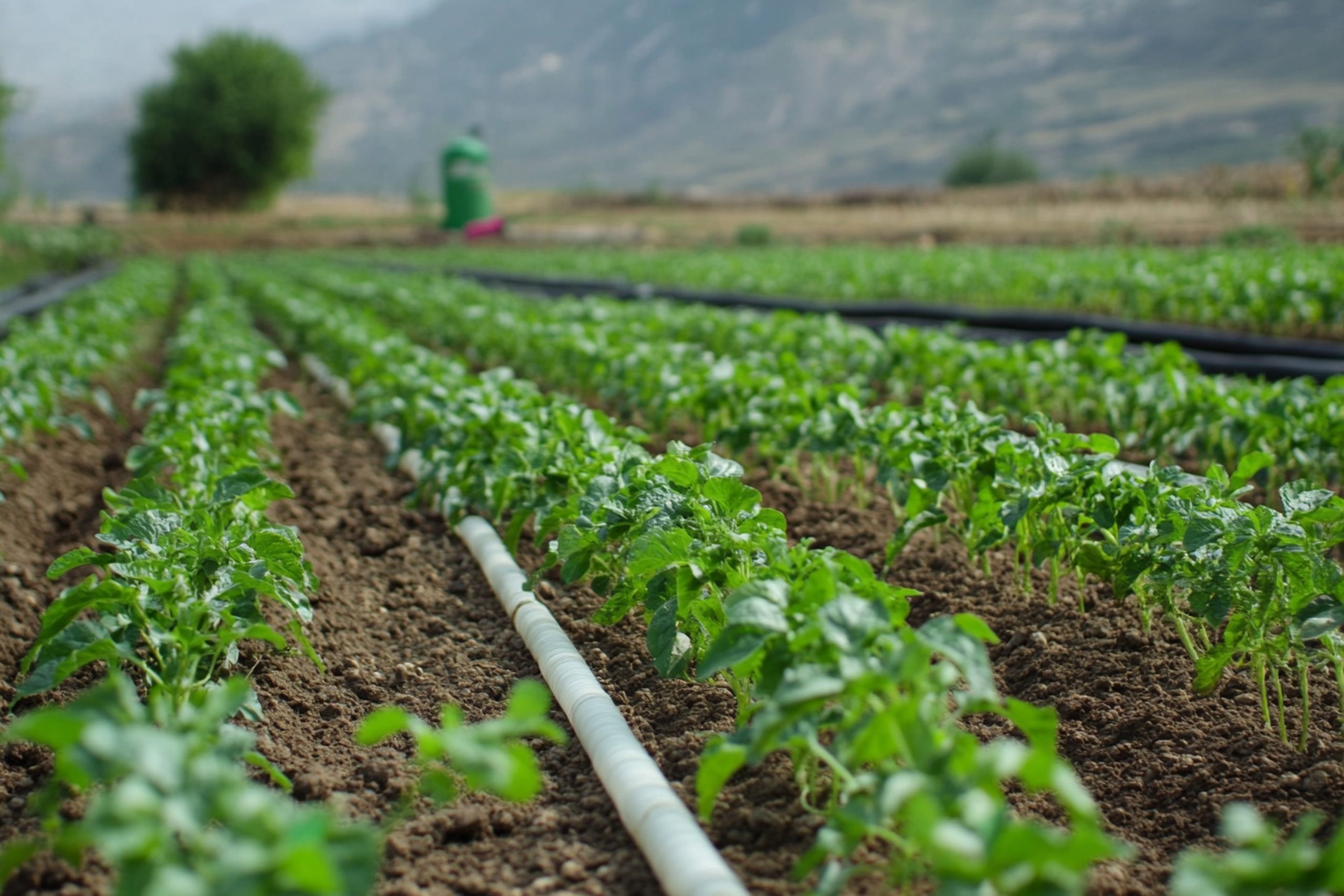
The Mexico micro irrigation systems market is currently valued at USD 485.2 million in 2025 and is projected to expand at a 6.8% CAGR from 2025 to 2035, driven by acute water scarcity in arid agricultural belts. The state of Sonora serves as a critical industrial hub for high-value horticultural exports, where large-scale adoption of precision drip systems is essential for export viability, while the Bajío region surrounding Querétaro acts as the primary deployment center for commercialized greenhouse irrigation infrastructure. Demand-side momentum is fueled by the transition of mid-sized farming cooperatives toward mechanized fertigation to maximize yield per hectare, whereas supply-side innovation is dominated by major global players like Netafim, headquartered in Hatzerim, Israel (founded 1965), and Rivulis Irrigation, based in Gvat, Israel (founded 1966), both of which are aggressively expanding local assembly operations to mitigate tariff volatility. Sustainability efforts are increasingly strictly enforced by the Mexican National Water Commission (CONAGUA), which mandates that agricultural subsidies are now contingent upon the adoption of low-flow water distribution technologies to align with the national commitment to groundwater preservation goals and drought resilience under the current administration's sustainable farming directives.
By Irrigation Technique
- Inline Emitter Tubing
- Pressure Compensating Drippers
- Subsurface Drip Lines
- Static Micro-Sprayers
- Spinning Micro-Sprinklers
- Inverted Greenhouse Emitters
- High Pressure Nozzles
- Adiabatic Cooling Units
- Humidity Control Foggers
- Multi-Outlet Pressure Bubblers
- Basin Flooding Heads
- Flow Regulated Bubblers
By End-User Industry
- Controlled Environment Agriculture
- Greenhouse Vegetable Production
- Ornamental Plant Nurseries
- Industrial Corn Production
- Cotton Cultivation Fields
- Legume Export Operations
- Avocado Export Orchards
- Table Grape Vineyards
- Pecan Tree Plantations
- Public Parks Maintenance
- Municipal Water Reclamation
- Agricultural Research Stations
Competitive Landscape
The Mexican micro-irrigation systems market exhibits a highly consolidated structure, with the top five players controlling approximately 68% of the total revenue share as of 2023. Competitive intensity is driven primarily by technical service provision and the ability to integrate advanced IoT-based fertigation controllers, which have become essential for large-scale agricultural operations in the Bajio and Sonora regions. Strategic differentiation is focused on durability in high-salinity water conditions and the implementation of precision sensors compliant with the National Water Commission (CONAGUA) standards for water efficiency reporting. Leading firms such as Netafim and Rivulis have adopted aggressive distribution strategies, leveraging partnerships with local agricultural cooperatives and credit unions in Sinaloa to bypass traditional retail intermediaries. Recent competitive moves include the expansion of local assembly hubs to avoid import tariffs associated with the United States-Mexico-Canada Agreement (USMCA) and the deployment of modular subsurface drip irrigation kits. Smaller players are increasingly being squeezed out by this trend toward vertical integration and the reliance on subsidized financing programs provided through the Trust Funds for Rural Development (FIRA).
| Company | Est. Year | Headquarters | Details | Details | Details | Details | Details | Details |
|---|---|---|---|---|---|---|---|---|
| Netafim Mexico | 1965 | Zapopan, Mexico | ~ | ~ | ~ | ~ | ~ | ~ |
| Rivulis Irrigation | 1966 | Hermosillo, Mexico | ~ | ~ | ~ | ~ | ~ | ~ |
| Valmont Industries | 1946 | Queretaro, Mexico | ~ | ~ | ~ | ~ | ~ | ~ |
| Jain Irrigation Systems | 1963 | Mexico City, Mexico | ~ | ~ | ~ | ~ | ~ | ~ |
| Lindsay Corporation | 1955 | Guadalajara, Mexico | ~ | ~ | ~ | ~ | ~ | ~ |
🔒 Detailed cross-comparison data are available in the full report. Talk to Us to access complete competitive intelligence.
Growth Drivers
Government Subsidization and Water Management Policies
The Mexican National Water Commission has implemented the Strategic Irrigation Modernization Program to combat persistent droughts in Northern regions like Sonora and Chihuahua. Through this initiative, the federal government allocated 4.2 billion Mexican pesos in 2023 specifically to incentivize the transition from flood-based methods to precision drip irrigation. By providing 50% cost-sharing grants for small-scale landholders, the administration aims to optimize water delivery systems across 120,000 hectares of arid agricultural land, directly increasing operational efficiency for farmers while reducing groundwater extraction by approximately 35% annually.
Expansion of High-Value Export Agriculture
The rapid growth of export-oriented greenhouse vegetable production in states such as Sinaloa and Baja California drives demand for sophisticated fertigation solutions. In 2024, approximately 85% of Mexico's berry exports, which reached a total valuation of 3.1 billion USD, utilize advanced micro-irrigation systems to maintain specific soil moisture profiles. Companies like Netafim, founded in 1965 and headquartered in Tel Aviv, have expanded their local engineering presence to support the technical requirements of these sprawling agribusiness operations that require 24-hour precision monitoring and nutrient delivery systems.
Technological Advancements in Soil Moisture Sensing
Integration of Internet of Things sensors and automated climate control systems is revolutionizing water usage in the Bajío region, home to major industrial agriculture clusters. By 2023, automated micro-irrigation installations deployed across 45,000 acres demonstrated a significant reduction in labor costs for water management. Tech innovators such as Valmont Industries, founded in 1946 and headquartered in Omaha, have deployed satellite-linked field controllers that allow managers to adjust flow rates remotely via mobile applications, ensuring optimal crop hydration while cutting power consumption for pumping stations by 22% during peak operations.
Escalating Water Scarcity and Groundwater Regulation
Legislative pressure from the Secretariat of Environment and Natural Resources to preserve aquifers in Central Mexico has forced industrial growers to adopt water-saving technologies. Following the 2022 emergency drought declaration, municipalities enforced stricter pumping quotas, leading to a 18% increase in demand for micro-irrigation retrofits within the last year. Companies such as Lindsay Corporation, established in 1955 and headquartered in Nebraska, report that the requirement to provide certified water-use logs to local river basin councils has become a primary motivation for irrigation system modernization among large-scale producers.
Market Challenges
High Initial Capital Expenditure
Small-scale farmers frequently struggle with the significant upfront costs of installing complex drip irrigation infrastructure. In 2023, the average cost to equip a single hectare reached 85,000 Mexican pesos, which remains prohibitively expensive for rural cooperatives lacking traditional bank credit access.
Lack of Technical Expertise
The operational complexity of modern automated systems requires specialized training in maintenance and digital integration. Internal audits conducted in 2024 revealed that nearly 40% of installed sensor arrays in remote agricultural districts remain underutilized due to a shortage of qualified field technicians.
Infrastructure and Power Limitations
Unreliable electrical grids in rural zones frequently disrupt the performance of high-pressure pumps and automated control nodes. In 2023, power outages recorded in agricultural corridors across Durango accounted for 28% of all operational failures in micro-irrigation systems, forcing reliance on expensive diesel generators.
Opportunities
Solar-Powered Drip Integration
The integration of photovoltaic cells with smart micro-irrigation controllers offers a significant path for decarbonizing agricultural operations in the Sonora region. By bypassing conventional grid reliance, operators reduce operational costs by 22% as of 2024. This technology pivot aligns with federal sustainability goals established by the Secretariat of Environment and Natural Resources to mitigate water scarcity across arid northern territories.
Government Subsidies in Bajío
The National Water Commission (CONAGUA) has introduced targeted financial incentives for smallholder farmers in the Bajío cluster to upgrade from flood irrigation. These grants specifically target a 35% reduction in groundwater extraction volumes for the 2025 fiscal year. Firms that localize production of filtration and emitter components within Guanajuato are best positioned to capture this surge in state-sponsored capital expenditure.
Precision Agronomy Data Services
Farmers are increasingly seeking AI-driven platforms to manage soil moisture sensor networks that feed real-time analytics to drip hardware. Providers deploying IoT hubs experienced a 14% increase in service-level agreements during 2023. By packaging hardware with automated cloud-based maintenance alerts, manufacturers can secure long-term recurring revenue streams while optimizing water delivery schedules for high-value export crops like Hass avocados.
Future Outlook
The Mexican micro-irrigation market is poised for a transformative trajectory through 2035, driven by the persistent intensification of water stress in key agricultural corridors like Sinaloa and Chihuahua. As the federal government heightens its enforcement of the National Water Law, agricultural enterprises are increasingly compelled to abandon inefficient furrow systems in favor of advanced pressure-compensated drip technology. We project that the adoption of automated irrigation control systems will scale significantly as large agribusiness conglomerates, such as the Mexico City-headquartered Agroindustrial Mexicana founded in 1998, finalize their digital transformation roadmaps. Furthermore, the localized manufacturing efforts by global entities like Netafim, which established its regional hub in Queretaro, will bolster supply chain resilience against geopolitical import fluctuations. By 2030, we anticipate the market will transition toward a service-oriented model, where hardware manufacturers pivot toward comprehensive water-as-a-service offerings. This shift will be underpinned by the increased penetration of satellite-based remote sensing and sub-surface moisture monitoring technologies. As Mexico continues to solidify its role as a premier supplier for the North American produce trade, the mandate for high-efficiency infrastructure will remain a cornerstone of national food security policy. Strategic alignment between local water authorities and the private sector, specifically regarding infrastructure financing, will serve as the primary catalyst for sustained growth across the next decade, ultimately stabilizing the agricultural sector against long-term climate variability.
Major Players
- Netafim Mexico
- Rivulis Irrigation
- Valmont Industries
- Jain Irrigation Systems
- Lindsay Corporation
- Grupo Rotoplas
- Rain Bird Mexico
- Metzer Plas
- Irritec S.p.A
- Hunter Industries
- Mexichem Soluciones Integrales
- Toro Company
- Azud Irrigation
- NaanDanJain
- Plastigama
Key Target Audience
- Drip and Sprinkler Irrigation Manufacturers (e.g., Netafim, Founded 1965, Tel Aviv)
- Agricultural Equipment Distributors (e.g., John Deere Mexico, Founded 1955, Monterrey)
- Large-Scale Commercial Greenhouse Operators (e.g., Hortifrut, Founded 1983, Guadalajara)
- Water Resource Management Service Providers (e.g., Rotoplas, Founded 1978, Mexico City)
- Government and Regulatory Bodies (Comisión Nacional del Agua - CONAGUA)
- Agricultural Technology Startups (e.g., Kilimo, Founded 2014, Querétaro)
- Infrastructure Development Banks (e.g., Banco Nacional de Comercio Exterior - BANCOMEXT)
- Investors and Venture Capital Firms (e.g., IGNIA, Founded 2007, Monterrey)
- Agrochemical and Fertilizer Producers (e.g., Nutrien Ag Solutions, Founded 2018, Chihuahua)
- Sustainable Agriculture NGOs (e.g., CIMMYT, Founded 1966, Texcoco)
- Regional Agricultural Cooperatives (e.g., Productores de Hortalizas de Sinaloa, Culiacán)
Research Methodology
Identification of Key Variables
- Analysts identify primary drivers for micro irrigation growth, including water scarcity metrics from the National Water Commission and adoption rates for precision agriculture.
- The process focuses on quantifying historical CAGR trends since 2018 and evaluating regulatory impacts from the Secretariat of Agriculture and Rural Development.
Market Analysis and Construction
- Researchers build bottom-up data models using 2023 annual reports from major stakeholders like Valmont Industries and Rivulis Irrigation.
- This phase integrates regional crop production data from the SIAP database to project supply-side capacity and demand-side consumption across key hubs like Bajío and the Northern Border states.
Validation and Synthesis
- Independent researchers conduct qualitative interviews with senior agronomists at regional irrigation bureaus and technical directors at local water treatment facilities.
- The process involves vetting initial findings with policy planners in charge of national hydraulic infrastructure to ensure projections for 2035 align with regional climate mitigation targets.
- The findings are synthesized into a cohesive market outlook, consolidating primary data with macroeconomic forecasts from the Bank of Mexico.
- Final output is subjected to rigorous internal peer review at the firm level before concluding on revenue potential, competitive positioning, and risk assessment for the Mexican horticultural sector.
Table of Contents
 Executive Summary
2 Sections
▼
Executive Summary
2 Sections
▼
- Executive Summary
- Research Methodology (Definition Of CONAGUA Irrigation Zones, Top-Down Agricultural Land Valuation, Bottom-Up System Component Sales, Regulatory Compliance Data Analysis, Primary Stakeholder Interview Cycles, Water Scarcity Metric Integration, Historical Import/Export Tracking, Crop Cycle Seasonality Weighting, Distribution Channel Margin Mapping, Technological Adoption Rate Modeling, Triangulation With Ministry Of Agriculture, Forecast Framework Sensitivity Testing)
 Mexico Micro Irrigation Systems Market Overview
8 Sections
▼
Mexico Micro Irrigation Systems Market Overview
8 Sections
▼
- Definition and Scope
- Market Evolution and Industry Genesis
- Drip Irrigation Infrastructure In Mexico
- Water Scarcity Challenges In Northern Mexico
- CONAGUA Regulatory Standards For Irrigation
- Public-Private Sector Adoption Strategies
- Technological Integration In Agribusiness
- Modernization Of Sinaloa Basin Irrigation
 Mexico Micro Irrigation Systems Market Size (2020-2025)
3 Sections
▼
Mexico Micro Irrigation Systems Market Size (2020-2025)
3 Sections
▼
- By Market Value (2020-2025)
- By Hectares Under Irrigation (2020-2025)
- By Annual Unit Shipment Volume (2020-2025)
 Mexico Micro Irrigation Systems Market Segmentation
50 Segments
▼
Mexico Micro Irrigation Systems Market Segmentation
50 Segments
▼
- By Product Type (In Value %)
- Drip Irrigation Components
- Pressure-Compensating Emitters
- Inline Drip Lines
- Tapes With Integrated Emitters
- Drip Sub-main Manifolds
- Self-Cleaning Filtration Systems
- Sprinkler Irrigation Hardware
- Center Pivot Systems
- Linear Move Irrigators
- Impact Sprinklers
- Micro-Sprayers
- Solid Set Systems
- Automation And Control Systems
- Soil Moisture Sensors
- Automated Solenoid Valves
- Cloud-Based Fertigation Controllers
- Remote Telemetry Units
- Weather Station Integration Kits
- Pumping And Power Units
- Solar-Powered Submersible Pumps
- Diesel-To-Electric Conversion Kits
- Variable Frequency Drives
- Booster Pump Stations
- By Crop Application (In Value %)
- High-Value Fruit Orchards
- Vegetable And Greenhouse Production
- Field Crop Agriculture
- Vineyard Operations
- Agro-Forestry And Landscaping
- Forage And Pasture Irrigation
- By Installation Scale (In Value %)
- Smallholder Farm Units
- Large Scale Commercial Operations
- Corporate Agribusiness Clusters
- By Irrigation Technique (In Value %)
- Surface Drip Systems
- Subsurface Drip Systems
- Micro-Sprinkler Systems
- By Geographic Region (In Value %)
- Northwest Mexico
- Bajío Region
- Central Highlands
- Northern Desert
- Southern Mexico
- By Distribution Channel (In Value %)
- Direct Manufacturer Sales
- Agricultural Cooperative Retailers
- Specialized Engineering Distributors
- Government Tender Participation
 Mexico Micro Irrigation Systems Market Analysis
8 Sections
▼
Mexico Micro Irrigation Systems Market Analysis
8 Sections
▼
- Growth Drivers (Government Subsidization and Water Management Policies, Expansion of High-Value Export Agriculture, Technological Advancements in Soil Moisture Sensing, Escalating Water Scarcity and Groundwater Regulation)
- Market Challenges (High Initial Capital Expenditure, Lack of Technical Expertise, Infrastructure and Power Limitations)
- Market Opportunities (Solar-Powered Drip Integration, Government Subsidies in Bajío, Precision Agronomy Data Services)
- Market Trends (Smart Fertigation Adoption, Solar Irrigation Infrastructure, Precision Monitoring Technology)
- Government Regulations
- SWOT Analysis
- Porter's Five Forces Analysis
- PESTLE Analysis
 Mexico Micro Irrigation Systems Market Competitive Analysis
20 Sections
▼
Mexico Micro Irrigation Systems Market Competitive Analysis
20 Sections
▼
- Market Share of Major Players
- Domestic Manufacturing Versus Global Imports
- Specialized Engineering Firms Market Share
- Government Contractor Landscape Analysis
- Low-Cost Kit Brand Penetration
- Premium Precision Agriculture Systems Competition
- Regional Distributor Partnerships Intensity
- Cross Comparison Parameters (Regional Technical Support Coverage, Compatibility With Fertigation Software, Durability In High-Salinity Water, Supply Chain Logistics Capability, Post-Installation Maintenance Training, Certification Compliance ISO 9261, Energy Efficiency Rating)
- Competitive Product Benchmarking (Emitter Discharge Rate LPH, Pressure Operating Range Bar, Anti-Clogging Mechanism Type, UV Resistance Rating, Installation Pipe Diameter MM, Remote Monitoring Latency, Expected Product Lifespan Years)
- Financial and Operational Parameters
- SWOT Analysis of Major Players
- Detailed Profiles of Major Companies
- Netafim – DripNet, Streamline, NetBeat
- Rivulis Irrigation – D5000, T-Tape, HydroPC
- Lindsay Corporation – Zimmatic, FieldNET
- Valmont Industries – Valley Irrigation, Valley 365
- Jain Irrigation Systems – JainPro, J-Line
- Hunter Industries – Eco-Mat, PC Series
- Rain Bird Corporation – XFS Subsurface, IQ Central Control
- Toro Company – Aqua-Traxx, NGE
 Mexico Micro Irrigation Systems Market End-User Analysis
8 Sections
▼
Mexico Micro Irrigation Systems Market End-User Analysis
8 Sections
▼
- Annual Water Usage Savings Percentage
- Average Investment Recovery Period Months
- Adoption Rate In Greenhouse Clusters
- Farm Size Versus System Complexity
- Maintenance Frequency Per Operating Season
- Average Spend On System Upgrades
- Remote Control Usage Frequency Metrics
- Farmer Satisfaction With Technical Support
 Mexico Micro Irrigation Systems Market Future Size (2026-2035)
3 Sections
▼
Mexico Micro Irrigation Systems Market Future Size (2026-2035)
3 Sections
▼
- By Market Value (2026-2035)
- By Hectares Under Irrigation (2026-2035)
- By Annual Unit Shipment Volume (2026-2035)
Frequently Asked Questions
The current market size is USD 0.4852 billion in 2025, projected to reach USD 0.9385 billion by 2035 (6.8% CAGR from 2025 to 2035). This expansion is supported by the ongoing modernization of water management infrastructure in states like Sonora and Chihuahua. The steady growth trajectory reflects increasing adoption rates among large-scale industrial vegetable producers.
High initial capital expenditure remains a significant barrier for small-holder farmers operating outside the northern agricultural corridors. Furthermore, inconsistent availability of technical maintenance support in rural regions often hampers the long-term operational efficiency of installed systems. Fluctuating trade policies and complex import tariffs on precision components continue to impact the cost structure for local distributors.
The market is characterized by the presence of global leaders including Netafim, established in 1965 and headquartered in Hatzerim, Israel, and Rivulis Irrigation, founded in 1966 and based in Gvat, Israel. Local participation is reinforced by specialized service providers such as Rain Bird Mexico, which operates from its regional hub in Guadalajara. These entities maintain a competitive edge through established distribution networks and localized product adaptation.
Government initiatives led by the Comision Nacional del Agua (CONAGUA) prioritize water conservation to combat persistent drought conditions in the northern territories. The increasing demand for high-value horticultural exports to the United States necessitates more efficient, automated irrigation solutions to meet international quality standards. Additionally, private sector investment in smart agriculture technologies is incentivizing farmers to transition away from traditional flood irrigation methods.
There is a distinct shift toward the integration of IoT-enabled sensors that allow for remote monitoring and automated fertilizer application through fertigation systems. Precision farming cooperatives in Bajío are increasingly adopting solar-powered pumping stations to mitigate energy costs. These technological advancements are progressively becoming the standard for commercial-scale operations looking to maximize yield per cubic meter of water.


 Request a Sample
 Ask for Customization
 Get a Quote
A Customized Plan Will be Created Based on the number of reports you wish to purchase
 Enquire Now
