

 Download PDF
 Download PDF
Market Overview
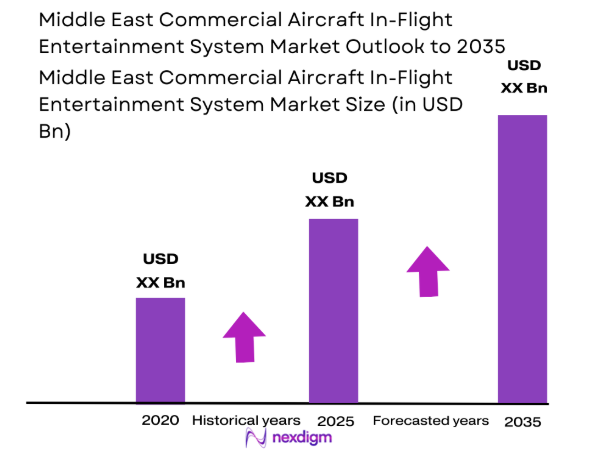
The Middle East Commercial Aircraft In-Flight Entertainment System market is expected to reach USD ~ billion by the end of the assessment period. The market is primarily driven by increasing passenger demand for in-flight connectivity, personalized entertainment, and enhanced flying experiences. Additionally, airlines are investing significantly in the modernization of aircraft fleets to meet these demands. Technological innovations, such as high-speed internet and content streaming systems, are key enablers driving the growth of the market, as they create new possibilities for entertainment in-flight.
The Middle East is experiencing rapid growth in the commercial aircraft sector, with cities such as Dubai, Abu Dhabi, and Doha taking the lead in implementing advanced in-flight entertainment systems. These cities have become regional hubs for international travelers, boosting the demand for superior inflight connectivity and entertainment experiences. Airlines in the Middle East are increasingly focusing on enhancing passenger experience through state-of-the-art in-flight systems, driven by both growing tourism and the expanding aviation sector in the region.
Market Segmentation
By Product Type
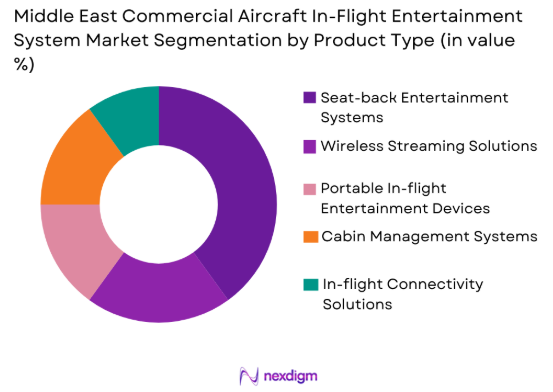
The Middle East Commercial Aircraft In-Flight Entertainment System market is segmented by product type into seat-back entertainment systems, wireless streaming solutions, portable in-flight entertainment devices, cabin management systems, and in-flight connectivity solutions. Recently, seat-back entertainment systems have a dominant market share due to factors such as demand patterns, brand presence, and consumer preference for traditional, interactive entertainment systems. These systems provide a full range of content, including movies, music, and games, and are typically viewed as an essential part of the flying experience. Their widespread adoption is also driven by technological advancements that have made them more affordable and efficient.
By Platform Type
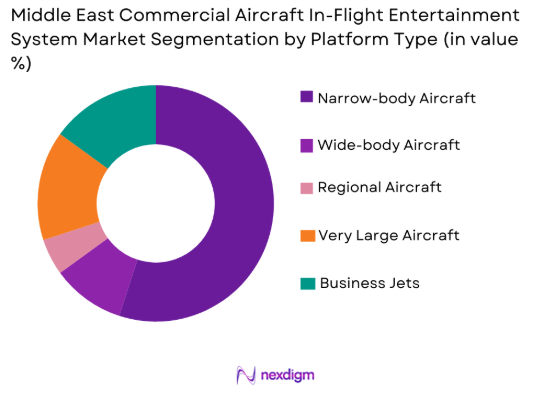
The Middle East Commercial Aircraft In-Flight Entertainment System market is segmented by platform type into narrow-body aircraft, wide-body aircraft, very large aircraft, regional aircraft, and business jets. Recently, wide-body aircraft have a dominant market share due to factors such as demand patterns, brand presence, infrastructure availability, and consumer preference. These aircraft typically carry more passengers, making them ideal for the installation of advanced entertainment systems. Furthermore, their long-haul flight routes necessitate the use of in-flight entertainment to ensure a comfortable and engaging journey for passengers.
Competitive Landscape
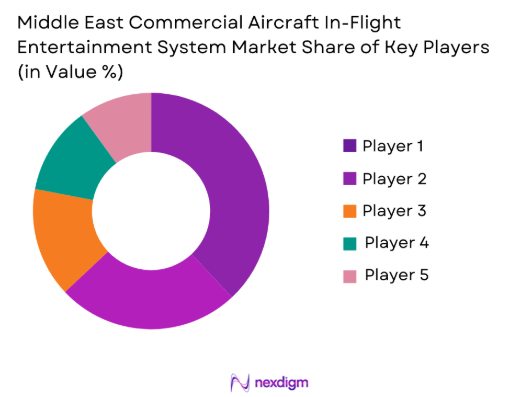
The Middle East Commercial Aircraft In-Flight Entertainment System market is competitive, with key players focusing on technological innovations and partnerships with airlines. Companies like Panasonic Avionics, Thales Group, and Gogo are actively involved in providing state-of-the-art systems that offer seamless connectivity and personalized entertainment experiences. The market is also seeing consolidation as major players seek to expand their market reach by acquiring smaller companies specializing in in-flight systems and connectivity solutions. The increasing demand for high-speed internet and integrated in-flight entertainment systems is a significant factor driving competition among key players in the market.
| Company Name | Establishment Year | Headquarters | Technology Focus | Market Reach | Key Products | Revenue | Market-Specific Parameter |
| Panasonic Avionics | 1979 | United States | ~ | ~ | ~ | ~ | ~ |
| Thales Group | 1893 | France | ~ | ~ | ~ | ~ | ~ |
| Gogo Inc. | 1991 | United States | ~ | ~ | ~ | ~ | ~ |
| Honeywell International | 1906 | United States | ~ | ~ | ~ | ~ | ~ |
| Rockwell Collins | 1933 | United States | ~ | ~ | ~ | ~ | ~ |
Middle East Commercial Aircraft In-Flight Entertainment System Market Analysis
Growth Drivers
Technological Advancements in In-flight Connectivity
One of the key growth drivers of the Middle East Commercial Aircraft In-Flight Entertainment System market is the continuous development of in-flight connectivity solutions. Airlines are increasingly prioritizing connectivity by implementing high-speed internet, allowing passengers to stay connected throughout their flight. This technological advancement is particularly crucial for long-haul flights, where passengers expect to have access to entertainment and communication. The demand for in-flight Wi-Fi and the integration of advanced entertainment options such as streaming services are propelling this segment of the market. Airlines are also utilizing Wi-Fi to offer e-commerce and other digital services, creating new revenue streams and enhancing the overall passenger experience. As connectivity technology evolves, airlines are able to offer more personalized and interactive entertainment solutions, which is further increasing passenger satisfaction and driving market growth.
Expansion of Airline Fleets
Another significant growth driver is the rapid expansion of airline fleets in the Middle East, particularly in countries such as the UAE, Saudi Arabia, and Qatar. These nations have made substantial investments in expanding their air fleets, aiming to accommodate the growing number of international travelers. As a result, the demand for modern in-flight entertainment systems is rising, as these airlines look to differentiate themselves by offering premium experiences to passengers. Fleet expansion plans involve the acquisition of larger and more advanced aircraft, which are equipped with cutting-edge in-flight entertainment and connectivity systems. This expansion is fueled by the growing aviation sector in the region, which is supported by favorable economic conditions and an increasing number of international and regional flights.
Market Challenges
High Initial Costs
The implementation and installation of advanced in-flight entertainment systems can be prohibitively expensive for many airlines, particularly for smaller operators. These high initial costs are a significant challenge, as airlines must balance the cost of the entertainment systems with other operational expenses such as fuel, crew salaries, and maintenance. The cost of upgrading or retrofitting existing fleets with the latest in-flight entertainment technologies can also be a financial burden. Smaller regional carriers in particular may face difficulties justifying the expense of advanced in-flight systems, which may hinder the widespread adoption of these technologies. The rising demand for connectivity and entertainment options can only be met if airlines are willing to invest in the required infrastructure, which may not be feasible for all players in the market.
Cybersecurity Risks
With the increasing integration of wireless technology and in-flight connectivity systems, cybersecurity risks have become a growing concern in the Middle East Commercial Aircraft In-Flight Entertainment System market. As more systems become interconnected, the potential for cyberattacks on aircraft communication and entertainment networks increases. Airlines must invest in advanced cybersecurity measures to protect both passenger data and critical aviation systems from unauthorized access. Failure to implement robust cybersecurity systems could lead to breaches of sensitive information, such as payment data and personal communications, and disrupt operations. As the market grows, it will be increasingly important for airlines to address cybersecurity challenges to ensure the safety and privacy of their passengers.
Opportunities
Emerging Demand for Sustainable Technologies
An opportunity for the Middle East Commercial Aircraft In-Flight Entertainment System market lies in the growing demand for sustainable and energy-efficient technologies. Airlines and aircraft manufacturers are under increasing pressure to reduce their carbon footprint and adopt environmentally friendly practices. As part of these efforts, there is a rising trend towards energy-efficient in-flight entertainment solutions that minimize energy consumption while still providing high-quality services. Airlines are focusing on implementing systems that are both eco-friendly and cost-effective, such as solar-powered entertainment systems and LED-based displays. As sustainability becomes a priority in the aviation industry, there is significant potential for growth in this segment.
Integration of AI and Personalized Entertainment
The integration of Artificial Intelligence (AI) in in-flight entertainment systems presents an exciting opportunity for market growth. AI can enable the delivery of personalized content, adjusting entertainment options based on passenger preferences, flight data, and previous choices. Airlines can also use AI-powered systems to optimize the management of in-flight entertainment, predicting and addressing maintenance issues proactively. This personalization of the passenger experience enhances customer satisfaction and encourages brand loyalty. As the aviation industry increasingly moves towards data-driven solutions, airlines that invest in AI-enhanced systems will be better positioned to meet consumer demand for customized entertainment during their flights.
Future Outlook
Over the next five years, the Middle East Commercial Aircraft In-Flight Entertainment System market is expected to continue its growth trajectory, driven by advancements in technology, increasing passenger expectations, and airline investments in fleet modernization. The demand for high-speed in-flight connectivity and enhanced entertainment options will be met with innovative solutions such as AI-powered content, sustainable technologies, and improved cybersecurity protocols. Additionally, regulatory support and favorable economic conditions in the Middle East will likely bolster the market’s expansion, enabling airlines to offer more personalized experiences to passengers while maintaining operational efficiency.
Major Players
- Panasonic Avionics
- Thales Group
- Gogo Inc.
- Honeywell International
- Rockwell Collins
- Zodiac Aerospace
- Lufthansa Systems
- Viasat Inc.
- Inmarsat Aviation
- SITAONAIR
- Immarsat
- Global Eagle Entertainment
- Vislink
- AeroMobile
- Embraer
Key Target Audience
- Investments and venture capitalist firms
- Government and regulatory bodies
- Aircraft manufacturers
- Aerospace component suppliers
- Airline operators
- Airport infrastructure developers
- In-flight service providers
- Technology integrators
Research Methodology
Step 1: Identification of Key Variables
In this step, the key variables affecting the market are identified, such as technological trends, passenger behavior, and economic factors. These variables form the foundation for market analysis.
Step 2: Market Analysis and Construction
A detailed analysis is conducted using both primary and secondary data sources, including interviews with industry experts and market reports, to construct a comprehensive market model.
Step 3: Hypothesis Validation and Expert Consultation
Market hypotheses are validated through discussions with industry experts, ensuring the data and assumptions are accurate. This step refines the analysis and forecasts.
Step 4: Research Synthesis and Final Output
Data is synthesized into a coherent report, summarizing key insights, trends, and forecasts to provide actionable recommendations for stakeholders in the Middle East Commercial Aircraft In-Flight Entertainment System market.

- Executive Summary
- Research Methodology (Definitions, Scope, Industry Assumptions, Market Sizing Approach, Primary & Secondary Research Framework, Data Collection & Verification Protocol, Analytic Models & Forecast Methodology, Limitations & Research Validity Checks)

- Market Definition and Scope
- Value Chain & Stakeholder Ecosystem
- Regulatory / Certification Landscape
- Sector Dynamics Affecting Demand
- Strategic Initiatives & Infrastructure Growth

- Growth Drivers
Rising Passenger Demand for Personalized In-Flight Entertainment
Technological Advancements in Connectivity & Streaming Services
Increasing Focus on Enhancing Passenger Experience
Growing Investment in Aircraft Modernization Programs
Rising Adoption of Smart Cabin Solutions - Market Challenges
High Installation and Maintenance Costs
Technological Integration and Interoperability Issues
Cybersecurity Risks in In-Flight Systems
Regulatory Barriers and Certification Challenges
Operational Downtime and System Failures - Market Opportunities
Partnerships with Telecom Companies for Enhanced Connectivity
Growth of In-flight Advertising Opportunities
Adoption of Sustainable and Energy-efficient Technologies - Trends
Integration of AI and Machine Learning for Personalized Content
Rise in Demand for High-speed Internet Connectivity
Increase in Adoption of Streaming-Based Entertainment Systems
Growing Integration of In-flight Shopping and E-commerce Features
Advancements in AR/VR for In-Flight Entertainment - Government Regulations & Defense Policy
Data Privacy Regulations for Passenger Information
Government Investments in Aviation Infrastructure
Regulations on In-Flight Connectivity and Communication Systems

- By Market Value, 2020-2025
- By Installed Units, 2020-2025
- By Average System Price, 2020-2025
- By System Complexity Tier, 2020-2025

- By System Type (In Value%)
Seat-back Entertainment Systems
Wireless Streaming Solutions
Portable In-Flight Entertainment Devices
Cabin Management Systems
In-flight Connectivity Solutions - By Platform Type (In Value%)
Narrow-body Aircraft
Wide-body Aircraft
Very Large Aircraft
Regional Aircraft
Business Jets - By Fitment Type (In Value%)
Line-fit Solutions
Retrofit Solutions
Hybrid Solutions
Modular Solutions
Custom Solutions - By End User Segment (In Value%)
Commercial Airlines
Private Airlines
Charter Airlines
Government / Military
Leisure Airlines - By Procurement Channel (In Value%)
Direct Procurement
OEMs & System Integrators
Tenders & Bidding
Private Sales
Third-party Distributors - By Material / Technology (In Value%)
LCD Screens
OLED Screens
Touchscreen Panels
LED Lighting Systems
Wi-Fi Systems

- Market structure and competitive positioning
- Market share snapshot of major players
- Cross Comparison Parameters (System Type, Platform Type, Procurement Channel, End User Segment, Fitment Type, Material/Technology, Region, Product Innovation)
- SWOT Analysis of Key Players
- Pricing & Procurement Analysis
- Porter’s Five Forces
- Key Players
Panasonic Avionics
Gogo Inc.
Thales Group
Honeywell International
Rockwell Collins
Lufthansa Systems
Viasat Inc.
Immarsat
Zodiac Aerospace
Global Eagle Entertainment
Inmarsat Aviation
Vislink
AeroMobile
SITAONAIR
Embraer

- Increasing Demand for Digital In-flight Content from Passengers
- Airlines’ Focus on Improving Passenger Experience and Retention
- Military and Government Aircraft Modernization Projects
- Growth in Low-cost Airlines’ Adoption of IFE Systems

- Forecast Market Value, 2026-2035
- Forecast Installed Units, 2026-2035
- Price Forecast by System Tier, 2026-2035
- Future Demand by Platform, 2026-2035


 Request a Sample
 Ask for Customization
 Get a Quote
 Enquire Now