

 Download PDF
Market Overview
The Middle East E-commerce Market is supported by rapid digital transformation, expanding smartphone penetration, and increasing adoption of digital payment systems across GCC and MENA countries. The market generated nearly USD ~ trillion in digital transaction value, while mobile commerce contributed a significant share of regional online purchases. Growth in app-based shopping, hyperlocal delivery ecosystems, and digital wallets has strengthened transaction frequency across categories such as fashion, electronics, grocery, and beauty products. Government-backed digital economy initiatives and investments in logistics infrastructure are accelerating marketplace expansion and improving consumer accessibility across the region.
Cities and countries such as Riyadh, Dubai, Abu Dhabi, Jeddah, and Cairo dominate the Middle East E-commerce Market due to advanced digital infrastructure, higher internet penetration, and strong consumer purchasing power. Saudi Arabia remains a leading digital commerce hub because of Vision 2030 investments in non-oil economic sectors, fintech ecosystems, and logistics modernization. The UAE benefits from free-zone infrastructure and cross-border trade connectivity, while Egypt is emerging rapidly due to its large youth population and increasing online buyer base. These regions also attract strong venture capital investment and rapid marketplace expansion due to favorable digital commerce policies.
Market Segmentation
By Product Category
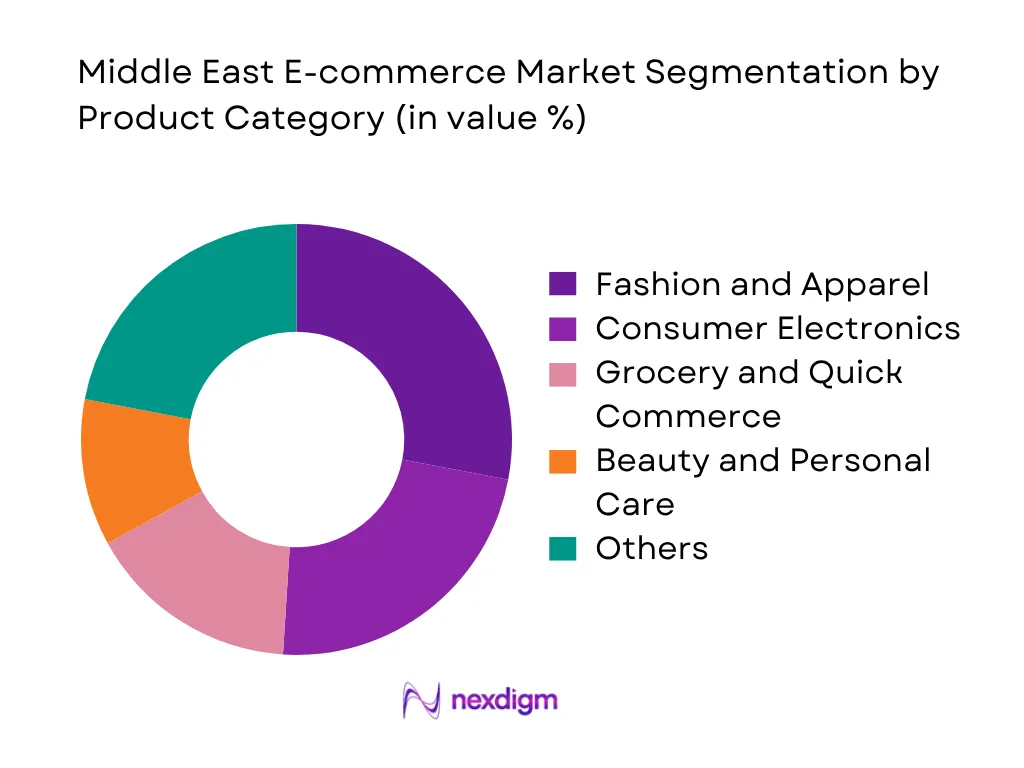
The Middle East E-commerce Market is segmented by product category into fashion and apparel, consumer electronics, grocery and quick commerce, beauty and personal care, home and furniture, luxury products, healthcare products, automotive accessories, and others. Fashion and apparel dominate the Middle East E-commerce Market because of strong demand for international brands, rising influencer-driven shopping behavior, and increasing mobile-first purchasing trends among younger consumers. Consumers across GCC countries increasingly prefer online apparel shopping due to broad SKU availability, fast delivery services, and premium digital shopping experiences. Expansion of social commerce platforms, livestream shopping, and flexible payment solutions such as digital wallets and installment-based payments further support category dominance. In addition, growing luxury consumption and higher disposable incomes in urban centers such as Dubai and Riyadh continue to strengthen online fashion retail penetration across regional marketplaces.
By Payment Method
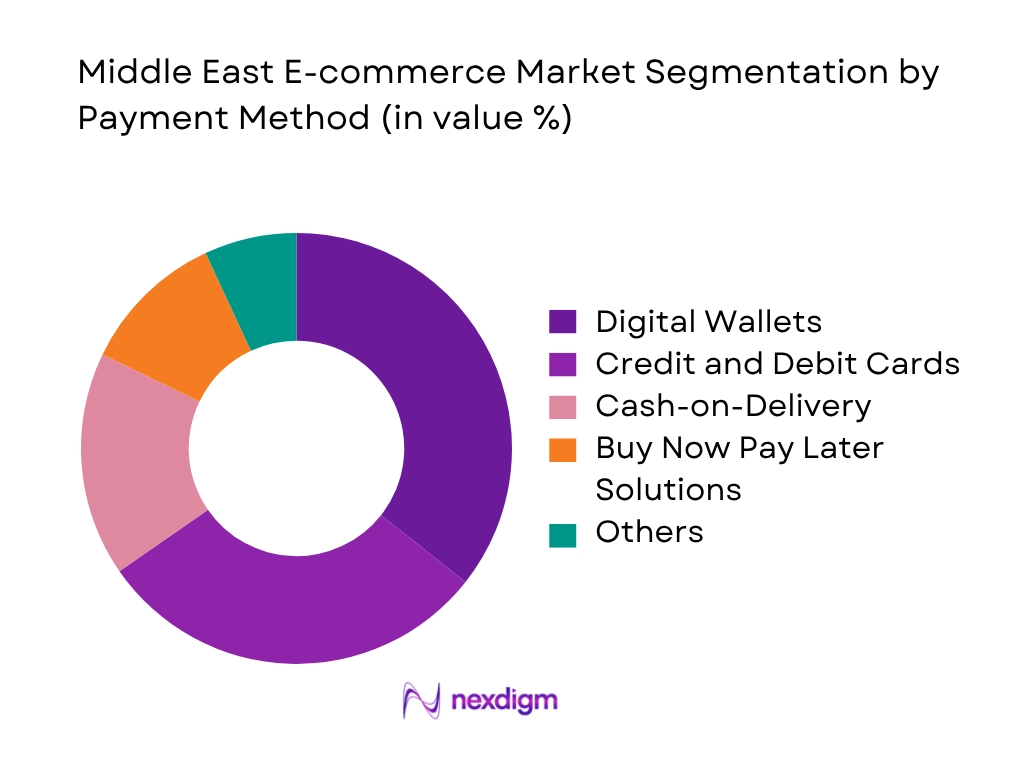
The Middle East E-commerce Market is segmented by payment method into digital wallets, credit and debit cards, cash-on-delivery, buy now pay later solutions, bank transfers, and cryptocurrency payments. Digital wallets dominate the Middle East E-commerce Market due to rapid fintech adoption, increasing smartphone-based transactions, and government initiatives promoting cashless economies. Consumers increasingly prefer mobile wallet systems because of faster checkout experiences, secure payment authentication, and integration with app-based commerce platforms. The rise of super apps and quick commerce services has further accelerated digital payment usage among urban consumers across Saudi Arabia and the UAE. Additionally, merchants increasingly prefer digital wallets due to reduced transaction failures, improved settlement efficiency, and integrated loyalty reward systems. Expansion of open banking infrastructure and embedded finance ecosystems across GCC countries is also strengthening digital payment penetration within regional online retail channels.
Competitive Landscape
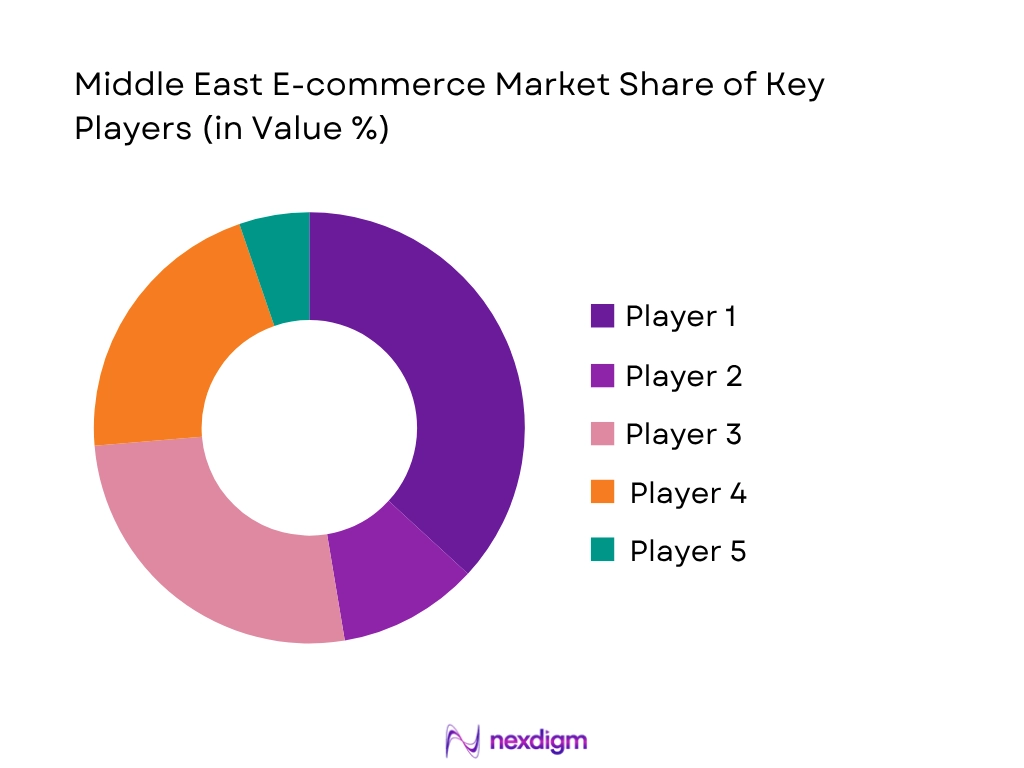
The Middle East E-commerce Market is moderately consolidated, with leading marketplace operators focusing on fulfillment expansion, mobile application innovation, AI-driven customer engagement, and cross-border logistics capabilities. Companies are strengthening market presence through warehouse investments, quick commerce networks, and integration of digital payment ecosystems. Increasing competition is also emerging from social commerce operators and hyperlocal grocery delivery platforms targeting high-frequency urban consumers.
| Company | Establishment Year | Headquarters | Core Business Focus | Fulfillment Infrastructure | Mobile Commerce Strength | Payment Integration | Cross-Border Reach | Quick Commerce Presence |
| Amazon Middle East | 1994 | Seattle, USA | ~ | ~ | ~ | ~ | ~ | ~ |
| Noon | 2017 | Riyadh, Saudi Arabia | ~ | ~ | ~ | ~ | ~ | ~ |
| Namshi | 2011 | Dubai, UAE | ~ | ~ | ~ | ~ | ~ | ~ |
| SHEIN | 2008 | Singapore | ~ | ~ | ~ | ~ | ~ | ~ |
| Carrefour Online | 1959 | France | ~ | ~ | ~ | ~ | ~ | ~ |
Middle East E-commerce Market Analysis
Growth Drivers
Rising Internet Penetration and Mobile Connectivity
The rapid expansion of internet accessibility and smartphone adoption across GCC countries is significantly accelerating digital commerce activity within the Middle East E-commerce Market. Saudi Arabia and the UAE both recorded internet penetration reaching nearly full population coverage, while mobile cellular subscriptions in Saudi Arabia exceeded subscriptions per 100 individuals. Expansion of high-speed mobile connectivity and app-based shopping behavior is increasing transaction frequency across online marketplaces. Government investments in digital infrastructure, smart city development, and cloud computing ecosystems are strengthening mobile commerce adoption. Urban consumers increasingly rely on smartphone applications for grocery delivery, fashion purchases, electronics shopping, and digital payment transactions, supporting long-term online retail expansion across the region.
Government-Led Economic Diversification and Non-Oil Sector Expansion
Government diversification programs across the Middle East are strengthening digital retail ecosystems and accelerating online commerce growth. Saudi Arabia’s non-oil economy recorded strong expansion, supported by large-scale investments in logistics, fintech, retail infrastructure, and digital business ecosystems. Public expenditure initiatives under economic transformation programs are encouraging SME digitization, marketplace seller onboarding, and development of omnichannel retail infrastructure. The UAE continues strengthening digital trade through free zones, smart customs systems, and advanced logistics connectivity. Expansion of technology-focused economic policies across GCC countries is increasing private sector participation within online retail, while digital licensing reforms are simplifying e-commerce business registration and cross-border operations for marketplace sellers and retailers.
Market Challenges
High Logistics Costs and Dependence on Cross-Border Imports
The Middle East E-commerce Market faces operational challenges due to dependence on imported consumer products and high logistics expenses across geographically dispersed markets. Many online retailers rely heavily on international sourcing for fashion products, electronics, and premium goods, increasing exposure to shipping disruptions and customs delays. Infrastructure investments remain elevated as governments continue expanding warehousing capacity, logistics corridors, and fulfillment infrastructure to support online commerce growth. Last-mile delivery costs remain particularly high outside major urban centers because of lower population density and fragmented delivery routes. Rising freight costs and geopolitical shipping disruptions in regional trade corridors also continue affecting inventory availability and delivery lead times for cross-border e-commerce transactions.
Cybersecurity Risks and Digital Payment Fraud Concerns
The rapid rise in digital transactions across the Middle East E-commerce Market has increased cybersecurity vulnerabilities and online payment fraud exposure. Expansion of mobile wallets, digital banking platforms, and buy now pay later systems has created broader attack surfaces for phishing, payment fraud, and identity theft activities. Governments across GCC countries are increasing investments in cybersecurity regulations, digital identity systems, and secure payment frameworks to mitigate risks associated with expanding online financial ecosystems. E-commerce operators continue investing heavily in AI-powered fraud detection systems, encrypted checkout infrastructure, and multi-factor authentication technologies to maintain consumer trust. Rising online shopping penetration and app-based transactions continue increasing pressure on retailers and fintech providers to strengthen digital security capabilities.
Market Opportunities
Expansion of SME Digitalization and Marketplace Seller Ecosystems
The increasing digitalization of SMEs across GCC and MENA countries is creating substantial opportunities for the Middle East E-commerce Market. Governments are actively supporting entrepreneurship, cloud-based business registration systems, and fintech infrastructure development to encourage small business participation within digital commerce ecosystems. Expansion of marketplace seller programs and mobile commerce applications is enabling SMEs to access broader customer bases across regional markets. Increasing smartphone penetration and internet accessibility are also helping local businesses transition from offline retail to omnichannel operations. This transformation is generating significant opportunities for logistics providers, digital payment companies, and marketplace operators to expand seller onboarding, transaction volumes, and digital retail participation across emerging urban and semi-urban markets.
Growth of Digital Payments and Cashless Commerce Ecosystems
Rapid development of digital payment infrastructure across GCC countries presents a major opportunity for online retail operators and fintech service providers. Governments continue promoting cashless economies through open banking policies, digital identity systems, and electronic payment regulations aimed at increasing financial inclusion and transaction transparency. Expansion of mobile wallet ecosystems, embedded finance platforms, and app-based commerce services is improving payment accessibility for younger consumers and first-time online shoppers. Increasing urbanization and smartphone usage are strengthening digital transaction ecosystems across grocery delivery, healthcare commerce, luxury retail, and quick commerce services. Integration of loyalty programs, installment payment systems, and AI-powered payment authentication technologies is also supporting broader adoption of digital commerce platforms across the Middle East region.
Future Outlook
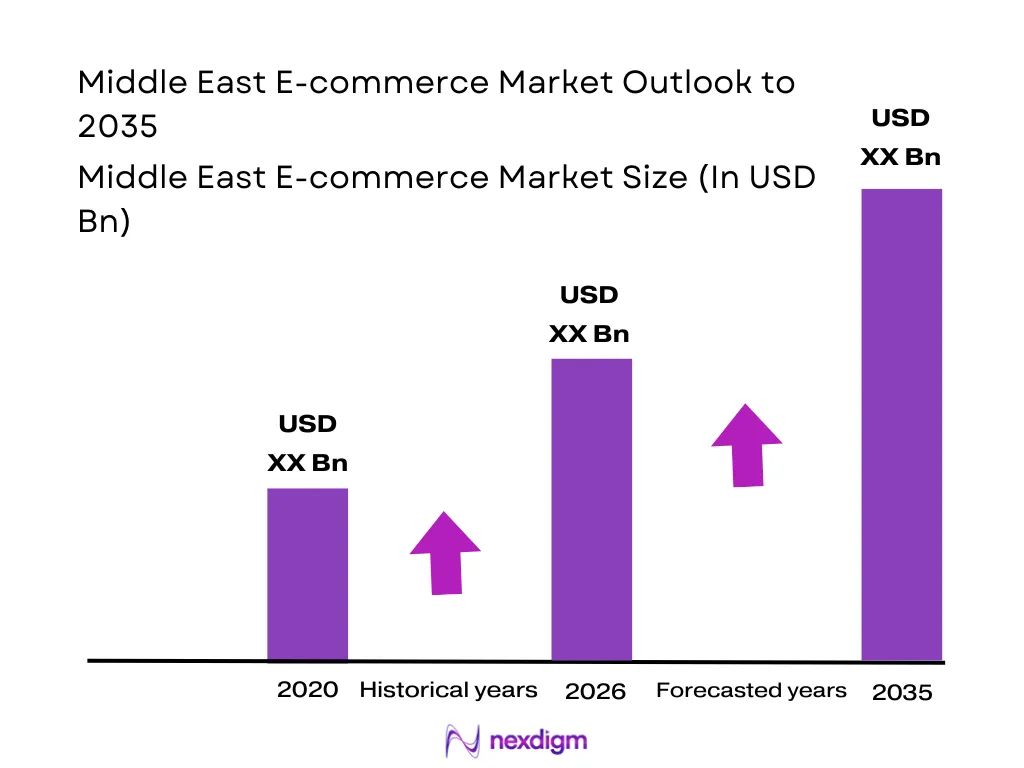
The Middle East E-commerce Market is expected to witness substantial expansion over the coming years due to increasing investments in digital infrastructure, fintech ecosystems, and smart logistics capabilities. Growing smartphone penetration, urbanization, and digital payment adoption are expected to strengthen online retail penetration across categories such as fashion, electronics, grocery, and luxury products. Governments across GCC countries are likely to continue supporting digital economy transformation through smart city initiatives, cloud infrastructure investments, and SME digitization programs. Quick commerce and hyperlocal delivery ecosystems are expected to transform urban retail consumption patterns across Riyadh, Dubai, Abu Dhabi, and Doha. Marketplace operators are likely to increase investments in warehouse automation, AI-powered personalization, and micro-fulfillment centers to improve operational efficiency and customer experience. The expansion of social commerce, livestream shopping, and influencer-driven retailing is also expected to strengthen customer engagement across younger demographic groups.
Major Player
- Amazon Middle East
- Noon
- Namshi
- SHEIN
- Carrefour Online
- Ounass
- Trendyol Gulf
- Talabat Mart
- Careem Quik
- Instashop
- Mumzworld
- Jumia Egypt
- AliExpress Middle East
- Jahez
- eXtra Online
Key Target Audience
- Marketplace Platform Operators
- Digital Payment and Fintech Providers
- Logistics and Last-Mile Delivery Companies
- Retail Chains and Omnichannel Retailers
- Warehouse and Fulfillment Infrastructure Providers
- Investments and Venture Capitalist Firms
- Government and Regulatory Bodies
- Cloud Infrastructure and E-commerce Technology Providers
Research Methodology
Step 1: Identification of Key Variables
The initial phase involved identifying critical variables influencing the Middle East E-commerce Market, including internet penetration, digital payment adoption, logistics infrastructure, online retail behavior, and marketplace seller expansion. Extensive secondary research was conducted using government publications, digital economy reports, company disclosures, and retail databases to understand the regional e-commerce ecosystem and value chain structure.
Step 2: Market Analysis and Construction
Historical market analysis was conducted using transaction volume data, online retail indicators, digital buyer penetration statistics, and payment infrastructure trends. Market estimations were derived through bottom-up calculations based on country-level digital commerce activity, product category performance, and marketplace transaction analysis across GCC and MENA countries.
Step 3: Hypothesis Validation and Expert Consultation
The preliminary findings were validated through interviews with marketplace operators, logistics providers, fintech companies, warehouse operators, and digital commerce executives. These consultations provided operational insights regarding seller onboarding trends, fulfillment challenges, customer acquisition strategies, and technology adoption across the Middle East E-commerce Market.
Step 4: Research Synthesis and Final Output
The final phase involved integrating qualitative and quantitative findings into a comprehensive market intelligence framework. Cross-validation was conducted using trade statistics, digital economy indicators, fintech adoption trends, and marketplace transaction data to ensure reliability and consistency of market estimates, segmentation analysis, and long-term projections.

- Executive Summary
- Research Methodology (Market Definitions and Assumptions, Abbreviations, Research Framework, Bottom-Up Market Estimation, Top-Down Validation, Digital Commerce Mapping, Retail and Marketplace Audit Analysis, Trade Flow Assessment, Primary Interviews with Marketplace Operators and Logistics Providers, Forecasting Model, Limitations and Assumptions)

- Definition and Scope
- Evolution of Digital Commerce in the Middle East
- Industry Ecosystem and Stakeholder Mapping
- Supply Chain and Value Chain Analysis
- Marketplace and Fulfillment Infrastructure Landscape
- Digital Payment Ecosystem Analysis

- Growth Drivers
Rising Internet Penetration and Mobile Connectivity
Government-Led Economic Diversification and Non-Oil Sector Expansion
Expansion of Digital Payment Infrastructure
Growth of Quick Commerce and Hyperlocal Delivery Ecosystems
Increasing Smartphone-Based Shopping Behavior - Market Challenges
High Logistics Costs and Dependence on Cross-Border Imports
Cybersecurity Risks and Digital Payment Fraud Concerns
Fragmented Regulatory Framework Across GCC and MENA
Reverse Logistics and Return Management Complexity
Cross-Border Customs and Import Delays - Market Opportunities
Expansion of SME Digitalization and Marketplace Seller Ecosystems
Growth of Digital Payments and Cashless Commerce Ecosystems
AI-Driven Personalization and Recommendation Engines
Expansion of Arabic Language Commerce Platforms
Growth in Social Commerce and Influencer-Led Retailing - Market Trends
Rise of Livestream Shopping
Dark Store and Micro-Fulfillment Expansion
Growth in Buy Now Pay Later Adoption
AI Chatbots and Conversational Commerce
Sustainable Packaging and Green Logistics Initiatives - Government Regulations
Consumer Protection and E-commerce Laws
Digital Taxation Policies
Data Protection and Privacy Regulations
Electronic Payment Compliance Frameworks
Cross-Border Trade and Customs Regulations - Porter’s Five Forces Analysis
- Pricing Analysis
- Competition Ecosystem

- By Gross Merchandise Value, 2020-2025
- By Transaction Volume, 2020-2025
- By Average Order Value, 2020-2025
- By Digital Buyer Base, 2020-2025

- By Product Category (in Value %)
GMV Contribution
Average Basket Size
SKU Penetration
Repeat Purchase Frequency - By Payment Method (in Value %)
Transaction Success Rate
Digital Wallet Penetration
Fraud Risk Exposure
Refund Processing Efficiency - By Business Model (in Value %)
Marketplace Take Rate
Seller Penetration
Inventory Ownership
Fulfillment Dependency - By Fulfillment Model (in Value %)
Delivery Time Efficiency
Warehouse Capacity
Last-Mile Reach
Return-to-Origin Rate - By Device Type (in Value %)
Mobile Commerce Usage
App Engagement Rate
Session Duration
Conversion Rate - By Sales Channel (in Value %)
Marketplace Traffic Share
Online Conversion Rate
Subscription Penetration
Customer Retention Rate - By Country (in Value %)
Saudi Arabia
United Arab Emirates
Qatar
Kuwait
Bahrain
Oman

- Market Share Analysis of Major Players on the Basis of GMV and Transaction Volume
- Cross Comparison Parameters (Company Overview, Marketplace Seller Base, GMV Contribution, Mobile App Downloads, Fulfillment Network Capacity, Delivery SLA Efficiency, Warehouse Infrastructure, Digital Wallet Integration, Cross-Border Reach, SKU Portfolio, Technology Infrastructure, Customer Retention Strategy, AI Personalization Capability, Advertising Revenue Contribution, Last-Mile Delivery Strength, Omnichannel Capabilities)
- Competitive Benchmarking Matrix
- SWOT Analysis of Major Players
- Pricing and Commission Analysis by Marketplace Category
- Detailed Profiles of Major Companies
Amazon Middle East
Noon
Namshi
SHEIN
Carrefour Online
Ounass
Trendyol Gulf
Talabat Mart
Careem Quik
Instashop
Mumzworld
Jumia Egypt
AliExpress Middle East
Jahez
eXtra Online

- Online Shopping Frequency Analysis
- Digital Payment Preference Mapping
- Consumer Spending and Basket Analysis
- Brand Loyalty and Marketplace Switching Behavior
- Purchase Decision Parameters
- Mobile Commerce Usage Patterns

- By Gross Merchandise Value, 2026-2035
- By Transaction Volume, 2026-2035
- By Average Order Value, 2026-2035
- By Digital Buyer Base, 2026-2035


 Request a Sample
 Ask for Customization
 Get a Quote
 Enquire Now