
 Download PDF
 Download PDF
Market Overview
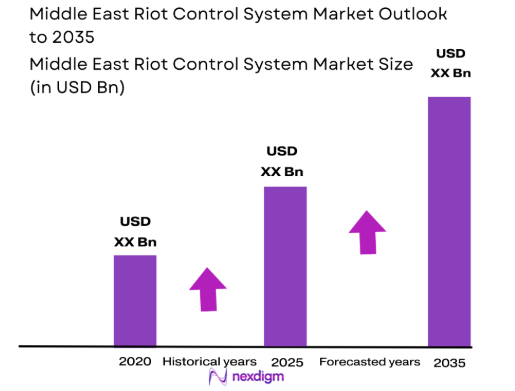
The Middle East Riot Control System market is projected to experience significant growth, driven by the increasing need for law enforcement agencies to manage civil unrest and public security challenges effectively. Based on a recent historical assessment, the market size is expected to reach USD ~ billion, driven by the region’s rising investment in public safety technologies, particularly non-lethal systems like water cannons, tear gas dispensers, and sound cannons. These technologies have gained traction due to their capacity to control large crowds while minimizing casualties. The demand is further propelled by government initiatives focused on bolstering national security and modernizing law enforcement agencies.
Key regions such as the UAE, Saudi Arabia, and Qatar are dominant in the market due to their proactive approach toward enhancing security infrastructure, influenced by the escalating threats posed by civil unrest and terrorism. These countries have established large-scale investments in defense and public safety, which has accelerated the adoption of advanced riot control technologies. Their geopolitical importance and the ongoing need for maintaining stability in urban areas are primary factors driving the demand for riot control systems in these nations.
Market Segmentation
By Product Type
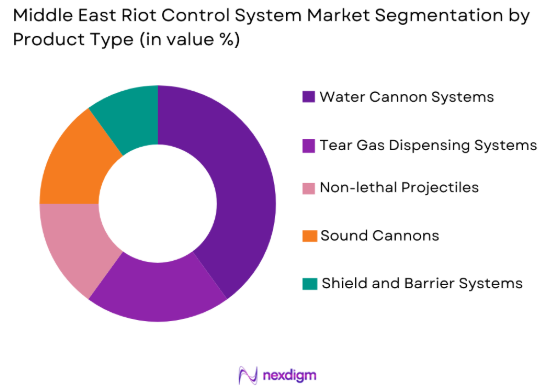
The Middle East Riot Control System market is segmented by product type into water cannon systems, tear gas dispensing systems, non-lethal projectiles, sound cannons, and shield and barrier systems. Recently, water cannon systems have a dominant market share due to their effectiveness in crowd control and the widespread use of these systems by law enforcement agencies across the region. Water cannons offer the advantage of scalability in terms of operational flexibility, providing law enforcement with the ability to adjust the intensity and volume of water deployed. Additionally, water cannon systems are preferred in regions with frequent demonstrations, as they are non-lethal and efficient in managing large-scale protests and riots. The effectiveness, ease of use, and relatively low cost of these systems make them an attractive option for law enforcement agencies, further solidifying their dominance in the market.
By Platform Type
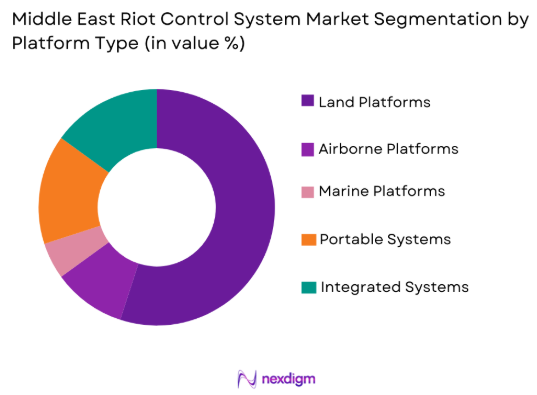
The Middle East Riot Control System market is segmented by platform type into land platforms, aerial platforms, marine platforms, portable systems, and integrated systems. Recently, land platforms, particularly vehicle-mounted systems such as water cannon trucks, have a dominant market share due to their mobility and effectiveness in managing large-scale riots. These systems are highly adaptable, offering both defensive and offensive capabilities during protests. The ability to rapidly deploy such systems in urban environments makes them highly sought after by law enforcement. Additionally, land-based platforms benefit from their extensive use in crowd control and are seen as essential for urban security in regions prone to unrest. Their relatively low operational complexity, combined with a high degree of utility, has led to their leading position in the market.
Competitive Landscape
The competitive landscape in the Middle East Riot Control System market is characterized by both global and regional players. These companies offer a diverse range of products and services, including non-lethal weapons, crowd control solutions, and security systems, driving market competition. The market is consolidating as leading players increase their focus on expanding product portfolios and technological advancements to capture greater market share. Major players also benefit from strong government contracts and growing investments in defense and public safety.
| Company Name | Establishment Year | Headquarters | Technology Focus | Market Reach | Key Products | Revenue (USD) | Innovation Focus |
| L3 Technologies | 1949 | New York, USA | ~ | ~ | ~ | ~ | ~ |
| Rheinmetall AG | 1889 | Düsseldorf, Germany | ~ | ~ | ~ | ~ | ~ |
| Lockheed Martin | 1912 | Bethesda, USA | ~ | ~ | ~ | ~ | ~ |
| Textron Systems | 1923 | Providence, USA | ~ | ~ | ~ | ~ | ~ |
| Tactical Defense Systems | 1995 | Washington, USA | ~ | ~ | ~ | ~ | ~ |
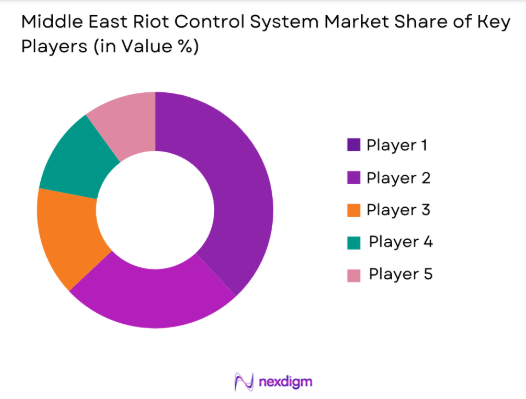
Middle East Riot Control System Market Analysis
Growth Drivers
Increased Security Concerns
The growth of the Middle East Riot Control System market is driven primarily by the escalating security concerns across the region. Political instability, civil unrest, and rising terrorism threats have spurred demand for non-lethal crowd control solutions. Governments are increasingly investing in advanced riot control systems, such as water cannons and sound cannons, to prevent violence during demonstrations and protests. These technologies enable law enforcement agencies to manage large crowds without resorting to deadly force, thereby minimizing casualties and mitigating risks to public safety. Additionally, the technological advancements in these systems have made them more effective and efficient, contributing to their growing adoption across various countries in the region. As the demand for public safety solutions continues to rise, the market is expected to expand further, driven by both government and private sector investments in riot control technologies. Moreover, international partnerships and collaborations are fueling the development of more advanced systems that are both reliable and cost-effective.
Technological Advancements in Non-lethal Weapons
Another key driver is the rapid advancement of non-lethal weaponry. The evolution of riot control technologies, including the integration of artificial intelligence and robotics, has significantly enhanced the effectiveness of riot control systems. These systems can now more accurately assess crowd dynamics, deploy targeted responses, and ensure minimal harm to civilians while maintaining law and order. Additionally, the continuous development of non-lethal weapons, such as precision-targeted projectiles, has revolutionized how law enforcement agencies approach crowd control. With growing interest in minimizing civilian casualties, the demand for these advanced systems is expected to increase. Furthermore, governments are keen to modernize their security infrastructure with the latest technologies, thus driving the growth of the market.
Market Challenges
High Operational Costs
One of the main challenges faced by the Middle East Riot Control System market is the high operational cost of implementing and maintaining advanced riot control technologies. Many law enforcement agencies and governments in the region are constrained by budget limitations, which affect their ability to procure and sustain sophisticated systems. The purchase cost of high-tech equipment such as water cannons, sound systems, and non-lethal projectiles is significant, and regular maintenance adds to the financial burden. Additionally, the need for ongoing training for law enforcement personnel on the use of these advanced systems further drives up costs. The combination of these factors makes it difficult for smaller agencies to adopt modern riot control solutions, posing a challenge to the widespread adoption of these technologies.
Regulatory and Ethical Concerns
Another major challenge is the growing concern over the regulatory and ethical implications of using non-lethal riot control systems. The use of such technologies can raise human rights and legal concerns, particularly when it comes to issues like privacy, excessive use of force, and the potential for misuse. Governments must navigate a complex landscape of international law and human rights standards when implementing riot control measures. Additionally, there is resistance from certain segments of society, particularly human rights organizations, that oppose the use of non-lethal weapons due to the potential for harm or abuse. These challenges may slow down the adoption of advanced riot control systems in the region, as governments and law enforcement agencies face increasing pressure to ensure that their actions remain within the bounds of ethical and legal frameworks.
Opportunities
Expansion of Law Enforcement Budgets
With increasing threats from civil unrest and terrorism, there is a growing opportunity for the riot control system market in the Middle East, driven by expanding law enforcement budgets. Governments across the region are allocating more funds for public safety, security, and modernization of law enforcement technologies. As a result, there is a growing demand for high-tech riot control systems that can effectively manage large-scale protests while minimizing harm. This trend presents a significant opportunity for companies operating in the market to expand their presence in the region and introduce innovative solutions that cater to the needs of law enforcement agencies. Additionally, as urbanization continues, there will be an increased need for sophisticated crowd management systems in major cities, providing further growth opportunities for market players.
Partnerships with Private Sector and Security Contractors
Another promising opportunity lies in the growing trend of public-private partnerships (PPPs) in the defense and security sectors. Many governments in the Middle East are seeking to collaborate with private security contractors to enhance their riot control capabilities. These partnerships enable law enforcement agencies to access cutting-edge technologies and specialized expertise, while private companies can benefit from government contracts and long-term relationships. As security contractors expand their operations in the region, they will require advanced riot control systems to meet the demands of their clients. This trend is likely to fuel the growth of the market, as more public-private partnerships are established to address the region’s security challenges.
Future Outlook
The future of the Middle East Riot Control System market looks promising, driven by a combination of increased security threats, technological advancements, and a strong focus on non-lethal crowd control. Over the next five years, the market is expected to expand significantly, with an emphasis on integrating advanced technologies such as AI, robotics, and automation into riot control systems. These innovations will further enhance the effectiveness and precision of crowd management solutions. Government investments in security infrastructure, particularly in countries with high urbanization rates, will also support market growth. Additionally, regulatory support for non-lethal technologies is expected to create a favorable environment for market expansion.
Major Players
- L3 Technologies
- Rheinmetall AG
- Lockheed Martin
- Textron Systems
- Tactical Defense Systems
- Northrop Grumman
- BAE Systems
- Leonardo
- General Dynamics
- Thales Group
- Rheinmetall Defence
- Saab Group
- United Tactical Systems
- AM General
- Israel Military Industries
Key Target Audience
- Investments and venture capitalist firms
- Government and regulatory bodies
- Law enforcement agencies
- Military forces
- Private security contractors
- Defense contractors
- International defense organizations
- Urban planning and security firms
Research Methodology
Step 1: Identification of Key Variables
The first step in the research methodology involves identifying the key variables influencing the market, such as technological advancements, regulations, and demand trends in riot control systems.
Step 2: Market Analysis and Construction
Market analysis is then conducted by gathering data from industry reports, government publications, and key players, followed by constructing a market framework based on this data.
Step 3: Hypothesis Validation and Expert Consultation
The hypotheses formed during the analysis phase are validated through consultations with industry experts, ensuring the accuracy and relevance of the market data.
Step 4: Research Synthesis and Final Output
The final step involves synthesizing the collected data, expert opinions, and market trends into a comprehensive report, providing actionable insights for stakeholders.

- Executive Summary
- Research Methodology (Definitions, Scope, Industry Assumptions, Market Sizing Approach, Primary & Secondary Research Framework, Data Collection & Verification Protocol, Analytic Models & Forecast Methodology, Limitations & Research Validity Checks)

- Market Definition and Scope
- Value Chain & Stakeholder Ecosystem
- Regulatory / Certification Landscape
- Sector Dynamics Affecting Demand
- Strategic Initiatives & Infrastructure Growth

- Growth Drivers
Increasing Urbanization and Civil Unrest
Government Focus on Law Enforcement Modernization
Rising Security Threats and Terrorism Concerns
Technological Advancements in Non-lethal Weapons
Growing Investment in Public Safety Infrastructure - Market Challenges
High Costs of Advanced Riot Control Systems
Regulatory Restrictions on Riot Control Equipment
Public Backlash Against Non-lethal Weapons
Integration and Interoperability Issues
Concerns Over Ethical and Humanitarian Implications - Market Opportunities
Expansion of Law Enforcement Agencies in Emerging Markets
Integration of AI and Robotics for Riot Control
Rising Demand for Crowd Management Technologies - Trends
Increase in Demand for Automated Riot Control Systems
Integration of AI in Surveillance and Control Equipment
Focus on Minimizing Harm to Civilians
Development of Non-lethal and Precision Control Technologies
Growth of Public-Private Partnerships in Security Systems - Government Regulations & Defense Policy
Tightening of Non-lethal Weapon Regulations
Increased Focus on Ethical Use of Riot Control Technologies
Introduction of New Certification Standards for Riot Control Systems

- By Market Value, 2020-2025
- By Installed Units, 2020-2025
- By Average System Price, 2020-2025
- By System Complexity Tier, 2020-2025

- By System Type (In Value%)
Water Cannon Systems
Tear Gas Dispensing Systems
Non-lethal Projectiles
Sound Cannons
Shield and Barrier Systems - By Platform Type (In Value%)
Land Platforms
Aerial Platforms
Marine Platforms
Portable Systems
Integrated Systems - By Fitment Type (In Value%)
Vehicle Mounted Solutions
Hand-held Solutions
Stationary Systems
Integrated System Solutions
Modular Solutions - By EndUser Segment (In Value%)
Law Enforcement Agencies
Military Forces
Private Security Contractors
Government Authorities
Emergency Response Units - By Procurement Channel (In Value%)
Government Tenders
Direct Procurement
Private Sector Procurement
International Bidding
Third-party Distributors - By Material / Technology (In Value%)
Electromagnetic Technology
Chemical-based Materials
Hydraulic Technology
Ballistic-resistant Materials
Robotics and Automation

- Market structure and competitive positioning
- Market share snapshot of major players
- Cross Comparison Parameters (System Type, Platform Type, Procurement Channel, End User Segment, Fitment Type)
- SWOT Analysis of Key Players
- Pricing & Procurement Analysis
- Porter’s Five Forces
- Key Players
L3 Technologies
Rheinmetall AG
Lockheed Martin
Thales Group
Textron Systems
Nonlethal Technologies, Inc.
Tactical Defense Systems
United Tactical Systems
General Dynamics
Crowd Control Experts
Armored Group LLC
Harris Corporation
Boeing
Kongsberg Gruppen
Leonardo

- Law Enforcement Agencies Increasing Adoption of Automated Systems
- Military Forces Seeking Advanced Non-lethal Control Solutions
- Private Security Contractors Expanding Services for Urban Protection
- Government Authorities Focusing on Public Safety and Crowd Control

- Forecast Market Value, 2026-2035
- Forecast Installed Units, 2026-2035
- Price Forecast by System Tier, 2026-2035
- Future Demand by Platform, 2026-2035


 Request a Sample
 Ask for Customization
 Get a Quote
 Enquire Now