

 Download PDF
Market Overview
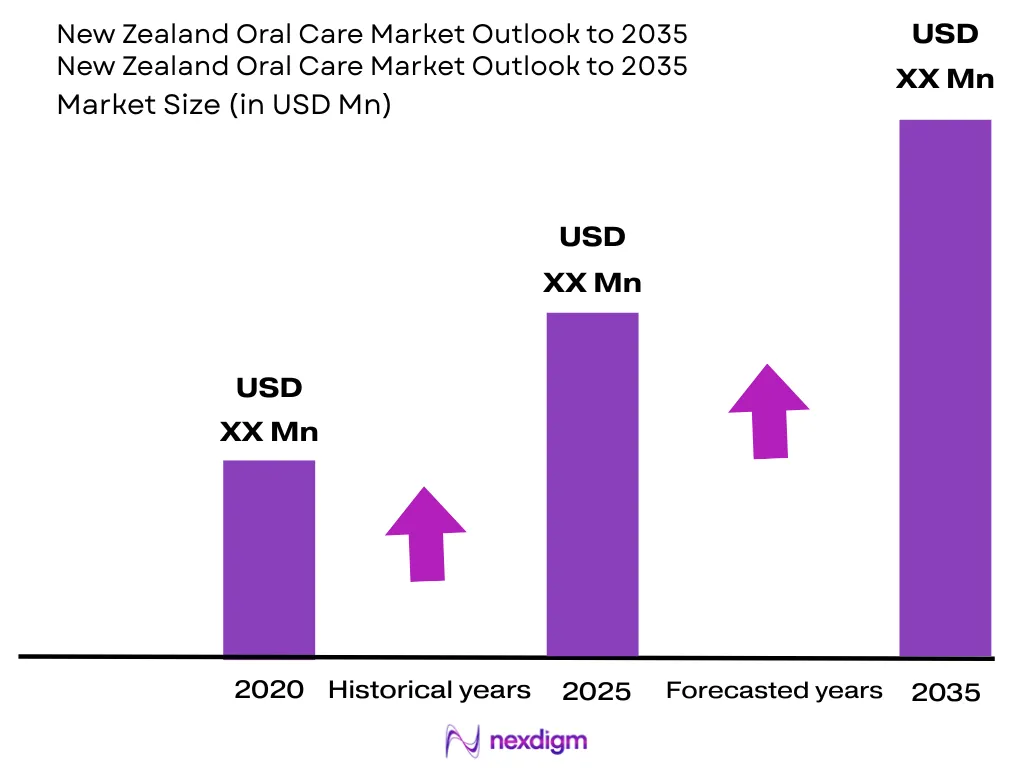
The New Zealand Oral Care Market is valued at USD ~ million in 2024, based on Nexdigm Market Forecast projections, with the market forecast to reach USD ~ million by 2028 and grow at a 5.42% CAGR across the available forecast window; this report applies that CAGR as the reference forecast rate for the requested long-range outlook. Market demand is driven by toothpaste, toothbrushes, mouthwash, whitening, sensitivity care, and natural oral-care products, with toothpaste identified as the largest product segment.
Market Segmentation
By Product Type
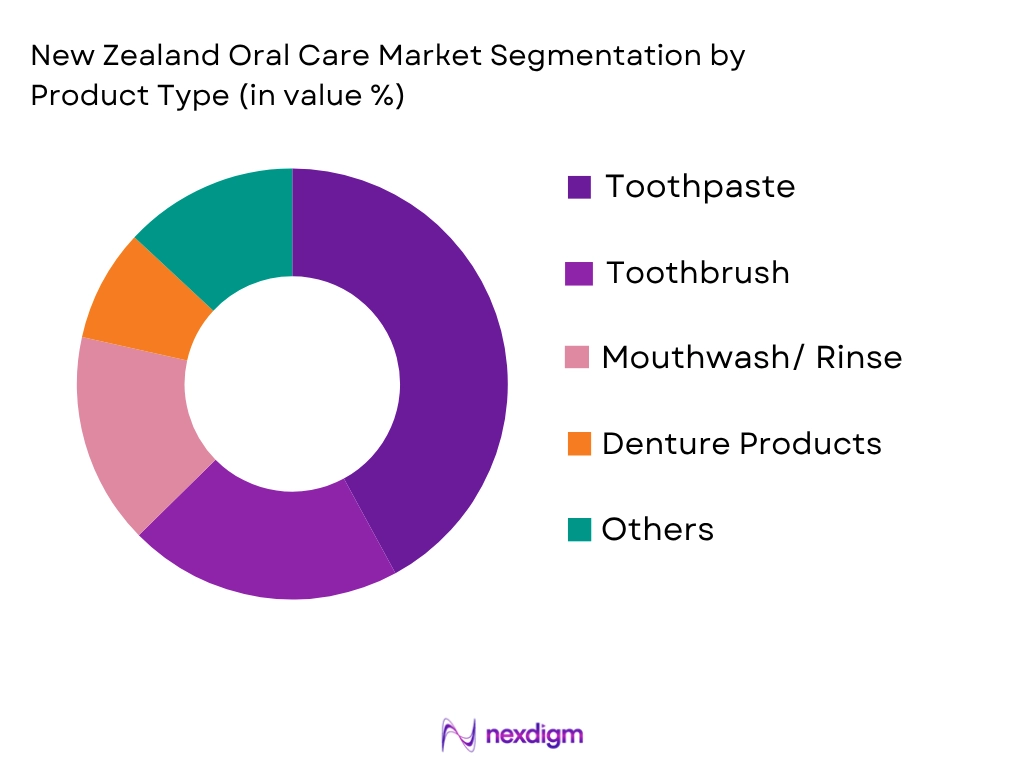
New Zealand Oral Care Market is segmented by product type into toothpaste, toothbrush manual/electric, and mouthwash/rinse. Recently, toothpaste has a dominant market share in New Zealand under product type segmentation, due to its daily-use nature, high household penetration, and strong role in cavity protection, sensitivity care, whitening, and gum-health routines. Toothpaste remains the largest segment globally by revenue share, with recent market data attributing approximately 49-50% of oral care value to the toothpaste category, and the New Zealand market reflects this pattern given its consumer alignment with preventive and problem-solution oral care. Premium variants such as Sensodyne, Colgate Total, Colgate Sensitive Pro-Relief, and enamel-repair toothpastes also support value growth because consumers increasingly trade up from basic cavity-protection products to clinically positioned oral care solutions available across pharmacies and supermarkets.
By Distribution Channel
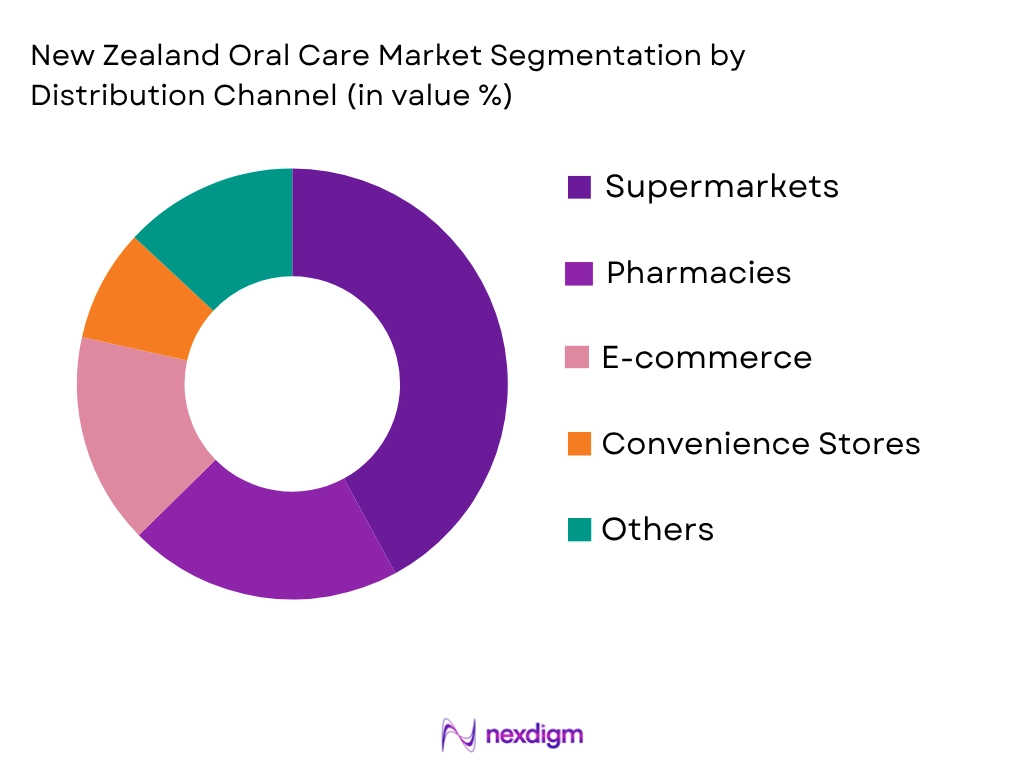
New Zealand Oral Care Market is segmented by distribution channel into pharmacy, supermarkets, and e-commerce. Recently, supermarkets have a dominant market share in New Zealand under distribution channel segmentation, due to their role as primary household replenishment destinations for everyday personal-care and oral hygiene products. The main supermarket operators — Woolworths New Zealand (Countdown/Woolworths-branded stores), Pak’nSave, and New World — carry broad toothpaste, toothbrush, and mouthwash ranges in high-traffic personal-care aisles. Pharmacy chains including Unichem, Life Pharmacy, Chemist Warehouse, and Bargain Chemist have grown in importance for sensitivity-care, gum-care, and dentist-recommended premium SKUs, while e-commerce through platforms such as Countdown Online, pharmacy websites, and direct brand stores is growing through price comparison, bundles, and subscription-style replenishment.
Competitive Landscape
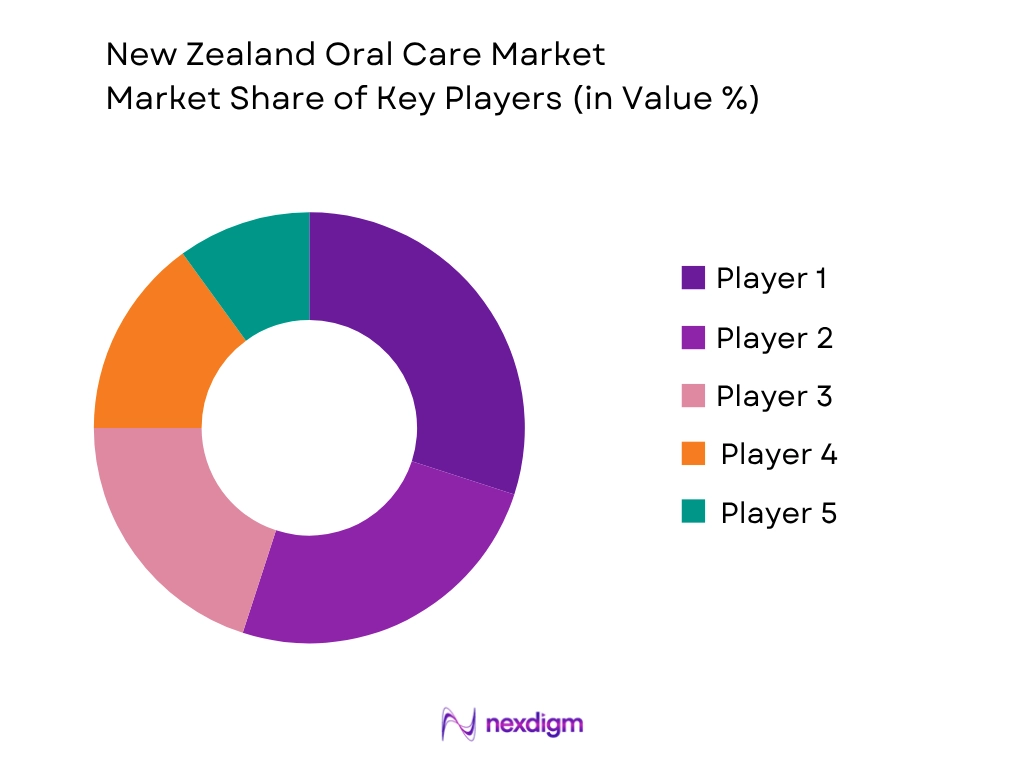
The New Zealand Oral Care Market is dominated by global FMCG and consumer-health companies, including Colgate-Palmolive, Haleon (Sensodyne, Parodontax), Procter & Gamble (Oral-B), Unilever, and Johnson & Johnson (Listerine), alongside specialist brands such as Philips Sonicare, Curaprox, TePe, Sunstar GUM, and local natural brand Ecostore. Competition is led by premium sensitivity care, whitening, gum care, electric toothbrushes, and retailer-led promotional visibility. Procter & Gamble, Colgate-Palmolive, and Haleon are among the key vendors operating in the New Zealand oral care space through established importer and distributor relationships with major supermarket and pharmacy retail chains.
| Company | Establishment Year | Headquarters | Manufacturing Facilities | Product Portfolio | Distribution Reach | Cold Chain Strength | Functional Products | Key Brands |
| Colgate-Palmolive | 1806 | ~ | ~ | ~ | ~ | ~ | ~ | ~ |
| Haleon | 2022 | ~ | ~ | ~ | ~ | ~ | ~ | ~ |
| Johnson & Johnson | 1886 | ~ | ~ | ~ | ~ | ~ | ~ | ~ |
| Procter & Gamble | 1837 | ~ | ~ | ~ | ~ | ~ | ~ | ~ |
| Unilever | 1929 | ~ | ~ | ~ | ~ | ~ | ~ | ~ |
New Zealand Oral Care Market Analysis
Growth Drivers
Rising Preventive Oral Hygiene Awareness
New Zealand’s preventive oral hygiene demand is supported by an established dental-care infrastructure, long-standing public oral health programs, and a growing consumer base for routine oral-care products. Stats NZ reported an estimated resident population of 5,356,700 at 31 December 2024, expanding the addressable base for daily-use toothpaste, toothbrushes, mouthwash, floss, and dental-clinic-influenced products. The Health Workforce Plan 2024 published by Health New Zealand (Te Whatu Ora) notes that the dental workforce includes dentists working across both private practices and Health NZ settings, with around 3.7% of dentists employed by Health NZ while the majority serve the adult population in private practices. New Zealand has provided free public oral health care for children through Community Oral Health Services since 1921, creating a strong early-life fluoride toothpaste and preventive brushing culture. The macroeconomic backdrop further supports oral-care adoption: World Bank data shows New Zealand’s GDP at USD 260.17 billion and GDP per capita at USD 48,747 in 2024, indicating solid consumer capacity for routine health-and-personal-care expenditure.
Premium Sensitive Toothpaste Uptake
Premium sensitive toothpaste uptake is supported by New Zealand’s aging population, middle-to-high income base, and strong pharmacy and supermarket health retail environment. Stats NZ reported an estimated resident population of 5,356,700 at 31 December 2024, with the median age of females at 39.2 years and males at 37.4 years, indicating an adult-skewed consumer base well positioned for sensitivity and gum-care oral products. Age-related oral concerns such as gum recession, enamel wear, dentine hypersensitivity, and post-treatment sensitivity are commercially relevant given New Zealand’s aging demographic profile. Dental workforce data from Health New Zealand’s 2024 Workforce Plan notes that most adult dental care is private, reinforcing the role of dentist recommendations in driving sensitivity toothpaste selection. Affordability is supported by World Bank GDP per capita of USD 48,747 in 2024. This environment favors clinically positioned toothpaste brands that sell sensitivity relief, enamel protection, gum care, and dentist-recommended credentials rather than basic cavity protection alone.
Market Challenges
High Brand Loyalty
High brand loyalty is a structural challenge in the New Zealand Oral Care Market because the category is mature, frequently purchased, and heavily shaped by repeated household habits. The market serves a national population of approximately 5.27 million people in mid-2024 and 5.36 million at end-2024, meaning brands compete repeatedly for the same households rather than relying on large untapped regional expansion. Strong professional influence also reinforces habitual brand selection, with dentists in private practice recommending familiar sensitivity, gum-care, and fluoride protection products to adult patients. The retail environment is concentrated around supermarkets, pharmacies, and convenience-led replenishment points, making shelf recall and promotional visibility critical. World Bank data shows New Zealand’s GDP per capita of USD 48,747 in 2024, a moderate-to-high income level that helps consumers remain loyal to established premium or trusted products rather than switching only on entry-level affordability.
Promotional Price Wars
Promotional price wars are a key challenge because New Zealand’s oral-care products are sold through competitive supermarket and pharmacy channels where toothpaste, toothbrushes, mouthwash, and replacement brush heads are frequently promoted at discounted prices. Consumer NZ research published in 2025 highlighted a growing ‘pharmacy war’ in New Zealand, with Chemist Warehouse, Bargain Chemist, Life Pharmacy, and Unichem competing aggressively on pricing and advertising spend for personal-care and health products. According to Nielsen research data cited by Consumer NZ, chemists recorded the biggest growth in advertising spend in New Zealand in 2024 — up 39% on 2023 — while Chemist Warehouse was the fourth-largest advertiser in New Zealand in 2024, outspending major household brands. In a cost-of-living sensitive market, where real GDP per capita growth was -2.0% in 2024 according to economic data, consumers actively compare promotions across pharmacies, supermarkets, and online platforms, creating sustained price pressure on oral care margins.
Market Opportunities
Sonic Toothbrush Upgrade
Sonic toothbrush upgrade represents a strong future-growth opportunity because New Zealand combines a health-conscious consumer base, growing dental professional network, and digitally enabled retail behavior. World Bank data records New Zealand’s GDP at USD 260.17 billion and GDP per capita at USD 48,747 in 2024, supporting discretionary upgrades from manual toothbrushes to electric and sonic toothbrush systems. Demand justification is also supported by oral-care professional influence, with Health New Zealand’s 2024 Workforce Plan noting that dentists predominantly serve the adult population in private practices, creating opportunities to recommend powered brushing for plaque control, gum health, orthodontic care, and post-treatment maintenance. Retail channel readiness is favorable because pharmacy chains including Chemist Warehouse and Unichem, as well as supermarket operators such as Woolworths/Countdown and New World, provide wide personal-care shelf space and increasingly stock electric toothbrush handles, replacement heads, and oral-care devices for New Zealand consumers.
Alcohol-Free Mouthwash
Alcohol-free mouthwash is a future-growth opportunity because New Zealand’s oral-care buyers are increasingly positioned around preventive, family-safe, gum-care, breath-care, and sensitivity-compatible routines. The opportunity is supported by a national consumer base of approximately 5.36 million people at end-2024, growing dental workforce access through private dental practices serving adult consumers, and free public oral health services for children that embed fluoride and preventive-care habits from an early age. Community Oral Health Services, which has served children since 1921, creates a foundation of oral hygiene awareness that extends into adult mouthwash and rinse adoption. These conditions favor alcohol-free formats positioned around daily rinsing, gum comfort, orthodontic use, and family oral hygiene, sold through pharmacies and supermarkets where the personal-care aisle is a primary discovery channel.
Future Outlook
Over the forecast period, the New Zealand Oral Care Market is expected to grow steadily, supported by premium toothpaste, electric toothbrush upgrades, sensitivity and gum-health solutions, and pharmacy and supermarket-led product discovery. Growth will also be supported by an aging population, higher engagement with private dental services, and stronger consumer interest in whitening, alcohol-free mouthwash, natural ingredients, and sustainable packaging. E-commerce will increase visibility for bundled oral-care kits, but supermarkets and pharmacies will remain central to replenishment behavior. The market’s long-term CAGR reference is 5.42%.
Major Players
- Colgate-Palmolive
- Haleon
- Procter & Gamble
- Unilever
- Johnson & Johnson
- Lion Corporation
- GlaxoSmithKline Consumer Healthcare
- Sunstar GUM
- Jordan
- Philips Sonicare
- Curaprox
- TePe
- Ora2
- Kodomo
- Ecostore
Key Target Audience
- Oral care product manufacturers
- Toothpaste and toothbrush brand owners
- Pharmacy and health-beauty retail chains
- Supermarket and hypermarket operators
- E-commerce marketplace operators
- Dental clinic chains and dental product distributors
- Investments and venture capitalist firms
- Government and regulatory bodies (Medsafe, Environmental Protection Authority, Ministry of Health New Zealand, Dental Council of New Zealand, New Zealand Dental Association)
Research Methodology
Step 1: Identification of Key Variables
The initial phase involves mapping the New Zealand Oral Care Market ecosystem, including brand owners, importers, distributors, retail pharmacies, supermarkets, e-commerce platforms, dental clinics, and regulatory agencies. Core variables include product mix, channel split, oral-care usage frequency, premium SKU pricing, dentist influence, and regulatory compliance requirements under Medsafe and the EPA Cosmetic Products Group Standard.
Step 2: Market Analysis and Construction
Historical and current market data are compiled from published market reports, trade references, retail availability, product-level SKU mapping, and public healthcare indicators. The sizing model studies toothpaste, toothbrushes, mouthwash, whitening, sensitivity, and gum-care products across modern trade, pharmacies, e-commerce, and clinic-linked retail.
Step 3: Hypothesis Validation and Expert Consultation
Market assumptions are validated through structured interviews with oral-care distributors, pharmacy category managers, dentists, e-commerce sellers, and brand representatives. These consultations help verify category dominance, price bands, premiumization trends, promotional cycles, and consumer purchase behavior across New Zealand’s geographically distributed market.
Step 4: Research Synthesis and Final Output
The final stage triangulates top-down market sizing with bottom-up SKU and channel-level validation. Competitive positioning, segment shares, growth drivers, and future opportunities are synthesized into a business-focused output for product planning, market entry, channel strategy, investment screening, and portfolio expansion.

- Executive Summary
- Research Methodology (Market Definitions and Assumptions, Abbreviations, Market Sizing Approach, Top-Down and Bottom-Up Demand Validation, Retail Audit Methodology, SKU Price Benchmarking, Channel Margin Mapping, Primary Interviews with Dentists/Retailers/Distributors, Limitations and Future Conclusions)

- Definition and Scope
- Market Genesis and Evolution
- Timeline of Major Oral Care Brands
- Business Cycle
- Supply Chain and Value Chain Analysis
- Regulatory Landscape (EPA Cosmetic Products Group Standard, Medsafe Related Product Classification, Fluoride Labelling, Ingredient Restrictions, Product Safety Responsibility, Importer/Manufacturer Compliance)
- Retail and Digital Commerce Ecosystem (Woolworths/Countdown, Pak’nSave, New World, Chemist Warehouse, Unichem, Life Pharmacy, Bargain Chemist, Warehouse Stationery, Amazon.co.nz, Dental Clinics, Brand D2C Stores)

- Growth Drivers (Rising Preventive Oral Hygiene Awareness, Premium Sensitive Toothpaste Uptake, Whitening and Aesthetic Dentistry Influence, Aging Population, Supermarket and Pharmacy Retail Density, E-Commerce Growth)
- Market Challenges (High Brand Loyalty, Promotional Price Wars, Cost-of-Living Pressure, Import Dependency, Regulatory Compliance Burden, Ingredient Claim Scrutiny, Low Switching in Core Toothpaste)
- Market Opportunities (Sonic Toothbrush Upgrade, Alcohol-Free Mouthwash, Kids Fluoride Education, Gum Care for Aging Consumers, Dentist-Recommended Premium Lines, Sustainable Oral Care Packaging, Subscription-Based Replenishment)
- Market Trends (Sensitivity and Gum Health Positioning, Whitening Pens and Strips, Charcoal Decline and Evidence-Based Claims, Smart Electric Toothbrushes, Oral Microbiome Messaging, Multi-Pack Promotions, Natural Ingredient Premiumization)
- Government Regulation (EPA Cosmetic Products Group Standard, Medsafe Related Product Classification, Fluoride Concentration and Warning Labels, Claims Substantiation, Importer Responsibility, Product Recall and Withdrawal)
- SWOT Analysis (Premium Oral Care Demand, Small Population Base, Pharmacy and Supermarket Retail Access, E-Commerce Discounting, Regulatory Compliance)
- Stakeholder Ecosystem (Brand Owners, Importers, Distributors, Pharmacy Chains, Supermarkets, Dental Clinics, E-Commerce Platforms, Medsafe/EPA, Consumers)
- Porter’s Five Forces (Brand Intensity, Retailer Bargaining Power, Distributor Dependence, Substitute Oral Hygiene Products, New Entrants in Natural/Premium SKUs)
- Competition Ecosystem (Global FMCG Brands, Dental-Specialist Brands, Australian/Japanese/Korean Oral Care Brands, Local New Zealand Brands, Pharmacy Private Labels)

- By Market Value (2020-2025)
- By Volume (2020-2025)
- By Average Selling Price (2020-2025)

- By Product Type (In Value %)
Toothpaste
Manual Toothbrush
Electric Toothbrush
Mouthwash/Rinse
Dental Floss/Interdental Brushes
Whitening Products
Denture Care
Kids Oral Care - By Toothpaste Type (In Value %)
Fluoride Cavity Protection
Sensitive Teeth
Gum Care
Whitening
Herbal/Natural
Charcoal
Enamel Repair
Kids Toothpaste - By Toothbrush Type (In Value%)
Manual Soft-Bristle
Medium-Bristle
Electric Oscillating
Sonic Electric
Kids Toothbrush
Orthodontic Toothbrush
Eco-Friendly Bamboo Toothbrush - By Packaging Format (In Value%)
Single Tube
Twin Pack
Family Value Pack
Travel Pack
Pump Bottle Mouthwash
Refill/Low-Plastic Pack - By Claim Type (In Value%)
Fluoride
SLS-Free
Alcohol-Free
Sugar-Free
Natural Ingredients
Vegan
Cruelty-Free
Sustainable Packaging
Dentist-Recommended
Eco-Certified

- Market Share of Major Players (Value Share, Volume Share, Category Share, Channel Share, Premium SKU Share)
- Cross Comparison Parameters (Company Overview, Product Portfolio Breadth, Toothpaste SKU Count, Electric Toothbrush Presence, Sensitive/Gum Care Portfolio, Whitening Product Range, Average Selling Price by SKU, Retail Shelf Presence, E-Commerce Visibility, Promotional Intensity, Dentist-Endorsement Strategy, Distributor Network, Local Manufacturing/Import Model, Sustainability Claims, Recent Launches)
- SWOT Analysis of Major Players (Brand Equity, Channel Coverage, Product Innovation, Premiumization Capability, Pricing Pressure, Regulatory Exposure)
- Pricing Analysis Basis SKUs (Toothpaste per 100g, Mouthwash per 100ml, Manual Toothbrush per Unit, Electric Toothbrush Handle Price, Replacement Brush Head Price, Whitening Pen/Strip Price, Kids Oral Care Price)
- Detailed Profiles of Major Companies
Colgate-Palmolive
Haleon
Procter & Gamble
Unilever
Johnson & Johnson
Lion Corporation
GlaxoSmithKline Consumer Healthcare
Sunstar GUM
Jordan
Philips Sonicare
Curaprox
TePe
Ora2
Kodomo
Ecostore

- Demand and Utilization (Brushing Frequency, Mouthwash Usage, Electric Toothbrush Ownership, Dental Floss Adoption, Kids Oral Hygiene Routine)
- Consumer Purchasing Power (Premium Toothpaste Basket, Multi-Pack Buying, Promotion Sensitivity, Online Discount Dependency)
- Needs, Desires and Pain Points (Cavity Prevention, Sensitivity Relief, Gum Bleeding, Whitening, Bad Breath, Enamel Protection, Child-Safe Fluoride, Denture Hygiene)
- Decision-Making Process (Dentist Recommendation, Retail Shelf Visibility, Brand Trust, Price Promotion, Ingredient Claims, Online Ratings, Family Usage)
- Dental Professional Influence (Dentist-Recommended Brands, Post-Treatment Product Advice, Sensitivity and Gum Care Referrals, Clinic Retailing)

- By Market Value (2026-2035)
- By Volume (2026-2035)
- By Average Selling Price (2026-2035)


 Request a Sample
 Ask for Customization
 Get a Quote
 Enquire Now