

 Download PDF
 Download PDF
Market Overview
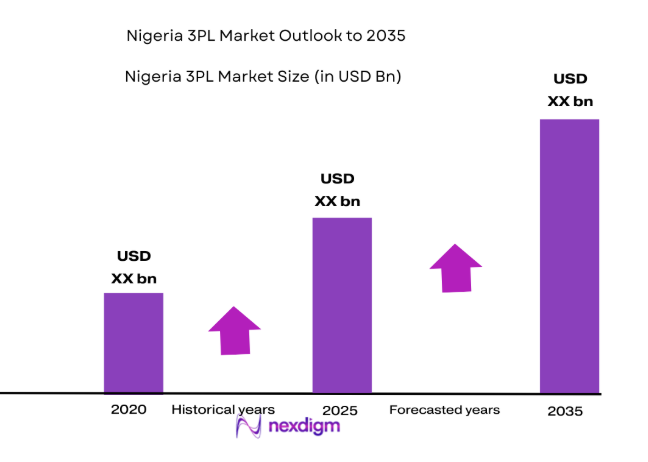
Nigeria’s third party logistics market demonstrates strong expansion driven by trade flows, industrial distribution networks, and increasing outsourcing of logistics operations by manufacturing, oil and gas, and retail sectors. Based on a recent historical assessment, the market generated approximately USD ~ Billion, according to logistics industry analyses and trade infrastructure data published by organizations including the World Bank and Nigeria’s National Bureau of Statistics. Growth is supported by expanding freight forwarding operations, warehousing development, cross border trade activity, and rising demand for integrated logistics services across domestic supply chains.
Lagos remains the most dominant logistics hub due to the presence of major seaports including Apapa and Tin Can Island which process large cargo volumes supporting import and export supply chains. Abuja plays an important role as an administrative and distribution center connecting northern trade corridors. Port Harcourt and Onne support oil and gas logistics operations through specialized maritime infrastructure. Kano functions as a regional trade gateway linking northern Nigeria with neighboring West African markets through road freight corridors and cross border commercial activity.
Market Segmentation
By Product Type
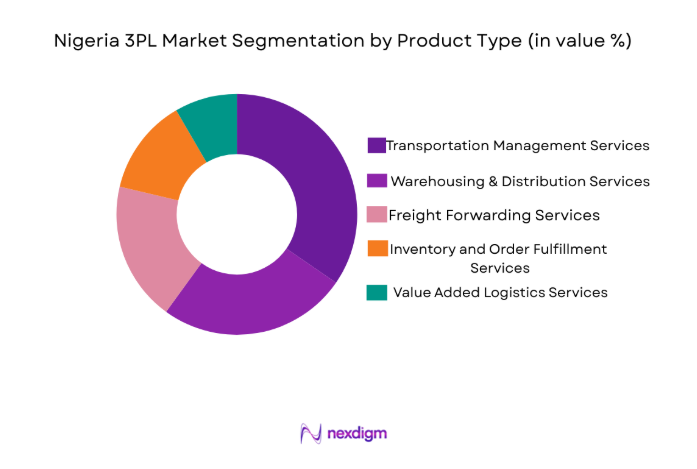
Nigeria 3PL market is segmented by product type into transportation management services, warehousing and distribution services, freight forwarding services, inventory and order fulfillment services, and value added logistics services. Recently, transportation management services has a dominant market share due to strong demand for domestic freight movement across Nigeria’s large geographic area and reliance on road based cargo transportation connecting ports, industrial zones, and inland commercial centers. Logistics providers increasingly focus on fleet operations, route optimization, and cargo management services supporting trade flows between Lagos ports and inland markets. Growth of manufacturing distribution and cross border trade further strengthens demand for transportation management services across Nigeria’s expanding logistics ecosystem.
By Platform Type
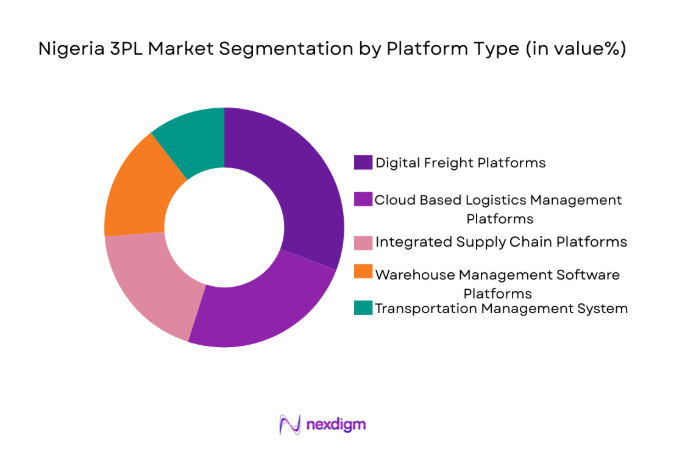
Nigeria 3PL market is segmented by platform type into digital freight platforms, cloud based logistics management platforms, integrated supply chain platforms, warehouse management software platforms, and transportation management systems. Recently, digital freight platforms has a dominant market share due to increasing adoption of technology driven logistics coordination tools that connect shippers, trucking companies, and freight operators through digital marketplaces. These platforms improve cargo visibility, optimize truck utilization, and reduce freight matching inefficiencies across Nigeria’s fragmented road transport sector. Logistics startups and technology providers continue expanding digital freight solutions that support real time shipment tracking, electronic documentation, and freight booking capabilities across national logistics networks.
Competitive Landscape
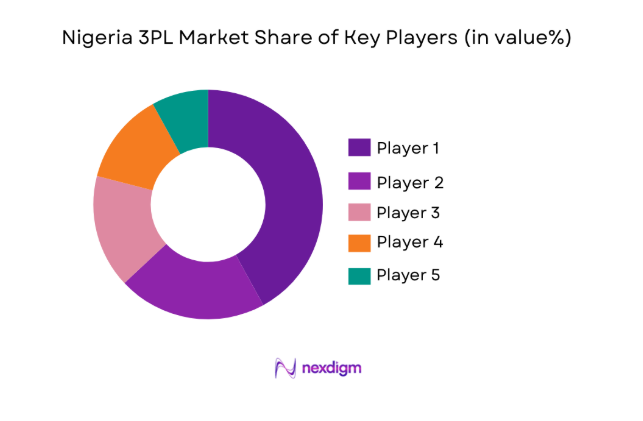
Nigeria’s third party logistics market remains moderately consolidated with global logistics providers competing alongside regional freight companies and domestic transport operators. International firms bring advanced supply chain technologies, integrated freight networks, and multinational customer bases, while local companies maintain strong distribution networks across domestic road transport corridors and regional trade routes. Competition is shaped by service diversification, digital logistics platforms, fleet scale, and warehousing infrastructure investments supporting expanding e commerce, industrial distribution, and oil and gas supply chains.
| Company Name | Establishment Year | Headquarters | Technology Focus | Market Reach | Key Products | Revenue | Logistics Network Coverage |
| DHL Supply Chain | 1969 | Bonn, Germany | ~ | ~ | ~ | ~ | ~ |
| Kuehne+Nagel | 1890 | Schindellegi, Switzerland | ~ | ~ | ~ | ~ | ~ |
| DB Schenker | 1872 | Essen, Germany | ~ | ~ | ~ | ~ | ~ |
| Maersk Logistics | 1904 | Copenhagen, Denmark | ~ | ~ | ~ | ~ | ~ |
| GIG Logistics | 2012 | Lagos, Nigeria | ~ | ~ | ~ | ~ | ~ |
Nigeria 3PL Market Analysis
Growth Drivers
Expansion of E Commerce Fulfillment and Digital Retail Distribution Networks
The rapid expansion of digital commerce platforms across Nigeria significantly increases demand for third party logistics providers capable of managing large parcel volumes across urban and regional markets. Online retail platforms selling electronics fashion groceries and household goods rely heavily on logistics partners to handle warehousing order processing and last mile delivery services. Logistics companies therefore expand fulfillment centers automated sorting hubs and urban distribution facilities designed to process thousands of daily orders efficiently. Technology platforms including route optimization software parcel tracking systems and automated warehouse management solutions further strengthen logistics productivity and service reliability. Retailers increasingly adopt omnichannel distribution models requiring integrated logistics networks connecting suppliers warehouses stores and consumers across multiple regions. Consumer expectations for fast delivery and reliable order fulfillment encourage retailers to outsource logistics operations to specialized service providers capable of managing complex distribution networks. Logistics providers also deploy micro fulfillment hubs located close to densely populated cities such as Lagos Abuja and Port Harcourt enabling faster parcel dispatch and lower transportation costs. As Nigeria’s digital retail ecosystem continues expanding nationwide the structural demand for outsourced logistics services increases substantially across the national supply chain environment. These developments position third party logistics providers as essential infrastructure supporting Nigeria’s rapidly evolving digital commerce and consumer distribution landscape.
Growth of Industrial Manufacturing and Energy Supply Chains Requiring Specialized Logistics Services
Nigeria’s expanding industrial base and large oil and gas sector significantly strengthen demand for advanced logistics solutions capable of transporting raw materials equipment and finished goods across complex supply chains. Industrial manufacturers operating in sectors including cement construction materials food processing and consumer goods increasingly depend on logistics providers capable of managing freight transportation inventory storage and distribution operations. Oil and gas companies require specialized logistics networks capable of transporting heavy machinery drilling equipment chemicals and energy infrastructure components between ports industrial zones and offshore facilities. Logistics operators therefore develop specialized transport fleets project cargo management expertise and secure warehousing infrastructure capable of supporting industrial supply chains. Industrial growth across regions including Lagos Ogun Rivers and Delta generates continuous freight movement between production facilities distribution centers and export terminals. Multinational companies operating in Nigeria increasingly outsource logistics management to professional service providers capable of delivering integrated supply chain visibility and operational efficiency. Investment in inland container depots industrial logistics parks and multimodal freight corridors further improves cargo movement reliability across Nigeria’s transport network. As industrial production capacity expands nationwide demand for specialized logistics coordination transportation services and supply chain integration continues strengthening Nigeria’s third party logistics market.
Market Challenges
Infrastructure Constraints and Transportation Network Inefficiencies Across National Logistics Corridors
Nigeria’s logistics sector faces significant operational challenges due to infrastructure limitations that reduce freight movement efficiency across major transportation corridors. Road networks connecting ports industrial zones and inland commercial cities often experience congestion maintenance gaps and inconsistent traffic management which increase transportation time and operating costs for logistics providers. Port congestion at major maritime gateways including Lagos ports further slows cargo clearance and container handling activities creating delays that disrupt supply chain scheduling. Limited rail freight capacity also restricts multimodal transportation options forcing logistics operators to rely heavily on road transport for long distance cargo movement. These infrastructure constraints increase fleet maintenance expenses fuel consumption and vehicle turnaround times which affect overall logistics service efficiency. Warehousing infrastructure across many regions also remains underdeveloped limiting storage capacity for high volume freight distribution. Logistics companies therefore invest additional resources to maintain private distribution facilities truck fleets and operational buffers designed to manage infrastructure related disruptions. These structural challenges increase operational complexity and cost pressures across Nigeria’s third party logistics sector. Until large scale infrastructure modernization projects improve transport networks and port capacity logistics providers must continuously adapt operational strategies to manage infrastructure constraints.
Regulatory Complexity and Customs Clearance Delays Affecting Cross Border Trade Operations
Nigeria’s logistics sector operates within a regulatory environment that often involves multiple agencies documentation procedures and compliance requirements affecting cargo movement efficiency. Import and export shipments frequently undergo extended customs clearance procedures requiring coordination between customs authorities port operators shipping lines and regulatory agencies responsible for inspection and certification. These processes can increase shipment dwell times at ports and border crossings creating operational uncertainty for logistics companies responsible for cargo delivery timelines. Documentation requirements for international trade transactions also involve complex verification procedures which may delay shipment release and increase administrative workload for logistics operators. Freight forwarders and logistics companies must therefore maintain specialized compliance teams capable of navigating customs regulations tariff classifications and trade documentation requirements. Inconsistent enforcement practices and regulatory policy changes occasionally create uncertainty for logistics planning and cargo scheduling. Cross border trade between Nigeria and neighboring West African markets also requires coordination with regional customs frameworks and transportation regulations. These regulatory complexities increase administrative costs and operational risk for logistics providers managing international shipments. Efficient regulatory reforms and digital customs systems remain essential to improving trade logistics efficiency across Nigeria’s freight forwarding and third party logistics sector.
Opportunities
Development of Digital Freight Marketplaces and Technology Driven Logistics Platforms
The rapid adoption of digital technologies across Nigeria’s logistics industry creates major opportunities for the expansion of technology enabled freight platforms connecting shippers trucking companies and logistics service providers. Digital freight marketplaces allow companies to match cargo with available truck capacity in real time improving fleet utilization and reducing empty return trips across transportation networks. Logistics startups increasingly develop mobile platforms that allow businesses to book freight transport services monitor shipment progress and manage delivery documentation through digital interfaces. These technology platforms improve transparency pricing visibility and operational efficiency across Nigeria’s fragmented road transport sector which historically relied on manual coordination processes. Integration of digital tracking systems electronic proof of delivery and automated freight management tools further strengthens service reliability for logistics providers. Technology driven logistics platforms also generate valuable operational data allowing companies to optimize route planning fuel consumption and asset utilization. As smartphone penetration and digital payment adoption increase across Nigeria the accessibility of logistics technology solutions continues expanding among businesses and transport operators. Investment from technology firms venture capital investors and logistics companies further accelerates innovation across digital freight ecosystems. These developments position technology enabled logistics platforms as a major growth opportunity transforming Nigeria’s third party logistics industry.
Expansion of Regional Trade Corridors and West African Economic Integration Logistics Networks
Nigeria’s strategic position within West Africa creates strong opportunities for logistics companies supporting regional trade growth and cross border supply chain integration. The implementation of regional trade frameworks including the African Continental Free Trade Area encourages increased movement of goods between Nigeria and neighboring countries including Ghana Benin Cameroon and Niger. Expanding trade flows involving agricultural commodities manufactured goods consumer products and industrial materials require efficient logistics networks capable of managing cross border transportation and customs coordination. Logistics providers therefore develop regional distribution hubs cross border trucking networks and integrated freight forwarding services designed to support expanding trade corridors. Inland logistics hubs and dry ports located near major industrial zones improve cargo consolidation and cross border freight management capabilities. Multinational companies operating in West Africa increasingly require logistics partners capable of managing multi country distribution networks across regional markets. Investments in regional highway infrastructure trade facilitation programs and customs digitalization further strengthen cross border logistics efficiency. As regional economic integration continues strengthening across West Africa the demand for logistics providers capable of managing multinational supply chains and cross border freight operations will expand significantly across Nigeria’s third party logistics market.
Future Outlook
Nigeria’s third party logistics sector is expected to experience steady expansion as supply chains become increasingly organized and businesses rely more on outsourced logistics services. Growth will be supported by rapid expansion of e commerce distribution networks, industrial production, and regional trade corridors linking West African economies. Technology adoption including digital freight platforms, warehouse automation, and real time cargo tracking systems will significantly improve operational efficiency. Government initiatives supporting port modernization, transport corridor upgrades, and trade facilitation reforms will further strengthen logistics infrastructure. Rising demand for integrated supply chain services from manufacturing, retail, and energy industries will continue shaping the Nigeria 3PL Market over the coming years.
Major Players
- DHL Supply Chain
- Kuehne+Nagel
- DB Schenker
- Maersk Logistics
- UPS Supply Chain Solutions
- FedEx Logistics
- Africa Global Logistics
- Agility Logistics
- APM Terminals Inland Services
- Imperial Logistics
- Red Star Express
- GIG Logistics
- ABC Transport
- Kobo360
- Lori Systems
Key Target Audience
- Logistics and transportation companies
- Manufacturing and industrial supply chain operators
- E-commerce and retail distribution companies
- Oil and gas logistics operators
- Investments and venture capitalist firms
- Government and regulatory bodies
- Supply chain technology providers
Research Methodology
Step 1: Identification of Key Variables
The research process begins by identifying key variables influencing the Nigeria 3PL Market including freight volumes, logistics outsourcing trends, infrastructure development, technology adoption, and trade flows. Secondary research from government publications, logistics industry databases, and international trade organizations helps establish baseline data. These variables provide the analytical foundation for evaluating market dynamics and industry structure.
Step 2: Market Analysis and Construction
Market analysis involves evaluating logistics service segments such as transportation, warehousing, freight forwarding, and value added logistics. Data is compiled from supply chain operators, transportation statistics, trade infrastructure reports, and logistics company disclosures. This information is used to construct a structured market model that reflects operational activity across Nigeria’s logistics ecosystem.
Step 3: Hypothesis Validation and Expert Consultation
Initial market findings are validated through consultations with industry participants including logistics operators, freight forwarders, transportation specialists, and supply chain professionals. Expert insights help confirm operational trends, infrastructure developments, and regulatory influences shaping logistics activities. This step ensures analytical accuracy and aligns market interpretation with real industry conditions.
Step 4: Research Synthesis and Final Output
All validated research insights are consolidated into a structured analytical framework describing the Nigeria 3PL Market. Quantitative data and qualitative industry insights are synthesized to present market structure, competitive dynamics, and growth drivers. The final report provides comprehensive market intelligence supporting strategic planning and investment decisions.

- Executive Summary
- Research Methodology (Definitions, Scope, Industry Assumptions, Market Sizing Approach, Primary & Secondary Research Framework, Data Collection & Verification Protocol, Analytic Models & Forecast Methodology, Limitations & Research Validity Checks)

- Market Definition and Scope
- Value Chain & Stakeholder Ecosystem
- Regulatory / Certification Landscape
- Sector Dynamics Affecting Demand
- Strategic Initiatives & Infrastructure Growth

- Growth Drivers
Expansion of E Commerce Distribution Networks
Growth in Oil Gas and Industrial Supply Chains
Increasing Demand for Outsourced Logistics Services - Market Challenges
Infrastructure Constraints and Port Congestion
High Transportation and Fuel Costs
Regulatory and Customs Clearance Delays - Market Opportunities
Expansion of Digital Freight and Logistics Platforms
Growth in Regional Trade within West Africa
Rising Demand for Modern Warehousing Infrastructure - Trends
Adoption of Technology Enabled Freight Management Systems
Growth of Integrated Multimodal Logistics Networks - Government Regulations
Port and customs regulatory frameworks influencing logistics operations
National transport policies supporting logistics corridor development
Trade facilitation reforms improving cargo clearance processes - SWOT Analysis
- Porter’s Five Forces

- By Market Value, 2020-2025
- By Installed Units, 2020-2025
- By Average System Price, 2020-2025
- By System Complexity Tier, 2020-2025

- By System Type (In Value%)
Transportation Management Services
Warehousing and Distribution Services
Freight Forwarding Services
Inventory and Order Fulfillment Services
Value Added Logistics Services - By Platform Type (In Value%)
Digital Freight Platforms
Cloud Based Logistics Management Platforms
Integrated Supply Chain Platforms
Warehouse Management Software Platforms
Transportation Management Systems - By Fitment Type (In Value%)
Asset Based 3PL Services
Non Asset Based 3PL Services
Dedicated Contract Logistics
Integrated End to End Logistics - By End User Segment (In Value%)
Manufacturing and Industrial Companies
Retail and E Commerce Companies
Oil and Gas and Energy Sector

- Market Share Analysis
- Cross Comparison Parameters (Service Portfolio Breadth, Warehousing Capacity, Transportation Fleet Strength, Digital Platform Capability, Industry Specialization, Geographic Coverage, Pricing Competitiveness)
- SWOT Analysis of Key Competitors
- Pricing & Procurement Analysis
- Key Players
DHL Supply Chain
Kuehne+Nagel
DB Schenker
Maersk Logistics
UPS Supply Chain Solutions
FedEx Logistics
Africa Global Logistics
Agility Logistics
APM Terminals Inland Services
Imperial Logistics
Red Star Express
GIG Logistics
ABC Transport
Kobo360
Lori Systems

- Manufacturers increasingly outsource logistics operations to improve supply chain efficiency
- Retail and e commerce companies rely on 3PL providers for warehousing and last mile distribution
- Oil and gas companies depend on specialized logistics for equipment and material transport
- Agriculture exporters utilize logistics partners for storage and international freight handling

- Forecast Market Value, 2026-2035
- Forecast Installed Units, 2026-2035
- Price Forecast by System Tier, 2026-2035
- Future Demand by Platform, 2026-2035


 Request a Sample
 Ask for Customization
 Get a Quote
 Enquire Now