
 Download PDF
Market Overview
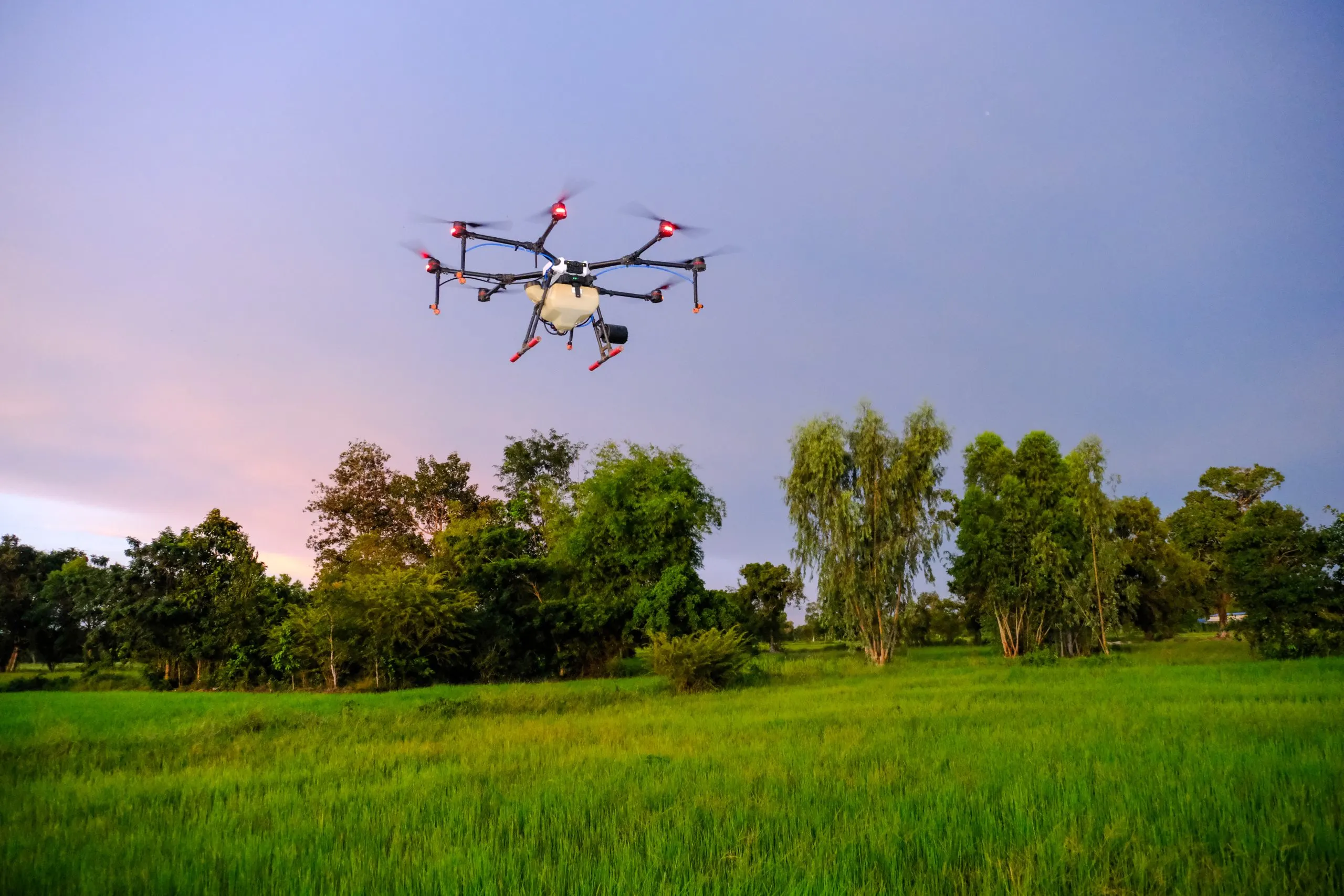
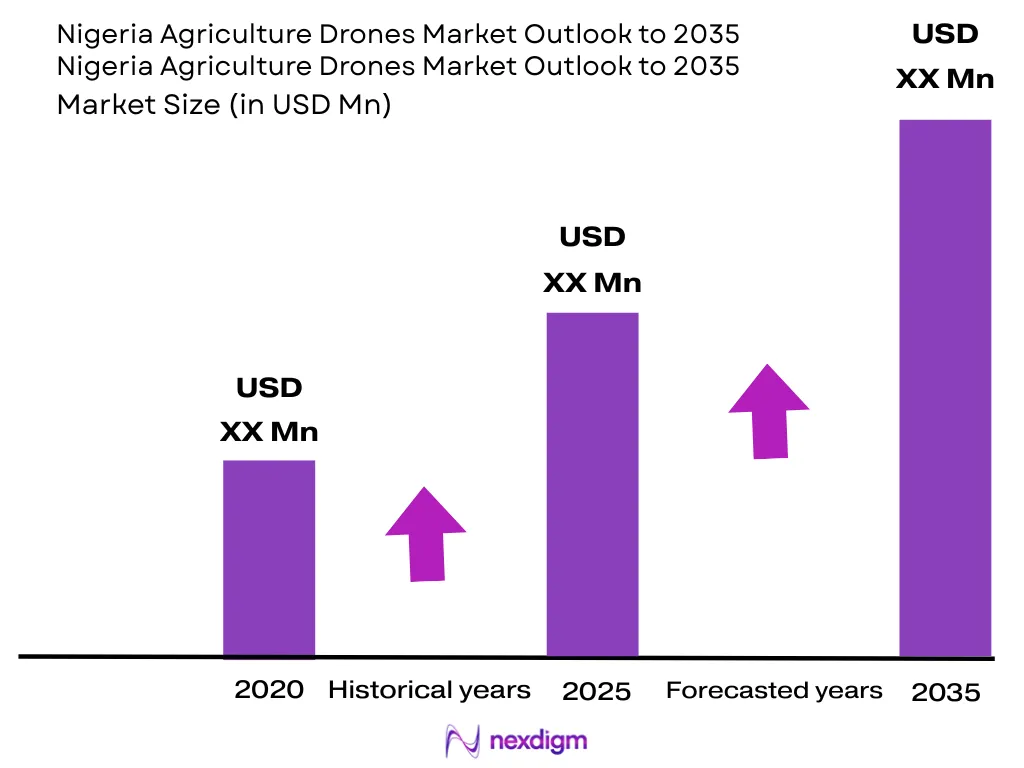
The Nigeria Agriculture Drones Market was valued at USD ~ Million in 2024 and has emerged as an important component of Nigeria’s agricultural modernization strategy. The market is supported by increasing adoption of precision farming technologies, government-backed agricultural transformation initiatives under the Renewed Hope Agenda, and rising investment in smart farming infrastructure. Nigeria recorded agricultural GDP contributing approximately 22% to total national GDP in 2024, while cultivated agricultural land remained above 70 million hectares according to official government statistics. The growing requirement for efficient input utilization across diverse farming regions, coupled with increasing deployment of digital agriculture technologies, has accelerated the adoption of agricultural drones for crop monitoring, spraying, mapping, and yield assessment. Furthermore, Nigeria’s Federal Ministry of Agriculture and Food Security continues to encourage agricultural technology adoption, creating favorable conditions for drone-based farming solutions across commercial farms, cooperative operations, and smallholder agriculture.
Market Segmentation
By Drone Type
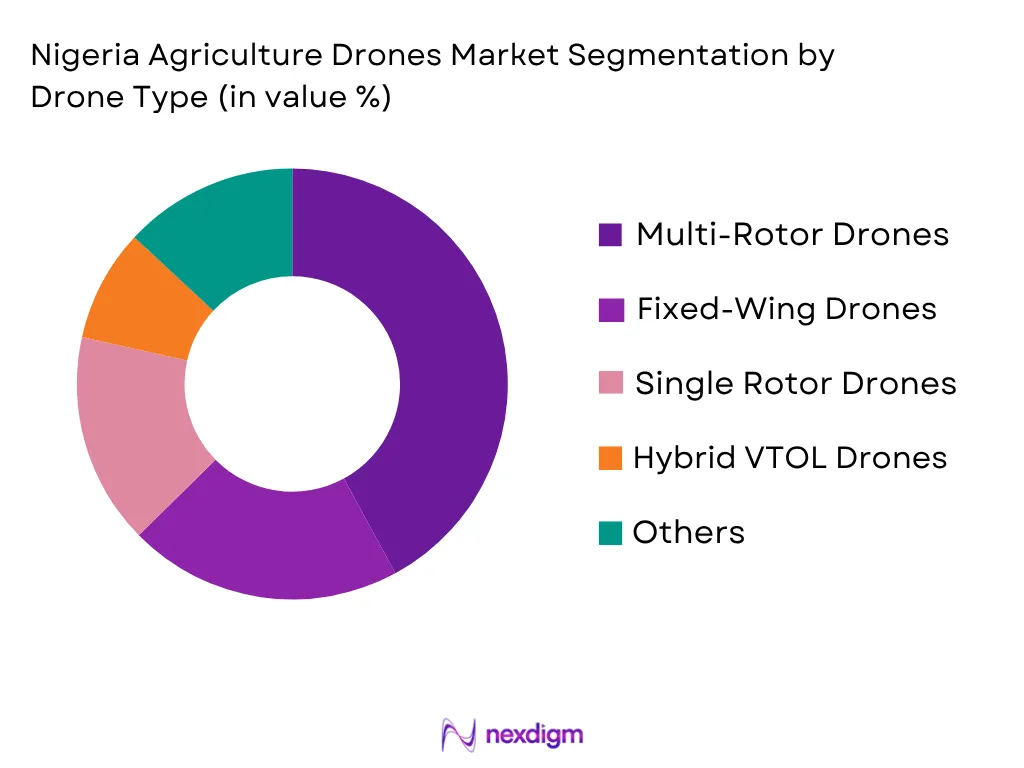
Nigeria Agriculture Drones Market is segmented by drone type into multi-rotor drones, fixed-wing drones, hybrid VTOL drones, single rotor drones, and nano & mini agricultural drones. Recently, multi-rotor drones have maintained a dominant market share within this segment owing to their versatility, ease of deployment, precision spraying capability, and suitability for small-to-medium farm operations prevalent across Nigeria. These drones can hover accurately above crop fields, enabling highly targeted pesticide and fertilizer application while minimizing chemical wastage. The growing adoption of commercial farming and estate crop cultivation across Nigeria’s agricultural zones has further strengthened demand for multi-rotor platforms due to their superior maneuverability. In addition, government-supported precision agriculture initiatives and increasing awareness among commercial farmers regarding operational efficiency have accelerated deployment. Their comparatively lower operational complexity and compatibility with multispectral sensors, thermal imaging systems, and AI-based crop monitoring solutions continue to position multi-rotor drones as the preferred choice across agricultural applications in Nigeria.
By Application
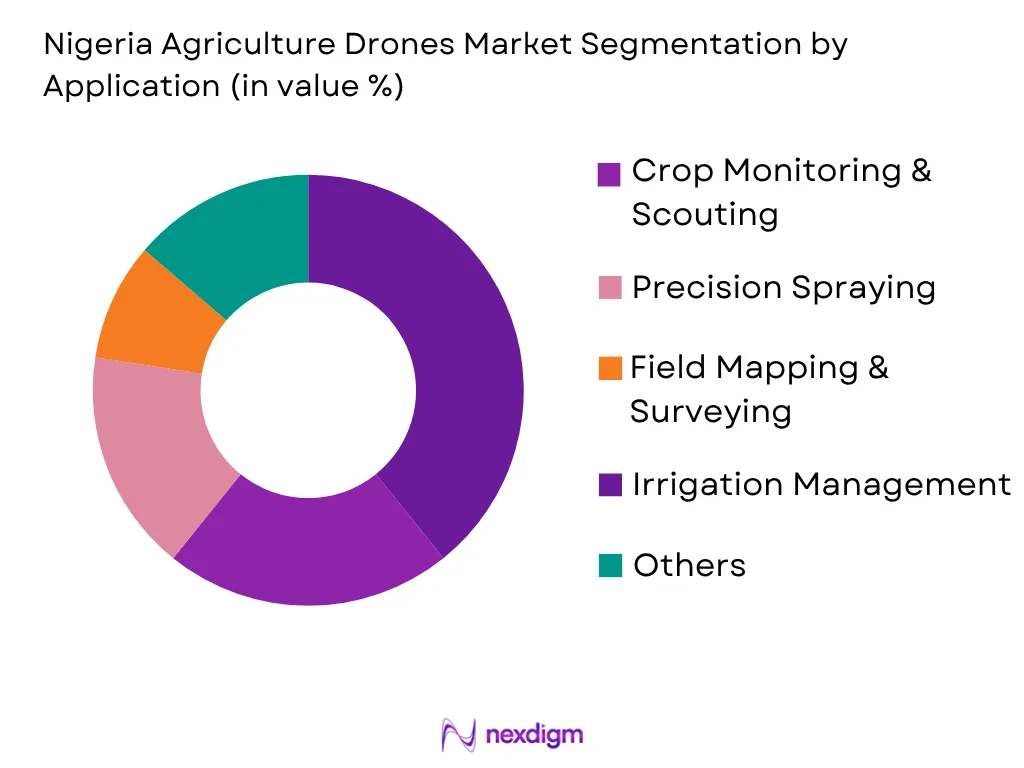
Nigeria Agriculture Drones Market is segmented by application into precision spraying, crop monitoring and scouting, field mapping and surveying, irrigation management, yield estimation and analytics, livestock monitoring, and planting and seeding. Crop monitoring and scouting currently dominates the market owing to Nigeria’s vast agricultural landscape and the need for efficient surveillance of large farm areas. Agricultural drones equipped with multispectral and thermal imaging systems enable detailed assessment of crop health across diverse commodity types including rice, maize, cassava, sorghum, cocoa, and oil palm. Given Nigeria’s significant pest and disease challenges such as fall armyworm infestations, drone-assisted early detection capabilities provide measurable advantages in protecting yields. Smallholder and commercial farms increasingly rely on drone-assisted monitoring to reduce manual scouting labor and improve crop protection decision-making. The integration of GPS-guided navigation, autonomous flight planning, and AI-powered analytics has further enhanced adoption. As Nigeria’s agricultural enterprises pursue productivity improvements and food security outcomes, crop monitoring remains the most commercially significant application segment in the market.
Competitive Landscape
The Nigeria Agriculture Drones Market is characterized by the presence of both global drone manufacturers and regional agricultural technology providers. International companies such as DJI Agriculture, XAG, Trimble, and AgEagle Aerial Systems have established growing positions through advanced drone technologies, precision spraying systems, and integrated farm analytics platforms. Competition is increasingly driven by technological innovation, payload capacity, autonomous flight capabilities, multispectral imaging solutions, and after-sales support services. Strategic collaborations with agricultural cooperatives, government agencies, and agritech startups are becoming key differentiators among market participants.
| Company | Establishment Year | Headquarters | Agriculture Drone Portfolio | Max Payload Capacity | Precision Spraying Capability | AI Analytics Integration | Nigeria Distribution Network | Precision Agriculture Solutions |
| DJI Agriculture | 2006 | ~ | ~ | ~ | ~ | ~ | ~ | ~ |
| XAG | 2007 | ~ | ~ | ~ | ~ | ~ | ~ | ~ |
| AgEagle Aerial Systems | 2010 | ~ | ~ | ~ | ~ | ~ | ~ | ~ |
| Trimble | 1978 | ~ | ~ | ~ | ~ | ~ | ~ | ~ |
| Sentera | 2014 | ~ | ~ | ~ | ~ | ~ | ~ | ~ |
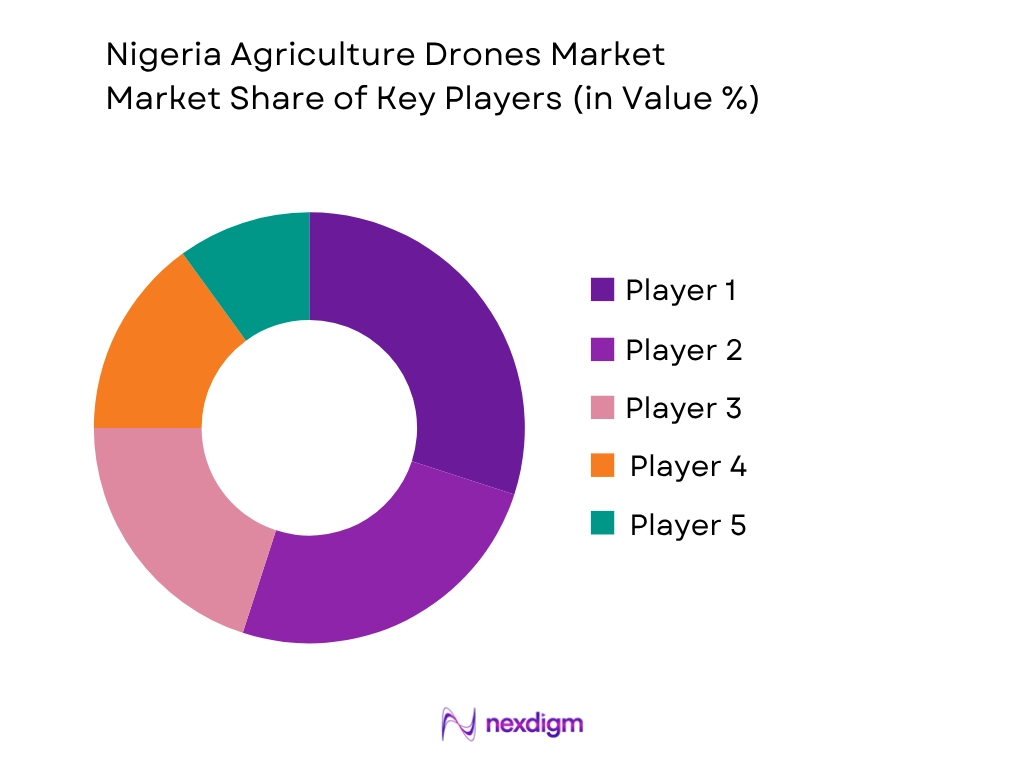
Nigeria Agriculture Drones Market Analysis
Growth Drivers
Government Support for Precision Agriculture
Nigeria’s ongoing investment in agricultural modernization is a major driver for agriculture drone adoption. Under the Renewed Hope Agenda and the Federal Government’s Agriculture Sector Renewal Strategy, the country is prioritizing food security and efficient resource utilization across the agricultural sector. According to the World Bank, Nigeria’s GDP exceeded USD 477 billion in current prices, reflecting one of Africa’s largest economies with substantial potential in strategic sectors including agriculture and agri-technology. The Federal Ministry of Agriculture and Food Security continues to promote smart farming practices to improve productivity across more than 70 million hectares of arable land. Agriculture contributes approximately 22% to national GDP, underscoring the economic significance of farm modernization. Nigeria also faces significant challenges related to post-harvest losses, estimated at 40–60% for perishable crops, creating demand for technologies that optimize monitoring and chemical application. Agriculture drones enable targeted spraying, crop monitoring, and field analytics that support productivity conservation objectives. The country’s estate crop and commercial farming activities continue expanding, increasing demand for advanced monitoring solutions. Furthermore, rising adoption of digital technologies, artificial intelligence applications, and geospatial analytics across farming operations strengthens the business case for drone deployment, making precision agriculture one of the most significant growth catalysts for the Nigeria Agriculture Drones Market.
Expansion of Commercial Farming and Food Security Programs
The expansion of commercial farming activities across Kano, Kaduna, Benue, Oyo, and Delta states is accelerating demand for agricultural drones. Nigeria’s population exceeded 220 million people, increasing pressure on domestic agricultural production and food security initiatives. The IMF reported strong growth potential supported by government-led diversification programs, including agricultural development projects under the Agricultural Transformation Agenda. Nigeria produces significant volumes of cassava, yam, maize, rice, cocoa, and oil palm products annually, requiring advanced monitoring and crop management systems. Commercial farms increasingly seek technologies that improve productivity while reducing labor dependency. Labor availability remains a challenge in certain agricultural regions, encouraging automation through drone-based crop surveillance and spraying systems. Large-scale farms cultivating rice, maize, and estate crops require accurate field mapping and crop health assessment, both of which are efficiently delivered through agricultural drones. Growing investments in mechanized agriculture and irrigation development further increase the need for aerial monitoring technologies. As Nigeria seeks to enhance domestic agricultural output while minimizing post-harvest losses, agriculture drones are becoming an essential component of modern farming operations, supporting sustainable production and improved operational efficiency.
Market Challenges
High Initial Capital Investment Requirements
One of the primary challenges facing the Nigeria Agriculture Drones Market is the substantial upfront investment required for drone acquisition, software integration, sensor deployment, operator training, and maintenance infrastructure. Although Nigeria possesses significant agricultural potential, the majority of farmers operate smallholder operations with limited access to capital and technology financing. Agricultural land is largely fragmented, creating significant differences in technology adoption rates between commercial enterprises and smallholders. Advanced agriculture drones equipped with multispectral cameras, thermal sensors, RTK navigation systems, and precision spraying equipment require significant capital commitment. Additional expenditures include data processing software, cloud platforms, maintenance contracts, and regulatory compliance requirements. Commercial farmers may achieve strong operational returns from drone utilization; however, smaller operators often face acute budget constraints that delay adoption. Moreover, limited access to agricultural financing, low insurance penetration, and currency instability further compound investment barriers. Despite government support programs, the financial burden associated with deploying complete precision agriculture ecosystems continues to limit widespread penetration. This challenge remains particularly relevant for farms operating in remote regions where additional infrastructure investments may be required to fully utilize advanced drone technologies.
Shortage of Skilled Drone Operators and Data Specialists
The availability of qualified drone pilots, geospatial analysts, and precision agriculture specialists remains a significant barrier to market expansion in Nigeria. Agriculture drones generate large volumes of aerial imagery and sensor data that require specialized interpretation to deliver actionable farming insights. Nigeria continues to invest in digital transformation; however, the pool of professionals experienced in agricultural drone operations remains relatively limited compared to demand. Precision agriculture requires expertise in GIS mapping, remote sensing, artificial intelligence, agronomy, and drone fleet management. Commercial farms increasingly seek integrated solutions combining drone operations with farm management software, creating additional demand for skilled personnel. Regulatory requirements associated with drone operation also necessitate proper certification and training under the Nigerian Civil Aviation Authority (NCAA). In rural agricultural regions, attracting and retaining qualified technology professionals can be particularly challenging. As drone technologies become increasingly sophisticated, operators must understand sensor calibration, autonomous flight planning, crop analytics, and predictive maintenance. Without adequate workforce development and specialized training programs, adoption rates may be constrained. The industry therefore faces a critical need for enhanced technical education, certification programs, and agricultural technology training initiatives to support long-term market growth.
Market Opportunities
Integration of Artificial Intelligence and Advanced Analytics
The increasing integration of artificial intelligence, machine learning, and advanced analytics presents substantial opportunities for the Nigeria Agriculture Drones Market. Nigeria is actively pursuing digital transformation initiatives across multiple sectors, creating a favorable environment for AI-enabled agricultural technologies. Agriculture drones equipped with multispectral and thermal imaging systems can generate detailed datasets that support predictive crop health analysis, disease detection, yield forecasting, and irrigation optimization. Commercial farms are increasingly seeking data-driven decision-making tools that improve productivity while minimizing resource consumption. The country’s growing investment in smart infrastructure and digital ecosystems supports the deployment of cloud-based agricultural intelligence platforms. AI-powered drone solutions can identify crop stress, nutrient deficiencies, and pest infestations before visible symptoms emerge, allowing timely intervention. Such capabilities are particularly valuable in Nigeria’s diverse agro-ecological zones, where efficient resource management and early pest detection are essential to securing yields. As agriculture becomes increasingly technology-driven, drone manufacturers and software providers have significant opportunities to develop integrated solutions combining aerial monitoring, predictive analytics, and autonomous decision support systems tailored to local farming conditions.
Expansion of Commercial Farming and Agritech Ecosystem
Nigeria’s continued focus on commercial farming development, agritech innovation, and sustainable agriculture initiatives creates strong growth opportunities for agriculture drone deployment. The country is investing in technologies that enhance food security while reducing dependence on imported food products and addressing post-harvest losses. Commercial farms require continuous monitoring of crop conditions, irrigation performance, environmental variables, and pest activity. Agriculture drones provide efficient methods for collecting high-resolution data across large cultivation areas without disrupting operations. The expansion of irrigated agricultural projects in states such as Kano, Niger, and Benue increases demand for advanced monitoring and precision spraying capabilities. Furthermore, sustainability objectives under Nigeria’s National Agricultural Technology and Innovation Policy (NATIP) encourage adoption of technologies that optimize fertilizer usage, reduce chemical runoff, and improve water efficiency. Drone-enabled precision agriculture directly supports these goals by delivering targeted interventions based on real-time field conditions. The increasing participation of private investors, agritech companies, and commercial farming enterprises in Nigeria’s agricultural sector further strengthens market potential. As Nigeria continues implementing food security-oriented agricultural strategies, drone technologies are expected to play a growing role in supporting productivity enhancement and environmental sustainability objectives.
Future Outlook
The Nigeria Agriculture Drones Market is expected to witness substantial growth during the forecast period, supported by ongoing agricultural modernization efforts, rising adoption of precision farming practices, and increasing integration of digital technologies within the agricultural sector. Government initiatives under the Renewed Hope Agenda and the Agricultural Sector Renewal Strategy are anticipated to encourage greater deployment of smart farming solutions across commercial farms and cooperative operations. Advances in artificial intelligence, machine learning, remote sensing, and autonomous navigation technologies are likely to enhance the effectiveness of agricultural drones. Furthermore, increasing emphasis on food security, post-harvest loss reduction, crop productivity optimization, and sustainable agriculture is expected to create favorable conditions for long-term market expansion.
Major Players
- DJI Agriculture
- XAG
- Trimble
- AgEagle Aerial Systems
- Sentera
- AeroVironment
- Delair
- Parrot Drones
- Drone Volt
- Quantum Systems
- Yamaha Motor
- Flyability
- SZ DJI Technology
- Aveyo
- Arotech Nigeria
Key Target Audience
- Agriculture Drone Manufacturers
- Precision Agriculture Solution Providers
- Commercial Farming Enterprises
- Cooperative Farm Operators
- Agricultural Cooperatives
- Investments and Venture Capitalist Firms
- Government and Regulatory Bodies (Federal Ministry of Agriculture and Food Security; Nigerian Civil Aviation Authority)
- Agricultural Technology Integrators
Research Methodology
Step 1: Identification of Key Variables
The initial phase involves constructing an ecosystem map encompassing all major stakeholders within the Nigeria Agriculture Drones Market. This step is supported through extensive secondary research, government publications, industry databases, regulatory frameworks, and technology assessments. The objective is to identify the critical variables influencing market demand, technology adoption, operational efficiency, and competitive dynamics.
Step 2: Market Analysis and Construction
In this phase, historical market information is compiled and analyzed using both top-down and bottom-up methodologies. The analysis includes agricultural technology penetration, drone deployment trends, precision farming adoption rates, crop-specific utilization patterns, and revenue generation across various drone applications. The collected information is validated through multiple data triangulation techniques.
Step 3: Hypothesis Validation and Expert Consultation
Market assumptions and forecasts are validated through computer-assisted telephone interviews (CATIs) and discussions with agricultural technology providers, drone manufacturers, farm operators, industry associations, and regulatory experts. These consultations provide practical insights into technology adoption barriers, investment trends, customer preferences, and operational requirements.
Step 4: Research Synthesis and Final Output
The final phase involves synthesizing information obtained through primary and secondary research into a comprehensive market assessment. Direct engagement with industry participants enables verification of segmentation assumptions, competitive positioning, technological developments, and future growth opportunities. The resulting report delivers a robust and validated view of the Nigeria Agriculture Drones Market.

- Executive Summary
- Research Methodology (Market Definitions and Assumptions, Abbreviations, Market Sizing Approach, Top-Down Analysis, Bottom-Up Analysis, Demand-Side Assessment, Supply-Side Assessment, Primary Industry Interviews, Data Triangulation, Forecasting Framework, Limitations and Future Conclusions)

- Definition and Scope
- Market Evolution and Industry Genesis
- Timeline of Major Industry Developments
- Agriculture Drone Ecosystem Analysis
- Precision Agriculture Value Chain Analysis

- Growth Drivers (Federal Government Agricultural Modernization, Food Security Initiatives, Rising Precision Farming Adoption, Labor Efficiency Requirements, Expansion of Commercial Agriculture)
- Market Challenges (Infrastructure Deficits, High Capital Investment Requirements, Skilled Operator Shortage, Regulatory Compliance Complexity, Limited Rural Connectivity)
- Market Opportunities (AI-Powered Farm Analytics, Drone-as-a-Service Expansion, Smart Irrigation Integration, Autonomous Crop Spraying, Expansion of Commercial Agriculture)
- Market Trends (Multispectral Imaging Adoption, AI-Based Crop Diagnostics, Autonomous Flight Planning, Cloud-Based Farm Management Platforms, Drone Swarm Technologies)
- Government Regulations (NCAA Drone Regulations, Federal Ministry of Agriculture and Food Security Policies, Agricultural Technology Adoption Programs, UAV Licensing Framework, Data Privacy Requirements)
- SWOT Analysis
- Porter’s Five Forces Analysis
- PESTLE Analysis
- Stakeholder Ecosystem
- Competition Ecosystem

- By Market Value (2020-2025)
- By Volume (2020-2025)
- By Average Selling Price (2020-2025)

- By Drone Type (In Value %)
Fixed-Wing Drones
Multi-Rotor Drones
Hybrid VTOL Drones
Single Rotor Drones
Nano and Mini Agricultural Drones - By Application (In Value %)
Crop Monitoring and Scouting
Precision Spraying
Field Mapping and Surveying
Crop Health Assessment
Livestock Monitoring
Irrigation Management
Planting and Seeding
Yield Estimation and Analytics - By Farm Type (In Value %)
Smallholder Farms
Commercial Farms
Plantation Farms
Cooperative Farms
Livestock Farms
Mixed Farming Operations - By Region (In Value %)
Northwest Nigeria
Northeast Nigeria
North Central Nigeria
Southwest Nigeria
Southeast Nigeria
South Nigeria - By End User (In Value %)
Commercial Farms
Agricultural Cooperatives
Government Agricultural Agencies
Agricultural Service Providers
Research and Development Farms

- Market Share of Major Players (By Value, Volume, Drone Type, Application)
- Cross Comparison Parameters (Drone Payload Capacity, Flight Endurance, Precision Spraying Capability, AI Analytics Integration, Multispectral Imaging Capability, Distribution Network Reach, After-Sales Service Infrastructure, Agricultural Software Ecosystem)
- SWOT Analysis of Major Players
- Pricing Analysis by Drone Model and Payload Category
- Detailed Profiles of Major Companies
DJI Agriculture
XAG
AeroVironment
AgEagle Aerial Systems
Trimble
Sentera
Parrot Drones
Yamaha Motor
Drone Volt
Quantum Systems
Delair
Flyability
SZ DJI Technology
Aveyo
Arotech Nigeria

- Agricultural Technology Adoption Analysis (Farm Size, Crop Type, Digital Readiness, Mechanization Level)
- Farmers Purchasing Behaviour Analysis
- Precision Farming Awareness Assessment
- Operational Pain Point Analysis
- Budget Allocation Analysis

- By Market Value (2026-2035)
- By Volume (2026-2035)
- By Average Selling Price (2026-2035)


 Request a Sample
 Ask for Customization
 Get a Quote
 Enquire Now