

 Download PDF
Market Overview
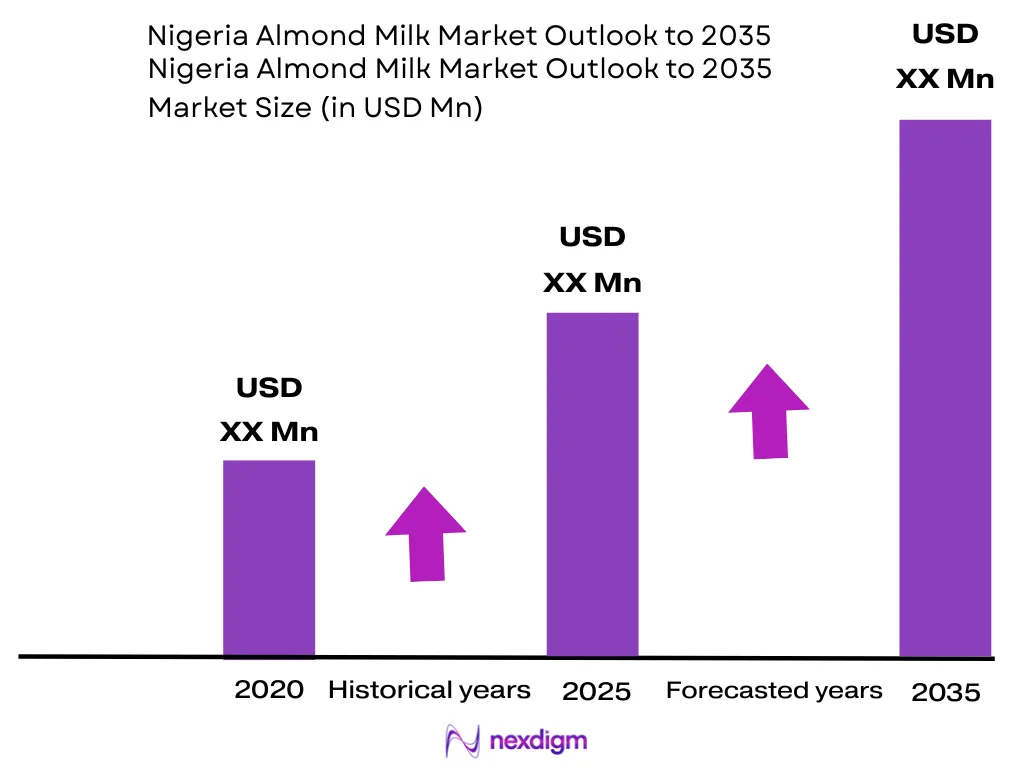
The Nigeria Almond Milk Market was valued at approximately USD ~ Million in 2024, expanding from USD ~ Million in 2023, supported by the increasing adoption of plant-based beverages and rising consumer interest in dairy alternatives. The market is driven by growing awareness regarding lactose intolerance, digestive health, vegan nutrition, and wellness-focused dietary habits. Expansion of modern retail infrastructure, increasing penetration of international food brands, and wider availability of imported plant-based beverages have further accelerated category growth. Rising urbanization and disposable income levels have also contributed to increased consumption of premium dairy alternatives, including almond milk products.
Market Segmentation
By Product Type
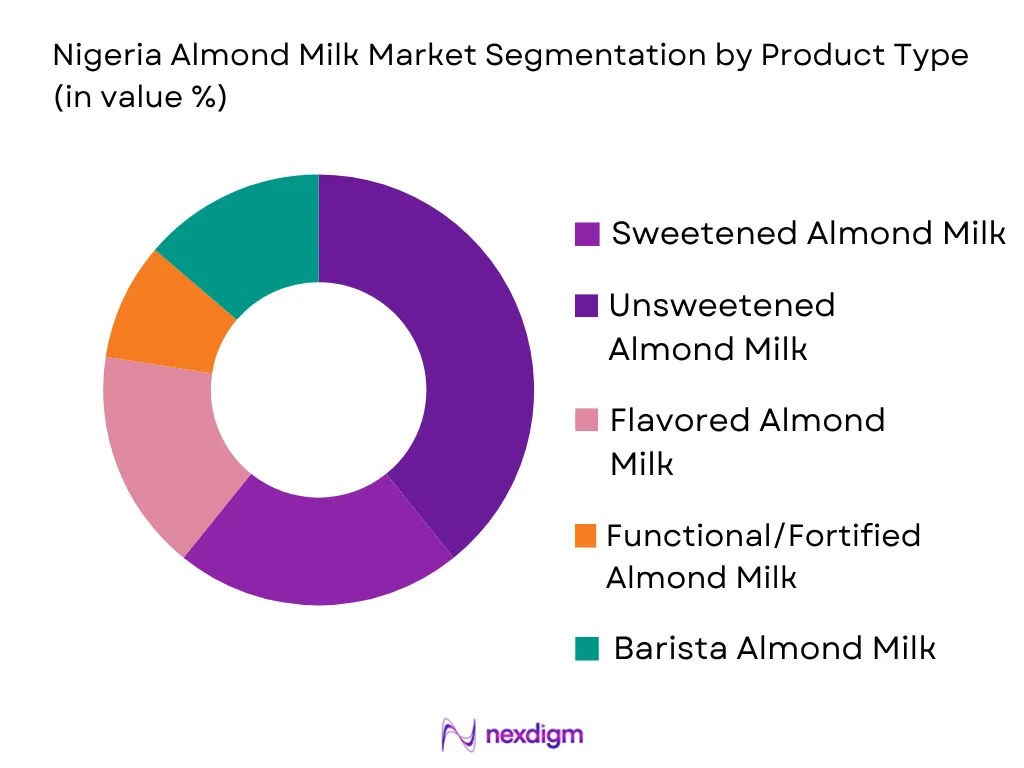
By Product Type, the Nigeria Almond Milk Market is segmented into sweetened, unsweetened, flavored, fortified, and barista variants. Sweetened almond milk currently dominates the segment due to its taste profile, which aligns more closely with traditional consumer beverage preferences in Nigeria. First-time plant-based beverage consumers generally prefer sweeter formulations as they provide a smoother transition from conventional dairy products. Major international brands have also introduced sweetened variants as their flagship products, increasing visibility and accessibility. Furthermore, sweetened almond milk enjoys greater acceptance among family households and younger consumers. The segment benefits from wider distribution across supermarkets, hypermarkets, and convenience stores, making it the preferred choice for mainstream consumers compared to niche fortified or barista-focused alternatives.
By Distribution Channel
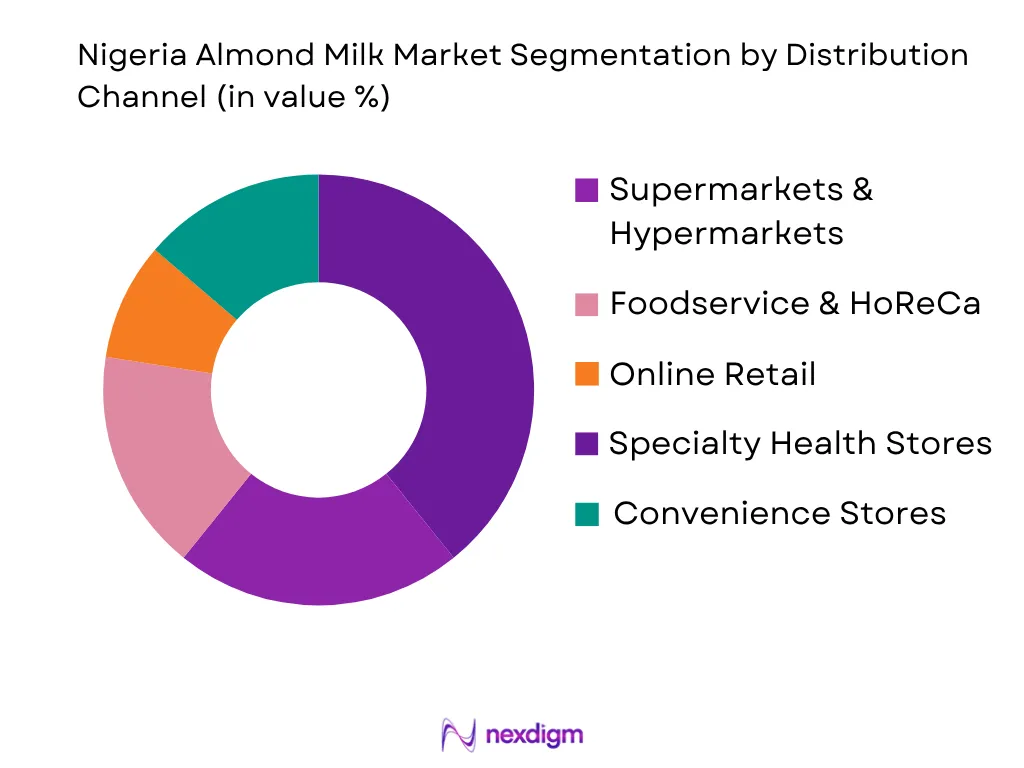
By Distribution Channel, supermarkets and hypermarkets dominate the Nigeria Almond Milk Market due to their ability to stock imported premium products and maintain cold-chain infrastructure when required. Retail chains provide consumers with greater product variety, promotional offers, and visibility for emerging plant-based categories. Urban consumers typically purchase almond milk during routine grocery shopping, making organized retail channels the primary point of sale. International brands often prioritize supermarket partnerships during market entry because of established customer traffic and product display opportunities. Additionally, supermarkets offer better shelf management and product education through in-store marketing initiatives, helping consumers understand the nutritional and lifestyle benefits associated with almond milk consumption.
Competitive Landscape
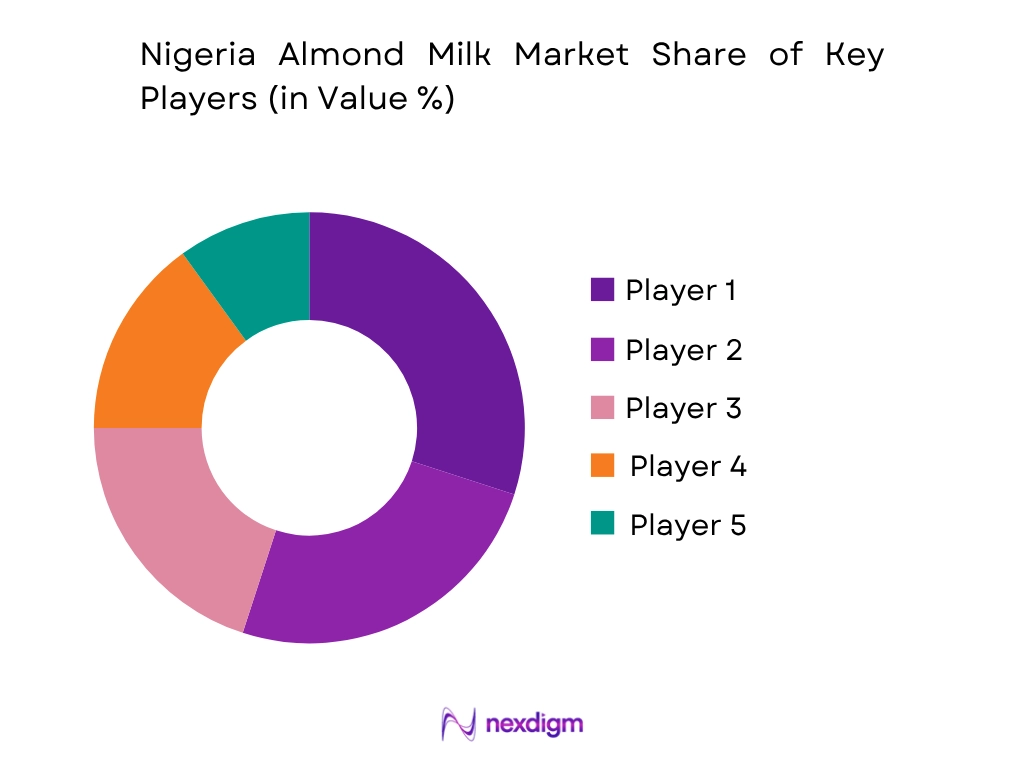
The Nigeria Almond Milk Market remains moderately consolidated, with international brands holding significant influence due to limited domestic manufacturing capabilities. Imported products dominate retail shelves, while premium plant-based beverage brands continue expanding distribution through modern trade channels. Competition is increasingly focused on product innovation, fortification, sugar-free formulations, sustainable packaging, and retail reach. Companies are also strengthening e-commerce availability and foodservice partnerships to improve market penetration.
| Company | Establishment Year | Headquarters | Product Portfolio | Distribution Reach | Fortified Variants | E-Commerce Presence | Packaging Formats | Foodservice Presence |
| Blue Diamond Almond Breeze | 1910 | ~ | ~ | ~ | ~ | ~ | ~ | ~ |
| Silk (Danone) | 1977 | ~ | ~ | ~ | ~ | ~ | ~ | ~ |
| Alpro | 1980 | ~ | ~ | ~ | ~ | ~ | ~ | ~ |
| Califia Farms | 2010
|
~ | ~ | ~ | ~ | ~ | ~ | ~ |
| Koita | 2013
|
~ | ~ | ~ | ~ | ~ | ~ | ~ |
Nigeria Almond Milk Market Analysis
Growth Drivers
Rising Urbanization and Expansion of Health-Conscious Consumer Base
Nigeria’s rapid urbanization is a significant growth driver for the almond milk market because urban consumers have greater exposure to international dietary trends, premium food products, and organized retail channels where plant-based beverages are commonly sold. According to the World Bank, Nigeria’s urban population reached 128.0 million people in 2024, while urban residents accounted for 55.0 million per 100 million population equivalent (55.03% of total population). The urban population continues to expand annually, creating larger consumer clusters in Lagos, Abuja, Port Harcourt, and Kano where demand for health-oriented food products is concentrated. The World Bank also highlights that Nigeria is among the fastest urbanizing countries globally, creating substantial opportunities for modern retail and imported food categories. Urban households generally exhibit higher disposable income and greater adoption of specialty food products, including lactose-free and plant-based beverages. The IMF projects Nigeria’s economic growth at 3.2 in 2024 following 2.8 economic growth in the previous year, supporting purchasing activity among middle-income consumers.
Increasing Demand for Plant-Based Nutrition and Functional Beverages
The Nigerian almond milk market is benefiting from growing interest in plant-based nutrition, wellness products, and functional beverages. Consumers are increasingly seeking products fortified with vitamins, minerals, and dairy-free ingredients that align with healthier lifestyles. According to the World Bank, Nigeria’s total population exceeds 227 million people in 2024, creating a large addressable consumer base for alternative nutrition categories. Nigeria’s food and beverage sector continues to evolve alongside demographic changes and urban dietary transitions. The World Bank-supported General Household Survey covering 25,662 cases highlights increasing attention toward dietary diversity and nutritional consumption patterns among Nigerian households. Research cited for the Middle East and Africa dairy alternatives sector indicates that lactose intolerance affects a substantial share of the adult population across the region, increasing the relevance of non-dairy products such as almond milk. Furthermore, Nigeria’s macroeconomic stabilization efforts, including reforms highlighted by the World Bank and IMF, are expected to support the long-term expansion of consumer goods categories. The World Bank notes that over 1 million women haveb benefited from income and livelihood initiatives under development programs, contributing to greater consumer participation and household spending capacity. These demographic and nutritional shifts continue to support demand for almond milk as a premium health-focused beverage category.
Market Challenges
High Import Dependency and Foreign Exchange Constraints
One of the key challenges facing the Nigeria almond milk market is its heavy reliance on imported almonds, almond ingredients, and finished almond milk products. Nigeria has limited domestic almond cultivation and processing capacity, making international supply chains critical to market development. This dependency exposes manufacturers and distributors to exchange rate fluctuations, import restrictions, shipping disruptions, and broader macroeconomic volatility. According to the IMF, Nigeria continues to face inflationary pressures and foreign exchange challenges despite ongoing economic reforms. Economic growth was recorded at 2.8 in the previous year, with projections of 3.2 in the current period, reflecting an economy undergoing adjustment. The World Bank notes that Nigeria’s population exceeds 227 million people, creating significant demand for imported food products while simultaneously increasing pressure on foreign exchange reserves. Plant-based dairy categories have experienced volume pressures as inflation affects consumer purchasing power. Almond milk remains a premium product category, and imported products are particularly vulnerable to currency depreciation and higher logistics costs. As domestic production remains limited, market participants continue to face supply-side vulnerabilities linked to global trade conditions, import regulations, and foreign exchange availability.
Limited Consumer Awareness Beyond Major Urban Centers
Although awareness of plant-based nutrition is increasing in Nigeria’s major cities, consumer understanding of almond milk remains limited across many parts of the country. The category continues to be viewed as a niche product compared to traditional dairy beverages and more familiar local alternatives. According to World Bank urbanization statistics, approximately 128 million people reside in urban areas, meaning a significant portion of the population still lives outside major metropolitan consumption centers. The concentration of organized retail infrastructure in Lagos, Abuja, and a handful of other cities restricts product visibility and availability across secondary cities and rural communities. Nigeria’s urbanization studies indicate uneven distribution of infrastructure and modern retail facilities, which affects the accessibility of premium food and beverage categories. Affordability also remains a concern, particularly during periods of inflationary pressure. Reports from international financial institutions have highlighted increasing food affordability challenges affecting household spending patterns. Consequently, almond milk brands must invest substantially in consumer education, nutritional awareness campaigns, product demonstrations, and distribution expansion strategies. Improving awareness beyond affluent urban consumers will be essential for broadening market penetration and supporting long-term category development across Nigeria.
Market Opportunities
Expansion of E-Commerce and Modern Retail Infrastructure
The continued expansion of modern retail channels and digital commerce presents a significant opportunity for the Nigerian almond milk market. Consumers increasingly purchase premium and imported food products through supermarkets, hypermarkets, specialty stores, and online platforms. According to the World Bank, Nigeria’s urban population reached 128.0 million people, creating a large customer base for organized retail development and modern shopping formats. Urban population growth continues to support demand for convenient purchasing channels and digitally enabled consumption patterns. The increasing availability of internet connectivity, smartphone usage, and online payment systems is enabling consumers to access specialized food products that may not be readily available in traditional retail outlets. Foodservice and retail sector analyses also indicate rising adoption of grocery delivery services and digital purchasing platforms, particularly among urban consumers. These developments create opportunities for almond milk suppliers to expand beyond conventional retail shelves by utilizing direct-to-consumer platforms, online grocery marketplaces, and e-commerce channels. Such platforms are especially valuable for premium products because they improve accessibility among affluent and health-conscious consumers who actively seek specialty food and beverage options. The ongoing development of retail infrastructure therefore provides a strong foundation for broader almond milk distribution and category expansion.
Growing Demand for Functional, Lactose-Free and Wellness-Oriented Nutrition
An important opportunity for the Nigeria almond milk market lies in the growing demand for functional nutrition products and wellness-oriented beverages. Consumers are increasingly interested in foods and drinks that provide added health benefits, including calcium, vitamins, protein, and dairy-free formulations. Nigeria’s population of more than 227 million people provides a substantial long-term consumer base for health-focused food categories. World Bank dietary and nutrition studies indicate increasing attention toward healthier food consumption patterns and nutritional adequacy among households. Research on dairy alternatives across Africa also highlights widespread lactose intolerance among adults, creating natural demand for non-dairy beverages such as almond milk. In addition, urban professionals, fitness-conscious consumers, and higher-income households are demonstrating stronger interest in preventive healthcare and nutritional wellness. Almond milk products fortified with vitamin D, vitamin B12, calcium, and other functional ingredients are well-positioned to address these evolving consumer preferences. As awareness of plant-based nutrition, dietary management, and healthier lifestyles continues to grow, manufacturers have substantial opportunities to introduce differentiated and value-added almond milk products tailored to local nutritional requirements and consumer expectations.
Future Outlook
The Nigeria Almond Milk Market is expected to witness substantial growth over the forecast period due to increasing consumer awareness regarding plant-based nutrition, expanding vegan and flexitarian lifestyles, and growing demand for lactose-free products. Rising urbanization and modern retail development are likely to improve product accessibility across major cities. Product innovation, including protein-enriched, sugar-free, and fortified variants, is expected to attract new consumer groups. Furthermore, increasing investments in premium health and wellness categories are anticipated to support long-term market expansion.
Major Players
- Blue Diamond Almond Breeze
- Silk (Danone)
- Alpro
- Califia Farms
- Koita
- Pureharvest
- Oatly
- Nature’s Heart
- Rude Health
- Isola Bio
- Earth’s Own
- Vly Foods
- Nestlé Plant-Based Beverages
- Minor Figures
- Carrefour Private Label
Key Target Audienc
- Almond Milk Manufacturers
- Plant-Based Beverage Producers
- Dairy Alternative Brands
- Foodservice & HoReCa Operators
- Modern Retail Chains & Supermarkets
- E-Commerce Grocery Platforms
- Investment and Venture Capitalist Firms
- Government and Regulatory Bodies (National Agency for Food and Drug Administration and Control (NAFDAC), Federal Ministry of Industry, Trade and Investment, Standards Organisation of Nigeria)
Research Methodology
Step 1: Identification of Key Variables
The initial phase involves developing a comprehensive ecosystem map of the Nigeria Almond Milk Market. Extensive secondary research is conducted to identify critical market variables including product categories, distribution channels, consumer demographics, import dependency levels, and regulatory frameworks. This process establishes the foundation for market sizing and strategic analysis.
Step 2: Market Analysis and Construction
Historical market data is compiled and analyzed using both top-down and bottom-up methodologies. The study evaluates product penetration, retail distribution networks, import volumes, consumption behavior, and pricing structures. Multiple data points are triangulated to generate accurate market estimates and segmentation insights.
Step 3: Hypothesis Validation and Expert Consultation
Market assumptions are validated through interviews with distributors, retailers, importers, category managers, and industry experts. These consultations provide valuable operational insights regarding consumer demand patterns, competitive positioning, channel performance, and future growth opportunities.
Step 4: Research Synthesis and Final Output
The final stage integrates findings from primary and secondary research sources. Detailed analysis of product segments, consumer preferences, competitive dynamics, and growth opportunities is conducted to develop a comprehensive assessment of the Nigeria Almond Milk Market and future industry outlook.

- Executive Summary
- Research Methodology (Market Definitions and Assumptions, Abbreviations, Market Sizing Approach, Bottom-Up and Top-Down Analysis, Primary Research Framework, Industry Expert Interviews, Demand Side Assessment, Supply Side Assessment, Data Triangulation, Limitations and Future Conclusions)

- Definition and Scope
- Market Evolution and Industry Genesis
- Almond Milk Ecosystem Overview
- Value Chain Analysis
- Supply Chain Assessment

- Growth Drivers (Rising Lactose Intolerance Awareness, Increasing Urban Middle-Class Population, Growth of Modern Retail Infrastructure, Expanding Health & Wellness Industry, Rising Demand for Plant-Based Nutrition)
- Market Challenges (Heavy Dependence on Imported Almonds, Foreign Exchange Volatility, Premium Product Pricing, Limited Consumer Awareness Outside Major Cities, Distribution Constraints)
- Market Opportunities (Functional & Fortified Almond Milk Products, Expansion Through E-Commerce, Growth in Café & Coffee Chains, Local Manufacturing Opportunities, Organic and Clean-Label Product Development)
- Market Trends (Sugar-Free Almond Milk, High-Protein Variants, Barista Formulations, Sustainable Packaging, Premium Imported Brands)
- Government Regulations (NAFDAC Food Regulations, Product Labeling Requirements, Import Regulations, Food Safety Standards, Nutritional Claims Compliance)
- SWOT Analysis
- PESTLE Analysis
- Porter’s Five Forces Analysis
- Competition Ecosystem

- By Market Value (2020-2025)
- By Volume Consumption (2020-2025)
- By Average Retail Price (2020-2025)


- Market Share of Major Players (Value, Volume, By Product Type)
- Cross Comparison Parameters (Product Portfolio Breadth, Almond Milk SKU Count, Organic Product Availability, Fortification Portfolio, Retail Distribution Reach, E-Commerce Presence, Packaging Format Diversity, Foodservice Penetration)
- SWOT Analysis of Major Players
- Pricing Analysis by SKU and Pack Size
- Detailed Profiles of Major Companies
Blue Diamond Almond Breeze
Silk (Danone)
Alpro
Califia Farms
Oatly
Koita
Pureharvest
Nature’s Heart
Rude Health
Minor Figures
Isola Bio
Earth’s Own
Vly Foods
Nestlé Plant-Based Beverages
Carrefour Private Label

- Consumer Demographics and Consumption Behavior
- Urban vs Semi-Urban Consumption Analysis
- Dietary Preference Mapping (Vegan, Flexitarian, Lactose-Free)
- Health & Wellness Purchase Drivers
- Consumer Awareness and Adoption Levels
- Brand Recognition and Loyalty Assessment
- Average Basket Value Analysis
- Purchase Decision-Making Framework
- Consumer Pain Point Assessment
- Product Attribute Preference Analysis

- By Market Value (2026-2035)
- By Volume Consumption (2026-2035)
- By Average Retail Price (2026-2035)


 Request a Sample
 Ask for Customization
 Get a Quote
 Enquire Now