
 Download PDF
Market Overview
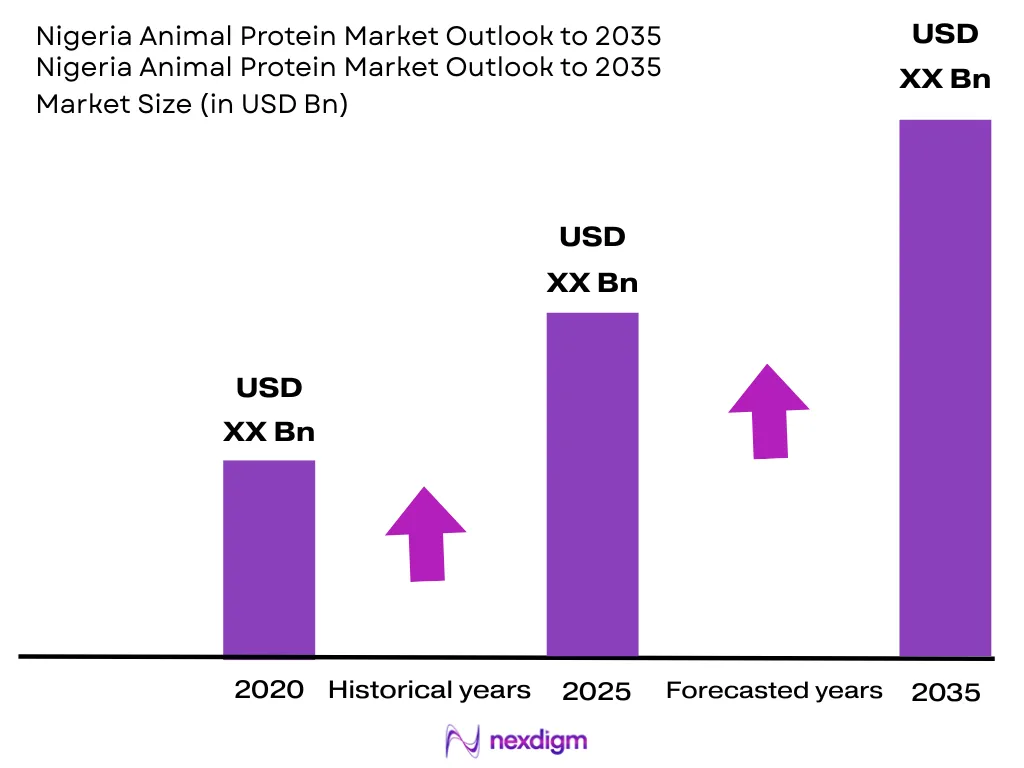
The Nigeria Animal Protein Market was valued at USD ~ Billion in 2024, based on historical production, domestic consumption, and processing revenues across poultry, beef, chevon, pork, fish, and egg products. Nigeria produced approximately 3.2 million metric tons of animal protein products during the latest reporting period, including around 1.5 million metric tons of chicken meat, over 0.7 million metric tons of beef and chevon, and growing volumes from the expanding aquaculture sector, according to data published by the National Bureau of Statistics (NBS), the Poultry Association of Nigeria (PAN), and the Federal Ministry of Agriculture and Rural Development (FMARD). The market continues to be driven by strong population growth, rapid urbanisation, rising consumer demand for animal protein, and increasing investment in commercial poultry and fish farming operations.
Market Segmentation
By Protein Type
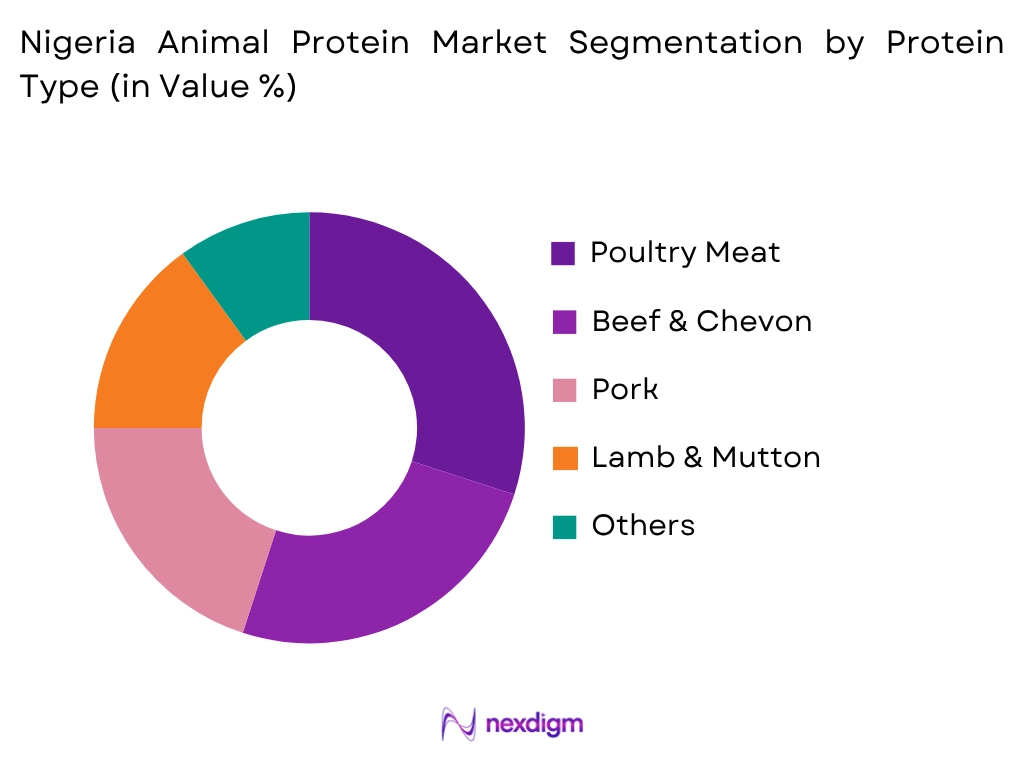
The Nigeria Animal Protein Market is segmented by protein type into Poultry Meat, Beef & Chevon, Pork, Aquaculture & Fish Protein, Eggs, and Processed Animal Protein Products. Poultry meat accounts for the largest share of the market owing to its relative affordability, shorter production cycle, wide consumer acceptance across religious and cultural groups, and strong demand from both urban and semi-urban households. Nigeria is one of Africa’s largest poultry producers, with commercial and smallholder farms distributed across all geopolitical zones, supported by growing investments in integrated production systems, hatcheries, and feed manufacturing. Poultry products benefit from increasing modern retail penetration, rising foodservice demand, and the expanding processed meat segment. Continuous investments in biosecurity infrastructure, day-old chick supply chains, and automated processing facilities further strengthen the segment’s leadership across retail, foodservice, and institutional markets.
By Distribution Channel
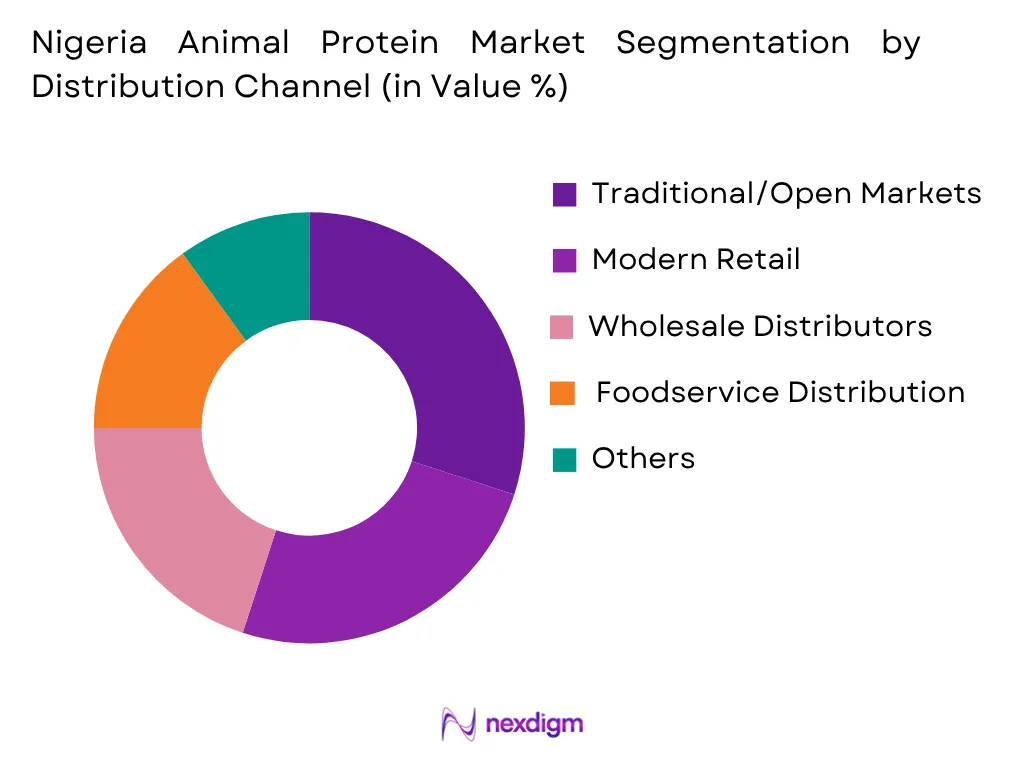
The Nigeria Animal Protein Market is segmented by distribution channel into Modern Retail, Traditional/Open Markets, Wholesale Distributors, Foodservice Distribution, Export Markets, and Online Grocery & Direct Sales. Traditional and open markets remain the dominant distribution channel due to deeply entrenched consumer purchasing habits, widespread accessibility across urban and rural communities, price flexibility, and the preference for fresh, live, or freshly slaughtered animals, which is culturally significant in Nigerian protein purchasing behaviour. Traditional markets serve as primary procurement points for the majority of Nigeria’s population, particularly across northern livestock markets, southern fish markets, and urban abattoir-linked distribution networks. However, modern retail channels are growing steadily in cities such as Lagos, Abuja, Port Harcourt, and Ibadan, driven by expanding supermarket networks, cold chain investments, and increasing consumer preference for processed and packaged protein products.
Competitive Landscape
The Nigeria Animal Protein Market is characterised by a mix of large integrated commercial producers, medium-scale regional processors, smallholder cooperative networks, and emerging agribusiness companies. Companies compete on production scale, processing technology, feed integration, product quality, distribution reach, and price competitiveness. Vertically integrated operations, cold chain capabilities, halal certification, and investment in modern processing infrastructure provide competitive advantages to leading market participants. Government import restrictions on frozen poultry, combined with rising domestic demand, have incentivised large-scale investment in domestic processing capacity, favouring established local producers with integrated value chains.
| Company | Establishment Year | Headquarters | Primary Protein Focus | Processing Facilities
|
Export Presence | Production Integration | Sustainability Programs | Value-Added Product Portfolio |
| Olam Agri (Nigeria) | 1989 | ~ | ~ | ~ | ~ | ~ | ~ | ~ |
| Zartech Ltd | 1983 | ~ | ~ | ~ | ~ | ~ | ~ | ~ |
| Chi Farms Ltd | 1980 | ~ | ~ | ~ | ~ | ~ | ~ | ~ |
| Obasanjo Farms Nigeria | 1979 | ~ | ~ | ~ | ~ | ~ | ~ | ~ |
| Krikri Group | 2000 | ~ | ~ | ~ | ~ | ~ | ~ | ~ |
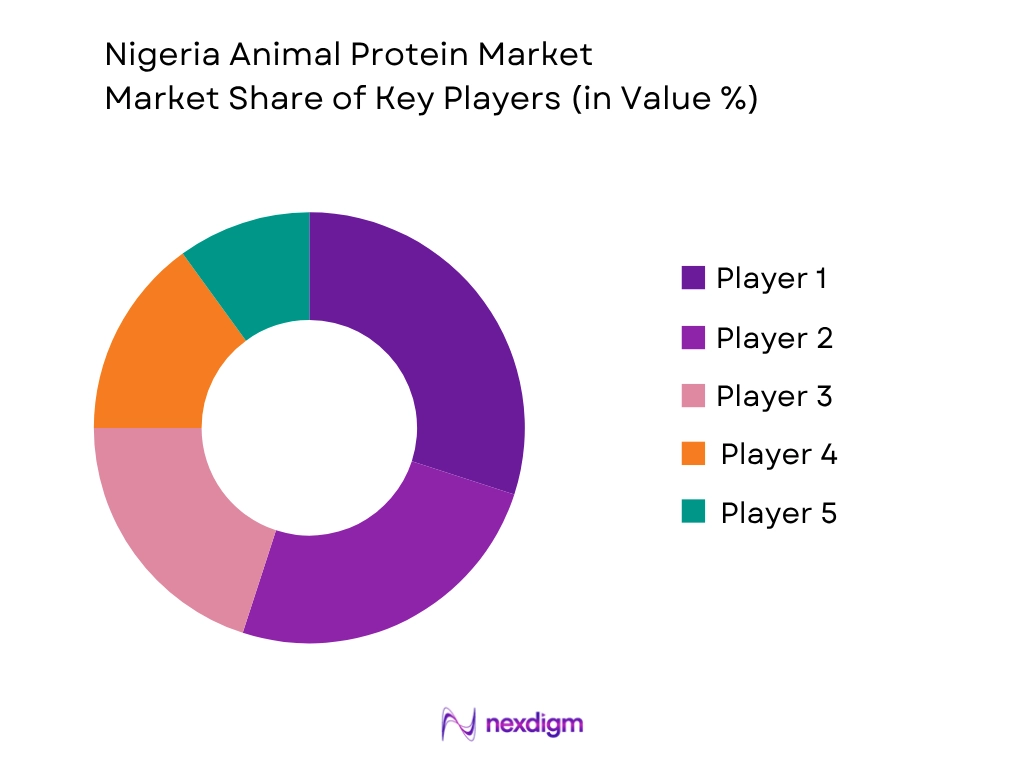
Nigeria Animal Protein Market Analysis
Growth Drivers
Rapidly Growing Population and Rising Domestic Protein Demand
Nigeria’s position as Africa’s most populous nation and one of the world’s fastest-growing consumer markets continues to be a fundamental growth driver for the animal protein sector. According to the National Bureau of Statistics (NBS), Nigeria’s population surpassed 220 million people in 2024, generating substantial and growing demand for affordable protein sources across all income segments. The Food and Agriculture Organization (FAO) estimates that Nigeria’s per capita animal protein consumption remains below recommended nutritional levels, indicating significant headroom for market expansion as purchasing power improves. The World Bank estimated Nigeria’s GDP at approximately USD 362 billion in 2024, reflecting a large consumer economy despite structural macroeconomic challenges. The International Monetary Fund (IMF) projected real GDP growth supported by ongoing economic reforms, increased oil revenues, and expanding non-oil sectors, which are expected to gradually improve household incomes and food spending. Rapid urbanisation, with over 53 percent of Nigerians now residing in urban areas according to UN estimates, is accelerating demand for processed, packaged, and convenient protein products. Rising middle-class households in cities such as Lagos, Abuja, Kano, and Port Harcourt are increasingly purchasing chicken, fish, and processed meat products through modern retail and foodservice channels. These structural demographic factors continue to reinforce domestic consumption growth as the primary engine of the Nigeria Animal Protein Market.
Expanding Poultry and Aquaculture Production Infrastructure
Nigeria benefits from growing investments in commercial poultry and aquaculture production, creating an expanding domestic supply base for animal protein. According to the Poultry Association of Nigeria (PAN), Nigeria’s poultry industry has a capacity to produce over 300,000 metric tons of poultry meat annually, with ongoing investments in commercial farms, hatcheries, feed mills, and processing facilities. The Federal Ministry of Agriculture and Rural Development (FMARD) continues to implement programmes supporting smallholder farmers, commercial agribusinesses, and integrated livestock companies through the Agricultural Promotion Policy and successor frameworks. The FAO recognises Nigeria as one of Africa’s largest producers of catfish and tilapia, with the aquaculture sector growing significantly due to rising fish demand, declining marine catch volumes, and increasing commercial pond and cage farming investments. The World Bank has continued to support Nigerian agricultural transformation through financing for agro-processing, cold chain development, and rural logistics under various agricultural development programmes. Integrated production systems adopted by leading poultry companies in Nigeria are enabling centralised feed manufacturing, genetics management, veterinary services, and processing operations, improving productivity across the value chain. Continuous investment in automated processing, improved breed lines, and digital farm management is further enhancing operational efficiency while supporting biosecurity and food safety standards across the commercial segment.
Market Challenges
Feed Cost Volatility and Foreign Exchange Constraints
Feed cost management remains one of the most critical challenges facing the Nigeria Animal Protein Market due to the country’s heavy reliance on imported raw materials and persistent foreign exchange pressures. According to the NBS, the cost of poultry feed in Nigeria has risen sharply over recent years, driven by naira depreciation, high import costs for feed additives, soybean meal, and lysine, and domestic supply shortages of quality maize. The Central Bank of Nigeria’s (CBN) foreign exchange management policies and the unification of exchange rates have introduced cost uncertainties for producers dependent on imported inputs, processing equipment, and veterinary products. The FAO identifies feed costs as the single largest variable cost in poultry and aquaculture production, typically accounting for 60 to 75 percent of total production expenses in Nigeria. The Federal Ministry of Finance and the CBN continue to implement monetary and fiscal reforms to stabilise the naira and improve access to foreign exchange for critical agricultural imports, though short-term volatility persists. Small and medium-scale producers face disproportionate exposure to feed cost inflation, as they lack the purchasing scale and procurement contracts available to larger integrated companies. Without reliable access to affordable locally produced maize, soybean, and fish meal, sustained profitability and production expansion for Nigerian animal protein producers remain structurally challenged, particularly for smallholder farmers who constitute the majority of the sector’s production base.
Inadequate Cold Chain Infrastructure and Post-Harvest Losses
Despite growing production volumes, cold chain infrastructure constraints continue to present significant operational challenges for the Nigeria Animal Protein Market due to unreliable power supply, limited refrigerated logistics capacity, and underdeveloped cold storage networks. According to the NBS, Nigeria has one of Africa’s highest levels of post-harvest food losses, with estimates suggesting that 20 to 40 percent of perishable food products, including animal protein, are lost due to inadequate refrigeration, transportation failures, and poor handling practices. The World Bank’s Logistics Performance Index consistently identifies Nigeria’s infrastructure efficiency as a structural constraint on agricultural supply chain competitiveness. Animal protein products require uninterrupted refrigerated transportation and cold storage throughout processing, warehousing, and retail distribution to maintain food safety and product quality, a requirement that remains difficult to satisfy consistently given Nigeria’s power infrastructure challenges. The cost of diesel-powered refrigeration has risen substantially following the removal of fuel subsidies in 2023, increasing operational expenses for cold storage facilities, refrigerated trucks, and processing plants. Investments in solar-powered cold storage, gas-based refrigeration, and decentralised cold chain hubs are being piloted by development finance institutions and agribusiness companies, but nationwide scale-up remains limited. Sustained investment in power infrastructure, cold chain logistics, and processing technology is essential to reducing post-harvest losses and improving market competitiveness for Nigerian animal protein producers.
Market Opportunities
Expansion of Halal Protein Production and Regional Export Potential
Growing demand for halal-certified animal protein from within Nigeria and across the broader West African and Middle Eastern export markets presents significant growth opportunities for Nigerian producers. Nigeria’s predominantly Muslim northern population of over 90 million people, combined with strong halal-oriented consumption across neighbouring countries such as Niger, Chad, and Ghana, creates a natural market foundation for certified halal protein products. The Standards Organisation of Nigeria (SON) and the Jama’atu Nasril Islam (JNI) continue to develop halal certification frameworks, while international Islamic food standards are increasingly influencing procurement decisions in the foodservice and institutional segments. The Federal Government of Nigeria’s export promotion agencies, including the Nigerian Export Promotion Council (NEPC), are encouraging animal protein exporters to pursue regional market opportunities in West Africa through ECOWAS trade facilitation frameworks. The African Continental Free Trade Area (AfCFTA) is expected to progressively reduce intra-African trade barriers, enabling Nigerian producers with certified halal production systems, competitive pricing, and regional logistics capabilities to capture export revenues across a market of over 1.4 billion people. Companies investing in halal-certified slaughterhouses, traceable supply chains, and internationally recognised quality standards are well positioned to capture both domestic premium demand and regional export opportunities as Nigerian protein processing capabilities continue to develop.
Growth in Value-Added Processing and Commercial Aquaculture Development
The expansion of value-added meat processing and commercial aquaculture offers substantial growth opportunities for the Nigeria Animal Protein Market. According to NBS data, Nigeria’s urban population is growing rapidly, supporting demand for processed, ready-to-cook, and convenience protein products across modern retail and foodservice channels. Rising investment in catfish and tilapia farming, cold storage, and fish processing is enabling aquaculture companies to serve growing consumer demand for affordable fish protein, which remains culturally central to Nigerian diets, particularly in southern and riverine communities. The FMARD’s National Agricultural Technology and Innovation Policy (NATIP) identifies aquaculture value chain development as a priority investment area, supporting both domestic food security and export potential. The IMF projects continued macroeconomic stabilisation for Nigeria, which is expected to gradually improve household spending capacity and industrial investment. Increasing adoption of innovative packaging, expansion of supermarket cold chains, and growing demand from QSR and foodservice operators are creating new market segments for processed chicken, smoked fish, and portion-packaged protein products. These developments allow processors to improve profitability while addressing evolving consumer preferences for convenience, quality, and product diversification across Nigeria’s rapidly urbanising consumer market.
Future Outlook
The Nigeria Animal Protein Market is expected to maintain strong long-term growth supported by one of the world’s fastest-growing populations, accelerating urbanisation, rising domestic protein demand, and increasing commercial investment in poultry, aquaculture, and livestock processing. Government import restrictions on frozen poultry and ongoing investment in domestic agribusiness infrastructure are anticipated to support continued expansion of the commercial protein sector, while technological advancements in genetics, animal nutrition, and precision livestock farming will improve productivity and reduce input costs. Domestic consumption is expected to benefit from gradual income growth, expanding modern retail networks, and increasing demand for convenient processed meat and fish products. Furthermore, improvements in cold chain infrastructure, halal certification adoption, and AfCFTA trade facilitation are likely to open new export opportunities for Nigerian animal protein producers within regional and international markets.
Major Players
- Olam Agri (Nigeria)
- Zartech Ltd
- Chi Farms Ltd
- Obasanjo Farms Nigeria
- Krikri Group
- FTN Cocoa Processors
- Vital Farms Nigeria
- Niger Mills Company
- Amo Byng Nigeria Ltd
- Aksun Farms
- Shodex Farms
- Kinhills Poultry
- Premier Feed Mills
- Ajanla Farms
- Top Feeds Nigeria
Key Target Audience
- Animal Protein Producers and Meat Processing Companies
- Livestock Producers and Integrated Farming Companies
- Food Processing and Packaged Food Manufacturers
- Retail Chains, Wholesale Distributors and Foodservice Operators
- Exporters, Importers and International Trading Companies
- Investments and Venture Capitalist Firms
- Government and Regulatory Bodies (Federal Ministry of Agriculture and Rural Development (FMARD), Poultry Association of Nigeria (PAN), National Agency for Food and Drug Administration and Control (NAFDAC), Standards Organisation of Nigeria (SON), Nigerian Export Promotion Council (NEPC))
- Cold Chain Logistics, Storage and Distribution Companies
Research Methodology
Step 1: Identification of Key Variables
The research process begins by identifying the complete ecosystem of the Nigeria Animal Protein Market, including livestock producers, feed suppliers, meat processors, distributors, exporters, retailers, and regulatory agencies. Extensive secondary research is conducted using government publications, trade associations, customs statistics, company reports, and proprietary industry databases. This stage helps determine the major variables influencing production, consumption, trade, pricing, and investment trends across the market.
Step 2: Market Analysis and Construction
Historical market information is compiled and analyzed to estimate the overall market size using both top-down and bottom-up approaches. Production volumes, domestic consumption, processing revenues, trade statistics, livestock inventories, slaughter volumes, and pricing trends are evaluated to construct a comprehensive market model. Demand-side and supply-side assessments are performed to validate the consistency of market estimates across various industry participants.
Step 3: Hypothesis Validation and Expert Consultation
The preliminary market findings are validated through computer-assisted telephone interviews (CATIs) and structured discussions with executives from meat processing companies, livestock producers, exporters, distributors, industry associations, and regulatory authorities. These consultations provide valuable insights regarding production capacity, utilisation rates, investment priorities, pricing dynamics, and emerging market opportunities, ensuring that the assumptions used in the research accurately reflect current industry conditions.
Step 4: Research Synthesis and Final Output
The final stage integrates findings obtained from secondary research and primary interviews to develop a comprehensive market assessment. Market estimates are cross-verified using company financial reports, trade databases, production statistics, and industry publications. The resulting analysis provides detailed insights into market size, competitive positioning, segmentation, growth drivers, challenges, future opportunities, and strategic recommendations for stakeholders operating within the Nigeria Animal Protein Market.

- Executive Summary
- Research Methodology (Market Definitions and Assumptions, Abbreviations, Market Sizing Framework, Top-Down Analysis, Bottom-Up Analysis, Demand-Side Assessment, Supply-Side Assessment, Primary Industry Interviews, Trade Flow Validation, Data Triangulation, Forecasting Framework, Limitations and Future Conclusions)

- Definition and Scope
- Market Evolution and Industry Genesis
- Timeline of Major Industry Developments
- Nigeria Animal Protein Industry Ecosystem
- Supply Chain Analysis

- Growth Drivers (Rising Domestic Protein Demand, Population Growth and Urbanisation, Expanding Poultry and Aquaculture Sectors, Government Agribusiness Investment Programmes, Feed Industry Development, Improving Cold Chain Infrastructure)
- Market Challenges (Feed Cost Volatility, Livestock Disease and Biosecurity Risks, Inadequate Cold Chain Infrastructure, Smallholder Fragmentation, Foreign Exchange Constraints, Insecurity in Northern Livestock Zones)
- Market Opportunities (Value-Added Meat Processing, Aquaculture Expansion, Halal Protein Export, Modern Retail Integration, Digital Livestock Technologies, Branded Protein Products)
- Market Trends (Poultry Sector Modernisation, Aquaculture Value Chain Development, Halal Certification Adoption, Precision Livestock Farming, Protein Premiumisation, Cold Chain Expansion)
- Government Regulations (NAFDAC Standards, NAQS Animal Health Certification, SON Quality Standards, Federal Ministry of Agriculture Guidelines, Export Certification Frameworks, Sanitary & Phytosanitary Standards)
- Trade Policy Analysis (Import Restrictions on Frozen Poultry, Export Incentives, Tariff Structure, Veterinary Protocols, Market Access Requirements)
- Feed Industry Assessment (Maize Availability, Soybean Meal Utilisation, Feed Conversion Efficiency, Feed Cost Structure)
- SWOT Analysis
- PESTLE Analysis
- Porter’s Five Forces Analysis
- Stakeholder Ecosystem
- Competition Ecosystem

- By Market Value (2020-2025)
- By Volume Consumption (2020-2025)
- By Average Selling Price (2020-2025)

- By Protein Type (In Value %)
Poultry Meat
Beef & Chevon
Pork
Aquaculture & Fish Protein
Eggs
Processed Animal Protein Products - By Product Form (In Value %)
Fresh/Chilled
Frozen
Processed & Value-Added
Smoked & Dried
Cooked & Ready-to-Eat - By End User (In Value %)
Retail Consumers
Foodservice & HoReCa
Food Processing Industry
Institutional Buyers
Export Buyers - By Distribution Channel (In Value %)
Modern Retail
Traditional/Open Markets
Wholesale Distributors
Foodservice Distribution
Export Markets
Online Grocery & Direct Sales - By Production System (In Value %)
Conventional Production
Integrated Contract Farming
Pastoral & Nomadic Livestock
Feedlot Production
Smallholder Farming
- By Animal Protein Grade (In Value %)
Commodity Grade
Premium Grade
Halal Certified
Organically Raised
Processed/Value-Added Grade - By Region (In Value %)
North-West Nigeria
North-East Nigeria
North-Central Nigeria
South-West Nigeria
South-East Nigeria
South-South Nigeria

- Market Share of Major Players (By Value, Production Volume, Export Volume, Protein Category, Processing Capacity)
- Cross Comparison Parameters (Slaughter Capacity, Processing Capacity, Export Market Presence, Feed Integration Level, Cold Storage Capacity, Product Portfolio Diversity, Sustainability & Animal Welfare Certifications, Value-Added Product Portfolio)
- SWOT Analysis of Major Players
- Pricing Analysis (By Protein Category, Processing Level, Export vs Domestic Pricing)
- Detailed Profiles of Major Companies
Olam Agri (Nigeria)
Zartech Ltd
Chi Farms Ltd
Obasanjo Farms Nigeria
Krikri Group
FTN Cocoa Processors
Vital Farms Nigeria
Niger Mills Company
Amo Byng Nigeria Ltd
Aksun Farms
Shodex Farms
Kinhills Poultry
Premier Feed Mills
Ajanla Farms
Top Feeds Nigeria

- Consumption Pattern Assessment (Per Capita Meat Consumption, Protein Preference, Meal Frequency, Household Penetration)
- Demographic Demand Analysis (Income Group, Age Group, Urban-Rural Split, Regional Preferences)
- Household Expenditure Analysis
- Protein Affordability Assessment
- Fresh vs Frozen Product Preference

- By Market Value (2026-2035)
- By Volume Consumption (2026-2035)
- By Average Selling Price (2026-2035)


 Request a Sample
 Ask for Customization
 Get a Quote
 Enquire Now