
 Download PDF
Market Overview
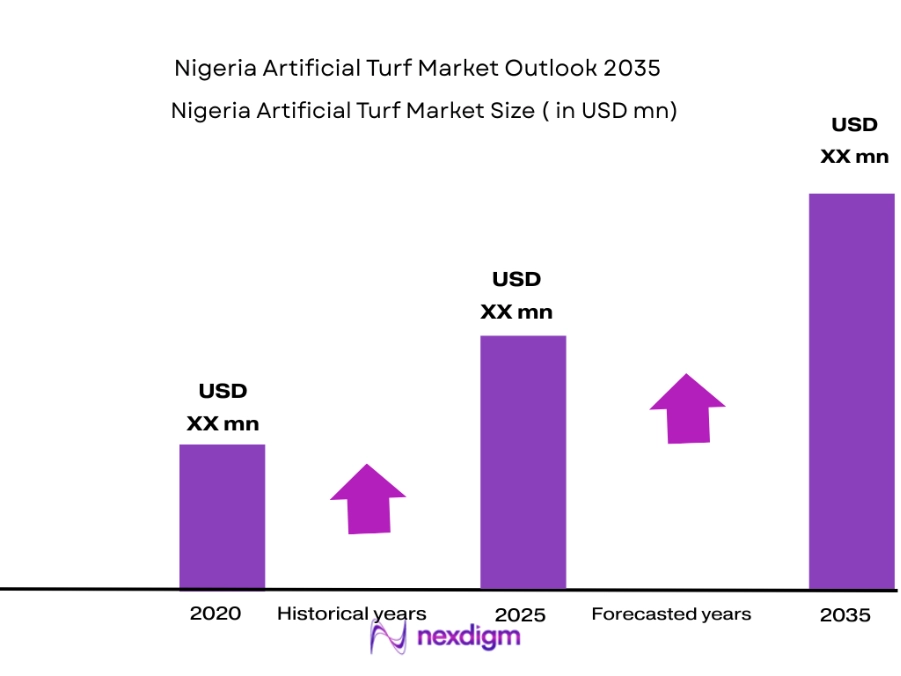
The Nigeria artificial turf market is valued at approximately USD ~ million, driven by the increasing demand for sustainable and low-maintenance landscaping solutions, particularly in sports fields, commercial spaces, and residential areas. The market is growing due to Nigeria’s rapid urbanization and climate conditions, which make maintaining natural grass challenging and costly. The country’s evolving sports culture, coupled with the need for water-efficient landscaping, has further accelerated the adoption of artificial turf. The demand is also boosted by technological advancements in turf manufacturing, making artificial grass more durable, realistic, and affordable.
Nigeria’s artificial turf market is dominated by cities such as Lagos, Abuja, and Port Harcourt. Lagos leads due to its position as the country’s economic hub, where urban development projects require large-scale turf installations for public spaces, commercial developments, and sports facilities. Abuja, with its rapidly growing infrastructure and governmental initiatives, is also contributing to increased turf adoption, especially in parks and recreational spaces. Port Harcourt, a growing industrial city, is witnessing significant use of artificial turf for both commercial and sports applications, driven by its increasing focus on public spaces and stadium developments.
Market Segmentation
By Application
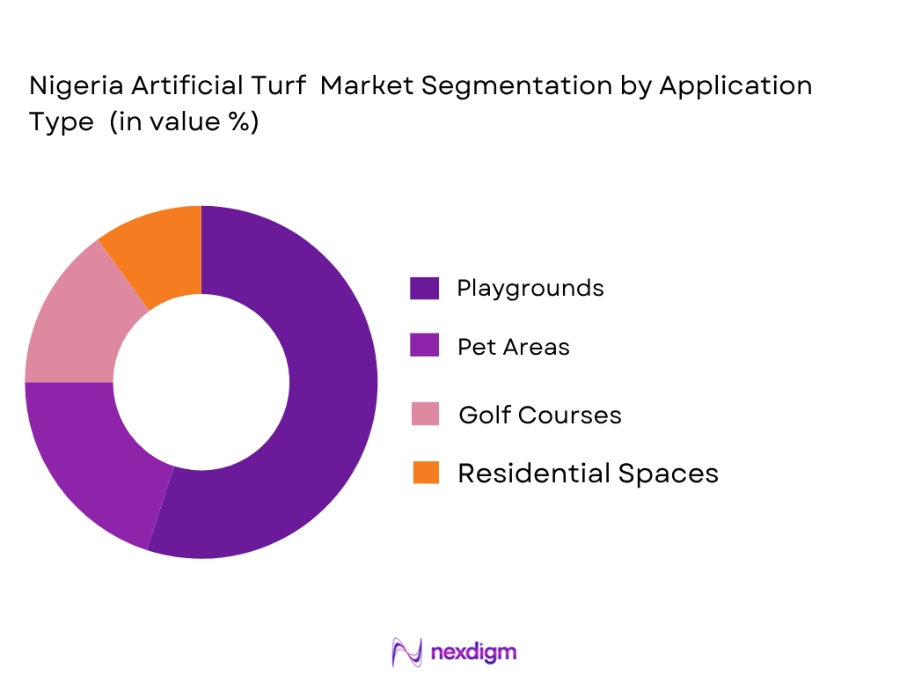
The Nigeria artificial turf market is segmented by application into sports fields, landscaping, playgrounds, pet areas, golf courses, and residential spaces. Among these, sports fields hold the dominant market share, driven by the growing popularity of sports such as football, rugby, and hockey in the country. The adoption of artificial turf in sports venues, schools, universities, and community centers has risen due to its ability to withstand high traffic and varying weather conditions. Additionally, the government’s push to develop sports infrastructure, along with the demand for sustainable and low-maintenance surfaces, has contributed significantly to the market’s growth in this segment.
By Turf Type
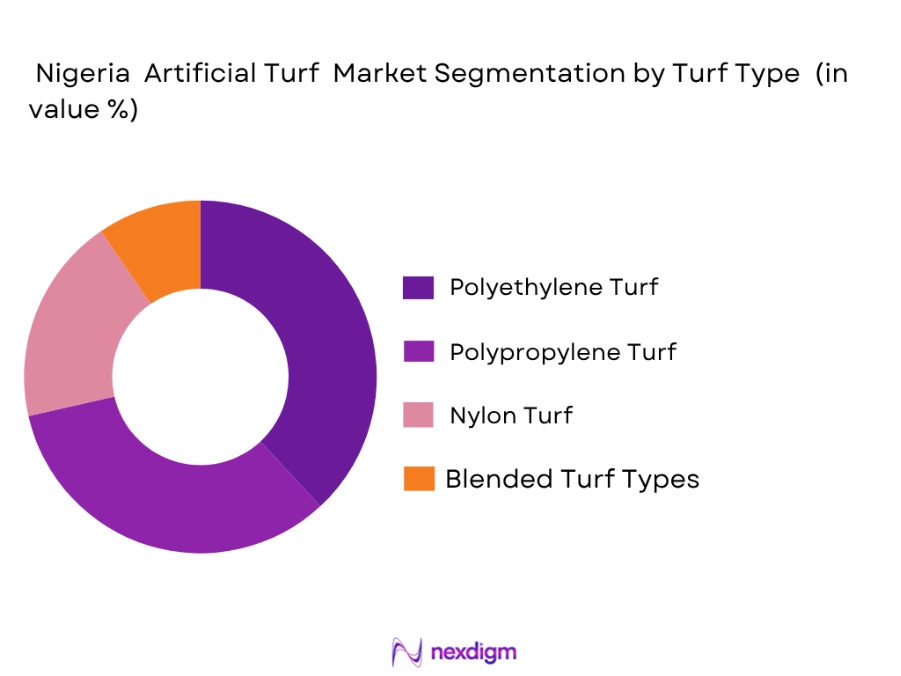
The Nigeria artificial turf market is segmented by turf type into polyethylene, polypropylene, nylon, and blended turf types. Polyethylene turf leads the market due to its superior durability, UV resistance, and ability to withstand the country’s tropical climate. Polyethylene turf is ideal for both sports fields and landscaping applications, as it provides a natural look and a soft feel, making it suitable for both recreational areas and commercial properties. It is also relatively cost-effective compared to other turf types, making it a popular choice for large-scale installations in Nigeria.
Competitive Landscape
The Nigeria artificial turf market is highly competitive, with both international and local players vying for market share. Key players include global brands like FieldTurf and AstroTurf, as well as local companies such as Artificial Grass Nigeria and TurfTech. These companies dominate due to their advanced manufacturing technologies, strong distribution networks, and ability to cater to local market demands, including tailored solutions for sports fields, landscaping, and public spaces. Local players are gaining traction by offering competitive pricing, fast delivery, and installation services, capitalizing on the growing demand for artificial turf in Nigeria.The competitive landscape is marked by innovations in turf manufacturing, particularly in the development of environmentally friendly and durable turf options. Strategic partnerships between artificial turf manufacturers and government agencies, as well as collaborations with construction firms, further contribute to the strong market position of these key players.
| Company Name | Establishment Year | Headquarters | Product Portfolio | Market Reach | Customization Services | Technology Focus | Key Clients |
| FieldTurf | 1988 | Canada | ~ | ~ | ~ | ~ | ~ |
| AstroTurf | 1965 | USA | ~ | ~ | ~ | ~ | ~ |
| Artificial Grass Nigeria | 2010 | Nigeria | ~ | ~ | ~ | ~ | ~ |
| TurfTech | 2012 | Nigeria | ~ | ~ | ~ | ~ | ~ |
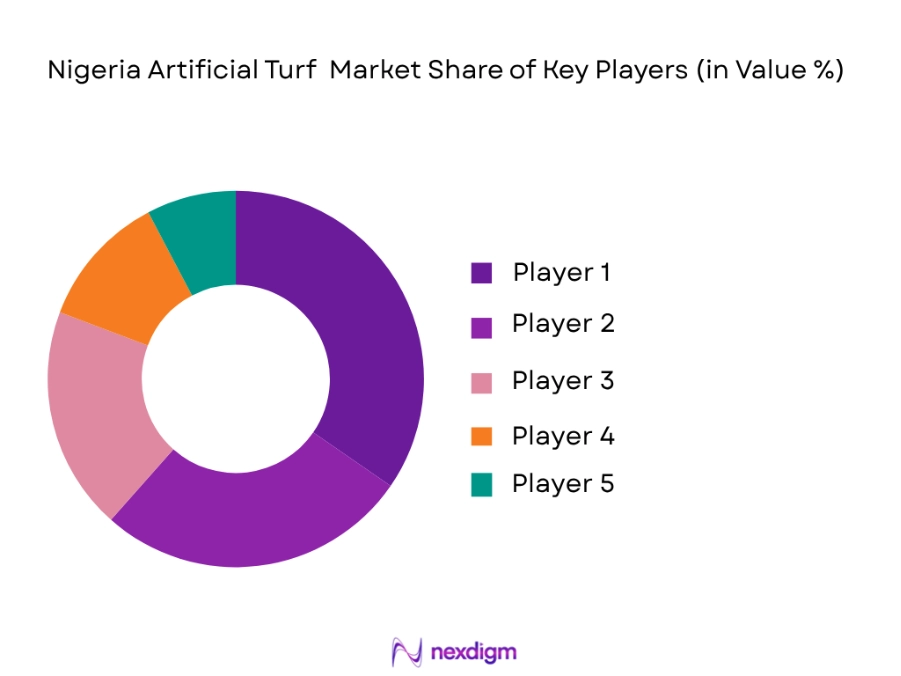
Nigeria Artificial Turf Market Analysis
Growth Drivers
Increasing Demand for Water-Efficient Landscaping Solutions
As water scarcity continues to be a pressing issue in Nigeria, the demand for water-efficient landscaping solutions has skyrocketed. Artificial turf provides a sustainable alternative to natural grass, requiring minimal water for maintenance. This is particularly crucial in areas where water resources are scarce or expensive to maintain, such as in Lagos and Abuja. As both residential and commercial properties seek greener, more sustainable solutions, the demand for artificial turf in landscaping has seen a significant rise. The growing recognition of artificial turf’s water-saving benefits, combined with its low-maintenance nature, makes it an ideal solution for urban areas looking to conserve water while maintaining aesthetically pleasing outdoor spaces.
Expansion of Sports and Recreational Facilities
The expansion of sports and recreational facilities across Nigeria has significantly driven the growth of the artificial turf market. With the country’s increasing focus on improving infrastructure for sports like football, rugby, and hockey, there is a growing demand for durable and low-maintenance playing surfaces. Artificial turf has become the preferred choice due to its ability to withstand heavy foot traffic, offer consistent playing conditions, and endure varying weather conditions. As both public and private sectors invest in building new sports complexes and upgrading existing ones, the demand for artificial turf will continue to grow, especially in high-performance and recreational sports venues.
Market Challenges
High Initial Installation Costs
Despite its long-term benefits, one of the main challenges facing the artificial turf market in Nigeria is the high initial installation cost. The cost of purchasing and installing synthetic turf, including preparation of the site and specialized labor, can be prohibitively expensive, particularly for smaller residential and commercial projects. For larger projects such as sports fields and municipal parks, while the cost is often absorbed by larger budgets, it still represents a significant investment. This upfront expense can deter potential customers from considering artificial turf, despite its cost-effectiveness over the long term due to reduced maintenance and water costs.
Consumer Perceptions and Misconceptions about Artificial Turf
Consumer perceptions and misconceptions about artificial turf remain a challenge to its widespread adoption in Nigeria. Many consumers still associate synthetic turf with low quality and environmental harm, perceiving it as an artificial, unnatural substitute for real grass. Concerns about the turf’s heat retention, potential environmental impact due to plastic use, and maintenance issues persist. Additionally, some individuals may believe artificial turf requires more upkeep than natural grass, which may not always be the case. Addressing these misconceptions and educating consumers on the long-term benefits of artificial turf, such as water conservation, durability, and low maintenance, will be crucial for market growth.
Opportunities
Growing Adoption in Landscaping for Residential and Commercial Spaces
The growing adoption of artificial turf in residential and commercial landscaping presents a major opportunity for the market in Nigeria. With urbanization on the rise, more property developers and homeowners are opting for synthetic turf due to its ability to create green spaces without the high water consumption and maintenance costs associated with natural grass. Commercial spaces such as office parks, malls, and hotels also prefer artificial turf for their landscaping needs, as it offers a long-lasting, visually appealing, and easy-to-maintain alternative. As the awareness of artificial turf’s benefits grows, its adoption in residential and commercial sectors will continue to expand, providing significant growth potential.
Expansion of Sports Infrastructure and Stadiums
The continued expansion of sports infrastructure, driven by both government and private investments, offers a major opportunity for the artificial turf market in Nigeria. The country’s increasing focus on sports, especially football, and its ambition to host international events has led to the construction of new stadiums, sports complexes, and recreational facilities. Artificial turf is the material of choice for these developments due to its resilience, low maintenance, and suitability for high-traffic areas. As Nigeria continues to invest in its sports infrastructure, the demand for artificial turf for use in stadiums, training grounds, and public sports facilities will grow, creating ample opportunities for manufacturers and suppliers.
Future Outlook
Over the next 5 years, the Nigeria artificial turf market is expected to experience significant growth, driven by continuous urbanization, the expansion of sports infrastructure, and the increasing demand for sustainable landscaping solutions. As Nigeria’s population continues to grow, urban areas like Lagos, Abuja, and Port Harcourt will see an uptick in residential and commercial developments, further boosting the demand for artificial turf. Additionally, the Nigerian government’s commitment to improving sports facilities and hosting international sports events will continue to drive adoption in sports fields. Technological advancements in turf performance, such as improved durability and UV resistance, will also contribute to the market’s growth.
Major Players
- FieldTurf
- AstroTurf
- Artificial Grass Nigeria
- TurfTech
- SIS Pitches
- Sporturf
- Act Global
- Global Syn-Turf
- Perfect Turf
- Xtreme Turf
- GreenFields
- Synthetic Turf International
- GreenTech Turf
- Turffit
- Master Turf
Key Target Audience
- Sports Facility Operators
- Government and Regulatory Bodies
- Commercial Developers
- Residential Builders
- Landscaping Companies
- Educational Institutions
- Real Estate Developers
- Investments and Venture Capitalist Firms
Research Methodology
Step 1: Identification of Key Variables
The first step involves identifying and mapping the critical variables that influence the Nigeria artificial turf market, including turf materials, application areas, and distribution channels. This is done through secondary research, expert consultations, and market surveys to gather all necessary information.
Step 2: Market Analysis and Construction
Historical market data is compiled and analyzed to evaluate the market size and penetration of artificial turf in various applications such as sports fields, residential landscaping, and public spaces. This phase also includes assessing revenue generation across segments and identifying key growth drivers.
Step 3: Hypothesis Validation and Expert Consultation
Hypotheses regarding market trends and projections are validated through consultations with industry experts, including turf manufacturers, distributors, and end-users. Their insights help ensure the accuracy and relevance of the data.
Step 4: Research Synthesis and Final Output
The final phase involves synthesizing all collected data and presenting the comprehensive market analysis. This includes analyzing the competitive landscape, evaluating emerging trends, and providing actionable recommendations for stakeholders.

- Executive Summary
- Research Methodology (Market Definitions and Assumptions, Abbreviations, Market Sizing Approach, Consolidated Research Approach, Understanding Market Potential Through In-Depth Industry Interviews, Primary Research Approach, Limitations and Future Conclusions)

- Definition and Scope
- Market Dynamics Overview
- Market Genesis
- Major Players and Market Timeline
- Business Cycle and Trends
- Supply Chain and Value Chain Analysis

- Growth Drivers
Increasing Demand for Water-Efficient Landscaping Solutions
Expansion of Sports and Recreational Facilities
Government Focus on Sustainable Urban Development
Rise in Residential Landscaping Projects
Increasing Commercial Adoption of Artificial Turf
Technological Advancements in Turf Manufacturing
Awareness of Environmental Benefits and Low Maintenance - Market Challenges
High Initial Installation Costs
Consumer Perceptions and Misconceptions about Artificial Turf
Limited Awareness of Maintenance Practices
Competition from Natural Grass Landscaping
Climate Sensitivity and Heat Management
Regulatory Compliance and Certification Standards
Dependence on Import Markets for Raw Materials - Opportunities
Growing Adoption in Landscaping for Residential and Commercial Spaces
Expansion of Sports Infrastructure and Stadiums
Partnerships with Municipalities for Public Space Enhancements
Technological Innovations in Artificial Turf Durability and Performance
Integration of Artificial Turf in Green Building Projects and Urban Parks
Government Incentives for Sustainable Landscaping Solutions - Key Trends
Shift Toward Eco-Friendly and Organic Turf Solutions
Growing Preference for Scented and Skin-Friendly Formulations
Innovation in Packaging (Portable, Refillable Bottles)
Increased Adoption in Public and Private Sectors
Rising Preference for Instant and Convenient Turf Solutions
Demand for Customization and Aesthetic Turf Designs - Government Regulations
Standards for Artificial Turf Manufacturing
Safety and Labeling Requirements
Impact of Regulations Post-COVID-19
Environmental and Sustainability Compliance - SWOT Analysis
- Porter’s Five Forces

- By Value, 2020–2025
- By Volume, 2020–2025
- By Average Price, 2020–2025

- By Application (In Value %)
Playgrounds
Pet Areas
Golf Courses
Residential Spaces - By Turf Type (In Value %)
Polyethylene Turf
Polypropylene Turf
Nylon Turf
Blended Turf Types - By End-User (In Value %)
Sports Facility Operators
Commercial Developers
Government and Municipalities
Residential Builders
Landscaping Companies
Educational Institutions
Real Estate Developers - By Distribution Channel (In Value %)
Direct Sales
Distributors and Dealers
Online Sales
Contractors and Installers
Retail Stores - By Region (In Value %)
Lagos
Abuja
Rivers
Kano
Ogun
Other Regions

- Market Share of Major Players by Value/Volume
- Market Share of Major Players by Product Type
- Cross Comparison Parameters (Company Overview, Business Strategies, Recent Developments, Strength, Weakness, Organizational Structure, Revenues, Revenues by Product Type, Number of Touchpoints, Distribution Channels, Number of Dealers and Distributors, Margins, Production Plant, Capacity, Unique Value Offering, and Others)
- SWOT Analysis of Major Players
- Pricing Analysis Based on Product Categories for Major Players
- Detailed Profiles of Major Companies
FieldTurf
AstroTurf
TurfScape Nigeria
Emirates Turf
TurfTech Nigeria
SIS Pitches
Sporturf
Artificial Grass Nigeria
Xtreme Turf
Perfect Turf
Act Global
Global Syn-Turf
GreenFields
Synthetic Turf International
GreenTech Turf

- Demand and Application Patterns
- Consumer Spending Power and Budget Distribution
- Regulatory Guidelines and Compliance Standards
- Customer Needs, Preferences, and Challenges
- Factors Influencing Purchasing Decisions

- By Value, 2026–2035
- By Volume, 2026–2035
- By Average Price, 2026–2035


 Request a Sample
 Ask for Customization
 Get a Quote
 Enquire Now