

 Download PDF
Market Overview
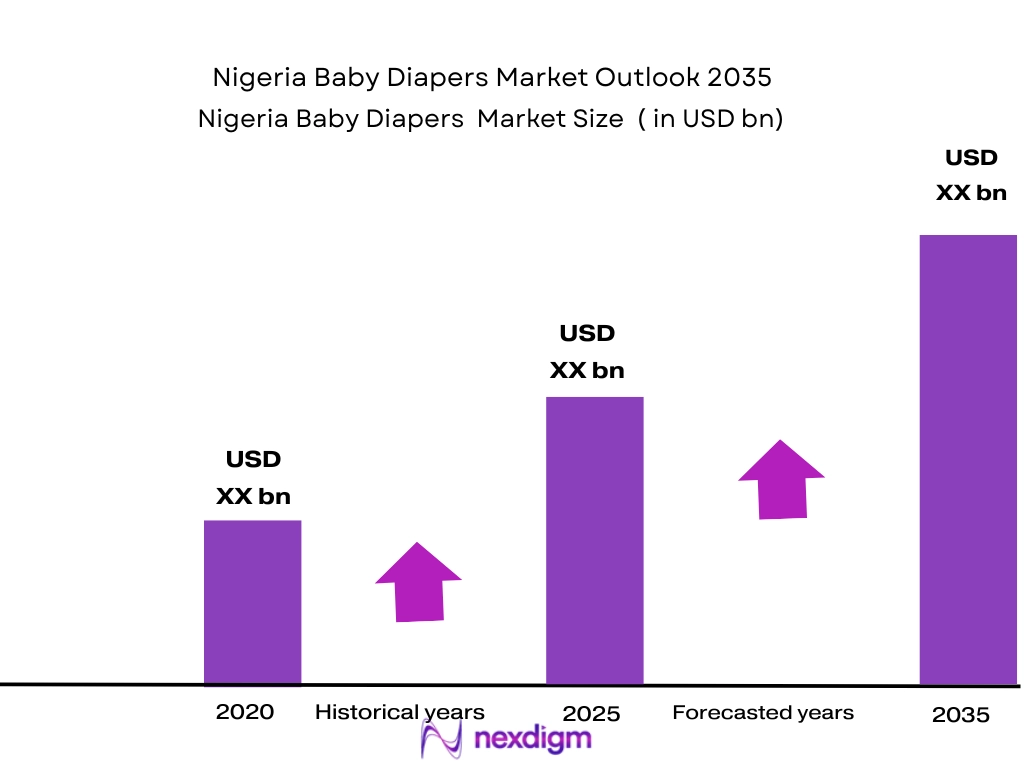
The Nigeria Baby Diapers market is valued at USD ~ billion. The market has been primarily driven by increasing urbanization, rising disposable incomes, and growing consumer awareness regarding baby hygiene. Moreover, rapid population growth and an increasing number of young parents are contributing factors to the market’s growth. Key drivers also include higher adoption rates of disposable diapers over traditional cloth diapers, offering better convenience, hygiene, and comfort. The increasing penetration of organized retail and e-commerce platforms is further helping boost market accessibility.
The dominant regions in the Nigeria Baby Diapers market include Lagos, Abuja, and Port Harcourt. These cities are key market hubs due to their urbanization, higher disposable incomes, and concentration of young families. The growing middle class and improving retail infrastructure in these cities, along with an increased preference for convenience, are important factors driving the market in these regions. Additionally, Lagos is a critical point for distribution, being the economic capital and the most populous city in the country.
Market Segmentation
By Product Type
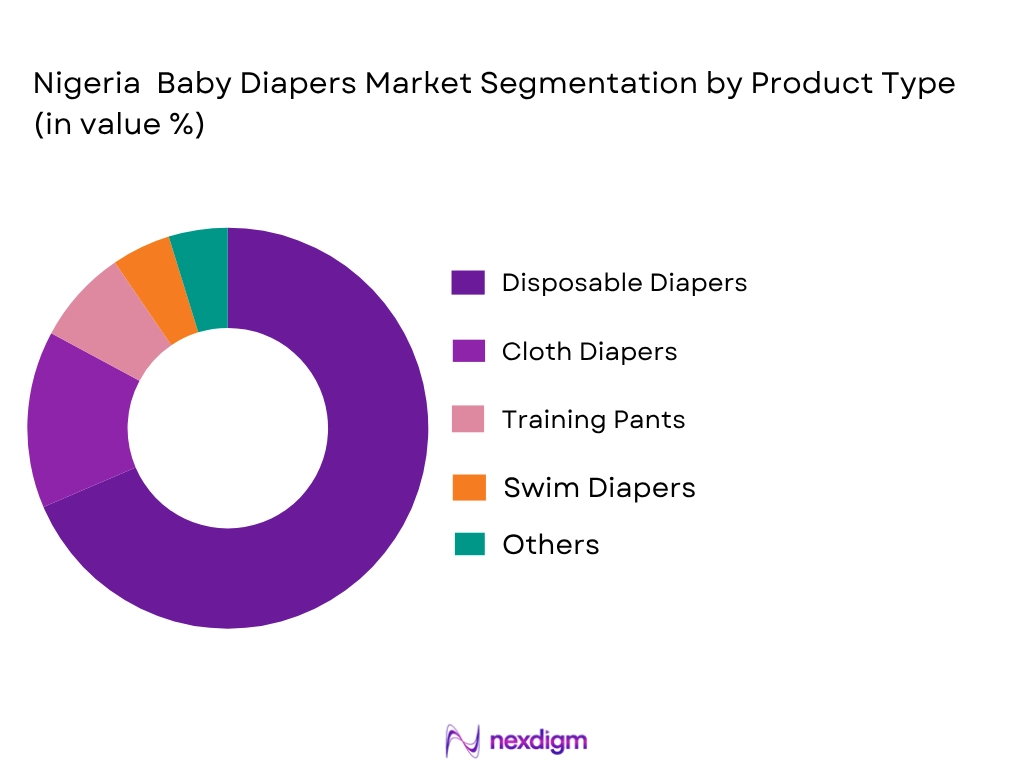
The Nigeria Baby Diapers market is segmented by product type into disposable diapers, cloth diapers, training pants, and swim diapers. Among these, disposable diapers hold the dominant market share due to their increasing adoption. Parents in Nigeria are increasingly shifting towards disposable diapers for their convenience, hygiene benefits, and availability. Additionally, brands like Huggies and Pampers have built strong brand loyalty and trust, further driving the demand for disposable options. As urbanization continues and the middle class expands, disposable diapers are expected to maintain their market dominance.
By Distribution Channel
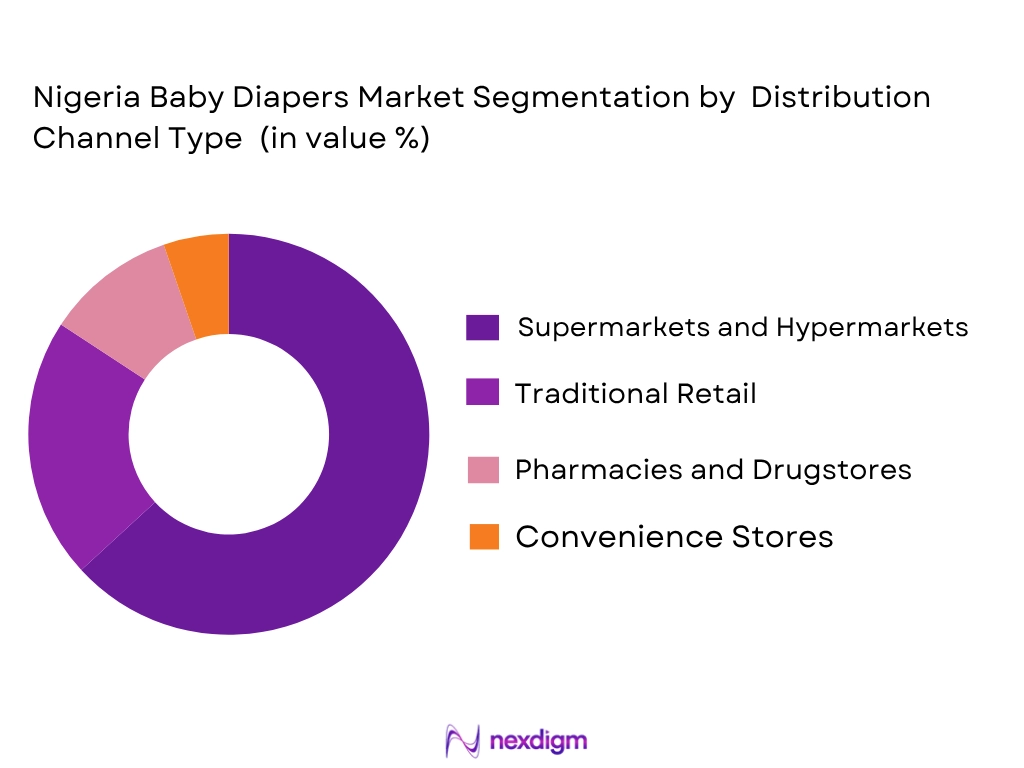
The Nigeria Baby Diapers market is segmented by distribution channels into supermarkets and hypermarkets, convenience stores, traditional retail, pharmacies and drugstores, and e-commerce. Supermarkets and hypermarkets lead the market, holding a major share. The expansion of organized retail, especially in urban areas like Lagos, Abuja, and Port Harcourt, has made it easier for consumers to access baby diaper products. The convenience, variety, and accessibility offered by these retail formats have made them the preferred choice for Nigerian parents.
Competitive Landscape
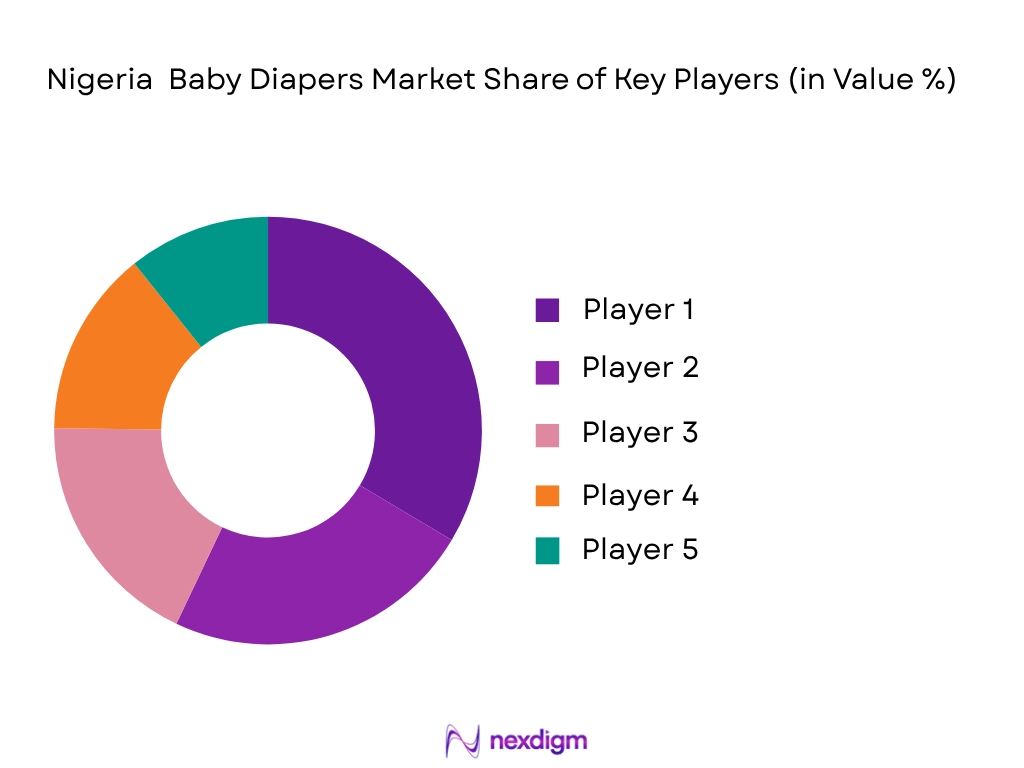
The Nigerian Baby Diapers market is dominated by a few major players, including global brands like Procter & Gamble (Pampers) and Kimberly-Clark (Huggies), as well as local brands like Tolaram Group’s Twinings. These companies leverage strong brand recognition, well-established distribution networks, and consumer trust to maintain market leadership. Other players, such as Nestlé and Johnson & Johnson, also contribute to the competitive landscape, but the presence of established brands continues to influence market dynamics.
| Company Name | Establishment Year | Headquarters | Revenue (USD) | Product Portfolio | Distribution Network | Market Focus | R&D Investment |
| Procter & Gamble | 1837 | Cincinnati, USA | ~ | ~ | ~ | ~ | ~ |
| Kimberly-Clark | 1872 | Irving, Texas, USA | ~ | ~ | ~ | ~ | ~ |
| Tolaram Group (Twinings) | 1954 | Lagos, Nigeria | ~ | ~ | ~ | ~ | ~ |
| Nestlé | 1867 | Vevey, Switzerland | ~ | ~ | ~ | ~ | ~ |
| Johnson & Johnson | 1886 | New Brunswick, USA | ~ | ~ | ~ | ~ | ~ |
Nigeria Baby Diapers Market Analysis
Growth Drivers
Population Growth and Urbanization
Population growth and urbanization are major contributors to the growth of the Nigeria Baby Diapers market. Nigeria’s growing population, particularly in urban areas, is creating a higher demand for baby care products. In cities such as Lagos, Abuja, and Port Harcourt, the number of young families continues to rise, leading to an increased demand for baby diapers. Urbanization further accelerates the shift towards disposable diapers as these areas experience lifestyle changes, with working parents seeking convenience and hygiene in baby care products. The rising number of nuclear families and improved living standards in these urban centers are creating the ideal environment for disposable diaper consumption. The demand for baby diapers is directly correlated to the need for hygiene and convenience, which has made disposable diapers the preferred choice for many young Nigerian parents in urban areas.
Rising Disposable Income
Rising disposable income is a significant growth driver for the Nigeria Baby Diapers market. As economic conditions improve, particularly within the expanding middle class, Nigerian households are seeing an increase in their income levels. This growing disposable income allows families to afford more premium and convenient baby products, such as disposable diapers. As a result, parents are becoming more willing to invest in high-quality diapers, often opting for well-known brands due to their reliability and comfort. This is particularly evident in urban areas where disposable incomes are higher. With more families able to afford these products, the demand for disposable diapers continues to rise, especially in key metropolitan areas. The market is experiencing a gradual shift from traditional cloth diapers to disposable options, reflecting the increased financial capability of Nigerian parents and their growing awareness of hygiene and convenience.
Market Challenges
Price Sensitivity of Consumers
Price sensitivity is a key challenge in the Nigeria Baby Diapers market. Despite the rising disposable income in urban areas, a large portion of the population still faces financial constraints, particularly in rural and semi-urban areas. Many Nigerian consumers remain price-conscious, which impacts their purchasing behavior for baby care products. Disposable diapers, especially premium brands, can be seen as an expensive investment, making it difficult for many families to afford them consistently. This price sensitivity leads to a preference for local, often more affordable, diaper brands that offer lower-cost alternatives. The challenge for diaper manufacturers is to strike a balance between providing high-quality products and keeping them affordable for the broad consumer base, ensuring that even low-income families can participate in the market without compromising on hygiene and comfort.
Supply Chain and Distribution Challenges
The Nigeria Baby Diapers market faces significant supply chain and distribution challenges that hinder its full market potential. Nigeria’s infrastructure is often underdeveloped, and logistical issues such as poor road networks, inadequate transportation facilities, and unreliable supply chains affect the timely availability of products. These challenges are particularly felt in rural areas, where distribution networks are limited. The lack of a robust distribution infrastructure also leads to stock shortages in some regions, making it difficult for consumers to access products consistently. Local and international brands often struggle to meet the demands of consumers in remote areas due to these logistical bottlenecks. Consequently, the market faces inefficiencies that contribute to the high cost of distribution and affect the overall growth potential of the baby diaper market.
Opportunities
Eco-friendly and Biodegradable Diapers
There is a growing opportunity for eco-friendly and biodegradable diapers in the Nigerian Baby Diapers market. As environmental concerns become more prominent worldwide, Nigerian consumers, particularly in urban areas, are increasingly becoming aware of the environmental impact of disposable products. Parents are looking for more sustainable alternatives to conventional disposable diapers, which often contribute to environmental pollution due to their plastic-based materials. Brands that offer biodegradable or plant-based diapers stand to benefit from this growing demand for eco-conscious products. Nigerian consumers are showing a rising interest in products that are both effective in ensuring hygiene and aligned with their environmental values. This shift towards sustainability provides a lucrative opportunity for companies to introduce green alternatives, tapping into a segment of the market that prioritizes environmental sustainability and eco-friendly practices in their purchasing decisions.
Expansion of E-commerce Platforms
The rapid expansion of e-commerce platforms is another significant opportunity for the Nigeria Baby Diapers market. With increasing internet penetration and greater access to mobile phones, more Nigerian consumers are turning to online shopping as a convenient way to purchase baby care products. E-commerce offers a broad reach to urban and rural areas alike, allowing consumers to easily access a wide variety of baby diaper brands. The ability to shop online provides parents with the convenience of purchasing diapers from the comfort of their homes, which is particularly appealing to working parents. E-commerce platforms also allow brands to offer discounts, promotions, and direct-to-consumer delivery models, further enhancing consumer convenience. This growing trend of online shopping is expected to drive significant growth in the baby diapers market, as more consumers embrace the ease of purchasing diapers through digital platforms.
Future Outlook
Over the next five years, the Nigeria Baby Diapers market is expected to witness steady growth. This growth is largely attributed to the increasing birth rate, urbanization, and the growing middle class. Furthermore, the shift towards disposable diapers and the convenience they provide is expected to continue, especially with more young parents in urban areas adopting these products. Rising disposable incomes, coupled with expanding e-commerce platforms, will further boost market expansion. Additionally, local manufacturing and innovation in biodegradable diapers are expected to gain traction, addressing sustainability concerns.
Major Players
- Procter & Gamble
- Kimberly-Clark
- Tolaram Group (Twinings)
- Nestlé
- Johnson & Johnson
- Huggies Nigeria
- Pampers Nigeria
- Delta Diapers
- Lagos Diapers
- Dada Diapers
- SCA Hygiene Nigeria
- First Care
- Molfix
- Bibi Diapers
- Diaperna
Key Target Audience
- Investments and Venture Capitalist Firms
- Government and Regulatory Bodies
- Retailers and Distributors
- Diaper Manufacturers
- Baby Care Product Companies
- E-commerce Platforms
- Healthcare and Medical Institutions
- Logistics and Supply Chain Providers
Research Methodology
Step 1: Identification of Key Variables
The first step involves understanding the key factors that drive the Nigerian Baby Diapers market, such as population growth, urbanization, and consumer preferences. A combination of secondary research, including market reports, government publications, and proprietary databases, is used to compile relevant data.
Step 2: Market Analysis and Construction
In this phase, historical data related to the market’s growth and size is compiled, along with consumer behavior, retail infrastructure, and distribution trends. Detailed analysis of product types and distribution channels is carried out to ensure comprehensive market mapping.
Step 3: Hypothesis Validation and Expert Consultation
Market hypotheses, such as the rising trend of disposable diapers and increasing consumer adoption of e-commerce, are validated by consulting with industry experts. Interviews with leading manufacturers, retailers, and distribution managers offer insights into market drivers and barriers.
Step 4: Research Synthesis and Final Output
Final research output is synthesized by engaging with key stakeholders, including diaper manufacturers and distributors. This phase ensures the accuracy and reliability of the findings, with an emphasis on ensuring the consistency of data across different market segments.

- Executive Summary
- Research Methodology (Market Definitions and Scope of Baby Diapers, Product Category Classification Framework, Retail Audit and E-commerce Data Utilization Approach, Primary Interviews with Manufacturers, Distributors and Retailers, Bottom-Up Household Consumption Modelling, Top-Down FMCG Sales Validation, Assumptions on Pricing, Inflation and Pack Sizes, Limitations and Data Triangulation Techniques, TAM/SAM/SOM Modelling Framework Based on Household Penetration and Spend)

- Definition and Scope
- Evolution of Baby Diapers Ecosystem in Nigeria
- Timeline of Regulatory and Consumer Market Developments
- Household Care Lifecycle Integration
- Value Chain Analysis
- Stakeholder Ecosystem

- Growth Drivers
Population Growth and Urbanization
Rising Disposable Income
Increasing Awareness of Baby Care and Hygiene
Adoption of Disposable Diapers
E-commerce Penetration - Market Challenges
Price Sensitivity of Consumers
Competition from Local Brands
Supply Chain and Distribution Challenges
High Import Reliance
Inflationary Pressures on Production Costs - Opportunities
Eco-friendly and Biodegradable Diapers
Expansion of E-commerce Platforms
Growth in Middle-Income Households
Local Manufacturing Initiatives
Subscription-based Diaper Delivery Models - Market Trends
Natural and Organic Diaper Materials
Biodegradable and Sustainable Packaging
Premium Diaper Segments
Online Retail Growth
Focus on Skin Care and Health-boosting Features - Government Regulations
- SWOT Analysis
- Porter’s Five Forces
- Sustainability and Packaging Impact
Retail Channel Integration Analysis

- By Value, 2020-2025
- By Volume, 2020-2025
- By Average Spend per Household, 2020-2025

- By Product Type (in Value %)
Disposable Diapers
Cloth Diapers
Training Pants
Swim Diapers
Others - By Distribution Channel (in Value %)
Supermarkets and Hypermarkets
Convenience Stores
Traditional Retail
Pharmacies and Drugstores - By Format (in Value %)
Standard Size Diapers
Pants Style Diapers
Baby Wipes
Training Pants
Diaper Bags - By Price Segment (in Value %)
Mass
Mid-Premium
Premium - By End User (in Value %)
Urban Households
Rural Households
Institutional and Commercial Users
Hospitals and Healthcare Facilities

- Market Share of Major Players
By Value
By Volume
By Product Category
TAM Coverage Ratio - Cross Comparison Parameters (Product Portfolio Breadth, Average Price per Unit, Distribution Network, E-commerce Presence, Sustainability Claims, Local Manufacturing Presence, Brand Recall, Retail Shelf Share, Innovation Pipeline, Customer Retention)
- SWOT Analysis of Major Players
- Pricing Benchmarking
- Detailed Profiles of Major Companies
Procter & Gamble Nigeria
Unilever Nigeria
Kimberly-Clark Nigeria
Nestlé Nigeria
Johnson & Johnson Nigeria
Tolaram Group (Twinings)
SCA Hygiene Nigeria
Huggies Nigeria
Dada Diapers
Lagos Diapers
Delta Diapers
Kao Corporation
Essity AB
First Quality Enterprises

- Household Consumption Patterns and Seasonality
- Brand Loyalty and Switching Behavior
- Price Sensitivity and Pack Size Preference
- Pain Point Analysis
- Purchase Decision-Making Criteria
- Consumer TAM Analysis

- By Value, 2026-2035
- By Volume, 2026-2035
- By Average Spend per Household, 2026-2035


 Request a Sample
 Ask for Customization
 Get a Quote
 Enquire Now