

 Download PDF
Market Overview
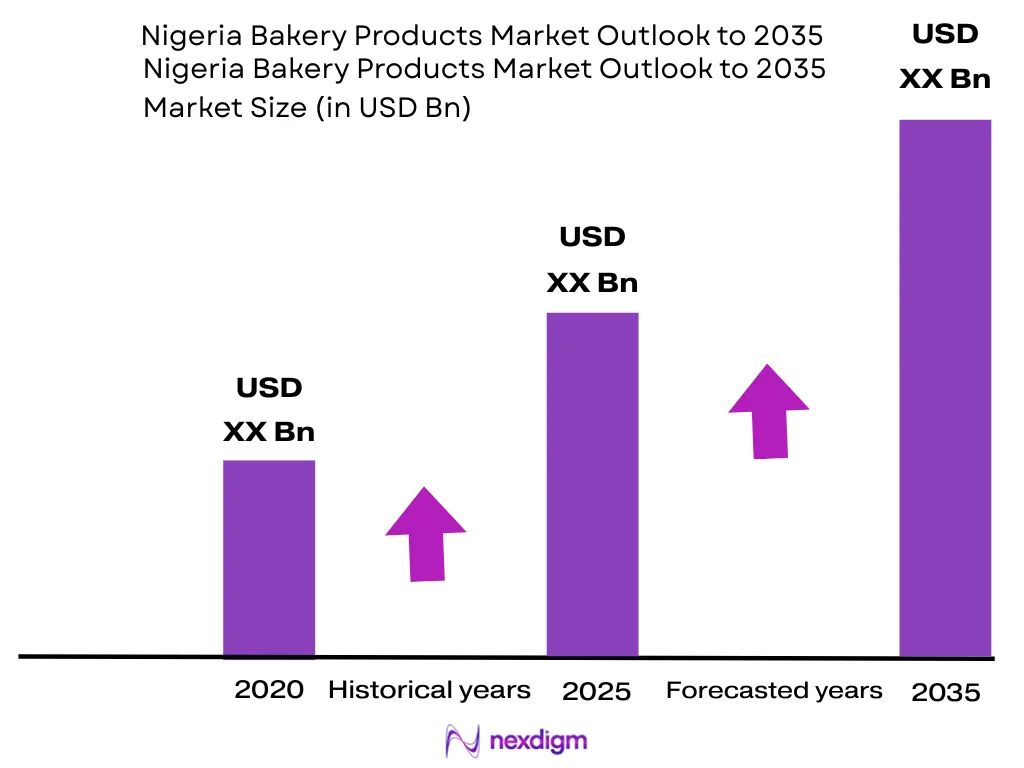
The Nigeria bakery products market was valued at approximately USD ~ Billion in 2024, compared to approximately USD X Billion in 2023, based on industry assessments of commercial bakery production, packaged bakery sales, flour consumption, and retail bakery revenues. The market is driven by Nigeria’s large population exceeding 220 million people, increasing urbanization, rising consumption of bread as a staple food, and expansion of the domestic flour milling industry. Bread remains one of the most widely consumed food products across both urban and rural households due to affordability and convenience. Growing demand for biscuits, cakes, pastries, and savory baked snacks, combined with increasing penetration of modern retail outlets, continues to support market expansion across the country.
Market Segmentation
By Product Type
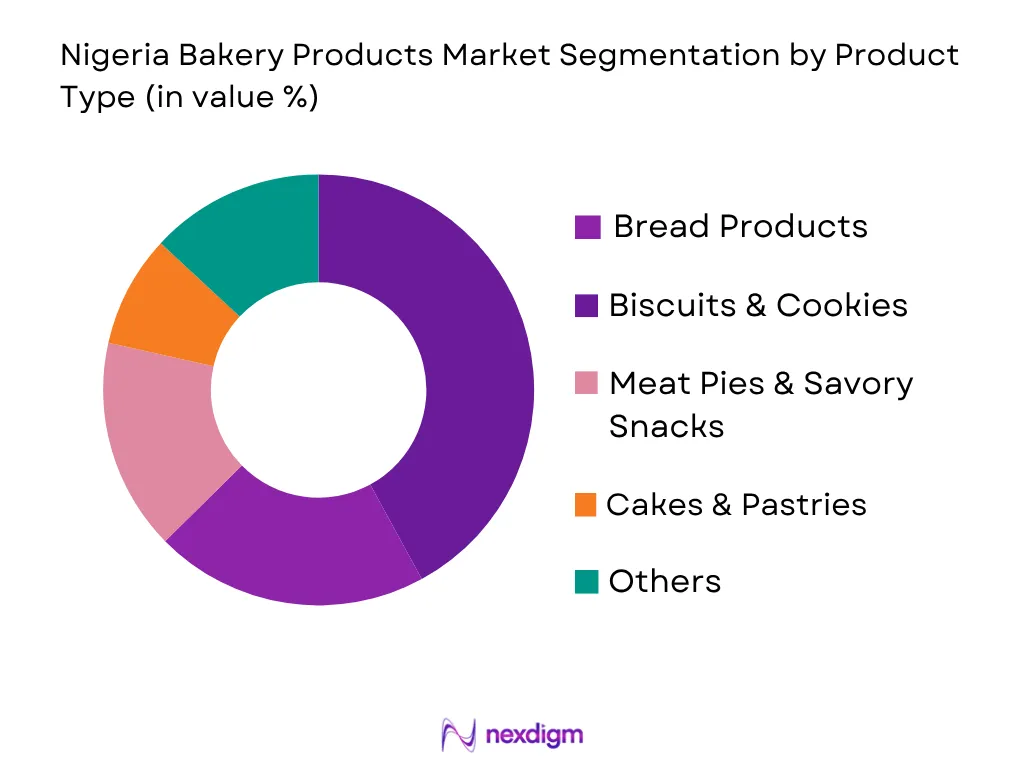
Nigeria bakery products market is segmented by product type into bread products, biscuits and cookies, cakes and pastries, meat pies and savory snacks, doughnuts and buns, frozen bakery products, artisan bakery products, and ready-to-eat bakery products. Recently, bread products have maintained the dominant market share under the product type segmentation because bread serves as one of the most affordable and frequently consumed staple foods across the country. Major flour millers and bakery operators have established extensive production and distribution networks that ensure bread availability in both urban and rural markets. The widespread consumption of sliced bread, family loaves, and affordable packaged bread products supports the segment’s leadership position. Bread also benefits from high household penetration and daily consumption patterns among consumers across different income groups. Although categories such as biscuits, cakes, and savory snacks continue to grow, bread remains the dominant segment due to its affordability, accessibility, nutritional value, and role as a key component of daily diets throughout Nigeria.
By Distribution Channel
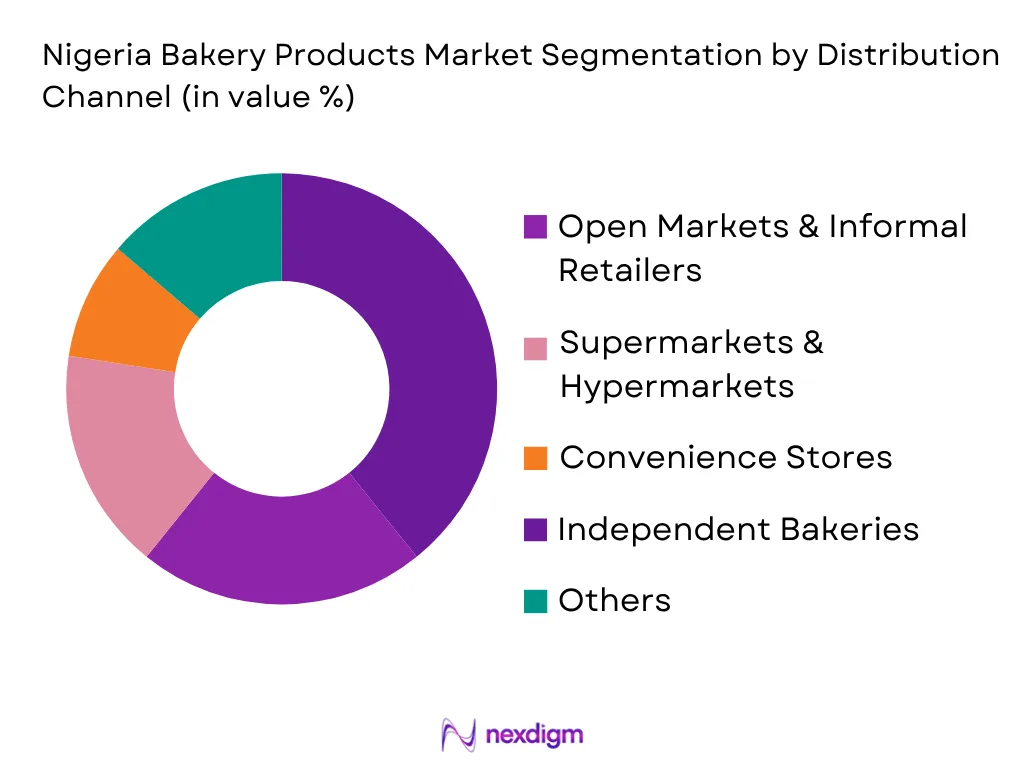
Nigeria bakery products market is segmented by distribution channel into open markets and informal retailers, supermarkets and hypermarkets, convenience stores, independent bakeries, specialty bakery chains, online retail, and foodservice channels. Open markets and informal retailers dominate the market due to their extensive geographic coverage and accessibility across urban, peri-urban, and rural communities. These channels remain the primary point of purchase for many consumers seeking affordable bread and bakery products. Informal retail outlets provide convenient access to fresh bakery products and often maintain strong relationships with local bakery manufacturers. Furthermore, Nigeria’s large informal retail economy supports high product turnover and broad market reach. While organized retail chains are expanding, open markets continue to dominate due to their ability to serve diverse income groups and provide flexible purchasing options. Their widespread presence ensures that bakery products remain available to consumers regardless of location, making them the leading distribution channel within the Nigerian bakery products market.
Competitive Landscape
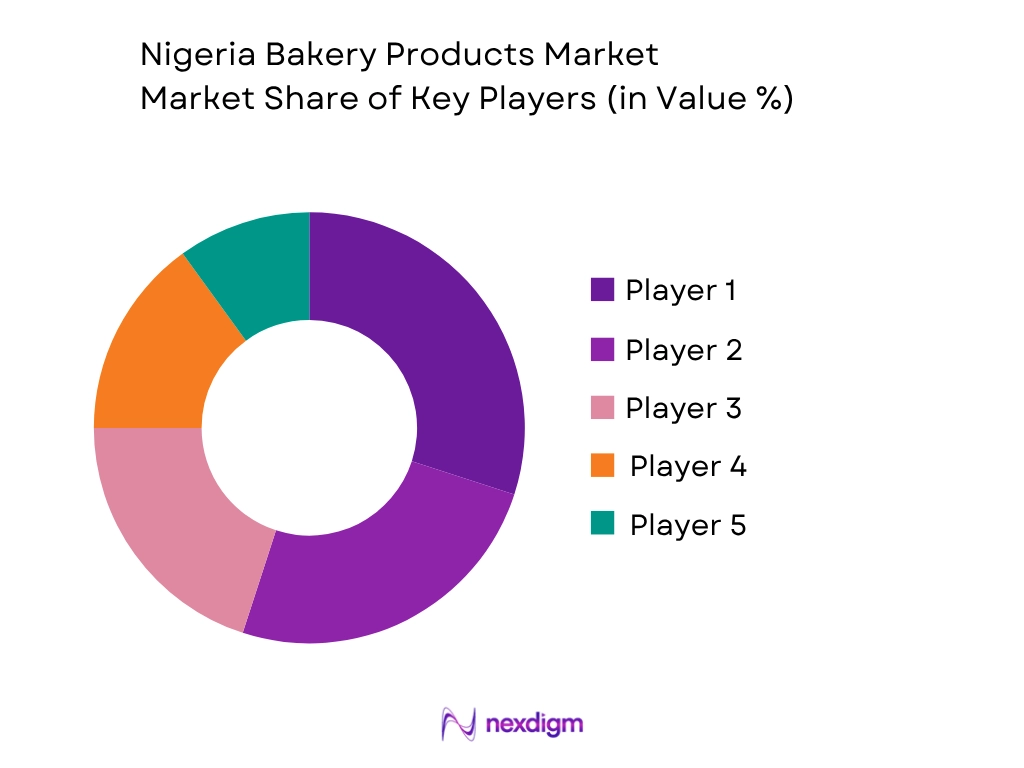
The Nigeria bakery products market is characterized by a combination of large flour milling companies with integrated bakery operations, independent bakery manufacturers, retail bakery chains, and regional bakery producers. Companies such as Flour Mills of Nigeria, Honeywell Flour Mills, and Dangote Flour Mills benefit from strong upstream integration, extensive distribution networks, and established brand recognition. Competition focuses on affordability, product freshness, distribution efficiency, and innovation in packaged bakery products.
| Company | Establishment Year | Headquarters | Key Brands | Product Portfolio | Distribution Reach | Manufacturing Presence | Retail Penetration | Innovative Focus |
| Flour Mills of Nigeria | 1960 | ~ | ~ | ~ | ~ | ~ | ~ | ~ |
| Honeywell Flour Mills | 1985 | ~ | ~ | ~ | ~ | ~ | ~ | ~ |
| Dangote Flour Mills | 1999 | ~ | ~ | ~ | ~ | ~ | ~ | ~ |
| UTC Foods | 1932 | ~ | ~ | ~ | ~ | ~ | ~ | ~ |
| Sweet Sensation | 1994 | ~ | ~ | ~ | ~ | ~ | ~ | ~ |
Nigeria Bakery Products Market Analysis
Growth Drivers
Rising Urban Population and Expansion of Urban Food Consumption
Nigeria’s bakery products market is strongly supported by rapid urbanization and increasing demand for convenient staple foods across major cities. The World Bank indicates Nigeria’s urban population exceeded 114 million people, making it one of Africa’s largest urban consumer markets. The country’s total population surpassed 227 million, creating substantial demand for affordable and ready-to-consume food products such as bread, biscuits, cakes, and pastries. According to the IMF, Nigeria’s nominal GDP exceeded USD 250 billion, reflecting the scale of economic activity supporting packaged food consumption. Lagos alone hosts more than 20 million residents, while Abuja, Kano, Port Harcourt, and Ibadan continue to attract migration from rural areas. Urban households increasingly rely on bakery products because of limited meal preparation time and easy accessibility through supermarkets, neighborhood stores, and informal retail channels. The growth of modern retail infrastructure, expansion of convenience stores, and increasing participation of women in the workforce have strengthened demand for packaged bakery products. Rising household expenditure on processed food categories, combined with increasing urban density, continues to support higher consumption volumes of bread and baked snacks. These demographic and economic fundamentals make urbanization one of the strongest growth drivers for Nigeria’s bakery products market.
Growth of Flour Milling and Food Processing Industry
Nigeria’s bakery sector benefits directly from the country’s expanding flour milling and food processing ecosystem. Nigeria remains one of Africa’s largest wheat-consuming nations, with annual wheat demand exceeding 6 million metric tons, supporting extensive flour production for bread and bakery manufacturing. The country’s manufacturing sector contributed more than NGN 10 trillion to national output according to recent national statistics, reflecting the importance of processed food industries. Major flour millers such as Flour Mills of Nigeria, Honeywell Flour Mills, and Dangote Flour Mills operate large-scale production facilities that support bakery manufacturers nationwide. The Nigerian population of more than 227 million people creates sustained demand for packaged food products, while food manufacturing remains among the largest industrial employers in the country. Expanding investments in food processing facilities, warehouse infrastructure, and distribution networks have improved bakery product availability across urban and semi-urban markets. Increased domestic processing capacity reduces supply chain bottlenecks and strengthens product accessibility. As bread remains one of the most consumed staple foods in Nigeria, the continued development of flour milling and food manufacturing infrastructure creates a strong foundation for long-term bakery product consumption and market expansion.
Market Challenges
Dependence on Imported Wheat and Raw Material Volatility
A major challenge facing Nigeria’s bakery products market is the heavy dependence on imported wheat and associated supply chain vulnerabilities. Nigeria consumes more than 6 million metric tons of wheat annually, while domestic production remains significantly below national requirements. As a result, bakery manufacturers rely heavily on imports to meet flour demand. According to national trade statistics, food and agricultural imports remain a significant component of Nigeria’s import bill, exposing bakery producers to currency fluctuations and global commodity supply disruptions. Nigeria’s foreign exchange constraints have periodically affected access to imported raw materials, creating operational uncertainty for flour millers and bakeries. The Nigerian Naira has experienced substantial volatility, increasing procurement challenges for businesses dependent on imported wheat. Since bread and bakery products rely heavily on flour as a primary ingredient, disruptions in wheat supply directly affect production planning and inventory management. Growing urban populations continue to increase consumption requirements, placing further pressure on supply chains. The combination of import dependency, currency fluctuations, logistics constraints, and global agricultural market uncertainty remains a critical challenge for bakery manufacturersoperating within Nigeria’s bakery products industry.
Energy and Infrastructure Constraints
Nigeria’s bakery industry faces considerable operational challenges arising from energy shortages and infrastructure limitations. According to government energy data, Nigeria’s installed electricity capacity exceeds 13,000 megawatts, yet effective power delivery remains significantly lower due to transmission and distribution constraints. Bakery operations depend heavily on continuous energy supply for mixing, baking, refrigeration, packaging, and storage processes. Frequent power interruptions compel many bakeries to rely on diesel-powered generators, increasing operational complexity and reducing production efficiency. Nigeria also possesses a road network exceeding 195,000 kilometers, but transportation bottlenecks continue to affect distribution efficiency across several regions. Bakery products are highly perishable and require rapid transportation to retail outlets, making logistics reliability critical. Urban congestion in major cities such as Lagos and Abuja further complicates distribution schedules. Additionally, maintaining freshness and shelf-life standards requires reliable cold chain and storage infrastructure, which remains underdeveloped in certain areas. These infrastructure constraints increase operational risks for bakery manufacturers and distributors. As bakery demand expands across Nigeria’s growing urban centers, addressing energy reliability and logistics efficiency remains essential for improving productivity and supporting sustainable market development.
Market Opportunities
Premium and Health-Oriented Bakery Product Innovation
An important opportunity within Nigeria’s bakery products market is the growing demand for premium, nutritious, and health-oriented baked goods. Nigeria’s population exceeds 227 million people, creating one of Africa’s largest consumer bases for food innovation. Urban consumers are increasingly exposed to international food trends through digital platforms, modern retail channels, and expanding foodservice networks. The World Bank reports continued growth in urban populations, creating larger markets for differentiated bakery products. Demand is increasing for whole wheat bread, multigrain products, high-fiber bakery items, low-sugar snacks, and fortified baked goods. The country’s expanding middle-income consumer segment is becoming more willing to explore value-added bakery categories that emphasize nutrition, convenience, and quality. Modern retail chains and specialty bakery outlets are expanding shelf space dedicated to premium bakery offerings. Food manufacturers are increasingly investing in product diversification to address changing consumer preferences. As awareness of nutrition and wellness grows across major cities such as Lagos, Abuja, and Port Harcourt, bakery companies have opportunities to develop specialized products targeting health-conscious consumers. This shift toward premiumization and functional bakery products creates substantial room for innovation and market expansion.
Expansion of Modern Retail and Digital Commerce Channels
The continued development of organized retail and digital commerce platforms presents a major opportunity for Nigeria’s bakery products market. Nigeria’s internet user base exceeds 120 million users, while mobile subscriptions surpass 220 million connections, supporting broader access to digital commerce channels. The country’s urban population of more than 114 million people creates a substantial customer base for modern retail formats, including supermarkets, hypermarkets, and convenience store chains. Organized retail expansion has improved product visibility, inventory management, and consumer access to packaged bakery products. E-commerce adoption is also increasing, enabling bakery brands to reach consumers directly through digital ordering platforms and delivery services. Lagos, Abuja, and Port Harcourt continue to experience rapid growth in online food delivery ecosystems, supporting demand for fresh and packaged baked goods. Digital platforms allow bakery manufacturers to expand geographic reach beyond traditional distribution channels while improving customer engagement and brand recognition. The combination of increasing internet penetration, mobile connectivity, organized retail growth, and urban consumer demand creates significant opportunities for bakery companies to strengthen distribution networks and increase product accessibility across Nigeria’s evolving food retail landscape.
Future Outlook
The Nigeria bakery products market is expected to demonstrate sustained growth over the forecast period due to continued population expansion, urbanization, and rising demand for convenient food products. Growth in modern retail infrastructure, increasing investment in local flour milling, and product innovation across health-oriented bakery categories are expected to create new opportunities. Premium bakery products, fortified bread, frozen bakery solutions, and digital retail channels are likely to gain traction among consumers. Manufacturers are also expected to focus on local sourcing initiatives, operational efficiency, and product diversification to strengthen competitiveness in an evolving market environment.
Major Players
- Flour Mills of Nigeria (Golden Penny)
- Honeywell Flour Mills
- Dangote Flour Mills
- UTC Foods
- Val-U Bread
- Butterfield Bakery
- Sweet Sensation Confectionery
- Ebeano Bakery
- FoodCo Bakery
- Shoprite Bakery Nigeria
- Kilimanjaro Bakery
- Market Square Bakery
- De Tastee Group
- Delight Bakeries
- May & Baker Foods Division
Key Target Audience
- Bakery Product Manufacturers
- Flour Milling Companies
- Supermarket and Hypermarket Chains
- Foodservice and Hospitality Operators
- Bakery Equipment Manufacturers
- Packaging Companies Serving Food Manufacturers
- Investments and Venture Capitalist Firms
- Government and Regulatory Bodies (NAFDAC, Standards Organisation of Nigeria, Federal Ministry of Industry Trade and Investment, Federal Ministry of Agriculture and Food Security)
Research Methodology
Step 1: Identification of Key Variables
The research process begins by mapping the entire Nigeria bakery products ecosystem, including flour millers, bakery manufacturers, retailers, distributors, foodservice operators, and consumers. Extensive secondary research is conducted to identify key market variables affecting demand, production, consumption, and competitive dynamics.
Step 2: Market Analysis and Construction
Historical data relating to bakery production, flour consumption, retail sales, foodservice demand, and consumer purchasing behavior is compiled and analyzed. Top-down and bottom-up methodologies are utilized to estimate market revenues and validate segment-level performance.
Step 3: Hypothesis Validation and Expert Consultation
Preliminary findings are validated through interviews with bakery manufacturers, distributors, retail operators, flour millers, and industry stakeholders. These consultations provide operational and strategic insights that strengthen the accuracy of market estimates and forecasts.
Step 4: Research Synthesis and Final Output
The final phase integrates findings from primary and secondary research sources. Data triangulation is applied to ensure consistency across all market estimates, segment analysis, competitive assessments, and future forecasts.

- Executive Summary
- Research Methodology (Market Definitions and Assumptions, Abbreviations, Market Sizing Approach, Top-Down Analysis, Bottom-Up Analysis, Demand-Side Assessment, Supply-Side Assessment, Formal and Informal Bakery Sector Assessment, Consumer Spending Analysis, Primary Industry Interviews, Trade Flow Assessment, Data Triangulation, Forecasting Framework, Limitations and Future Conclusions)

- Definition and Scope
- Market Evolution and Industry Genesis
- Timeline of Major Industry Developments
- Bakery Industry Business Cycle Analysis
- Bakery Value Chain Analysis

- Growth Drivers (Rapid Population Growth, Rising Urbanization, Increasing Bread Consumption as Staple Food, Expansion of Flour Milling Industry, Growth of Convenience Foods, Rising Retail Penetration, Expanding Foodservice Sector, Growing Youth Population)
- Market Challenges (Wheat Import Dependency, Foreign Exchange Volatility, High Energy Costs, Inflationary Pressure on Raw Materials, Transportation and Logistics Constraints, Power Supply Challenges, Product Shelf-Life Management, Intense Price Competition)
- Market Opportunities (Local Wheat Substitution Initiatives, Health-Oriented Bakery Products, Premium and Artisan Bakery Expansion, Frozen Bakery Product Development, E-Commerce Bakery Sales Growth, Product Fortification Innovations, Modern Retail Expansion, Sustainable Packaging Adoption)
- Market Trends (Smaller Affordable Pack Sizes, Fortified Bread Products, Premium Pastries and Cakes Growth, Convenience-Oriented Consumption, Whole Wheat Product Adoption, Digital Ordering Channels, Product Diversification Beyond Bread, Expansion of In-Store Bakeries)
- Government Regulations (NAFDAC Food Safety Standards, SON Product Quality Standards, Food Fortification Requirements, Labeling Regulations, Packaging Compliance Standards, Wheat Import Policies, Consumer Protection Regulations, Food Manufacturing Compliance)
- SWOT Analysis
- Porter’s Five Forces Analysis
- PESTLE Analysis
- Stakeholder Ecosystem
- Competition Ecosystem
- ESG and Sustainability Assessmen

- By Market Value (2020-2025)
- By Volume Consumption (2020-2025)
- By Average Selling Price (2020-2025)

- By Product Type (In Value %)
Bread Products
Cakes and Pastries
Biscuits and Cookies
Meat Pies and Savory Bakery Snacks
Doughnuts and Buns
Frozen Bakery Products
Artisan and Premium Bakery Products
Morning Goods
Crackers and Dry Bakery Products
Ready-to-Eat Bakery Products - By Ingredient Type (In Value %)
Conventional Bakery Products
Whole Wheat Bakery Products
High-Fiber Bakery Products
Gluten-Free Bakery Products
Low Sugar Bakery Products
Fortified Bakery Products
Organic Bakery Products
Functional Bakery Products - By Distribution Channel (In Value %)
Open Markets and Informal Retailers
Supermarkets and Hypermarkets
Convenience Stores
Independent Bakeries
Specialty Bakery Chains
Online Retail and Direct-to-Consumer
Foodservice and Institutional Sales
Wholesale Distributors - By Region (In Value %)
Lagos State
South West Nigeria
South South Nigeria
South East Nigeria
North Central Nigeria
North West Nigeria
North East Nigeria
Federal Capital Territory (Abuja) - By Packaging Type (In Value %)
Flexible Plastic Packaging
Paper Packaging
Cartons and Boxes
Family Pack Packaging
Single-Serve Packaging
Eco-Friendly Packaging
Bulk Packaging

- Market Share of Major Players (By Value, Volume, Product Category, Distribution Channel, Organized Retail Presence)
- Cross Comparison Parameters (Product Portfolio Breadth, Bakery SKU Count, Production Capacity, Distribution Network Reach, Flour Integration Capability, Bread Manufacturing Scale, Informal Market Penetration, Product Innovation Frequency)
- SWOT Analysis of Major Players
- Pricing Analysis by SKU and Product Category
- Detailed Profiles of Major Companies
Honeywell Flour Mills
Flour Mills of Nigeria (Golden Penny)
Dangote Flour Mills
UTC Foods
May & Baker Foods Division
Val-U Bread
Butterfield Bakery
Sweet Sensation Confectionery
Ebeano Bakery
FoodCo Bakery
Shoprite Bakery Nigeria
Kilimanjaro Bakery
Market Square Bakery
De Tastee Group
Delight Bakeries

- Consumption Behavior Assessment
- Demographic Consumption Trends
- Household Bakery Spending Analysis
- Premium vs Mass Market Demand Assessment
- Consumer Affordability Analysis
- Brand Loyalty Assessment
- Health and Wellness Influence on Purchasing Decisions
- Consumer Pain Point Analysis
- Product Attribute Preference Analysis
- Purchase Decision-Making Process
- Online vs Offline Purchase Behavior
- Formal Retail vs Informal Retail Consumption Analysis

- By Market Value (2026-2035)
- By Volume Consumption (2026-2035)
- By Average Selling Price (2026-2035)


 Request a Sample
 Ask for Customization
 Get a Quote
 Enquire Now