
 Download PDF
 Download PDF
Market Overview
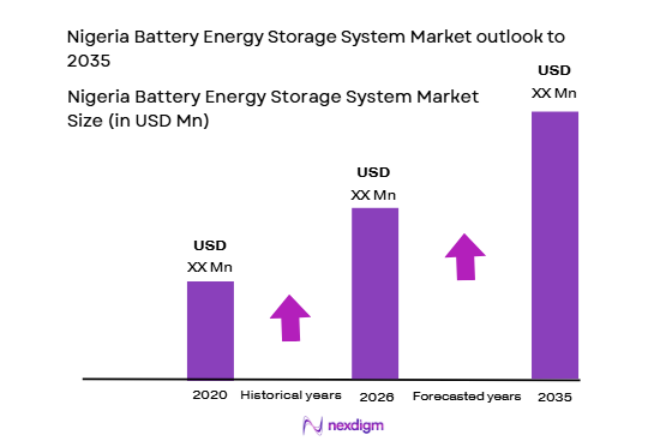
Nigeria’s Battery Energy Storage System market has emerged as a critical component of the national power ecosystem, with a recent historical assessment valuing the market at approximately USD ~ million based on data compiled from International Energy Agency storage deployment datasets and World Bank power infrastructure project disclosures. Market expansion is primarily driven by persistent electricity supply shortages, rising investments in renewable integration, and increasing adoption of decentralized power solutions by commercial and industrial facilities seeking reliability and cost stability.
Lagos, Abuja, and Port Harcourt represent the most influential urban centers shaping the Nigeria Battery Energy Storage System market due to their high electricity demand, concentration of commercial industries, and significant deployment of solar hybrid microgrid projects. Lagos dominates deployment due to its industrial density and private energy initiatives, while Abuja benefits from government-backed electrification programs and infrastructure investments. Port Harcourt’s dominance is linked to oil and gas sector power backup requirements and increasing renewable hybrid energy adoption across industrial estates.
Market Segmentation
By Product Type
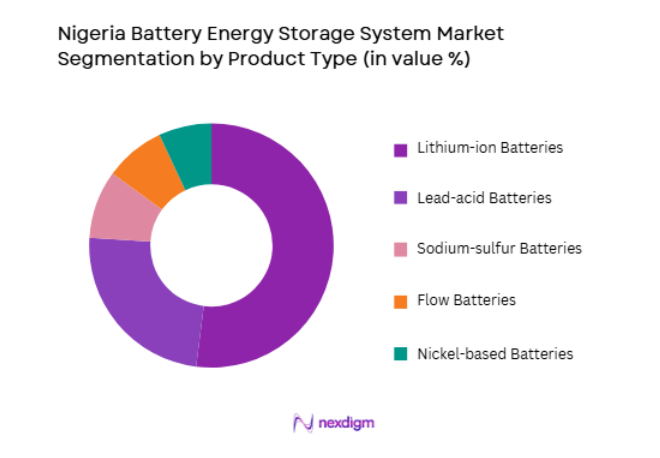
Nigeria Battery Energy Storage System market is segmented by product type into lithium-ion batteries, lead-acid batteries, sodium-sulfur batteries, flow batteries, and nickel-based batteries. Recently, lithium-ion batteries have a dominant market share due to factors such as strong demand for solar hybrid systems, declining battery prices globally, improved energy density, and widespread deployment in commercial backup applications. Industrial facilities, telecom towers, and microgrid developers increasingly favor lithium-ion solutions because of their longer lifecycle, faster charging capability, and compact installation footprint. Additionally, renewable energy projects supported by development banks and private investors often specify lithium-ion technologies due to their compatibility with solar photovoltaic systems and modern energy management platforms.
By Application
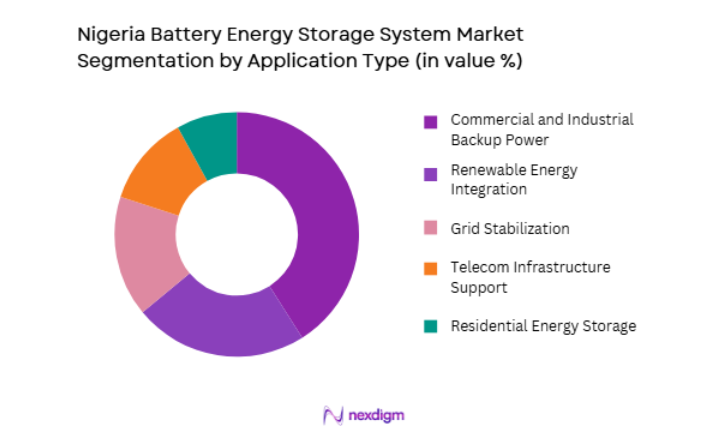
Nigeria Battery Energy Storage System market is segmented by application into grid stabilization, renewable integration, commercial and industrial backup power, residential energy storage, and telecom infrastructure support. Recently, commercial and industrial backup power has a dominant market share due to factors such as chronic grid instability, high diesel generator operating costs, and increasing interest in hybrid solar-battery systems among manufacturing and service sectors. Businesses operating in manufacturing zones, financial districts, and logistics centers rely heavily on uninterrupted electricity, prompting adoption of battery systems that reduce generator runtime and fuel consumption. Telecom infrastructure operators also increasingly deploy battery storage within backup solutions for thousands of tower sites across the country.
Competitive Landscape
The Nigeria Battery Energy Storage System market exhibits moderate consolidation, with several global technology providers partnering with regional energy developers to implement storage solutions across commercial facilities, telecom infrastructure, and renewable energy projects. Major players influence technology standards, project financing structures, and system integration capabilities. International battery manufacturers dominate technology supply, while local energy companies focus on project development, installation, and maintenance services across distributed energy projects.
| Company Name | Establishment Year | Headquarters | Technology Focus | Market Reach | Key Products | Revenue | Storage Capacity Deployment |
| Tesla Energy | 2003 | United States | ~ | ~ | ~ | ~ | ~ |
| BYD Energy | 1995 | China | ~ | ~ | ~ | ~ | ~ |
| Fluence Energy | 2018 | United States | ~ | ~ | ~ | ~ | ~ |
| Huawei Digital Power | 1987 | China | ~ | ~ | ~ | ~ | ~ |
| Siemens Energy | 2020 | Germany | ~ | ~ | ~ | ~ | ~ |
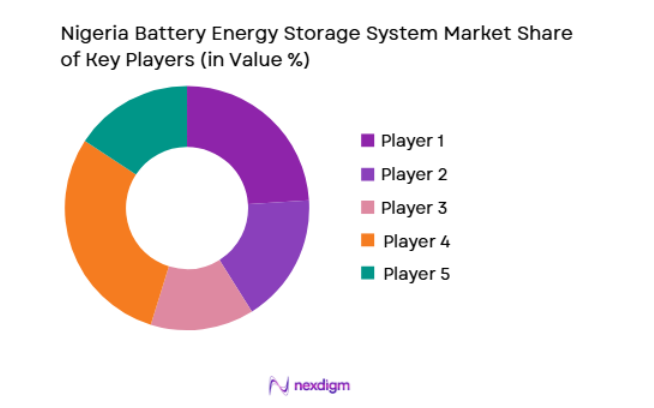
Nigeria Battery Energy Storage System Market Analysis
Growth Drivers
Rapid Expansion of Renewable Hybrid Energy Projects in Nigeria
Nigeria’s growing deployment of solar hybrid systems across mini-grids, commercial facilities, and rural electrification programs is significantly accelerating demand for battery energy storage systems as developers require reliable technologies capable of stabilizing intermittent renewable generation while maintaining consistent electricity supply for consumers. Government-supported electrification initiatives and donor-funded energy programs are increasingly emphasizing solar-plus-storage models for off-grid communities, creating sustained market demand for integrated battery systems across thousands of distributed power installations nationwide. Large commercial complexes and industrial estates are also integrating renewable hybrid solutions to reduce dependence on diesel generators, lowering operational costs while improving environmental performance and energy resilience. As electricity demand grows in urban and semi-urban areas, distributed solar installations supported by storage systems enable facilities to manage peak load conditions and ensure uninterrupted power for critical operations. Development banks and international climate finance institutions are channeling funding toward renewable infrastructure in Nigeria, prioritizing projects that incorporate energy storage to enhance grid stability and maximize renewable generation efficiency. Telecom tower operators deploying solar hybrid power systems across remote regions are further strengthening storage demand, as battery systems enable longer operational hours without generator support. Private sector renewable developers are increasingly offering energy-as-a-service models where battery systems play a central role in ensuring reliable supply to commercial customers under long-term energy contracts.
Declining Cost of Lithium-Ion Battery Technologies and Energy Storage Components
Continuous reductions in lithium-ion battery manufacturing costs driven by global electric vehicle production growth and large-scale battery gigafactory investments are making energy storage systems increasingly accessible for energy developers and industrial consumers across Nigeria. Lower battery prices significantly improve the economic feasibility of solar-plus-storage installations by reducing upfront project costs while enhancing lifecycle performance and return on investment for power system operators. Energy developers implementing mini-grid projects benefit from these cost declines because battery storage represents a substantial portion of overall system expenditure, and price reductions enable expansion of electrification programs across more remote communities. Industrial users replacing diesel generator backup systems with hybrid battery solutions are also realizing operational savings through reduced fuel consumption, lower maintenance requirements, and improved energy efficiency. Telecommunications infrastructure providers managing extensive tower networks are adopting lithium-ion battery storage systems due to improved reliability and longer replacement cycles compared with traditional lead-acid technologies. Increased competition among battery manufacturers and energy storage integrators has accelerated innovation in battery management systems, thermal control technologies, and modular storage architectures that improve operational safety and scalability. International technology providers entering African energy markets are introducing advanced storage solutions specifically designed for high-temperature environments and unstable grid conditions common in Nigeria.
Market Challenges
Limited Grid Infrastructure and Transmission Constraints Affecting Storage Integration
Nigeria’s electricity transmission and distribution infrastructure faces structural limitations that complicate large-scale integration of advanced battery energy storage systems across the national power network. Many grid regions experience congestion, outdated equipment, and limited real-time monitoring capabilities, which restrict the ability of system operators to fully leverage energy storage technologies for frequency regulation, load balancing, and renewable integration applications. These infrastructure gaps reduce potential operational efficiency benefits that storage systems can deliver when deployed alongside grid modernization programs. Power utilities managing aging transmission lines and substations often prioritize immediate reliability improvements rather than implementing advanced energy management platforms required for sophisticated storage integration. Additionally, regulatory uncertainty regarding grid service compensation mechanisms for battery storage projects can discourage private investors from developing utility-scale storage installations. Energy developers implementing storage-enabled renewable projects must often design systems capable of operating independently from the national grid due to inconsistent grid availability. Such conditions increase project complexity and require additional technical expertise in microgrid architecture and power electronics integration. Without coordinated investments in digital grid monitoring technologies, advanced dispatch systems, and transmission upgrades, the full operational potential of battery energy storage systems remains constrained across Nigeria’s evolving electricity network.
High Initial Capital Investment and Financing Barriers for Energy Storage Projects
Battery energy storage projects in Nigeria frequently encounter financing challenges because of high upfront capital requirements combined with perceived investment risks associated with power sector regulatory uncertainty and currency volatility. Financial institutions and private investors evaluating storage projects often require strong long-term revenue guarantees before committing capital, which can delay deployment timelines and increase project development complexity. Many energy storage installations are integrated within larger solar or hybrid microgrid projects, meaning that developers must secure financing packages covering multiple technology components and infrastructure assets simultaneously. Currency fluctuations affecting imported battery equipment costs also influence investment planning, as most advanced battery technologies are manufactured outside Nigeria. Developers operating within emerging electricity markets must additionally account for uncertainties related to tariff structures, energy pricing frameworks, and regulatory approvals governing distributed energy systems. Limited availability of specialized financing instruments tailored for energy storage infrastructure further constrains market expansion, particularly for smaller developers implementing rural electrification projects. Although development finance institutions and international climate funds provide some project funding support, many private investors remain cautious about entering large-scale storage markets without clear regulatory stability.
Opportunities
Expansion of Telecom Infrastructure Energy Storage Solutions Across Nigeria
Nigeria’s extensive telecommunications network presents a significant opportunity for battery energy storage deployment because thousands of mobile communication towers require reliable backup power systems to maintain uninterrupted connectivity across urban and rural regions. Telecom operators increasingly seek alternatives to diesel generator-based power solutions due to rising fuel costs, logistical challenges, and environmental sustainability goals. Battery storage integrated with solar photovoltaic systems offers a cost-effective and operationally efficient alternative that reduces fuel consumption while improving power reliability for critical communication infrastructure. Telecom tower operators managing large infrastructure portfolios benefit from battery technologies capable of supporting longer backup durations and remote monitoring capabilities that simplify maintenance operations. Energy service companies are developing specialized hybrid power packages combining solar modules, lithium-ion batteries, and intelligent control systems designed specifically for telecom infrastructure environments. Such solutions allow operators to significantly reduce operational expenditures associated with generator fuel supply and maintenance. Nigeria’s rapid expansion of digital connectivity and mobile broadband coverage ensures sustained demand for reliable telecom tower power systems across both densely populated cities and remote communities. As telecommunications companies continue expanding network coverage and upgrading infrastructure to support advanced mobile technologies, the deployment of battery energy storage solutions across tower networks is expected to grow significantly throughout the national power ecosystem.
Development of Utility-Scale Energy Storage Projects Supporting Renewable Power Plants
Increasing investment in large renewable energy projects across Nigeria creates significant opportunities for utility-scale battery energy storage installations designed to stabilize grid operations and enhance renewable generation reliability. Solar power plants and other renewable facilities require energy storage solutions capable of smoothing generation fluctuations and maintaining consistent electricity supply during periods of variable renewable output. Utility-scale battery installations can provide essential grid services such as frequency regulation, peak load management, and energy shifting, enabling more efficient integration of renewable generation within the national power network. Power utilities and independent power producers exploring renewable expansion projects are beginning to incorporate storage components into project planning frameworks to improve operational flexibility and reduce grid instability risks. International climate finance programs and energy transition initiatives are also encouraging the deployment of storage-enabled renewable infrastructure across emerging electricity markets. As Nigeria seeks to diversify its energy mix and reduce dependence on fossil-fuel-based generation, utility-scale battery energy storage systems are becoming increasingly valuable in supporting long-term renewable power development strategies. Continued policy reforms promoting renewable investment and grid modernization are therefore expected to create substantial opportunities for large-scale battery storage deployment across Nigeria’s evolving electricity sector.
Future Outlook
The Nigeria Battery Energy Storage System market is expected to experience significant expansion as renewable energy integration, telecom infrastructure development, and commercial energy resilience strategies accelerate adoption. Over the coming five years, declining battery technology costs and stronger policy support for distributed energy systems are expected to drive wider deployment of storage technologies. Grid modernization initiatives and electrification programs will further encourage energy storage investments. Increasing private sector participation and international climate finance support will also strengthen the development of large-scale and decentralized storage projects.
Major Players
- Tesla Energy
- BYD Energy
- Fluence Energy
- Huawei Digital Power
- Siemens Energy
- LG Energy Solution
- Samsung SDI
- Panasonic Energy
- Contemporary Amperex Technology Co. Limited (CATL)
- Wärtsilä Energy Storage
- ABB Energy Industries
- Eaton Corporation
- Schneider Electric
- Sungrow Power Supply
- Hitachi Energy
Key Target Audience
- Battery Energy Storage System Manufacturers
- Renewable Energy Developers
- Electricity Distribution Companies
- Telecom Infrastructure Operators
- Industrial Power Consumers
- Investments and venture capitalist firms
- Government and regulatory bodies
- Power Infrastructure EPC Contractors
Research Methodology
Step 1: Identification of Key Variables
Key market variables such as deployment capacity, technology adoption trends, policy frameworks, and renewable integration levels are identified. These factors define demand drivers and structural characteristics influencing the Nigeria Battery Energy Storage System market.
Step 2: Market Analysis and Construction
Collected information is structured into market segments including product type, application, and end-user sectors. Data sources include energy infrastructure databases, government power sector publications, and international energy agency datasets.
Step 3: Hypothesis Validation and Expert Consultation
Industry experts, technology providers, and power infrastructure professionals are consulted to validate deployment patterns, technology adoption trends, and regulatory impacts shaping the Nigeria Battery Energy Storage System market.
Step 4: Research Synthesis and Final Output
Validated data is synthesized into structured market insights covering segmentation, competitive landscape, and growth dynamics. The final analysis integrates qualitative industry intelligence with quantitative energy infrastructure datasets.

- Executive Summary
- Research Methodology (Definitions, Scope, Industry Assumptions, Market Sizing Approach, Primary & Secondary Research Framework, Data Collection & Verification Protocol, Analytic Models & Forecast Methodology, Limitations & Research Validity Checks)

- Market Definition and Scope
- Value Chain & Stakeholder Ecosystem
- Regulatory / Certification Landscape
- Sector Dynamics Affecting Demand

- Growth Drivers
Increasing integration of renewable energy sources into Nigeria’s power generation mix
Rising demand for grid stability and backup power solutions amid unreliable electricity supply
Government initiatives encouraging off grid and distributed energy storage deployment - Market Challenges
High capital cost associated with battery storage system deployment
Limited local manufacturing capability for advanced battery storage components
Regulatory uncertainty around energy storage integration within the national grid - Market Opportunities
Expansion of microgrid and off grid energy storage solutions for rural electrification
Partnerships between renewable energy developers and storage technology providers
Growth in solar plus storage projects for commercial and industrial facilities - Trends
Adoption of containerized modular battery energy storage systems
Integration of smart energy management software with storage infrastructure - Government Regulations
National electrification initiatives promoting distributed renewable energy systems
Energy policy reforms supporting independent power and storage developers
Regulatory frameworks governing grid connection and energy storage deployment - SWOT Analysis
- Porter’s Five Forces

- By Market Value, 2020-2025
- By Installed Units, 2020-2025
- By Average System Price, 2020-2025
- By System Complexity Tier, 2020-2025

- By System Type (In Value%)
Lithium Ion Battery Storage Systems
Lead Acid Battery Storage Systems
Flow Battery Energy Storage Systems
Sodium Sulfur Battery Storage Systems
Hybrid Battery Energy Storage Systems - By Platform Type (In Value%)
Utility Scale Energy Storage Systems
Commercial and Industrial Energy Storage Systems
Residential Energy Storage Systems
Microgrid Energy Storage Systems
Renewable Integrated Energy Storage Systems - By Fitment Type (In Value%)
Standalone Battery Storage Systems
Integrated Solar Plus Storage Systems
Containerized Modular Storage Units
Grid Connected Battery Storage Systems - By End User Segment (In Value%)
Electric Utility Providers
Commercial and Industrial Facilities
Residential Energy Consumers

- Market Share Analysis
- Cross Comparison Parameters (Battery Chemistry Type, Storage Capacity Range, Power Output Rating, Round Trip Efficiency, System Lifecycle Performance, Depth of Discharge Capability, Grid Integration Capability, Energy Management Software Integration, Installation Model, Maintenance & Service Support)
- SWOT Analysis of Key Competitors
- Pricing & Procurement Analysis
- Key Players
Tesla Energy
Fluence Energy
LG Energy Solution
Samsung SDI
BYD Energy Storage
CATL
ABB
Siemens Energy
Schneider Electric
Hitachi Energy
Panasonic Energy
Saft Groupe
Huawei Digital Power
Sungrow Power Supply
Eaton

- Electric utilities deploying large scale storage systems to stabilize grid operations
- Commercial facilities adopting storage systems to reduce diesel generator dependence
- Residential consumers integrating storage with rooftop solar installations
- Renewable developers deploying storage to manage intermittency of solar generation

- Forecast Market Value, 2026-2035
- Forecast Installed Units, 2026-2035
- Price Forecast by System Tier, 2026-2035
- Future Demand by Platform, 2026-2035


 Request a Sample
 Ask for Customization
 Get a Quote
 Enquire Now