
 Download PDF
Market Overview
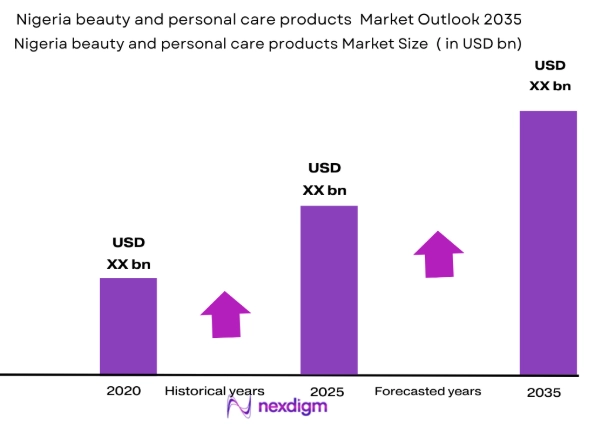
The Nigeria beauty and personal care products market is valued at approximately USD ~ billion, based on consolidated retail and consumer goods data from sources such as the World Bank and International Monetary Fund. The market expansion is driven by a population exceeding 223 million, rising urban population of over 128 million, and increasing consumer spending on hygiene and grooming products. Growth is further supported by expanding retail networks, increasing internet penetration of 41 users per 100 people, and strong demand for skincare and haircare products.
The market is primarily concentrated in urban hubs such as Lagos, Abuja, and Port Harcourt due to higher disposable incomes, dense population clusters, and stronger retail infrastructure. Lagos alone accounts for a significant share of retail activity, supported by its population exceeding 15 million and status as a commercial hub. These cities benefit from better access to supermarkets, pharmacies, and e-commerce platforms, while also serving as entry points for international brands and innovation-driven beauty products.
Market Segmentation
By Product Type
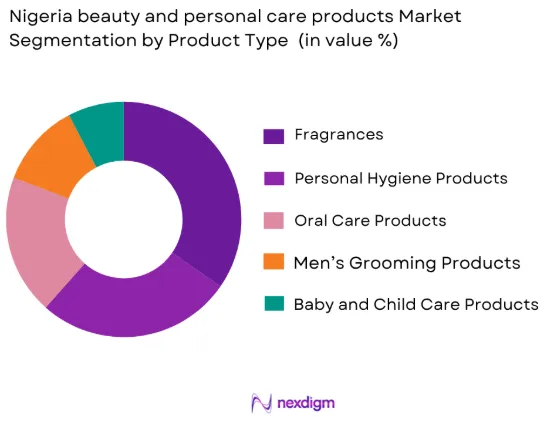
Nigeria beauty and personal care products market is segmented by product type into skincare, haircare, personal hygiene, color cosmetics, fragrances, and others. Recently, skincare products have a dominant market share in Nigeria under this segmentation due to increasing awareness around skin health and widespread use of moisturizers, sunscreens, and treatment products. Urban consumers are driving this demand, supported by access to dermatological products and social media influence. Additionally, Nigeria’s tropical climate increases the need for skincare protection, further strengthening this segment’s position.
By End User Type
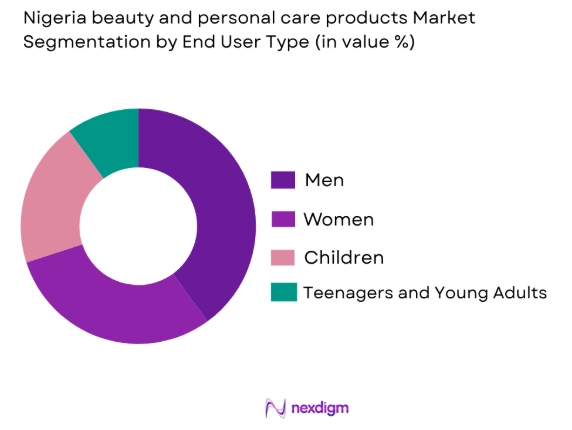
The Nigeria beauty and personal care products market is segmented by end users into women, men, and kids, each contributing differently to overall demand. Women dominate due to higher usage across skincare, cosmetics, and haircare products. The men’s segment is expanding with increasing awareness of grooming and hygiene. Kids’ products are driven by parental preference for safe and mild formulations. Urbanization and digital exposure influence all segments. Brands are tailoring products to meet the specific needs of each consumer group.
Competitive Landscape
The Nigeria beauty and personal care products market is moderately consolidated with a mix of global and regional players. Companies such as Unilever, Procter & Gamble, and L’Oréal dominate due to their strong distribution networks and brand recognition. Local players are also gaining traction through affordability and localized product offerings.
| Company | Established | Headquarters | Product Portfolio | Pricing Strategy | Distribution Network | Innovation Focus | Brand Strength | Digital Presence |
| Unilever | 1929 | London, UK | ~ | ~ | ~ | ~ | ~ | ~ |
| Procter & Gamble | 1837 | Ohio, USA | ~ | ~ | ~ | ~ | ~ | ~ |
| L’Oréal | 1909 | Paris, France | ~ | ~ | ~ | ~ | ~ | ~ |
| PZ Cussons | 1884 | Manchester, UK | ~ | ~ | ~ | ~ | ~ | ~ |
| Beiersdorf | 1882 | Hamburg, Germany | ~ | ~ | ~ | ~ | ~ | ~ |
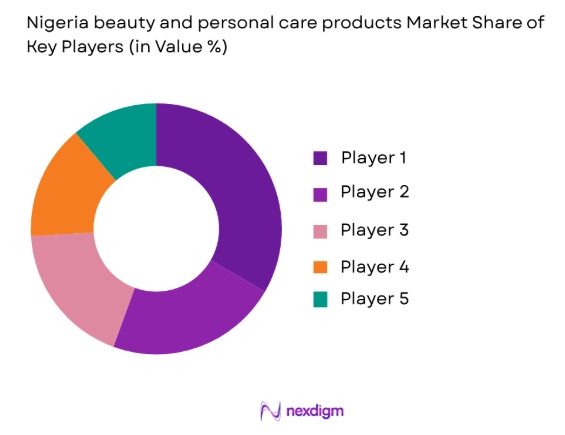
Nigeria Beauty and Personal Care Products Market Analysis
Growth Drivers
Rising Disposable Income and Urbanization
Nigeria’s expanding consumer base is supported by macroeconomic fundamentals such as GDP of USD 252.26 billion and an urban population exceeding 128 million, as reported by the World Bank. Rapid urbanization has led to increased access to modern retail formats, including supermarkets and pharmacies, especially in cities like Lagos and Abuja. Higher concentration of working professionals and dual-income households in urban areas has improved spending on personal grooming products. Additionally, improved infrastructure and retail penetration have enabled better product availability, thereby directly contributing to higher consumption of skincare, haircare, and hygiene products across urban Nigeria.
Expansion of E-Commerce and Social Commerce
Digital adoption is reshaping the distribution of beauty and personal care products in Nigeria. Internet penetration stands at 41 users per 100 people, according to the World Bank, facilitating access to online retail platforms such as Jumia and Konga. The rise of mobile-based commerce has allowed consumers to explore a wider range of products beyond physical stores. Social media platforms like Instagram and TikTok have further amplified product awareness and direct sales through influencer marketing and small-scale vendors. This ecosystem has significantly improved product reach, especially among younger and tech-savvy consumers.
Market Challenges
Counterfeit and Substandard Products
The proliferation of counterfeit beauty products continues to undermine market growth and consumer trust in Nigeria. Regulatory enforcement by agencies such as the National Agency for Food and Drug Administration and Control has led to multiple product seizures in recent years. However, informal retail channels still account for a significant portion of distribution, making it difficult to eliminate substandard goods. These products are often sold at lower prices, appealing to cost-sensitive consumers. The presence of counterfeit items not only affects brand reputation but also poses health risks, which in turn limits the adoption of premium and dermatologically tested products in the market.
Import Dependency and Foreign Exchange Volatility
Nigeria’s beauty and personal care sector is highly dependent on imported raw materials and finished goods. According to the International Monetary Fund, fluctuations in foreign exchange rates have created cost pressures across consumer goods industries. Limited domestic manufacturing capacity further increases reliance on imports, exposing companies to currency risks. As import costs rise, businesses are forced to adjust pricing strategies, which impacts affordability for consumers. This volatility disrupts supply consistency and creates challenges in maintaining stable pricing, thereby affecting overall demand and profitability in the beauty and personal care market.
Opportunities
Growth of Local Beauty and Skincare Brands
The Nigeria beauty and personal care market is witnessing increasing traction for locally manufactured products. With a population exceeding 223 million, there is a strong demand for products tailored to African skin tones and hair textures, as highlighted by the World Bank. Local brands leverage indigenous ingredients such as shea butter and black soap, which are widely available within the country. Government support for small and medium enterprises has further enabled local production. These brands benefit from lower logistics costs and cultural alignment, positioning them competitively against imported products while expanding accessibility across different consumer income groups.
Rising Demand for Men’s Grooming Products
The men’s grooming segment is emerging as a high-potential opportunity within Nigeria’s beauty market. Changing societal norms and increasing awareness of personal hygiene are driving demand for products such as beard oils, shaving kits, and skincare solutions. Urbanization and digital exposure have played a significant role in influencing male grooming habits. With internet penetration at 41 users per 100 people, consumers are increasingly exposed to global grooming trends. Brands are capitalizing on this shift by introducing dedicated men’s product lines. This segment remains relatively underdeveloped, offering substantial scope for expansion and innovation in the coming years.
Future Outlook
Over the next few years, the Nigeria beauty and personal care products market is expected to witness steady expansion driven by urbanization, increasing digital adoption, and rising consumer awareness regarding grooming and hygiene. The market will benefit from the growth of e-commerce platforms and mobile-based retail channels.Innovation in natural and organic products, combined with rising demand for premium offerings, will further shape the market landscape. Additionally, increasing participation of local manufacturers and improved distribution networks will contribute to market development.
Key Players
- Unilever
- Procter & Gamble
- L’Oréal
- Beiersdorf
- PZ Cussons
- Johnson & Johnson
- Coty Inc.
- Revlon
- Estée Lauder
- Godrej Consumer Products
- Oriflame
- Avon
- Zaron Cosmetics
- House of Tara
- Shea Moisture
Key Target Audience
- Investments and venture capitalist firms
- Government and regulatory bodies (National Agency for Food and Drug Administration and Control, Standards Organisation of Nigeria)
- Beauty and personal care product manufacturers
- Retail chains and supermarket operators
- E-commerce platform providers
- Cosmetic ingredient suppliers
- Distributors and wholesalers
- Packaging and labeling solution providers
Research Methodology
Step 1: Identification of Key Variables
The initial phase involves mapping stakeholders across the Nigeria beauty and personal care ecosystem, including manufacturers, distributors, retailers, and consumers. Secondary data sources such as international financial databases and government publications are used to identify key demand drivers and industry variables.
Step 2: Market Analysis and Construction
Historical data is compiled to evaluate consumption patterns, retail expansion, and product adoption trends. This includes analyzing macroeconomic indicators such as population, urbanization, and internet penetration to estimate demand across segments.
Step 3: Hypothesis Validation and Expert Consultation
Market assumptions are validated through interactions with industry experts, distributors, and retail professionals. These insights help refine segmentation and validate trends related to consumer preferences and product demand.
Step 4: Research Synthesis and Final Output
The final stage integrates quantitative and qualitative findings to produce a comprehensive market assessment. Data triangulation ensures accuracy, while insights from stakeholders validate the conclusions and projections.

- Executive Summary
- Research Methodology (Definitions, Scope, Industry Assumptions, Market Sizing Approach, Primary & Secondary Research Framework, Data Collection & Verification Protocol, Analytic Models & Forecast Methodology, Limitations & Research Validity Checks)

- Market Definition and Scope
- Value Chain & Stakeholder Ecosystem
- Regulatory / Certification Landscape
- Sector Dynamics Affecting Demand

- Growth Drivers
Rising Disposable Income and Urbanization
Growing Youth Population and Beauty Awareness
Expansion of E-Commerce and Social Commerce
Increasing Demand for Natural and Organic Products
Influence of Social Media and Beauty Influencers - Challenges
Counterfeit and Substandard Products
Price Sensitivity Among Consumers
Import Dependency and Foreign Exchange Volatility
Regulatory and Product Compliance Issues
Supply Chain and Distribution Constraints - Opportunities
Growth of Local Beauty and Skincare Brands
Expansion of Premium and Halal Beauty Products
Rising Demand for Men’s Grooming Products
Innovation in Natural, Herbal, and African-Ingredient-Based Products
Expansion of Digital Beauty Retail Platforms - Trends
Rising Demand for Skin Brightening and Even-Tone Products
Increasing Popularity of Natural Haircare Products
Growth of Affordable Luxury Beauty Products
Influencer-Led Product Discovery
Preference for Multi-Functional Beauty Products - Government Regulations
- SWOT Analysis
- Porter’s Five Forces

- By Market Value, 2020-2025
- By Sales Volume, 2020-2025
- By Average Product Price, 2020-2025
- By Product Category Tier, 2020-2025

- By Product Type ( In Value %)
Fragrances
Personal Hygiene Products
Oral Care Products
Men’s Grooming Products
Baby and Child Care Products - By End User Segment
Women
Men
Children
Teenagers and Young Adults - By Category ( In Value %)
Mass Beauty and Personal Care Products
Premium Beauty and Personal Care Products
Natural and Organic Products
Dermatological / Medicated Products - By Distribution Channel ( In Value %)
Supermarkets and Hypermarkets
Pharmacies and Drugstores
Specialty Beauty Stores
Online Retail / E-Commerce
Traditional Retail Stores
Direct Selling

- Market Share Analysis
- Cross Comparison Parameters (Product Portfolio, Pricing Strategy, Distribution Network, Brand Positioning, Regulatory Compliance, Product Innovation, Online Presence, Retail Partnerships, Ingredient Quality, Packaging, Customer Loyalty, Marketing Strategy, Influencer Partnerships, Sustainability Practices, After-Sales Support)
- SWOT Analysis of Key Competitors
- Pricing & Procurement Analysis
- Key Players
L’Oréal Group
Unilever Nigeria Plc
Procter & Gamble
Beiersdorf AG
Coty Inc.
Revlon Inc.
Estée Lauder Companies
Johnson & Johnson
PZ Cussons Nigeria Plc
Godrej Consumer Products
Avon Products
Oriflame Cosmetics
Nivea
Dabur International
House of Tara International
Zaron Cosmetics
Kuddy Cosmetics
Classic Makeup USA
Dark and Lovely
Shea Moisture

- Growing Demand from Urban Consumers
- Rising Adoption Among Male Consumers
- Increasing Beauty Product Usage Among Young Adults
- Consumer Preference for Affordable and Trusted Brands
- Demand for Products Suited to African Skin and Hair Types

- By Market Value, 2026-2035
- By Sales Volume, 2026-2035
- By Average Product Price, 2026-2035
- By Product Category Tier, 2026-2035


 Request a Sample
 Ask for Customization
 Get a Quote
 Enquire Now