
 Download PDF
Market Overview
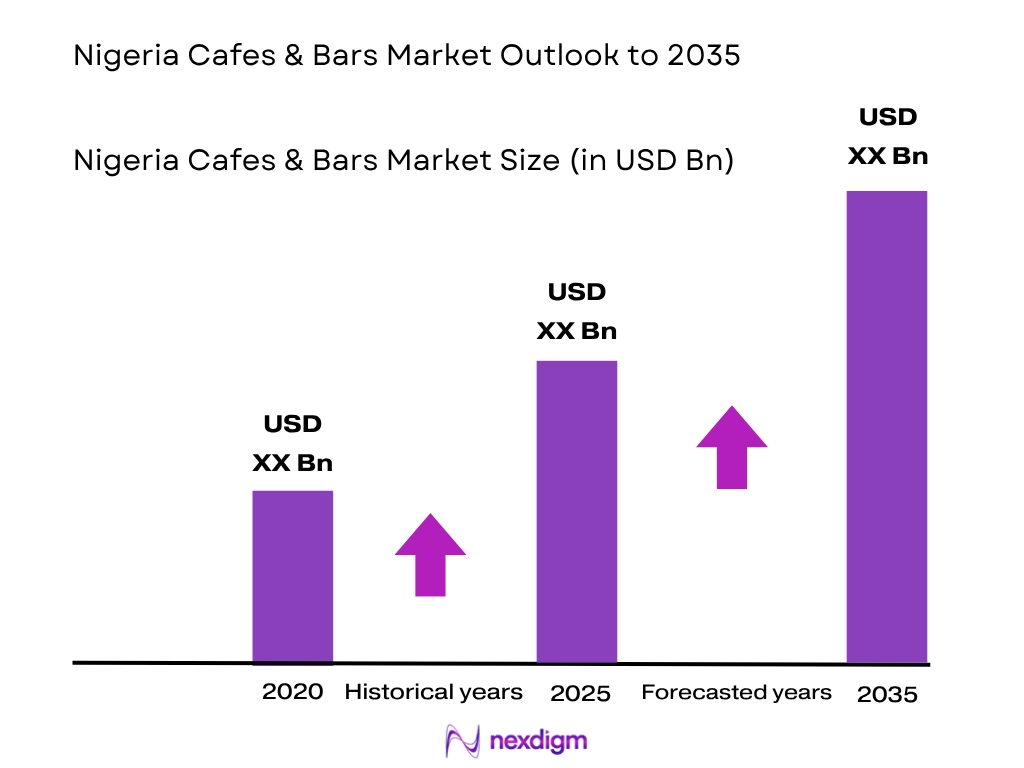
The Nigeria Cafes & Bars Market is assessed within the consumer foodservice ecosystem, which is valued at USD ~ billion, while consumer foodservice maintained positive value growth in cafés/bars despite pressure on transactions and outlet economics. Growth is driven by urban consumption, mobile ordering, nightlife demand, premium coffee adoption, and digital payment usage.
Lagos, Abuja, Port Harcourt and Ibadan dominate Nigeria’s cafés and bars landscape because they concentrate office workers, expatriates, premium hospitality assets, shopping malls, nightlife corridors, and digitally connected consumers. Lagos remains the core hub due to Victoria Island, Ikoyi, Lekki and Ikeja clusters, while Abuja benefits from government, diplomatic and institutional demand. Nigeria recorded 139.3 million active internet subscriptions after 163.8 million, supporting discovery, payments and delivery-led café/bar demand.
Market Segmentation
By Outlet Type
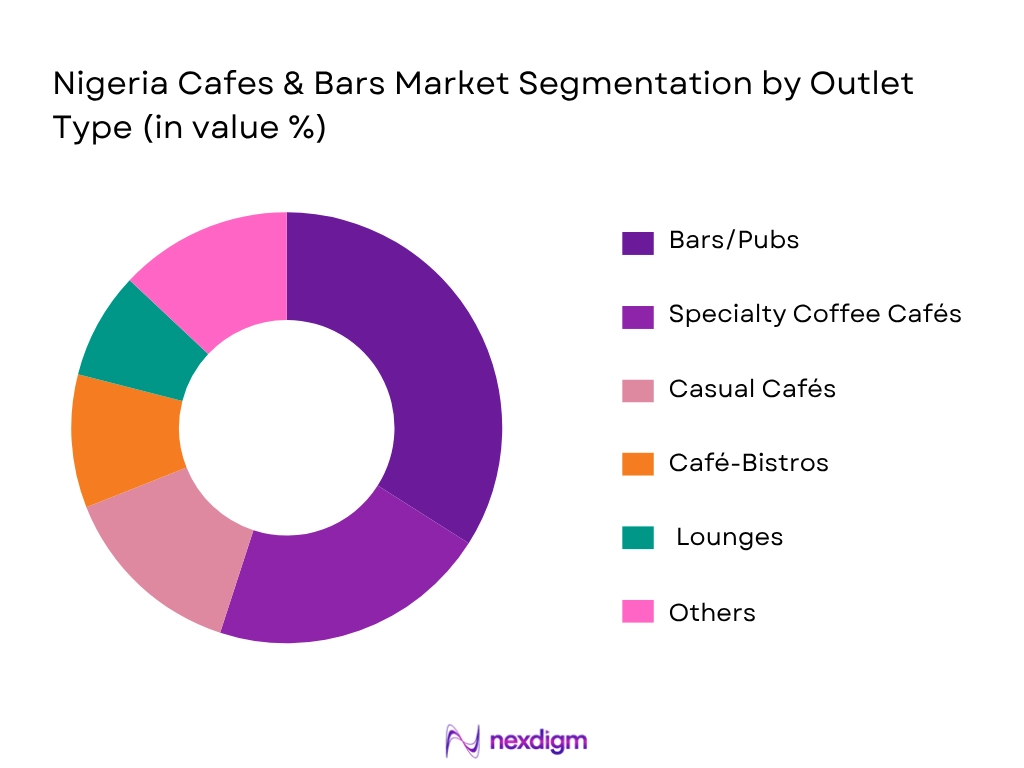
The Nigeria Cafes & Bars Market is segmented by outlet type into bars/pubs, specialty coffee cafés, casual cafés, café-bistros, lounges, rooftop bars, beach clubs, hotel bars and brewery taprooms. Bars/pubs hold the dominant market share because alcoholic beverage consumption, social drinking occasions, live music, football viewing, after-work gatherings and weekend nightlife remain deeply embedded in Lagos, Abuja and Port Harcourt. Inflation reduced discretionary spending, but bars remain resilient because consumers continue using them for entertainment-led occasions rather than only food consumption. Euromonitor’s public summary notes that cafés/bars struggled differently by category, with bars/pubs specifically affected by higher drink prices and consumers shifting some alcohol occasions to home settings, confirming their relevance within the segment mix.
By Revenue Stream
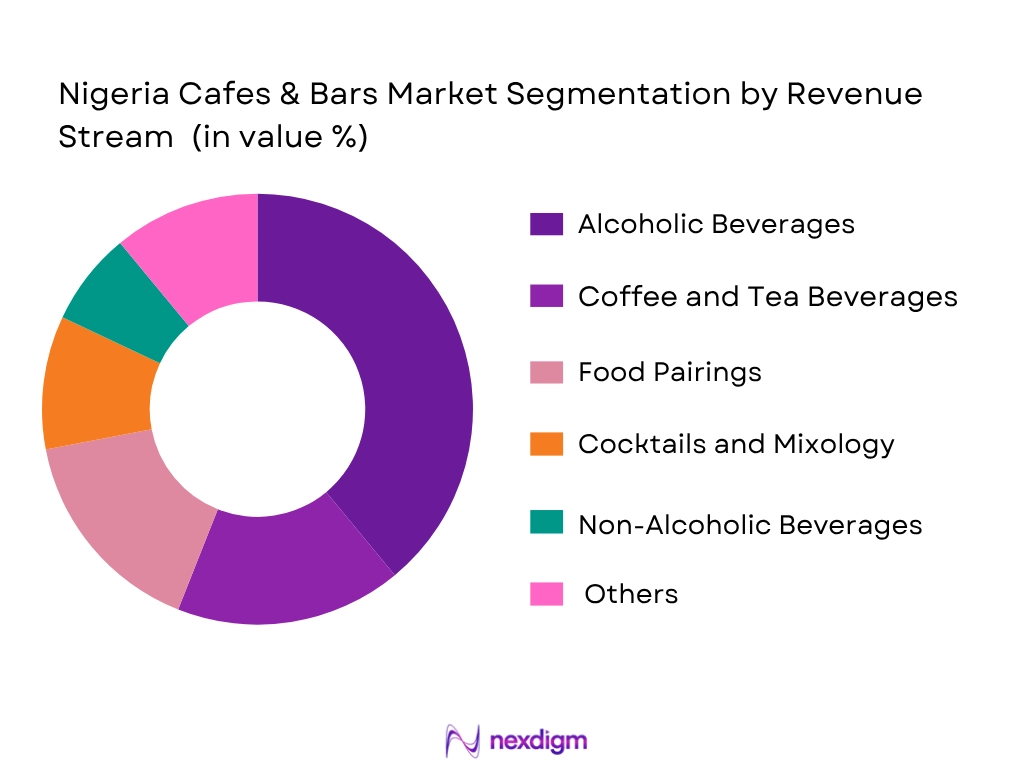
The Nigeria Cafes & Bars Market is segmented by revenue stream into alcoholic beverages, coffee and tea beverages, food pairings, cocktails and mixology, non-alcoholic beverages, desserts and pastries, shisha revenue, events and cover charges, and private bookings. Alcoholic beverages dominate because bars, lounges, beach clubs and hotel bars rely heavily on beer, spirits, wine and cocktails for gross margin, night-time spending and premium table culture. Café operators generate revenue through coffee and food attachment, but higher average ticket sizes are concentrated in alcohol-led venues. The wider foodservice market is supported by convenience dining and urban demand, while cafés/bars are further shaped by nightlife, social occasions and beverage-led experiences.
Competitive Landscape
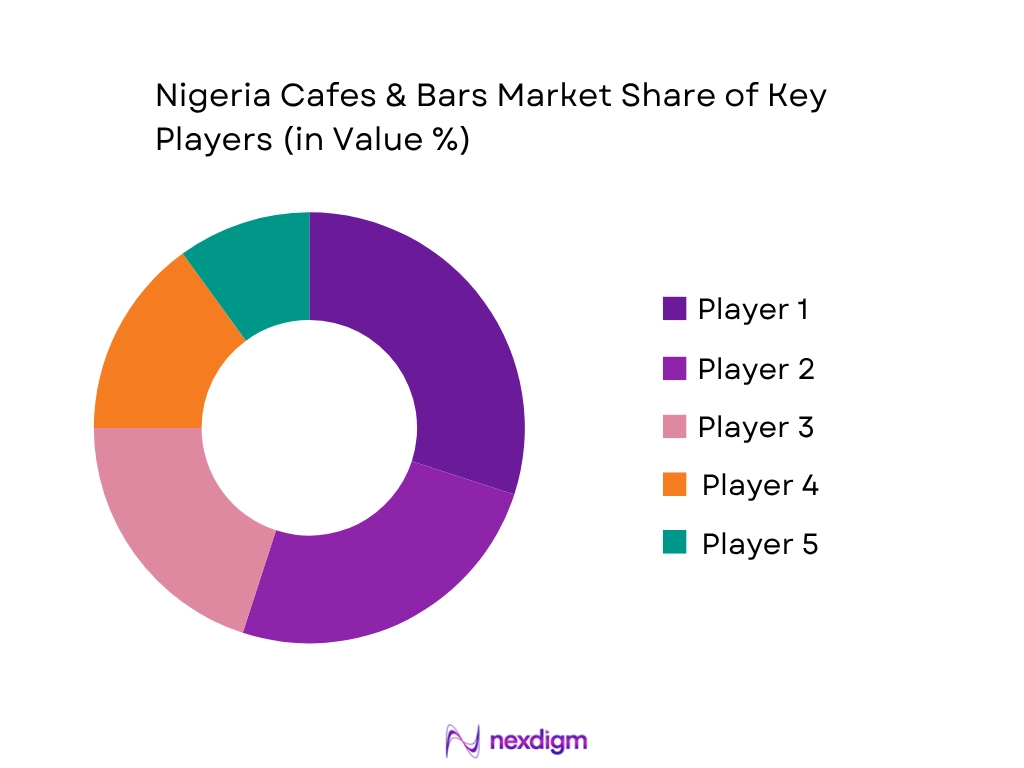
The Nigeria Cafes & Bars Market is fragmented, with independent cafés, premium bars, lounges, hotel bars and destination nightlife venues competing alongside a small number of branded chains. Café Neo provides one of the clearest chained coffee models, while Hard Rock Cafe Lagos represents an international café-bar format. Bature Brewery is differentiated by craft beer and taproom distribution, while Shiro Lagos and RSVP Lagos compete in premium dining-bar occasions. Competition is shaped by location, ambience, beverage portfolio, social media pull, reservation systems, entertainment programming and ability to manage imported-input costs.
| Player | Establishment Year | Headquarters / Main Base | Format Focus | Core Beverage Strength | City Presence | Digital/Delivery Integration | Premium Positioning | Differentiation |
| Café Neo | 2012 | Lagos | ~ | ~ | ~ | ~ | ~ | ~ |
| Bature Brewery | 2017 | Lagos / Abuja origin | ~ | ~ | ~ | ~ | ~ | ~ |
| Hard Rock Cafe Lagos | 2016 | Victoria Island, Lagos | ~ | ~ | ~ | ~ | ~ | ~ |
| RSVP Lagos | 2014 | Victoria Island, Lagos | ~ | ~ | ~ | ~ | ~ | ~ |
| Shiro Lagos | 2016 | Lagos | ~ | ~ | ~ | ~ | ~ | ~ |
Nigeria Cafes & Bars Market Analysis
Growth Drivers
Urban Middle-Class Expansion
Nigeria’s cafés and bars are supported by a large urban consumer base concentrated in Lagos, Abuja, Port Harcourt and other commercial cities. The country’s total population reached 232,679,478 people, while the urban population stood at 128,043,517 people, creating a sizeable addressable base for dine-in cafés, cocktail bars, lounges, work-friendly cafés and premium social venues. The macroeconomic base is also service-led: World Bank data records Nigeria’s GDP at USD 252.26 billion, GDP per capita at USD 1,084.2, and real GDP growth at 4.1 in the same reference year. For cafés and bars, this supports demand from salaried professionals, entrepreneurs, expatriates, diaspora visitors and corporate customers who use cafés for meetings and bars for after-work and weekend occasions. The digital layer is also important because café/bar discovery, reservations, payments and delivery increasingly happen online; World Bank data records internet usage at 41 users per 100 people, while NCC reported 138,983,537 active internet subscriptions.
Café Work Culture
Café work culture is being reinforced by Nigeria’s expanding digital and cashless transaction ecosystem, which directly supports work-from-café behaviour, informal meetings, laptop cafés, café-bistros and premium coffee outlets. NCC reported 138,983,537 active internet subscriptions, giving cafés a stronger basis to attract customers seeking Wi-Fi-enabled workspaces, online meetings, digital ordering and social-media-friendly environments. CBN’s payments data also shows that the first half of the reference year recorded 2,935,765 deployed POS terminals, 6,395,670,571 POS transactions, 11,638,142,074 internet web transfers, and 3,493,116,888 mobile app transfers. This matters for cafés and bars because faster payment acceptance reduces cash dependency, supports counter-service cafés, improves queue management and enables small-ticket repeat purchases such as coffee, pastries, smoothies and light meals. The same data environment also supports table reservations, social media discovery and repeat patronage through digital wallets and bank apps. For business districts in Lagos, Abuja and Port Harcourt, these macro indicators justify the rise of cafés as semi-formal work, meeting and networking spaces rather than only leisure venues.
Market Challenges
Food Inflation
Food inflation remains a direct operating challenge for Nigeria’s cafés and bars because menus depend on bakery inputs, dairy, meat, poultry, seafood, vegetables, cooking oil, fruits, mixers and non-alcoholic beverage ingredients. NBS reported food inflation at 40.87 in June of the reference year, with headline inflation at 34.19 in the same month. NBS later reported food inflation at 21.26 in April of the following year, while the official NBS March update recorded food inflation at 14.31. Even with moderation, the inflation path remains material for café and bar operators because the category relies on frequent replenishment, consistent menu quality and customer-facing service standards. Higher food inflation limits the ability of casual cafés to maintain affordable meal pairings, while premium bars face pressure on garnishes, fresh juices, syrups, bar snacks and sharing platters. For the Nigeria Cafes & Bars Market, the challenge is not only ingredient availability but margin protection, menu redesign, supplier renegotiation and maintaining customer frequency when household purchasing power is strained.
FX Volatility
FX volatility is a major challenge for Nigeria’s cafés and bars because many premium operators depend on imported coffee beans, espresso machines, grinders, glassware, spirits, wine, cocktail bitters, syrups, refrigeration systems and bar equipment. World Bank’s WDI exchange-rate table records Nigeria’s official exchange rate moving from 644.30 to 1,477.92 local currency units per US dollar across the latest reported annual comparison, while the alternative conversion factor moved from 645.19 to 1,478.97. CBN’s live official exchange-rate page also shows the exchange rate at NGN 1,362.21 per US dollar, indicating that imported-input planning remains exposed to currency movements even after recent stabilization. This affects premium cocktail bars, hotel bars, café-bistros and specialty coffee outlets more heavily than informal outlets because their customer proposition depends on consistent imported SKUs and equipment standards. For operators, FX volatility creates risk around inventory replacement, menu continuity, imported beverage availability and procurement planning, particularly in Lagos and Abuja where consumers expect international drink menus and specialty coffee quality.
Market Opportunities
Specialty Coffee
Specialty coffee presents a future growth opportunity in the Nigeria Cafes & Bars Market because current macro indicators support digitally connected, urban, work-friendly and premium beverage occasions. Nigeria has 128,043,517 urban residents, 232,679,478 total population, and 41 internet users per 100 people, which creates a large base for cafés positioned around remote work, meetings, premium beverages and social discovery. The opportunity is strengthened by cashless behaviour: CBN reported 6,395,670,571 POS transactions, 11,638,142,074 internet web transfers, and 3,493,116,888 mobile app transfers in the first half of the reference year. Specialty cafés can use this infrastructure to scale order-ahead formats, loyalty apps, delivery add-ons, card-led payment, subscription coffee bundles and work-from-café monetization. The segment also benefits from services-led economic activity, with NBS reporting real GDP growth of 3.89 in the first quarter of the latest available year, after 3.13 in the comparable prior quarter. This supports café demand from offices, freelancers, creators and small business owners in Lagos, Abuja and other service hubs.
Craft Beer
Craft beer is a future opportunity for Nigeria’s cafés and bars because the beverage-led hospitality base is supported by urban density, nightlife culture, digital payments and a functioning food-and-beverage manufacturing environment. NBS GDP data identifies food, beverage and tobacco as a manufacturing activity, while the broader accommodation and food services category remained active in quarterly GDP reporting, with accommodation and food services contributing 0.88 to nominal GDP in the fourth quarter of the reference year and 1.25 in the first quarter of the following year. The opportunity is strongest for taprooms, gastropubs, beach clubs, rooftop bars and premium lounges that can differentiate through locally brewed beer, limited batches, food pairings and event-led consumption. Digital payments further support taproom scalability: CBN recorded 2,935,765 POS terminals and 6,395,670,571 POS transactions in the first half of the reference year, making card-led bar transactions and table payments easier to execute. With 128,043,517 urban residents, craft beer formats can grow around Lagos, Abuja and Port Harcourt clusters where social drinking, music events and premium casual hospitality are concentrated.
Future Outlook
The Nigeria Cafes & Bars Market is expected to expand steadily as urban consumption, digital payments, hospitality investment and youth-led social occasions strengthen organized foodservice demand. The wider Nigeria foodservice market is forecast to grow from USD 12.37 billion to USD 21.38 billion at 11.55% CAGR, while another published forecast places Nigeria foodservice growth at 7.7% CAGR. For the cafés/bars long-range model, a 7.7% CAGR for 2026-2035 is used as the conservative forecast benchmark, reflecting inflation pressure, FX exposure, power costs and slower outlet scaling outside major cities. Growth will be concentrated in Lagos and Abuja, supported by premium lounges, specialty coffee formats, boutique hotels, mixed-use developments, malls, beach clubs and high-income residential districts. The next phase of competition will be driven by experiential venue design, brunch menus, mocktail innovation, craft beer, Nigerian-flavour cocktails, live music, sports viewing, influencer-led discovery, reservation tools and loyalty programs.
Major Players
- Café Neo
- Art Café Lagos
- MyYa’s Café
- Bature Brewery
- RSVP Lagos
- NOK by Alára
- SLoW Lagos
- Z Kitchen
- Hanes & Jones
- Shiro Lagos
- Hard Rock Cafe Lagos
- South Social House
- Cubana
- Moist Beach Club
- The House Lagos
Key Target Audience
- Café and bar chain operators
- Premium lounge, nightclub and beach club owners
- Hotel groups and hospitality asset owners
- Alcoholic beverage manufacturers and distributors
- Coffee roasters, café suppliers and bakery product manufacturers
- Investments and venture capitalist firms
- Government and regulatory bodies (Federal Competition and Consumer Protection Commission, National Agency for Food and Drug Administration and Control, Federal Inland Revenue Service, Lagos State Internal Revenue Service, Lagos State Safety Commission, Abuja Municipal Area Council)
- Commercial real estate developers and mall operators
Research Methodology
Step 1: Identification of Key Variables
The initial phase involves mapping the Nigeria Cafes & Bars Market ecosystem, including café operators, bar owners, beverage suppliers, coffee roasters, breweries, nightlife venues, delivery platforms, regulators and commercial landlords. Key variables include outlet density, average ticket size, beverage mix, city-level footfall, dine-in share, event revenue and digital payment adoption.
Step 2: Market Analysis and Construction
The second phase involves compiling historical data from foodservice, hospitality, beverage, urbanization, digital payment and consumer spending indicators. Market construction uses bottom-up outlet mapping across Lagos, Abuja, Port Harcourt and other urban clusters, supported by top-down validation from published foodservice market values and category-level café/bar commentary.
Step 3: Hypothesis Validation and Expert Consultation
Market hypotheses are validated through structured interviews with café founders, bar managers, beverage distributors, mall leasing teams, hotel F&B managers, event promoters and delivery platform executives. These consultations support verification of pricing, customer frequency, revenue split, imported-input dependency, outlet economics, labour cost and premiumization trends.
Step 4: Research Synthesis and Final Output
The final phase consolidates primary interviews, secondary research and market modelling into an integrated report. Findings are cross-validated using published market-size benchmarks, payment infrastructure indicators, operator profiles and category-level industry commentary to ensure a consistent view of market size, segmentation, competitive structure and long-term outlook.

- Executive Summary
- Research Methodology (Market Definitions and Assumptions, Abbreviations, Market Sizing Approach, Top-Down Market Assessment, Bottom-Up Outlet Mapping, City-Level Demand Estimation, Consumer Spend Benchmarking, Mystery Shopping, Menu Price Benchmarking, Primary Interviews with Café Owners, Bar Operators, Distributors, Beverage Suppliers, Mall Operators, Delivery Platforms, Event Promoters, Regulatory Stakeholders, Limitations and Forecast Assumptions)

- Definition and Scope
- Market Genesis
- Evolution of Café Culture and Bar-Led Social Consumption
- Timeline of Major Café, Bar, Lounge, Beach Club and Brewery Operators
- Business Cycle
- Supply Chain and Value Chain Analysis
- Revenue Pool Structure
- Demand Concentration by Urban Cluster
- Operating Model Landscape
- Consumer Occasion Mapping

- Growth Drivers (Urban Middle-Class Expansion, Café Work Culture, Premium Nightlife, Digital Payments, Social Media-Led Discovery, Detty December Tourism, Diaspora Spending, Live Events, Mall and Mixed-Use Development)
- Market Challenges (Food Inflation, FX Volatility, Imported Coffee Beans, Imported Spirits, Diesel and Power Costs, Security Costs, Liquor Licensing, Rent Escalation, Skilled Bartender and Barista Shortage)
- Market Opportunities (Specialty Coffee, Craft Beer, Local Spirits, Premium Mocktails, Corporate Catering, Members’ Clubs, Day-to-Night Café Bars, Beachfront Concepts, Franchise Expansion)
- Market Trends (Table Culture, No-Table Rave Formats, Afro-Fusion Menus, Brunch Culture, Amapiano and Afrobeats Programming, Coffee Pairings, Bottle Service, Rooftop Experiences, Premium Shisha, Instagrammable Interiors)
- Government Regulation (Liquor Licence, Food Premises Permit, CAC Registration, Tax Compliance, Signage Permit, Fire Safety Approval, Music Copyright Licensing, Environmental Health Inspection, Late-Night Operations Compliance)
- SWOT Analysis (Brand Equity, Outlet Footprint, Menu Differentiation, Supplier Dependence, Pricing Power, Experience Quality, Digital Visibility, Compliance Readiness)
- Stakeholder Ecosystem (Café Owners, Bar Operators, Beverage Distributors, Coffee Roasters, Breweries, Spirits Importers, Mixologists, Baristas, Mall Developers, Hotel Operators, Delivery Platforms, POS Providers, Event Promoters, DJs, Influencers, Regulators)
- Porter’s Five Forces (Supplier Bargaining Power, Customer Bargaining Power, Threat of New Entrants, Threat of Substitutes, Competitive Rivalry, Premium Location Access, Brand Switching Behaviour, Import Dependency)
- PESTLE Analysis (Alcohol Policy, Inflation, Youth Demographics, Social Media Culture, POS Technology, Food Safety, Energy Infrastructure, Import Regulation)
- Pricing Analysis (Espresso Price, Cappuccino Price, Cocktail Price, Beer Price, Wine-by-Glass Price, Mocktail Price, Shisha Price, Brunch Basket Price, Bottle-Service Price, Cover Charge)
- Supply Chain Analysis (Coffee Beans, Dairy, Syrups, Spirits, Wine, Beer, Mixers, Ice, Bakery Products, Fresh Produce, Packaging, Glassware, Bar Equipment, Cold Chain)

- By Value (2020-2025)
- By Number of Outlets (2020-2025)
- By Average Ticket Size (2020-2025)
- By Transaction Volume (2020-2025)
- By Beverage Revenue Contribution (2020-2025)
- By Food Attachment Rate (2020-2025)
- By City-Level Revenue Contribution (2020-2025)
- By Organized vs Independent Operators (2020-2025)

- By Outlet Type (In Value%)
Specialty Coffee Cafés
Casual Cafés
Café-Bistros
Cocktail Bars
Sports Bars
Lounges
Rooftop Bars
Beach Clubs
Brewery Taprooms
Hotel Bars - By Revenue Stream (In Value%)
Coffee Sales
Tea and Non-Alcoholic Beverages
Alcoholic Beverages
Cocktails and Mixology
Food Pairings
Desserts and Pastries
Shisha Revenue
Events and Cover Charges
Membership and Private Bookings - By Service Model (In Value%)
Dine-In
Takeaway
Delivery
Reservation-Based Seating
Walk-In Seating
Table-Service Bar
Counter-Service Café
Event-Led Service
Private Lounge Access - By Consumer Cohort (In Value%)
Urban Professionals
Students
Entrepreneurs and Freelancers
Expatriates
Affluent Millennials
Gen Z Nightlife Consumers
Corporate Clients
Tourists and Diaspora Visitors
Premium Social Groups - By Price Positioning (In Value%)
Value Cafés
Mid-Market Cafés
Premium Cafés
Value Bars
Mid-Market Bars
Premium Cocktail Bars
Luxury Lounges
Ultra-Premium Clubs and Beach Clubs - By Location Type (In Value%)
High-Street Outlets
Mall-Based Outlets
Hotel-Based Outlets
Office District Outlets
Residential Neighbourhood Outlets
Waterfront and Beachfront Outlets
Airport and Transit Outlets
Members’ Club Locations - By Region (In Value%)
Lagos
Abuja FCT
South-West Nigeria
South-South Nigeria
South-East Nigeria
North-Central Nigeria
North-West Nigeria
North-East Nigeria - By Channel of Customer Acquisition (In Value%)
Instagram Discovery
TikTok Discovery
Google Search
Influencer Marketing
Word-of-Mouth
Delivery Apps
Event Partnerships
Corporate Tie-Ups
Hotel Concierge Referrals

- Market Share of Major Players (Revenue Share, Outlet Share, Premium Segment Share, Café-Led Share, Bar-Led Share, Nightlife Segment Share, City-Level Share)
- Market Share of Major Players by Outlet Type (Specialty Coffee Cafés, Café-Bistros, Cocktail Bars, Lounges, Rooftop Bars, Beach Clubs, Brewery Taprooms, Hotel Bars)
- Cross Comparison Parameters (Outlet Footprint, City Coverage, Average Ticket Size, Beverage Mix, Alcohol Licence Positioning, Menu Breadth, Event and Entertainment Calendar, Social Media Engagement, Delivery and Takeaway Integration, Reservation and Table Management, Seating Capacity, Ambience Positioning, Supplier Partnerships, Staff Skill Depth, Pricing Tier)
- SWOT Analysis of Major Players (Brand Recall, Location Strength, Menu Innovation, Operational Efficiency, Compliance Exposure, Import Cost Exposure, Customer Retention, Expansion Readiness)
- Pricing Analysis by Menu Category for Major Players (Espresso, Cappuccino, Iced Coffee, Signature Cocktail, Beer, Craft Beer, Wine-by-Glass, Premium Spirits, Mocktail, Pastry, Brunch Plate, Sharing Platter)
- Competitive Benchmarking by Customer Experience (Ambience, Service Speed, Music Programming, Food Quality, Drink Consistency, Safety, Parking, Wi-Fi, Cleanliness, Crowd Profile, Reservation Experience)
- Competitive Benchmarking by Digital Presence (Instagram Followers, TikTok Visibility, Google Ratings, Influencer Mentions, Online Menu Availability, Reservation Links, Delivery App Presence, User-Generated Content)
- Detailed Profiles of Major Companies
Café Neo
Art Café Lagos
MyYa’s Café
Bature Brewery
RSVP Lagos
NOK by Alára
SLoW Lagos
Z Kitchen
Hanes & Jones
Shiro Lagos
Hard Rock Cafe Lagos
South Social House
Cubana
Moist Beach Club
The House Lagos

- Market Demand and Utilization (Footfall, Table Occupancy, Seat Turnover, Weekday Utilization, Weekend Utilization, Peak-Hour Demand, Festive Season Demand)
- Purchasing Power and Budget Allocation (Average Café Spend, Average Bar Spend, Premium Cocktail Spend, Bottle-Service Spend, Brunch Spend, Group Booking Spend, Corporate Event Budget)
- Needs, Desires and Pain Point Analysis (Ambience, Safety, Parking, Wi-Fi, Power Outlets, Music Quality, Drink Quality, Food Consistency, Service Speed, Price Transparency, Reservation Reliability)
- Decision-Making Process (Location Convenience, Menu Appeal, Peer Recommendation, Social Media Rating, Influencer Visibility, Event Line-Up, Price Point, Crowd Profile, Security Perception)
- Consumer Cohort Analysis (Gen Z, Millennials, Young Professionals, High-Net-Worth Consumers, Women-Led Groups, Corporate Clients, Expat Communities, Diaspora Visitors)
- Occasion-Based Demand Mapping (Coffee Meetings, Laptop Work Sessions, Brunch, Date Nights, Pre-Drinks, Watch Parties, Live Music Nights, Raves, Beach Parties, Private Celebrations)

- By Value (2026-2035)
- By Number of Outlets (2026-2035)
- By Average Ticket Size (2026-2035)
- By Transaction Volume (2026-2035)
- By Beverage Revenue Contribution (2026-2035)
- By Organized vs Independent Operators (2026-2035)
- By City-Level Revenue Contribution (2026-2035)


 Request a Sample
 Ask for Customization
 Get a Quote
 Enquire Now